15 Results for "

enterocolitis

" in MedChemExpress (MCE) Product Catalog:
Products (15)

15 Results for "enterocolitis" in MCE Product Catalog:

15
15 Publications Verification
Cat. No.: HY-107575
CAS No.: 40592-88-9
Purity:  99.90%
Research Areas:  

Inflammation/Immunology

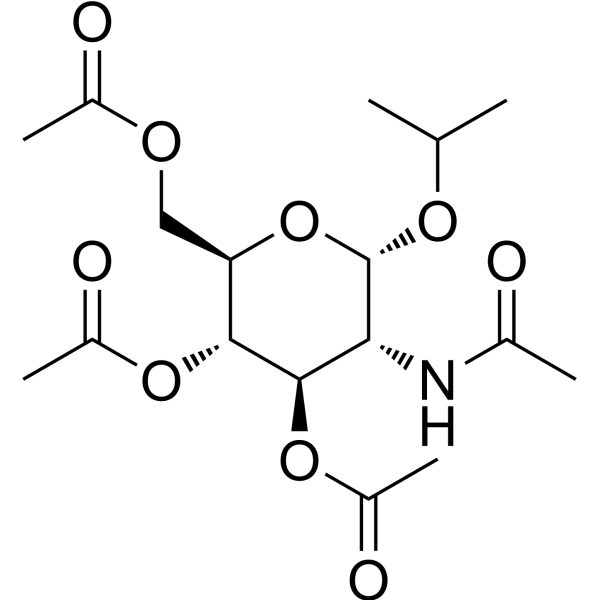
TLR4-IN-C34 is an orally active TLR4 inhibitor and reduces systemic inflammation in models of endotoxemia and necrotizing enterocolitis .
loading...
    loading...
14
14 Cited Publications
Cat. No.: HY-112005
CAS No.: 4004-05-1
Purity:  98.80%
Synonyms: Dioleoylphosphatidylethanolamine; 1,2-Dioleoyl-sn-glycero-3-phosphoethanolamine
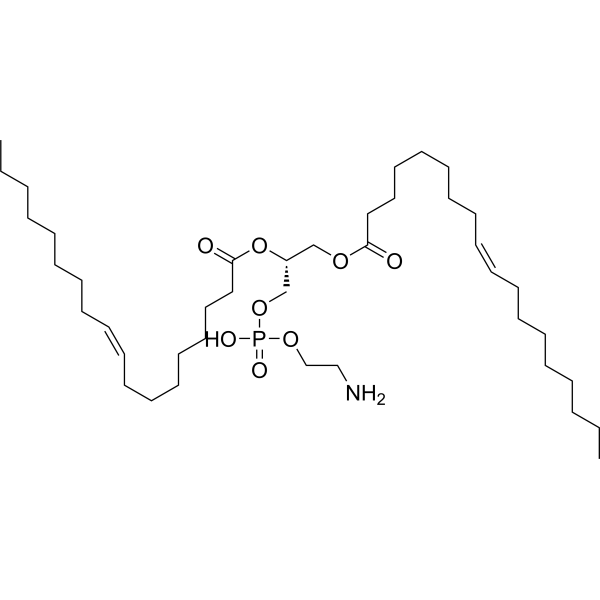
DOPE (Dioleoylphosphatidylethanolamine; 1,2-Dioleoyl-sn-glycero-3-phosphoethanolamine) is an orally active inhibitor of ferroptosis with anti-inflammatory and intestinal barrier maintenance activities. DOPE regulates the expression of ACSL4, SLC7A11 and GPX4 to restore the redox system balance, thereby reducing the levels of lipid peroxides, iron ions and intestinal inflammatory factors (IL-1β and IL-6). DOPE promotes the migration and proliferation of intestinal epithelial cells and increases the level of tight junction proteins; it also destabilizes endosomal membranes, mediates the conjugation of RVG peptides with mesenchymal stem cell-derived exosomes to enhance brain targeting. DOPE can be applied to research related to neonatal necrotizing enterocolitis and Alzheimer's disease .
loading...
    loading...
2
2 Cited Publications
Cat. No.: HY-14149
CAS No.: 81098-60-4
Purity:  99.87%
Synonyms: R 51619; (±)-Cisaprid
Research Areas:  

Inflammation/Immunology

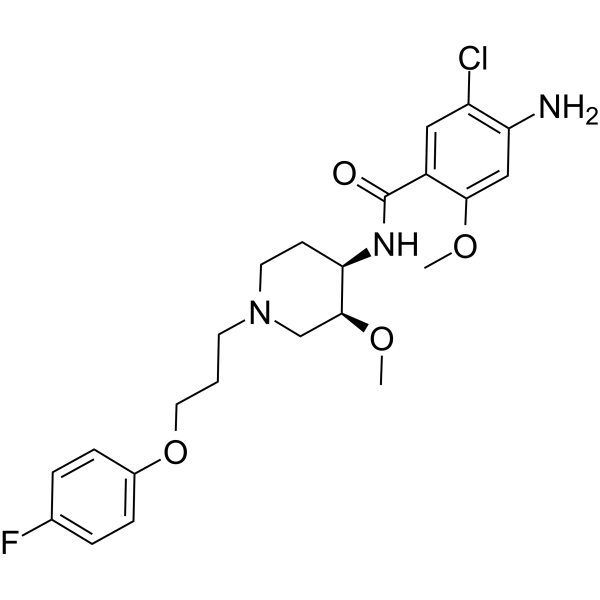
Cisapride (R 51619) is an orally active, selective 5-HT4 receptor agonist with an EC50 of 140 nM. Cisapride also acts as an hERG potassium channel blocker with an IC50 of 9.4 nM. Cisapride exerts gastrointestinal prokinetic effects by activating 5-HT4 receptors, but it also blocks the hERG potassium channel responsible for the repolarization phase of cardiac action potentials, delaying repolarization and thus prolonging the action potential duration . Cisapride can be used in research related to gastrointestinal dysfunction, gastroesophageal reflux disease, functional dyspepsia, chronic gastritis, gastroparesis, ulcerative colitis and necrotizing enterocolitis .
loading...
    loading...
2
2 Cited Publications
Cat. No.: HY-W092043
CAS No.: 1159408-54-4
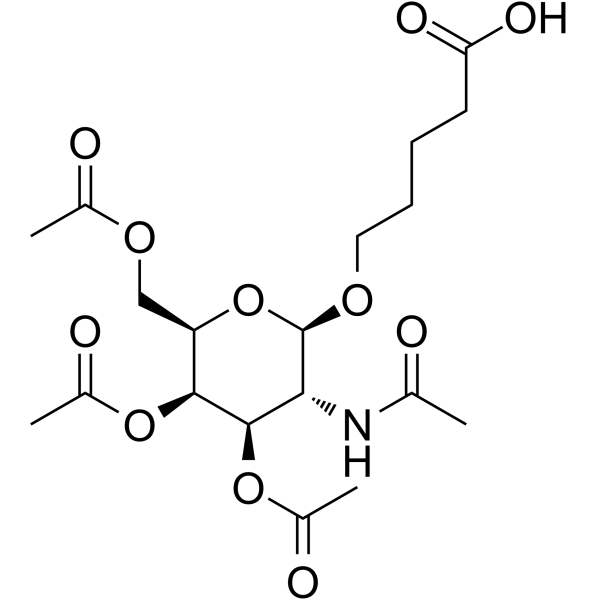
TLR4-IN-C34-C2-COO is a linker that incorporates TLR4 inhibitor TLR4-IN-C34. TLR4-IN-C34-C2-COOH can be used in the research of inflammation and acute myocardial injury. TLR4-IN-C34 inhibits TLR4 in enterocytes and macrophages, and reduces systemic inflammation in mouse models of endotoxemia and necrotizing enterocolitis .
loading...
    loading...
2
2 Cited Publications
Cat. No.: HY-14149A
CAS No.: 260779-88-2
Synonyms: R 51619 monohydrate; (±)-Cisaprid monohydrate
Research Areas:  

Inflammation/Immunology

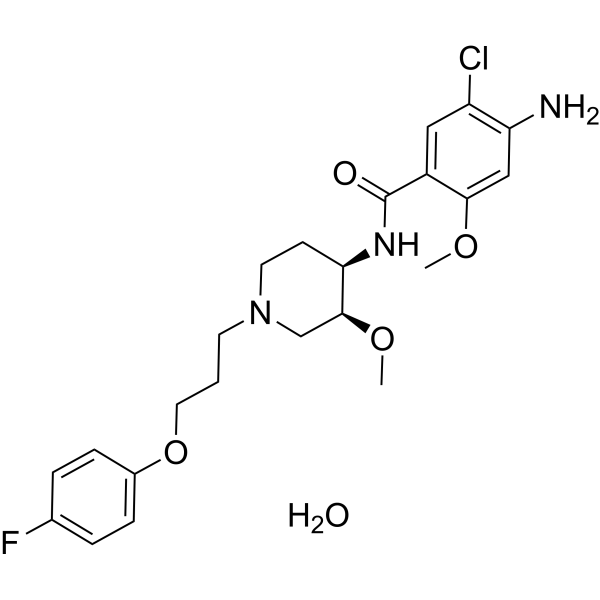
Cisapride (R 51619) monohydrate is an orally active, selective 5-HT4 receptor agonist with an EC50 of 140 nM. Cisapride monohydrate also acts as an hERG potassium channel blocker with an IC50 of 9.4 nM. Cisapride monohydrate exerts gastrointestinal prokinetic effects by activating 5-HT4 receptors, but it also blocks the hERG potassium channel responsible for the repolarization phase of cardiac action potentials, delaying repolarization and thus prolonging the action potential duration . Cisapride monohydrate can be used in research related to gastrointestinal dysfunction, gastroesophageal reflux disease, functional dyspepsia, chronic gastritis, gastroparesis, ulcerative colitis and necrotizing enterocolitis .
loading...
    loading...
Cat. No.: HY-N11503
CAS No.: 61278-38-4
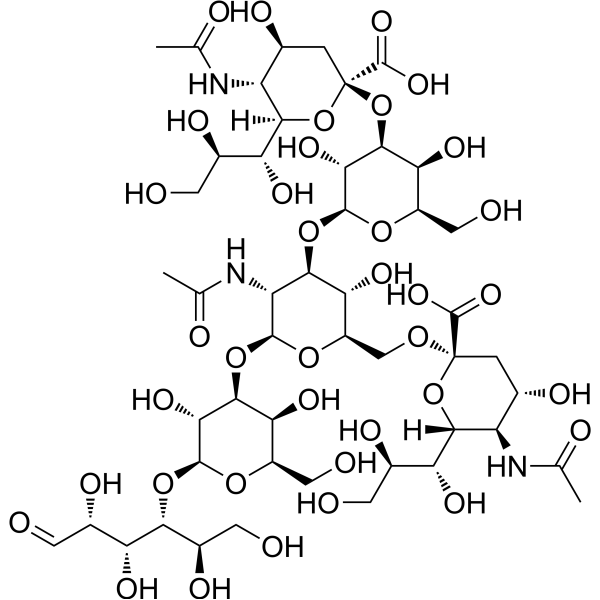
Disialyllacto-N-tetraose is a human milk oligosaccharide that prevents necrotising enterocolitis in neonatal rats .
loading...
    loading...
Cat. No.: HY-145245
Purity:  99.62%
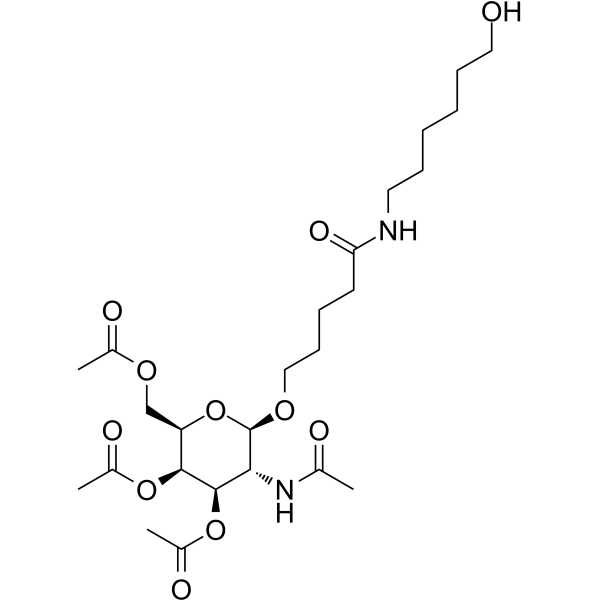
TLR4-IN-C34-C2-amide-C6-OH is a linker that incorporates TLR4 inhibitor TLR4-IN-C34. TLR4-IN-C34 inhibits TLR4 in enterocytes and macrophages, and reduces systemic inflammation in mouse models of endotoxemia and necrotizing enterocolitis .
loading...
    loading...
Cat. No.: HY-145253
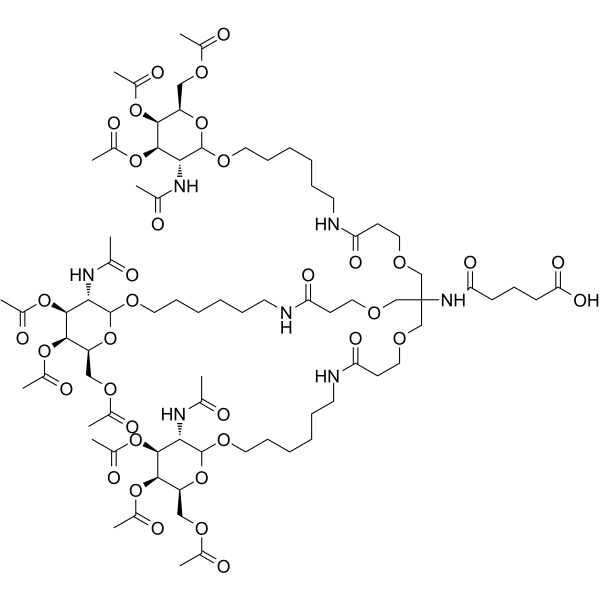
Tri(TLR4-IN-C34-C2-amide-PEG1)-amide-C3-COOH is a linker that incorporates TLR4 inhibitor TLR4-IN-C34. TLR4-IN-C34 inhibits TLR4 in enterocytes and macrophages, and reduces systemic inflammation in mouse models of endotoxemia and necrotizing enterocolitis .
loading...
    loading...
Cat. No.: HY-145255
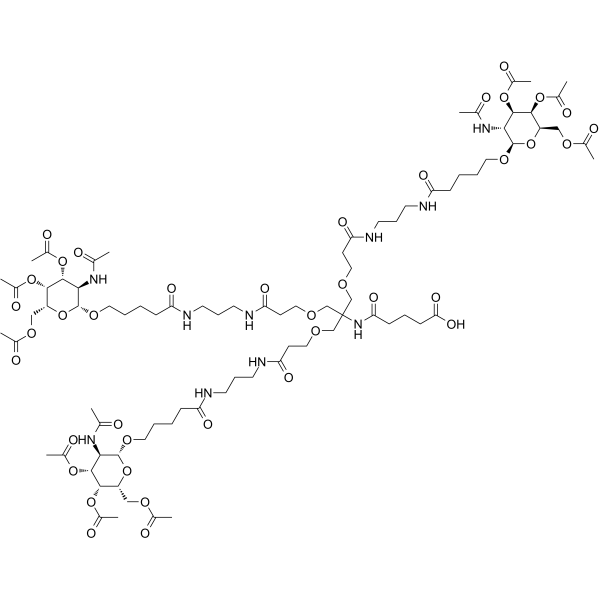
Tri(TLR4-IN-C34-C2-amide-C3-amide-PEG1)-amide-C3-COOH is a linker that incorporates TLR4 inhibitor TLR4-IN-C34. TLR4-IN-C34 inhibits TLR4 in enterocytes and macrophages, and reduces systemic inflammation in mouse models of endotoxemia and necrotizing enterocolitis .
loading...
    loading...
Cat. No.: HY-145254
Research Areas:  

Inflammation/Immunology

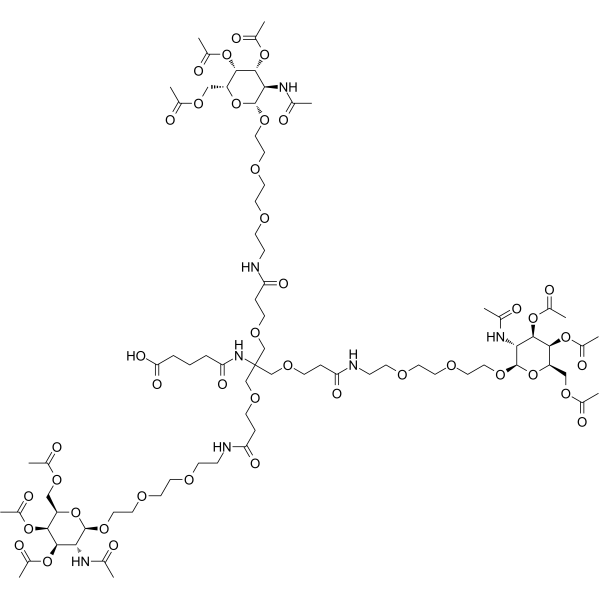
Tri(TLR4-IN-C34-PEG2-amide-PEG1)-amide-C3-COOH is a linker that incorporates TLR4 inhibitor TLR4-IN-C34. TLR4-IN-C34 inhibits TLR4 in enterocytes and macrophages, and reduces systemic inflammation in mouse models of endotoxemia and necrotizing enterocolitis .
loading...
    loading...
Cat. No.: HY-14149R
CAS No.: 81098-60-4
Synonyms: R 51619 (Standard); (±)-Cisaprid (Standard)
Cisapride (R 51619) (Standard) is the analytical standard of Cisapride (HY-14149). This product is intended for research and analytical applications. Cisapride (R 51619) is an orally active, selective 5-HT4 receptor agonist with an EC50 of 140 nM. Cisapride also acts as an hERG potassium channel blocker with an IC50 of 9.4 nM. Cisapride exerts gastrointestinal prokinetic effects by activating 5-HT4 receptors, but it also blocks the hERG potassium channel responsible for the repolarization phase of cardiac action potentials, delaying repolarization and thus prolonging the action potential duration . Cisapride can be used in research related to gastrointestinal dysfunction, gastroesophageal reflux disease, functional dyspepsia, chronic gastritis, gastroparesis, ulcerative colitis and necrotizing enterocolitis .
loading...
    loading...
Cat. No.: HY-14149S
CAS No.: 2738376-71-9
Synonyms: R51619-d6; (±)-Cisaprid-d6
Cisapride-d6 (R51619-d6) is the deuterated-labeled Cisapride (HY-14149). Cisapride (R 51619) is an orally active, selective 5-HT4 receptor agonist with an EC50 of 140 nM. Cisapride also acts as an hERG potassium channel blocker with an IC50 of 9.4 nM. Cisapride exerts gastrointestinal prokinetic effects by activating 5-HT4 receptors, but it also blocks the hERG potassium channel responsible for the repolarization phase of cardiac action potentials, delaying repolarization and thus prolonging the action potential duration . Cisapride can be used in research related to gastrointestinal dysfunction, gastroesophageal reflux disease, functional dyspepsia, chronic gastritis, gastroparesis, ulcerative colitis and necrotizing enterocolitis .
loading...
    loading...
Cat. No.: HY-W777120
CAS No.: 1285970-69-5
Synonyms: R 51619-13C,d3; (±)-Cisaprid-13C,d3
Cisapride- 13C,d3 (R 51619- 13C,d3) is the deuterated, 13C-labeled Cisapride (HY-14149). Cisapride (R 51619) is an orally active, selective 5-HT4 receptor agonist with an EC50 of 140 nM. Cisapride also acts as an hERG potassium channel blocker with an IC50 of 9.4 nM. Cisapride exerts gastrointestinal prokinetic effects by activating 5-HT4 receptors, but it also blocks the hERG potassium channel responsible for the repolarization phase of cardiac action potentials, delaying repolarization and thus prolonging the action potential duration . Cisapride can be used in research related to gastrointestinal dysfunction, gastroesophageal reflux disease, functional dyspepsia, chronic gastritis, gastroparesis, ulcerative colitis and necrotizing enterocolitis .
loading...
    loading...
Cat. No.: HY-107575R
CAS No.: 40592-88-9
TLR4-IN-C34 (Standard) is the analytical standard of TLR4-IN-C34 (HY-107575). This product is intended for research and analytical applications. TLR4-IN-C34 is an orally active TLR4 inhibitor and reduces systemic inflammation in models of endotoxemia and necrotizing enterocolitis .
loading...
    loading...
Cat. No.: HY-112005G
CAS No.: 4004-05-1
Synonyms: Dioleoylphosphatidylethanolamine (GMP); 1,2-Dioleoyl-sn-glycero-3-phosphoethanolamine (GMP)
DOPE GMP is DOPE (HY-112005) produced by using GMP guidelines. GMP small molecules works appropriately as an auxiliary reagent for cell therapy manufacture. DOPE (Dioleoylphosphatidylethanolamine; 1,2-Dioleoyl-sn-glycero-3-phosphoethanolamine) is an orally active inhibitor of ferroptosis with anti-inflammatory and intestinal barrier maintenance activities. DOPE regulates the expression of ACSL4, SLC7A11 and GPX4 to restore the redox system balance, thereby reducing the levels of lipid peroxides, iron ions and intestinal inflammatory factors (IL-1β and IL-6). DOPE promotes the migration and proliferation of intestinal epithelial cells and increases the level of tight junction proteins; it also destabilizes endosomal membranes, mediates the conjugation of RVG peptides with mesenchymal stem cell-derived exosomes to enhance brain targeting. DOPE can be applied to research related to neonatal necrotizing enterocolitis and Alzheimer's disease .
loading...
    loading...
  • 1

