
Search Result
Results for "
estrogen receptors α
" in MedChemExpress (MCE) Product Catalog:
4
Biochemical Assay Reagents
35
Isotope-Labeled Compounds
| Cat. No. |
Product Name |
Target |
Research Areas |
Chemical Structure |
-
- HY-14650
-
|
Prasterone; Dehydroisoandrosterone; Dehydroepiandrosterone
|
Environmental Pollutants
Endogenous Metabolite
Androgen Receptor
|
Cardiovascular Disease
Endocrinology
Cancer
|
|
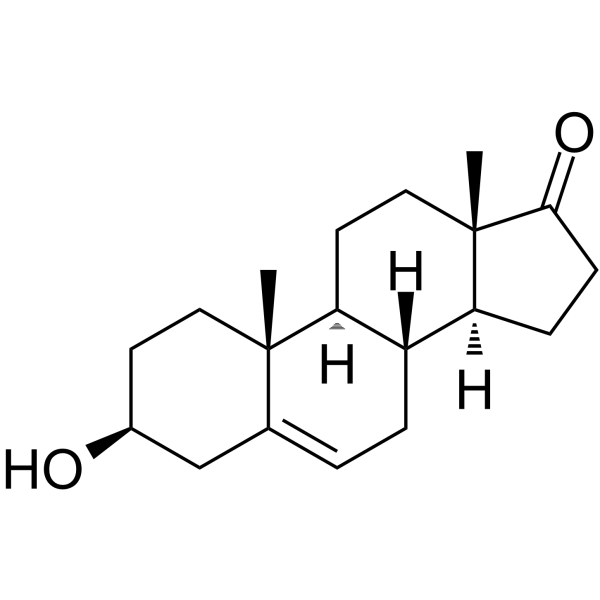
DHEA (Prasterone) is one of the most abundant steroid hormones. DHEA (Prasterone) mediates its action via multiple signaling pathways involving specific membrane receptors and via transformation into androgen and estrogen derivatives (e.g., androgens, estrogens, 7α and 7β DHEA, and 7α and 7β epiandrosterone derivatives) acting through their specific receptors.
|
-
-
- HY-138642
-
|
ARV-471
|
PROTACs
Estrogen Receptor/ERR
|
Cancer
|
|
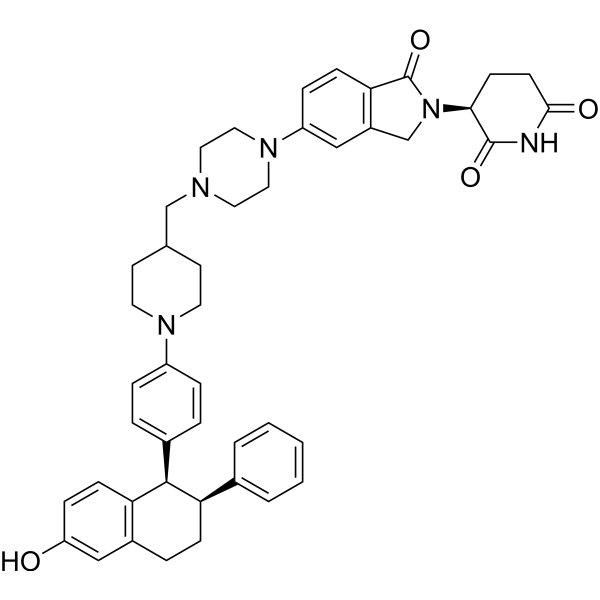
Vepdegestrant (ARV-471) is an orally active PROTAC estrogen receptor degrader against breast cancer. Vepdegestrant is a hetero-bifunctional molecule that facilitates the interactions between estrogen receptor alpha and an intracellular E3 ligase complex. Vepdegestrant leads to the ubiquitylation and subsequent degradation of estrogen receptors via the proteasome. Vepdegestrant robustly degrades ER in ER-positive breast cancer cell lines with a half-maximal degradation concentration (DC50) of about 2 nM .
|
-
-
- HY-103456
-
-
-
- HY-100689
-
|
PPT
|
Estrogen Receptor/ERR
|
Cancer
|
|
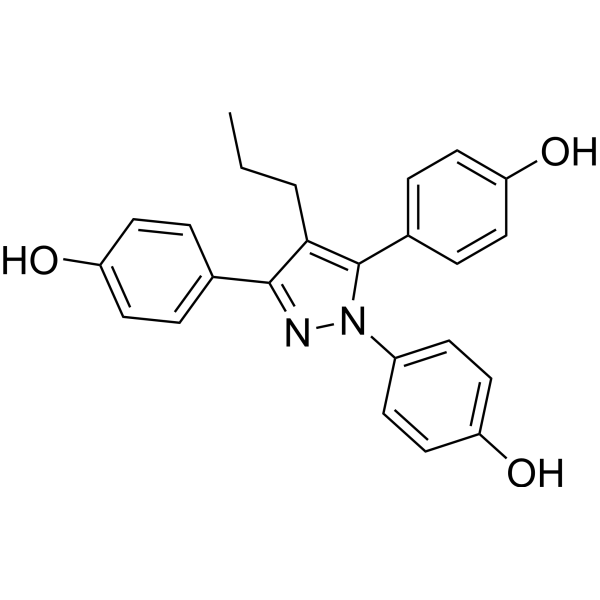
Propyl pyrazole triol (PPT) is a selective estrogen receptor alpha (ERα) agonist. The relative binding affinity of Propyl pyrazole triol for ERα (ERα: 49%) around 410 times higher compared with estrogen receptor beta (ERβ: 0.12%) .
|
-
-
- HY-B0723
-
|
FC-1271a
|
Estrogen Receptor/ERR
Caspase
|
Neurological Disease
Endocrinology
Cancer
|
|
Ospemifene (FC-1271a) is an orally active and non-estrogenic selective estrogen receptor modulator (SERM) with Ki values of 380 and 410 nM for estrogen receptor α (ERα) and ERβ, respectively. Ospemifene inhibits caspase-3 activity. Ospemifene inhibits neuronal degeneration, prevents bone loss, and increases vaginal weight and vaginal epithelial height. Ospemifene has anticancer activity against breast cancer .
|
-
-
- HY-W142080
-
|
α-Methyltryptophan
|
mTOR
Autophagy
Apoptosis
Amino Acid Derivatives
|
Metabolic Disease
Cancer
|
|
α-Methyl-DL-tryptophan (α-Methyltryptophan), a tryptophan derivative, is a selective SLC6A14 blocker. In estrogen receptor (ER)-positive breast cancer cells, α-Methyl-DL-tryptophan inhibits mTOR and activates autophagy and apoptosis. α-Methyl-DL-tryptophan also has the effect of reducing weight .
|
-
-
- HY-N0835
-
-
-
- HY-12870
-
|
|
Estrogen Receptor/ERR
|
Cancer
|
|
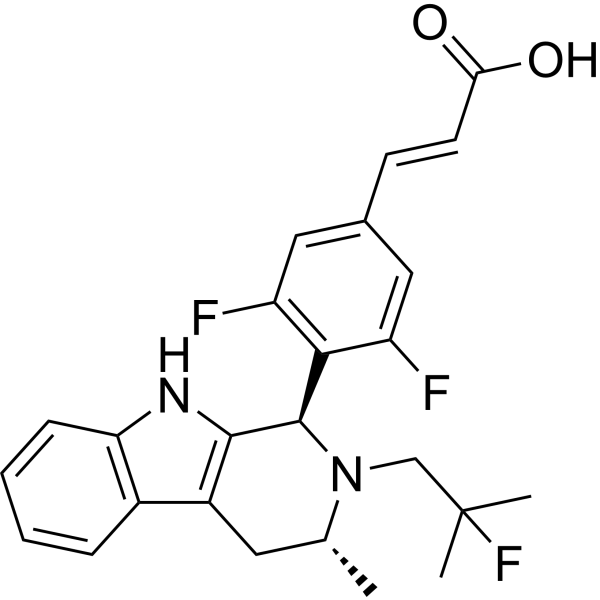
AZD9496 is an effective, selective estrogen receptor (ERα) antagonist with an IC50 of 0.28 nM. AZD9496 is an orally active, selective estrogen receptor degrader (SERD).
|
-
-
- HY-N0233
-
|
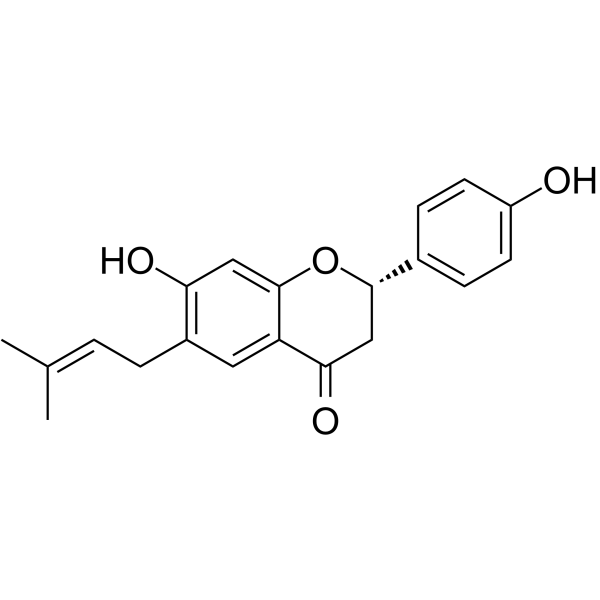
Corylifolin
|
Estrogen Receptor/ERR
|
Cancer
|
|
Bavachin, a flavonoid first isolated from seeds of P. corylifolia, acts as a phytoestrogen that activates the estrogen receptors ERα and ERβ with EC50s of 320 and 680 nM, respectively.
|
-
-
- HY-B0412
-
Estriol
5 Publications Verification
Oestriol
|
Estrogen Receptor/ERR
Endogenous Metabolite
|
Cancer
|
|
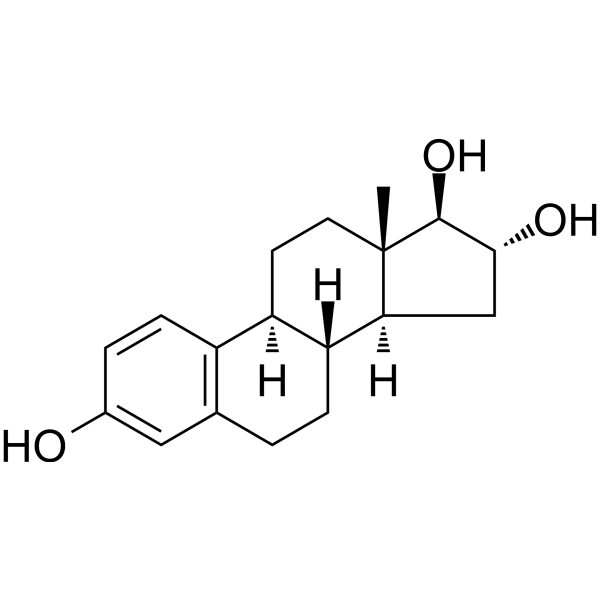
Estriol (Oestriol), an orally active estrogen, is a ERα and ERβ agonist. Estriol is a potent GPR30 antagonist in estrogen receptor-negative breast cancer cells. Estriol can ameliorate disease severity through immunomodulatory mechanisms that decrease tissue inflammation. Estriol has powerful proconvulsant effects .
|
-
-
- HY-103450
-
|
|
Estrogen Receptor/ERR
|
Endocrinology
Cancer
|
|
G-36 is a cell-permeable nonsteroidal antagonist of the G protein-coupled estrogen receptor (GPER/GPR30), which selectively inhibits estrogen-mediated PI3K activation through GPER, rather than Erα. G-36 also inhibits estrogen-mediated calcium mobilization (IC50=112 nM). G-36 is promising for research in the field of cancer .
|
-
-
- HY-15731
-
|
|
Estrogen Receptor/ERR
Endogenous Metabolite
NO Synthase
|
Cardiovascular Disease
Cancer
|
|
Estetrol, an orally active estrogen synthesized exclusively during pregnancy by the human fetal liver, is a selective nuclear estrogen receptor modulator. Estetrol binds ERα as well as ERβ (with a fourfold lower affinity). Estetrol increases eNOS expression/activity and NO synthesis in endothelial cells. Estetrol exerts estrogenic actions on the endometrium or the central nervous system but presents antagonistic effects on the breast. Estetrol can be used in contraception and menopausal hormone research .
|
-
-
- HY-111226
-
-
-
- HY-B1662
-
|
|
Estrogen Receptor/ERR
|
Endocrinology
|
|
Hexestrol is a nonsteroidal synthetic estrogen, with a Ki of 0.06 and 0.06 nM for estrogen receptor alpha (ERα) and ERβ. Hexestrol can be used for the research of the diseases caused by estrogen deficiencym, and it also can increase the weight of cattle .
|
-
-
- HY-132205
-
|
|
Estrogen Receptor/ERR
|
Metabolic Disease
|
|
DS45500853 is an estrogen-related receptor α (ERRα) agonist. DS45500853 inhibits the binding between receptor-interacting protein 140 (RIP140) corepressor peptide (10 nM) and GST-ERRα ligand-binding domain (LBD; 1.2 μM) with an IC50 value of 0.80 μM. DS45500853 can be used for the research of metabolic disorders, including type 2 diabetes mellitus (T2DM) .
|
-
-
- HY-112100
-
|
|
PROTAC-Linker Conjugates for PAC
Estrogen Receptor/ERR
|
Cancer
|
|
MC-Val-Cit-PAB-PROTAC ERα Degrader-1 (compound LP2) consists an ADC linker and a PROTAC, whcih can be conjugated to an antibody to form PACs. MC-Val-Cit-PAB-PROTAC ERα Degrader-1 conjugated to an antibody is a more marked estrogen receptor-alpha (ERα) degrader compared to PROTAC (without Ab) .
|
-
-
- HY-N6710
-
|
|
Estrogen Receptor/ERR
|
Inflammation/Immunology
|
|
α-Zearalenol is a Mycotoxin with high affinity for the estrogen receptors (ER),
α-Zearalenol is the derivative of zearalenone (ZEN), causes reproductive disorders in animals, due to its xenoestrogenic effects .
|
-
-
- HY-113960
-
|
|
Estrogen Receptor/ERR
|
Cancer
|
|
ERRα antagonist-1 (Compound A) is a selective and high affinity agonist for estrogen-related receptor α (ERRα). ERRα antagonist-1 inhibits interaction of ERRα with Proliferator-activated Receptor γ Coactivator-1α (PGC-1α) and PGC-1β, the IC50 values are 170 nM and 180 nM, respectively .
|
-
-
- HY-126109
-
|
|
Estrogen Receptor/ERR
Apoptosis
|
Metabolic Disease
Endocrinology
Cancer
|
|
(±)-8-Prenylnaringenin, a natural prenylated flavonoid, is a potent phytoestrogen. (±)-8-Prenylnaringenin is an orally active selective estrogen receptor modulator (SERM) (Estrogen Receptor/ERR) that inhibits ERα and ERβ with IC50s of 57 nM and 68 nM, respectively. (±)-8-Prenylnaringenin has anticancer effects, and can be used for osteoporosis research .
|
-
-
- HY-125703
-
|
|
Estrogen Receptor/ERR
Apoptosis
|
Infection
Inflammation/Immunology
Endocrinology
Cancer
|
|
Ferutinin, a natural terpenoid compound, is an estrogen receptor ERα agonist and estrogen ERβ-receptor agonist/antagonist with IC50s of 33.1 nM and 180.5 nM, respectively. Ferutinin acts as an electrogenic Ca 2+-ionophore that increases calcium permeability of lipid bilayer membranes, mitochondria. Ferutinin possesses estrogenic, antitumor, antibacterial and antiinflammatory activities .
|
-
-
- HY-N4121
-
|
|
Estrogen Receptor/ERR
Apoptosis
|
Cancer
|
|
Isocurcumenol, an estrogen receptor alpha (ERα) inhibitor isolated from Curcuma zedoaria Rhizomes, possesses anti-tumor acticity, with IC50 values of 99.1μg/mL and 178.2 μg/mL in DLA and KB cells, respectively .
|
-
-
- HY-143201
-
|
|
Estrogen Receptor/ERR
|
Metabolic Disease
|
|
DS20362725 is an estrogen-related receptor α (ERRα) agonist. DS20362725 inhibits the binding between receptor-interacting protein 140 (RIP140) corepressor peptide (10 nM) and GST-ERRα ligand-binding domain (LBD; 1.2 μM) with an IC50 value of 0.6 μM. DS20362725 can be used for the research of metabolic disorders, including type 2 diabetes mellitus (T2DM) .
|
-
-
- HY-W1006471
-
-
-
- HY-143227
-
-
-
- HY-150601
-
-
-
- HY-145341
-
|
|
Estrogen Receptor/ERR
|
Cancer
|
|
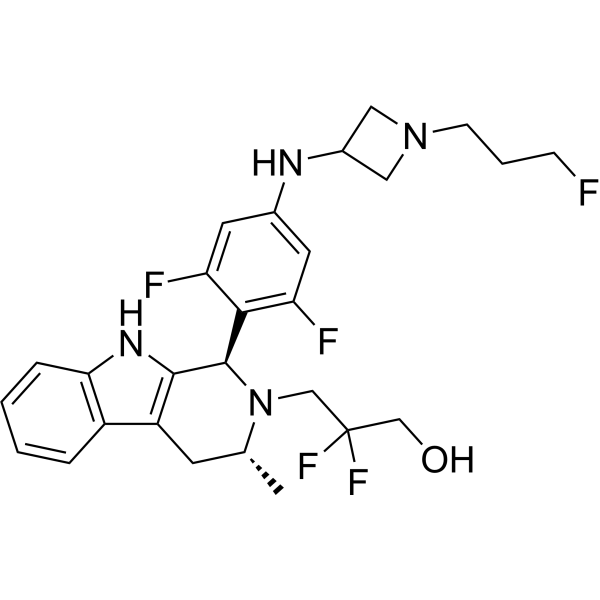
GNE-149 is an orally bioavailable full antagonist of estrogen receptor α (ERα; IC50=0.053 nM). GNE-149 is a selective estrogen receptor degrader (SERD). GNE-149 can be used for the research of breast cancer .
|
-
-
- HY-150803
-
|
|
Ligands for E3 Ligase
|
Cancer
|
|
VHL Ligand 14 (Compound 11) is a VHL ligand for design of PROTAC estrogen receptor α (ERα) degraders, with a binding affinity IC50 of 196 nM .
|
-
-
- HY-112098
-
|
|
PROTACs
Estrogen Receptor/ERR
|
Cancer
|
|
PROTAC ERα Degrader-1 comprises an ubiquitin E3 ligase binding group, a linker and a protein binding group. PROTAC ERα Degrader-1 extracts from patent WO2017201449A1, compound P1. PROTAC ERα Degrader-1 is an estrogen receptor-alpha (ERα) degrader.
|
-
-
- HY-79576
-
|
Oestrone methyl ether; 3-O-Methylestrone
|
Drug Intermediate
|
Cancer
|
|
Estrone 3-methyl ether (Oestrone methyl ether; 3-O-Methylestrone) is a synthetic intermediate useful for synthesis of estrogen receptor modulator .
|
-
-
- HY-150693
-
|
|
Estrogen Receptor/ERR
|
Cancer
|
|
Estrogen receptor β antagonist 2 is a potent and selective estrogen receptor β (ERβ) antagonist with IC50s of 109.10, 0.63 µM for Erα and Erβ, respectively .
|
-
-
- HY-12870A
-
|
|
Estrogen Receptor/ERR
|
Cancer
|
|
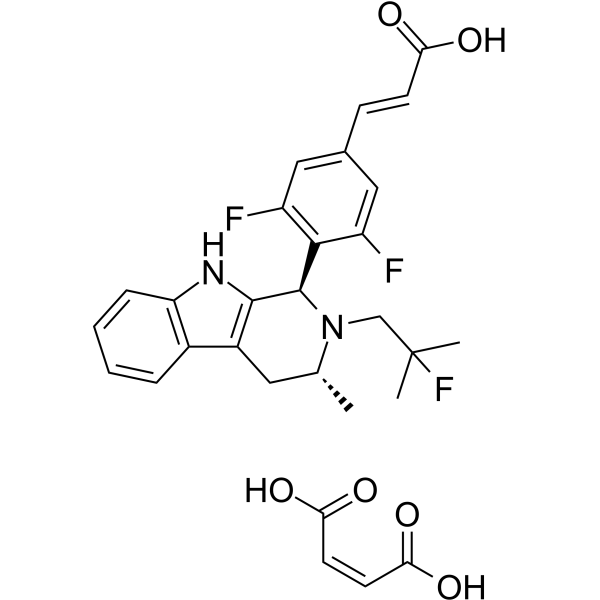
AZD9496 maleate is a potent and selective estrogen receptor (ERα) antagonist with IC50 of 0.28 nM. AZD9496 maleate is an orally bioavailable selective oestrogen receptor degrader (SERD).
|
-
-
- HY-141901S1
-
|
Prasterone-d5; Dehydroisoandrosterone-d5; Dehydroepiandrosterone-d5
|
Isotope-Labeled Compounds
Endogenous Metabolite
Androgen Receptor
|
Cardiovascular Disease
Endocrinology
Cancer
|
|
DHEA-d5 (Prasterone-d5; Dehydroisoandrosterone-d5; Dehydroepiandrosterone-d5) is the deuterium labeled DHEA (HY-14650). DHEA (Prasterone) is one of the most abundant steroid hormones. DHEA (Prasterone) mediates its action via multiple signaling pathways involving specific membrane receptors and via transformation into androgen and estrogen derivatives (e.g., androgens, estrogens, 7α and 7β DHEA, and 7α and 7β epiandrosterone derivatives) acting through their specific receptors.
|
-
-
- HY-144699
-
|
|
Estrogen Receptor/ERR
|
Cancer
|
|
ERRα antagonist-2 (Compound 11) is a potential ERRα (estrogen related receptor α) inverse agonist with an IC50 of 0.80 μM. ERRα antagonist-2 suppresses the migration and invasion of the ER-negative MDA-MB-231 cell line. ERRα antagonist-2 inhibits breast cancer growth in vivo .
|
-
-
- HY-19822D
-
|
RAD1901 S enantiomer
|
Estrogen Receptor/ERR
|
Cancer
|
|
Elacestrant S enantiomer (RAD1901 S enantiomer) is an low activity enantiomer of elacestrant. Elacestrant (RAD1901) is a selective and orally available estrogen receptor (ERR) degrader with IC50 values of 48 and 870 nM for ERα and ERβ, respectively .
|
-
-
- HY-150692
-
|
|
Estrogen Receptor/ERR
|
Cancer
|
|
Estrogen receptor α antagonist 1 (compound 35) is a highly selective antagonist of estrogen receptor α, with IC50s of 0.02, 6.55 and 7.73 μM for estrogen receptor α, estrogen receptor β and MCF-7 cells, respectively. Estrogen receptor α antagonist 1 can be used for the research of cancer .
|
-
-
- HY-128838
-
|
|
PROTACs
Estrogen Receptor/ERR
|
Cancer
|
|
PROTAC ERRα Degrader-1 comprises a MDM2 ligand binding group, a linker and an estrogen-related receptor alpha (ERRa) binding group. PROTAC ERRα Degrader-1 is an PROTAC estrogen-related receptor alpha (ERRa) degrader .
|
-
-
- HY-138642S
-
|
ARV-471-d5
|
Isotope-Labeled Compounds
|
Cancer
|
|
Vepdegestrant-d5 (ARV-471-d5) is the deuterium labeled Vepdegestrant (HY-138642). Vepdegestrant (ARV-471) is an orally active PROTAC estrogen receptor degrader against breast cancer. Vepdegestrant is a hetero-bifunctional molecule that facilitates the interactions between estrogen receptor alpha and an intracellular E3 ligase complex. Vepdegestrant leads to the ubiquitylation and subsequent degradation of estrogen receptors via the proteasome. Vepdegestrant robustly degrades ER in ER-positive breast cancer cell lines with a DC50 of about 2 nM .
|
-
-
- HY-W766497
-
|
|
Isotope-Labeled Compounds
Estrogen Receptor/ERR
|
Inflammation/Immunology
|
|
Alpha-Zearalenol-d7 is the deuterium labeled α-Zearalenol (HY-N6710). α-Zearalenol is a Mycotoxin with high affinity for the estrogen receptors (ER). α-Zearalenol is the derivative of zearalenone (ZEN), causes reproductive disorders in animals, due to its xenoestrogenic effects .
|
-
-
- HY-19822B
-
|
RAD1901 S enantiomer dihydrochloride
|
Estrogen Receptor/ERR
|
Cancer
|
|
Elacestrant S enantiomer dihydrochloride (RAD1901 S enantiomer dihydrochloride) is an low activity enantiomer of elacestrant dihydrochloride. Elacestrant (RAD1901) dihydrochloride is a selective and orally available estrogen receptor (ERR) degrader with IC50 values of 48 and 870 nM for ERα and ERβ, respectively.
|
-
-
- HY-19498
-
|
SIM-688
|
NF-κB
|
Inflammation/Immunology
|
|
WAY-204688 is an estrogen receptor (ER-α) selective, orally active inhibitor of NF-κB transcriptional activity with an IC50 of 122 ± 30 nM for NF-κB-luciferase (NF-κB-luc) in HAECT-1 cells.
|
-
-
- HY-168869
-
|
|
PROTACs
Estrogen Receptor/ERR
|
Cancer
|
|
Tamoxifen-PEG-Clozapine is an estrogen receptor α (ERα) PROTAC degrader. Tamoxifen-PEG-Clozapine degrades ERα via a ubiquitin-proteasome system that uses the ubiquitin protein ligase E3 component N-recognin 5. Tamoxifen-PEG-Clozapine can be used for the research of cancer . (Pink: ERα inhibitor (HY-W271653); Black: linker (HY-168870); Blue: CRBN Ligand (HY-G0021))
|
-
-
- HY-128839
-
|
|
PROTACs
Estrogen Receptor/ERR
|
Cancer
|
|
PROTAC ERRα Degrader-2 comprises a MDM2 ligand binding group, a linker and an estrogen-related receptor alpha (ERRa) binding group. PROTAC ERRα Degrader-2 is an estrogen-related receptor alpha (ERRa) degrader .
|
-
-
- HY-110392
-
|
|
Estrogen Receptor/ERR
|
Cancer
|
|
CMP8, a selective ligand for estrogen receptor, binds to the mutant estrogen receptor ligand binding domain (ERLBD). CMP8 exhibits IC50 values of 29 nM , 41 nM, 1100 nM and 2200 nM for MGERα, MGRERα, hERα and hERβ, respectively .
|
-
-
- HY-N2448
-
|
|
Estrogen Receptor/ERR
|
Endocrinology
|
|
Lindleyin, isolated from Rhei rhizoma, mediates hormonal effects through estrogen receptors. Lindleyin binds to ERα with estrogenic activity .
|
-
-
- HY-111484A
-
|
SRN-927 Racemate
|
Estrogen Receptor/ERR
|
Cancer
|
|
GDC-0927 Racemate (SRN-927 Racemate) is an estrogen receptor (ER) degrader that can effectively inhibit the activity of ER-α with an IC50 value of 0.2 nM and can be used in diseases related to estrogen receptors.
|
-
-
- HY-131404
-
TPBM
2 Publications Verification
|
Estrogen Receptor/ERR
|
Cancer
|
|
TPBM is a potent estrogen receptor α (ERα) inhibitor with an IC50 value of 9 μM for 17β-estradiol (E2)-ERα. TPBM reduces E2·ERα recruitment to an endogenous estrogen-responsive gene. TPBM inhibits E2-dependent growth of ERα-positive cancer cells (IC50=5 μM). TPBM is not toxic to cells and does not affect estrogen-independent cell growth .
|
-
-
- HY-138642A
-
|
(Rac)-ARV-471
|
Estrogen Receptor/ERR
PROTACs
|
Cancer
|
|
(Rac)-Vepdegestrant is the isomer of Vepdegestrant (HY-138642). Vepdegestrant ((R)-Lavandulol) is an orally active PROTAC estrogen receptor degrader against breast cancer. Vepdegestrant is a hetero-bifunctional molecule that facilitates the interactions between estrogen receptor alpha and an intracellular E3 ligase complex. Vepdegestrant leads to the ubiquitylation and subsequent degradation of estrogen receptors via the proteasome. Vepdegestrant robustly degrades ER in ER-positive breast cancer cell lines with a half-maximal degradation concentration (DC50) of about 2 nM .
|
-
-
- HY-144733
-
|
|
Estrogen Receptor/ERR
Apoptosis
|
Cancer
|
|
ERα antagonist 1 (Compound 19d) is a potent, selective, covalent estrogen receptor α (ERα) antagonist. ERα antagonist 1 induces apoptosis and cell cycle G0/G1 phase arrest in MCF-7 cells .
|
-
-
- HY-19822S
-
|
RAD1901-d4
|
Isotope-Labeled Compounds
Estrogen Receptor/ERR
|
Cancer
|
|
Elacestrant-d4 (RAD1901-d4) is a deuterated labeled Elacestrant (HY-19822). Elacestrant (RAD1901) is a selective estrogen receptor (estrogen receptor, ER) degrader (SERD) with oral activity, with IC50 values of 48 and 870 nM for ERα and ERβ, respectively. Elacestrant can also effectively inhibit the growth of ER + breast cancer cell lines both in vitro and in vivo.
|
-
-
- HY-W114419
-
|
|
Estrogen Receptor/ERR
mTOR
|
Cardiovascular Disease
Metabolic Disease
|
|
Bisphenol C is an estrogen receptor-α (ERα) agonist and an ERβ antagonist, with IC50 values of 2.65 nM for ERα and 1.94 nM for ERβ. Bisphenol C is a material of manufacturing polyester polymers like polycarbonate, is widely used in daily items like water bottles, food packaging, textile and so on .
|
-
- HY-W005186
-
|
6-Bromochromen-2-one
|
17β-HSD
|
Infection
|
|
6-Bromocoumarin (compound 34) is a potential anti-bacterial agent, with no inhibition against 17β-HSD1. 6-Bromocoumarin exhibtis affinity for α and β estrogen receptors .
|
-
- HY-107550
-
|
|
HDAC
|
Cancer
|
|
NCT-14b is a HDAC6-selective inhibitor. NCT-14b blocks the growth of estrogen receptor α-positive breast cancer MCF-7 cells .
|
-
- HY-135590
-
|
|
Estrogen Receptor/ERR
|
Endocrinology
|
|
Raloxifene 4-Monomethyl Ether (Compound 37) is a Raloxifene derivative that inhibits estrogen receptor α. Raloxifene 4-Monomethyl Ether inhibits MCF-7 cells with an IC50 of 1 μM and a pIC50 of 6 .
|
-
- HY-144138
-
|
|
Estrogen Receptor/ERR
|
Cancer
|
|
Estrogen receptor antagonist 2 is a selective estrogen receptor downregulator. Estrogen (E2) and estrogen alpha receptor (ERα) are important drivers of breast cancer development. Estrogen receptor antagonist 2 has the potential for the research of breast cancer diseases (extracted from patent WO2021228210A1, compound 3) .
|
-
- HY-144137
-
|
|
Estrogen Receptor/ERR
|
Cancer
|
|
Estrogen receptor antagonist 1 is a selective estrogen receptor antagonist. Estrogen (E2) and estrogen alpha receptor (ERα) are important drivers of breast cancer development. Estrogen receptor antagonist 1 has the potential for the research of breast cancer diseases (extracted from patent WO2021249533A1, compound 4) .
|
-
- HY-163467
-
-
- HY-138690
-
|
|
Estrogen Receptor/ERR
|
Endocrinology
|
|
Estrogen receptor modulator 6 (compound 3a) is a selective estrogen receptor (ER) β agonist (Ki=0.44 nM). Estrogen receptor modulator 6 displays 19-fold selectivity for ERβ over ERα(Ki=8.4 nM) .
|
-
- HY-B0723S2
-
|
FC-1271a-d5
|
Isotope-Labeled Compounds
Estrogen Receptor/ERR
|
Cancer
|
|
Ospemifene-d5 (FC-1271a-d5) is deuterium labeled Ospemifene. Ospemifene is a non-estrogen selective estrogen receptor modulator (SERM), with Kis of 380 and 410 nM for estrogen receptor α (ERα) and ERβ, respectively. Ospemifene can be used for the research of vaginal atrophy and breast cancer .
|
-
- HY-153700
-
|
|
Estrogen Receptor/ERR
|
Endocrinology
|
|
Estrogen receptor modulator 8 (compound 4) is an orally active inhibitor of Estrogen Receptor/ERR α (IC50=0.437 nM, MCF-7 cells). Estrogen receptor modulator 8 inhibits MCF-7 cells proliferation with an IC50 value of 0.1 nM .
|
-
- HY-128838A
-
|
|
PROTACs
Estrogen Receptor/ERR
|
Others
|
|
(rel)-PROTAC ERRα Degrader-1 is a relative configuration of PROTAC ERRα Degrader-1. PROTAC ERRα Degrader-1 comprises a MDM2 ligand binding group, a linker and an estrogen-related receptor alpha (ERRa) binding group. PROTAC ERRα Degrader-1 is an estrogen-related receptor alpha (ERRa) degrader .
|
-
- HY-146424
-
-
- HY-107045
-
|
|
Estrogen Receptor/ERR
|
Endocrinology
|
|
CHF 4227 free base is an orally active and selective estrogen receptor modulator (SERM) with high affinity to the human estrogen receptor-α and -β (Ki values of 0.017 nM and 0.099 nM, respectively) .
|
-
- HY-B0723S
-
|
FC-1271a-d4
|
Isotope-Labeled Compounds
Estrogen Receptor/ERR
|
Cancer
|
|
Ospemifene-d4 is a deuterium labeled Ospemifene. Ospemifene is a selective and orally active estrogen receptor modulator for the prevention of osteoporosis with IC50 values of 827 nM and 1633 nM for estrogen receptor α (ERα) and ERβ, respectively. Ospemifene has bone-sparing, antitumor, and cholesterol-lowering effects .
|
-
- HY-B1662R
-
|
|
Reference Standards
Estrogen Receptor/ERR
|
Endocrinology
|
|
Hexestrol (Standard) is the analytical standard of Hexestrol. This product is intended for research and analytical applications. Hexestrol is a nonsteroidal synthetic estrogen, with a Ki of 0.06 and 0.06 nM for estrogen receptor alpha (ERα) and ERβ. Hexestrol can be used for the research of the diseases caused by estrogen deficiencym, and it also can increase the weight of cattle .
|
-
- HY-100689R
-
|
PPT (Standard)
|
Reference Standards
Estrogen Receptor/ERR
|
Cancer
|
|
Propyl pyrazole triol (Standard) is the analytical standard of Propyl pyrazole triol. This product is intended for research and analytical applications. Propyl pyrazole triol (PPT) is a selective estrogen receptor alpha (ERα) agonist. The relative binding affinity of Propyl pyrazole triol for ERα (ERα: 49%) around 410 times higher compared with estrogen receptor beta (ERβ: 0.12%) .
|
-
- HY-119418
-
|
|
Estrogen Receptor/ERR
|
Cancer
|
|
Desketoraloxifene is an estrogen receptors alpha (ERα) activator at an AP-1 site. Desketoraloxifene can be used for the research of osteoporosis and breast cancer .
|
-
- HY-178463
-
|
|
Estrogen Receptor/ERR
|
Cancer
|
|
F0840-0093 is a highly selective estrogen receptor α (ERα) degrader. F0840-0093 exhibits potent antiproliferative activity against T47D cells with an IC50 value of 4.65 μM. F0840-0093 is promising for research of estrogen receptor-positive (ER+) breast cancer .
|
-
- HY-111845
-
-
- HY-163680
-
|
|
Estrogen Receptor/ERR
Cytochrome P450
|
Cancer
|
|
ERα degrader 9 is a dual targeting ligand for estrogen receptor α (ERα) and aromatase (ARO). ERα degrader 9 can be utilized for synthesis of PROTAC ERα Degrader-9 (HY-163679) .
|
-
- HY-146267
-
|
|
Estrogen Receptor/ERR
|
Cancer
|
|
ERα degrader 5 (Compound 40) is a selective, orally bioavailable estrogen receptor (ER) degrader (SERD) with an EC50 of 1.1 nM against ERα. ERα degrader 5 shows antitumor effect in vivo .
|
-
- HY-161692
-
|
|
Estrogen Receptor/ERR
|
Cancer
|
|
ERα degrader 8 (Compound 18j) is a selective Estrogen Receptor degrader. ERα degrader 8 is degrader to MCF-7 cells with IC50 value of 0.15 μM .
|
-
- HY-143226
-
|
|
Estrogen Receptor/ERR
|
Metabolic Disease
|
|
DK1 is a potent modulator of estrogen related receptor. DK1 has an ability in reducing blood glucose, and impacts the activity of ERRα receptor. DK1 has the potential for the research of diabetes .
|
-
- HY-N6710S
-
-
- HY-N6710R
-
|
|
Reference Standards
Estrogen Receptor/ERR
|
Inflammation/Immunology
|
|
α-Zearalenol (Standard) is the analytical standard of α-Zearalenol. This product is intended for research and analytical applications. α-Zearalenol is a Mycotoxin with high affinity for the estrogen receptors (ER), α-Zearalenol is the derivative of zearalenone (ZEN), causes reproductive disorders in animals, due to its xenoestrogenic effects .
|
-
- HY-170339
-
-
- HY-19822S3
-
|
RAD1901-d6
|
Isotope-Labeled Compounds
Estrogen Receptor/ERR
|
Cancer
|
|
Elacestrant-d6 (RAD1901-d6) is a deuterated labeled Elacestrant (HY-19822). Elacestrant is a selective estrogen receptor (estrogen receptor, ER) degrader (SERD) with oral activity, with IC50 values of 48 and 870 nM for ERα and ERβ, respectively. Elacestrant can also effectively inhibit the growth of ER + breast cancer cell lines both in vitro and in vivo.
|
-
- HY-163712
-
|
|
Estrogen Receptor/ERR
|
Endocrinology
|
|
17-Epiestriol is an estrogen metabolite and a selective estrogen receptor (ER) β agonist. 17-epiestriol inhibits the mRNA and protein expression of the vascular cell adhesion molecule VCAM-1 induced by tumor necrosis factor α (TNFα). 17-epiestriol also inhibits TNFα-induced VCAM-1 expression and prevents NF-κB migration to the nucleus. 17-Epiestriol also induces the mRNA and protein expression of endothelial nitric oxide synthase .
|
-
- HY-103456R
-
|
|
Reference Standards
Estrogen Receptor/ERR
|
Cancer
|
|
PHTPP (Standard) is the analytical standard of PHTPP. This product is intended for research and analytical applications. PHTPP is a selective estrogen receptor β (ERβ) antagonist with 36-fold selectivity over ERα .
|
-
- HY-155492
-
|
|
Estrogen Receptor/ERR
|
Cancer
|
|
ERα degrader 7 (compound B1) is a potent ERα degrader with an IC50 of 14.6 nM and a DC50 of 9.7 nM, respectively. ERα degrader 7 shows excellent antitumor activity, indicating its potential to evolve as a promising selective estrogen-receptor degrader (SERD) for breast cancer research .
|
-
- HY-125091
-
|
|
Estrogen Receptor/ERR
|
Cancer
|
|
LY2066948 is a selective and orally active estrogen receptor modulator (SERM). LY2066948 has high affinity for estrogen receptors ERα and ERβ (Ki: 0.51 and 1.36 nM respectively) and shows potent antiestrogenic activity. LY2066948 blocks uterine weight gain induced by Ethynyl estradiol (HY-B0216) in immature rats. LY2066948 can be used for research of uterine fibroids and myomas .
|
-
- HY-123664
-
|
LY133314
|
Estrogen Receptor/ERR
|
Cancer
|
|
Trioxifene mesylate (LY133314) is an orally active and selective estrogen receptor (ER) modulator with human ERα IC50 of 203.49 nM and Ki of 20.84 nM. Trioxifene mesylate binds estradiol receptors, inhibits ERα-mediated gene expression, reduces circulating gonadotrophin levels. Trioxifene mesylate can be used for the research of advanced breast cancer and androgen-independent, metastatic prostatic adenocarcinoma .
|
-
- HY-130499
-
|
|
Target Protein Ligand-Linker Conjugates
|
Cancer
|
|
ERRα Ligand-Linker Conjugates 1 incorporates a ligand for estrogen-related receptor alpha (ERRα), and a PROTAC linker, which recruit E3 ligases MDM2. ERRα Ligand-Linker Conjugates 1 can be used in the synthesis of a series of PROTACs, such as PROTAC ERRalpha Degrader-1 (HY-128838). PROTAC ERRalpha Degrader-1 is an ERRα degrader .
|
-
- HY-139999
-
|
|
E3 Ligase Ligand-Linker Conjugates
|
Cancer
|
|
LCL-PEG3-N3 is a decoy oligonucleotide ligand for E3 ligase which can be used for developing chimeric molecules LCL-ER(dec), degrading the estrogen receptor . LCL-PEG3-N3 is a click chemistry reagent, it contains an Azide group and can undergo copper-catalyzed azide-alkyne cycloaddition reaction (CuAAc) with molecules containing Alkyne groups. It can also undergo strain-promoted alkyne-azide cycloaddition (SPAAC) reactions with molecules containing DBCO or BCN groups.
|
-
- HY-139999A
-
|
|
E3 Ligase Ligand-Linker Conjugates
|
Cancer
|
|
LCL-PEG3-N3 (hydrochloride) is a decoy oligonucleotide ligand for E3 ligase which can be used for developing chimeric molecules LCL-ER(dec), degrading the estrogen receptor . LCL-PEG3-N3 (hydrochloride) is a click chemistry reagent, it contains an Azide group and can undergo copper-catalyzed azide-alkyne cycloaddition reaction (CuAAc) with molecules containing Alkyne groups. It can also undergo strain-promoted alkyne-azide cycloaddition (SPAAC) reactions with molecules containing DBCO or BCN groups.
|
-
- HY-160562
-
|
|
PROTACs
Estrogen Receptor/ERR
|
Cancer
|
|
PROTAC ERα Degrader-7 (compound i-320) is a potent estrogen receptor alpha(ERα) PROTAC degrader with a DC50 value of 0.000006 µM. PROTAC ERα Degrader-7 comprises a cereblon-binding moiety LBM linked to a ligand ERBM that binds ERα and comprises a benzofused partially saturated 6-membered carbocyclic or heterocyclic ring .
|
-
- HY-179510
-
|
|
Estrogen Receptor/ERR
|
Cancer
|
|
CDD-1274 is an ERα (Estrogen receptor α) variant inhibitor. CDD-1274 induces proteasomal degradation of ERα variants in breast cancer cell lines and causes Y537S ERα degradation. CDD-1274 potently blocks ligand-dependent and ligand-independent ER signaling in endocrine-resistant breast cancer cells. CDD-1274 can be used for the study of breast cancer .
|
-
- HY-183187
-
|
|
Estrogen Receptor/ERR
COX
|
Cancer
|
|
4H-Chromen-4-one-o-carborane is an estrogen receptor (ER) agonist, with an EC50 of 0.9 μM for ERα and an EC50 of 11.1 μM for ERβ. 4H-Chromen-4-one-o-carborane also acts as an inhibitor of COX-1 and COX-2, with an IC50 of 6.6 μM for COX-1 and an IC50 of 17.7 μM for COX-2 .
|
-
- HY-164726
-
|
|
Estrogen Receptor/ERR
|
Others
|
|
Estrogen receptor modulator 11 (Compound 27) is a tetrahydroisoquinoline derivative. Estrogen receptor modulator 11 has a certain affinity for estrogen receptors (ER), with IC50 values of 285 nM and 421 nM for ERα and ERβ, respectively. Estrogen receptor modulator 11 lacks antagonist activity in the MCF-7 cellular assay .
|
-
- HY-B1662S3
-
|
|
Isotope-Labeled Compounds
MEK
Autophagy
Apoptosis
|
Cancer
|
|
Hexestrol-d4 is the deuterium labeled Hexestrol (HY-B1662). Hexestrol is a nonsteroidal synthetic estrogen, with a Ki of 0.06 and 0.06 nM for estrogen receptor alpha (ERα) and ERβ. Hexestrol can be used for the research of the diseases caused by estrogen deficiencym, and it also can increase the weight of cattle .
|
-
- HY-W615671
-
|
|
Estrogen Receptor/ERR
|
Others
|
|
4,4'-(Cyclohexylidenemethylene)diphenol (Compound 2) is a symmetric cyclic nonsteroidal estrogen. 4,4'-(Cyclohexylidenemethylene)diphenol has high binding affinity for estrogen receptors ERα and ERβ .
|
-
- HY-168644
-
-
- HY-170806
-
|
|
Estrogen Receptor/ERR
|
Cancer
|
|
ERα degrader 12 (Compound RA3) is an estrogen receptor α (ERα) degrader with antitumor properties. ERα degrader 12 induces pronounced tumor growth inhibition in a breast cancer xenograft mouse model .
|
-
- HY-168101
-
|
|
Estrogen Receptor/ERR
|
Cancer
|
|
ERα degrader 11 (compound B16) is a selective ERα degrader that can be used as an estrogen receptor probe to investigate ER status in ER-positive breast cancer cells .
|
-
- HY-N6709S1
-
|
α-Zearalanol-13C18
|
Isotope-Labeled Compounds
|
Endocrinology
|
|
Zeranol- 13C18 (α-Zearalanol- 13C18) is the 13C-labeled Zeranol. Zeranol, a metabolite of the mycoestrogen zearalenone, is an estrogen receptor agonist. Zeranol is used as a growth promoter of livestock due to its strong estrogenic activity .
|
-
- HY-N6710S1
-
|
|
Isotope-Labeled Compounds
|
Inflammation/Immunology
|
|
α-Zearalenol- 13C18 is the 13C-labeled α-Zearalenol. α-Zearalenol is a Mycotoxin with high affinity for the estrogen receptors (ER). α-Zearalenol is the derivative of zearalenone (ZEN), causes reproductive disorders in animals, due to its xenoestrogenic effects .
|
-
- HY-N6709S2
-
|
α-Zearalanol-d5-1
|
Isotope-Labeled Compounds
Estrogen Receptor/ERR
|
Endocrinology
|
|
Zeranol-d5-1 (α-Zearalanol-d5-1) is the deuterium labeled Zeranol (HY-N6709). Zeranol, a metabolite of the mycoestrogen zearalenone, is an estrogen receptor agonist. Zeranol is used as a growth promoter of livestock due to its strong estrogenic activity .
|
-
- HY-181172
-
|
|
Estrogen Receptor/ERR
|
Cancer
|
|
FRAGHIT-4 is an estrogen receptor alpha (ERα) inhibitor. FRAGHIT-4 exhibits antineoplastic activity against breast cancer via targeting ER signaling. FRAGHIT-4 can be used for the research of breast cancer .
|
-
- HY-168099
-
|
|
Estrogen Receptor/ERR
|
Cancer
|
|
ERα degrader 10 is a selective and orally active estrogen receptor α (ERα) degrader. ERα degrader 10 exhibits potent ERα binding affinity (IC50 of 24.0 nM) and degradation ability (EC50 of 5.3 nM). ERα degrader 10 degrades ERα through the proteasome-mediated pathway. ERα degrader 10 can be used for the study of breast cancer .
|
-
- HY-43322
-
|
|
17β-HSD
|
Cancer
|
|
7-Coumaryl triflate is a type 17β-HSD1 inhibitor of 17β-hydroxysteroid dehydrogenase. Its IC50 is 360 nM and Ki is 173 nM. 7-Coumaryl triflate shows selectivity for 17β-HSD2 and has no detectable affinity for ERα or ERβ. 7-Coumaryl triflate can be used in related research on hormone-dependent breast cancer .
|
-
- HY-135529
-
|
LY133314 free base
|
Estrogen Receptor/ERR
|
Cancer
|
|
Trioxifene (LY133314 free base) is an orally active and selective estrogen receptor (ER) modulator with human ERα IC50 of 203.49 nM and Ki of 20.84 nM. Trioxifene binds estradiol receptors, inhibits ERα-mediated gene expression, reduces circulating gonadotrophin levels. Trioxifene can be used for the research of advanced breast cancer and androgen-independent, metastatic prostatic adenocarcinoma .
|
-
- HY-135584
-
|
|
Estrogen Receptor/ERR
|
Endocrinology
|
|
Raloxifene 6-Monomethyl Ether (Compound 7) is a Raloxifene derivative that inhibits estrogen receptor α. Raloxifene 4-Monomethyl Ether inhibits MCF-7 cells with an IC50 of 250 nM and a pIC50 of 6.6 .
|
-
- HY-181345
-
|
|
Estrogen Receptor/ERR
|
Cancer
|
|
OP-1690 is a complete estrogen receptor (ERα) antagonist (CERAN), with pIC50 values of 7.5 and 7.9 in alkaline phosphatase (AP) activity assay and TR-FRET assay, respectively. OP-1690 modulates receptor function by inducing ERα tetramerization, effectively induces ERα degradation, inhibits target gene transcription, but exhibits low antiproliferative potency. OP-1690 can be used for breast cancer research .
|
-
- HY-128527
-
|
|
PROTAC-Linker Conjugates for PAC
Estrogen Receptor/ERR
|
Cancer
|
|
PROTAC ER Degrader-3 is an intermediate for synthesis of PAC. PAC, consists the ADCs linker and PROTACs, conjugated to an antibody. PAC extracts from patent WO2017201449A1, compound LP2. PAC conjugated to an antibody is a more marked estrogen receptor-alpha (ERα) degrader compared to PROTAC (without Ab) .
|
-
- HY-10426
-
|
|
Estrogen Receptor/ERR
Autophagy
|
Cancer
|
|
XCT-790 is a potent and selective inverse agonist for ERRα with an IC50 value of 0.37 μM. XCT-790 induces cell death in chemotherapeutic resistant cancer cells. XCT-790 (Compound 12) is inactive against ERRγ and the estrogen receptors ERα and ERβ .
|
-
- HY-128528
-
|
|
PROTAC-Linker Conjugates for PAC
Estrogen Receptor/ERR
|
Cancer
|
|
PROTAC ER Degrader-2 is an intermediate for synthesis of PAC. PAC, consists the ADCs linker and PROTACs, conjugated to an antibody. PAC extracts from patent WO2017201449A1, compound LP2. PAC conjugated to an antibody is a more marked estrogen receptor-alpha (ERα) degrader compared to PROTAC (without Ab) .
|
-
- HY-126932
-
|
|
Estrogen Receptor/ERR
|
Cancer
|
|
TTC-352 is an orally bioavailable selective human estrogen receptor (ER) α partial agonist (ShERPA). TTC-352 inhibits the growth of three ER+ breast cancer cells. TTC-352 induces tumor regression accompanied by exit of ERα from the nucleus to extranuclear sites .
|
-
- HY-132194
-
|
|
Estrogen Receptor/ERR
|
Cancer
|
|
ERα degrader-2 is a selective estrogen receptor degrader (SERD) with potent binding affinity with ERα (IC50=17.1 nM), good degradation efficacy (EC50=0.3 nM). ERα degrader-2 exhibits favorable pharmacokinetic properties and excellent agentgability, can be used for HER + breast cancer research .
|
-
- HY-175785
-
|
|
Estrogen Receptor/ERR
Aryl Hydrocarbon Receptor
Apoptosis
MDM-2/p53
|
Cancer
|
|
X15695 is selective and orally active estrogen receptor (ERα) degrader. X15695 is an aryl hydrocarbon receptor (AHR) ligand. X15695 enables AHR to form a complex with the ERα, promoting its proteasomal degradation. X15695 inhibits the breast cancer cells proliferation, promotes cell cycle block and induces apoptosis. X15695 can be used for the study of breast cancer .
|
-
- HY-145071
-
|
|
PROTACs
Estrogen Receptor/ERR
|
Cancer
|
|
PROTAC ERα Y537S degrader-1 comprises a ubiquitin E3 ligase binding group, a linker and a protein binding group. PROTAC ERα Y537S degrader-1 extracts from patent WO2021143822, example 12. PROTAC ERα Y537S degrader-1 is an estrogen receptor-alpha (ERα) Y537S degrader .
|
-
- HY-19822S1
-
|
RAD1901-d4-1
|
Isotope-Labeled Compounds
Estrogen Receptor/ERR
|
Cancer
|
|
Elacestrant-d4-1 is the deuterium labeled Elacestrant (HY-19822). Elacestrant is an orally available and selective estrogen receptor degrader (SERD) with IC50s of 48 and 870 nM for ERα and ERβ, respectively .
|
-
- HY-155196
-
|
|
Estrogen Receptor/ERR
|
Cancer
|
|
ER degrader 6 (compound 35s) is a potent Estrogen Receptor (ER)α degrader. ER degrader 6 disrupts the microtubule network by restraining tubulin polymerization. ER degrader 6 suppresses tumor growth without noticeable poisonousness .
|
-
- HY-176486
-
|
|
Estrogen Receptor/ERR
|
Cancer
|
|
ER degrader 11 (Compound 5) is an orally active, brain-penetrant and selective estrogen receptor (ER) degrader (ERα IC50=1.6 nM). ER degrader 11 is promising for research of breast cancer brain metastasis .
|
-
- HY-W744272
-
|
|
Isotope-Labeled Compounds
Estrogen Receptor/ERR
Endogenous Metabolite
NO Synthase
|
Cardiovascular Disease
Cancer
|
|
Estetrol-d3 is the deuterium labeled Estetrol (HY-15731). Estetrol, an orally active estrogen synthesized exclusively during pregnancy by the human fetal liver, is a selective nuclear?estrogen receptor?modulator. Estetrol binds?ERα?as well as?ERβ?(with a fourfold lower affinity). Estetrol increases?eNOS?expression/activity and NO synthesis in endothelial cells. Estetrol exerts estrogenic actions on the endometrium or the central nervous system but presents antagonistic effects on the breast. Estetrol can be used in contraception and menopausal hormone research.
|
-
- HY-144306
-
|
|
Estrogen Receptor/ERR
Apoptosis
|
Cancer
|
|
ERα degrader 4 is an excellent and selective estrogen receptor α (ERα) degrader (IC50 of 0.31, 0.41 and 0.48 μM in MDA-MB-231, MCF-7 and MCF-7/ADR cells, respectively). ERα degrader 4 has potent inhibitory activity against MCF-7 cell lines. ERα degrader 4 is a potential SERDs candidate for the research of breast cancer .
|
-
- HY-136186
-
|
VH032-C7-amine
|
E3 Ligase Ligand-Linker Conjugates
|
Cancer
|
|
(S,R,S)-AHPC-C7-amine (VH032-C7-amine) is a synthesized E3 ligase ligand-linker conjugate that incorporates the VH032 based VHL ligand and a linker used for estrogen-related receptor α (ERRα) PROTAC degrader .
|
-
- HY-136186B
-
|
VH032-C7-amine hydrochloride
|
E3 Ligase Ligand-Linker Conjugates
|
Cancer
|
|
(S,R,S)-AHPC-C7-amine (VH032-C7-amine) hydrochloride is a synthesized E3 ligase ligand-linker conjugate that incorporates the VH032 based VHL ligand and a linker used for estrogen-related receptor α (ERRα) PROTAC degrader .
|
-
- HY-132294A
-
|
|
Estrogen Receptor/ERR
|
Cancer
|
|
(1S,3R)-GNE-502 (compound 179) is a potent ERα degrader with an EC50 value of 13 nM against ERα in MCF7 HCS. (1S,3R)-GNE-502 can be used to research cancer related with estrogen receptor .
|
-
- HY-16031A
-
|
NSC710464
|
Aryl Hydrocarbon Receptor
Integrin
Drug Intermediate
DNA/RNA Synthesis
|
Cancer
|
|
AFP464 (NSC710464) is a prodrug of Aminoflavone (HY-132974) and an agonist of the aryl hydrocarbon receptor (AhR). AFP464 downregulates the expression of α6-integrin (α6-integrin), inhibits breast tumor growth, reduces the population of tumor-initiating cells, disrupts mammosphere structure, induces the formation of mucin lake clusters, triggers DNA damage, and exerts antiproliferative activity. AFP464 is rapidly converted to Aminoflavone by nonspecific esterases in plasma and cell culture media. AFP464 is applicable to research related to breast cancer .
|
-
- HY-B0141E
-
|
ent-β-Estradiol; ent-17β-Estradiol; ent-17β-Oestradiol
|
Estrogen Receptor/ERR
|
Endocrinology
|
|
Ent-Estradiol is the enantiomer of Estradiol (HY-B0141). Ent-Estradiol is a highly selective estrogen receptor ligand, but does not possess estrogenic activity. Ent-Estradiol displays IC50 values of 24.9 nM, 9.59 nM and 8.17 nM for human, rat and mouse ERβ, and 151 nM, 246 nM and 268 nM for human, rat and mouse ERα, respectively. Ent-Estradiol can be used for the study of menopausal physiological changes .
|
-
- HY-163712S
-
|
|
Isotope-Labeled Compounds
Estrogen Receptor/ERR
|
Endocrinology
|
|
17-Epiestriol-d5-1 is the deuterium labeled 17-Epiestriol (HY-163712). 17-Epiestriol is an estrogen metabolite and a selective estrogen receptor (ER) β agonist. 17-epiestriol inhibits the mRNA and protein expression of the vascular cell adhesion molecule VCAM-1 induced by tumor necrosis factor α (TNFα). 17-epiestriol also inhibits TNFα-induced VCAM-1 expression and prevents NF-κB migration to the nucleus. 17-Epiestriol also induces the mRNA and protein expression of endothelial nitric oxide synthase .
|
-
- HY-W036120
-
|
2,2′,4,4′-Tetrahydroxybenzophenone
|
Environmental Pollutants
Glycosidase
Estrogen Receptor/ERR
Pregnane X Receptor (PXR)
|
Metabolic Disease
Endocrinology
|
|
Benzophenone-2 (2,2',4,4'-Tetrahydroxybenzophenone) is an organic ultraviolet absorber that is widely used in personal care products and industrial products such as plastics and coatings. Benzophenone-2 is an endocrine disruptor that can interfere with estrogen receptors (ERα receptor) and pregnane X receptor (PXR receptor) activity, leading to reproductive toxicity, immune disorders, and metabolic abnormalities. Benzophenone-2 can inhibit the activity of α-glucosidase (IC50 = 49.72 μM), and can be used for research on diabetes .
|
-
- HY-N0233R
-
|
Corylifolin (Standard)
|
Reference Standards
Estrogen Receptor/ERR
|
Cancer
|
|
Bavachin (Standard) is the analytical standard of Bavachin. This product is intended for research and analytical applications. Bavachin, a flavonoid first isolated from seeds of P. corylifolia, acts as a phytoestrogen that activates the estrogen receptors ERα and ERβ with EC50s of 320 and 680 nM, respectively.
|
-
- HY-174131
-
|
|
Estrogen Receptor/ERR
|
Cancer
|
|
PVTX-321 (Compound 16a) is an orally active estrogen receptor α (ERα) degrader. PVTX-321 can potently degrade ERα (DC50=0.15 nM in MCF-7 cells) and also has inhibitory activity against mutant ERα (IC50=59 nM). PVTX-321 is promising for research of ER+/HER2- breast cancer .
|
-
- HY-125675
-
|
|
Estrogen Receptor/ERR
|
Cancer
|
|
VPC-16606 is a selective inhibitor targeting the activation function 2 (AF2) domain of estrogen receptor α (ERα). VPC-16606 blocks the interaction between ERα and coactivators, inhibits the activity of both wild-type and clinically drug-resistant mutant ERα, and exerts inhibitory effects on hormone-resistant breast cancer cells. VPC-16606 can be used in breast cancer research .
|
-
- HY-181171
-
|
|
Estrogen Receptor/ERR
|
Cancer
|
|
HIT-2 is an estrogen receptor alpha (ERα) inhibitor that can bind to the ERα ligand binding domain. HIT-2 forms stable interactions including hydrogen bonds, π-π stacking, and hydrophobic contacts to disrupt ERα-driven signaling. HIT-2 exhibits antineoplastic activity against breast cancer. HIT-2 can be used for the research of breast cancer .
|
-
- HY-103450R
-
|
|
Reference Standards
Estrogen Receptor/ERR
|
Endocrinology
Cancer
|
|
G36 (Standard) is the analytical standard of G36 (HY-103450). This product is intended for research and analytical applications. G-36 is a cell-permeable nonsteroidal antagonist of the G protein-coupled estrogen receptor (GPER/GPR30), which selectively inhibits estrogen-mediated PI3K activation through GPER, rather than Erα. G-36 also inhibits estrogen-mediated calcium mobilization (IC50=112 nM). G-36 is promising for research in the field of cancer .
|
-
- HY-15731S1
-
|
|
Isotope-Labeled Compounds
NO Synthase
Endogenous Metabolite
Estrogen Receptor/ERR
|
Cardiovascular Disease
|
|
Estetrol-d4 (Major) is the deuterium labeled Estetrol (HY-15731). Estetrol, an orally active estrogen synthesized exclusively during pregnancy by the human fetal liver, is a selective nuclear estrogen receptor modulator. Estetrol binds ERα as well as ERβ (with a fourfold lower affinity). Estetrol increases eNOS expression/activity and NO synthesis in endothelial cells. Estetrol exerts estrogenic actions on the endometrium or the central nervous system but presents antagonistic effects on the breast. Estetrol can be used in contraception and menopausal hormone research .
|
-
- HY-B0742
-
|
17α-Hydroxyprogesterone hexanoate; 17α-Hydroxyprogesterone caproate
|
Progesterone Receptor
|
Endocrinology
|
|
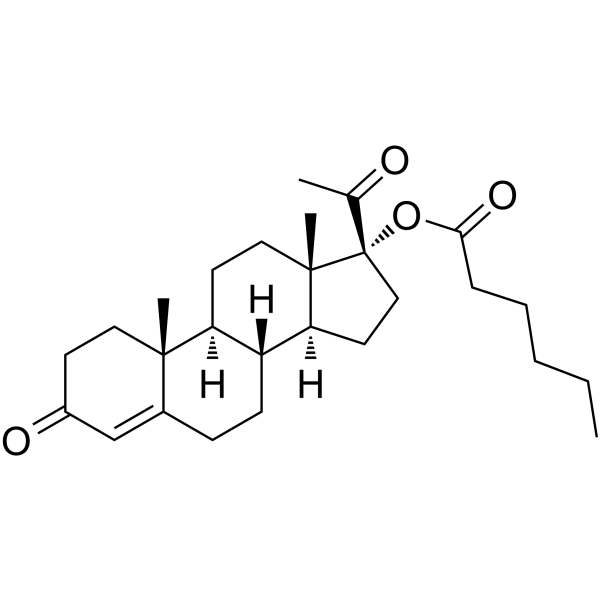
Hydroxyprogesterone caproate (17α-Hydroxyprogesterone hexanoate; 17α-Hydroxyprogesterone caproate) is a progesterone receptor (progesterone receptor) ligand and steroid hormone transcription inhibitor. Hydroxyprogesterone caproate downregulates estrogen receptors in target tissues and activates their metabolic pathways, and exhibits equivalent affinity for progesterone receptor A and progesterone receptor B. Hydroxyprogesterone caproate shows no consistent teratogenicity or developmental toxicity in rat, mouse and monkey models, but induces resorption or abortion in rhesus monkeys at human-equivalent doses. Hydroxyprogesterone caproate promotes the production of TNF-α in lipopolysaccharide-stimulated whole blood from non-pregnant women. Hydroxyprogesterone caproate can be used in scientific research related to preterm birth .
|
-
- HY-114631
-
|
|
Estrogen Receptor/ERR
|
Cancer
|
|
EM-800, an orally active anti-estrogen, serves as an antagonist to the transcriptional functions of estrogen receptors α (ERα) and β (ERβ). EM-800 possesses anticancer activity, capable of inhibiting the growth of breast cancer induced by 7,12-Dimethylbenz[a]anthracene (DMBA) (HY-W011845). Furthermore, in ovariectomized animals, EM-800 effectively slows down bone loss. Additionally, EM-800 shows potential in the research of breast and endometrial cancers, while exerting beneficial effects on bone and lipid metabolism .
|
-
- HY-19822
-
|
RAD1901
|
Estrogen Receptor/ERR
|
Cancer
|
|
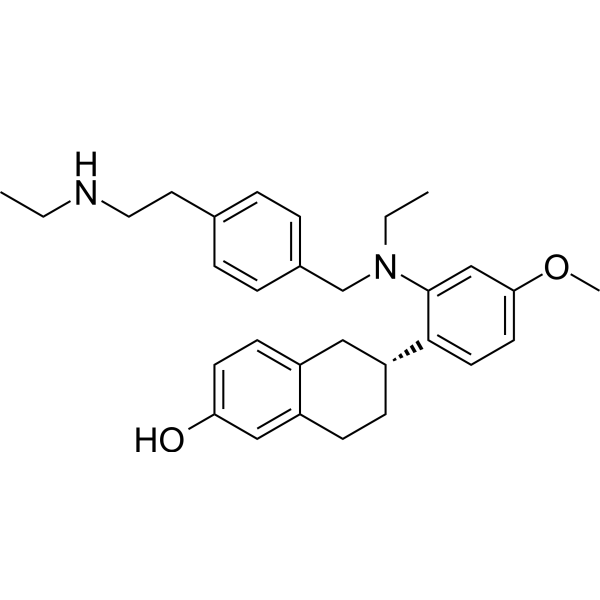
Elacestrant (RAD1901) is an orally available and selective estrogen receptor degrader (SERD) with IC50s of 48 and 870 nM for ERα and ERβ, respectively. Elacestrant also can inhibit growth of ER + breast cancer cell lines in vitro and in vivo .
|
-
- HY-19822A
-
|
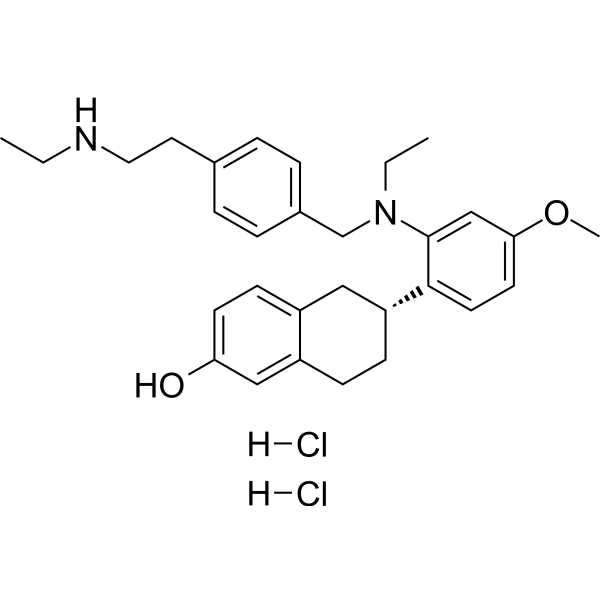
RAD1901 dihydrochloride
|
Estrogen Receptor/ERR
|
Cancer
|
|
Elacestrant (RAD1901) dihydrochloride is an orally available and selective estrogen receptor degrader (SERD) with IC50s of 48 and 870 nM for ERα and ERβ, respectively. Elacestrant dihydrochloride also can inhibit growth of ER + breast cancer cell lines in vitro and in vivo .
|
-
- HY-14590
-
-
- HY-182498
-
|
|
Cytochrome P450
Estrogen Receptor/ERR
|
Cancer
|
|
(Z)-Norendoxifen is an aromatase inhibitor and estrogen receptor modulator. The IC50 value of (Z)-Norendoxifen against aromatase is 102 nM. The EC50 values of (Z)-Norendoxifen for ER-α and ER-β are 27.0 nM and 35.2 nM, respectively. (Z)-Norendoxifen can be used in breast cancer research .
|
-
- HY-136187
-
|
VH032-C5-NH2
|
E3 Ligase Ligand-Linker Conjugates
|
Cancer
|
|
(S,R,S)-AHPC-C5-NH2 (VH032-C5-NH2) is a synthesized E3 ligase ligand-linker conjugate that incorporates the VH032 based VHL ligand and a linker used for estrogen-related receptor α (ERRα) PROTAC degrader .
|
-
- HY-163766
-
|
|
Estrogen Receptor/ERR
|
Cancer
|
|
Antiproliferative agent-51 (Compound 18h) exhibits inhibitory efficacy against estrogen receptor α (ERα) mediated transcription, with an IC50 of 1.6 nM. Antiproliferative agent-51 inhibits the proliferation of cancer cell ZR-75, with an IC50 of 0.031 μM. Antiproliferative agent-51 exhibits antitumor efficacy in mouse models .
|
-
- HY-136187A
-
|
VH032-C5-NH2 dihydrochloride
|
E3 Ligase Ligand-Linker Conjugates
|
Cancer
|
|
(S,R,S)-AHPC-C5-NH2 (VH032-C5-NH2) dihydrochloride is a synthesized E3 ligase ligand-linker conjugate that incorporates the VH032 based VHL ligand and a linker used for estrogen-related receptor α (ERRα) PROTAC degrader .
|
-
- HY-110157
-
|
|
Estrogen Receptor/ERR
|
Neurological Disease
|
|
AC-186 is a selective non-steroidal estrogen receptor β (ERβ) agonist with EC50s of 6 nM and 5000 nM for ERβ and ERα, respectively. AC-186 shows gender selective neuroprotective effects in a male rat model of Parkinson's disease .
|
-
- HY-129619
-
|
|
SNIPERs
Estrogen Receptor/ERR
|
Cancer
|
|
SNIPER(ER)-87 consists of an inhibitor of apoptosis protein (IAP) ligand LCL161 derivative that is conjugated to the estrogen receptor α (ERα) ligand 4-hydroxytamoxifen by a PEG linker, and efficiently degrades the ERα protein (IC50=0.097 μM). SNIPER(ER)-87 preferentially recruits XIAP to ERα in the cells, and XIAP is the primary E3 ubiquitin ligase responsible for the SNIPER(ER)-87-induced ERα degradation .
|
-
- HY-112611
-
|
|
Estrogen Receptor/ERR
|
Cancer
|
|
H3B-5942 is a selective, irreversible and orally active estrogen receptor covalent antagonist, inactivates both wild-type and mutant ERα by targeting Cys530, with Kis of 1 nM and 0.41 nM, respectively. H3B-5942 reduces ERα target gene GREB1, shows potent antitumor activity both in multiple cell lines or animals bearing ERα WT or ERα mutations .
|
-
- HY-A0036D
-
|
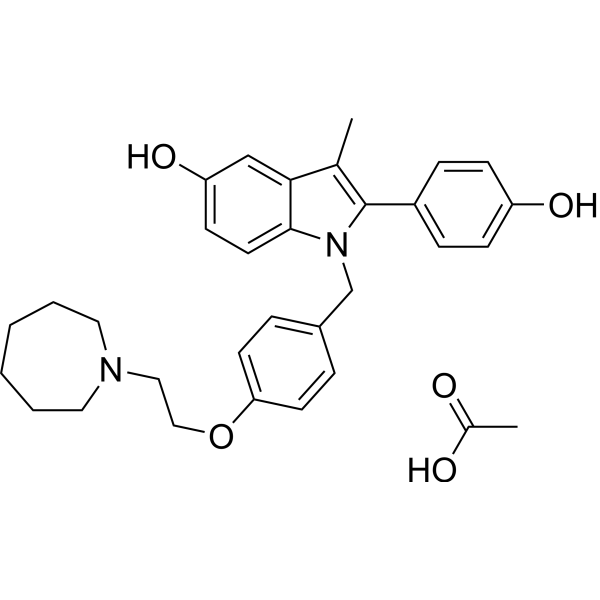
TSE-424 acetate-D
|
Estrogen Receptor/ERR
|
Cancer
|
|
Bazedoxifene (acetate)-D (TSE-424 (acetate)-D) is the D-crystal form compound of Bazedoxifene acetate (HY-A0036). Bazedoxifene acetate is an orally active, nonsteroidal selective estrogen receptor modulator (SERM), with IC50s of 23 nM and 99 nM for ERα and ERβ, respectively .
|
-
- HY-144070
-
|
|
Estrogen Receptor/ERR
|
Cancer
|
|
ErSO-DFP is an anticipatory unfolded protein response (a-UPR) activator. ErSO-DFP has enhanced selectivity for estrogen receptor alpha-positive (ERα+) cancer cells with a wider selectivity window than ErSO (HY-132247). ErSO-DFP displays antitumor activity against MCF-7 in mice. ErSO-DFP can cross the blood brain barrier .
|
-
- HY-170382
-
|
|
Estrogen Receptor/ERR
Apoptosis
|
Cancer
|
|
ER covalent antagonist-1 (Compound 39D) is the antagonist for estrogen receptor α (ERα). ER covalent antagonist-1 inhibits the proliferation of ERα-positive cell MCF-7 with an IC50 of 0.98 μM, arrests the cell cycle at G0/G1 phase, and induces apoptosis. ER covalent antagonist-1 exhibits antitumor efficacy in mouse model .
|
-
- HY-W014589
-
|
2,4-DTBP
|
Endogenous Metabolite
Fungal
Apoptosis
RAR/RXR
Amyloid-β
|
Infection
Neurological Disease
Inflammation/Immunology
Cancer
|
|
2,4-Di-tert-butylphenol (2,4-DTBP) is an orally active RXRα activator and a human estrogen receptor ligand with anti-inflammatory and antioxidant activities, which can induce apoptosis in tumor cells. 2,4-Di-tert-butylphenol can activate the RXRα subtype in LXRα/RXRα, PPARγ/RXRα, and hormone receptor β/RXRα. 2,4-Di-tert-butylphenol also has antiviral and antifungal activities and has the potential to inhibit Aβ-induced neurotoxicity. 2,4-Di-tert-butylphenol can be used as an intermediate in the preparation of antioxidants and UV stabilizers, and is also used in the manufacture of drugs and fragrances .
|
-
- HY-124627
-
|
|
Estrogen Receptor/ERR
|
Cancer
|
|
THIQ-40 is a tetrahydroisoquinoline-based, orally active, and selective estrogen receptor ERα degrader (SERD) (IC50=17 nM), with antitumor efficacy. THIQ-40 possesses functional ERα antagonistic activity, promotes ERα degradation and forms stable ERαLBD complexes. THIQ-40 shows the characteristic of rapid racemization in multi-species plasma. THIQ-40 can be widely applied to studies on the relevant mechanisms and drug development of ERα-positive breast cancer .
|
-
- HY-153468
-
|
TEQ103; Sera2
|
Sodium Channel
TRP Channel
|
Cancer
|
|
ErSO-TFPy (TEQ103) is an ERα+ tumor cell inhibitor with low nanomolar cytotoxic activity against ERα+ breast cancer cells. ErSO-TFPy activates the sodium channel TRPM4, causes an imbalance of intracellular calcium and sodium ions. ErSO-TFPy dysregulates calcium homeostasis in ERα+ tumor cells, triggers the anticipatory unfolded protein response, and induces rapid immune cell-independent necrotic cell death. ErSO-TFPy can be used for the research of estrogen receptor alpha positive breast cancer .
|
-
- HY-135312
-
|
|
Estrogen Receptor/ERR
PROTACs
|
Cancer
|
|
AZ'6421 acts as Protcolysis Targeting Chimera (PROTAC) to selectively degrade estrogen receptor alpha. AZ'6421 has a potent anti-tumour effect to inhibit the uncontrolled cellular proliferation which arises from malignant disease. AZ'6421 can be used for the research of cancer such as breast cancer .
|
-
- HY-19822S2
-
|
RAD1901-d10
|
Estrogen Receptor/ERR
Isotope-Labeled Compounds
|
Cancer
|
|
Elacestrant-d10 is the deuterium labeled of Elacestrant (HY-19822). Elacestrant is an orally available and selective estrogen receptor degrader (SERD) with IC50s of 48 and 870 nM for ERα and ERβ, respectively. Elacestrant also inhibits growth of ER + breast cancer cell lines in vitro and in vivo .
|
-
- HY-B0742S1
-
|
17α-Hydroxyprogesterone hexanoate-d8; 17α-Hydroxyprogesterone caproate-d8
|
Isotope-Labeled Compounds
Progesterone Receptor
|
Others
|
|
Hydroxyprogesterone caproate-d8 (17α-Hydroxyprogesterone hexanoate-d8) is the deuterium labeled Hydroxyprogesterone caproate (HY-B0742). Hydroxyprogesterone caproate (17α-Hydroxyprogesterone hexanoate; 17α-Hydroxyprogesterone caproate) is a progesterone receptor (progesterone receptor) ligand and steroid hormone transcription inhibitor. Hydroxyprogesterone caproate downregulates estrogen receptors in target tissues and activates their metabolic pathways, and exhibits equivalent affinity for progesterone receptor A and progesterone receptor B. Hydroxyprogesterone caproate shows no consistent teratogenicity or developmental toxicity in rat, mouse and monkey models, but induces resorption or abortion in rhesus monkeys at human-equivalent doses. Hydroxyprogesterone caproate promotes the production of TNF-α in lipopolysaccharide-stimulated whole blood from non-pregnant women. Hydroxyprogesterone caproate can be used in scientific research related to preterm birth .
|
-
- HY-121372
-
|
|
Estrogen Receptor/ERR
|
Cancer
|
Lactandrate is a D-high nitrogen steroid alkylating agent. It can interact with the ligand-binding domain (LBD) of estrogen receptor-alpha (ERα). Lactandrate has a growth inhibitory effect on breast cancer cells, with a GI50 value ranging from 5 to 65 μM. It shows anti-tumor activity in mouse breast tumors (MXT and CD8F1) as well as in human xenograft MX-1 .
|
-
- HY-N0835R
-
-
- HY-180409
-
|
|
Androgen Receptor
|
Cancer
|
|
YM580 is a potent, orally active and selective Androgen Receptor (AR) antagonist (IC50 = 0.11 μM, hAR Ki = 4.6 nM, rAR Ki = 6.2 nM). YM580 exhibits good selectivity over PR, GR, and ERα (Kis > 3300 nM). YM580 decreases ventral prostate weight in mature intact rats dose-dependently without affecting serum testosterone levels. YM580 can be used for the research of prostate cancer .
|
-
- HY-B0742R
-
|
17α-Hydroxyprogesterone hexanoate(Standard); 17α-Hydroxyprogesterone caproate (Standard)
|
Reference Standards
Progesterone Receptor
|
Others
|
|
Hydroxyprogesterone caproate (Standard) is the analytical standard of Hydroxyprogesterone caproate. This product is intended for research and analytical applications. Hydroxyprogesterone caproate (17α-Hydroxyprogesterone hexanoate; 17α-Hydroxyprogesterone caproate) is a progesterone receptor (progesterone receptor) ligand and steroid hormone transcription inhibitor. Hydroxyprogesterone caproate downregulates estrogen receptors in target tissues and activates their metabolic pathways, and exhibits equivalent affinity for progesterone receptor A and progesterone receptor B. Hydroxyprogesterone caproate shows no consistent teratogenicity or developmental toxicity in rat, mouse and monkey models, but induces resorption or abortion in rhesus monkeys at human-equivalent doses. Hydroxyprogesterone caproate promotes the production of TNF-α in lipopolysaccharide-stimulated whole blood from non-pregnant women. Hydroxyprogesterone caproate can be used in scientific research related to preterm birth .
|
-
- HY-167701
-
|
|
Ligands for Target Protein for PROTAC
Apoptosis
Estrogen Receptor/ERR
|
Cancer
|
|
OBHSA is a selective estrogen receptor (ERα) degrader. OBHSA blocks the cell cycle by degrading cyclin D1, thereby overcoming Tamoxifen (HY-13757A) resistance. OBHSA also triggers excessive activation of the unfolded protein response (UPR) by inducing an increase in intracellular reactive oxygen species, ultimately leading to cell apoptosis. In addition, OBHSA can also be used as an ERα ligand to synthesize PROTAC degraders .
|
-
- HY-N0322
-
|
|
Environmental Pollutants
Endogenous Metabolite
Estrogen Receptor/ERR
Bacterial
Liposome
|
Infection
Metabolic Disease
Cancer
|
|
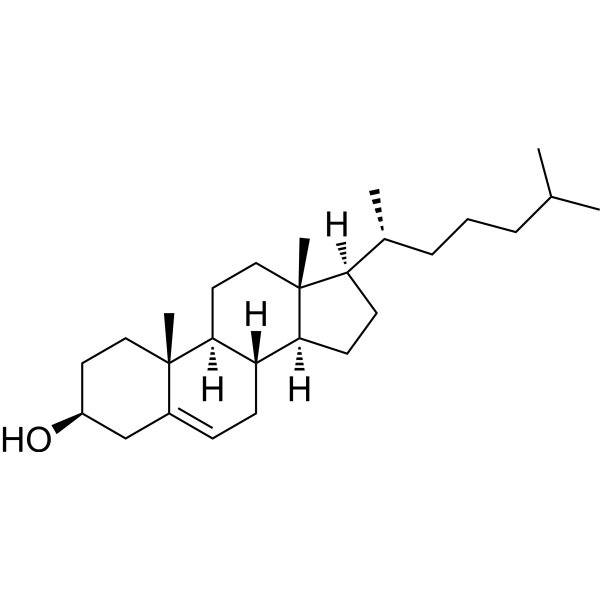
Cholesterol (from animal) is the major sterol in mammals. It is making up 20-25% of structural component of the plasma membrane. Plasma membranes are highly permeable to water but relatively impermeable to ions and protons. Cholesterol (from animal) plays an important role in determining the fluidity and permeability characteristics of the membrane as well as the function of both the transporters and signaling proteins . Cholesterol (from animal) is also an endogenous estrogen-related receptor α (ERRα) agonist .
|
-
- HY-107835
-
|
FCR 2769
|
Environmental Pollutants
Apoptosis
Bcl-2 Family
Parasite
Insecticide
|
Infection
Cancer
|
|
Flumethrin (FCR 2769) is a pyrethroid insecticide and acaricide . Flumethrin targets voltage-gated sodium channels and estrogen receptor α (ERα). Flumethrin induces cytotoxicity, apoptosis, genotoxicity and DNA damage in breast cancer cells by regulating the expression of BCL2, BAX, TP53 and P21 genes. Flumethrin is applicable to relevant studies on ectoparasite infections (tick and flea burdens) in dogs and cats, as well as breast cancer .
|
-
- HY-N0322S8
-
|
|
Isotope-Labeled Compounds
Estrogen Receptor/ERR
Endogenous Metabolite
|
Metabolic Disease
|
|
Cholesterol- 18O is the 18O-labeled Cholesterol. Cholesterol is the major sterol in mammals. It is making up 20-25% of structural component of the plasma membrane. Plasma membranes are highly permeable to water but relatively impermeable to ions and protons. Cholesterol plays an important role in determining the fluidity and permeability characteristics of the membrane as well as the function of both the transporters and signaling proteins . Cholesterol is also an endogenous estrogen-related receptor α (ERRα) agonist .
|
-
- HY-N0322S7
-
|
|
Isotope-Labeled Compounds
Estrogen Receptor/ERR
Endogenous Metabolite
|
Endocrinology
|
|
Cholesterol-d1 is the deuterium labeled Cholesterol. Cholesterol is the major sterol in mammals. It is making up 20-25% of structural component of the plasma membrane. Plasma membranes are highly permeable to water but relatively impermeable to ions and protons. Cholesterol plays an important role in determining the fluidity and permeability characteristics of the membrane as well as the function of both the transporters and signaling proteins . Cholesterol is also an endogenous estrogen-related receptor α (ERRα) agonist .
|
-
- HY-N0322R
-
|
|
Liposome
Reference Standards
Estrogen Receptor/ERR
Endogenous Metabolite
Bacterial
|
Metabolic Disease
Cancer
|
|
Cholesterol (Standard) is the analytical standard of Cholesterol. This product is intended for research and analytical applications. Cholesterol is the major sterol in mammals. It is making up 20-25% of structural component of the plasma membrane. Plasma membranes are highly permeable to water but relatively impermeable to ions and protons. Cholesterol plays an important role in determining the fluidity and permeability characteristics of the membrane as well as the function of both the transporters and signaling proteins . Cholesterol is also an endogenous estrogen-related receptor α (ERRα) agonist .
|
-
- HY-N0322S1
-
|
|
Estrogen Receptor/ERR
Endogenous Metabolite
|
Metabolic Disease
|
|
Cholesterol-d6 is the deuterium labeled Cholesterol. Cholesterol is the major sterol in mammals. It is making up 20-25% of structural component of the plasma membrane. Plasma membranes are highly permeable to water but relatively impermeable to ions and protons. Cholesterol plays an important role in determining the fluidity and permeability characteristics of the membrane as well as the function of both the transporters and signaling proteins . Cholesterol is also an endogenous estrogen-related receptor α (ERRα) agonist .
|
-
- HY-N0322S4
-
|
|
Estrogen Receptor/ERR
Endogenous Metabolite
|
Metabolic Disease
|
|
Cholesterol- 13C3 is the 13C-labeled Cholesterol. Cholesterol is the major sterol in mammals. It is making up 20-25% of structural component of the plasma membrane. Plasma membranes are highly permeable to water but relatively impermeable to ions and protons. Cholesterol plays an important role in determining the fluidity and permeability characteristics of the membrane as well as the function of both the transporters and signaling proteins . Cholesterol is also an endogenous estrogen-related receptor α (ERRα) agonist .
|
-
- HY-N0322S6
-
|
|
Estrogen Receptor/ERR
Endogenous Metabolite
|
Metabolic Disease
|
|
Cholesterol-d4 is deuterium labeled Cholesterol. Cholesterol is the major sterol in mammals. It is making up 20-25% of structural component of the plasma membrane. Plasma membranes are highly permeable to water but relatively impermeable to ions and protons. Cholesterol plays an important role in determining the fluidity and permeability characteristics of the membrane as well as the function of both the transporters and signaling proteins . Cholesterol is also an endogenous estrogen-related receptor α (ERRα) agonist .
|
-
- HY-N0322S2
-
|
|
Isotope-Labeled Compounds
Estrogen Receptor/ERR
Endogenous Metabolite
|
Metabolic Disease
|
|
Cholesterol-d6-1 is the deuterium labeled Cholesterol. Cholesterol is the major sterol in mammals. It is making up 20-25% of structural component of the plasma membrane. Plasma membranes are highly permeable to water but relatively impermeable to ions and protons. Cholesterol plays an important role in determining the fluidity and permeability characteristics of the membrane as well as the function of both the transporters and signaling proteins . Cholesterol is also an endogenous estrogen-related receptor α (ERRα) agonist .
|
-
- HY-N0322S5
-
|
|
Estrogen Receptor/ERR
Endogenous Metabolite
|
Metabolic Disease
|
|
Cholesterol- 13C2 is the 13C labeled Cholesterol. Cholesterol is the major sterol in mammals. It is making up 20-25% of structural component of the plasma membrane. Plasma membranes are highly permeable to water but relatively impermeable to ions and protons. Cholesterol plays an important role in determining the fluidity and permeability characteristics of the membrane as well as the function of both the transporters and signaling proteins . Cholesterol is also an endogenous estrogen-related receptor α (ERRα) agonist .
|
-
- HY-N0322S3
-
|
|
Estrogen Receptor/ERR
Endogenous Metabolite
|
Metabolic Disease
|
|
Cholesterol- 13C5 is the 13C-labeled Cholesterol. Cholesterol is the major sterol in mammals. It is making up 20-25% of structural component of the plasma membrane. Plasma membranes are highly permeable to water but relatively impermeable to ions and protons. Cholesterol plays an important role in determining the fluidity and permeability characteristics of the membrane as well as the function of both the transporters and signaling proteins . Cholesterol is also an endogenous estrogen-related receptor α (ERRα) agonist .
|
-
- HY-10426R
-
|
|
Reference Standards
Estrogen Receptor/ERR
Autophagy
|
Cancer
|
|
XCT790 (Standard) is the analytical standard of XCT790 (HY-10426). This product is intended for research and analytical applications. XCT-790 is a potent and selective inverse agonist for ERRα with an IC50 value of 0.37 μM. XCT-790 induces cell death in chemotherapeutic resistant cancer cells. XCT-790 (Compound 12) is inactive against ERRγ and the estrogen receptors ERα and ERβ .
|
-
- HY-N0322S
-
|
|
Estrogen Receptor/ERR
Endogenous Metabolite
|
Metabolic Disease
|
|
Cholesterol-d7 is the deuterium labeled Cholesterol. Cholesterol is the major sterol in mammals. It is making up 20-25% of structural component of the plasma membrane. Plasma membranes are highly permeable to water but relatively impermeable to ions and protons. Cholesterol plays an important role in determining the fluidity and permeability characteristics of the membrane as well as the function of both the transporters and signaling proteins . Cholesterol is also an endogenous estrogen-related receptor α (ERRα) agonist .
|
-
- HY-176955
-
|
|
Estrogen Receptor/ERR
|
Cancer
|
|
ER degrader 12 (Example 1) is an estrogen receptor (ER) degrader with IC50 values for ERα and ERβ of 2.3 and 80.2 nM respectively (TR-FRET experiment). ER degrader 12 inhibits the proliferation of MCF-7 cells, with an IC50 of 1.53 nM. ER degrader 12 can be used for research on breast cancer .
|
-
- HY-14590R
-
|
Kempferol(Standard); Robigenin (Standard)
|
Reference Standards
Estrogen Receptor/ERR
Autophagy
Mitophagy
Apoptosis
HIV
Parasite
Endogenous Metabolite
|
Cancer
|
|
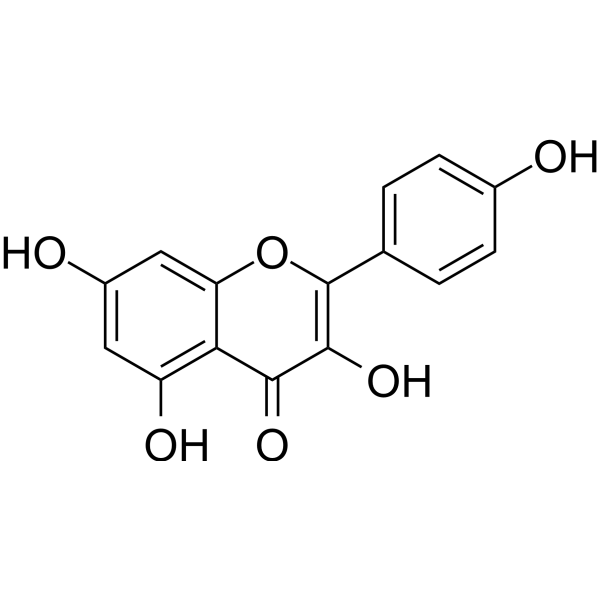
Kaempferol (Standard) is the analytical standard of Kaempferol. This product is intended for research and analytical applications. Kaempferol (Kempferol), a flavonoid found in many edible plants, inhibits estrogen receptor α expression in breast cancer cells and induces apoptosis in glioblastoma cells and lung cancer cells by activation of MEK-MAPK. Kaempferol can be uesd for the research of breast cancer .
|
-
- HY-W585917
-
|
BFDGE·2HCl
|
Androgen Receptor
|
Metabolic Disease
|
|
Bisphenol F bis(2-chloro-1-propanol) ether (BFDGE·2HCl) is an androgen receptor antagonist with a human IC50 of 18 μM. Bisphenol F bis(2-chloro-1-propanol) ether binds to the androgen receptor. Bisphenol F bis(2-chloro-1-propanol) ether (BFDGE·2HCl) can be used for research on hormonal activity .
|
-
- HY-P10393
-
|
ERα (295-311)
|
Apoptosis
|
Cancer
|
|
ERα17p (ERα 295-311) is the epitope of the CaM binding site on the estrogen receptor α (ER), which interacts with calmodulin (CaM) in a calcium-dependent manner. ERα17p regulates the migration of cancer cells MCF-7, SK-BR-3, T47D, and MDA-MB-231 through Rho/ROCK and PI3K/Akt signaling pathways. ERα17p inhibits proliferations of breast cancer cells, induces apoptosis, and inhibits tumor growth in mouse models .
|
-
- HY-P10843
-
|
|
Estrogen Receptor/ERR
|
Cancer
|
|
R4K1 is a cell-permeable stapled peptide. R4K1 binds to the estrogen receptor (ER) α with high affinity and inhibits its interaction with coactivators. R4K1 can enter breast cancer cells to regulate gene transcription and inhibit cell proliferation. R4K1 can be used in the study of cancer .
|
-
- HY-155673
-
|
|
Estrogen Receptor/ERR
|
Metabolic Disease
|
|
SLU-PP-332 is a pan-Estrogen Receptor/ERR agonist with EC50 values of 98, 230 and 430 nM for ERRα, ERRβ and ERRγ, respectively. SLUPP-332 enhances mitochondrial function and cellular respiration in skeletal muscle cell lines. SLU-PP-332 has the potential to study metabolic diseases as well as improve muscle function .
|
-
- HY-A0036
-
|
TSE-424 acetate
|
Estrogen Receptor/ERR
|
Cancer
|
|
Bazedoxifene acetate (TSE-424 acetate) is an oral, nonsteroidal selective estrogen receptor modulator (SERM), with IC50s of 23 nM and 99 nM for ERα and ERβ, respectively. Bazedoxifene acetate can be used for the research of osteoporosis. Bazedoxifene acetate also acts as an inhibitor of IL-6/GP130 protein-protein interactions and can be used for the research of pancreatic cancer .
|
-
- HY-114770
-
|
|
Estrogen Receptor/ERR
|
Cancer
|
|
(E,E)-GLL398 is a selective estrogen receptor degrader with potent binding activity to ERα (IC50 = 1.14 nM). (E,E)-GLL398 can effectively degrade ERα in MCF-7 breast cancer cells (IC50 = 0.21 μM). The introduced boronic acid group of (E,E)-GLL398 gives it superior oral bioavailability, with an AUC of 36.9 μg·h/mL in rats, which is significantly higher than that of GW7604 .
|
-
- HY-164924
-
|
|
PROTACs
Estrogen Receptor/ERR
|
Cancer
|
|
ERD-12310A is a PROTAC targeting Estrogen Receptor α (ERα) with a ED50 value of 47 pM. ERD-12310A has oral activity. ERD-12310A is composed of PROTAC target protein ligand ER ligand-4 (HY-164925) (red part), E3 ligase ligand (S)-Deoxy-thalidomide (HY-168055) (blue part). ERD-12310A can be used in the research of ER + breast cancer .
|
-
- HY-125627
-
|
|
Glucocorticoid Receptor
Androgen Receptor
|
Neurological Disease
Metabolic Disease
|
|
CP-394531 is an efficient and highly selective non-steroidal glucocorticoid receptor (GR) antagonist, with a Ki value of 0.1 nM. CP-394531 has a weak binding to androgen receptor (AR) (Ki = 130 nM), and has almost no effect on progesterone receptor (PR) and estrogen receptors (ERα, ERβ). CP-394531 completely blocks the half-maximal agonistic effect induced by Dexamethasone (HY-14648G), with a Kif of 4.1 nM. CP-394531 can be used to study various diseases such as diabetes, obesity, depression, neurodegenerative diseases, glaucoma and Cushing's disease .
|
-
- HY-W014589R
-
|
2,4-DTBP (Standard)
|
Reference Standards
Endogenous Metabolite
Fungal
Apoptosis
RAR/RXR
Amyloid-β
|
Infection
Neurological Disease
Inflammation/Immunology
Cancer
|
|
2,4-Di-tert-butylphenol (Standard) is the analytical standard of 2,4-Di-tert-butylphenol (HY-W014589). This product is intended for research and analytical applications. 2,4-Di-tert-butylphenol (2,4-DTBP) is an orally active RXRα activator and a human estrogen receptor ligand with anti-inflammatory and antioxidant activities, which can induce apoptosis in tumor cells. 2,4-Di-tert-butylphenol can activate the RXRα subtype in LXRα/RXRα, PPARγ/RXRα, and hormone receptor β/RXRα. 2,4-Di-tert-butylphenol also has antiviral and antifungal activities, and has the potential to inhibit Aβ-induced neurotoxicity. 2,4-Di-tert-butylphenol can be used as an intermediate in the preparation of antioxidants and UV stabilizers, and is also used in the manufacture of pharmaceuticals and fragrances .
|
-
- HY-107835R
-
|
FCR 2769 (Standard)
|
Reference Standards
Insecticide
Parasite
Apoptosis
Bcl-2 Family
|
Infection
Cancer
|
|
Flumethrin (Standard) (FCR 2769 (Standard)) is the analytical standard of Flumethrin (HY-107835). This product is intended for research and analytical applications. Flumethrin (FCR 2769) is a pyrethroid insecticide and acaricide. Flumethrin targets voltage-gated sodium channels and estrogen receptor α (ERα). Flumethrin induces cytotoxicity, apoptosis, genotoxicity and DNA damage in breast cancer cells by regulating the expression of BCL2, BAX, TP53 and P21 genes. Flumethrin is applicable to relevant studies on ectoparasite infections (tick and flea burdens) in dogs and cats, as well as breast cancer.
|
-
- HY-B1984
-
|
4,4'-DDD; p,p'-Dichlorodiphenyl dichloroethane
|
Environmental Pollutants
Drug Metabolite
Apoptosis
Insecticide
Necroptosis
|
Infection
Neurological Disease
Cancer
|
|
p,p'-DDD (4,4’-DDD) is an organochlorine insecticide, a major metabolite of p,p'-DDT. p,p'-DDD is an agonist at estrogen receptor α(ERα) and ERβ. p,p'-DDD increases DNA damage, apoptosis and necrosis in peripheral blood. p,p'-DDD stimulates cell proliferation in SKBR3 cells. p,p'-DDD activates the AP-1 transcription factor. p,p'-DDD decreases sleep times of barbiturates and steroids in rats .
|
-
- HY-136186A
-
|
VH032-C7-amine dihydrochloride
|
E3 Ligase Ligand-Linker Conjugates
|
Cancer
|
|
(S,R,S)-AHPC-C7-amine dihydrochloride is the dihydrochloride form of (S,R,S)-AHPC-C7-amine (HY-136186). (S,R,S)-AHPC-C7-amine is a synthesized E3 ligase ligand-linker conjugate that incorporates the VH032 based VHL ligand and a linker. (S,R,S)-AHPC-C7-amine can be used for estrogen-related receptor α (ERRα) PROTAC degrader .
|
-
- HY-A0031
-
|
TSE-424
|
Estrogen Receptor/ERR
|
Neurological Disease
Cancer
|
|
Bazedoxifene (TSE-424) is an oral, BBB-penetrant nonsteroidal selective estrogen receptor modulator (SERM), with IC50s of 23 nM and 99 nM for ERα and ERβ, respectively. Bazedoxifene can be used for the research of osteoporosis. Bazedoxifene also acts as an inhibitor of IL-6/GP130 protein-protein interactions and can be used for the research of pancreatic cancer .
|
-
- HY-A0031A
-
|
TSE-424 hydrochloride
|
Estrogen Receptor/ERR
|
Cancer
|
|
Bazedoxifene hydrochloride (TSE-424 hydrochloride) is an oral active, BBB-penetrant nonsteroidal selective estrogen receptor modulator (SERM), with IC50s of 23 nM and 99 nM for ERα and ERβ, respectively. Bazedoxifene hydrochloride can be used for the research of osteoporosis. Bazedoxifene hydrochloride acts as an inhibitor of IL-6/GP130 protein-protein interactions. Bazedoxifene hydrochloride can be used for the research of pancreatic cancer .
|
-
- HY-19822S4
-
|
RAD1901-d5
|
Isotope-Labeled Compounds
Estrogen Receptor/ERR
|
Cancer
|
|
Elacestrant-d5 (RAd1901-d5) is the deuterium labeled Elacestrant (HY-19822). Elacestrant (RAD1901) is an orally available and selective estrogen receptor degrader (SERD) with IC50s of 48 and 870 nM for ERα and ERβ, respectively. Elacestrant also can inhibit growth of ER + breast cancer cell lines in vitro and in vivo .
|
-
- HY-16023A
-
|
EM-652; SCH 57068
|
Estrogen Receptor/ERR
|
Cancer
|
|
Acolbifene (EM-652), the active metabolite of EM800, is an orally active pure antiestrogen and selective estrogen receptor antagonist. Acolbifene (EM-652) inhibits estradiol (E2)-induced transcriptional activity of ERα (IC50 = 2 nM) and ERβ (IC50 = 0.4 nM). Acolbifene (EM-652) possesses potent and pure anticarcinogenic properties .
|
-
- HY-107835S
-
|
FCR 2769-d5
|
Isotope-Labeled Compounds
Insecticide
Apoptosis
Environmental Pollutants
Parasite
Bcl-2 Family
|
Infection
Cancer
|
|
Flumethrin-d5 (FCR 2769-d5) is the deuterium labeled Flumethrin (HY-107835). Flumethrin (FCR 2769) is a pyrethroid insecticide and acaricide . Flumethrin targets voltage-gated sodium channels and estrogen receptor α (ERα). Flumethrin induces cytotoxicity, apoptosis, genotoxicity and DNA damage in breast cancer cells by regulating the expression of BCL2, BAX, TP53 and P21 genes. Flumethrin is applicable to relevant studies on ectoparasite infections (tick and flea burdens) in dogs and cats, as well as breast cancer .
|
-
- HY-110193
-
SPP-86
2 Publications Verification
|
RET
|
Cancer
|
|
SPP-86 is a potent and selective cell permeable inhibitor of RET tyrosine kinase, with an IC50 of 8 nM. SPP-86 inhibits RET-induced phosphatidylinositide 3-kinases (PI3K)/Akt and MAPK signaling, also inhibits RET-induced estrogen receptorα (ERα) phosphorylation in MCF7 cells . SPP-86 is a click chemistry reagent, it contains an Alkyne group and can undergo copper-catalyzed azide-alkyne cycloaddition (CuAAc) with molecules containing Azide groups.
|
-
- HY-W014589S
-
|
2,4-DTBP-d19
|
Isotope-Labeled Compounds
RAR/RXR
Amyloid-β
Fungal
Apoptosis
Endogenous Metabolite
|
Infection
Neurological Disease
Inflammation/Immunology
Cancer
|
|
2,4-Di-tert-butylphenol-d19 (2,4-DTBP-d19) is the deuterium labeled 2,4-Di-tert-butylphenol (HY-W014589). 2,4-Di-tert-butylphenol (2,4-DTBP) is an orally active RXRα activator and a human estrogen receptor ligand with anti-inflammatory and antioxidant activities, which can induce apoptosis in tumor cells. 2,4-Di-tert-butylphenol can activate the RXRα subtype in LXRα/RXRα, PPARγ/RXRα, and hormone receptor β/RXRα. 2,4-Di-tert-butylphenol also has antiviral and antifungal activities and has the potential to inhibit Aβ-induced neurotoxicity. 2,4-Di-tert-butylphenol can be used as an intermediate in the preparation of antioxidants and UV stabilizers, and is also used in the manufacture of drugs and fragrances .
|
-
- HY-W749327
-
|
2,4-DTBP-d21
|
Isotope-Labeled Compounds
RAR/RXR
Amyloid-β
Fungal
Apoptosis
Endogenous Metabolite
|
Infection
Neurological Disease
Inflammation/Immunology
Cancer
|
|
2,4-Di-tert-butylphenol-d21 (2,4-DTBP-d21) is the deuterium labeled 2,4-Di-tert-butylphenol (HY-W014589). 2,4-Di-tert-butylphenol (2,4-DTBP) is an orally active RXRα activator and a human estrogen receptor ligand with anti-inflammatory and antioxidant activities, which can induce apoptosis in tumor cells. 2,4-Di-tert-butylphenol can activate the RXRα subtype in LXRα/RXRα, PPARγ/RXRα, and hormone receptor β/RXRα. 2,4-Di-tert-butylphenol also has antiviral and antifungal activities and has the potential to inhibit Aβ-induced neurotoxicity. 2,4-Di-tert-butylphenol can be used as an intermediate in the preparation of antioxidants and UV stabilizers, and is also used in the manufacture of drugs and fragrances .
|
-
- HY-14933
-
|
ERB-041
|
Estrogen Receptor/ERR
Wnt
Apoptosis
|
Cancer
|
|
Prinaberel (ERB-041) is a potent and selective estrogen receptor (ER) β agonist with IC50s of 5.4, 3.1 and 3.7 nM for human, rat and mouse ERβ, respectively. Prinaberel displays >200-fold selectivity for ERβ over ERα. Prinaberel is a potent skin cancer chemopreventive agent that acts by dampening the WNT/β-catenin signaling pathway. Prinaberel induces ovarian cancer apoptosis .
|
-
- HY-A0031S
-
|
TSE-424-d4
|
Isotope-Labeled Compounds
Estrogen Receptor/ERR
|
Cancer
|
|
Bazedoxifene-d4 is deuterium labeled Bazedoxifene. Bazedoxifene (TSE-424) is an oral, BBB-penetrant nonsteroidal selective estrogen receptor modulator (SERM), with IC50s of 23 nM and 99 nM for ERα and ERβ, respectively. Bazedoxifene can be used for the research of osteoporosis. Bazedoxifene also acts as an inhibitor of IL-6/GP130 protein-protein interactions and can be used for the research of pancreatic cancer[1][2].
|
-
- HY-A0036R
-
|
TSE-424 acetate (Standard)
|
Reference Standards
Estrogen Receptor/ERR
|
Cancer
|
|
Bazedoxifene (acetate) (Standard) is the analytical standard of Bazedoxifene (acetate). This product is intended for research and analytical applications. Bazedoxifene acetate (TSE-424 acetate) is an oral, nonsteroidal selective estrogen receptor modulator (SERM), with IC50s of 23 nM and 99 nM for ERα and ERβ, respectively. Bazedoxifene acetate can be used for the research of osteoporosis. Bazedoxifene acetate also acts as an inhibitor of IL-6/GP130 protein-protein interactions and can be used for the research of pancreatic cancer .
|
-
- HY-A0031R
-
|
TSE-424 (Standard)
|
Reference Standards
Estrogen Receptor/ERR
|
Cancer
|
|
Bazedoxifene (Standard) is the analytical standard of Bazedoxifene. This product is intended for research and analytical applications. Bazedoxifene (TSE-424) is an oral, BBB-penetrant nonsteroidal selective estrogen receptor modulator (SERM), with IC50s of 23 nM and 99 nM for ERα and ERβ, respectively. Bazedoxifene can be used for the research of osteoporosis. Bazedoxifene also acts as an inhibitor of IL-6/GP130 protein-protein interactions and can be used for the research of pancreatic cancer .
|
-
- HY-159613
-
|
|
Apoptosis
Estrogen Receptor/ERR
|
Inflammation/Immunology
Cancer
|
|
PELP1-IN-1 is a PELP1 inhibitor and an apoptosis inducer with no cytotoxic activity against non-cancer cell lines. PELP1-IN-1 targets wild-type, mutant and drug-resistant ER + breast cancer, and promotes PELP1 degradation through the proteasome pathway. As an analog of SMIP34 (HY-169903), PELP1-IN-1 is applicable to the research of estrogen receptor α-positive breast cancer .
|
-
- HY-A0031S2
-
|
TSE-424-d4 acetate
|
Estrogen Receptor/ERR
|
Cancer
|
|
Bazedoxifene-d4 (acetate) is the deuterium labeled Bazedoxifene[1]. Bazedoxifene (TSE-424) is an oral, BBB-penetrant nonsteroidal selective estrogen receptor modulator (SERM), with IC50s of 23 nM and 99 nM for ERα and ERβ, respectively. Bazedoxifene can be used for the research of osteoporosis. Bazedoxifene also acts as an inhibitor of IL-6/GP130 protein-protein interactions and can be used for the research of pancreatic cancer[2][3].
|
-
- HY-N0322GL
-
|
|
Liposome
Estrogen Receptor/ERR
Endogenous Metabolite
|
Metabolic Disease
Cancer
|
|
Cholesterol (GMP Like) is Cholesterol (HY-N0322) produced by using GMP like guidelines. GMP Like small molecules works appropriately as an auxiliary reagent for cell therapy manufacture. Cholesterol is the major sterol in mammals. It is making up 20-25% of structural component of the plasma membrane. Plasma membranes are highly permeable to water but relatively impermeable to ions and protons. Cholesterol plays an important role in determining the fluidity and permeability characteristics of the membrane as well as the function of both the transporters and signaling proteins . Cholesterol is also an endogenous estrogen-related receptor α (ERRα) agonist .
|
-
- HY-N0322A
-
|
|
Liposome
|
Others
|
Cholesterol Water Soluble is a major sterol in mammals, constituting 20-25% of the structural composition of the plasma membrane. The plasma membrane is highly permeable to water but relatively impermeable to ions and protons. Cholesterol Water Soluble plays an important role in determining the fluidity and permeability characteristics of membranes and the function of transporters and signaling proteins. Cholesterol Water Soluble is also an endogenous estrogen-related receptor alpha (ERRα) agonist. Cholesterol Water Soluble can be used to study the effects of cholesterol on potassium currents in inner hair cells . (Note: This product is a mixture of Cholesterol and Methyl-β-cyclodextrin. The product specifications below only indicate the effective content of Cholesterol.)
|
-
- HY-W1005067
-
|
|
Molecular Glues
Hippo (MST)
Estrogen Receptor/ERR
|
Others
|
|
EN171 is a covalent ligand that covalently targets both C38 and C96 on 14-3-3 to enhance 14-3-3 interactions with ERα, YAP and TAZ, leading to impaired estrogen receptor and Hippo pathway transcriptional activity. EN171 can not only be used as a molecular glue to enhance native protein interactions but can also be used as a covalent 14-3-3 recruiter in heterobifunctional molecules to sequester nuclear neo-substrates such as BRD4 and BLC6 into the cytosol .
|
-
- HY-16023
-
|
EM-652 hydrochloride; SCH 57068 hydrochloride
|
Estrogen Receptor/ERR
|
Cancer
|
|
Acolbifene (EM-652) hydrochloride, an active metabolite of EM800, is an orally active, cancer-preventing selective estrogen receptor modulator (SERM). Acolbifene (EM-652) hydrochloride inhibits estradiol (E2)-induced transcriptional activity of ERα (IC50=2 nM) and ERβ (IC50=0.4 nM). Acolbifene (EM-652) hydrochloride exerts a potent and pure antiestrogenic action in the mammary gland and uterus. Anticarcinogenic properties .
|
-
- HY-B1984R
-
|
4,4'-DDD (Standard); p,p'-Dichlorodiphenyl dichloroethane (Standard)
|
Reference Standards
Drug Metabolite
Apoptosis
Necroptosis
Insecticide
|
Infection
Neurological Disease
Cancer
|
|
p,p'-DDD (Standard) is the analytical standard of p,p'-DDD (HY-B1984) . This product is intended for research and analytical applications. p,p'-DDD (4,4’-DDD) is an organochlorine insecticide, a major metabolite of p,p'-DDT. p,p'-DDD is an agonist at estrogen receptor α(ERα) and ERβ. p,p'-DDD increases DNA damage, apoptosis and necrosis in peripheral blood. p,p'-DDD stimulates cell proliferation in SKBR3 cells. p,p'-DDD activates the AP-1 transcription factor. p,p'-DDD decreases sleep times of barbiturates and steroids in rats.
|
-
- HY-B1984S
-
|
4,4'-DDD-d8; p,p'-Dichlorodiphenyl dichloroethane-d8
|
Drug Metabolite
Apoptosis
Necroptosis
Insecticide
|
Infection
Neurological Disease
Cancer
|
|
p,p'-DDD-d8 is the deuterium labeled p,p'-DDD[1]. p,p'-DDD (4,4’-DDD) is an organochlorine insecticide, a major metabolite of p,p'-DDT. p,p'-DDD is an agonist at estrogen receptor α(ERα) and ERβ. p,p'-DDD increases DNA damage, apoptosis and necrosis in peripheral blood. p,p'-DDD stimulates cell proliferation in SKBR3 cells. p,p'-DDD activates the AP-1 transcription factor. p,p'-DDD decreases sleep times of barbiturates and steroids in rats .
|
-
- HY-175260
-
|
|
Estrogen Receptor/ERR
|
Cancer
|
|
ZN-c5 is a selective and orally active estrogen receptor degrader. ZN-c5 exhibits high potency in the cellular assay (MCF-7, IC50 = 0.3 nM) and binds with high affinity to ERα and ERβ (IC50 = 0.4 nM and 0.8 nM, respectively). ZN-c5 inhibits tumor growth in MCF-7 mouse xenograft model and WHIM20 xenograft model. ZN-c5 can be used for the study of breast cancer .
|
-
- HY-138089
-
|
|
Androgen Receptor
Estrogen Receptor/ERR
LDLR
|
Metabolic Disease
Cancer
|
|
17β-Hydroxy exemestane (17-H-EXE) is the primary active metabolite of Exemestane (HY-13632). 17β-Hydroxy exemestane is an aromatase inhibitor (IC50 = 69 nM) and an androgen receptor (AR) agonist (IC50 = 39.6 nM) that is selective for AR over estrogen receptor α (ERα; IC50 = 21.2 μM). 17β-Hydroxy exemestane stimulates growth of AR- and ERα-positive MCF-7 (EC50= 2.7 μM) and T47D breast cancer cells (EC50s = 0.43 and 1500 nM for AR- and ER-mediated growth, respectively) and inhibits proliferation of testosterone-treated aromatase-overexpressing MCF-7 cells. 17β-Hydroxy exemestane inhibits increases in serum cholesterol and LDL levels and prevents decreases in bone mineral density in the lumbar vertebrae and femur, as well as femoral bending strength and compressive strength of the fifth lumbar vertebrae in ovariectomized rats .
|
-
- HY-N2168
-
|
(+)-Pinoresinol 4-O-β-D-glucopyranoside
|
Glycosidase
Estrogen Receptor/ERR
Phosphodiesterase (PDE)
|
Neurological Disease
Metabolic Disease
Cancer
|
|
Pinoresinol 4-O-β-D-glucopyranoside ((+)-Pinoresinol 4-O-β-D-glucopyranoside) is an orally active α-glucosidase inhibitor, with an IC50 of 48.13 μg/mL. Pinoresinol 4-O-β-D-glucopyranoside binds to estrogen receptors. Pinoresinol 4-O-β-D-glucopyranoside inhibits phosphodiesterase. Pinoresinol 4-O-β-D-glucopyranoside exhibits various activities such as antioxidant, anti-inflammatory, anti-hyperglycemic, hepatoprotective and anti-epileptic effects .
|
-
- HY-163679
-
|
|
Estrogen Receptor/ERR
Cytochrome P450
PROTACs
Apoptosis
|
Cancer
|
|
PROTAC ERα Degrader-9 (Compound 18c) is a dual-targeting PROTAC degrader, which degrades estrogen receptor α (ERα) and aromatase (ARO). PROTAC ERα Degrader-9 binds to ERα with a Ki of 0.25 μM, inhibits ARO with an IC50 of 4.6 μM. PROTAC ERα Degrader-9 inhibits the proliferation of MCF-7 wildtype (IC50=0.54 μM) and ERα mutants MCF-7 EGFR (IC50=0.075 μM), MCF-7 D538G (IC50=0.31 μM), MCF-7 Y537S (IC50=2.3 μM), downregulates the expressions of ERS1 and MYC. PROTAC ERα Degrader-9 arrests the cell cycle at G2/M, induces apoptosis in MCF-7. PROTAC ERα Degrader-9 exhibits antitumor efficacy in mouse models. (Pink: ligand for target protein (HY-163680); Black: linker (HY-W007559); Blue: ligand for E3 ligase (HY-112078))
|
-
- HY-179433
-
|
|
PROTACs
Androgen Receptor
Estrogen Receptor/ERR
Src
|
Cancer
|
|
PROTAC AR Degrader-12 is a highly efficient PROTAC targeting AR coactivator binding site (AR-CBS). PROTAC AR Degrader-12 induces AR degradation in a ubiquitin proteasome system (UPS) pathway-dependent manner. PROTAC AR Degrader-12 inhibits tumor cell growth by affecting DNA replication and cell division PROTAC AR Degrader-12 could not only effectively degrade AR, but also potently inhibit the proliferation of MCF-7 and multiple mutant or resistant BC cells. PROTAC AR Degrader-12 effectively blocked estrogen receptor α (ERα) signaling through a dual mechanism involving ERα protein downregulation and suppression of its transcriptional activity. PROTAC AR Degrader-12 significantly inhibits the mRNA expression of FOXA1, GREB1, SRC, and PELP1. PROTAC AR Degrader-12 can be used for the study of breast cancer .
|
-
- HY-N8075
-
|
|
Estrogen Receptor/ERR
|
Cancer
|
|
Artonin U is an artonin. Artonin U can be isolated from Artocarpus species. Artonin U binds to hERα, as measured by docking score and Prime MM-GBSA binding free energy evaluation. Artonin U can be used in breast cancer research .
|
-
- HY-N2168R
-
|
(+)-Pinoresinol 4-O-β-D-glucopyranoside (Standard)
|
Glycosidase
Reference Standards
Estrogen Receptor/ERR
Phosphodiesterase (PDE)
|
Neurological Disease
Metabolic Disease
Cancer
|
|
Pinoresinol 4-O-β-D-glucopyranoside (Standard) is the analytical standard of Pinoresinol 4-O-β-D-glucopyranoside (HY-N2168). This product is intended for research and analytical applications. Pinoresinol 4-O-β-D-glucopyranoside is an orally active α-glucosidase inhibitor, with an IC50 of 48.13 μg/mL. Pinoresinol 4-O-β-D-glucopyranoside binds to estrogen receptors. Pinoresinol 4-O-β-D-glucopyranoside inhibits phosphodiesterase. Pinoresinol 4-O-β-D-glucopyranoside exhibits various activities such as antioxidant, anti-inflammatory, anti-hyperglycemic, hepatoprotective and anti-epileptic effects .
|
-
- HY-W011927
-
|
Bisphenol S; Bis(4-hydroxyphenyl) sulfone
|
Estrogen Receptor/ERR
Histone Methyltransferase
Thyroid Hormone Receptor
PI3K
Akt
mTOR
Androgen Receptor
Drug Derivative
|
Cardiovascular Disease
Neurological Disease
Metabolic Disease
Inflammation/Immunology
Cancer
|
|
4,4'-Sulfonyldiphenol (Bisphenol S; Bis(4-hydroxyphenyl) sulfone), a substitute for Bisphenol A (HY-18260), is widely used in industrial and consumer products. 4,4'-Sulfonyldiphenol is an oally ative estrogen receptor (ER) agonist and can competitively bind to thyroid hormone receptors (TR) with IC50 values for TRα and TRβ are 2650 μM and 2294 μM respectively, thereby affecting breast development and reducing the expression of androgen receptor (AR) in fetal testes. 4,4'-Sulfonyldiphenol promotes the progression of glioblastoma by upregulating the EZH2 mediated PI3K/AKT/mTOR pathway. Under chronic exposure, 4,4'-Sulfonyldiphenol can cause significant lipid deposition and dyslipidemia in the mouse liver by upregulating JunB and Atf3, and has a role in causing obesity at low doses. 4,4'-Sulfonyldiphenol induces intestinal inflammation by altering the intestinal microbiome. 4,4'-Sulfonyldiphenol accelerates the progression of atherosclerosis in zebrafish embryo larvae .
|
-
- HY-W011927R
-
|
Bisphenol S (Standard); Bis(4-hydroxyphenyl) sulfone (Standard)
|
Reference Standards
Estrogen Receptor/ERR
Histone Methyltransferase
Thyroid Hormone Receptor
PI3K
Akt
mTOR
Androgen Receptor
Drug Derivative
|
Cardiovascular Disease
Metabolic Disease
Inflammation/Immunology
Endocrinology
Cancer
|
|
4,4'-Sulfonyldiphenol (Bisphenol S; Bis(4-hydroxyphenyl) sulfone) (Standard) is the analytical standard of 4,4'-Sulfonyldiphenol (HY-W011927). This product is intended for research and analytical applications. 4,4'-Sulfonyldiphenol, a substitute for Bisphenol A (HY-18260), is widely used in industrial and consumer products. 4,4'-Sulfonyldiphenol is an estrogen receptor (ER) agonist and can competitively bind to thyroid hormone receptors (TR) with IC50 values for TRα and TRβ are 2650 μM and 2294 μM respectively, thereby affecting breast development and reducing the expression of androgen receptor (AR) in fetal testes. 4,4'-Sulfonyldiphenol promotes the progression of glioblastoma by upregulating the EZH2 mediated PI3K/AKT/mTOR pathway. Under chronic exposure, 4,4'-Sulfonyldiphenol can cause significant lipid deposition and dyslipidemia in the mouse liver by upregulating JunB and Atf3, and has a role in causing obesity at low doses. 4,4'-Sulfonyldiphenol induces intestinal inflammation by altering the intestinal microbiome. 4,4'-Sulfonyldiphenol accelerates the progression of atherosclerosis in zebrafish embryo larvae.
|
-
- HY-W011927S
-
|
Bisphenol S (4,4'-Sulfonyldiphenol)-d8
|
Isotope-Labeled Compounds
Estrogen Receptor/ERR
Histone Methyltransferase
Thyroid Hormone Receptor
PI3K
Akt
mTOR
Androgen Receptor
|
Cardiovascular Disease
Metabolic Disease
Inflammation/Immunology
Endocrinology
Cancer
|
|
4,4'-Sulfonyldiphenol-d8 (Bisphenol S (4,4'-Sulfonyldiphenol)-d8) is the deuterium labeled 4,4'-Sulfonyldiphenol (HY-W011927).4,4'-Sulfonyldiphenol (Bisphenol S; Bis(4-hydroxyphenyl) sulfone), a substitute for Bisphenol A (HY-18260), is widely used in industrial and consumer products. 4,4'-Sulfonyldiphenol is an estrogen receptor (ER) agonist and can competitively bind to thyroid hormone receptors (TR) with IC50 values for TRα and TRβ are 2650 μM and 2294 μM respectively, thereby affecting breast development and reducing the expression of androgen receptor (AR) in fetal testes. 4,4'-Sulfonyldiphenol promotes the progression of glioblastoma by upregulating the EZH2 mediated PI3K/AKT/mTOR pathway. Under chronic exposure, 4,4'-Sulfonyldiphenol can cause significant lipid deposition and dyslipidemia in the mouse liver by upregulating JunB and Atf3, and has a role in causing obesity at low doses. 4,4'-Sulfonyldiphenol induces intestinal inflammation by altering the intestinal microbiome. 4,4'-Sulfonyldiphenol accelerates the progression of atherosclerosis in zebrafish embryo larvae.
|
-
| Cat. No. |
Product Name |
Type |
-
- HY-N0322GL
-
|
|
Fluorescent Dyes
|
|
Cholesterol (GMP Like) is Cholesterol (HY-N0322) produced by using GMP like guidelines. GMP Like small molecules works appropriately as an auxiliary reagent for cell therapy manufacture. Cholesterol is the major sterol in mammals. It is making up 20-25% of structural component of the plasma membrane. Plasma membranes are highly permeable to water but relatively impermeable to ions and protons. Cholesterol plays an important role in determining the fluidity and permeability characteristics of the membrane as well as the function of both the transporters and signaling proteins . Cholesterol is also an endogenous estrogen-related receptor α (ERRα) agonist .
|
| Cat. No. |
Product Name |
Type |
-
- HY-N0322A
-
|
|
Biochemical Assay Reagents
|
Cholesterol Water Soluble is a major sterol in mammals, constituting 20-25% of the structural composition of the plasma membrane. The plasma membrane is highly permeable to water but relatively impermeable to ions and protons. Cholesterol Water Soluble plays an important role in determining the fluidity and permeability characteristics of membranes and the function of transporters and signaling proteins. Cholesterol Water Soluble is also an endogenous estrogen-related receptor alpha (ERRα) agonist. Cholesterol Water Soluble can be used to study the effects of cholesterol on potassium currents in inner hair cells . (Note: This product is a mixture of Cholesterol and Methyl-β-cyclodextrin. The product specifications below only indicate the effective content of Cholesterol.)
|
-
- HY-W011927
-
|
Bisphenol S; Bis(4-hydroxyphenyl) sulfone
|
Biochemical Assay Reagents
|
|
4,4'-Sulfonyldiphenol (Bisphenol S; Bis(4-hydroxyphenyl) sulfone), a substitute for Bisphenol A (HY-18260), is widely used in industrial and consumer products. 4,4'-Sulfonyldiphenol is an oally ative estrogen receptor (ER) agonist and can competitively bind to thyroid hormone receptors (TR) with IC50 values for TRα and TRβ are 2650 μM and 2294 μM respectively, thereby affecting breast development and reducing the expression of androgen receptor (AR) in fetal testes. 4,4'-Sulfonyldiphenol promotes the progression of glioblastoma by upregulating the EZH2 mediated PI3K/AKT/mTOR pathway. Under chronic exposure, 4,4'-Sulfonyldiphenol can cause significant lipid deposition and dyslipidemia in the mouse liver by upregulating JunB and Atf3, and has a role in causing obesity at low doses. 4,4'-Sulfonyldiphenol induces intestinal inflammation by altering the intestinal microbiome. 4,4'-Sulfonyldiphenol accelerates the progression of atherosclerosis in zebrafish embryo larvae .
|
-
- HY-W011927R
-
|
Bisphenol S (Standard); Bis(4-hydroxyphenyl) sulfone (Standard)
|
Biochemical Assay Reagents
|
|
4,4'-Sulfonyldiphenol (Bisphenol S; Bis(4-hydroxyphenyl) sulfone) (Standard) is the analytical standard of 4,4'-Sulfonyldiphenol (HY-W011927). This product is intended for research and analytical applications. 4,4'-Sulfonyldiphenol, a substitute for Bisphenol A (HY-18260), is widely used in industrial and consumer products. 4,4'-Sulfonyldiphenol is an estrogen receptor (ER) agonist and can competitively bind to thyroid hormone receptors (TR) with IC50 values for TRα and TRβ are 2650 μM and 2294 μM respectively, thereby affecting breast development and reducing the expression of androgen receptor (AR) in fetal testes. 4,4'-Sulfonyldiphenol promotes the progression of glioblastoma by upregulating the EZH2 mediated PI3K/AKT/mTOR pathway. Under chronic exposure, 4,4'-Sulfonyldiphenol can cause significant lipid deposition and dyslipidemia in the mouse liver by upregulating JunB and Atf3, and has a role in causing obesity at low doses. 4,4'-Sulfonyldiphenol induces intestinal inflammation by altering the intestinal microbiome. 4,4'-Sulfonyldiphenol accelerates the progression of atherosclerosis in zebrafish embryo larvae.
|
-
- HY-N0322GL
-
|
|
Biochemical Assay Reagents
|
|
Cholesterol (GMP Like) is Cholesterol (HY-N0322) produced by using GMP like guidelines. GMP Like small molecules works appropriately as an auxiliary reagent for cell therapy manufacture. Cholesterol is the major sterol in mammals. It is making up 20-25% of structural component of the plasma membrane. Plasma membranes are highly permeable to water but relatively impermeable to ions and protons. Cholesterol plays an important role in determining the fluidity and permeability characteristics of the membrane as well as the function of both the transporters and signaling proteins . Cholesterol is also an endogenous estrogen-related receptor α (ERRα) agonist .
|
| Cat. No. |
Product Name |
Target |
Research Area |
-
- HY-W142080
-
|
α-Methyltryptophan
|
mTOR
Autophagy
Apoptosis
Amino Acid Derivatives
|
Metabolic Disease
Cancer
|
|
α-Methyl-DL-tryptophan (α-Methyltryptophan), a tryptophan derivative, is a selective SLC6A14 blocker. In estrogen receptor (ER)-positive breast cancer cells, α-Methyl-DL-tryptophan inhibits mTOR and activates autophagy and apoptosis. α-Methyl-DL-tryptophan also has the effect of reducing weight .
|
-
- HY-P10393
-
|
ERα (295-311)
|
Apoptosis
|
Cancer
|
|
ERα17p (ERα 295-311) is the epitope of the CaM binding site on the estrogen receptor α (ER), which interacts with calmodulin (CaM) in a calcium-dependent manner. ERα17p regulates the migration of cancer cells MCF-7, SK-BR-3, T47D, and MDA-MB-231 through Rho/ROCK and PI3K/Akt signaling pathways. ERα17p inhibits proliferations of breast cancer cells, induces apoptosis, and inhibits tumor growth in mouse models .
|
-
- HY-P10843
-
|
|
Estrogen Receptor/ERR
|
Cancer
|
|
R4K1 is a cell-permeable stapled peptide. R4K1 binds to the estrogen receptor (ER) α with high affinity and inhibits its interaction with coactivators. R4K1 can enter breast cancer cells to regulate gene transcription and inhibit cell proliferation. R4K1 can be used in the study of cancer .
|
| Cat. No. |
Product Name |
Category |
Target |
Chemical Structure |
-
- HY-14650
-
-
-
- HY-N0322
-
-
-
- HY-14590
-
-
-
- HY-N0322A
-
|
|
Classification of Application Fields
Other Diseases
Endogenous metabolite
Disease Research Fields
Steroids
Source Classification
|
Liposome
|
Cholesterol Water Soluble is a major sterol in mammals, constituting 20-25% of the structural composition of the plasma membrane. The plasma membrane is highly permeable to water but relatively impermeable to ions and protons. Cholesterol Water Soluble plays an important role in determining the fluidity and permeability characteristics of membranes and the function of transporters and signaling proteins. Cholesterol Water Soluble is also an endogenous estrogen-related receptor alpha (ERRα) agonist. Cholesterol Water Soluble can be used to study the effects of cholesterol on potassium currents in inner hair cells . (Note: This product is a mixture of Cholesterol and Methyl-β-cyclodextrin. The product specifications below only indicate the effective content of Cholesterol.)
|
-
-
- HY-N0835
-
-
-
- HY-N0233
-
-
-
- HY-B0412
-
-
-
- HY-15731
-
-
-
- HY-14590R
-
-
-
- HY-N0322R
-
-
-
- HY-W014589
-
|
2,4-DTBP
|
Monophenols
Microorganisms
Classification of Application Fields
Phenols
Metabolic Disease
Endogenous metabolite
Disease Research Fields
Source Classification
|
Endogenous Metabolite
Fungal
Apoptosis
RAR/RXR
Amyloid-β
|
|
2,4-Di-tert-butylphenol (2,4-DTBP) is an orally active RXRα activator and a human estrogen receptor ligand with anti-inflammatory and antioxidant activities, which can induce apoptosis in tumor cells. 2,4-Di-tert-butylphenol can activate the RXRα subtype in LXRα/RXRα, PPARγ/RXRα, and hormone receptor β/RXRα. 2,4-Di-tert-butylphenol also has antiviral and antifungal activities and has the potential to inhibit Aβ-induced neurotoxicity. 2,4-Di-tert-butylphenol can be used as an intermediate in the preparation of antioxidants and UV stabilizers, and is also used in the manufacture of drugs and fragrances .
|
-
-
- HY-126109
-
-
-
- HY-N2168
-
-
-
- HY-125703
-
-
-
- HY-N4121
-
-
-
- HY-W014589R
-
|
2,4-DTBP (Standard)
|
Structural Classification
Monophenols
Microorganisms
Phenols
Endogenous metabolite
Source Classification
|
Reference Standards
Endogenous Metabolite
Fungal
Apoptosis
RAR/RXR
Amyloid-β
|
|
2,4-Di-tert-butylphenol (Standard) is the analytical standard of 2,4-Di-tert-butylphenol (HY-W014589). This product is intended for research and analytical applications. 2,4-Di-tert-butylphenol (2,4-DTBP) is an orally active RXRα activator and a human estrogen receptor ligand with anti-inflammatory and antioxidant activities, which can induce apoptosis in tumor cells. 2,4-Di-tert-butylphenol can activate the RXRα subtype in LXRα/RXRα, PPARγ/RXRα, and hormone receptor β/RXRα. 2,4-Di-tert-butylphenol also has antiviral and antifungal activities, and has the potential to inhibit Aβ-induced neurotoxicity. 2,4-Di-tert-butylphenol can be used as an intermediate in the preparation of antioxidants and UV stabilizers, and is also used in the manufacture of pharmaceuticals and fragrances .
|
-
-
- HY-N2448
-
-
-
- HY-N0233R
-
-
-
- HY-N0835R
-
-
-
- HY-N2168R
-
-
-
- HY-W585917
-
-
-
- HY-N8075
-
-
| Cat. No. |
Product Name |
Chemical Structure |
-
- HY-N0322S
-
|
|
|
Cholesterol-d7 is the deuterium labeled Cholesterol. Cholesterol is the major sterol in mammals. It is making up 20-25% of structural component of the plasma membrane. Plasma membranes are highly permeable to water but relatively impermeable to ions and protons. Cholesterol plays an important role in determining the fluidity and permeability characteristics of the membrane as well as the function of both the transporters and signaling proteins . Cholesterol is also an endogenous estrogen-related receptor α (ERRα) agonist .
|
-
-
- HY-N0322S5
-
|
|
|
Cholesterol- 13C2 is the 13C labeled Cholesterol. Cholesterol is the major sterol in mammals. It is making up 20-25% of structural component of the plasma membrane. Plasma membranes are highly permeable to water but relatively impermeable to ions and protons. Cholesterol plays an important role in determining the fluidity and permeability characteristics of the membrane as well as the function of both the transporters and signaling proteins . Cholesterol is also an endogenous estrogen-related receptor α (ERRα) agonist .
|
-
-
- HY-N0322S1
-
|
|
|
Cholesterol-d6 is the deuterium labeled Cholesterol. Cholesterol is the major sterol in mammals. It is making up 20-25% of structural component of the plasma membrane. Plasma membranes are highly permeable to water but relatively impermeable to ions and protons. Cholesterol plays an important role in determining the fluidity and permeability characteristics of the membrane as well as the function of both the transporters and signaling proteins . Cholesterol is also an endogenous estrogen-related receptor α (ERRα) agonist .
|
-
-
- HY-N0322S2
-
|
|
|
Cholesterol-d6-1 is the deuterium labeled Cholesterol. Cholesterol is the major sterol in mammals. It is making up 20-25% of structural component of the plasma membrane. Plasma membranes are highly permeable to water but relatively impermeable to ions and protons. Cholesterol plays an important role in determining the fluidity and permeability characteristics of the membrane as well as the function of both the transporters and signaling proteins . Cholesterol is also an endogenous estrogen-related receptor α (ERRα) agonist .
|
-
-
- HY-N0322S4
-
1 Publications Verification
|
|
Cholesterol- 13C3 is the 13C-labeled Cholesterol. Cholesterol is the major sterol in mammals. It is making up 20-25% of structural component of the plasma membrane. Plasma membranes are highly permeable to water but relatively impermeable to ions and protons. Cholesterol plays an important role in determining the fluidity and permeability characteristics of the membrane as well as the function of both the transporters and signaling proteins . Cholesterol is also an endogenous estrogen-related receptor α (ERRα) agonist .
|
-
-
- HY-N0322S6
-
1 Publications Verification
|
|
Cholesterol-d4 is deuterium labeled Cholesterol. Cholesterol is the major sterol in mammals. It is making up 20-25% of structural component of the plasma membrane. Plasma membranes are highly permeable to water but relatively impermeable to ions and protons. Cholesterol plays an important role in determining the fluidity and permeability characteristics of the membrane as well as the function of both the transporters and signaling proteins . Cholesterol is also an endogenous estrogen-related receptor α (ERRα) agonist .
|
-
-
- HY-N0322S7
-
|
|
|
Cholesterol-d1 is the deuterium labeled Cholesterol. Cholesterol is the major sterol in mammals. It is making up 20-25% of structural component of the plasma membrane. Plasma membranes are highly permeable to water but relatively impermeable to ions and protons. Cholesterol plays an important role in determining the fluidity and permeability characteristics of the membrane as well as the function of both the transporters and signaling proteins . Cholesterol is also an endogenous estrogen-related receptor α (ERRα) agonist .
|
-
-
- HY-W011927S
-
1 Publications Verification
|
|
4,4'-Sulfonyldiphenol-d8 (Bisphenol S (4,4'-Sulfonyldiphenol)-d8) is the deuterium labeled 4,4'-Sulfonyldiphenol (HY-W011927).4,4'-Sulfonyldiphenol (Bisphenol S; Bis(4-hydroxyphenyl) sulfone), a substitute for Bisphenol A (HY-18260), is widely used in industrial and consumer products. 4,4'-Sulfonyldiphenol is an estrogen receptor (ER) agonist and can competitively bind to thyroid hormone receptors (TR) with IC50 values for TRα and TRβ are 2650 μM and 2294 μM respectively, thereby affecting breast development and reducing the expression of androgen receptor (AR) in fetal testes. 4,4'-Sulfonyldiphenol promotes the progression of glioblastoma by upregulating the EZH2 mediated PI3K/AKT/mTOR pathway. Under chronic exposure, 4,4'-Sulfonyldiphenol can cause significant lipid deposition and dyslipidemia in the mouse liver by upregulating JunB and Atf3, and has a role in causing obesity at low doses. 4,4'-Sulfonyldiphenol induces intestinal inflammation by altering the intestinal microbiome. 4,4'-Sulfonyldiphenol accelerates the progression of atherosclerosis in zebrafish embryo larvae.
|
-
-
- HY-W749327
-
|
|
|
2,4-Di-tert-butylphenol-d21 (2,4-DTBP-d21) is the deuterium labeled 2,4-Di-tert-butylphenol (HY-W014589). 2,4-Di-tert-butylphenol (2,4-DTBP) is an orally active RXRα activator and a human estrogen receptor ligand with anti-inflammatory and antioxidant activities, which can induce apoptosis in tumor cells. 2,4-Di-tert-butylphenol can activate the RXRα subtype in LXRα/RXRα, PPARγ/RXRα, and hormone receptor β/RXRα. 2,4-Di-tert-butylphenol also has antiviral and antifungal activities and has the potential to inhibit Aβ-induced neurotoxicity. 2,4-Di-tert-butylphenol can be used as an intermediate in the preparation of antioxidants and UV stabilizers, and is also used in the manufacture of drugs and fragrances .
|
-
-
- HY-141901S1
-
|
|
|
DHEA-d5 (Prasterone-d5; Dehydroisoandrosterone-d5; Dehydroepiandrosterone-d5) is the deuterium labeled DHEA (HY-14650). DHEA (Prasterone) is one of the most abundant steroid hormones. DHEA (Prasterone) mediates its action via multiple signaling pathways involving specific membrane receptors and via transformation into androgen and estrogen derivatives (e.g., androgens, estrogens, 7α and 7β DHEA, and 7α and 7β epiandrosterone derivatives) acting through their specific receptors.
|
-
-
- HY-N0322S3
-
|
|
|
Cholesterol- 13C5 is the 13C-labeled Cholesterol. Cholesterol is the major sterol in mammals. It is making up 20-25% of structural component of the plasma membrane. Plasma membranes are highly permeable to water but relatively impermeable to ions and protons. Cholesterol plays an important role in determining the fluidity and permeability characteristics of the membrane as well as the function of both the transporters and signaling proteins . Cholesterol is also an endogenous estrogen-related receptor α (ERRα) agonist .
|
-
-
- HY-138642S
-
|
|
|
Vepdegestrant-d5 (ARV-471-d5) is the deuterium labeled Vepdegestrant (HY-138642). Vepdegestrant (ARV-471) is an orally active PROTAC estrogen receptor degrader against breast cancer. Vepdegestrant is a hetero-bifunctional molecule that facilitates the interactions between estrogen receptor alpha and an intracellular E3 ligase complex. Vepdegestrant leads to the ubiquitylation and subsequent degradation of estrogen receptors via the proteasome. Vepdegestrant robustly degrades ER in ER-positive breast cancer cell lines with a DC50 of about 2 nM .
|
-
-
- HY-W766497
-
|
|
|
Alpha-Zearalenol-d7 is the deuterium labeled α-Zearalenol (HY-N6710). α-Zearalenol is a Mycotoxin with high affinity for the estrogen receptors (ER). α-Zearalenol is the derivative of zearalenone (ZEN), causes reproductive disorders in animals, due to its xenoestrogenic effects .
|
-
-
- HY-19822S
-
|
|
|
Elacestrant-d4 (RAD1901-d4) is a deuterated labeled Elacestrant (HY-19822). Elacestrant (RAD1901) is a selective estrogen receptor (estrogen receptor, ER) degrader (SERD) with oral activity, with IC50 values of 48 and 870 nM for ERα and ERβ, respectively. Elacestrant can also effectively inhibit the growth of ER + breast cancer cell lines both in vitro and in vivo.
|
-
-
- HY-N0322S8
-
|
|
|
Cholesterol- 18O is the 18O-labeled Cholesterol. Cholesterol is the major sterol in mammals. It is making up 20-25% of structural component of the plasma membrane. Plasma membranes are highly permeable to water but relatively impermeable to ions and protons. Cholesterol plays an important role in determining the fluidity and permeability characteristics of the membrane as well as the function of both the transporters and signaling proteins . Cholesterol is also an endogenous estrogen-related receptor α (ERRα) agonist .
|
-
-
- HY-B1984S
-
|
|
|
p,p'-DDD-d8 is the deuterium labeled p,p'-DDD[1]. p,p'-DDD (4,4’-DDD) is an organochlorine insecticide, a major metabolite of p,p'-DDT. p,p'-DDD is an agonist at estrogen receptor α(ERα) and ERβ. p,p'-DDD increases DNA damage, apoptosis and necrosis in peripheral blood. p,p'-DDD stimulates cell proliferation in SKBR3 cells. p,p'-DDD activates the AP-1 transcription factor. p,p'-DDD decreases sleep times of barbiturates and steroids in rats .
|
-
-
- HY-B0723S2
-
|
|
|
Ospemifene-d5 (FC-1271a-d5) is deuterium labeled Ospemifene. Ospemifene is a non-estrogen selective estrogen receptor modulator (SERM), with Kis of 380 and 410 nM for estrogen receptor α (ERα) and ERβ, respectively. Ospemifene can be used for the research of vaginal atrophy and breast cancer .
|
-
-
- HY-B0723S
-
|
|
|
Ospemifene-d4 is a deuterium labeled Ospemifene. Ospemifene is a selective and orally active estrogen receptor modulator for the prevention of osteoporosis with IC50 values of 827 nM and 1633 nM for estrogen receptor α (ERα) and ERβ, respectively. Ospemifene has bone-sparing, antitumor, and cholesterol-lowering effects .
|
-
-
- HY-N6710S
-
|
|
|
α-Zearalenol-d4 is a deuterated labeled α-Zearalenol . α-Zearalenol is a Mycotoxin with high affinity for the estrogen receptors (ER),
α-Zearalenol is the derivative of zearalenone (ZEN), causes reproductive disorders in animals, due to its xenoestrogenic effects .
|
-
-
- HY-19822S3
-
|
|
|
Elacestrant-d6 (RAD1901-d6) is a deuterated labeled Elacestrant (HY-19822). Elacestrant is a selective estrogen receptor (estrogen receptor, ER) degrader (SERD) with oral activity, with IC50 values of 48 and 870 nM for ERα and ERβ, respectively. Elacestrant can also effectively inhibit the growth of ER + breast cancer cell lines both in vitro and in vivo.
|
-
-
- HY-19822S1
-
|
|
|
Elacestrant-d4-1 is the deuterium labeled Elacestrant (HY-19822). Elacestrant is an orally available and selective estrogen receptor degrader (SERD) with IC50s of 48 and 870 nM for ERα and ERβ, respectively .
|
-
-
- HY-163712S
-
|
|
|
17-Epiestriol-d5-1 is the deuterium labeled 17-Epiestriol (HY-163712). 17-Epiestriol is an estrogen metabolite and a selective estrogen receptor (ER) β agonist. 17-epiestriol inhibits the mRNA and protein expression of the vascular cell adhesion molecule VCAM-1 induced by tumor necrosis factor α (TNFα). 17-epiestriol also inhibits TNFα-induced VCAM-1 expression and prevents NF-κB migration to the nucleus. 17-Epiestriol also induces the mRNA and protein expression of endothelial nitric oxide synthase .
|
-
-
- HY-15731S1
-
|
|
|
Estetrol-d4 (Major) is the deuterium labeled Estetrol (HY-15731). Estetrol, an orally active estrogen synthesized exclusively during pregnancy by the human fetal liver, is a selective nuclear estrogen receptor modulator. Estetrol binds ERα as well as ERβ (with a fourfold lower affinity). Estetrol increases eNOS expression/activity and NO synthesis in endothelial cells. Estetrol exerts estrogenic actions on the endometrium or the central nervous system but presents antagonistic effects on the breast. Estetrol can be used in contraception and menopausal hormone research .
|
-
-
- HY-19822S2
-
|
|
|
Elacestrant-d10 is the deuterium labeled of Elacestrant (HY-19822). Elacestrant is an orally available and selective estrogen receptor degrader (SERD) with IC50s of 48 and 870 nM for ERα and ERβ, respectively. Elacestrant also inhibits growth of ER + breast cancer cell lines in vitro and in vivo .
|
-
-
- HY-W014589S
-
|
|
|
2,4-Di-tert-butylphenol-d19 (2,4-DTBP-d19) is the deuterium labeled 2,4-Di-tert-butylphenol (HY-W014589). 2,4-Di-tert-butylphenol (2,4-DTBP) is an orally active RXRα activator and a human estrogen receptor ligand with anti-inflammatory and antioxidant activities, which can induce apoptosis in tumor cells. 2,4-Di-tert-butylphenol can activate the RXRα subtype in LXRα/RXRα, PPARγ/RXRα, and hormone receptor β/RXRα. 2,4-Di-tert-butylphenol also has antiviral and antifungal activities and has the potential to inhibit Aβ-induced neurotoxicity. 2,4-Di-tert-butylphenol can be used as an intermediate in the preparation of antioxidants and UV stabilizers, and is also used in the manufacture of drugs and fragrances .
|
-
-
- HY-A0031S
-
|
|
|
Bazedoxifene-d4 is deuterium labeled Bazedoxifene. Bazedoxifene (TSE-424) is an oral, BBB-penetrant nonsteroidal selective estrogen receptor modulator (SERM), with IC50s of 23 nM and 99 nM for ERα and ERβ, respectively. Bazedoxifene can be used for the research of osteoporosis. Bazedoxifene also acts as an inhibitor of IL-6/GP130 protein-protein interactions and can be used for the research of pancreatic cancer[1][2].
|
-
-
- HY-A0031S2
-
|
|
|
Bazedoxifene-d4 (acetate) is the deuterium labeled Bazedoxifene[1]. Bazedoxifene (TSE-424) is an oral, BBB-penetrant nonsteroidal selective estrogen receptor modulator (SERM), with IC50s of 23 nM and 99 nM for ERα and ERβ, respectively. Bazedoxifene can be used for the research of osteoporosis. Bazedoxifene also acts as an inhibitor of IL-6/GP130 protein-protein interactions and can be used for the research of pancreatic cancer[2][3].
|
-
-
- HY-B1662S3
-
|
|
|
Hexestrol-d4 is the deuterium labeled Hexestrol (HY-B1662). Hexestrol is a nonsteroidal synthetic estrogen, with a Ki of 0.06 and 0.06 nM for estrogen receptor alpha (ERα) and ERβ. Hexestrol can be used for the research of the diseases caused by estrogen deficiencym, and it also can increase the weight of cattle .
|
-
-
- HY-N6709S1
-
|
|
|
Zeranol- 13C18 (α-Zearalanol- 13C18) is the 13C-labeled Zeranol. Zeranol, a metabolite of the mycoestrogen zearalenone, is an estrogen receptor agonist. Zeranol is used as a growth promoter of livestock due to its strong estrogenic activity .
|
-
-
- HY-N6710S1
-
|
|
|
α-Zearalenol- 13C18 is the 13C-labeled α-Zearalenol. α-Zearalenol is a Mycotoxin with high affinity for the estrogen receptors (ER). α-Zearalenol is the derivative of zearalenone (ZEN), causes reproductive disorders in animals, due to its xenoestrogenic effects .
|
-
-
- HY-N6709S2
-
|
|
|
Zeranol-d5-1 (α-Zearalanol-d5-1) is the deuterium labeled Zeranol (HY-N6709). Zeranol, a metabolite of the mycoestrogen zearalenone, is an estrogen receptor agonist. Zeranol is used as a growth promoter of livestock due to its strong estrogenic activity .
|
-
-
- HY-W744272
-
|
|
|
Estetrol-d3 is the deuterium labeled Estetrol (HY-15731). Estetrol, an orally active estrogen synthesized exclusively during pregnancy by the human fetal liver, is a selective nuclear?estrogen receptor?modulator. Estetrol binds?ERα?as well as?ERβ?(with a fourfold lower affinity). Estetrol increases?eNOS?expression/activity and NO synthesis in endothelial cells. Estetrol exerts estrogenic actions on the endometrium or the central nervous system but presents antagonistic effects on the breast. Estetrol can be used in contraception and menopausal hormone research.
|
-
-
- HY-B0742S1
-
|
|
|
Hydroxyprogesterone caproate-d8 (17α-Hydroxyprogesterone hexanoate-d8) is the deuterium labeled Hydroxyprogesterone caproate (HY-B0742). Hydroxyprogesterone caproate (17α-Hydroxyprogesterone hexanoate; 17α-Hydroxyprogesterone caproate) is a progesterone receptor (progesterone receptor) ligand and steroid hormone transcription inhibitor. Hydroxyprogesterone caproate downregulates estrogen receptors in target tissues and activates their metabolic pathways, and exhibits equivalent affinity for progesterone receptor A and progesterone receptor B. Hydroxyprogesterone caproate shows no consistent teratogenicity or developmental toxicity in rat, mouse and monkey models, but induces resorption or abortion in rhesus monkeys at human-equivalent doses. Hydroxyprogesterone caproate promotes the production of TNF-α in lipopolysaccharide-stimulated whole blood from non-pregnant women. Hydroxyprogesterone caproate can be used in scientific research related to preterm birth .
|
-
-
- HY-19822S4
-
|
|
|
Elacestrant-d5 (RAd1901-d5) is the deuterium labeled Elacestrant (HY-19822). Elacestrant (RAD1901) is an orally available and selective estrogen receptor degrader (SERD) with IC50s of 48 and 870 nM for ERα and ERβ, respectively. Elacestrant also can inhibit growth of ER + breast cancer cell lines in vitro and in vivo .
|
-
-
- HY-107835S
-
|
|
|
Flumethrin-d5 (FCR 2769-d5) is the deuterium labeled Flumethrin (HY-107835). Flumethrin (FCR 2769) is a pyrethroid insecticide and acaricide . Flumethrin targets voltage-gated sodium channels and estrogen receptor α (ERα). Flumethrin induces cytotoxicity, apoptosis, genotoxicity and DNA damage in breast cancer cells by regulating the expression of BCL2, BAX, TP53 and P21 genes. Flumethrin is applicable to relevant studies on ectoparasite infections (tick and flea burdens) in dogs and cats, as well as breast cancer .
|
-
| Cat. No. |
Product Name |
|
Classification |
-
- HY-139999
-
|
|
|
Azide
|
|
LCL-PEG3-N3 is a decoy oligonucleotide ligand for E3 ligase which can be used for developing chimeric molecules LCL-ER(dec), degrading the estrogen receptor . LCL-PEG3-N3 is a click chemistry reagent, it contains an Azide group and can undergo copper-catalyzed azide-alkyne cycloaddition reaction (CuAAc) with molecules containing Alkyne groups. It can also undergo strain-promoted alkyne-azide cycloaddition (SPAAC) reactions with molecules containing DBCO or BCN groups.
|
-
- HY-139999A
-
|
|
|
Azide
|
|
LCL-PEG3-N3 (hydrochloride) is a decoy oligonucleotide ligand for E3 ligase which can be used for developing chimeric molecules LCL-ER(dec), degrading the estrogen receptor . LCL-PEG3-N3 (hydrochloride) is a click chemistry reagent, it contains an Azide group and can undergo copper-catalyzed azide-alkyne cycloaddition reaction (CuAAc) with molecules containing Alkyne groups. It can also undergo strain-promoted alkyne-azide cycloaddition (SPAAC) reactions with molecules containing DBCO or BCN groups.
|
| Cat. No. |
Product Name |
|
Classification |
-
- HY-N0322
-
|
|
|
Cholesterol
Emulsifiers
|
|
Cholesterol (from animal) is the major sterol in mammals. It is making up 20-25% of structural component of the plasma membrane. Plasma membranes are highly permeable to water but relatively impermeable to ions and protons. Cholesterol (from animal) plays an important role in determining the fluidity and permeability characteristics of the membrane as well as the function of both the transporters and signaling proteins . Cholesterol (from animal) is also an endogenous estrogen-related receptor α (ERRα) agonist .
|
-
- HY-N0322A
-
|
|
|
Cholesterol
|
Cholesterol Water Soluble is a major sterol in mammals, constituting 20-25% of the structural composition of the plasma membrane. The plasma membrane is highly permeable to water but relatively impermeable to ions and protons. Cholesterol Water Soluble plays an important role in determining the fluidity and permeability characteristics of membranes and the function of transporters and signaling proteins. Cholesterol Water Soluble is also an endogenous estrogen-related receptor alpha (ERRα) agonist. Cholesterol Water Soluble can be used to study the effects of cholesterol on potassium currents in inner hair cells . (Note: This product is a mixture of Cholesterol and Methyl-β-cyclodextrin. The product specifications below only indicate the effective content of Cholesterol.)
|
| Cat. No. |
Product Name |
Target |
Research Areas |
Chemical Structure |
-
- HY-N0322GL
-
|
|
Liposome
Estrogen Receptor/ERR
Endogenous Metabolite
|
Metabolic Disease
Cancer
|
|
Cholesterol (GMP Like) is Cholesterol (HY-N0322) produced by using GMP like guidelines. GMP Like small molecules works appropriately as an auxiliary reagent for cell therapy manufacture. Cholesterol is the major sterol in mammals. It is making up 20-25% of structural component of the plasma membrane. Plasma membranes are highly permeable to water but relatively impermeable to ions and protons. Cholesterol plays an important role in determining the fluidity and permeability characteristics of the membrane as well as the function of both the transporters and signaling proteins . Cholesterol is also an endogenous estrogen-related receptor α (ERRα) agonist .
|
-
Your information is safe with us. * Required Fields.
Inquiry Information
- Product Name:
- Cat. No.:
- Quantity:
- MCE Japan Authorized Agent:

