44 Results for "

ethanolamine

" in MedChemExpress (MCE) Product Catalog:
Products (44)

44 Results for "ethanolamine" in MCE Product Catalog:

11
11 Cited Publications
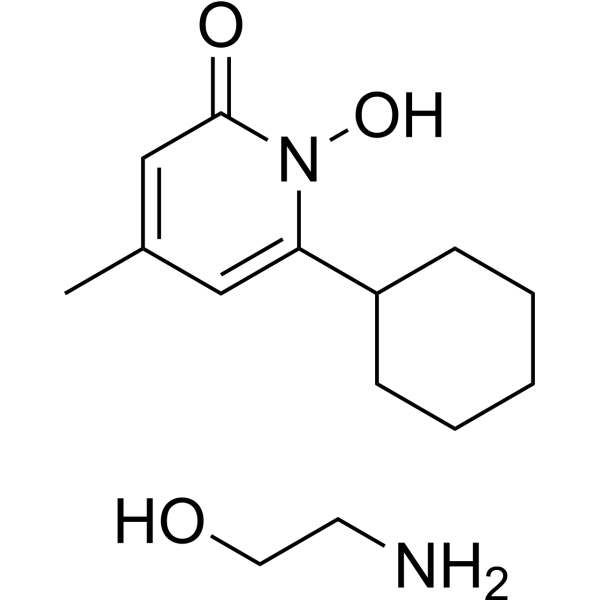
Cat. No.: HY-B0450A
CAS No.: 41621-49-2
Synonyms: Ciclopirox ethanolamine; HOE 296
Research Areas:  

Infection Cancer

Ciclopirox olamine (Ciclopirox ethanolamine) is a synthetic and orally active antifungal agent that can be used for superficial mycoses reseaech. Ciclopirox olamine has a very broad spectrum of activity and inhibits dermatophytes, yeasts, molds, and many Gram-positive and Gram-negative species pathogenic. Ciclopirox olamine also has anticancer and anti-inflammatory effect .
loading...
    loading...
1
1 Cited Publications
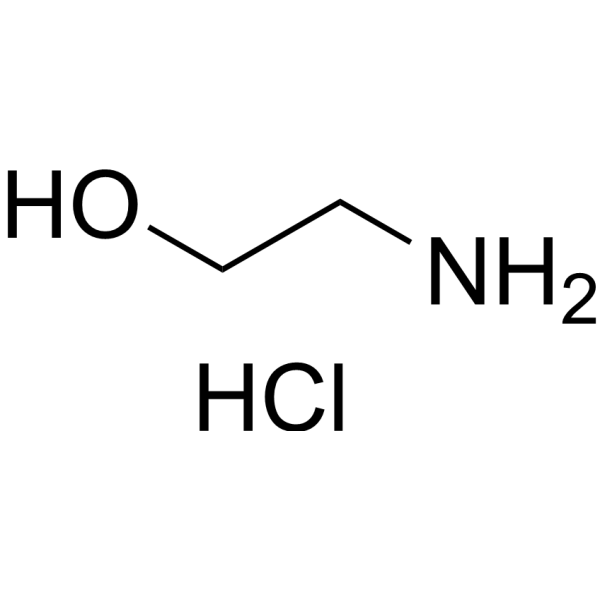
Cat. No.: HY-W035903
CAS No.: 2002-24-6
Synonyms: 2-Aminoethanol hydrochloride
Ethanolamine hydrochloride, is an organic compound used in various industrial applications. It is a white or colorless solid that is soluble in water and has a faint odor. One of the major uses of Ethanolamine hydrochloride is in the production of detergents and surfactants. Used as a raw material in the manufacture of compounds such as ethylenediaminetetraacetic acid (EDTA) and diethanolamine, which are commonly used in household and industrial cleaning products. Ethanolamine hydrochloride is also used in the synthesis of pharmaceuticals, agrochemicals and rubber processing agents. It acts as a buffer in certain chemical reactions, helping to adjust pH and maintain stability. Ethanolamine hydrochloride can be used for gas purification and metal corrosion inhibitor. Its ability to react with acid gases such as carbon dioxide and sulfur dioxide makes it useful for removing impurities from natural gas and other industrial gases. Overall, Ethanolamine hydrochloride is a multifunctional compound with many potential industrial applications. Its ability to act as a buffer, chelating agent, and corrosion inhibitor makes it an important tool in a variety of industries.
loading...
    loading...
1
1 Cited Publications
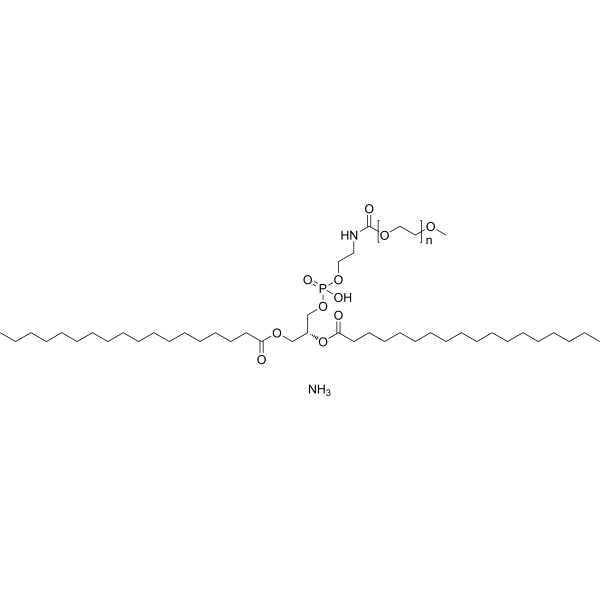
Cat. No.: HY-144013
CAS No.: 474922-77-5
Synonyms: DSPE-mPEG2000 ammonium; 1,2-Distearoyl-sn-glycero-3-phosphoethanolamine-N-[methoxy(polyethylene glycol)-2000] ammonium
18:0 mPEG2000 PE (DSPE-mPEG2000) ammonium is a polyethyleneglycol/phosphatidyl-ethanolamine conjugate. 18:0 mPEG2000 PE ammonium can be used for drug delivery .
loading...
    loading...
1
1 Cited Publications
Cat. No.: HY-100197
CAS No.: 162758-94-3
Purity:  99.30%
Synonyms: N-Docosahexaenoyl ethanolamine (DHEA); Docosahexaenoyl ethanolamide
Target:  

Cannabinoid Receptor

Research Areas:  

Neurological Disease

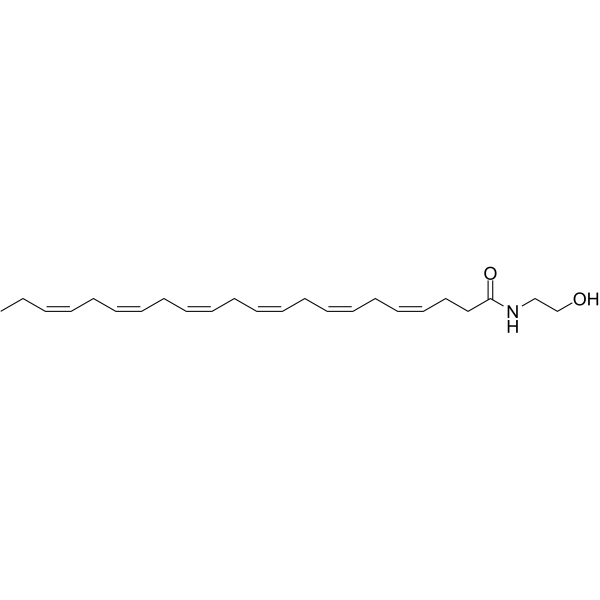
Synaptamide (Dehydroepiandrosteron; DHEA) is an endogenous metabolite and structural analogue of Anandamide. Synaptamide binds to both the cannabinoid-1 and 2 (CB1 and CB2) cannabinoid receptors and has anti-inflammatory properties. Synaptamide is the first small-molecule endogenous ligand of an adhesion G protein-coupled receptor (aGPCR) .
loading...
    loading...
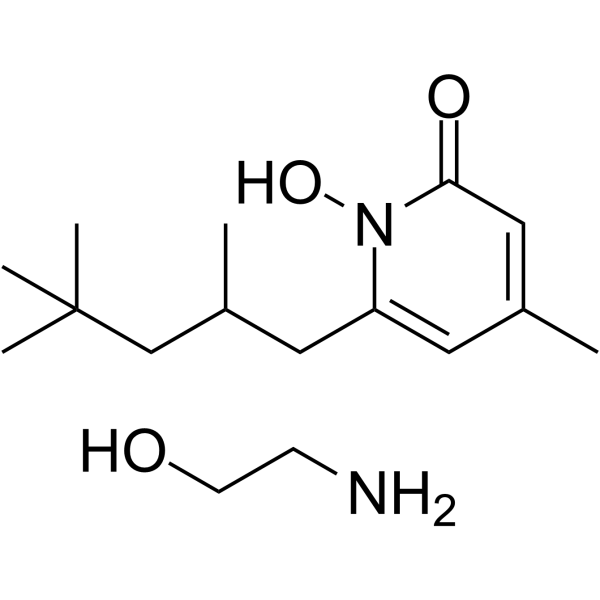
Cat. No.: HY-B1345
CAS No.: 68890-66-4
Synonyms: Piroctone ethanolamine
Target:  

Fungal

Research Areas:  

Infection

Piroctone olamine is a pyridine derivate. It is known to have a fungicidal effect.
loading...
    loading...
Cat. No.: HY-150287A
Synonyms: ITS-X
Insulin-Transferrin-Selenium-Ethanolamine (ITS-X) is a cell culture supplement as well as a cell growth and adhesion promoter. Insulin-Transferrin-Selenium-Ethanolamine supports adhesion, pseudopodium formation, pseudopodium elongation and proliferation of adherent cancer cells in serum-free culture systems .
loading...
    loading...
Cat. No.: HY-112747
CAS No.: 97281-51-1
Synonyms: LPI; PE (soy)
Target:  

Phospholipase

Research Areas:  

Infection

Soy PE (LPI) is the most abundant phospholipid in prokaryotes and the second most abundant found in the membrane of mammalian, plant, and yeast cells, comprising approximately 25% of total mammalian phospholipids. In the brain, phosphatidylethanolamine comprises almost half of the total phospholipids. It is synthesized mainly through the cytidine diphosphate-ethanolamine and phosphatidylserine decarboxylation pathways, which occur in the endoplasmic reticulum (ER) and mitochondrial membranes, respectively. It is a precursor in the synthesis of phosphatidylcholine and arachidonoyl ethanolamide and is a source of ethanolamine used in various cellular functions. In E.coli, phosphatidylethanolamine deficiency prevents proper assembly of lactose permease, suggesting a role as a lipid chaperone. It is a cofactor in the propagation of prions in vitro and can convert recombinant mammalian proteins into infectious molecules even in the absence of RNA. This product contains phosphatidylethanolamine molecular species with variable fatty acyl chain lengths at the sn-1 and sn-2 positions .
loading...
    loading...
Cat. No.: HY-148123
CAS No.: 39382-08-6
Purity:  88.59%
Glycerophospholipids and cephalins are a class of phospholipid compounds and important components of neural membranes. Glycerophospholipids and cephalins are hydrolysis substrates of phospholipase (such as PLA2, PLC, and PLD). After complete hydrolysis, they produce 1 mol of glycerol, phosphate, ethanolamine, and 2 mol of fatty acids, respectively. Glycerophospholipids and cephalins can maintain membrane structure, fluidity, and ion permeability, and serve as precursors of second messengers such as arachidonic acid and diacylglycerol. Glycerophospholipids and cephalins can regulate signal transduction, cell apoptosis, and membrane transport, and are used in the study of neurodegenerative diseases (such as Alzheimer's disease) .
loading...
    loading...
Cat. No.: HY-144010
CAS No.: 474922-90-2
Purity:  99.79%
Synonyms: DOPE-PEG2000 ammonium; 1,2-Dioleoyl-sn-glycero-3-phosphoethanolamine-N-[methoxy(polyethylene glycol)-2000] ammonium
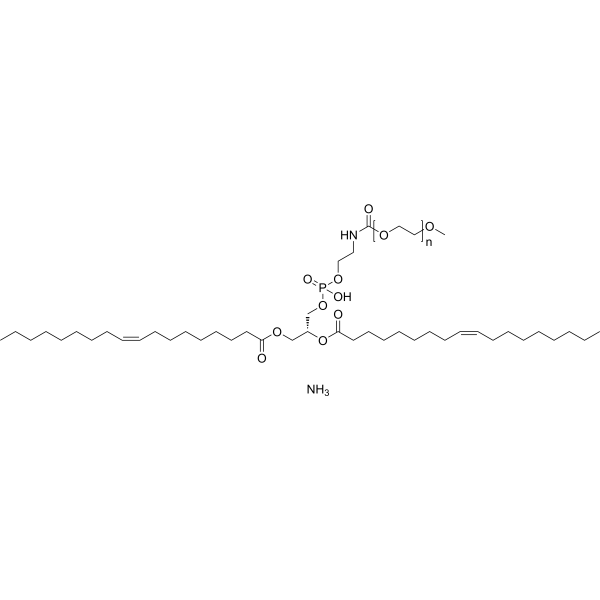
18:1 PEG2000 PE ammonium (DOPE-PEG2000 ammonium) is a polyethyleneglycol/phosphatidyl-ethanolamine conjugate. 18:1 PEG2000 PE ammonium (DOPE-PEG2000 ammonium) can be used for drug delivery .
loading...
    loading...
Cat. No.: HY-W011533
CAS No.: 105496-31-9
Synonyms: N-Fmoc-ethanolamine
Target:  

PROTAC Linkers

Research Areas:  

Cancer

(9H-Fluoren-9-yl)methyl (2-hydroxyethyl)carbamate (N-Fmoc-ethanolamine) is a PROTAC linker that can be used in the synthesis of PROTACs.
loading...
    loading...
Cat. No.: HY-125407
CAS No.: 126127-31-9
Purity:  95.9%
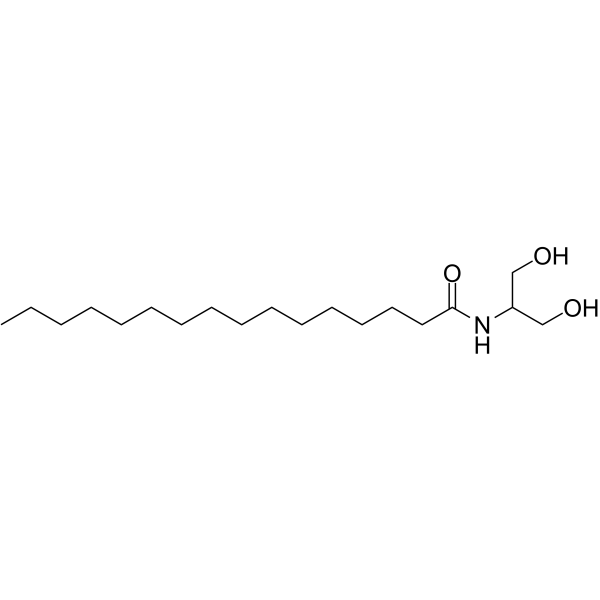
Synonyms: N-Palmitoyl serinol
Target:  

Cannabinoid Receptor

Research Areas:  

Inflammation/Immunology

Palmitoyl serinol (N-Palmitoyl serinol) is an analog of the endocannabinoid N-palmitoyl ethanolamine (PEA). Palmitoyl serinol improves the epidermal permeability barrier in both normal and inflamed skin .
loading...
    loading...
Cat. No.: HY-120813
CAS No.: 1373625-34-3
Purity:  98.83%
Synonyms: URB913
Target:  

Ceramidase

Research Areas:  

Inflammation/Immunology

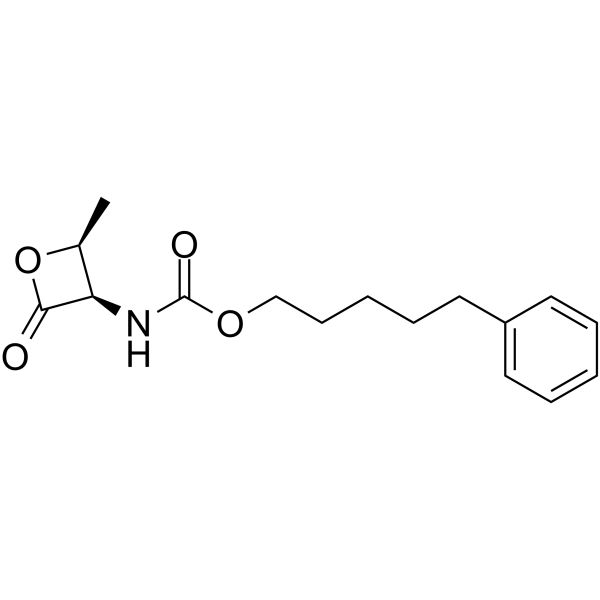
ARN 077 is a potent and selective N-acylethanolamine acid amidase (NAAA) inhibitor with an IC50 of 7 nM for human NAAA . ARN 077 significantly increases palmitoyl ethanolamine (PEA) levels within the CNS and has broad antinociceptive activity in mice and rats .
loading...
    loading...
Cat. No.: HY-120957
CAS No.: 862913-13-1
Synonyms: AMC-AA; 7-Amino-4-methyl coumarin-arachidonamide
Target:  

Endogenous Metabolite

Research Areas:  

Metabolic Disease

AMC arachidonoyl amide (AMC-AA) is one of several fatty acid amides which can be used to measure fatty acid amide hydrolase (FAAH) activity.1 FAAH is a relatively unselective enzyme in that it accepts a variety of amide head groups other than the ethanolamine of its nominal endogenous substrate anandamide.2 Exposure of AMC-AA to FAAH activity results in the release of the fluorescent aminomethyl coumarin that absorbs at 360 nm and emits at 465 nm. This allows the fast and convenient measurement of FAAH activity using a simple cuvette or microplate fluorometer.
loading...
    loading...
Cat. No.: HY-169784
CAS No.: 1436673-69-6
Target:  

Drug Derivative

Research Areas:  

Metabolic Disease

PPI-1040 is an orally bioavailable vinyl ether synthetic plasmalogen. PPI-1040 acts as a precursor of plasmalogen. PPI-1040 increases plasmalogen levels in plasmalogen-deficient mice and normalizes hyperactive behaviors in these mice. In wild-type mice, PPI-1040 retains the sn-1 vinyl ether group and sn-3 phosphoethanolamine group, and is converted into endogenous ethanolamine plasmalogen. PPI-1040 can be used in studies related to rhizomelic chondrodysplasia punctata .
loading...
    loading...
Cat. No.: HY-124081
CAS No.: 107743-37-3
Purity:  ≥99.0%
Target:  

Apoptosis

Research Areas:  

Metabolic Disease

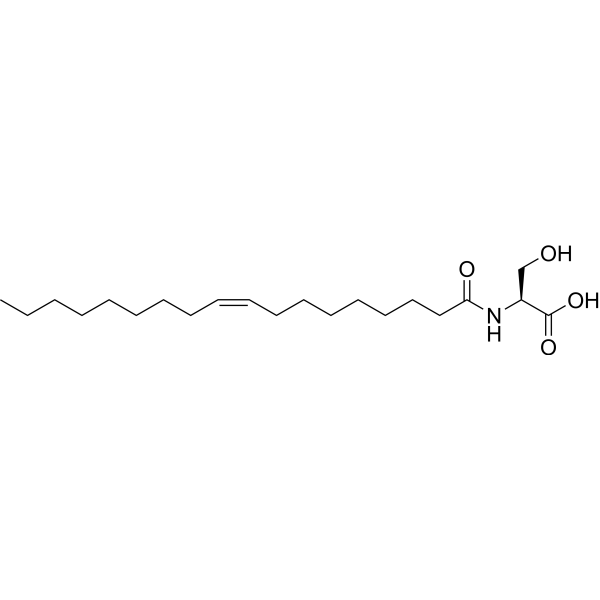
N-Oleoyl-L-Serine is an endogenous amide of long-chain fatty acids with ethanolamine (N-acyl amides). N-Oleoyl-L-Serine is a lipid regulator of bone remodeling and stimulates osteoclast apoptosis. N-Oleoyl-L-Serine can be used for antiosteoporotic drug discovery development .
loading...
    loading...
Cat. No.: HY-W035903S2
CAS No.: 2483832-03-5
Synonyms: 2-Aminoethanol-d4 hydrochloride
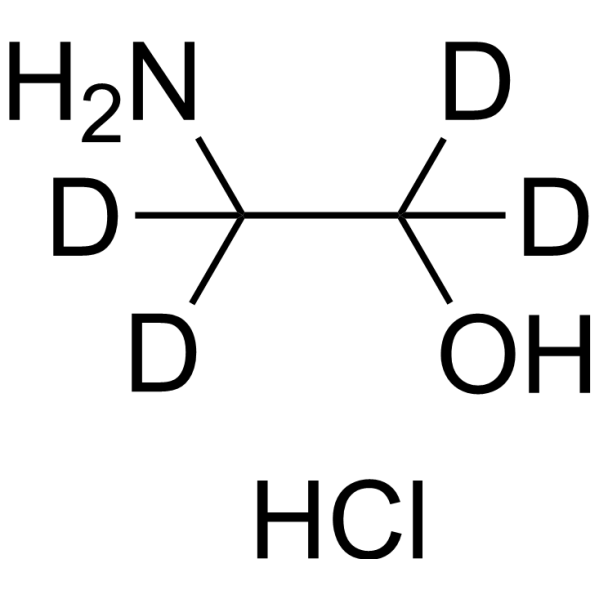
Ethanolamine-d4 hydrochloride is the deuterium labeled Ethanolaminel hydrochloride .
loading...
    loading...
Cat. No.: HY-W004853
CAS No.: 77987-49-6
Synonyms: N-Z-ethanolamine
Target:  

PROTAC Linkers

Research Areas:  

Cancer

Z-Glycinol (N-Z-ethanolamine) is a PROTAC linker that can be used in the synthesis of PROTACs.
loading...
    loading...
Cat. No.: HY-112528
CAS No.: 100575-09-5
Synonyms: GP-NPEA
Target:  

Endogenous Metabolite

Research Areas:  

Metabolic Disease

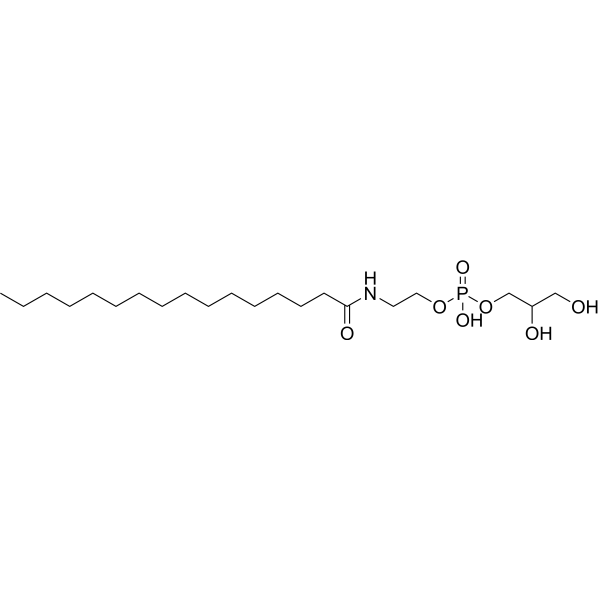
Glycerophospho-N-palmitoyl ethanolamine (GP-NPEA) is a metabolic precursor of palmitoyl ethanolamide PEA (HY-157829). Glycerophospho-N-palmitoyl ethanolamine decreases in the cortex of CUMS rats, which may be related to a disorder in the endocannabinoid system arising after the onset of depression .
loading...
    loading...
Cat. No.: HY-W127407
CAS No.: 201738-25-2
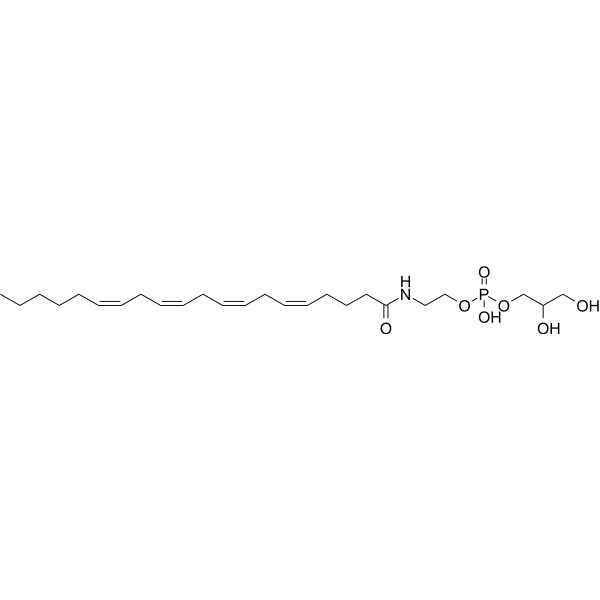
Glycerophospho-N-Arachidonoyl Ethanolamine is a N-acylated ethanolamines (NAEs). Most NAEs are naturally occurring lipids with diverse biological activities. Different types of NAE can be derived from glycerophosphate-linked precursors through the activity of glycerophosphodiesterase 1 (GDE1). Glycerophosphate-N-Arachidonoyl Ethanolamine is the precursor of Anandamide (AEA), also known as Anandamide. AEA is an endocannabinoid neurotransmitter that binds to central cannabinoid (CB1) and peripheral cannabinoid (CB2) receptors. It inhibits the specific binding of [3H]-HU-243 to synaptosomal membranes with a Ki value of 52 nM compared to 46 nM for δ9-THC.
loading...
    loading...
Cat. No.: HY-W259542
CAS No.: 634926-63-9
Research Areas:  

Others

O-Proparagyl-N-Boc-ethanolamine is crosslinker consisting of a propargyl group and a t-Boc protected amine group. The propargyl group reacts with azide-bearing compounds or biomolecules via copper catalyzed Click Chemistry reactions. The t-Boc protected amine can be deprotected under mild acidic conditions.
loading...
    loading...

