
1. Search Result
Search Result
Results for "

flies

" in MedChemExpress (MCE) Product Catalog:

24

Inhibitors & Agonists

1

Biochemical Assay Reagents

2

Peptides

11

Natural
Products

Cat. No. Product Name Target Research Areas Chemical Structure
  • HY-128454

    Environmental Pollutants Biochemical Assay Reagents Infection Neurological Disease
    Dimethyl trisulfide is a cyanide scavenger. Dimethyl trisulfide can be isolated from garlic, onions, broccoli and similar plants. Dimethyl trisulfide converts cyanide into thiocyanate. Dimethyl trisulfide is used by saprophagous insects to locate breeding sites (decaying organic matter), and is also used by deceptive flowers in brood sites to attract such insects. Dimethyl trisulfide induces electrophysiological responses in houseflies .
    Dimethyl trisulfide
  • HY-122485

    Bacterial Infection
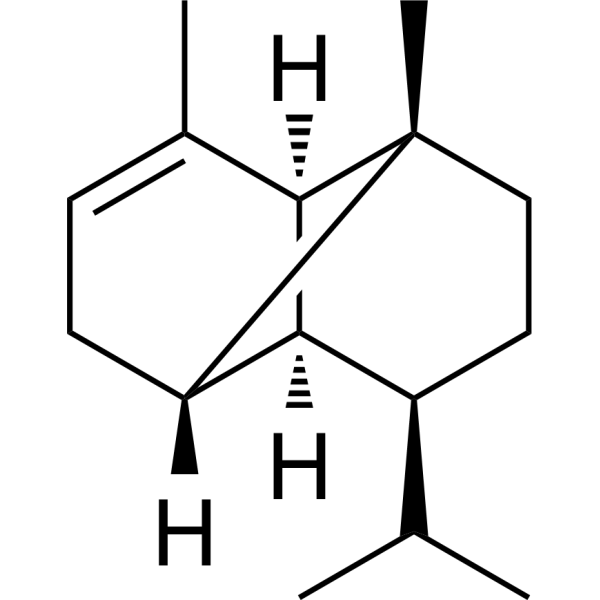
    α-Copaene is a potent attractant for male Mediterranean fruit flies Ceratitis capitata.α-Copaene can be found as a minor component in the essential oils of various plant species. α-Copaene can inhibit bacterial growth with a minimum inhibitory concentration of 0.5-1 μL/mL. α-Copaene suppresses biofilm formation by decreasing the hydrophobicity of the cell surface. α-Copaene can be used as an oviposition promoter of Bactrocera oleae .
    α-Copaene
  • HY-128900

    Endogenous Metabolite Others
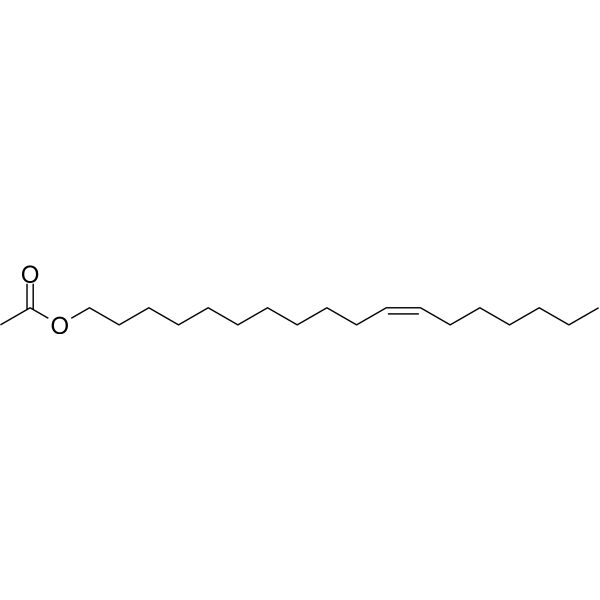
    11-cis-Vaccenyl acetate is male-specific lipid that mediates aggregation behavior in both male and female flies, which activates a few dozen olfactory neurons located in T1 sensilla on the antenna of both male and female flies .
    11-cis-Vaccenyl acetate
  • HY-B0874

    FMC 45497; Fendona; WL 85871

    Environmental Pollutants Insecticide Others
    Alpha-Cypermethrin (FMC 45497; Fendona; WL 85871) is an effective insecticide against house flies .
    Alpha-Cypermethrin
  • HY-N7099

    Q-lure

    Environmental Pollutants Insecticide Others
    Cue-lure (Q-lure) is a melon fly attractant. Cue-lure provides a short-term mating advantage to male Bactrocera cucurbitae .
    Cue-lure
  • HY-N6689
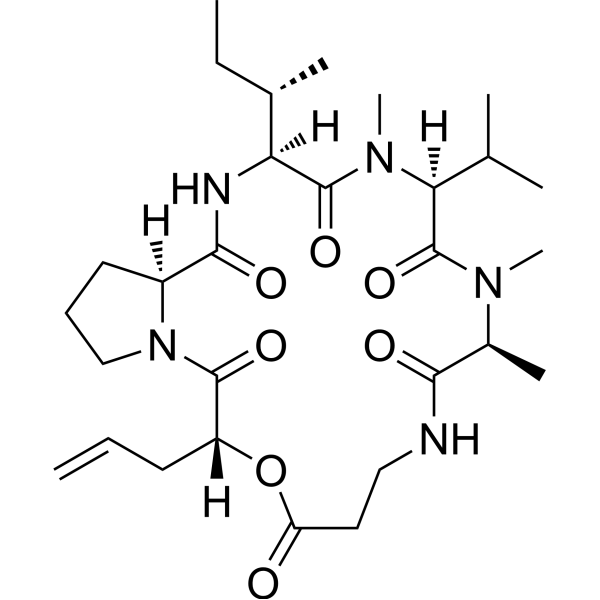
    Destruxin A
    1 Publications Verification

    Insecticide Bacterial Infection Inflammation/Immunology Cancer
    Destruxin A is a fungal cyclopeptide with insecticidal and antiviral activities. Destruxin A has a certain inhibitory effect on leukemia cells in vitro. Destruxin A can also specifically inhibit the innate immune response of Drosophila melanogaster, making the flies more susceptible to bacterial infections .
    Destruxin A
  • HY-129583
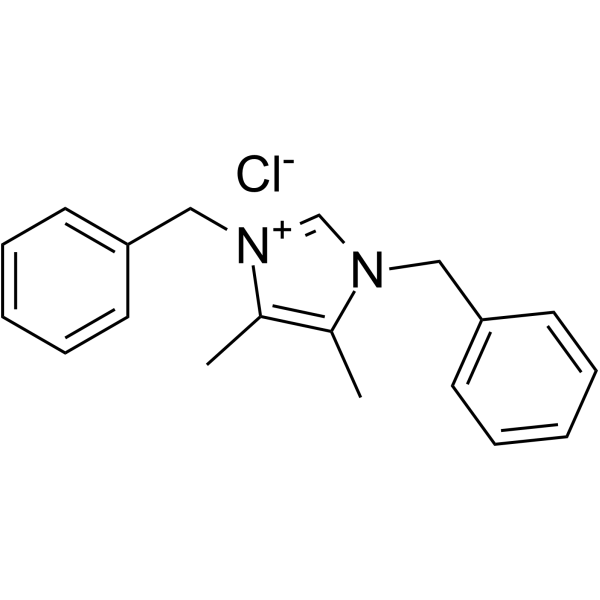
    Lepidiline A
    1 Publications Verification

    17β-HSD Cancer
    Lepidiline A exhibits cytotoxic activity against HL-60 cells with an IC50 value of 32.3 μM. Lepidiline A targets HSD17B1 activity, increases the bioconversion efficiency of sex hormones (including the conversion of estrogen into 17β-estradiol and 4-androsten-3,7-dione into testosterone), thereby improving the reproductive capacity of fruit flies. .
    Lepidiline A
  • HY-130423

    Insecticide Infection
    Milbemycin A3 is a 16-membered macrocyclic lactone compound found in the soil bacterium Saccharopolyspora hygroscopicus subsp. aureolacrimosus. Milbemycin A3 enhances the opening of glutamate- and GABA-gated chloride channels and exhibits insecticidal activity. Milbemycin A3 can be used in insect resistance-related research .
    Milbemycin A3
  • HY-76632

    Cholinesterase (ChE) SOD Neurological Disease
    4-Hydroxyisophthalic acid activates antioxidant enzymes (such as catalase CAT and superoxide dismutase SOD), scavenges free radicals, and exhibits antioxidant property. 4-Hydroxyisophthalic acid activates AChE and BChE, enhances neuronal function and improves Tau-induced neurobehavioral defects. 4-Hydroxyisophthalic acid improves the cognitive defects, and ameliorates circadian rhythm disorders of fruit flies .
    4-Hydroxyisophthalic acid
  • HY-P3483

    PACAP Receptor Caspase Apoptosis PKA Interleukin Related TNF Receptor Cardiovascular Disease Neurological Disease
    Maxadilan is a specific irreversible PAC1 receptor agonist and a potent vasodilator peptide present in the salivary glands of sand flies. Maxadilan exhibits anti-apoptotic activity in hADSCs. Maxadilan inhibits pro-inflammatory cytokines (TNF-α) and enhances anti-inflammatory mediators (IL-10). Maxadilan can activate leukocytes and inhibit vascular permeability through PAC1 receptors. Maxadilan promotes neural differentiation of human adipose-derived stem cells. Maxadilan can be used to study endotoxin shock, atherosclerosis, and neurodegenerative diseases [1] [2] [3] [4] [5].
    Maxadilan
  • HY-B0887B

    (-)-trans-NRDC-143; (1S)-trans-Permethrin

    Insecticide Others
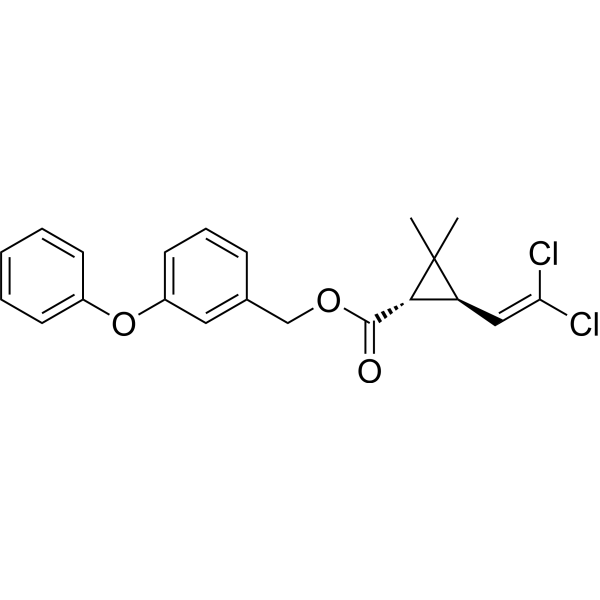
    (-)-trans-Permethrin ((-)-trans-NRDC-143) is a pyrethroid that can provide a satisfactory level of protection from black flies for cattle .
    (-)-trans-Permethrin
  • HY-W540861

    Biochemical Assay Reagents Others
    3,4-Dichlorophenyl Isothiocyanate is an intermediate in organic synthesis and is used to make other isothiocyanate-containing compounds. 3,4-Dichlorophenyl Isothiocyanate and its derivatives can be used to induce cabbage root flies and test their behavioral responses and trap bait effects .
    3,4-Dichlorophenyl isothiocyanate
  • HY-W009165R

    cis-9-Tricosene (Standard)

    Insecticide Reference Standards Others
    (Z)-9-Tricosene (Standard) is the analytical standard of (Z)-9-Tricosene. This product is intended for research and analytical applications. (Z)-9-Tricosene (cis-9-Tricosene) is an insect pheromone present in flies of the order Diptera (such as the housefly) and can be used as an insecticide[1].
    (Z)-9-Tricosene (Standard)
  • HY-W009165

    cis-9-Tricosene

    Environmental Pollutants Insecticide Others
    (Z)-9-Tricosene (cis-9-Tricosene) is an insect pheromone present in flies of the order Diptera (such as the housefly) and can be used as an insecticide .
    (Z)-9-Tricosene
  • HY-W013767

    Insecticide Infection
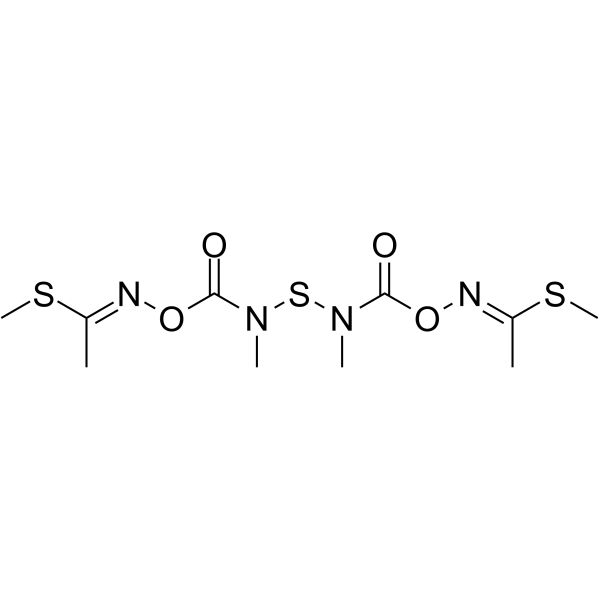
    Thiodicarb is a carbamate insecticide used to control flies in animal and poultry houses and dairies. Thiodicarb is metabolized into methomyl in animals and plants, and subsequently degraded into carbon dioxide and acetonitrile .
    Thiodicarb
  • HY-B0874R

    FMC 45497 (Standard); Fendona (Standard); WL 85871 (Standard)

    Insecticide Reference Standards Others
    Alpha-Cypermethrin (Standard) is the analytical standard of Alpha-Cypermethrin. This product is intended for research and analytical applications. Alpha-Cypermethrin (FMC 45497; Fendona; WL 85871) is an effective insecticide against house flies .
    Alpha-Cypermethrin (Standard)
  • HY-114832

    Insecticide Others
    OS 1808 is an effective inhibitor against blow flies .
    OS 1808
  • HY-N7099R

    Q-lure (Standard)

    Insecticide Reference Standards Others
    Cue-lure (Standard) is the analytical standard of Cue-lure (HY-N7099). This product is intended for research and analytical applications. Cue-lure (Q-lure) is a melon fly attractant. Cue-lure provides a short-term mating advantage to male Bactrocera cucurbitae .
    Cue-lure (Standard)
  • HY-N12924

    Others Endocrinology
    Ethyl 3-octenoate is an insect sex pheromone capable of attracting male Mediterranean fruit flies (Ceratitis capitata Wied.) .
    Ethyl 3-octenoate
  • HY-W718989

    Insecticide Infection
    Nithiazine is a neonicotinoid insecticide that induces death in adult house flies via ingestion of sugar baits. The resistance level to Nithiazine is low .
    Nithiazine
  • HY-182731

    Biochemical Assay Reagents Others
    Brain CPE is a sphingolipid found in mammalian cells, bacteria, and invertebrates. Brain CPE is the main sphingolipid found in the cell membranes of fruit flies and houseflies.
    Brain CPE
  • HY-W013767R

    Insecticide Reference Standards Infection
    Thiodicarb (Standard) is the analytical standard of Thiodicarb. This product is intended for research and analytical applications. Thiodicarb is a carbamate insecticide used to control flies in animal and poultry houses and dairies. Thiodicarb is metabolized into methomyl in animals and plants, and subsequently degraded into carbon dioxide and acetonitrile .
    Thiodicarb (Standard)
  • HY-W707148

    Endogenous Metabolite Infection
    4-Methyltridecane is a volatile substance specifically released by cabbage root flies (Delia radicum) after feeding. 4-Methyltridecane might be a key signal for the parasitoid bee Trybliographa rapae (Delia radicum’s specific parasitic predator) to locate the host. 4-Methyltridecane can serve as a specific marker for root damage in turnips (Brassica rapa subsp. Rapa) .
    4-Methyltridecane
  • HY-W421914

    Insecticide Infection
    Chlorthion is an organic phosphorothionate insecticide. Chlorthion inhibits liver microsomal hydroxylation of testosterone .
    Chlorthion

Inquiry Online

Your information is safe with us. * Required Fields.

Salutation


Country or Region *

Applicant Name *


Organization Name *

Department *


Email Address *


Product Name *

Cat. No.


Requested quantity *

Phone Number *


Remarks

Inquiry Online

Inquiry Information

Product Name:
Cat. No.:
Quantity:
MCE Japan Authorized Agent:

