Search Result
Results for "
herbicides
" in MedChemExpress (MCE) Product Catalog:
14
Biochemical Assay Reagents
84
Isotope-Labeled Compounds
| Cat. No. |
Product Name |
Target |
Research Areas |
Chemical Structure |
-
- HY-B2034
-
-
-
- HY-118742
-
|
|
Environmental Pollutants
HPPD
|
Others
|
|
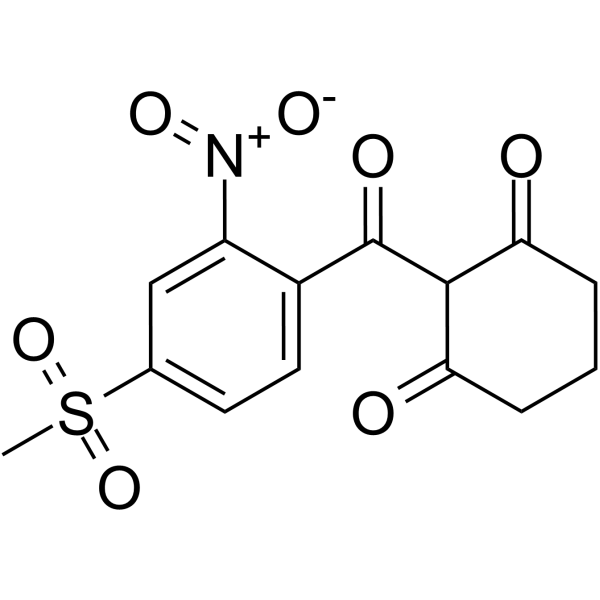
Benzobicyclon is a 4-HPPD inhibitor and herbicide that reacts with water to form a hydrolysate of the active herbicide benzobicycline, causing bleaching and death of weeds. Benzobicyclon is effective against grass, sedge and broadleaf weeds. Benzobicyclon effectively targets sulfonylurea herbicide-resistant biotypes as well as wild-type weeds .
|
-
-
- HY-136371
-
-
-
- HY-B1972
-
|
Napropamid
|
Environmental Pollutants
DNA/RNA Synthesis
Herbicide
|
Others
|
|
Napropamide (Napropamid) is an amide herbicide that can be used to control weeds in fruits, vegetables, tobacco, and ornamental plants. Napropamide mainly exerts its effect by inhibiting DNA synthesis and cell division. Napropamide has moderate to high persistence in the field, with a half-life of 24-131 days, and is prone to photodegradation .
|
-
-
- HY-119896
-
-
-
- HY-W018749
-
|
|
Environmental Pollutants
Herbicide
|
Others
|
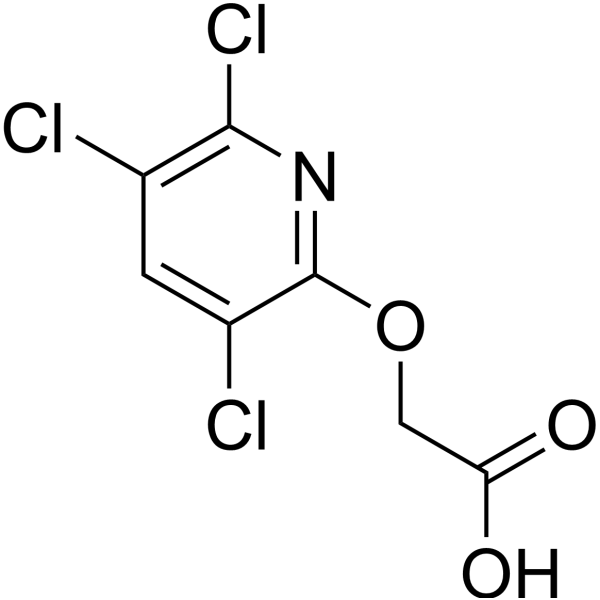
|
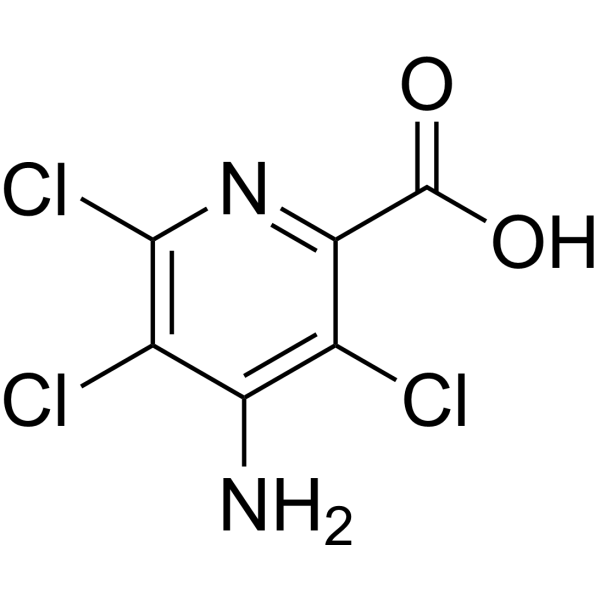
Clopyralid is a toxic and biorefractory herbicide. Clopyralid can form ionic liquids with increased efficacy against weeds and reduced leaching from soils .
|
-
-
- HY-114849
-
-
-
- HY-148429
-
|
|
Parasite
|
Others
|
|
Antimalarial agent 17 is an antimalarial agent, also acts as a herbicide. Antimalarial agent 17 is photosystem II inhibitor, shows post-emergence herbicidal activity equal to commercial herbicides .
|
-
-
- HY-136375
-
-
-
- HY-135753
-
-
-
- HY-B1871
-
|
|
Environmental Pollutants
Herbicide
|
Others
|
|
Metolachlor is a pre-emergent selective, chloroacetanilide herbicide for the control of a variety of annual grass and broad leaf weeds in corn and other crops. Metolachlor is a chiral herbicide consisting of four stereoisomers .
|
-
-
- HY-B1877
-
-
-
- HY-B1859
-
|
|
Environmental Pollutants
Herbicide
|
Others
|
|
Isoproturon belongs to the phenylurea herbicide family and is a systemic and selective herbicide. Isoproturon is widely applied for killing weeds in farmland, which can be used in the control of annual grasses and broad-leaved weeds in spring and winter wheat, winter rye and spring and winter barley .
|
-
-
- HY-126987
-
-
-
- HY-117262
-
-
-
- HY-170920
-
|
|
Cytochrome P450
SOD
Glutathione S-transferase
Acetolactate Synthase (ALS)
|
Others
|
|
Herbicide safener-4 (Compound I-15) is a Herbicide safener, improving the herbicide resistance of crops without reducing the herbicidal effect on targeted weed species. Herbicide safener-4 competitively binds to the ALS active site with Mesosulfuron-methyl (HY-126987). Herbicide safener-4 enhances GSH (HY-D0187), GST, CYP450, POD, SOD and ALS activity in plants .
|
-
-
- HY-130361
-
-
-
- HY-19698A
-
|
4-CPA sodium; p-Chlorophenoxyacetic acid sodium
|
Biochemical Assay Reagents
Herbicide
|
Others
|
|
4-Chlorophenoxyacetic acid sodium is a widely used herbicide and plant growth regulator. 4-Chlorophenoxyacetic acid sodium mimics endogenous auxin and regulates plant cell division, differentiation and gene expression. 4-Chlorophenoxyacetic acid sodium is used to control weeds and promote fruit growth .
|
-
-
- HY-133188
-
-
-
- HY-126176
-
|
|
Acetolactate Synthase (ALS)
|
Others
|
|
Cloransulam-methyl is a triazolopyrimidine sulfonanilide herbicide. Cloransulam-methyl can be used to control broadleaf weeds in soybean by acetolactate synthase (ALS) inhibition .
|
-
-
- HY-B1912
-
|
|
Herbicide
|
Others
|
|
Amidosulfuron is a herbicide. Amidosulfuron targets acetohydroxyacid synthase (AHAS), is highly effective against dicot broad-leaf weeds .
|
-
-
- HY-B1875
-
-
-
- HY-121079
-
-
-
- HY-149199
-
|
Touchdown; Glyphosphate-trimesium
|
Herbicide
|
Others
|
|
Sulfosate is a post-emergence, non-selective and translocated herbicide. Sulfosate can be used for weed control .
|
-
-
- HY-147365
-
|
|
Environmental Pollutants
Herbicide
|
Others
|
|
Acifluorfen-methyl is an inhibitor of the heme and chlorophyll biosynthetic enzyme protoporphyrinogen oxidase (Protox). Acifluorfen-methyl is a photobleaching herbicide .
|
-
-
- HY-W726600
-
|
|
Herbicide
|
Infection
|
|
Florpyrauxifen-benzyl is an auxin herbicide. Florpyrauxifen-benzyl is promising for research of agricultural weeds, such as Echinochloa crusgalli in rice paddies .
|
-
-
- HY-175500
-
|
|
HPPD
Herbicide
|
Others
|
|
HPPD-IN-5 (compound IV-45) is a 4-hydroxyphenylpyruvate dioxygenase (HPPD) inhibitor with an IC50 of 0.21 μM. HPPD-IN-5 is used as a herbicide .
|
-
-
- HY-136371R
-
|
Fluroxypyr-1-methylheptyl ester (Standard)
|
Herbicide
Reference Standards
SOD
Glutathione S-transferase
|
Others
|
|
Fluroxypyr-meptyl (Standard) is the analytical standard of Fluroxypyr-meptyl. This product is intended for research and analytical applications. Fluroxypyr-meptyl (Fluroxypyr-1-methylheptyl ester), a synthetical phytohormone, is used as herbicide agent .
|
-
-
- HY-162883
-
|
|
SHMT
|
Others
|
|
SHMT-IN-4 (Compound 9ay) is a herbicide that targets and inhibits serine hydroxymethyltransferase (SHMT1) with an IC50 value of 193.8 g a.i./ha (active ingredient content per hectare). SHMT-IN-4 interferes with amino acid synthesis and metabolism in plants by binding to SHMT1, thereby inhibiting plant growth. Additionally, SHMT-IN-4 shows no significant toxicity to maize and honeybees .
|
-
-
- HY-B1850
-
-
-
- HY-156267
-
|
|
Herbicide
|
Others
|
|
PPO-IN-4 (compond 2i) is a potent Protoporphyrinogen oxidase (PPO) inhibitor. PPO-IN-4 can be used as a candidate herbicide for wheat, corn, and paddy fields .
|
-
-
- HY-B2051
-
-
-
- HY-121727
-
|
AE 1887196; BCS-BX60309
|
Acetolactate Synthase (ALS)
|
Others
|
|
Triafamone (AE 1887196) is a paddy field pre-emergence and post-emergence sulfonamide herbicide. Triafamone weeds by
inhibiting the acetolactate synthase (ALS) enzyme, thereby blocking the biosynthesis of branched-chain amino acids .
|
-
-
- HY-136374
-
|
|
Herbicide
|
Others
|
|
Haloxyfop-P-methyl is an aryloxyphenoxypropionate herbicide. Haloxyfop-P-methyl can be absorbed by roots or foliage and hampers lipogenesis and increases oxidative stress in target plants .
|
-
-
- HY-W020020
-
-
-
- HY-B0870
-
-
-
- HY-136369
-
-
-
- HY-126152
-
|
|
Herbicide
|
Others
|
|
Chlorthiamid is a broad-spectrum herbicide. Chlorthiamid is an olfactory toxicant with a high in vivo covalent binding in the olfactory mucosa of mice .
|
-
-
- HY-W052234
-
|
|
Insecticide
|
Others
|
|
4-Fluorophenoxyacetic acid is a herbicide and plant defense inducer. 4-Fluorophenoxyacetic can inhibit the heading of monocotyledonous weeds and induce their sterility. Additionally, 4-Fluorophenoxyacetic acid can induce the defense mechanism of cereals to suppress pest populations and increase the yield of field crops .
|
-
-
- HY-W286307
-
|
|
Environmental Pollutants
Herbicide
|
Others
|
|
Haloxyfop-methyl is a high-efficacy herbicide. Haloxyfop-methyl selectively controls several annual and perennial grasses in soybeans and other dicotyledenous crops .
|
-
-
- HY-122217
-
|
CL 11344
|
Herbicide
|
Others
|
|
Pyridate (CL 11344) is a herbicide, which is used in the agricultural management of cereals, maize and rape .
|
-
-
- HY-135244
-
|
AC 222293
|
Herbicide
|
Others
|
|
Imazamethabenz-methyl (AC 222293) is a postemergence herbicide .
|
-
-
- HY-158245
-
|
|
Acetolactate Synthase (ALS)
|
Others
|
|
Herbicide safener-2 (Compound III-7) is a herbicide safener with the same pharmacokinetic profile as the safener mefenpyr-diethyl (HY-136376). Herbicide safener-2 competitively binds to the acetolactate synthase (ALS) active site with mesosulfuron-methyl (HY-126987). Herbicide safener-2 protects crops against herbicide injury .
|
-
-
- HY-114769
-
|
UBH 820
|
Herbicide
|
Others
|
|
Beflubutamid is a chiral soil herbicide against dicotyledonous weeds in cereals .
|
-
-
- HY-116653
-
-
-
- HY-117262R
-
|
|
Reference Standards
Acetyl-CoA Carboxylase
|
Others
|
|
Propaquizafop (Standard) is the analytical standard of Propaquizafop. This product is intended for research and analytical applications. Propaquizafop is a phenoxyisopropionic acid herbicide and an acetyl-coA carboxylase inhibitor .
|
-
-
- HY-122217R
-
|
CL 11344 (Standard)
|
Herbicide
Reference Standards
|
Others
|
|
Pyridate (Standard) is the analytical standard of Pyridate. This product is intended for research and analytical applications. Pyridate (CL 11344) is a herbicide, which is used in the agricultural management of cereals, maize and rape .
|
-
-
- HY-121427
-
-
-
- HY-122118
-
|
CP-17029
|
Herbicide
|
Others
|
|
Lambast (CP-17029) is a herbicide. Lambast is more toxic to wheat and sorghum than to cucumber .
|
-
-
- HY-W076490
-
|
IPO 4328; N-Methyl-N'-phenylurea; 1-Methyl-3-phenylurea
|
Herbicide
|
Others
|
|
Defenuron (IPO 4328) is a herbicide for controlling undesirable grasses and broad-leaved plants in a variety of crops .
|
-
- HY-135244R
-
|
AC 222293 (Standard)
|
Herbicide
Reference Standards
|
Others
|
|
Imazamethabenz-methyl (Standard) is the analytical standard of Imazamethabenz-methyl. This product is intended for research and analytical applications. Imazamethabenz-methyl (AC 222293) is a postemergence herbicide .
|
-
- HY-114769R
-
|
UBH 820 (Standard)
|
Herbicide
Reference Standards
|
Others
|
|
Beflubutamid (Standard) is the analytical standard of Beflubutamid. This product is intended for research and analytical applications. Beflubutamid is a chiral soil herbicide against dicotyledonous weeds in cereals .
|
-
- HY-116653R
-
|
|
Reference Standards
Stearoyl-CoA Desaturase (SCD)
|
Others
|
|
Flurtamone (Standard) is the analytical standard of Flurtamone. This product is intended for research and analytical applications. Flurtamone is a chiral herbicide with acute toxicity levels to Selenastrum capricornutum .
|
-
- HY-111912
-
|
|
Environmental Pollutants
Fungal
|
Infection
|
|
Tribenuron-methyl, a sulfonylurea herbicide agent, can be used as the fungicide agent. Tribenuron-methyl plays an important role in controlling the weeds and diseases in wheat field .
|
-
- HY-136370
-
-
- HY-B1875R
-
|
|
Herbicide
Reference Standards
|
Others
|
|
Monuron (Standard) is the analytical standard of Monuron. This product is intended for research and analytical applications. Monuron is a phenylurea herbicide which inhibits photosynthesis .
|
-
- HY-144177S
-
|
|
Isotope-Labeled Compounds
|
Infection
|
|
Benzthiazuron-d3 is deuterium labeled Benzthiazuron. Benzthiazuron is a selective herbicide that is used mainly to control annual broad-leaved weeds in a variety of crops .
|
-
- HY-B2051R
-
|
|
Fungal
Reference Standards
|
Others
|
|
Triclopyr (Standard) is the analytical standard of Triclopyr. This product is intended for research and analytical applications. Triclopyr, a foliar systemic herbicide and fungicide, is widely used for broadleaf and woody plant control. Triclopyr has severe toxicity .
|
-
- HY-121427R
-
|
|
Reference Standards
Acetyl-CoA Carboxylase
|
Others
|
|
Fluazifop (Standard) is the analytical standard of Fluazifop. This product is intended for research and analytical applications. Fluazifop is a grass-selective herbicide via inhibiting acetyl-CoA carboxylase .
|
-
- HY-176728
-
|
|
Dihydroorotate Dehydrogenase
|
Infection
|
|
DHODH-IN-27 (WF-8) is a dihydroacetate dehydrogenase (DHODH) inhibitor with an IC50 of 64.97 μM. DHODH-IN-27 can be used as an anti-DHODH herbicide .
|
-
- HY-119896R
-
|
|
Herbicide
Reference Standards
|
Neurological Disease
|
|
Clethodim (Standard) is the analytical standard of Clethodim. This product is intended for research and analytical applications. Clethodim is a postemergence herbicide. Clethodim shows developmental toxicity and neurotoxicity in zebrafish embryos and larvae .
|
-
- HY-111912R
-
|
|
Reference Standards
Fungal
|
Infection
|
|
Tribenuron-methyl (Standard) is the analytical standard of Tribenuron-methyl. This product is intended for research and analytical applications. Tribenuron-methyl, a sulfonylurea herbicide agent, can be used as the fungicide agent. Tribenuron-methyl plays an important role in controlling the weeds and diseases in wheat field .
|
-
- HY-121423
-
|
|
Apoptosis
Reactive Oxygen Species (ROS)
|
Metabolic Disease
|
|
Dimethachlor, a synthetic herbicide, inhibits the undesirable growth of weeds via the suppression of very long-chain fatty acid synthesis. Dimethachlor disrupts normal developmental processes via the induction of apoptosis and ROS production .
|
-
- HY-W774905
-
-
- HY-B2020S
-
-
- HY-136374R
-
|
|
Herbicide
Reference Standards
|
Others
|
|
Haloxyfop-P-methyl (Standard) is the analytical standard of Haloxyfop-P-methyl. This product is intended for research and analytical applications. Haloxyfop-P-methyl is an aryloxyphenoxypropionate herbicide. Haloxyfop-P-methyl can be absorbed by roots or foliage and hampers lipogenesis and increases oxidative stress in target plants .
|
-
- HY-121338R
-
|
NIA-11092 (Standard)
|
Herbicide
Reference Standards
|
Others
|
|
Karbutilate (Standard) is the analytical standard of Karbutilate. This product is intended for research and analytical applications. Karbutilate (NIA-11092) is a nonselective soil-active herbicide which is used to kill one-leaf pinyon saplings .
|
-
- HY-136375R
-
|
|
Herbicide
Reference Standards
|
Others
|
|
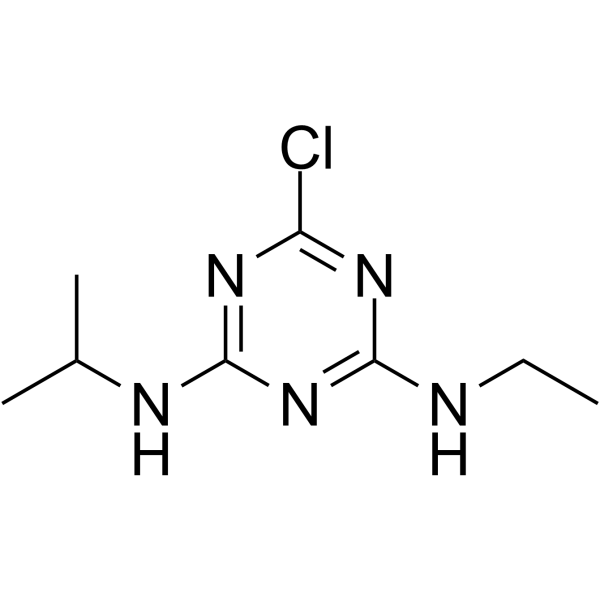
Cyanazine (Standard) is the analytical standard of Cyanazine. This product is intended for research and analytical applications. Cyanazine, a triazine herbicide cyanazine, is used to control a variety of grass weeds and broadleaf weed. Cyanazine is proved non-genotoxic .
|
-
- HY-B1871R
-
|
|
Herbicide
Reference Standards
|
Others
|
|
Metolachlor (Standard) is the analytical standard of Metolachlor. This product is intended for research and analytical applications. Metolachlor is a pre-emergent selective, chloroacetanilide herbicide for the control of a variety of annual grass and broad leaf weeds in corn and other crops. Metolachlor is a chiral herbicide consisting of four stereoisomers .
|
-
- HY-121220
-
|
Legurame
|
Herbicide
|
Others
|
|
Carbetamide (Legurame) is a soil active herbicide which controls annual grasses and suppresses some broadleaf weeds in a range of dicotyledonous crops .
|
-
- HY-121079R
-
|
DPX-A8947 (Standard)
|
Herbicide
Reference Standards
|
Others
|
|
Azimsulfuron (Standard) is the analytical standard of Azimsulfuron. This product is intended for research and analytical applications. Azimsulfuron (DPX-A8947) is a sulfonylurea herbicide useful in controlling weeds in paddy fields .
|
-
- HY-158981
-
|
|
Herbicide
|
Others
|
|
Herbicide safener-3 is a compound that increases the selectivity of herbicides. Herbicide safener-3 is often used together with herbicides, particularly those that can be harmful to crops. Herbicide safener-3 reduces the negative effects of herbicide on the crop by regulating metabolic differences between the crop and the weed while still allowing the herbicide to be effective on the weed. Herbicide safener-3 can be used in research that improves herbicide application effectiveness and crop safety .
|
-
- HY-111339
-
|
|
Herbicide
|
Others
|
|
Pyridafol is a pyridazine herbicide and metabolite of pyridate.Pyridafol is classified as a metabolite of a selective postemergence herbicide .
|
-
- HY-W343201
-
-
- HY-W754459
-
|
|
Herbicide
|
Others
|
|
Triazole sulcotrione is a triazole herbicide commonly used for weed control in cornfields.
|
-
- HY-181407
-
|
|
Herbicide
Glutathione S-transferase
Cytochrome P450
SOD
|
Others
|
|
Herbicide safener-5 is a herbicide (Herbicide) safener. Herbicide safener-5 promotes plant growth recovery, enhances the activities of detoxifying enzymes (ALS, GST, CYP450, POD), and reduces SOD activity. Herbicide safener-5 is applicable to herbicide-related research .
|
-
- HY-W014871
-
-
- HY-W714195
-
|
|
Herbicide
|
Others
|
|
MCPA-2-ethylhexyl ester is a herbicide used for the control of broad-spectrum broadleaf weeds in winter cereal crops .
|
-
- HY-W703578
-
|
|
Herbicide
|
Others
|
|
Cinmethylin is a herbicide. Cinmethylin inhibits plant fatty acid biosynthesis. Cinmethylin reduces the emergence rate and above-ground biomass of rigid ryegrass. Cinmethylin kills weeds by inhibiting cell division at root meristems. Cinmethylin exhibits activity against paddy field weeds including Echinochloa crus-galli (L.) var. formosensis and Scirpus juncoides var. ohwianus. Cinmethylin is applicable to agricultural herbicide research .
|
-
- HY-B1850R
-
|
Inpool (Standard); MON 12000 (Standard); Manage (Standard)
|
Herbicide
Reference Standards
|
Others
|
|
Halosulfuron-methyl (Standard) is the analytical standard of Halosulfuron-methyl. This product is intended for research and analytical applications. Halosulfuron-methyl is a pyrazole sulfonylurea herbicide .
|
-
- HY-W794636
-
|
|
Herbicide
|
Others
|
|
Sodium 4-(4-chloro-o-tolyloxy)butyrate is a phenoxycarboxylic acid herbicide.
|
-
- HY-180894
-
-
- HY-N15360
-
|
|
Herbicide
|
Infection
|
|
Isophytyl acetate is an organic compound found in Nicotiana plumbaginifolia stems. Isophytyl acetate is promising for research of herbicides .
|
-
- HY-B1912R
-
|
|
Herbicide
Reference Standards
|
Others
|
|
Amidosulfuron (Standard) is the analytical standard of Amidosulfuron. This product is intended for research and analytical applications. Amidosulfuron is a herbicide. Amidosulfuron targets acetohydroxyacid synthase (AHAS), is highly effective against dicot broad-leaf weeds .
|
-
- HY-116690
-
|
|
Herbicide
|
Others
|
|
Daimuron is a herbicide safener. Daimuron has a protective effect against the inhibition of seed root elongation by chloroacetanilide herbicides .
|
-
- HY-W714191
-
|
|
Herbicide
|
Others
|
|
Flamprop-isopropyl is a selective herbicide mainly used for controlling grassy weeds in farmland .
|
-
- HY-175844
-
|
|
Herbicide
|
Others
|
|
Herbicidal agent 12 (compound 6q) is a potent pyrimidinedione herbicide with strong herbicidal activity against broadleaf weeds .
|
-
- HY-121338
-
|
NIA-11092
|
Herbicide
|
Others
|
|
Karbutilate (NIA-11092) is a nonselective soil-active herbicide which is used to kill one-leaf pinyon saplings .
|
-
- HY-157086
-
|
|
Herbicide
|
Others
|
|
IR5790 is a herbicide. IR5790 strongly inhibits protoporphyrinogen oxidase with an IC50 of 3 nM .
|
-
- HY-180202
-
|
|
Herbicide
Transketolase
|
Others
|
|
Transketolase-IN-7 (compound 4m) is a potent herbicide that exhibits inhibitory activity against C. rotundus with an IC50 of 6.66 mg/L. Transketolase-IN-7 is a transketolase (TK) inhibitor that interacts with the TK enzyme by forming hydrogen bonds. Transketolase-IN-7 can be used for research of plant herbicides .
|
-
- HY-W414395
-
-
- HY-W713147
-
|
|
Herbicide
|
Others
|
|
Thiencarbazone-methyl is a triazole herbicide and also a substrate for microbial degradation. Thiencarbazone-methyl can be degraded by specific fungi and strains. Thiencarbazone-methyl has intrinsic toxicity to the bladder and urinary function. Thiencarbazone-methyl possesses herbicidal activity and can be applied to corn, wheat, lawns and ornamental plants .
|
-
- HY-B1951
-
|
|
Herbicide
|
Endocrinology
Cancer
|
|
Trietazine is a selective pre- and post-emergence glyphosate-based herbicide. Trietazine residues cause human health risks, such as cancer, birth defects, and hormone imbalance .
|
-
- HY-N18280
-
|
|
Herbicide
|
Others
|
|
(2E,4Z-Decadienoyl)piperidine is a herbicide found in the fruits of Piper longum L. .
|
-
- HY-116690R
-
|
|
Herbicide
Reference Standards
|
Others
|
|
Daimuron (Standard) is the analytical standard of Daimuron. This product is intended for research and analytical applications. Daimuron is a herbicide safener. Daimuron has a protective effect against the inhibition of seed root elongation by chloroacetanilide herbicides .
|
-
- HY-125945
-
|
|
Herbicide
|
Others
|
|
Monosulfuron is a potent herbicide agent. Monosulfuron is an acetolactate synthase (ALS) inhibitor with an IC50 of 32 nmol/L against CAU 3138 .
|
-
- HY-W753723
-
|
|
Herbicide
HPPD
|
Others
|
|
Biscarfentrazone is a HPPD-inhibiting herbicide for wheat fields, which can effectively control ALS-resistant broadleaf weeds and is safe to wheat .
|
-
- HY-W020020R
-
|
|
Herbicide
Reference Standards
|
Others
|
|
Thifensulfuron-methyl (Standard) is the analytical standard of Thifensulfuron-methyl. This product is intended for research and analytical applications. Thifensulfuron-methyl is a sulfonylurea herbicide and mainly used for control of broadleaved weeds in wheat, corn, and soybean fields .
|
-
- HY-130361R
-
|
|
Herbicide
Reference Standards
|
Others
|
|
Isoxadifen-ethyl (Standard) is the analytical standard of Isoxadifen-ethyl. This product is intended for research and analytical applications. Isoxadifen-ethyl is a widely used herbicide safener in rice which can decrease the phytotoxicity caused by fenoxaprop-P-ethyl .
|
-
- HY-153727
-
|
|
Phytohormone
|
Others
|
|
Herbicide safener-1 (II-Q001) is a crop protection and safety agent. Herbicide safener-1 can protect crops from the damage caused by pesticides (such as herbicides and fungicides) .
|
-
- HY-135753R
-
|
BAS 9052 (Standard)
|
Reference Standards
Acetyl-CoA Carboxylase
|
Others
|
|
Sethoxydim (Standard) is the analytical standard of Sethoxydim. This product is intended for research and analytical applications. Sethoxydim is a postemergent herbicide. Sethoxydim inhibits plant acetyl-coenzyme A carboxylase (ACCase) activity .
|
-
- HY-B1951R
-
|
|
Herbicide
Reference Standards
|
Endocrinology
Cancer
|
|
Trietazine (Standard) is the analytical standard of Trietazine. This product is intended for research and analytical applications. Trietazine is a selective pre- and post-emergence glyphosate-based herbicide. Trietazine residues cause human health risks, such as cancer, birth defects, and hormone imbalance .
|
-
- HY-136370R
-
|
|
Herbicide
Reference Standards
|
Others
|
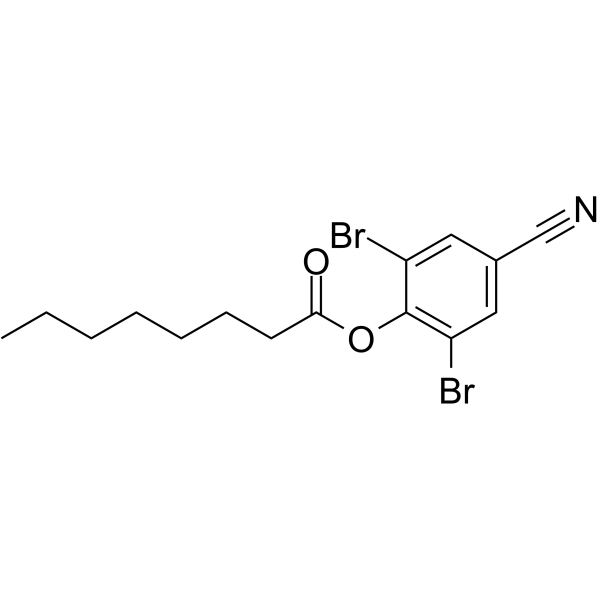
|
Bromoxynil octanoate (Standard) is the analytical standard of Bromoxynil octanoate. This product is intended for research and analytical applications. Bromoxynil octanoate is an herbicide widely applied to maize, is potentially toxic to both animals and humans .
|
-
- HY-59354
-
-
- HY-123307
-
|
Xylafop
|
Environmental Pollutants
Acetyl-CoA Carboxylase
|
Others
|
|
Quizalofop (Xylafop) is a herbicide that inhibits acetyl-CoA carboxylase (ACCase) to reduce the synthesis of fatty acids. Quizalofop can be used to screen EMS (HY-W015854) mutated microalgae for research on improving the performance of microalgae biofuel production .
|
-
- HY-W585923
-
|
|
Drug Metabolite
|
Others
|
|
Clethodim sulfoxide is the aerobic metabolite of clethodim (HY-119896), a cyclohexanedione oxime herbicide .
|
-
- HY-144900
-
-
- HY-B2046R
-
-
- HY-118742R
-
|
|
HPPD
Reference Standards
|
Others
|
|
Benzobicyclon (Standard) is the analytical standard of Benzobicyclon. This product is intended for research and analytical applications. Benzobicyclon is a 4-HPPD inhibitor and herbicide that reacts with water to form a hydrolysate of the active herbicide benzobicycline, causing bleaching and death of weeds. Benzobicyclon is effective against grass, sedge and broadleaf weeds. Benzobicyclon effectively targets sulfonylurea herbicide-resistant biotypes as well as wild-type weeds .
|
-
- HY-133188R
-
|
|
Herbicide
Reference Standards
|
Others
|
|
Imazethapyr (Standard) is the analytical standard of Imazethapyr. This product is intended for research and analytical applications. Imazethapyr is an imidazolinone herbicide used in crops. Imazethapyr can protect crops from damage by weeds and annual grasses .
|
-
- HY-125945R
-
|
|
Herbicide
Reference Standards
|
Others
|
|
Monosulfuron (Standard) is the analytical standard of Monosulfuron. This product is intended for research and analytical applications. Monosulfuron is a potent herbicide agent. Monosulfuron is an acetolactate synthase (ALS) inhibitor with an IC50 of 32 nmol/L against CAU 3138 .
|
-
- HY-136369R
-
|
|
Herbicide
Mitosis
Reference Standards
|
Others
|
|
Ethofumesate (Standard) is the analytical standard of Ethofumesate. This product is intended for research and analytical applications. Ethofumesate, a chiral herbicide, acts by inhibiting mitosis and reducing photosynthesis and plant respiration .
|
-
- HY-136367
-
|
|
Environmental Pollutants
Herbicide
|
Others
|
|
Diclofop-methyl, a common post-emergence herbicide, is widely used in agriculture production. Diclofop-methyl increases the proton permeability of isolated oat-root tonoplast .
|
-
- HY-162337
-
|
|
Protoporphyrinogen IX oxidase
|
Others
|
|
PPO-IN-8 (Compound D4) is a phenyltriazolinone PPO inhibitor with an IC50 of 33 μg/L. PPO-IN-8 is a herbicide with a wide herbicidal spectrum and has good growth inhibition effect on dicotyledonous weeds .
|
-
- HY-B1859R
-
|
|
Herbicide
Reference Standards
|
Others
|
|
Isoproturon (Standard) is the analytical standard of Isoproturon. This product is intended for research and analytical applications. Isoproturon belongs to the phenylurea herbicide family and is a systemic and selective herbicide. Isoproturon is widely applied for killing weeds in farmland, which can be used in the control of annual grasses and broad-leaved weeds in spring and winter wheat, winter rye and spring and winter barley .
|
-
- HY-B1877R
-
|
|
Herbicide
Reference Standards
|
Cancer
|
|
Nitrofen (Standard) is the analytical standard of Nitrofen. This product is intended for research and analytical applications. Nitrofen is a selective contact herbicide. Nitrofen is a retinal dehydrogenase and protoporphyrinogen oxidase inhibitor .
|
-
- HY-163298
-
|
|
Protoporphyrinogen IX oxidase
|
Others
|
|
Herbicidal agent 2 (compound 8d), a herbicide, is a protoporphyrinogen oxidase (PPO) inhibitor. Herbicidal agent 2 exhibits herbicidal activities against broadleaf and monocotyledon weeds .
|
-
- HY-122319
-
|
RP-020630
|
Environmental Pollutants
Herbicide
|
Others
|
|
Oxadiargyl (RP-020630) is an herbicide that inhibits protoporphyrinogen oxidase and has both pre- and early post-emergent weed activity. Oxadiargyl (RP-020630) has a short residual activity period, broad weed spectrum, and can be used in various soil types .
|
-
- HY-121423R
-
|
|
Reference Standards
Apoptosis
Reactive Oxygen Species (ROS)
|
Metabolic Disease
|
|
Dimethachlor (Standard) is the analytical standard of Dimethachlor. This product is intended for research and analytical applications. Dimethachlor, a synthetic herbicide, inhibits the undesirable growth of weeds via the suppression of very long-chain fatty acid synthesis. Dimethachlor disrupts normal developmental processes via the induction of apoptosis and ROS production .
|
-
- HY-19698AR
-
|
4-CPA sodium (Standard); p-Chlorophenoxyacetic acid sodium (Standard)
|
Biochemical Assay Reagents
Reference Standards
|
Others
|
|
4-Chlorophenoxyacetic acid (sodium) (Standard) is the analytical standard of 4-Chlorophenoxyacetic acid (sodium). This product is intended for research and analytical applications. 4-Chlorophenoxyacetic acid (sodium) (4-CPA (sodium); p-Chlorophenoxyacetic acid (sodium)) is a chlorophenol compound that can act as a plant growth regulator and herbicide. At low concentrations, 4-Chlorophenoxyacetic acid sodium promotes plant growth, while at high concentrations, it inhibits plant growth (especially in dicotyledonous plants). 4-Chlorophenoxyacetic acid (sodium) is a kind of biological materials or organic compounds that are widely used in life science research .
|
-
- HY-17528
-
|
Cyhalofop acid
|
Drug Metabolite
|
Others
|
|
Cyhalofop (Cyhalofop acid), the primary metabolite of Cyhalofop-butyl (HY-B0861) in susceptible grasses, is the herbicidally active metabolite. Cyhalofop-butyl is an aryloxyphenoxypropionate post-emergence herbicide widely used around the world in agriculture .
|
-
- HY-178165
-
|
|
Drug Derivative
|
Others
|
|
PPO-IN-22 (Compound B-04) is a benzothiazol-2(3H)-one derivative. PPO-IN-22 is a herbicide. PPO-IN-22 exhibits excellent post-emergence herbicidal activity against broadleaf weeds. PPO-IN-22 demonstrates potent pre-emergence activity against both dicotyledonous and monocotyledonous weeds. PPO-IN-22 exhibits favorable crop safety as a selective pre-emergence herbicide in soybean, peanut, and cotton cultivation systems .
|
-
- HY-111939
-
|
BAY-NTN 6867
|
Environmental Pollutants
Microtubule/Tubulin
|
Others
|
|
Amiprofos methyl (BAY-NTN 6867) is a phosphoric amide herbicide. Amiprofos methyl is a specific and potent antimicrotubule agent. Amiprofos methyl directly poisons microtubule dynamics in plant cells .
|
-
- HY-126176R
-
|
|
Acetolactate Synthase (ALS)
Reference Standards
|
Others
|
|
Cloransulam-methyl (Standard) is the analytical standard of Cloransulam-methyl. This product is intended for research and analytical applications. Cloransulam-methyl is a triazolopyrimidine sulfonanilide herbicide. Cloransulam-methyl can be used to control broadleaf weeds in soybean by acetolactate synthase (ALS) inhibition .
|
-
- HY-B0870R
-
|
|
Herbicide
Reference Standards
|
Others
|
|
Bensulfuron-methyl (Standard) is the analytical standard of Bensulfuron-methyl (HY-B0870). This product is intended for research and analytical applications. Bensulfuron-methyl is a kind of sulfonylurea herbicide widely used to control broad-leaf weeds in rice paddies .
|
-
- HY-B2046
-
-
- HY-W662572
-
|
|
Acetolactate Synthase (ALS)
|
Others
|
|
Pyroxsulam is a selective, foliar-applied acetolactate synthase (ALS)-inhibiting herbicide. Pyroxsulam can be used for the study of grassy weed management in winter wheat systems .
|
-
- HY-N7091
-
|
|
Environmental Pollutants
Herbicide
|
Metabolic Disease
Cancer
|
|
Atrazine, a triazine herbicide, is principally used for control of certain annual broadleaf and grass weeds. Atrazine inhibits photophosphorylation but typically does not result in lethality or permanent cell damage in the short term .
|
-
- HY-126152R
-
|
|
Herbicide
Reference Standards
|
Others
|
|
Chlorthiamid (Standard) is the analytical standard of Chlorthiamid. This product is intended for research and analytical applications. Chlorthiamid is a broad-spectrum herbicide. Chlorthiamid is an olfactory toxicant with a high in vivo covalent binding in the olfactory mucosa of mice .
|
-
- HY-114849R
-
|
SAN 9789 (Standard)
|
Herbicide
Reference Standards
|
Others
|
|
Norflurazon (Standard) is the analytical standard of Norflurazon. This product is intended for research and analytical applications. Norflurazon (SAN 9789) is a bleaching herbicide. Norflurazon can block carotenoid biosynthesis by inhibiting phytoene desaturase activity .
|
-
- HY-B1842
-
|
|
Herbicide
|
Others
|
|
Fluroxypyr is an auxin herbicide to control annual or perennial weeds. Fluroxypyr icauses auxin overdose or excessive endogenous auxin concentrations, thereby resulting in an imbalance of auxin homeostasis and interaction with other hormones in tissues .
|
-
- HY-B0871
-
|
|
Environmental Pollutants
Herbicide
|
Others
|
|
Quinclorac, an herbicide widely applied in agriculture, induces oxidative stress due to free radical generation and changes in the antioxidant defense system .
|
-
- HY-170505
-
|
|
Microtubule/Tubulin
Herbicide
|
Others
|
|
Icafolin-methyl is a herbicide and plant β-tubulin (Microtubule/Tubulin) inhibitor. Icafolin-methyl binds to the β-tubulin region of the Colchicine (HY-16569) binding site, thereby blocking the polymerization of plant tubulin. As a non-selective herbicide, Icafolin-methyl exhibits post-emergence activity against weeds in both cool-season and warm-season cropping systems, including resistant ryegrass and darnel biotypes. Icafolin-methyl can be used for herbicide research .
|
-
- HY-135745
-
|
|
Environmental Pollutants
Herbicide
|
Others
|
|
Sulfentrazone is a phenyl triazolinone herbicide used for control of certain broadleaf and grass weed species. Sulfentrazone inhibits protoporphyrinogen oxidase, resulting in the disruption of lipid cell membranes .
|
-
- HY-174804
-
|
|
Herbicide
|
Infection
|
|
DHAD-IN-1 (Compound I-6e) is a potent dihydroxyacid dehydratase (DHAD) inhibitor with a Ki value of 1 μM for Arabidopsis thaliana DHAD. DHAD-IN-1 exhibits 100% efficacy against weeds like Avena fatua and Setaria viridis. DHAD-IN-1 is promising for research of herbicides .
|
-
- HY-126987R
-
|
|
Acetolactate Synthase (ALS)
Reference Standards
|
Others
|
|
Mesosulfuron-methyl (Standard) is the analytical standard of Mesosulfuron-methyl. This product is intended for research and analytical applications. Mesosulfuron-methyl is a sulfonylurea herbicide that inhibits acetolactate synthase (ALS) and is used in research for post-emergence control of ryegrass and Avena spp. (wild oat) in wheat fields .
|
-
- HY-B0865
-
|
|
Acetolactate Synthase (ALS)
|
Others
|
|
Pyrazosulfuron-ethyl, one of the acetolactate synthase inhibiting herbicides in the sulphonylurea family, has been widely used to control weed growth in commercial cereal, soybean, and vegetable fields .
|
-
- HY-121220R
-
|
Legurame (Standard)
|
Herbicide
Reference Standards
|
Others
|
|
Carbetamide (Standard) is the analytical standard of Carbetamide. This product is intended for research and analytical applications. Carbetamide (Legurame) is a soil active herbicide which controls annual grasses and suppresses some broadleaf weeds in a range of dicotyledonous crops .
|
-
- HY-121267R
-
|
|
Reference Standards
Herbicide
DNA/RNA Synthesis
|
Others
|
|
Dicamba (Standard) is the analytical standard of Dicamba. This product is intended for research and analytical applications. Dicamba is a herbicide with high water solubility and low volatility. Dicamba induces tissue damage and cell death in Gallium aparine L. through lipid peroxidation. Dicamba is widely used in agriculture and horticulture .
|
-
- HY-116482
-
|
|
Herbicide
|
Others
|
|
Desmedipham is a selective systemic phenyl-carbamate herbicide. Desmedipham acts by disrupting CO2 fixation and the production of intermediary energy components-ATP and NADPH2 and inhibition of Hill reaction .
|
-
- HY-N3555
-
|
|
COX
|
Cancer
|
|
(+)-Catechin pentaacetate is a precursor for the production of (+) catechin (HY-N0898 ). (+) catechin is a useful natural herbicide and antimicrobial. (+)-Catechin inhibits cyclooxygenase-1 (COX-1) with an IC50 of 1.4 μM .
|
-
- HY-121273
-
|
Dichlorfop acid; (±)-Diclofop
|
Acetyl-CoA Carboxylase
Parasite
Drug Metabolite
|
Infection
|
|
Diclofop (Dichlorfop acid) is an acetyl-CoA carboxylase (ACC) inhibitor. Diclofop is also the major metabolite of the herbicide Diclofop-methyl (HY-136367). Diclofop exhibits antimalarial activity with an IC50 of 210 μM against P. falciparum .
|
-
- HY-136380S
-
|
|
Isotope-Labeled Compounds
Herbicide
|
Others
|
|
Clodinafop-propargyl- 13C6 is the 13C-labeled Clodinafop-propargyl (HY-136380). Clodinafop-propargyl, an aryloxyphenoxy-propionate herbicide, is used for postemergence control of annual grasses in cereals. Clodinafop-propargyl has organ toxicity and developmental toxicity .
|
-
- HY-121337
-
|
R-40244
|
Environmental Pollutants
Apoptosis
Bcl-2 Family
|
Others
|
|
Flurochloridone (R-40244) is a selective preemergence and persistent herbicide. Flurochloridone induces endoplasmic reticulum (ER) stress and activated unfolded protein response (UPR) signaling pathways. Flurochloridone impairs cell viability and induces cytotoxicity and apoptosis mediated by ER stress via activating eIF2α-ATF4/ATF6-CHOP-Bim/Bax signaling pathways in TM4 cells .
|
-
- HY-112785
-
|
|
Herbicide
Acetolactate Synthase (ALS)
|
Others
|
|
Pyriftalid is one of the most commonly used herbicides that inhibits the synthesis of acetyl lactate synthase (ALS). Pyriftalid is mainly used to prevent poaceae weeds and some broadleaf weeds in paddy fields .
|
-
- HY-W020804
-
|
|
Herbicide
|
Others
|
|
Dithiopyr is a selective herbicide. Dithiopyr targets major grassy weeds and small-seeded broadleaf weeds through pre-emergence or early post-emergence application .
|
-
- HY-124438
-
|
|
Antibiotic
Fungal
|
Infection
|
|
Herbicidin A is an adenosine-derived nucleoside antibiotic, but also is a herbicide against dicotyledonous plants. Herbicidin A can be isolated from Streptomyces scopuliridis M40 .
|
-
- HY-144900R
-
|
|
Reference Standards
Reactive Oxygen Species (ROS)
|
Others
|
|
Topramezone (Standard) is the analytical standard of Topramezone. This product is intended for research and analytical applications. Topramezone is a potent 4-hydroxyphenylpyruvate dioxygenase (4-HPPD) inhibitor. Topramezone is a herbicide, used for the post-emergence control of broadleaf and grass weeds in corn .
|
-
- HY-136380R
-
|
|
Herbicide
Reference Standards
|
Others
|
|
Clodinafop-propargyl (Standard) is the analytical standard of Clodinafop-propargyl (HY-136380). This product is intended for research and analytical applications. Clodinafop-propargyl, an aryloxyphenoxy-propionate herbicide, is used for postemergence control of annual grasses in cereals. Clodinafop-propargyl has organ toxicity and developmental toxicity .
|
-
- HY-W286307R
-
|
|
Herbicide
Reference Standards
|
Others
|
|
Haloxyfop-methyl (Standard) is the analytical standard of Haloxyfop-methyl. This product is intended for research and analytical applications. Haloxyfop-methyl is a high-efficacy herbicide. Haloxyfop-methyl selectively controls several annual and perennial grasses in soybeans and other dicotyledenous crops .
|
-
- HY-126922R
-
|
|
Herbicide
Reference Standards
|
Others
|
|
Pyraflufen-ethyl (Standard) is the analytical standard of Pyraflufen-ethyl (HY-126922). This product is intended for research and analytical applications. Pyraflufen-ethyl is a phenylpyrazole herbicide for control of annual and perennial broadleaf weeds. Pyraflufen-ethyl inhibits protoporphyrinogen oxidase (PPO). Pyraflufen-ethyl controls rosette Parthenium hysterophorus .
|
-
- HY-162420
-
|
|
Herbicide
|
Others
|
|
PPO-IN-9 (compound(rac)-7as) a type of protoporphyrinogen oxidase(PPO) inhibitor(IC50=0.3 μM). PPO-IN-9 shows good safety and can be used in the study of PPO inhibitor herbicide .
|
-
- HY-136372R
-
|
|
Herbicide
Reference Standards
|
Others
|
|
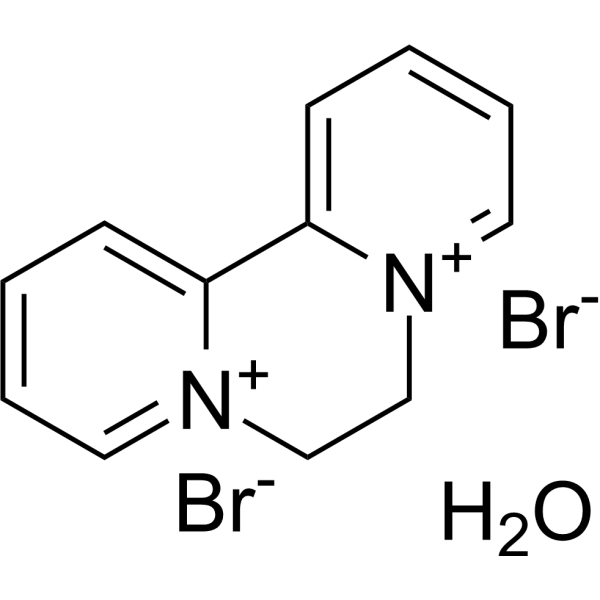
Diquat (dibromide hydrate) (Standard) is the analytical standard of Diquat (dibromide hydrate). This product is intended for research and analytical applications. Diquat dibromide hydrate is a comprehensive herbicide. Diquat dibromide hydrate increases the production of ROS and triggers mitophagy. Diquat dibromide hydrate generates free radicals such as superoxide anions through redox cycles, which induce oxidative stress. Diquat dibromide hydrate is cytotoxic, reproductive, and neurotoxic. Diquat dibromide hydrate is used in cotton, soybean, and other crops to combat noxious weeds .
|
-
- HY-17528R
-
|
Cyhalofop acid (Standard)
|
Drug Metabolite
Reference Standards
|
Others
|
|
Cyhalofop (Standard) is the analytical standard of Cyhalofop. This product is intended for research and analytical applications. Cyhalofop (Cyhalofop acid), the primary metabolite of Cyhalofop-butyl (HY-B0861) in susceptible grasses, is the herbicidally active metabolite. Cyhalofop-butyl is an aryloxyphenoxypropionate post-emergence herbicide widely used around the world in agriculture .
|
-
- HY-114507
-
|
Sumisoya; V-53482
|
Environmental Pollutants
Herbicide
|
Others
|
|
Flumioxazin (Sumisoya) is an herbicide for use in soybean and peanut. Flumioxazin inhibits the enzyme protoporphyrinogen oxidase . Flumioxazin is a click chemistry reagent, it contains an Alkyne group and can undergo copper-catalyzed azide-alkyne cycloaddition (CuAAc) with molecules containing Azide groups.
|
-
- HY-128075
-
|
|
Environmental Pollutants
Herbicide
|
Cancer
|
|
Acifluorfen, a protoporphyrinogen oxidase (PROTOX) inhibitor herbicide, promotes the accumulation of protoporphyrin IX (PPIX), and induces tumors in the rodent liver. Acifluorfen causes strong photooxidative destruction of pigments and lipids in sensitive plant species .
|
-
- HY-118985
-
|
|
Endogenous Metabolite
|
Cancer
|
|
Acifluorfen sodium, a protoporphyrinogen oxidase (PROTOX) inhibitor herbicide, promotes the accumulation of protoporphyrin IX (PPIX), and induces tumors in the rodent liver. Acifluorfen sodium causes strong photooxidative destruction of pigments and lipids in sensitive plant species .
|
-
- HY-136367R
-
|
|
Herbicide
Reference Standards
|
Others
|
|
Diclofop-methyl (Standard) is the analytical standard of Diclofop-methyl. This product is intended for research and analytical applications. Diclofop-methyl, a common post-emergence herbicide, is widely used in agriculture production. Diclofop-methyl increases the proton permeability of isolated oat-root tonoplast .
|
-
- HY-121337R
-
|
R-40244 (Standard)
|
Reference Standards
Apoptosis
Bcl-2 Family
|
Others
|
|
Flurochloridone (Standard) is the analytical standard of Flurochloridone. This product is intended for research and analytical applications. Flurochloridone (R-40244) is a selective preemergence and persistent herbicide. Flurochloridone induces endoplasmic reticulum (ER) stress and activated unfolded protein response (UPR) signaling pathways. Flurochloridone impairs cell viability and induces cytotoxicity and apoptosis mediated by ER stress via activating eIF2α-ATF4/ATF6-CHOP-Bim/Bax signaling pathways in TM4 cells .
|
-
- HY-111957
-
|
|
HPPD
|
Others
|
|
Fenquinotrione is a 4-hydroxyphenylpyruvate dioxygenase (HPPD) inhibitor with IC50s of 27.2 and 44.7nM against rice and Arabidopsis thaliana HPPD, respectively. Fenquinotrione is an herbicide that can control a wide range of broadleaf and sedge weeds with excellent rice selectivity .
|
-
- HY-138276
-
|
|
Herbicide
|
Others
|
|
Quizalofop-p-tefuryl is an aryloxyphenoxypropionate herbicide. Quizalofop-p-tefuryl exhibits medium-high persistence in distilled water .
|
-
- HY-113976A
-
|
Endothal
|
Environmental Pollutants
Phosphatase
|
Cancer
|
|
Endothall (Endothal) is a protein phosphatase 2A (PP2A) inhibitor with IC50s of 90 nM and 5 µM for PP2A and PP1, respectively. Endothall can be used as an herbicide. Endothall also is useful in cancer chemotherapy .
|
-
- HY-B1842R
-
|
|
Herbicide
Reference Standards
|
Others
|
|
Fluroxypyr (Standard) is the analytical standard of Fluroxypyr. This product is intended for research and analytical applications. Fluroxypyr is an auxin herbicide to control annual or perennial weeds. Fluroxypyr icauses auxin overdose or excessive endogenous auxin concentrations, thereby resulting in an imbalance of auxin homeostasis and interaction with other hormones in tissues .
|
-
- HY-111939R
-
|
BAY-NTN 6867 (Standard)
|
Reference Standards
Microtubule/Tubulin
|
Others
|
|
Amiprofos methyl (Standard) is the analytical standard of Amiprofos methyl. This product is intended for research and analytical applications. Amiprofos methyl (BAY-NTN 6867) is a phosphoric amide herbicide. Amiprofos methyl is a specific and potent antimicrotubule agent. Amiprofos methyl directly poisons microtubule dynamics in plant cells .
|
-
- HY-135713
-
|
|
Herbicide
Acetolactate Synthase (ALS)
Fungal
|
Infection
|
|
Penoxsulam is an acetolactate synthase (ALS) inhibitor herbicide. Penoxsulam inhibits Candida auris acetohydroxyacid synthase (AHAS) with a Ki value of <32 nM. Penoxsulam can be used for postemergence control of annual grasses, sedges, and broadleaf weeds in rice culture. Penoxsulam can be used for the study of Candida auris infections .
|
-
- HY-W747607
-
|
|
Herbicide
|
Others
|
|
Alloxydim sodium is a cyclohexenone oxime herbicide. Alloxydim sodium exhibits cytotoxicity. Alloxydim sodium can be used to control grassy weeds in broadleaf crops .
|
-
- HY-131325
-
-
- HY-176729
-
|
|
Phytohormone
|
Others
|
|
KeIKK5 is a strigolactone (SL) biosynthesis inhibitor. KeIKK5 significantly reduces the level of 4-deoxystrigolactone (4-DO) in rice by inhibiting the activity of CYP711A enzyme. KeIKK5 can effectively inhibit the germination of root parasitic weeds. KeIKK5 can be used in the research of plant hormone regulation and new agricultural herbicides .
|
-
- HY-19698
-
|
4-CPA; p-Chlorophenoxyacetic acid
|
Environmental Pollutants
Biochemical Assay Reagents
Herbicide
|
Others
|
|
4-Chlorophenoxyacetic acid (4-CPA) is a widely used herbicide and plant growth regulator. 4-Chlorophenoxyacetic acid (4-CPA) mimics endogenous auxin and regulates plant cell division, differentiation and gene expression. 4-Chlorophenoxyacetic acid (4-CPA) is used to control weeds and promote fruit growth .
|
-
- HY-119989
-
|
|
Herbicide
|
Infection
|
|
Cyclopyrimorate, a highly effective bleaching herbicide for weed control in rice fields, targets homogentisate solanesyltransferase (HST). HST is a downstream enzyme of 4-hydroxyphenylpyruvate dioxygenase in the plastoquinone (PQ) biosynthesis pathway .
|
-
- HY-W841955
-
|
SSH-41
|
Herbicide
|
Others
|
|
Monisouron (SSH-41) is a herbicide. Monisouron shows post-emergence control effects on various broad-leaved and grass weeds, and selectivity for barley, pea and maize. Monisouron is promising for research of weed control .
|
-
- HY-135745R
-
|
|
Herbicide
Reference Standards
|
Others
|
|
Sulfentrazone (Standard) is the analytical standard of Sulfentrazone. This product is intended for research and analytical applications. Sulfentrazone is a phenyl triazolinone herbicide used for control of certain broadleaf and grass weed species. Sulfentrazone inhibits protoporphyrinogen oxidase, resulting in the disruption of lipid cell membranes .
|
-
- HY-B0871R
-
|
|
Herbicide
Reference Standards
|
Others
|
|
Quinclorac (Standard) is the analytical standard of Quinclorac. This product is intended for research and analytical applications. Quinclorac, an herbicide widely applied in agriculture, induces oxidative stress due to free radical generation and changes in the antioxidant defense system .
|
-
- HY-122984R
-
|
|
Herbicide
Reference Standards
|
Others
|
|
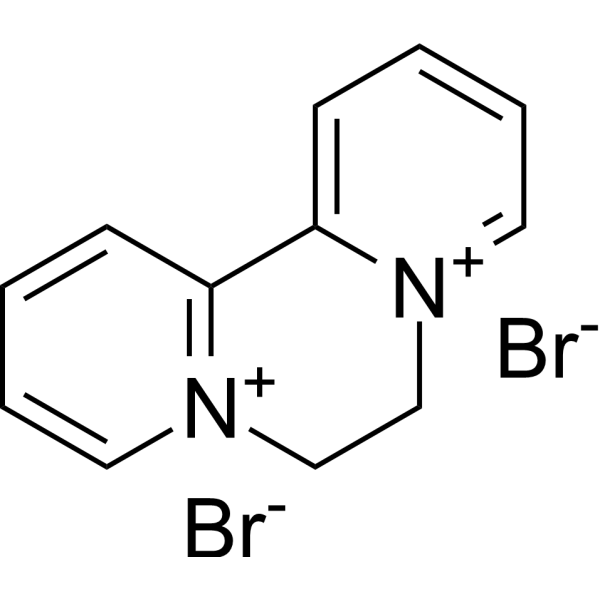
Diquat (dibromide) (Standard) is the analytical standard of Diquat (dibromide). This product is intended for research and analytical applications. Diquat dibromide is a comprehensive herbicide commonly used in the cultivation of cotton, soybeans, and other crops to combat unwanted weeds. Diquat dibromide has an IC50 of 60 mg/L in the Allium root growth inhibition test .
|
-
- HY-B0859
-
MCPA
1 Publications Verification
|
Environmental Pollutants
Cytochrome P450
Herbicide
|
Metabolic Disease
|
|
MCPA is an orally active phenoxyacetic acid herbicide. MCPA interferes with membrane integrity, energy metabolism (decreases ATP levels), and redox balance in plant cells. MCPA increases hepatic cytochrome P-450 levels and increases aniline hydroxylase and 7-ethoxycoumarin O-deethylase activities. MCPA can be used to control broadleaf weeds .
|
-
- HY-116482R
-
|
|
Insecticide
Herbicide
Reference Standards
|
Others
|
|
Desmedipham (Standard) is the analytical standard of Desmedipham. This product is intended for research and analytical applications. Desmedipham is a selective systemic phenyl-carbamate herbicide. Desmedipham acts by disrupting CO2 fixation and the production of intermediary energy components-ATP and NADPH2 and inhibition of Hill reaction .
|
-
- HY-147092R
-
|
|
Reference Standards
Microtubule/Tubulin
Herbicide
|
Infection
|
|
Oryzalin (Standard) is the analytical standard of Oryzalin (HY-147092). This product is intended for research and analytical applications. Oryzalin is a dinitroaniline herbicide with antimitotic and antileishmanial activities. Oryzalin can bind to plant tubulin, inhibit the polymerization of microtubules in plant cells, and affect chromosome migration. Oryzalin can also be used to induce chromosome doubling .
|
-
- HY-B0865R
-
|
|
Reference Standards
Acetolactate Synthase (ALS)
|
Others
|
|
Pyrazosulfuron-ethyl (Standard) is the analytical standard of Pyrazosulfuron-ethyl. This product is intended for research and analytical applications. Pyrazosulfuron-ethyl, one of the acetolactate synthase inhibiting herbicides in the sulphonylurea family, has been widely used to control weed growth in commercial cereal, soybean, and vegetable fields .
|
-
- HY-136380
-
|
|
Herbicide
|
Others
|
|
Clodinafop-propargyl, a main member of aryloxyphenoxy-propionate herbicides, is used for postemergence control of annual grasses in cereals, including Avena, Lolium, Setaria, Phalaris and Alopecurus spp . Clodinafop-propargyl is a click chemistry reagent, it contains an Alkyne group and can undergo copper-catalyzed azide-alkyne cycloaddition (CuAAc) with molecules containing Azide groups. Clodinafop-propargyl has developmental toxicity to zebrafish embryos .
|
-
- HY-W033687
-
|
|
Herbicide
|
Others
|
|
Triclopyr triethylamine is a herbicide. Triclopyr triethylamine causes lethargy in metamorphic northern red-legged frogs during exposure, and delays the completion time of metamorphosis in northern red-legged frogs. Triclopyr triethylamine is used to control broadleaf emergent aquatic weeds, such as the invasive species Lythrum salicaria .
|
-
- HY-114507R
-
|
Sumisoya (Standard); V-53482 (Standard)
|
Herbicide
Reference Standards
|
Others
|
|
Flumioxazin (Standard) is the analytical standard of Flumioxazin. This product is intended for research and analytical applications. Flumioxazin (Sumisoya) is an herbicide for use in soybean and peanut. Flumioxazin inhibits the enzyme protoporphyrinogen oxidase . Flumioxazin is a click chemistry reagent, it contains an Alkyne group and can undergo copper-catalyzed azide-alkyne cycloaddition (CuAAc) with molecules containing Azide groups.
|
-
- HY-128075R
-
|
|
Herbicide
Reference Standards
|
Cancer
|
|
Acifluorfen (Standard) is the analytical standard of Acifluorfen. This product is intended for research and analytical applications. Acifluorfen, a protoporphyrinogen oxidase (PROTOX) inhibitor herbicide, promotes the accumulation of protoporphyrin IX (PPIX), and induces tumors in the rodent liver. Acifluorfen causes strong photooxidative destruction of pigments and lipids in sensitive plant species .
|
-
- HY-116706
-
|
|
Environmental Pollutants
Herbicide
|
Others
|
|
Lenacil is a selective uracil substituted herbicide used for control of both annual grasses, broad leafed weeds and some perennial weeds in sugarcane, apples, alfalfa, peaches, peacans, peppermints (Mentha piperita) and sugar beets. Lenacil can inhibit photosynthesis .
|
-
- HY-19698R
-
|
4-CPA (Standard); p-Chlorophenoxyacetic acid (Standard)
|
Biochemical Assay Reagents
Reference Standards
|
Others
|
|
4-Chlorophenoxyacetic acid (4-CPA) (Standard) is the analytical standard of 4-Chlorophenoxyacetic acid (4-CPA). This product is intended for research and analytical applications. 4-Chlorophenoxyacetic acid (4-CPA) is a widely used herbicide for weed control in agriculture. 4-Chlorophenoxyacetic acid can be degraded in aqueous media through an electrochemical oxidation process. The end products of 4-Chlorophenoxyacetic acid degradation are harmless, such as carbon dioxide, water, and chloride ions .
|
-
- HY-123294
-
|
YRC 2388; BAY-YRC 2388; NBA 061
|
Herbicide
|
Neurological Disease
Metabolic Disease
|
|
Fentrazamide (YRC 2388) is a herbicide. Fentrazamide has specific toxic effects on the nervous system and erythrocytes in rats, affecting the energy supply of cells mainly by interfering with the glycolysis process. Fentrazamide can be used as a useful tool to study the mechanisms of neurodegenerative diseases and erythrocyte dysfunction .
|
-
- HY-B0869A
-
|
|
Environmental Pollutants
SOD
Acetolactate Synthase (ALS)
Herbicide
|
Metabolic Disease
|
|
Bispyribac sodium is a selective, orally active, systemic and post-emergence herbicide. Bispyribac sodium reduces SOD levels and inhibits ALS activity. Bispyribac sodium blocks the biosynthesis of branched-chain amino acids, resulting in growth retardation, chlorosis and necrosis of weeds. Bispyribac sodium exerts herbicidal activity against grass, sedge and broadleaf weeds in rice fields. Bispyribac sodium is hepatotoxic and genotoxic .
|
-
- HY-113976AR
-
|
Endothal (Standard)
|
Reference Standards
Phosphatase
|
Cancer
|
|
Endothall (Standard) is the analytical standard of Endothall. This product is intended for research and analytical applications. Endothall (Endothal) is a protein phosphatase 2A (PP2A) inhibitor with IC50s of 90 nM and 5 µM for PP2A and PP1, respectively. Endothall can be used as an herbicide. Endothall also is useful in cancer chemotherapy .
|
-
- HY-122984
-
-
- HY-136372
-
-
- HY-185451
-
|
|
Herbicide
|
Others
|
|
Herbicidal agent 15 is a uracilpyridine herbicide. Herbicidal agent 15 controls harmful plants and acts on plants, their seeds, and their habitat to manage unwanted vegetation .
|
-
- HY-B1869
-
|
|
Environmental Pollutants
Herbicide
|
Others
|
|
Metsulfuron-methyl is a systemic sulfonylurea herbicide that has been widely used to control broadleaf weeds and annual grasses in rice, corn, wheat, and barley. Metsulfuron-methyl exhibits high herbicidal activity and low mammalian toxicity, with an LD50 for rats exceeding 5000 mg/kg .
|
-
- HY-W681867
-
|
CGA-133205
|
Herbicide
Glutathione S-transferase
|
Others
|
|
Fluxofenim (CGA-133205) is a herbicide safener, with activity against Pyroxasulfone (HY-136633) and Metolachlor (HY-B1871). Fluxofenim enhances the activity of needle glutathione S-transferase (GST) towards the substrate 1-chloro-2,4-dinitrobenzene (CDNB) .
|
-
- HY-18572A
-
|
2,4-Dichlorophenoxyacetic acid sodium
|
Environmental Pollutants
Apoptosis
Herbicide
DNA/RNA Synthesis
|
Cancer
|
|
2,4-D (2,4-Dichlorophenoxyacetate) sodium is a selective herbicide that can be used for the control of broad-leaved weeds. 2,4-D sodium salt can induce < b>apoptosis. 2,4-D sodium salt inhibits DNA and protein synthesis, thereby preventing normal plant growth and development .
|
-
- HY-18572
-
2,4-D
1 Publications Verification
2,4-Dichlorophenoxyacetic acid
|
Environmental Pollutants
Herbicide
Apoptosis
DNA/RNA Synthesis
|
Cancer
|
|
2,4-D (2, 4-dichlorophenoxyacetic acid) is a selective herbicide that can be used for the control of broad-leaved weeds. 2,4-D can induce apoptosis. 2,4-D inhibits DNA and protein synthesis, thereby preventing normal plant growth and development .
|
-
- HY-W015993
-
|
n-Nonyl-β-D-glucopyranoside
|
Biochemical Assay Reagents
|
Others
|
|
Nonyl β-D-glucopyranoside (n-Nonyl-β-D-glucopyranoside) is a surfactant that can be used in studies on interactions with lipid monolayers. Nonyl β-D-glucopyranoside can also be used for the enantiomer separation of phenoxy acid herbicides and amino acid derivatives .
|
-
- HY-123294R
-
|
YRC 2388 (Standard); BAY-YRC 2388 (Standard); NBA 061 (Standard)
|
Herbicide
Reference Standards
|
Neurological Disease
Metabolic Disease
|
|
Fentrazamide (Standard) is the analytical standard of Fentrazamide. This product is intended for research and analytical applications. Fentrazamide (YRC 2388) is a herbicide. Fentrazamide has specific toxic effects on the nervous system and erythrocytes in rats, affecting the energy supply of cells mainly by interfering with the glycolysis process. Fentrazamide can be used as a useful tool to study the mechanisms of neurodegenerative diseases and erythrocyte dysfunction .
|
-
- HY-174423
-
|
NC-656
|
Herbicide
|
Others
|
|
Iptriazopyrid (NC-656) is an azole carboxamide herbicide targeting 4-hydroxyphenylpyruvate dioxygenase (HPPD) with a Ki value of 24.3 nM for Arabidopsis HPPD and 33.3 nM for rice HPPD. Iptriazopyrid blocks plastoquinone and carotenoid synthesis, leading to weed chlorosis and death. Iptriazopyrid is promising for research of controlling weeds such as Echinochloa crus-galli in paddy fields .
|
-
- HY-116706R
-
|
|
Herbicide
Reference Standards
|
Others
|
|
Lenacil (Standard) is the analytical standard of Lenacil. This product is intended for research and analytical applications. Lenacil is a selective uracil substituted herbicide used for control of both annual grasses, broad leafed weeds and some perennial weeds in sugarcane, apples, alfalfa, peaches, peacans, peppermints (Mentha piperita) and sugar beets. Lenacil can inhibit photosynthesis .
|
-
- HY-B1856
-
|
|
Environmental Pollutants
Acetyl-CoA Carboxylase
|
Cancer
|
|
Haloxyfop is an aryloxyphenoxypropionic acid herbicide and is widely used in grass weeds in broad-leaf crops . Haloxyfop inhibits the acetyl coenzyme A carboxylase (EC 6.4.1.2) from corn seedling chloroplasts with an IC50 of 0.5 μM, but has no effect on this enzyme in pea .
|
-
- HY-136513
-
-
- HY-B0869AR
-
|
|
Reference Standards
Acetolactate Synthase (ALS)
SOD
|
Metabolic Disease
|
|
Bispyribac (sodium) (Standard) is the analytical standard of Bispyribac sodium (HY-B0869A). This product is intended for research and analytical applications. Bispyribac sodium is a selective, orally active, systemic and post-emergence herbicide. Bispyribac sodium reduces SOD levels and inhibits ALS activity. Bispyribac sodium blocks the biosynthesis of branched-chain amino acids, resulting in growth retardation, chlorosis and necrosis of weeds. Bispyribac sodium exerts herbicidal activity against grass, sedge and broadleaf weeds in rice fields. Bispyribac sodium is hepatotoxic and genotoxic .
|
-
- HY-116954R
-
|
|
Reference Standards
DNA/RNA Synthesis
|
Others
|
|
Metribuzin (Standard) is the analytical standard of Metribuzin. This product is intended for research and analytical applications. Metribuzin is a low-cost non-selective herbicide that belongs to the chemical class of triazinones. Metribuzin hinders DNA synthesis in treated plants and acts on photosystem II, ultimately inhibiting photosynthesis. Metribuzin provides good control of important annual grass and broad-leaf weeds .
|
-
- HY-B1869R
-
|
|
Herbicide
Reference Standards
|
Others
|
|
Metsulfuron-methyl (Standard) is the analytical standard of Metsulfuron-methyl. This product is intended for research and analytical applications. Metsulfuron-methyl is a systemic sulfonylurea herbicide that has been widely used to control broadleaf weeds and annual grasses in rice, corn, wheat, and barley. Metsulfuron-methyl exhibits high herbicidal activity and low mammalian toxicity, with an LD50 for rats exceeding 5000 mg/kg .
|
-
- HY-119435R
-
|
|
Herbicide
Reference Standards
Environmental Pollutants
|
Others
|
|
Triallate (Standard) is the analytical standard of Triallate (HY-119435). This product is intended for research and analytical applications. Triallate is a selective thiocarbamate herbicide. Triallate regulates the biosynthesis of very-long-chain fatty acids and inhibits the elongation and division of plant cells. Triallate is used to control wild oats in barley, spring wheat, durum wheat, winter wheat and sugar beets
|
-
- HY-136373
-
|
BAS 479H
|
Herbicide
Cytochrome P450
DNA/RNA Synthesis
|
Others
|
|
Metazachlor (BAS 479H) is a herbicide belonging to the chloroacetamides class. Metazachlor can inhibit the synthesis of very long chain fatty acids during the germination and emergence of weed seeds, thereby interfering with cell division and tissue differentiation, and thus hindering the normal growth and development of weeds .
|
-
- HY-126922
-
|
|
Environmental Pollutants
Herbicide
|
Others
|
|
Pyraflufen-ethyl is a phenylpyrazole herbicide for control of annual and perennial broadleaf weeds. Pyraflufen-ethyl inhibits protoporphyrinogen oxidase (PPO). Pyraflufen-ethyl controls rosette Parthenium hysterophorus .
|
-
- HY-121242
-
|
VEL-5026
|
Photosystem II
|
Others
|
|
Buthidazole is a selective herbicide for weed control in corn. Buthidazole inhibits photosynthetic electron transport at two distinct sites in the photosynthetic electron transport chain. The major site of inhibition was on the reducing side of photosystem II. Another site of electron transport inhibition is on the oxidizing side of photosystem II. Buthidazole inhibits corn photosynthesis and prevents starch accumulation in bundle sheath chloroplasts and some ultrastructural disruption of mesophyl chloroplasts of corn plants .
|
-
- HY-W014331
-
|
|
Herbicide
Photosensitizer
|
Others
|
|
Atraton is a 1,3,5-triazine Herbicide and photodegradable substrate. Atraton undergoes photodegradation under the action of the photosensitizer acetone .
|
-
- HY-B1856R
-
|
|
Reference Standards
Acetyl-CoA Carboxylase
|
Cancer
|
|
Haloxyfop (Standard) is the analytical standard of Haloxyfop. This product is intended for research and analytical applications. Haloxyfop is an aryloxyphenoxypropionic acid herbicide and is widely used in grass weeds in broad-leaf crops . Haloxyfop inhibits the acetyl coenzyme A carboxylase (EC 6.4.1.2) from corn seedling chloroplasts with an IC50 of 0.5 μM, but has no effect on this enzyme in pea .
|
-
- HY-18572AR
-
|
2,4-Dichlorophenoxyacetic acid sodium (Standard)
|
Reference Standards
Herbicide
DNA/RNA Synthesis
Apoptosis
|
Cancer
|
|
2,4-D sodium (Standard) is the analytical standard of 2,4-D sodium (HY-18572A). This product is intended for research and analytical applications. 2,4-D sodium is a selective herbicide that can be used for the control of broad-leaved weeds. 2,4-D sodium can induce < b>apoptosis. 2,4-D sodium inhibits DNA and protein synthesis, thereby preventing normal plant growth and development .
|
-
- HY-147092
-
|
|
Environmental Pollutants
Microtubule/Tubulin
Herbicide
|
Infection
|
|
Oryzalin is a dinitroaniline herbicide with antimitotic and antileishmanial activities. Oryzalin can bind to plant tubulin, inhibit the polymerization of microtubules in plant cells, and affect chromosome migration. Oryzalin can also be used to induce chromosome doubling .
|
-
- HY-B0867R
-
|
|
Herbicide
Reference Standards
Environmental Pollutants
|
Others
|
|
2,4-D Butyl ester (Standard) is the analytical standard of 2,4-D Butyl ester (HY-B0867). This product is intended for research and analytical applications. 2,4-D Butyl ester is a phenoxyacetic acid herbicide used to control woody broadleaf weeds. 2,4-D Butyl ester shows high toxicity to fish and aquatic invertebrates. In animals, 2,4-D Butyl ester hydrolyzes to produce n-butanol, which further induces neurobehavioral toxicity such as ataxia in rats .
|
-
- HY-18572R
-
|
2,4-Dichlorophenoxyacetic acid (Standard)
|
Reference Standards
Herbicide
DNA/RNA Synthesis
Apoptosis
|
Cancer
|
|
2,4-D (Standard) is the analytical standard of 2,4-D (HY-18572). This product is intended for research and analytical applications. 2,4-D (2, 4-dichlorophenoxyacetic acid) is a selective herbicide that can be used for the control of broad-leaved weeds. 2,4-D can induce apoptosis. 2,4-D inhibits DNA and protein synthesis, thereby preventing normal plant growth and development .
|
-
- HY-119633
-
|
|
Herbicide
|
Others
|
|
Perfluidone is a selective 3-ketoacyl-CoA synthase (KCS) inhibitor with IC50s of 0.21 and 7.60 μM for CER6 (KCS6) and FAE1 (KCS18), respectively. Perfluidone significantly inhibits very-long-chain fatty acid (VLCFA) synthesis. Perfluidone has phytotoxic activity and inhibits Lemna paucicostata growth. Perfluidone can be uses as a plant growth regulator and herbicide for agriculture research .
|
-
- HY-W019881
-
|
RH-0265
|
Herbicide
|
Others
|
|
Fluoroglycofen-ethyl (RH-0265) is a diphenylether herbicide and a substrate for biodegradation. Fluoroglycofen-ethyl can be degraded by Mycobacterium phocaicum MBWY-1. Fluoroglycofen-ethyl can be used for protecting wheat, barley, rice, peanuts, and soybeans .
|
-
- HY-B2023
-
|
Chlortoluron
|
Environmental Pollutants
Herbicide
|
Others
|
|
Chlorotoluron (Chlortoluron) is a urea herbicide. Chlorotoluron serves as a degradation substrate that undergoes dissipation in soil and produces demethylated chlorotoluron metabolites via N-dealkylation. Chlorotoluron is used for pre-emergence and post-emergence weed control in cereals and various other crops .
|
-
- HY-W714178
-
|
|
Herbicide
|
Others
|
|
Aziprotryne is a post-emergence selective herbicide active against broadleaf weeds. When tank-mixed with Alachlor (HY-B2014), Aziprotryne provides longer-term weed control in field-grown cabbage plots .
|
-
- HY-B1849R
-
|
|
Reference Standards
Environmental Pollutants
Herbicide
|
Others
|
|
Hexazinone (Standard) is the analytical standard of Hexazinone. This product is intended for research and analytical applications. Hexazinone is a triazinone herbicide with high mobility and persistence in soil. Hexazinone is mainly degraded by soil microorganisms, and its degradation and mineralization processes are significantly affected by soil texture (faster in clay loam) and application method (mixed application can improve its bioavailability and mineralization rate). Hexazinone exhibits mild to moderate acute oral toxicity and has significant eye irritation .
|
-
- HY-179286
-
|
|
Herbicide
|
Others
|
|
DHAD-IN-2 (compound 6ag) is a potent dihydroxy acid dehydratase (DHAD) inhibitor with a KD of 20 μM. DHAD-IN-2 demonstrates over 85% control effectiveness against Eclipta prostrata, Amaranthus retroflexus, and Setaria viridis at a dosage of 150 g ai/ha, while also showing safety for rice. DHAD-IN-2 can be used for herbicide research .
|
-
- HY-W714973
-
|
|
Herbicide
|
Others
|
|
Halauxifen-methyl is a 6-arylpicolinic acid herbicide. As a synthetic auxin, Halauxifen-methyl interferes with the normal growth and development of sensitive weeds by mimicking the action of endogenous plant auxins, causing malformation, uncontrolled growth and eventual death .
|
-
- HY-W714199
-
|
Potablan
|
Herbicide
|
Others
|
|
Monalide (Potablan) is a soil-applied and contact herbicide that acts both via absorption by plant roots from the soil and through contact with the aboveground parts of plants. Monalide inhibits weed growth. Monalide decomposes within several weeks in soil and leaves no residues on crops .
|
-
- HY-W010221
-
|
Trimethylanilinium hydroxide (ca. 8.5% in Methanol)
|
Biochemical Assay Reagents
|
Others
|
|
Phenyltrimethylammonium hydroxide (Trimethylanilinium hydroxide (ca. 8.5% in Methanol)) is a derivatization reagent. Phenyltrimethylammonium hydroxide converts phenolic compounds including pentachlorophenol herbicides into methyl ethers .
|
-
- HY-119176
-
|
|
Environmental Pollutants
Protoporphyrinogen IX oxidase
Herbicide
|
Others
|
|
Oxyfluorfen is a pre- and post-emergence diphenyl ether herbicide to control annual broad-leaved and grass weeds. Oxyfluorfen is a protoporphyrinogen oxidase inhibitor and inhibits photosynthesis by blocking chlorophyll synthesis. Oxyfluorfen can inhibit cell growth. Oxyfluorfen induces DNA damage and exhibits toxicity toward aquatic organisms such as Paramisgurnus dabryanus. Oxyfluorfen has genome-level deleterious effects on fish that can lead to stunted skeletal growth. Oxyfluorfen induces transverse limb deficiency or craniosynostosis .
|
-
- HY-136373R
-
|
BAS 479H (Standard)
|
Herbicide
Reference Standards
Cytochrome P450
DNA/RNA Synthesis
|
Others
|
|
Metazachlor (Standard) (BAS 479H (Standard)) is the analytical standard of Metazachlor (HY-136373). This product is intended for research and analytical applications. Metazachlor (BAS 479H) is a herbicide belonging to the chloroacetamides class. Metazachlor can inhibit the synthesis of very long chain fatty acids during the germination and emergence of weed seeds, thereby interfering with cell division and tissue differentiation, and thus hindering the normal growth and development of weeds .
|
-
- HY-16947
-
|
|
Herbicide
|
Others
|
|
Butroxydim is a cyclohexanedione acetyl-coenzyme A carboxylase (ACCase)-inhibiting herbicide. Butroxydim controls herbicide-resistant Hordeum leporinum populations with resistance to other ACCase-inhibiting herbicides .
|
-
- HY-B1866R
-
|
|
Reference Standards
Androgen Receptor
|
Endocrinology
|
|
Linuron (Standard) is the analytical standard of Linuron. This product is intended for research and analytical applications. Linuron is a phenylurea herbicide that is widely used to control the growth of grass and weeds in various agriculture crops and in orchards. Linuron is a photosystem II inhibitor. Linuron is also a competitive androgen receptor (AR) antagonist with a Ki of 100 μM. Linuron shows reproductive toxicity in animals that acts as an endocrine disruptor .
|
-
- HY-119176R
-
|
|
Herbicide
Reference Standards
Protoporphyrinogen IX oxidase
|
Others
|
|
Oxyfluorfen (Standard) is the analytical standard of Oxyfluorfen. This product is intended for research and analytical applications. Oxyfluorfen is a pre- and post-emergence diphenyl ether herbicide to control annual broad-leaved and grass weeds. Oxyfluorfen is a protoporphyrinogen oxidase inhibitor and inhibits photosynthesis by blocking chlorophyll synthesis. Oxyfluorfen can inhibit cell growth. Oxyfluorfen induces DNA damage and exhibits toxicity toward aquatic organisms such as Paramisgurnus dabryanus. Oxyfluorfen has genome-level deleterious effects on fish that can lead to stunted skeletal growth. Oxyfluorfen induces transverse limb deficiency or craniosynostosis .
|
-
- HY-137910R
-
|
|
Reference Standards
Herbicide
HPPD
|
Others
|
|
Tembotrione (Standard) is the analytical standard of Tembotrione. This product is intended for research and analytical applications. Tembotrione is a drug that may reduce the
productivity of carrots. Tembotrione has the activity of reducing carrot stem
mass. Tembotrione can be used to study the total productivity of carrot
. Tembotrione is a herbicide belonging to the HPPD (dioxygenase) inhibitor class with crop selectivity. Tembotrione effectively controls a variety of weeds including broadleaf and gramineous species by disrupting carotenoid synthesis, which leads to chlorophyll degradation and leaf whitening. Mixing Tembotrione with isoxaflutole or adding surfactants optimizes its efficacy and reduces phytotoxicity, with no residual impact on subsequent cruciferous crops, thus helping to increase maize grain yield. The activity of Tembotrione decreases under drought conditions, and under specific conditions (such as double-dose treatment), it may cause reversible yellowing and even yield reduction in crops such as poppy .
|
-
- HY-175736
-
|
|
Herbicide
|
Others
|
|
Herbicidal agent 11 (Compound 8a) is a herbicidal agent. Herbicidal agent 11 has significant postemergence herbicidal activities against the monocotyledonous weed Echinochloa crusgalli with inhibition of potent root and stem growth and has a good crop selectivity against wheat, maize, and oilseed rape. Herbicidal agent 11 also has effective inhibitory effects on Digitaria sanguinalis, Eclipta prostrate and Eleusine indica. Herbicidal agent 11 can be used for the development of herbicides .
|
-
- HY-B2045
-
|
|
Environmental Pollutants
Herbicide
|
Others
|
|
Benfluralin is a kind of herbicide and an agrochemical which can be used as a pre-emergence herbicide used for the control of grass and other weeds in a range of food and non-food crops.
|
-
- HY-118126
-
-
- HY-116741
-
-
- HY-136376R
-
|
|
Herbicide
Reference Standards
|
Others
|
|
Mefenpyr-diethyl (Standard) is the analytical standard of Mefenpyr-diethyl. This product is intended for research and analytical applications. Mefenpyr-diethyl is an herbicide safener. Mefenpyr-diethyl enhances plant tolerance to herbicides by inducing the expression of antioxidant enzymes such as GST. Mefenpyr-diethyl protects crops against herbicide injury .
|
-
- HY-B1849
-
|
|
Environmental Pollutants
Herbicide
|
Others
|
|
Hexazinone is a triazinone herbicide with high mobility and persistence in soil. Hexazinone is mainly degraded by soil microorganisms, and its degradation and mineralization processes are significantly affected by soil texture (faster in clay loam) and application method (mixed application can improve its bioavailability and mineralization rate). Hexazinone exhibits mild to moderate acute oral toxicity and has significant eye irritation .
|
-
- HY-183559
-
|
|
Protoporphyrinogen IX oxidase
Herbicide
|
Others
|
|
Herbicidal agent 16 is a herbicide and Protoporphyrinogen IX oxidase (PPO) inhibitor with an IC50 of 15.1 nM and Kd of 24.89 nM. Herbicidal agent 16 can be used for research on herbicides .
|
-
- HY-W708756
-
|
|
Isotope-Labeled Compounds
Herbicide
|
Others
|
|
Butachlor-d13 is the deuterium labeled Butachlor (HY-B2042). Butachlor is an herbicide of the acetanilide class. Butachlor is used as a selective pre-emergent herbicide .
|
-
- HY-B2032
-
-
- HY-W521246
-
|
|
Herbicide
Acetolactate Synthase (ALS)
|
Others
|
|
Tritosulfuron is a sulfonylurea herbicide. Tritosulfuron has inhibitory activity against acetolactate synthase. Tritosulfuron is a broad-spectrum post-emergent dicotyledonous herbicide used in cereals, maize, and turf cultivation .
|
-
- HY-B1876
-
|
|
Environmental Pollutants
Acetolactate Synthase (ALS)
|
Others
|
|
Nicosulfuron is efficient, harmless, antifungal and selective herbicide belonging to the sulfonylurea family. Nicosulfuron is also a photosynthetic system inhibitor and inhibits acetolactate synthase (ALS) enzyme activity. Nicosulfuron degradation by Plectosphaerella cucumerina AR1 is glucose concentration dependent in planktonic lifestyle. Nicosulfuron enhances the glycolysis pathway and tricarboxylic acid cycle to improve the adaptability of sweet maize. Nicosulfuron reduces the synthesis of branched-chain amino acids (BCAAs), which is proming for maize cultivation .
|
-
- HY-W721611
-
|
|
Herbicide
|
Others
|
|
Terbucarb is a phenylcarbamate herbicide. Terbucarb disrupts the mitotic microtubule organizing centers in plant cells, leading to the formation of multipolar spindles and branched phragmoplasts, thereby inhibiting plant growth. An "anaphase star" pattern induced by Terbucarb is observed in onion root tips. Terbucarb is cytotoxic to isolated rat hepatocytes, inducing cell death accompanied by depletion of intracellular ATP, protein thiols and glutathione .
|
-
- HY-B1883
-
-
- HY-117199
-
|
S-Ethyl 4-chloro-o-tolyloxythioacetate; Phenothiol
|
Herbicide
|
Others
|
|
MCPA-thioethyl is a kind of herbicide .
|
-
- HY-W753209
-
|
|
Herbicide
HPPD
|
Others
|
|
Tolpyralate is a selective post-emergence herbicide and corn Herbicide. Tolpyralate inhibits 4-HPPD. Tolpyralate exhibits herbicidal activity against a variety of weeds, including the glyphosate-resistant weed Amaranthus tuberculatus .
|
-
- HY-W328125
-
|
|
Herbicide
|
Others
|
|
Deisopropylatrazine, a prevalent herbicide from the triazine class.
|
-
- HY-135466
-
-
- HY-117096
-
-
- HY-121331
-
-
- HY-154817
-
|
|
Herbicide
|
Others
|
|
Metobromuron is a phenylurea derivative used as a herbicide .
|
-
- HY-136376
-
|
|
Environmental Pollutants
Herbicide
|
Others
|
|
Mefenpyr-diethyl is a pyrazoline-type herbicide safener that functions to enhance lipid biosynthesis. Mefenpyr-diethyl effectively prevents herbicide-induced phytotoxic damage caused by herbicides such as fenoxaprop-p-ethyl (HY-B2013) and mesosulfuron-methyl (HY-126987) by protecting cereal crops including wheat. Mefenpyr-diethyl significantly increases lipid content in wheat either when applied alone or in combination with the herbicide fenoxaprop-p-ethyl. The mechanism of action of Mefenpyr-diethyl does not involve the induction of glutathione S-transferase (GST) activity in wheat .
|
-
- HY-W721329
-
|
MON-0358
|
Herbicide
|
Others
|
|
Terbuchlor (MON-0358) is an agricultural herbicide .
|
-
- HY-B2030
-
-
- HY-126150
-
-
- HY-W007371
-
-
- HY-136377
-
|
|
Herbicide
|
Others
|
|
Fluoroglycofen is a herbicide used in vineyards to eradicate weeds .
|
-
- HY-B2045R
-
|
|
Herbicide
Reference Standards
|
Others
|
|
Benfluralin (Standard) is the analytical standard of Benfluralin. This product is intended for research and analytical applications. Benfluralin is a kind of herbicide and an agrochemical which can be used as a pre-emergence herbicide used for the control of grass and other weeds in a range of food and non-food crops.
|
-
- HY-W714185
-
|
|
Herbicide
|
Others
|
|
Esprocarb is a pre- and postemergence herbicide that can be used for rice .
|
-
- HY-116846
-
|
|
Herbicide
|
Others
|
|
Methyldymron is a herbicide that act on acyl-ACP thioesterase (FAT) .
|
-
- HY-17515
-
|
|
Herbicide
|
Others
|
|
Ipfencarbazone is a herbicide used to control weeds such as water grass in rice.
|
-
- HY-B1950
-
|
(R)-Quizalofop ethyl; Quinofop-ethyl
|
Environmental Pollutants
SOD
Herbicide
|
Infection
|
|
Quizalofop-P-ethyl is a low-toxicity herbicide, a highly selective new type of post-emergence herbicide for dryland crops, with high selectivity between gramineous weeds and dicotyledonous crops, and it has good control efficacy against gramineous weeds in broadleaf crop fields.
|
-
- HY-W422402
-
|
|
Acetolactate Synthase (ALS)
Herbicide
|
Others
|
|
Foramsulfuron is a postemergence herbicide used for selective control of grass and some broadleaved weeds in maize (Zea mays L.). Foramsulfuron is a sulfonylurea herbicide that exerts its herbicidal activity by inhibiting acetolactate synthase (ALS), a key enzyme in the biosynthesis of branched chain amino acids .
|
-
- HY-B1871S
-
|
|
Isotope-Labeled Compounds
|
Others
|
|
Metolachlor-d6 is the deuterium labeled Metolachlor . Metolachlor is a pre-emergent selective, chloroacetanilide herbicide for the control of a variety of annual grass and broad leaf weeds in corn and other crops. Metolachlor is a chiral herbicide consisting of four stereoisomers .
|
-
- HY-157160
-
|
|
Herbicide
|
Others
|
|
PPO-IN-5 (compound 9) is a herbicide based on PPO inhibitors. PPO, protoporphyrinogen oxidase, participates in the biosynthetic pathway of heme and chlorophyll synthesis. PPO-IN-5 is tolerant in cereal crops such as wheat, corn, and rice, and is a potential herbicide in wheat fields .
|
-
- HY-B2013
-
-
- HY-136357
-
|
|
Herbicide
|
Others
|
|
Tribenuron, a slow acting sulfonylurea herbicide, controls broadleaf weed .
|
-
- HY-W016857
-
|
|
Herbicide
|
Others
|
|
2-(4-Chlorophenoxy)ethanol is used as an intermediate (such as for herbicides) .
|
-
- HY-121243
-
|
|
Herbicide
|
Others
|
|
Halauxifen is a herbicide with plasma elimination half-life of 1 h .
|
-
- HY-111223
-
|
PP604; ICIA 0604; FD-4026
|
Acetyl-CoA Carboxylase
|
Others
|
|
Tralkoxydim is a cyclohexanedione herbicide that inhibits Acetyl-CoA Carboxylase in corn .
|
-
- HY-N7928
-
-
- HY-W714210
-
|
Aminophon
|
Herbicide
|
Others
|
|
Buminafos (Aminophon) is an organophosphate herbicide used in agriculture to control weeds .
|
-
- HY-B1876S
-
|
|
Acetolactate Synthase (ALS)
|
Others
|
|
Nicosulfuron-d6 is the deuterium labeled Nicosulfuron . Nicosulfuron is a selective herbicide belonging to the sulfonylurea family. Nicosulfuron is commonly used as a post-emergence herbicide to protect maize crops from weeds. Nicosulfuron inhibits acetolactate synthase (ALS) enzyme activity .
|
-
- HY-W008484
-
|
|
Environmental Pollutants
Herbicide
|
Infection
|
|
Aminopyralid is a synthetic auxin herbicide. Aminopyralid provides foliar and soil residual weed control, and also increases forage yield in bahiagrass pastures. When present as a soil residue, Aminopyralid causes phytotoxicity, reduced plant height, decreased flower number and fruit yield loss in rotated vegetable crops. Aminopyralid is registered for the control of annual and perennial broadleaf weeds in pastures, permanent grasslands and non-cropped areas .
|
-
- HY-B1860
-
-
- HY-B1875S
-
-
- HY-136381
-
|
N-Nitroso-N-(phosphonoMethyl)glycine sodium; Glyphosate-N-nitroso sodium
|
Drug Metabolite
|
Others
|
|
N-Nitrosoglyphosate sodium is the nitrosamine degradation product and synthetic impurity of glyphosate herbicide .
|
-
- HY-B1876R
-
|
|
Reference Standards
Acetolactate Synthase (ALS)
|
Others
|
|
Nicosulfuron (Standard) is the analytical standard of Nicosulfuron. This product is intended for research and analytical applications. Nicosulfuron is a selective herbicide belonging to the sulfonylurea family. Nicosulfuron is commonly used as a post-emergence herbicide to protect maize crops from weeds. Nicosulfuron inhibits acetolactate synthase (ALS) enzyme activity .
|
-
- HY-W713975
-
|
|
Isotope-Labeled Compounds
Herbicide
|
Others
|
|
Metolachlor-d11 is the deuterium labeled Metolachlor (HY-B1871). Metolachlor is a pre-emergent selective, chloroacetanilide herbicide for the control of a variety of annual grass and broad leaf weeds in corn and other crops. Metolachlor is a chiral herbicide consisting of four stereoisomers .
|
-
- HY-W751296
-
|
|
Herbicide
|
Others
|
|
Pethoxamid is a highly effective chloroacetamide herbicide that can be used for field weed control .
|
-
- HY-107368
-
-
- HY-W059342S
-
-
- HY-136445
-
|
Desethylterbuthylazine
|
Drug Metabolite
|
Others
|
|
Terbuthylazine-desethyl (Desethylterbuthylazine) is a chloro dealkylated metabolite of Terbuthylazine (a triazine herbicide) .
|
-
- HY-W142446
-
-
- HY-W040802
-
|
|
Herbicide
|
Others
|
|
AC-94149 is a substituted nitro compound used as an intermediate in several herbicides .
|
-
- HY-100052
-
|
6-Hydroxybentazone
|
Drug Metabolite
|
Others
|
|
6-Hydroxybentazon is a phase I metabolite of bentazone, and bentazone is a chemical for use in herbicides.
|
-
- HY-W103488
-
-
- HY-B0922
-
-
- HY-N14534
-
|
|
Herbicide
|
Infection
|
|
Dihydrobisdechlorogeodin is found in the strain of Chrysosporium sp. FO-4712 and it can be used as a herbicide .
|
-
- HY-B2005
-
|
|
Herbicide
|
Others
|
|
Terbumeton is a methoxytriazine herbicide, which inhibits sensitive weeds' growth through inhibition of photosynthesis .
|
-
- HY-121576
-
|
|
Endogenous Metabolite
|
Others
|
|
Butenachlor is a selective herbicide that is applied to soil for the effective control of grass and certain broad-leaved weeds.
|
-
- HY-B2016
-
|
|
Herbicide
|
Others
|
|
Anilofos is a pre-emergence, organophosphorus herbicide. Anilofos has moderate toxic potential in mammals .
|
-
- HY-B2035
-
|
|
Herbicide
|
Others
|
|
Pretilachlor is a herbicide used to control the the most common weeds found in paddy rice crops .
|
-
- HY-12464
-
|
WC-9717; CGA-276854
|
Herbicide
|
Others
|
|
Butafenacil (WC-9717; CGA-276854) is an herbicide that inhibits protoporphyrinogen oxidase .
|
-
- HY-N13932
-
|
|
Herbicide
|
Others
|
|
Arabenoic acid is a natural product herbicide of fungal origin. Arabenoic acid inhibits the growth of Arabidopsis thaliana .
|
-
- HY-136305
-
|
|
Drug Intermediate
|
Others
|
|
Clethodim sulfone is a clethodim oxidation metabolite. Clethodim is one of the most widely used herbicides in agriculture
|
-
- HY-17531
-
|
|
Environmental Pollutants
Herbicide
|
Others
|
|
Pyraclonil is a proporphyrinogen oxidase (PPO) inhibitor. Pyraclonil is a herbicide agent and is highly effective in controlling the susceptible (S) and multiple-herbicide-resistant (MHR) E. indica populations . Pyraclonil is a click chemistry reagent, it contains an Alkyne group and can undergo copper-catalyzed azide-alkyne cycloaddition (CuAAc) with molecules containing Azide groups.
|
-
- HY-B1859S1
-
|
|
Isotope-Labeled Compounds
|
Others
|
|
Isoproturon-d3 is the deuterium labeled Isoproturon . Isoproturon belongs to the phenylurea herbicide family and is a systemic and selective herbicide. Isoproturon is widely applied for killing weeds in farmland, which can be used in the control of annual grasses and broad-leaved weeds in spring and winter wheat, winter rye and spring and winter barley .
|
-
- HY-W775385
-
|
|
Herbicide
|
Others
|
|
Metcamifen is a herbicide safener that can protect rice from Clodinafop-propargyl (HY-136380) .
|
-
- HY-121487
-
|
|
Herbicide
|
Others
|
|
Etobenzanid is a herbicide for control of weeds in rice. Etobenzanid can be used for the research of rice weed management .
|
-
- HY-118126R
-
|
|
Herbicide
Reference Standards
|
Others
|
|
Mecoprop (Standard) is the analytical standard of Mecoprop. This product is intended for research and analytical applications. Mecoprop is a herbicide .
|
-
- HY-121287
-
|
|
Herbicide
|
Cardiovascular Disease
|
|
Ioxynil is an herbicide that act as endocrine disruptor. Ioxynil can disrupt vascular and heart development in zebrafish .
|
-
- HY-B1882
-
|
|
Endogenous Metabolite
|
Others
|
|
Propazine is a triazine herbicide that effectively manages broad-leaved weeds and annual grasses in sweet sorghum cultivation.
|
-
- HY-118085
-
|
Isopropazol; JV-485
|
Herbicide
|
Others
|
|
Fluazolate is a herbicide that inhibits protoporphyrinogen-IX-oxidase (Protox) and targets glyphosate-resistant weeds . .
|
-
- HY-116741R
-
|
Taipan 300 (Standard); MY-71 (Standard)
|
Herbicide
Reference Standards
|
Others
|
|
Benzofenap (Standard) is the analytical standard of Benzofenap. This product is intended for research and analytical applications. Benzofenap is a herbicide .
|
-
- HY-118811
-
|
|
Herbicide
|
Others
|
|
Napropamide-M, a herbicide for winter oilseed rape and brassica vegetable crops, is a pesticide active substance .
|
-
- HY-W422402R
-
|
|
Reference Standards
Acetolactate Synthase (ALS)
|
Others
|
|
Foramsulfuron (Standard) is the analytical standard of Foramsulfuron. This product is intended for research and analytical applications. Foramsulfuron is a postemergence herbicide used for selective control of grass and some broadleaved weeds in maize (Zea mays L.). Foramsulfuron is a sulfonylurea herbicide that exerts its herbicidal activity by inhibiting acetolactate synthase (ALS), a key enzyme in the biosynthesis of branched chain amino acids .
|
-
- HY-163910
-
|
|
Herbicide
|
Others
|
|
Herbicidal agent 5 (compound B5) is a herbicide that acts on Photosynthetic System II (PS II) .
|
-
- HY-121335
-
|
|
Herbicide
|
Others
|
|
Chlorthal is a 2-hydroxyisophthalic acid that can be used to synthesize Chlorthal-dimethyl (HY-B2062) herbicide.
|
-
- HY-B0861
-
-
- HY-118126S2
-
-
- HY-W019880
-
|
|
Herbicide
|
Others
|
|
Lactofen is a herbicide that targets dicotyledonous weeds and causes oxidative stress, activating the expression of chalcone synthase and chalcone reductase .
|
-
- HY-W040189
-
|
|
Herbicide
|
Others
|
|
Imazaquin is an imidazolinone herbicide which inhibits acetohydroxy acid synthase (AHAS). Imazaquin displays high mobility in soils .
|
-
- HY-138156
-
|
|
Herbicide
|
Others
|
|
Iodosulfuron-methyl sodium is a sulfonylurea herbicide. Iodosulfuron-methyl sodium controls grass weeds in winter wheat and winter barley .
|
-
- HY-B2032R
-
|
|
Herbicide
Reference Standards
|
Others
|
|
Phenmedipham (Standard) is the analytical standard of Phenmedipham. This product is intended for research and analytical applications. Phenmedipham is a carbamate herbicide .
|
-
- HY-W923189
-
|
|
Interleukin Related
COX
TNF Receptor
NOD-like Receptor (NLR)
NO Synthase
PERK
p38 MAPK
Reactive Oxygen Species (ROS)
Caspase
Autophagy
Herbicide
|
Inflammation/Immunology
Cancer
|
|
Neral is a plant-derived anti-inflammatory, antioxidant and anticancer agent. Neral inhibits the phosphorylation of ERK1/2, p38 MAPK and IκB in macrophages induced by LPS (HY-D1056), suppresses the secretion of TNF-α and IL-6, as well as the expression of pro-IL-1β, iNOS and COX-2 in cells, and reduces the production of ROS in cells. Neral inhibits the activation of the NLRP3 inflammasome, and decreases the activation of caspase-1 and the secretion of IL-1β in mouse macrophages. Neral induces autophagy, and exhibits antiproliferative activity both in in vitro breast cancer cell models and mouse xenograft models. Neral regulates brassinosteroid, jasmonic acid and ethylene signaling pathways, and induces the expression of AP2/ERF-ERF and bHLH family genes in rice roots. Neral acts as a herbicide safener, alleviates the damage induced by Fenoxaprop-P-ethyl (HY-B2013), and promotes the elongation of rice roots. Neral can be used in research related to breast cancer, inflammatory and immune system diseases, and herbicide safeners .
|
-
- HY-W721333
-
|
|
Herbicide
Acetolactate Synthase (ALS)
|
Others
|
|
Pyrimisulfan is a potent acetolactate synthase (ALS) inhibitor and a broad‑spectrum herbicide. Pyrimisulfan selectively inhibits plant acetolactate synthase. Pyrimisulfan controls a wide spectrum of paddy weeds including annual grasses, sedges, broadleaf weeds, and sulfonylurea‑resistant biotypes pre‑ and postemergence, with long residual activity and excellent rice safety. Pyrimisulfan can be used for research on paddy herbicides .
|
-
- HY-W721637
-
|
|
Isotope-Labeled Compounds
Acetolactate Synthase (ALS)
|
Others
|
|
Foramsulfuron-d6-1 is the deuterium labeled Foramsulfuron (HY-W422402). Foramsulfuron is a postemergence herbicide used for selective control of grass and some broadleaved weeds in maize (Zea mays L.). Foramsulfuron is a sulfonylurea herbicide that exerts its herbicidal activity by inhibiting acetolactate synthase (ALS), a key enzyme in the biosynthesis of branched chain amino acids .
|
-
- HY-B1859S2
-
|
|
Isotope-Labeled Compounds
Herbicide
|
Others
|
|
Isoproturon-d6-1 is the deuterium labeled Isoproturon (HY-B1859). Isoproturon belongs to the phenylurea herbicide family and is a systemic and selective herbicide. Isoproturon is widely applied for killing weeds in farmland, which can be used in the control of annual grasses and broad-leaved weeds in spring and winter wheat, winter rye and spring and winter barley .
|
-
- HY-120803
-
-
- HY-185169
-
|
Quicaotong; Quinotrione; Y 13161
|
Herbicide
|
Others
|
|
Benquitrione (Quicaotong) is a highly selective herbicide. Benquitrione is used to control several common harmful weeds in sorghum fields .
|
-
- HY-B1874
-
|
Dosanex; Purivel; SAN 6602; SAN 7102
|
Endogenous Metabolite
|
Others
|
|
Metoxuron (Dosanex) is a phenylurea herbicide that effectively targets and controls annual grasses and broadleaf weeds in wheat, barley, and carrot crops.
|
-
- HY-W425676
-
|
|
Herbicide
|
Others
|
|
Pinoxaden, a member of the phenylpyrazolines class, is a selective post-emergence herbicide extensively utilized to control various annual grass weeds.
|
-
- HY-B1883R
-
|
Kerb (Standard); RH 315 (Standard)
|
Herbicide
Reference Standards
|
Others
|
|
Propyzamide (Standard) is the analytical standard of Propyzamide. This product is intended for research and analytical applications. Propyzamide is a anti-microtubule herbicide .
|
-
- HY-B2032S
-
-
- HY-163026
-
|
|
Herbicide
|
Others
|
|
Cyromazine-3-mercaptopropanoic acid (Compound 7) is a hapten conjugated to BSA and OVA for immunoassays of triazine herbicides .
|
-
- HY-30318
-
|
HCG 004
|
Herbicide
|
Others
|
|
Clofop (HCG 004), a once-utilized post-emergence herbicide, was employed to manage annual grasses in various crop fields.
|
-
- HY-113074R
-
-
- HY-W714183
-
|
|
Herbicide
ERK
p38 MAPK
JNK
PI3K
Akt
Apoptosis
Microtubule/Tubulin
|
Metabolic Disease
|
|
Dinitramine is a herbicide. Dinitramine activates the Erk/P38/JNK/MAPK pathway and inactivates the PI3k/Akt pathway in testicular cells. Dinitramine induces endoplasmic reticulum stress, dysregulation of calcium homeostasis in the cytoplasm and mitochondria, apoptosis, and downregulated expression of cell cycle genes in testicular cells. Dinitramine reduces the viability and proliferation capacity of testicular cells, and inhibits cell division by suppressing the synthesis of tubulin. Dinitramine induces abnormal heart development, inhibited angiogenesis, inflammatory responses, apoptosis, and impaired embryonic growth in zebrafish embryos .
|
-
- HY-B1842S
-
-
- HY-W014793
-
|
|
Herbicide
|
Others
|
|
Metamitron is a triazone herbicide that can be used for pre- and post-emergence weed control of broadleaf weeds and grasses in sugar beet .
|
-
- HY-W014522
-
-
- HY-135466R
-
|
|
Herbicide
Reference Standards
|
Others
|
|
Profluralin (Standard) is the analytical standard of Profluralin. This product is intended for research and analytical applications. Profluralin is an aromatic hydrocarbon based herbicide .
|
-
- HY-W705846
-
|
|
Herbicide
|
Infection
|
|
Pyraflufen is a pyrazolylphenyl herbicide that can be used for selective control of broadleaf weeds. Pyraflufen can inhibit plant enzyme protoporphyrinogen oxidase.
|
-
- HY-W714201
-
|
|
Herbicide
Parasite
|
Infection
|
|
Nitralin is a dinitroaniline herbicide. Nitralin exhibits inhibitory activity against Cryptosporidium parvum, with a IC50 of 4.5 µM .
|
-
- HY-121331R
-
|
|
Herbicide
Reference Standards
|
Others
|
|
Butralin (Standard) is the analytical standard of Butralin. This product is intended for research and analytical applications. Butralin is a widely used dinitroaniline herbicide .
|
-
- HY-117096R
-
|
C-19490 (Standard)
|
Herbicide
Reference Standards
|
Others
|
|
Piperophos (Standard) is the analytical standard of Piperophos. This product is intended for research and analytical applications. Piperophos (C-19490) is an herbicide .
|
-
- HY-B2030S
-
-
- HY-116139
-
|
Merlin; RP-201772
|
Environmental Pollutants
HPPD
Herbicide
|
Others
|
|
Isoxaflutole (Merlin) is the inhibitor for HPPD that blocks benzoquinone biosynthesis, and results in the bleaching of weeds. Isoxaflutole can be used as herbicide .
|
-
- HY-154817R
-
|
|
Herbicide
Reference Standards
|
Others
|
|
Metobromuron (Standard) is the analytical standard of Metobromuron. This product is intended for research and analytical applications. Metobromuron is a phenylurea derivative used as a herbicide .
|
-
- HY-W724363
-
-
- HY-129792
-
|
|
Environmental Pollutants
Herbicide
|
Others
|
|
Thiobencarb is an herbicide, can reduce growth, photosynthetic activity, and amount of rieske iron-sulfur protein in the diatom Thalassiosira pseudonana .
|
-
- HY-W040262
-
-
- HY-111202
-
-
- HY-W714215
-
|
|
Herbicide
|
Others
|
|
Sebuthylazine is a herbicide. Sebuthylazine is selectively and systematically absorbed and migrated through plant roots. Sebuthylazine inhibits photosynthesis in photosystem II .
|
-
- HY-185138
-
|
|
Herbicide
|
Others
|
|
Herbicidal agent 14 (compound 17) is a herbicide with an excellent herbicidal effect when controlling broadleaf weeds before/after emergence .
|
-
- HY-W900879
-
|
|
Biochemical Assay Reagents
|
Infection
|
|
Dihexadecylamine is a fatty amine used as a surfactant, emulsifier, lubricant, and defoamer. Dihexadecylamine can also serve as an additive in pesticides and herbicides .
|
-
- HY-133085
-
-
- HY-114575
-
-
- HY-180303
-
-
- HY-W040303
-
-
- HY-W105233
-
-
- HY-136377R
-
|
|
Herbicide
Reference Standards
|
Others
|
|
Fluoroglycofen (Standard) is the analytical standard of Fluoroglycofen. This product is intended for research and analytical applications. Fluoroglycofen is a herbicide used in vineyards to eradicate weeds .
|
-
- HY-W014240
-
|
|
Environmental Pollutants
Herbicide
|
Others
|
|
Chlorpropham is a carbamate herbicide and plant growth regulator. Chlorpropham inhibits mitosis and cell division by interfering with the organisation of the spindle microtubules .
|
-
- HY-W414724
-
|
|
Herbicide
|
Others
|
|
Methabenzthiazuron is a herbicide, which inhibits the plants' growth through inhibition of photosynthesis. Methabenzthiazuron can be used for weed control in cereal crops .
|
-
- HY-157025
-
|
|
Herbicide
|
Others
|
|
Herbicidal agent 1 ((S)-6q)is a herbicidal agent with superior activity than its racemate .
|
-
- HY-122319R
-
|
RP-020630 (Standard)
|
Herbicide
Reference Standards
|
Others
|
|
Nystose (Standard) is the analytical standard of Nystose. This product is intended for research and analytical applications. Nystose is a tetrasaccharide with two fructose molecules linked via beta (1→2) bonds to the fructosyl moiety of sucrose.
|
-
- HY-17531R
-
|
|
Herbicide
Reference Standards
|
Others
|
|
Pyraclonil (Standard) is the analytical standard of Pyraclonil. This product is intended for research and analytical applications. Pyraclonil is a proporphyrinogen oxidase (PPO) inhibitor. Pyraclonil is a herbicide agent and is highly effective in controlling the susceptible (S) and multiple-herbicide-resistant (MHR) E. indica populations . Pyraclonil is a click chemistry reagent, it contains an Alkyne group and can undergo copper-catalyzed azide-alkyne cycloaddition (CuAAc) with molecules containing Azide groups.
|
-
- HY-W151441
-
|
|
Herbicide
|
Others
|
|
Iprymidam is a pyrimidinediamine herbicide that can be used for weed control. Iprymidam has a good control effect on annual broad-leaved weeds .
|
-
- HY-163310
-
|
|
Transketolase
Herbicide
|
Others
|
|
Transketolase-IN-5 is a transketolase inhibitor and a herbicide. Transketolase-IN-5 inhibits growth of Digitaria sanguinalis, Amaranthus retroflexus, and Setaria viridis .
|
-
- HY-W721303
-
|
SN-533; BTS-30843
|
Herbicide
|
Others
|
|
Epronaz (SN-533; BTS-30843) is an agricultural herbicide that can be used for field weed control in crops such as soybeans and peanuts .
|
-
- HY-W019870A
-
|
|
Herbicide
|
Neurological Disease
|
|
Glufosinate, a phosphinic acid analogue of glutamic acid, is a herbicide which is converted by plant cells into PT (L-phosphinothricin). Glufosinate exerts neurotoxic activity .
|
-
- HY-W616313
-
|
|
Herbicide
|
Others
|
|
Cyprosulfamide serves as a herbicide that safeguards plants against salinity stress while promoting vigorous growth, including the development of new tillers and early flowering.
|
-
- HY-118852
-
|
|
Herbicide
|
Others
|
|
Isoxaben, a herbicide, inhibits incorporation of radiolabeled glucose into an acid insoluble cell wall fraction. Isoxaben is also a specific inhibitor of cell wall biosynthesis .
|
-
- HY-111223R
-
|
PP604 (Standard); ICIA 0604 (Standard); FD-4026 (Standard)
|
Acetyl-CoA Carboxylase
Reference Standards
|
Others
|
|
Tralkoxydim (Standard) is the analytical standard of Tralkoxydim. This product is intended for research and analytical applications. Tralkoxydim is a cyclohexanedione herbicide that inhibits Acetyl-CoA Carboxylase in corn .
|
-
- HY-N7928R
-
|
|
Herbicide
Reference Standards
|
Others
|
|
Nonadecane (Standard) is the analytical standard of Nonadecane. This product is intended for research and analytical applications. Nonadecane is a herbicide that can be used for the control of weeds in Dendrobium orchids .
|
-
- HY-116489
-
|
LGC-40863
|
Herbicide
|
Others
|
|
Pyribenzoxim (LGC-40863) is a broad-spectrum herbicide. Pyribenzoxim has a higher safety level in bentgrass and a stronger herbicidal activity on grass weeds .
|
-
- HY-136633R
-
|
|
Herbicide
Reference Standards
|
Others
|
|
Pyroxasulfone (Standard) is the analytical standard of Pyroxasulfone. This product is intended for research and analytical applications. Pyroxasulfone is a broad-spectrum pyrazole herbicide used primarily for all-season residual weed control in corn and soybeans. Pyroxasulfone is active against a variety of annual grasses and some broad-leaved weeds, and can be absorbed through roots and stems to inhibit early seedling growth of sensitive plants. Pyroxasulfone can be used to study herbicide effects and weed resistance .
|
-
- HY-B1850S
-
|
Inpool-d6; MON 12000-d6; Manage-d6
|
Isotope-Labeled Compounds
Herbicide
|
Others
|
|
Halosulfuron-methyl-d6 (Inpool-d6) is deuterium labeled Halosulfuron-methyl. Halosulfuron-methyl is a pyrazole sulfonylurea herbicide .
|
-
- HY-W019870
-
-
- HY-N7007R
-
|
|
Drug Intermediate
Reference Standards
|
Metabolic Disease
|
|
Fluazifop (Standard) is the analytical standard of Fluazifop. This product is intended for research and analytical applications. Fluazifop is a grass-selective herbicide via inhibiting acetyl-CoA carboxylase .
|
-
- HY-119417
-
-
- HY-122389
-
|
|
Herbicide
|
Others
|
|
Difenzoquat methyl sulfate is a herbicide, which is used for post-emergence control of wild oats in cereal crops. Difenzoquat methyl sulfate is toxic to health and environment .
|
-
- HY-B0866
-
-
- HY-B2034R
-
|
|
Herbicide
Reference Standards
|
Others
|
|
Picloram (Standard) is the analytical standard of Picloram. This product is intended for research and analytical applications. Picloram is an auxinic herbicide that is widely used for controlling broad leaf weeds .
|
-
- HY-N6717
-
|
|
Herbicide
|
Infection
|
|
Tentoxin is a cyclic tetrapeptide isolated from Alternaria tenuis, acts as a herbicide, causes seedling chlorosis, inhibits cyclic photophosphorylation and functions as an energy transfer inhibitor .
|
-
- HY-W332206
-
|
|
Herbicide
|
Metabolic Disease
|
|
Cafenstrole acts as a herbicide. Cafenstrole is a potent inhibitor of microsomal elongase enzyme involved in the biosynthesis of fatty acids with alkyl chains longer han C18 .
|
-
- HY-B2039
-
|
|
Herbicide
|
Others
|
|
Bentazone is a post-emergence herbicide used for selective control of broadleaf weeds and sedges in beans, rice, corn, peanuts, mint and others. It acts by interfering with photosynthesis .
|
-
- HY-W040206S
-
|
|
Isotope-Labeled Compounds
|
Others
|
|
Diflufenican-d3 is the deuterium labeled Diflufenican . Diflufenican is a contact, selective herbicide used to specifically control some broad leaved weeds .
|
-
- HY-121427S
-
-
- HY-175641
-
|
|
HPPD
|
Others
|
|
HPPD-IN-6 (Compound IIy) is a HPPD inhibitor with high rice selectivity. HPPD-IN-6 has potent herbicidal activities against Echinochloa crus-galli and Leymus chinensis, including the herbicide-resistant biotypes with EC50s of 19.62-33.26 g of ai/ha. HPPD-IN-6 effectively controls the weeds in rice fields at 90-150 g of ai/ha. HPPD-IN-6 can be used for the development of herbicide .
|
-
- HY-155465
-
|
|
HPPD
|
Others
|
|
HPPD-IN-2 (compound 28) is a herbicide based on HPPD inhibitors. HPPD-IN-2 potently targets AtHPPD and exhibits enhanced safety in canola crops .
|
-
- HY-107368R
-
|
|
Reference Standards
Reactive Oxygen Species (ROS)
|
Others
|
|
Sulcotrione (Standard) is the analytical standard of Sulcotrione. This product is intended for research and analytical applications. Sulcotrione is a β-triketone herbicide which can inhibit hydroxyphenylpyruvate dioxygenase (HPPD).
|
-
- HY-136445S
-
|
Desethylterbuthylazine-d9
|
Isotope-Labeled Compounds
|
Others
|
|
Terbuthylazine-desethyl-d9 is the deuterium labeled Terbuthylazine-desethyl . Terbuthylazine-desethyl (Desethylterbuthylazine) is a chloro dealkylated metabolite of Terbuthylazine (a triazine herbicide) .
|
-
- HY-136369S
-
|
|
Isotope-Labeled Compounds
Herbicide
|
Others
|
|
Ethofumesate-d5 is the deuterium labeled Ethofumesate (HY-136369). Ethofumesate, a chiral herbicide, acts by inhibiting mitosis and reducing photosynthesis and plant respiration .
|
-
- HY-W745979
-
|
|
Reactive Oxygen Species (ROS)
|
Others
|
|
Sulcotrione-d7 is the deuterium labeled Sulcotrione (HY-107368). Sulcotrione is a β-triketone herbicide which can inhibit hydroxyphenylpyruvate dioxygenase (HPPD).
|
-
- HY-121319
-
|
Dicryl
|
Herbicide
|
Others
|
|
Chloranocryl (Dicryl) is a herbicide, and is effective when applied at the early growth stage. Chloranocryl has high activity against Brassica rapa and low activity against rice .
|
-
- HY-18688
-
|
|
Herbicide
|
Others
|
|
5,6-Bis(4-methoxyphenyl)-2,3-diphenylthieno[3,2-b]furan is a herbicide .
|
-
- HY-119737
-
-
- HY-W040206R
-
|
|
Herbicide
Reference Standards
|
Others
|
|
Diflufenican (Standard) is the analytical standard of Diflufenican. This product is intended for research and analytical applications. Diflufenican is a contact, selective herbicide used to specifically control some broad leaved weeds .
|
-
- HY-12464R
-
|
WC-9717 (Standard); CGA-276854 (Standard)
|
Herbicide
Reference Standards
|
Others
|
|
Butafenacil (Standard) is the analytical standard of Butafenacil. This product is intended for research and analytical applications. Butafenacil (WC-9717; CGA-276854) is an herbicide that inhibits protoporphyrinogen oxidase .
|
-
- HY-126816
-
|
|
Endogenous Metabolite
|
Others
|
|
Atrazine mercapturate is a metabolite of herbicide Atrazine (HY-N7091), which is detectable in urinary excretion. Atrazine mercapturate serve as an unambiguous confirmation of human exposure to Atrazine .
|
-
- HY-B2035R
-
|
|
Herbicide
Reference Standards
|
Others
|
|
Pretilachlor (Standard) is the analytical standard of Pretilachlor. This product is intended for research and analytical applications. Pretilachlor is a herbicide used to control the the most common weeds found in paddy rice crops .
|
-
- HY-B1847
-
-
- HY-163008
-
|
|
Biochemical Assay Reagents
|
Inflammation/Immunology
|
|
Dicamba-5-aminopentanoic acid (DCc) is an immunizing and heterologous hapten, designed using the carboxylic acid group of dicamba to introduce a spacer arm for a better exposure of the herbicide's structure .
|
-
- HY-W715358
-
-
- HY-B2016R
-
|
|
Herbicide
Reference Standards
|
Others
|
|
Anilofos (Standard) is the analytical standard of Anilofos. This product is intended for research and analytical applications. Anilofos is a pre-emergence, organophosphorus herbicide. Anilofos has moderate toxic potential in mammals .
|
-
- HY-W683412
-
|
|
Drug Isomer
|
Others
|
|
(Rac)-Clodinafop-propargyl is the racemic form of Clodinafop-propargyl (HY-136380). Clodinafop-propargyl is an arylphenoxypropionic acid herbicide that can be used to control the emergence of annual grasses .
|
-
- HY-157024
-
|
|
Herbicide
|
Others
|
|
PDS-IN-1 is a potent inhibitor of Oryza sativa phytoene desaturase (OsPDS), resulting in herbicidal activity .
|
-
- HY-N12257
-
|
|
Cytochrome P450
Reactive Oxygen Species (ROS)
Apoptosis
|
Infection
Cancer
|
|
Antimycin A2 is a selective inhibitor of the cytochrome b-c1 complex in the mitochondrial electron transport chain. Antimycin A2 disrupts mitochondrial membrane potential and produces reactive oxygen species (ROS) by inhibiting electron transfer between cytochrome b and c. Antimycin A2 has bactericidal and piscicidal activity, as well as tumor cell growth inhibitory effects, and can induce S-phase cell cycle arrest and apoptosis in HeLa cells. Antimycin A2 is suitable for research of cervical cancer and fisheries management. Antimycin A2 can be naturally isolated from the fermentation products of Streptomyces sp. strains .
|
-
- HY-117142R
-
|
|
Acetyl-CoA Carboxylase
Reference Standards
|
Others
|
|
Quizalofop-P (Standard) is the analytical standard of Quizalofop-P. This product is intended for research and analytical applications. Quizalofop-P is absorbed through weed stems and leaves, conducts upward and downward in plants, accumulates at the top and intermediate meristems, inhibits cellular fatty acid synthesis, and makes weeds necrotic. Quizalofop-P is highly selective between grass weeds and dicotyledonous crops .
|
-
- HY-117142
-
|
|
Acetyl-CoA Carboxylase
|
Others
|
|
Quizalofop-P is absorbed through weed stems and leaves, conducts upward and downward in plants, accumulates at the top and intermediate meristems, inhibits cellular fatty acid synthesis, and makes weeds necrotic. Quizalofop-P is highly selective between grass weeds and dicotyledonous crops .
|
-
- HY-121362R
-
-
- HY-B0862S
-
|
|
Isotope-Labeled Compounds
|
Others
|
|
Pendimethalin-d5 is the deuterium labeled Pendimethalin . Pendimethalin is an herbicide that controls annual grasses and certain broadleaf weeds. Pendimethalin inhibits cell division and cell elongation .
|
-
- HY-170795
-
|
|
HPPD
Herbicide
|
Others
|
|
AtHPPD-IN-1 (Compound III-15) is an HPPD inhibitor and herbicide with high safety for peanuts. AtHPPD-IN-1 has IC50 of 12 nM for Arabidopsis thaliana HPPD .
|
-
- HY-136375S
-
|
|
Isotope-Labeled Compounds
|
Others
|
|
Cyanazine-d5 is deuterium labeled Cyanazine. Cyanazine, a triazine herbicide cyanazine, is used to control a variety of grass weeds and broadleaf weed. Cyanazine is proved non-genotoxic .
|
-
- HY-B2020
-
|
|
Environmental Pollutants
Herbicide
|
Others
|
|
Fenuron is a water-soluble herbicide used to control annual broad-leaved weeds and woody plants, which is widely applied in the fields of beans, spinach, sugar beet, and other fruits .
|
-
- HY-B2023S
-
|
|
Isotope-Labeled Compounds
Environmental Pollutants
|
Others
|
|
Chlorotoluron-d6 is the deuterium labeled Chlorotoluron . Chlorotoluron (Chlortoluron) is a substituted phenylurea herbicide, is widely used for selective weed control in cereals crops and is an environmental pollutant .
|
-
- HY-134094
-
-
- HY-B1882R
-
|
|
Endogenous Metabolite
Reference Standards
|
Others
|
|
Propazine (Standard) is the analytical standard of Propazine. This product is intended for research and analytical applications. Propazine is a triazine herbicide that effectively manages broad-leaved weeds and annual grasses in sweet sorghum cultivation.
|
-
- HY-136445R
-
|
Desethylterbuthylazine (Standard)
|
Drug Metabolite
Reference Standards
|
Others
|
|
Terbuthylazine-desethyl (Standard) is the analytical standard of Terbuthylazine-desethyl. This product is intended for research and analytical applications. Terbuthylazine-desethyl (Desethylterbuthylazine) is a chloro dealkylated metabolite of Terbuthylazine (a triazine herbicide) .
|
-
- HY-170784
-
|
|
Transketolase
Herbicide
|
Others
|
|
TKL-IN-1 (compound 7r) is a transketolase inhibitor and can be used as a herbicide. TKL-IN-1 can inhibit the growth of Digitaria sanguinalis (Ds) and Amaranthus retroflexus (Ar) .
|
-
- HY-W004643
-
|
AK-II
|
Fungal
Herbicide
|
Infection
|
|
Akardite II (AK-II) is a stabilizer for nitrocellulose (NC) propellants as it scavenges NOx. Akardite II helps control a variety of plant pathogens and weeds, which can be used as fungicides and herbicides .
|
-
- HY-W669241
-
|
|
Herbicide
|
Others
|
|
Dimethenamide-P is an amide herbicide effective for the pre-emergence management of annual grasses, small-seeded broadleaf weeds, and sedges in ornamental plants, functioning by inhibiting the synthesis of long-chain fatty acids.
|
-
- HY-122494A
-
|
SF-1293 sodium
|
Herbicide
Bacterial
|
Infection
|
|
Bialaphos (SF-1293) sodium is a phosphinothricinylalanylalanine. Bialaphos sodium also acts as a precursor of herbicides and antibacterial agents. After entering bacterial or plant cells, Bialaphos sodium is converted into phosphinothricin, an inhibitor of glutamine synthetase .
|
-
- HY-70002BR
-
|
MDV3100 carboxylic acid (Standard)
|
Reference Standards
Drug Metabolite
|
Cancer
|
|
Bromoxynil octanoate (Standard) is the analytical standard of Bromoxynil octanoate. This product is intended for research and analytical applications. Bromoxynil octanoate is an herbicide widely applied to maize, is potentially toxic to both animals and humans .
|
-
- HY-W040189R
-
|
|
Herbicide
Reference Standards
|
Others
|
|
Imazaquin (Standard) is the analytical standard of Imazaquin. This product is intended for research and analytical applications. Imazaquin is an imidazolinone herbicide which inhibits acetohydroxy acid synthase (AHAS). Imazaquin displays high mobility in soils .
|
-
- HY-118923
-
|
|
Protoporphyrinogen IX oxidase
|
Others
|
|
Saflufenacil is a herbicide of the pyrimidinedione chemical class preplant burndown and selective preemergence dicot weed control in multiple crops, including corn. Saflufenacil is a potent inhibitor of protoporphyrinogen IX oxidase (PPO) .
|
-
- HY-133085S
-
|
DPX-E9636-d6
|
Isotope-Labeled Compounds
|
Others
|
|
Rimsulfuron-d6 is deuterium labeled Rimsulfuron. Rimsulfuron (DPX-E9636) is a sulfonylurea herbicide for postemergence use in maize to control grasses and some broadleaf weeds .
|
-
- HY-W724354
-
|
|
Isotope-Labeled Compounds
Herbicide
|
Others
|
|
Bromoxynil octanoate-d15 is the deuterium labeled Bromoxynil octanoate (HY-136370). Bromoxynil octanoate is an herbicide widely applied to maize, is potentially toxic to both animals and humans .
|
-
- HY-B0868
-
|
|
Herbicide
|
Others
|
|
2,4-D isooctyl ester, a synthetic auxin herbicide, is a TIR1 protein transport inhibitor. 2,4-D isooctyl ester interacts with TIR1 to facilitate auxin signal transduction, activating auxin-mediated growth responses. 2,4-D isooctyl ester functions as a pro-herbicide bio-transformed into phytotoxic 2,4-D post-plant absorption, disrupting normal plant growth. 2,4-D isooctyl ester can be used to control broadleaf weeds .
|
-
- HY-B0862R
-
|
|
Herbicide
Reference Standards
|
Others
|
|
Pendimethalin (Standard) is the analytical standard of Pendimethalin. This product is intended for research and analytical applications. Pendimethalin is an herbicide that controls annual grasses and certain broadleaf weeds. Pendimethalin inhibits cell division and cell elongation .
|
-
- HY-100052R
-
|
6-Hydroxybentazone (Standard)
|
Reference Standards
Drug Metabolite
|
Others
|
|
6-Hydroxybentazon (Standard) is the analytical standard of 6-Hydroxybentazon. This product is intended for research and analytical applications. 6-Hydroxybentazon is a phase I metabolite of bentazone, and bentazone is a chemical for use in herbicides.
|
-
- HY-B2023R
-
|
Chlortoluron (Standard)
|
Herbicide
Reference Standards
Environmental Pollutants
|
Others
|
|
Chlorotoluron (Standard) is the analytical standard of Chlorotoluron. This product is intended for research and analytical applications. Chlorotoluron (Chlortoluron) is a substituted phenylurea herbicide, is widely used for selective weed control in cereals crops and is an environmental pollutant .
|
-
- HY-W482133
-
|
|
Herbicide
Acetolactate Synthase (ALS)
|
Others
|
|
Primisulfuron-methyl is a herbicide. Primisulfuron-methyl shows inhibitory activity against acetolactate synthase (ALS) enzyme. Primisulfuron-methyl can be used to selectively control annual bluegrass of Kentucky bluegrass turf .
|
-
- HY-W425676R
-
|
|
Endogenous Metabolite
Reference Standards
|
Others
|
|
Pinoxaden (Standard) is the analytical standard of Pinoxaden. This product is intended for research and analytical applications. Pinoxaden, a member of the phenylpyrazolines class, is a selective post-emergence herbicide extensively utilized to control various annual grass weeds.
|
-
- HY-B0869
-
|
|
Acetolactate Synthase (ALS)
Herbicide
|
Others
|
|
Bispyribac is an acetolactate synthase inhibitor that can be used as a systemic post-emergence herbicide for control of weeds in agriculture. Bispyribac blocks the amino acid synthesis. Bispyribac has low acute toxicity in animal models .
|
-
- HY-W014240S1
-
|
|
Isotope-Labeled Compounds
Mitosis
|
Others
|
|
Chlorpropham-d7 is the deuterium labeled Chlorpropham . Chlorpropham is a carbamate herbicide and plant growth regulator. Chlorpropham inhibits mitosis and cell division by interfering with the organisation of the spindle microtubules .
|
-
- HY-120803R
-
|
MBR 12325 (Standard)
|
Herbicide
Reference Standards
|
Others
|
|
Mefluidide (Standard) is the analytical standard of Mefluidide. This product is intended for research and analytical applications. Mefluidide is a potent inhibitor of KCS6, CER60 and CER1 enzymes and can be used in herbicide research .
|
-
- HY-66011BR
-
|
(Rac)-BAY 12-8039 free base (Standard)
|
Bacterial
Antibiotic
Reference Standards
|
Infection
|
|
Pinoxaden (Standard) is the analytical standard of Pinoxaden. This product is intended for research and analytical applications. Pinoxaden, a member of the phenylpyrazolines class, is a selective post-emergence herbicide extensively utilized to control various annual grass weeds.
|
-
- HY-12853
-
|
|
Environmental Pollutants
Reactive Oxygen Species (ROS)
|
Others
|
|
Mesotrione is a herbicide belongs to the benzoylcyclohexanedione family. Mesotrione is a potent and competitive and reversible inhibitor of HPPD enzyme. Mesotrione is selective to maize due to rapid metabolism and relative high tolerance by the susceptible crop plant .
|
-
- HY-W004515
-
|
|
Endogenous Metabolite
|
Others
|
|
3-Pyridineacetic acid hydrochloride is a high homolog of nicotinic acid and is a decomposition product of nicotine (and other tobacco alkaloids). 3-Pyridylacetic acid hydrochloride can be used to synthesize anti-inflammatory agents or as a precursor for the preparation of herbicides .
|
-
- HY-163559
-
|
|
HPPD
|
Others
|
|
HPPD-IN-4 (Compound III-29) is a selective inhibitor of HPPD with anIC50 of 0.19 μM. HPPD-IN-4 is primarily used in the study of high-efficiency herbicides .
|
-
- HY-W616313S
-
|
|
Isotope-Labeled Compounds
HBV
Herbicide
|
Others
|
|
Cyprosulfamide-d4 is deuterium labeled Cyprosulfamide. Cyprosulfamide serves as a herbicide that safeguards plants against salinity stress while promoting vigorous growth, including the development of new tillers and early flowering .
|
-
- HY-W719881
-
|
|
Herbicide
|
Others
|
|
Isocarbamid is an imidazolinone herbicide. Isocarbamid is sensitive to changes in soil temperature, and its degradation is highly dependent on microbial activity; therefore, low temperatures significantly slow down or even completely inhibit its degradation .
|
-
- HY-129792R
-
|
|
Herbicide
Reference Standards
|
Others
|
|
Thiobencarb (Standard) is the analytical standard of Thiobencarb. This product is intended for research and analytical applications. Thiobencarb is an herbicide, can reduce growth, photosynthetic activity, and amount of rieske iron-sulfur protein in the diatom Thalassiosira pseudonana .
|
-
- HY-B1852
-
|
|
Bacterial
Fungal
|
Infection
|
|
Sulfometuron-methyl is a herbicide and also a powerful inhibitor of the enzyme acetolactate synthase (ALS). It exhibits antibacterial and antifungal activities, capable of inhibiting the activity of Salmonella. typhimurium ALS II and Escherichia. coli ALS III .
|
-
- HY-B2042
-
|
|
Environmental Pollutants
Herbicide
|
Others
|
|
Butachlor is defined as a commonly used acetanilide herbicide that exhibits varying levels of chronic toxicity to microalgae and acute toxicity to aquatic organisms. Butachlor butachlor adversely affected the normal reproductive success of zebrafish .
|
-
- HY-W014522R
-
|
|
Herbicide
Reference Standards
|
Others
|
|
Dichlormid (Standard) is the analytical standard of Dichlormid. This product is intended for research and analytical applications. Dichlormid is a herbicide safener. Dichlormid up-regulates expression of ZmGST27 and ZmMRP1 and increases ZmGT1 .
|
-
- HY-131325S
-
-
- HY-N1506R
-
-
- HY-B0861R
-
|
|
Herbicide
Reference Standards
|
Others
|
|
Cyhalofop-butyl (Standard) is the analytical standard of Cyhalofop-butyl. This product is intended for research and analytical applications. Cyhalofop-butyl is a post-emergence herbicide. Cyhalofop-butyl inhibits acetyl-coenzyme A carboxylase (ACCase) biosynthesis .
|
-
- HY-B0870S
-
|
|
Isotope-Labeled Compounds
Herbicide
|
Others
|
|
Bensulfuron-methyl-d6 is a deuterated Bensulfuron-methyl (HY-B0870). Bensulfuron-methyl is a kind of sulfonylurea herbicide widely used to control broad-leaf weeds in rice paddies .
|
-
- HY-W708945
-
|
|
Herbicide
Acetolactate Synthase (ALS)
|
Others
|
|
Metazosulfuron is an acetolactate synthase (ALS)-inhibiting herbicide. Metazosulfuron provides complete control of pondweed (Potamogeton nodosus) and prevents its regrowth in transplanted rice ecosystems. Metazosulfuron contributes to increased rough rice grain .
|
-
- HY-121158
-
|
S-2846
|
Herbicide
|
Others
|
|
Butamifos (S-2846) is an organophosphoramidate herbicide used to control annual weeds with low toxicity to mammals. Butamifos acts on the growing points of susceptible plants, causing severe radial enlargement of the affected tissues .
|
-
- HY-12852
-
-
- HY-W414724R
-
|
|
Herbicide
Reference Standards
|
Others
|
|
Methabenzthiazuron (Standard) is the analytical standard of Methabenzthiazuron. This product is intended for research and analytical applications. Methabenzthiazuron is a herbicide, which inhibits the plants' growth through inhibition of photosynthesis. Methabenzthiazuron can be used for weed control in cereal crops .
|
-
- HY-17513
-
|
BAY314666; BAY-MKH 3586
|
Environmental Pollutants
Herbicide
|
Others
|
|
Amicarbazone (BAY-MKH3586; BAY314666) acts as a potent inhibitor of photosynthetic electron transport by binding to the Qb domain of photosystem II (PSII); it is a herbicide with broad-spectrum weed control activity .
|
-
- HY-W014240R
-
|
|
Herbicide
Mitosis
Reference Standards
|
Others
|
|
Chlorpropham (Standard) is the analytical standard of Chlorpropham. This product is intended for research and analytical applications. Chlorpropham is a carbamate herbicide and plant growth regulator. Chlorpropham inhibits mitosis and cell division by interfering with the organisation of the spindle microtubules .
|
-
- HY-133085R
-
|
DPX-E9636 (Standard)
|
Herbicide
Reference Standards
|
Others
|
|
Rimsulfuron (Standard) is the analytical standard of Rimsulfuron. This product is intended for research and analytical applications. Rimsulfuron (DPX-E9636) is a sulfonylurea herbicide for postemergence use in maize to control grasses and some broadleaf weeds .
|
-
- HY-162417
-
|
|
Herbicide
|
Others
|
|
PPO-IN-12 (Compound E-Ic) an inhibitor for nicotiana tabacum protoporphyrinogen IX oxidase (NtPPO), with the Ki of 3 nM. Antibacterial agent 208 exhibits a board herbicide spectrum, with good inhibitory activity against broadleaf weeds .
|
-
- HY-136690
-
|
|
Herbicide
|
Others
|
|
Triasulfuron is a sulfonylurea herbicide. Triasulfuron degrades slowly, with most of the residues remaining in the first 20 cm of the soil surface, but small amounts have been observed to penetrate deeper into the soil (up to 1 m deep) .
|
-
- HY-W040303R
-
|
DE-498 (Standard); XRD-498 (Standard)
|
Herbicide
Reference Standards
|
Others
|
|
Flumetsulam (Standard) is the analytical standard of Flumetsulam. This product is intended for research and analytical applications. Flumetsulam is pre- and postemergence herbicide, which is susceptible to dissipate in corn ecosystem with half-live less than 8.7 days .
|
-
- HY-W040262R
-
|
|
Herbicide
Reference Standards
|
Others
|
|
Chlorimuron-ethyl (Standard) is the analytical standard of Chlorimuron-ethyl. This product is intended for research and analytical applications. Chlorimuron-ethyl induces oxidative stress. Chlorimuron-ethyl is an important herbicide that has been widely used in soybean production .
|
-
- HY-W726600S
-
|
|
Isotope-Labeled Compounds
Herbicide
|
Others
|
|
Florpyrauxifen-benzyl-d5 is the deuterium labeled Florpyrauxifen-benzyl (HY-W726600). Florpyrauxifen-benzyl is an auxin herbicide. Florpyrauxifen-benzyl is promising for research of agricultural weeds, such as Echinochloa crusgalli in rice paddies .
|
-
- HY-118852R
-
|
|
Herbicide
Reference Standards
|
Others
|
|
Isoxaben (Standard) is the analytical standard of Isoxaben. This product is intended for research and analytical applications. Isoxaben, a herbicide, inhibits incorporation of radiolabeled glucose into an acid insoluble cell wall fraction. Isoxaben is also a specific inhibitor of cell wall biosynthesis .
|
-
- HY-B2039S1
-
|
|
Isotope-Labeled Compounds
|
Others
|
|
Bentazone-d7 is the deuterium labeled Bentazone . Bentazone is a post-emergence herbicide used for selective control of broadleaf weeds and sedges in beans, rice, corn, peanuts, mint and others. It acts by interfering with photosynthesis .
|
-
- HY-B0871S
-
-
- HY-124889
-
|
|
Apoptosis
Herbicide
|
Others
|
|
Dimethenamid is an acetamide herbicide that is widely used on soybeans and corns to inhibit weed growth. Dimethenamid not only lead to morphological abnormalities in zebrafish larvae but also reduces their viability. ROS production and inflammation responses were promoted in zebrafish larvae.
|
-
- HY-163279
-
|
|
Glycosidase
|
Others
|
|
Fluopipamine is an antagonist for Cellulose Synthase 1 (CESA1) with an IC50 of 0.78 μM. Fluopipamine leads a decrease in glucose uptake into cellulose and hyperaccumulation of CESAs at the PM in etiolated Arabidopsis seedlings .
|
-
- HY-W321016S
-
-
- HY-161951
-
|
|
Protoporphyrinogen IX oxidase
|
Others
|
|
PPO-IN-15 (compound (R)-I-5) is a protoporphyrinogen IX oxidase (PPO) inhibitor that is effective against resistant weeds and safer in wheat and rice .
|
-
- HY-N12990
-
|
MyA
|
Herbicide
Fungal
|
Others
|
|
Myrigalone A (MyA) is a plant ethylene biosynthesis inhibitor and natural herbicide . Myrigalone A possesses antioxidant, antifungal, and antimicrobial activities. Myrigalone A interferes with auxin homeostasis during seed germination. Myrigalone A delays seed germination, inhibits the formation of roots, hypocotyls, and root hairs, and causes developmental delay in specific organisms. Myrigalone A triggers the induction of detoxification programs, alters the metabolism of gibberellins, cis-(+)-12-oxophytodienoic acid, and jasmonic acid, disrupts the antioxidant system and oxidative signaling, and impairs the function of aquaporins and water uptake in imbibed seeds. Myrigalone A can be used in studies related to herbicides and plant growth regulators .
|
-
- HY-W018749R
-
|
|
Herbicide
Reference Standards
|
Others
|
|
Clopyralid (Standard) is the analytical standard of Clopyralid. This product is intended for research and analytical applications. Clopyralid is a toxic and biorefractory herbicide. Clopyralid can form ionic liquids with increased efficacy against weeds and reduced leaching from soils .
|
-
- HY-W725647
-
|
|
Isotope-Labeled Compounds
Herbicide
|
Others
|
|
Chlorimuron-ethyl-d5 is the deuterium labeled Chlorimuron-ethyl (HY-W040262). Chlorimuron-ethyl induces oxidative stress. Chlorimuron-ethyl is an important herbicide that has been widely used in soybean production .
|
-
- HY-W010629
-
|
|
Bacterial
|
Infection
|
|
2-Chloroacetamide is a preservative and is a herbicide for both uplands and paddy fields. 2-Chloroacetamide is a biocide in agriculture, glues, paints and coatings. 2-Chloroacetamide inhibits very-long-chain fatty acid elongase .
|
-
- HY-W748338
-
|
|
Herbicide
Protoporphyrinogen IX oxidase
|
Others
|
|
Flumiclorac-pentyl is a herbicide and NtPPO inhibitor, with a Ki value of 46.02 nM against NtPPO. Flumiclorac-pentyl exhibits herbicidal activity against Abutilon theophrasti, Amaranthus retroflexus, Portulaca oleracea, Setaria viridis, Digitaria sanguinalis and Echinochloa crusgalli .
|
-
- HY-137551
-
|
|
Environmental Pollutants
Protoporphyrinogen IX oxidase
Herbicide
|
Others
|
|
Tiafenacil is a new protoporphyrinogen IX oxidase (PPO)-inhibiting herbicide, with IC50 values of 22 to 28 nM for various plant species, including amaranth (Amaranthus tuberculatus), soybean (Glycine max), arabidopsis (Arabidopsis thaliana), and rapeseed (Brassica napus) .
|
-
- HY-59354S
-
|
|
DNA/RNA Synthesis
|
Cancer
|
|
Maleic hydrazide-d2 is the deuterium labeled Maleic hydrazide . Maleic hydrazide is extensively used as a systemic plant growth regulator and as a herbicide. Maleic hydrazide acts as an inhibitor of the synthesis of nucleic acids and proteins .
|
-
- HY-W752907
-
|
|
Isotope-Labeled Compounds
Herbicide
|
Neurological Disease
|
|
Glufosinate-d8 is the deuterium labeled Glufosinate (HY-W019870A). Glufosinate, a phosphinic acid analogue of glutamic acid, is a herbicide which is converted by plant cells into PT (L-phosphinothricin). Glufosinate exerts neurotoxic activity .
|
-
- HY-100427
-
|
CL29926; (±)-Imazamox
|
Environmental Pollutants
Acetolactate Synthase (ALS)
|
Others
|
|
Imazamox (CL29926) is a systemic herbicide that inhibits the production of acetolactate synthase (ALS) in plants with high selectivity, high activity, safety and broadspectrum activity, which would then inhibit plant growth and ultimately lead to plant death .
|
-
- HY-B0866R
-
|
|
Herbicide
Reference Standards
|
Metabolic Disease
|
Ametryn (Standard) is the analytical standard of Ametryn. This product is intended for research and analytical applications. Ametryn, a member of the Triazine chemical family, is a herbicide which inhibits photosynthesis and other enzymatic processes. Ametryn is effective against annual broadleaf weeds and grasses .
|
-
- HY-B2039R
-
|
|
Herbicide
Reference Standards
|
Others
|
|
Bentazone (Standard) is the analytical standard of Bentazone. This product is intended for research and analytical applications. Bentazone is a post-emergence herbicide used for selective control of broadleaf weeds and sedges in beans, rice, corn, peanuts, mint and others. It acts by interfering with photosynthesis .
|
-
- HY-119417R
-
|
|
Herbicide
Reference Standards
|
Others
|
|
Chloramben (Standard) is the analytical standard of Chloramben. This product is intended for research and analytical applications. Chloramben (3-Amino-2,5-dichlorobenzoic acid) is a pre-emergence herbicide used to control the seedlings of annual grasses and broadleaf weeds .
|
-
- HY-179006
-
|
|
HPPD
Herbicide
|
Others
|
|
HPPD-IN-7 (Compound 35) is an Arabidopsis thaliana HPPD inhibitor (IC50 of 89 nM) and herbicide. HPPD-IN-7 exhibits herbicidal activity against Digitaria sanguinalis, Amaranthus retroflexus, Chenopodium serotinum, Abutilon theophrasti, Setaria viridis .
|
-
- HY-W351546
-
|
|
Herbicide
Protoporphyrinogen IX oxidase
|
Others
|
|
Carfentrazone-ethyl is a selective post-emergence herbicide and protoporphyrinogen oxidase (Protox) inhibitor, with an I50 value of 18 nM against soybean Protox. Carfentrazone-ethyl causes severe damage to target weeds (ivy-leaved morning glory, velvetleaf) .
|
-
- HY-W014793R
-
|
|
Herbicide
Reference Standards
|
Others
|
|
Metamitron (Standard) is the analytical standard of Metamitron (HY-W014793). This product is intended for research and analytical applications. Metamitron is a triazone herbicide that can be used for pre- and post-emergence weed control of broadleaf weeds and grasses in sugar beet .
|
-
- HY-173015
-
|
|
Herbicide
Protoporphyrinogen IX oxidase
|
Others
|
|
PPO-IN-16 (Compound D5) is a PPO inhibitor and herbicide with a Ki of 33.7 nM against Nicotiana tabacum PPO (NtPPO). PPO-IN-16 has a broad herbicidal spectrum and exhibits good safety on crops such as wheat, rice, and peanut .
|
-
- HY-136513S
-
-
- HY-139731
-
|
|
Transketolase
Herbicide
|
Others
|
|
Transketolase-IN-1 is a transketolase inhibitor and a herbicide. Transketolase-IN-1 inhibits weed growth and exhibits safety for maize and wheat at specified application rates. Transketolase-IN-1 can be used for the research of weed control in wheat and maize fields .
|
-
- HY-W714182
-
|
|
Herbicide
|
Others
|
|
Dimethametryn is a methylthio-triazine herbicide mainly used for controlling broadleaf weeds in paddy fields. Dimethametryn blocks plant photosynthesis by inhibiting electron transport and non-cyclic photophosphorylation of photosystem II, ultimately causing chlorosis, necrosis and death of sensitive plants .
|
-
- HY-168786
-
|
|
Herbicide
|
Others
|
|
4,6,4'-Trihydroxy-3'-methoxyaurone is an herbicide. At concentrations of 100 and 1000 µg/mL, 4,6,4'-Trihydroxy-3'-methoxyaurone is able to inhibit the growth of rape root and barnyardgrass seedlings 1.
|
-
- HY-59354R
-
|
|
Reference Standards
DNA/RNA Synthesis
|
Cancer
|
|
Maleic hydrazide (Standard) is the analytical standard of Maleic hydrazide. This product is intended for research and analytical applications. Maleic hydrazide is extensively used as a systemic plant growth regulator and as a herbicide. Maleic hydrazide acts as an inhibitor of the synthesis of nucleic acids and proteins .
|
-
- HY-B0862
-
-
- HY-151604
-
|
|
Transketolase
|
Others
|
|
Transketolase-IN-3 is a potent transketolase (TK) inhibitor. Transketolase-IN-3 has herbicidal activity and has inhibitory effects against Digitaria sanguinalis (DS) and Amaranthus retroflexus (AR). Transketolase-IN-3 can be used for the research of herbicides .
|
-
- HY-B1847S
-
-
- HY-B0866S
-
|
|
Isotope-Labeled Compounds
|
Metabolic Disease
|
Ametryn- 13C,d3 is the 13C- and deuterium labeled Ametryn. Ametryn, a member of the Triazine chemical family, is a herbicide which inhibits photosynthesis and other enzymatic processes. Ametryn is effective against annual broadleaf weeds and grasses .
|
-
- HY-119737R
-
|
|
Reference Standards
Acetolactate Synthase (ALS)
|
Metabolic Disease
|
|
Chlorsulfuron (Standard) is the analytical standard of Chlorsulfuron. This product is intended for research and analytical applications. Chlorsulfuron blocks the biosynthesis of the amino acids valine and isoleucine in plants. Chlorsulfuron completely alleviates herbicide-induced growth inhibition. The site of action of Chlorsulfuron is the enzyme acetolactate synthase .
|
-
- HY-W988754
-
|
|
Herbicide
|
Others
|
|
O-(2,4-Dichlorophenyl) O-methyl isopropylphosphoramidothioate (Zytron) is a herbicide. At conventional application doses, Zytron exerts no adverse effects on molds, actinomycetes or soil bacteria in field plots or model systems. Zytron can be degraded by Aspergillus clavatus .
|
-
- HY-W019870R
-
|
|
Herbicide
Reference Standards
|
Neurological Disease
|
|
Glufosinate (ammonium) (Standard) is the analytical standard of Glufosinate (ammonium). This product is intended for research and analytical applications. Glufosinate ammonium, a phosphinic acid analogue of glutamic acid, is an herbicide which is converted by plant cells into PT (L-phosphinothricin). Glufosinate ammonium exerts neurotoxic activity .
|
-
- HY-116954
-
|
|
DNA/RNA Synthesis
|
Others
|
|
Metribuzin is a low-cost non-selective herbicide belonging to the chemical class of triazinones. Metribuzin inhibits plant DNA synthesis and acts on photosystem II, ultimately suppressing photosynthesis. Metribuzin provides excellent control of important annual grass and broadleaf weeds .
|
-
- HY-B1847S1
-
-
- HY-W725473
-
|
|
Isotope-Labeled Compounds
|
Others
|
|
Oxyfluorfen-d5 is deuterated labeled Oxyfluorfen (HY-119176) Oxyfluorfen is a pre- and post-emergence diphenyl ether herbicide to control annual broad-leaved and grass weeds. Oxyfluorfen is a protoporphyrinogen oxidase inhibitor and inhibits photosynthesis by blocking chlorophyll synthesis.
|
-
- HY-121267
-
|
|
Environmental Pollutants
DNA/RNA Synthesis
Herbicide
|
Others
|
|
Dicamba is a herbicide. Dicamba is currently used in agriculture and gardening to control the growth of different unwanted vegetable species, mainly in cereal grain crops, but also on sugar cane and soybeans, among others. Dicambais induces significant DNA damage. Dicambais induces genotoxicity and cytotoxicity.
|
-
- HY-123158
-
|
SAN 835H
|
Herbicide
|
Others
|
|
Diflufenzopyr (SAN 835H) is an auxin transport inhibitor. Diflufenzopyr can enhance the activity of auxin herbicides, such as quinclorac (HY-B0871) and picloram (HY-B2034), and of the synthetic auxin, 1-naphthaleneacetic acid (HY-18570) .
|
-
- HY-B2020R
-
|
|
Herbicide
Reference Standards
|
Others
|
|
Fenuron (Standard) is the analytical standard of Fenuron. This product is intended for research and analytical applications. Fenuron is a water-soluble herbicide used to control annual broad-leaved weeds and woody plants, which is widely applied in the fields of beans, spinach, sugar beet, and other fruits .
|
-
- HY-W142446S
-
-
- HY-N8357R
-
|
|
Reference Standards
Endogenous Metabolite
|
Others
|
|
Fenuron (Standard) is the analytical standard of Fenuron. This product is intended for research and analytical applications. Fenuron is a water-soluble herbicide used to control annual broad-leaved weeds and woody plants, which is widely applied in the fields of beans, spinach, sugar beet, and other fruits .
|
-
- HY-N6717S1
-
|
|
Isotope-Labeled Compounds
|
Infection
|
|
Tentoxin- 13C22 is the 13C-labeled Tentoxin (HY-N6717). Tentoxin is a cyclic tetrapeptide isolated from Alternaria tenuis, acts as a herbicide, causes seedling chlorosis, inhibits cyclic photophosphorylation and functions as an energy transfer inhibitor .
|
-
- HY-136633
-
|
|
Environmental Pollutants
Herbicide
|
Others
|
|
Pyroxasulfone is a broad-spectrum pyrazole Herbicide. Pyroxasulfone is effective against a variety of annual grass weeds and some broadleaf weeds. Pyroxasulfone causes reduced plant height, decreased above-ground dry weight and yield loss in pinto beans and red Mexican beans .
|
-
- HY-E71099
-
|
|
Biochemical Assay Reagents
|
Others
|
|
(R)-Dichlorprop dioxygenase (2-oxoglutarate) (EC 1.14.11.44) is a Fe2+-dependent enzyme. (R)-Dichlorprop dioxygenase (2-oxoglutarate) (EC 1.14.11.44) is involved in the degradation of the (R)-enantiomer of the phenoxyalkanoic acid herbicides mecoprop and dichlorprop.
|
-
- HY-134094R
-
|
|
Herbicide
Reference Standards
|
Inflammation/Immunology
|
|
Fluridone (Standard) is the analytical standard of Fluridone. This product is intended for research and analytical applications. Fluridone is a herbicide, particularly to eliminate aquatic plant growth in water reservoirs and irrigation channels. Fluridone is a potent Abscisic acid (ABA) biosynthesis inhibitor, and has anti-inflammatory effects .
|
-
- HY-B1838
-
Asulam
1 Publications Verification
|
Herbicide
|
Others
|
|
Asulam is a herbicide with control activity against wild oats. Asulam can be used for bulb production in spinach, tulips, daffodils and lilies. Maximum residue limits (MRLs) for Asulam were evaluated in spinach. The review of Asulam took into account its endocrine disrupting properties .
|
-
- HY-B1847R
-
|
|
Reference Standards
Herbicide
Acetolactate Synthase (ALS)
|
Others
|
|
Terbuthylazine (Standard) is the analytical standard of Terbuthylazine (HY-B1847). This product is intended for research and analytical applications. Terbuthylazine is an inhibitor of acetolactate syntase (ALS), is a selective herbicide. Terbuthylazine blocks electron transport in photosystem II via interaction with the D1-protein.
|
-
- HY-B2042R
-
|
|
Herbicide
Reference Standards
|
Others
|
|
Butachlor (Standard) is the analytical standard of Butachlor. This product is intended for research and analytical applications. Butachlor is defined as a commonly used acetanilide herbicide that exhibits varying levels of chronic toxicity to microalgae and acute toxicity to aquatic organisms. Butachlor butachlor adversely affected the normal reproductive success of zebrafish.
|
-
- HY-118923R
-
|
|
Reference Standards
Protoporphyrinogen IX oxidase
|
Others
|
|
Saflufenacil (Standard) is the analytical standard of Saflufenacil. This product is intended for research and analytical applications. Saflufenacil is a herbicide of the pyrimidinedione chemical class preplant burndown and selective preemergence dicot weed control in multiple crops, including corn. Saflufenacil is a potent inhibitor of protoporphyrinogen IX oxidase (PPO) .
|
-
- HY-129308
-
|
|
Herbicide
|
Others
|
|
LS 82-556 is a light and oxygen-dependent herbicide, which leads to degradation of fatty acids, deals structural damage at the cellular membrane level, and results in the bleaching, wilting, and desiccation of leaves and stems. LS 82-556 exhibits herbicidal activity with the presence of chloroplastic pigments .
|
-
- HY-122389R
-
|
|
Herbicide
Reference Standards
|
Others
|
|
Difenzoquat methyl sulfate (Standard) is the analytical standard of Difenzoquat methyl sulfate. This product is intended for research and analytical applications. Difenzoquat methyl sulfate is a herbicide, which is used for post-emergence control of wild oats in cereal crops. Difenzoquat methyl sulfate is toxic to health and environment .
|
-
- HY-W749263
-
|
|
Isotope-Labeled Compounds
Protoporphyrinogen IX oxidase
|
Others
|
|
Saflufenacil-d7 is the deuterium labeled Saflufenacil (HY-118923). Saflufenacil is a herbicide of the pyrimidinedione chemical class preplant burndown and selective preemergence dicot weed control in multiple crops, including corn. Saflufenacil is a potent inhibitor of protoporphyrinogen IX oxidase (PPO) .
|
-
- HY-116802
-
|
|
Drug Derivative
Herbicide
|
Others
|
|
Bromobutide is an active ingredient in herbicides that kill weeds. Bromobutide has the highest control effect on Scirpus juncoides and Monochloa vaginalis, but has no inhibitory effect on weed seed germination. The main metabolites of bromobutide in rats are alcohol or phenol glucuronides, which enter the enterohepatic circulation .
|
-
- HY-18257R
-
|
|
Reference Standards
Bacterial
Antibiotic
|
Infection
|
|
Saflufenacil (Standard) is the analytical standard of Saflufenacil. This product is intended for research and analytical applications. Saflufenacil is a herbicide of the pyrimidinedione chemical class preplant burndown and selective preemergence dicot weed control in multiple crops, including corn. Saflufenacil is a potent inhibitor of protoporphyrinogen IX oxidase (PPO) .
|
-
- HY-113947
-
|
|
Herbicide
Acetyl-CoA Carboxylase
|
Others
|
|
Metamifop is a post-emergence lipid synthesis inhibitor herbicide, with an IC50 of 41.1 nM against the carboxyltransferase (CT) domain of chloroplast acetyl-CoA carboxylase (ACCase) in barnyard grass (Echinochloa crus-galli). Metamifop inhibits the activity of the CT domain, thereby blocking fatty acid biosynthesis .
|
-
- HY-W653894
-
|
|
Isotope-Labeled Compounds
|
Others
|
|
Tentoxin-d3 is the deuterium-labeled Tentoxin (HY-N6717). Tentoxin-d3 is a cyclic tetrapeptide isolated from Alternaria tenuis, acts as a herbicide, causes seedling chlorosis, inhibits cyclic photophosphorylation and functions as an energy transfer inhibitor .
|
-
- HY-N14757
-
|
|
Endogenous Metabolite
|
Others
|
|
Hydantocidin is an adenylosuccinate synthetase inhibitor and a spiroribofuranose. Hydantocidin can be produced by Streptomyces hygroscopicus. Hydantocidin has strong herbicidal activity toward annual, biennial and perennial weeds .
|
-
- HY-N10290
-
|
|
Others
|
Others
|
|
Cytochalasin K (Compounds 7) is a cytochalasin that inhibits wheat root elongation with an IC50 of 22.58 μM .
|
-
- HY-N10291
-
|
|
Others
|
Others
|
|
10-Phenyl-[12]-cytochalasins Z16 (Compounds 5) is a cytochalasin that inhibits wheat root elongation with an IC50 of 17.35 μM .
|
-
- HY-178107
-
|
|
Protoporphyrinogen IX oxidase
Herbicide
|
Others
|
|
PPO-IN-21 (Compound A20) is a protoporphyrinogen IX oxidase (PPO) inhibitor with a Ki of 15.2 nM for Nicotiana tabacum PPO. PPO-IN-21 has inhibitory activity against various weeds (including monocots and dicots). PPO-IN-21 can be used as herbicide .
|
-
- HY-136426
-
|
|
Environmental Pollutants
Reactive Oxygen Species (ROS)
Herbicide
|
Others
|
|
Trifludimoxazin is a click chemistry reagent, a protoporphyrinogen oxidase (PPO) inhibitor and herbicide. Trifludimoxazin inhibits PPO, accumulates reactive oxygen species, damages cell membranes, and thereby causes weed death. Trifludimoxazin exhibits high-efficiency activity in controlling broadleaf weeds and grassy weeds .
|
-
- HY-W714225
-
|
Monosodium methylarsonate
|
Environmental Pollutants
Herbicide
|
Others
|
|
Sodium methylarsonate (Monosodium methylarsonate) is an organoarsenic compound with environmental toxicity that can be used as a herbicide to control weeds. Sodium methylarsonate interferes with plant metabolic processes, particularly by hindering photosynthesis and protein synthesis, ultimately leading to plant death. Additionally, sodium methylarsonate can induce the production of metallothioneins (MTs) in fish .
|
-
- HY-12853R
-
|
|
Reference Standards
Reactive Oxygen Species (ROS)
|
Others
|
|
Mesotrione (Standard) is the analytical standard of Mesotrione. This product is intended for research and analytical applications. Mesotrione is a herbicide belongs to the benzoylcyclohexanedione family. Mesotrione is a potent and competitive and reversible inhibitor of HPPD enzyme. Mesotrione is selective to maize due to rapid metabolism and relative high tolerance by the susceptible crop plant .
|
-
- HY-W017289
-
|
|
Drug Intermediate
|
Others
|
|
4,4′-Dipyridyl is a heterocyclic compound. 4,4′-Dipyridyl is utilized as an electronic and photosensitive building block and bidentate ligand in supramolecular chemistry. 4,4′-Dipyridyl can also be used as a drug intermediate in the synthesis of paraquat, a widely used herbicide .
|
-
- HY-W720961
-
|
|
Reactive Oxygen Species (ROS)
|
Metabolic Disease
|
|
Dimethachlor-d6 is the deuterium labeled Dimethachlor (HY-121423). Dimethachlor, a synthetic herbicide, inhibits the undesirable growth of weeds via the suppression of very long-chain fatty acid synthesis. Dimethachlor disrupts normal developmental processes via the induction of apoptosis and ROS production .
|
-
- HY-B2039S
-
|
|
Isotope-Labeled Compounds
|
Others
|
|
Bentazone- 13C10, 15N is the 13C-labeled and 15N-labeled Bentazone. Bentazone is a post-emergence herbicide used for selective control of broadleaf weeds and sedges in beans, rice, corn, peanuts, mint and others. It acts by interfering with photosynthesis .
|
-
- HY-W669241R
-
|
|
Endogenous Metabolite
Reference Standards
|
Others
|
|
Dimethenamide-P (Standard) is the analytical standard of Dimethenamide-P. This product is intended for research and analytical applications. Dimethenamide-P is an amide herbicide effective for the pre-emergence management of annual grasses, small-seeded broadleaf weeds, and sedges in ornamental plants, functioning by inhibiting the synthesis of long-chain fatty acids.
|
-
- HY-121158R
-
|
S-2846 (Standard)
|
Herbicide
Reference Standards
|
Others
|
|
Butamifos (Standard) is the analytical standard of Butamifos. This product is intended for research and analytical applications. Butamifos (S-2846) is an organophosphoramidate herbicide used to control annual weeds with low toxicity to mammals. Butamifos acts on the growing points of susceptible plants, causing severe radial enlargement of the affected tissues .
|
-
- HY-W264306
-
|
|
Herbicide
|
|
|
(2,4,6-Trimethyl-phenoxy)-acetic acid is an organic compound with excellent herbicide activity. This compound can effectively inhibit weed growth and help increase crop yields. (2,4,6-Trimethyl-phenoxy)-acetic acid shows strong selectivity against specific types of weeds.
|
-
- HY-W747529
-
|
|
Herbicide
|
Others
|
|
Fluthiacet-methyl is an isoxazole herbicide and also a protoporphyrinogen oxidase (Protox) inhibitor. Fluthiacet-methyl inhibits chlorophyll biosynthesis in cotyledons of velvetleaf and cotton. Fluthiacet-methyl induces electrolyte leakage in cotyledons of sensitive plants such as velvetleaf and cotton. Fluthiacet-methyl induces the accumulation of protoporphyrin IX in cotton cotyledons .
|
-
- HY-B1842S1
-
|
|
Isotope-Labeled Compounds
Herbicide
|
Others
|
|
Fluroxypyr-d2 is the deuterium labeled Fluroxypyr (HY-B1842). Fluroxypyr is an auxin herbicide to control annual or perennial weeds. Fluroxypyr icauses auxin overdose or excessive endogenous auxin concentrations, thereby resulting in an imbalance of auxin homeostasis and interaction with other hormones in tissues .
|
-
- HY-14397AR
-
|
Indometacin sodium hydrate (Standard)
|
Reference Standards
COX
Bacterial
Influenza Virus
Antibiotic
|
Inflammation/Immunology
Cancer
|
|
Dimethenamide-P (Standard) is the analytical standard of Dimethenamide-P. This product is intended for research and analytical applications. Dimethenamide-P is an amide herbicide effective for the pre-emergence management of annual grasses, small-seeded broadleaf weeds, and sedges in ornamental plants, functioning by inhibiting the synthesis of long-chain fatty acids.
|
-
- HY-112785R
-
|
|
Reference Standards
Herbicide
Acetolactate Synthase (ALS)
|
Others
|
|
Pyriftalid (Standard) is the analytical standard of Pyriftalid (HY-112785). This product is intended for research and analytical applications. Pyriftalid is one of the most commonly used herbicides that inhibits the synthesis of acetyl lactate synthase (ALS). Pyriftalid is mainly used to prevent poaceae weeds and some broadleaf weeds in paddy fields .
|
-
- HY-136690R
-
|
|
Herbicide
Reference Standards
|
Others
|
|
Triasulfuron (Standard) is the analytical standard of Triasulfuron. This product is intended for research and analytical applications. Triasulfuron is a sulfonylurea herbicide. Triasulfuron degrades slowly, with most of the residues remaining in the first 20 cm of the soil surface, but small amounts have been observed to penetrate deeper into the soil (up to 1 m deep) .
|
-
- HY-W714212
-
|
|
Herbicide
Microtubule/Tubulin
DNA/RNA Synthesis
Apoptosis
|
Others
|
|
Fluchloralin is a dinitroaniline herbicide that effectively controls annual gramineous and broadleaf weeds primarily by inhibiting tubulin synthesis and cell division . Fluchloralin exhibits cytotoxicity and genotoxicity, and promotes cell apoptosis by activating apoptotic signaling proteins, forming DNA ladder bands, inducing cell shrinkage and nuclear fragmentation .
|
-
- HY-122950
-
|
|
Fungal
|
Infection
|
|
Harzianic acid, a tetramic acid derivative, with activity of antimicrobial, antibiofilm formation and biofilm disaggregation. Harzianic acid interferes with biofilm formation by limiting bacterial iron availability. Harzianic acid is also a selective inhibitor of Acetohydroxyacid synthase (AHAS), the first enzyme in the branched-chain amino acid biosynthetic pathway. Harzianic acid can used for herbicide and fungicide .
|
-
- HY-N9715
-
|
|
Herbicide
|
Others
|
|
4-Chloropinselin is a chlorine-containing xanthone herbicide that can be isolated from Alternaria sonchi. 4-Chloropinselin is a biosynthetic precursor or degradation product of chloromonilicin and exhibits phytotoxic and antimicrobial activity. 4-Chloropinselin can inhibit the growth of weeds such as field sowthistle and suppress the proliferation of certain microorganisms .
|
-
- HY-182897
-
|
|
Herbicide
|
Others
|
|
PPO-IN-25 (Compound B2) is a PPO inhibitor and Herbicide, with a Ki value of 9.50 nM against NtPPO. PPO-IN-25 exhibits control efficacy against broadleaf weeds and shows broad-spectrum herbicidal activity. PPO-IN-25 can be used in studies related to weed damage .
|
-
- HY-W040286
-
|
|
Herbicide
Endogenous Metabolite
|
|
|
Cinosulfuron is a selective herbicide with excellent inhibitory activity against a variety of broadleaf weeds and is widely used in crop fields to protect the growth of crops. Cinosulfuron can effectively manage weed problems by inhibiting specific enzyme activity. Cinosulfuron is used in agriculture to increase crop yield and quality and ensure efficient use of farmland.
|
-
- HY-W874850
-
|
|
Herbicide
|
|
|
Fluorodifen is a selective herbicide with the activity of inhibiting weed growth. Fluorodifen can effectively control the growth of various annual and perennial broadleaf weeds and some grass weeds, and is widely used in the field management of various crops. By acting on the photosynthesis of plants and the regulation of their growth hormones, Fluorodifen ensures the healthy growth and harvest of crops.
|
-
- HY-119435
-
|
|
Herbicide
Environmental Pollutants
|
Others
|
|
Triallate is a selective thiocarbamate herbicide. Triallate regulates the biosynthesis of very-long-chain fatty acids and inhibits the elongation and division of plant cells. Triallate is used to control wild oats in barley, spring wheat, durum wheat, winter wheat and sugar beets .
|
-
- HY-175249
-
|
|
|
Others
|
|
TKL-IN-2 is a herbicide and SvTKL inhibitor with an IC50 of 0.11 mg/L. TKL-IN-2 binds to the SvTKL active site, interacts with key pocket residues, and inhibits enzyme activity. TKL-IN-2 can be used for the research of weed control in maize, wheat, soybean, and cotton fields .
|
-
- HY-W714200
-
|
|
Herbicide
Aryl Hydrocarbon Receptor
Notch
Apoptosis
|
Others
|
|
Neburon is a phenylurea herbicide whose main mechanism of action is to inhibit photosynthetic electron transport, thereby disrupting algal growth. Neburon activates the Ahr and Notch1 signaling pathways, and induces oxidative stress and apoptosis. Long-term exposure causes significant male reproductive toxicity and cardiotoxicity in zebrafish .
|
-
- HY-15876R
-
|
|
Drug Metabolite
Reference Standards
P2Y Receptor
|
Cardiovascular Disease
|
|
Cyhalofop (Standard) is the analytical standard of Cyhalofop. This product is intended for research and analytical applications. Cyhalofop (Cyhalofop acid), the primary metabolite of Cyhalofop-butyl (HY-B0861) in susceptible grasses, is the herbicidally active metabolite. Cyhalofop-butyl is an aryloxyphenoxypropionate post-emergence herbicide widely used around the world in agriculture .
|
-
- HY-B1852R
-
|
|
Bacterial
Reference Standards
Fungal
|
Infection
|
|
Sulfometuron-methyl (Standard) is the analytical standard of Sulfometuron-methyl. This product is intended for research and analytical applications. Sulfometuron-methyl is a herbicide and also a powerful inhibitor of the enzyme acetolactate synthase (ALS). It exhibits antibacterial and antifungal activities, capable of inhibiting the activity of Salmonella. typhimurium ALS II and Escherichia. coli ALS III .
|
-
- HY-W1115537
-
|
|
HPPD
Herbicide
|
Others
|
|
Flusulfinam is a HPPD inhibitor and herbicide, with an IC50 of 0.0181 μM against Arabidopsis thaliana HPPD. Flusulfinam inhibits the catalytic activity of recombinant Arabidopsis thaliana HPPD. Flusulfinam exhibits potent herbicidal activity against barnyard grass (Echinochloa crus-galli). Flusulfinam inhibits the growth of Digitaria sanguinalis .
|
-
- HY-100427R
-
|
CL29926 (Standard); (±)-Imazamox (Standard)
|
Reference Standards
Acetolactate Synthase (ALS)
|
Others
|
|
Imazamox (Standard) is the analytical standard of Imazamox. This product is intended for research and analytical applications. Imazamox (CL29926) is a systemic herbicide that inhibits the production of acetolactate synthase (ALS) in plants with high selectivity, high activity, safety and broadspectrum activity, which would then inhibit plant growth and ultimately lead to plant death .
|
-
- HY-122984S
-
|
|
Isotope-Labeled Compounds
Herbicide
|
Others
|
|
Diquat-d4 (dibromide) is the deuterium labeled Diquat dibromide (HY-122984) . Diquat dibromide is a comprehensive herbicide commonly used in the cultivation of cotton, soybeans, and other crops to combat unwanted weeds. Diquat dibromide has an IC50 of 60 mg/L in the Allium root growth inhibition test .
|
-
- HY-W778236
-
|
SAN 9789-13C,d3
|
Isotope-Labeled Compounds
Herbicide
|
Others
|
|
Norflurazon- 13C,d3 (SAN 9789- 13C,d3) is the deuterium and 13C-labeled Norflurazon (HY-114849). Norflurazon (SAN 9789) is a bleaching herbicide. Norflurazon can block carotenoid biosynthesis by inhibiting phytoene desaturase activity .
|
-
- HY-163311
-
|
|
Transketolase
Herbicide
|
Others
|
|
Transketolase-IN-6 is a potent transketolase inhibitor and a herbicide. Transketolase-IN-6 inhibits root growth of Digitaria sanguinalis, Amaranthus retroflexus, and Setaria viridis. Transketolase-IN-6 shows low phytotoxicity to wheat, maize, soybean, and cotton. Transketolase-IN-6 can be used for the research of herbicidal agent development .
|
-
- HY-W004515R
-
|
|
Reference Standards
Endogenous Metabolite
|
Others
|
|
3-Pyridylacetic acid (hydrochloride) (Standard) is the analytical standard of 3-Pyridylacetic acid (hydrochloride). This product is intended for research and analytical applications. 3-Pyridineacetic acid hydrochloride is a higher homologue of nicotinic acid, a breakdown product of nicotine (and other tobacco alkaloids). 3-Pyridylacetic acid hydrochloride can be used to synthesize anti-inflammatory agents or as a precursor for the preparation of herbicides .
|
-
- HY-W711089
-
|
MC-4379-d3-1
|
Isotope-Labeled Compounds
Herbicide
|
Others
|
|
Bifenox-d3-1 (Modown-d3; MC-4379-d3) is the deuterium labeled Bifenox (HY-136513). Bifenox (Modown; MC-4379) is a potent herbicide. Bifenox increases the ROS production. Bifenox causes cellular membrane disruption, inhibition of photosynthesis .
|
-
- HY-B2046S
-
-
- HY-W714171
-
|
BAY MKH 6561
|
Herbicide
|
Others
|
|
Propoxycarbazone sodium (BAY MKH 6561) is a herbicide. Propoxycarbazone sodium controls shepherd’s purse (Capsella bursa-pastoris L. Medicus), tumble mustard (Sisymbrium altissimum L.), field pennycress (Thlaspi arvense L.), and several Bromus species. Propoxycarbazone sodium also inhibits the growth of jointed goatgrass, wild oat (Avena fatua L.), and quackgrass (Elytrigia repens L. Nevski) .
|
-
- HY-B1880
-
|
|
Environmental Pollutants
Cytochrome P450
Herbicide
|
Neurological Disease
Metabolic Disease
|
|
Oxadiazon is an orally active herbicide. Oxadiazon reduces hepatic cytochrome P450 levels. Oxadiazon increases palmitoyl CoA oxidase, acetyl carnitine transferase, and hepatic ALAS activity. Oxadiazon induces hepatomegaly and experimental porphyria. Oxadiazon controls weeds. Oxadiazon may be used in neurodegenerative disease research .
|
-
- HY-100427S
-
|
CL29926-13C,d3; (±)-Imazamox-13C,d3
|
Acetolactate Synthase (ALS)
Isotope-Labeled Compounds
|
Others
|
|
Imazamox- 13C,d3 is the 13C- and deuterium labeled Imazamox. Imazamox (CL29926) is a systemic herbicide that inhibits the production of acetolactate synthase (ALS) in plants with high selectivity, high activity, safety and broadspectrum activity, which would then inhibit plant growth and ultimately lead to plant death .
|
-
- HY-161503
-
|
|
Protoporphyrinogen IX oxidase
|
Others
|
|
PPO-IN-10 (Compound 4) is a 2-phenylpyridine derivative of pyrrolidone. PPO-IN-10 inhibits protoporphyrinogen IX oxidase (PPO). PPO-IN-10 leads to the formation of photosensitive protoporphyrin IX and the death of weed leaves. PPO-IN-10 can be used in the research of developing new PPO herbicides .
|
-
- HY-B2024
-
|
|
Environmental Pollutants
Herbicide
|
Others
|
|
Cloquintocet-mexyl is a herbicide safener. Cloquintocet-mexyl promotes the expression of genes related to chlorophyll synthesis (such as GTR and PPO) and chlorophyll-binding protein genes (CBP), increases the chlorophyll content, thereby promoting photosynthesis and reducing oxidative stress. Cloquintocet-mexyl improves wheat tolerance to Fomesafen (HY-B2010) .
|
-
- HY-B1845
-
|
|
Environmental Pollutants
Herbicide
|
Others
|
|
Florasulam is a targeted post-emergent herbicide belonging to the triazolopyrimidine sulfonanilide class, which functions by inhibiting acetolactate synthase (ALS) in plants. Located in the chloroplasts, ALS plays a crucial role in the biosynthesis of branched-chain amino acids. When Florasulam inhibits ALS, it disrupts plant cell division, reduces growth, and ultimately leads to plant death.
|
-
- HY-B1856S
-
|
|
Isotope-Labeled Compounds
Acetyl-CoA Carboxylase
|
Cancer
|
|
Haloxyfop-d4 is deuterium labeled Haloxyfop. Haloxyfop is an aryloxyphenoxypropionic acid herbicide and is widely used in grass weeds in broad-leaf crops . Haloxyfop inhibits the acetyl coenzyme A carboxylase (EC 6.4.1.2) from corn seedling chloroplasts with an IC50 of 0.5 μM, but has no effect on this enzyme in pea .
|
-
- HY-W010629S
-
|
|
Bacterial
|
Infection
|
|
2-Chloroacetamide-d4 is the deuterium labeled 2-Chloroacetamide . 2-Chloroacetamide is a preservative and is a herbicide for both uplands and paddy fields. 2-Chloroacetamide is a biocide in agriculture, glues, paints and coatings. 2-Chloroacetamide inhibits very-long-chain fatty acid elongase .
|
-
- HY-W040206
-
|
|
Environmental Pollutants
Acetolactate Synthase (ALS)
Herbicide
|
Others
|
|
Diflufenican is a Herbicide. Diflufenican inhibits phytoene desaturase (PDS) in the carotenoid synthesis pathway. Diflufenican suppresses the production of PDS, blocks carotenoid biosynthesis, thereby inducing chlorophyll destruction and cell membrane rupture, and ultimately causes the death of broadleaf weeds. The combination of Diflufenican and Flufenacet can be used to control Lolium rigidum populations resistant to ALS/ACCase .
|
-
- HY-W547534
-
|
2,4-Dichlorophenoxyacetic acid ammonium
|
Herbicide
DNA/RNA Synthesis
Apoptosis
|
Cancer
|
|
2,4-D (2, 4-dichlorophenoxyacetic acid) ammonium is a selective herbicide that can be used for the control of broad-leaved weeds. 2,4-D ammonium can induce apoptosis. 2,4-D ammonium inhibits DNA and protein synthesis, thereby preventing normal plant growth and development .
|
-
- HY-123158R
-
|
SAN 835H (Standard)
|
Herbicide
Reference Standards
|
Others
|
|
Diflufenzopyr (Standard) is the analytical standard of Diflufenzopyr. This product is intended for research and analytical applications. Diflufenzopyr (SAN 835H) is an auxin transport inhibitor. Diflufenzopyr can enhance the activity of auxin herbicides, such as quinclorac (HY-B0871) and picloram (HY-B2034), and of the synthetic auxin, 1-naphthaleneacetic acid (HY-18570) .
|
-
- HY-W727532
-
|
|
HPPD
Herbicide
|
Others
|
|
Fenpyrazone is a 4-hydroxyphenylpyruvate dioxygenase (HPPD) inhibitor as well as a post-emergence herbicide. By inhibiting the activity of HPPD, Fenpyrazone indirectly blocks carotenoid biosynthesis in plants, causing bleaching of new tissues in sensitive plants, followed by necrosis and eventual death. Fenpyrazone is used in studies on controlling annual monocotyledonous and dicotyledonous weeds in summer maize fields .
|
-
- HY-W010629R
-
|
|
Reference Standards
Bacterial
|
Infection
|
|
2-Chloroacetamide (Standard) is the analytical standard of 2-Chloroacetamide. This product is intended for research and analytical applications. 2-Chloroacetamide is a preservative and is a herbicide for both uplands and paddy fields. 2-Chloroacetamide is a biocide in agriculture, glues, paints and coatings. 2-Chloroacetamide inhibits very-long-chain fatty acid elongase .
|
-
- HY-B0867
-
|
|
Environmental Pollutants
Herbicide
|
Others
|
|
2,4-D Butyl ester is a phenoxyacetic acid herbicide used to control woody broadleaf weeds. 2,4-D Butyl ester shows high toxicity to fish and aquatic invertebrates. In animals, 2,4-D Butyl ester hydrolyzes to produce n-butanol, which further induces neurobehavioral toxicity such as ataxia in rats .
|
-
- HY-B2010
-
-
- HY-121267S
-
|
|
Isotope-Labeled Compounds
Herbicide
DNA/RNA Synthesis
|
Others
|
|
Dicamba- 13C6 is the 13C labeled Dicamba (HY-121267). Dicamba is a herbicide. Dicamba is currently used in agriculture and gardening to control the growth of different unwanted vegetable species, mainly in cereal grain crops, but also on sugar cane and soybeans, among others. Dicambais induces significant DNA damage. Dicambais induces genotoxicity and cytotoxicity .
|
-
- HY-121267S1
-
|
|
Isotope-Labeled Compounds
Herbicide
DNA/RNA Synthesis
|
Others
|
|
Dicamba-d3 is the deuterium labeled Dicamba (HY-121267 ) . Dicamba is a herbicide. Dicamba is currently used in agriculture and gardening to control the growth of different unwanted vegetable species, mainly in cereal grain crops, but also on sugar cane and soybeans, among others. Dicambais induces significant DNA damage. Dicambais induces genotoxicity and cytotoxicity .
|
-
- HY-W681876
-
|
|
Herbicide
Acetolactate Synthase (ALS)
|
Others
|
|
(E)-Pyriminobac-methyl is an Acetolactate synthase inhibitor and a pyrimidinylbenzoate Herbicide. (E)-Pyriminobac-methyl inhibits acetolactate synthase and blocks the biosynthesis of branched-chain amino acids. The herbicidal activity of (E)-Pyriminobac-methyl against Echinochloa crus-galli and Leptochloa chinensis is 1.5-2 times higher than that of Bensulfuron-methyl (HY-B0870) .
|
-
- HY-W708304
-
|
|
Isotope-Labeled Compounds
Herbicide
|
Others
|
|
Asulam-d3 is the deuterium labeled Asulam (HY-B1838). Asulam is a herbicide with control activity against wild oats. Asulam can be used for bulb production in spinach, tulips, daffodils and lilies. Maximum residue limits (MRLs) for Asulam were evaluated in spinach. The review of Asulam took into account its endocrine disrupting properties .
|
-
- HY-149311
-
-
- HY-B1848
-
-
- HY-B1848R
-
|
|
Reference Standards
Insecticide
|
Others
|
Hexaflumuron (Standard) is the analytical standard of Hexaflumuron. This product is intended for research and analytical applications. Hexaflumuron is an insect growth regulator (IGR) that inhibits chitin synthesis during insect molting .
|
-
- HY-W768772
-
|
|
Isotope-Labeled Compounds
Herbicide
|
Others
|
|
Fluroxypyr- 13C2,d2 is the deuterium labeled and 13C-labeled Fluroxypyr (HY-B1842). Fluroxypyr is an auxin herbicide to control annual or perennial weeds. Fluroxypyr icauses auxin overdose or excessive endogenous auxin concentrations, thereby resulting in an imbalance of auxin homeostasis and interaction with other hormones in tissues .
|
-
- HY-W052988
-
|
|
Herbicide
|
Others
|
|
Aminocyclopyrachlor-methyl is a herbicide that acts as an indole-3-acetic acid (IAA) mimic. Aminocyclopyrachlor-methyl targets the IAA signaling pathway and is readily absorbed through both the leaves and roots of susceptible plants. Aminocyclopyrachlor-methyl markedly inhibits the growth and biomass of trumpetcreeper (Campsis radicans) and the growth and regrowth of mugwort (Artemisia vulgaris), thereby effectively controlling both weeds .
|
-
- HY-B0859A
-
|
|
Herbicide
Cytochrome P450
|
Metabolic Disease
|
|
MCPA sodium is an orally active phenoxyacetic acid herbicide. MCPA sodium interferes with membrane integrity, energy metabolism (decreases ATP levels), and redox balance in plant cells. MCPA sodium increases hepatic cytochrome P-450 levels and increases aniline hydroxylase and 7-ethoxycoumarin O-deethylase activities. MCPA sodium can be used to control broadleaf weeds .
|
-
- HY-B2007
-
|
|
Environmental Pollutants
Acetyl-CoA Carboxylase
Herbicide
|
Metabolic Disease
Inflammation/Immunology
|
|
Fluazifop-P-butyl is an orally active herbicide and ACCase inhibitor. Fluazifop-P-butyl blocks the formation of malonyl-CoA, disrupts lipid synthesis in sensitive plants, and exhibits concentration-dependent phytotoxicity to non-target maize seedlings. Fluazifop-P-butyl induces oxidative stress in male Wistar rats, impairs their liver and kidney functions, and disrupts testicular function .
|
-
- HY-N11409A
-
|
|
Herbicide
|
Others
|
|
Shikimate-3-phosphate lithium is the salt form of Shikimate-3-phosphate. Shikimate-3-phosphate lithium is a central microbial, parasite and plant metabolite, as a product of the shikimate kinase-catalysed reaction. Shikimate-3-phosphate lithium serves as an enzyme substrate for 5-enolpyruvoyl-shikimate 3-phosphate synthase, which is a target of anti-infectives and of herbicides .
|
-
- HY-W710697
-
|
Triclopyr 2-butoxyethylester
|
Herbicide
|
Others
|
|
Triclopyr ester (Triclopyr 2-butoxyethylester) is a bioactive substance with activity in controlling harmful woody plants. Triclopyr ester showed toxicity to honeybees (Apis mellifera) in greenhouse trials. Triclopyr ester in combination with other herbicides is effective in removing the canopy of plants such as honey trees and whitebrush. Triclopyr ester can quickly assess its weeding effectiveness when treating trees in greenhouses, providing potential treatment options for field experiments .
|
-
- HY-W720329
-
|
|
Herbicide
DNA/RNA Synthesis
|
Others
|
|
Indaziflam is an alkyltriazine herbicide. Indaziflam targets the cellulose synthase complex and inhibits cellulose biosynthesis in plant cell walls. Indaziflam induces radial swelling of plants, ectopic lignification, inhibition of root and hypocotyl elongation, abnormal root and cell morphology, and also induces DNA strand breaks and micronucleus formation in HepG2 cells. Indaziflam can be used for research on monocot weed control .
|
-
- HY-W017289S
-
|
|
Isotope-Labeled Compounds
Drug Intermediate
|
Others
|
|
4,4′-Dipyridyl-d8 is the deuterium labeled 4,4'-Dipyridyl (HY-017289). 4,4′-Dipyridyl is a heterocyclic compound. 4,4′-Dipyridyl is utilized as an electronic and photosensitive building block and bidentate ligand in supramolecular chemistry. 4,4′-Dipyridyl can also be used as a drug intermediate in the synthesis of paraquat, a widely used herbicide.
|
-
- HY-W040286R
-
|
|
Endogenous Metabolite
Reference Standards
|
|
|
Cinosulfuron (Standard) is the analytical standard of Cinosulfuron. This product is intended for research and analytical applications. Cinosulfuron is a selective herbicide with excellent inhibitory activity against a variety of broadleaf weeds and is widely used in crop fields to protect the growth of crops. Cinosulfuron can effectively manage weed problems by inhibiting specific enzyme activity. Cinosulfuron is used in agriculture to increase crop yield and quality and ensure efficient use of farmland.
|
-
- HY-W725041
-
|
|
Herbicide
|
Others
|
|
Methiozolin is an oxazoline herbicide designed for the selective control of annual bluegrass in turfgrass. Methiozolin strongly inhibits the biosynthesis of cellulose and hemicellulose in corn root cells at low concentrations. Methiozolin inhibits recombinant Arabidopsis thaliana tyrosine aminotransferase, with a IC50 of approximately 200 µM. Methiozolin not only effectively controls vegetative growth but also significantly suppresses inflorescence formation, which helps reduce the seed bank .
|
-
- HY-W874850R
-
|
|
Endogenous Metabolite
Reference Standards
|
|
|
Fluorodifen (Standard) is the analytical standard of Fluorodifen. This product is intended for research and analytical applications. Fluorodifen is a selective herbicide with the activity of inhibiting weed growth. Fluorodifen can effectively control the growth of various annual and perennial broadleaf weeds and some grass weeds, and is widely used in the field management of various crops. By acting on the photosynthesis of plants and the regulation of their growth hormones, Fluorodifen ensures the healthy growth and harvest of crops.
|
-
- HY-B1866S
-
|
|
Androgen Receptor
Isotope-Labeled Compounds
|
Others
|
|
Linuron-d6 is the deuterium labeled Linuron (HY-B1866). Linuron is a phenylurea herbicide that is widely used to control the growth of grass and weeds in various agriculture crops and in orchards. Linuron is a photosystem II inhibitor. Linuron is also a competitive androgen receptor (AR) antagonist with a Ki of 100 μM. Linuron shows reproductive toxicity in animals that acts as an endocrine disruptor .
|
-
- HY-B1845R
-
|
|
Endogenous Metabolite
Reference Standards
|
Others
|
|
Florasulam (Standard) is the analytical standard of Florasulam. This product is intended for research and analytical applications. Florasulam is a targeted post-emergent herbicide belonging to the triazolopyrimidine sulfonanilide class, which functions by inhibiting acetolactate synthase (ALS) in plants. Located in the chloroplasts, ALS plays a crucial role in the biosynthesis of branched-chain amino acids. When Florasulam inhibits ALS, it disrupts plant cell division, reduces growth, and ultimately leads to plant death.
|
-
- HY-150033
-
|
|
Photosystem II
Herbicide
|
Others
|
|
Sorgoleone is a photosystem II inhibitor found in sorghum. Sorgoleone binds to the QB niche of the D1 protein, inhibits photosynthetic electron transport, and does not affect photosystem I reactions. Sorgoleone reduces radicle elongation and stunts growth. Sorgoleone inhibits CO2-dependent oxygen evolution, photosynthetic O2 evolution, and mitochondrial respiration. Sorgoleone can be used as a herbicide .
|
-
- HY-W714171R
-
|
BAY MKH 6561 (Standard)
|
Herbicide
Reference Standards
|
Others
|
|
Propoxycarbazone (sodium) (Standard) is the analytical standard of Propoxycarbazone (sodium). This product is intended for research and analytical applications. Propoxycarbazone sodium (BAY MKH 6561) is a herbicide. Propoxycarbazone sodium controls shepherd’s purse (Capsella bursa-pastoris L. Medicus), tumble mustard (Sisymbrium altissimum L.), field pennycress (Thlaspi arvense L.), and several Bromus species. Propoxycarbazone sodium also inhibits the growth of jointed goatgrass, wild oat (Avena fatua L.), and quackgrass (Elytrigia repens L. Nevski) .
|
-
- HY-W728891
-
|
|
Herbicide
|
Others
|
|
Pentoxazone is a protoporphyrinogen IX oxidase (PPO)-inhibiting herbicide. Pentoxazone inhibits chlorophyll and heme synthesis, drives protoporphyrinogen IX accumulation and oxidation, and generates singlet oxygen to oxidize cell membranes and induce cell damage.Pentoxazone suppresses fresh weight growth of multiple weed species and shows low activity against weedy rice. Pentoxazone can be used for the research of direct-seeding rice field weed management .
|
-
- HY-185306
-
|
PP 745
|
Herbicide
Phosphatase
β-glucuronidase
|
Metabolic Disease
|
|
Morfamquat dichloride (PP 745) is a bipyridine herbicide. Acute poisoning by Morfamquat dichloride strongly stimulates the reticuloendothelial system, causes lysosomal membrane damage and enzyme leakage, and interferes with the function of hepatocyte Golgi apparatus and related glucose metabolic pathways. Morfamquat dichloride significantly increases the activities of acid phosphatase and β-glucuronidase, exerting toxic effects on mice, while pre-administration of vitamin E alleviates such toxicity .
|
-
- HY-N12498
-
|
|
Antibiotic
Bacterial
|
Infection
|
|
Aureonuclemycin can be isolated from Staphylococcus aureus to obtain its biosynthetic gene cluster. Aureonuclemycin exists in two forms: Type A and Type B. Aureonuclemycin A is a nucleoside antibiotic that is structurally similar to herbicides and contains adenine. Aureonuclemycin B contains 5′-deoxyadenosine and exhibits antibacterial activity. Aureonuclemycin can be used in the research of bacterial leaf blight in rice, citrus canker, and bacterial leaf spot in rice. .
|
-
- HY-151095
-
|
|
Reactive Oxygen Species (ROS)
|
Others
|
|
Phytoene desaturase-IN-1 is a potent phytoene desaturase (PDS) inhibitor (Kd: 65.9 μM) through π−π stacking effect with Phe301 residue. Phytoene desaturase-IN-1 shows broad spectrum of postemergence herbicidal activity. Phytoene desaturase-IN-1 induces PDS mRNA reduction, phytoene and reactive oxygen species (ROS) accumulation in albino leaves. Phytoene desaturase-IN-1 can be used in the area of agricultural production .
|
-
- HY-136373S
-
|
BAS 479H-d6
|
Isotope-Labeled Compounds
Herbicide
Cytochrome P450
DNA/RNA Synthesis
|
Others
|
|
Metazachlor-d6 (BAS 479H-d6) is a deuterium labeled Metazachlor (HY-136373). Metazachlor (BAS 479H) is a herbicide belonging to the chloroacetamides class. Metazachlor can inhibit the synthesis of very long chain fatty acids during the germination and emergence of weed seeds, thereby interfering with cell division and tissue differentiation, and thus hindering the normal growth and development of weeds .
|
-
- HY-B1972R
-
|
Napropamid (Standard)
|
Herbicide
Reference Standards
DNA/RNA Synthesis
|
Others
|
|
Napropamide (Standard) (Napropamid (Standard)) is the analytical standard of Napropamide (HY-B1972). This product is intended for research and analytical applications. Napropamide (Napropamid) is an amide herbicide that can be used to control weeds in fruits, vegetables, tobacco, and ornamental plants. Napropamide mainly exerts its effect by inhibiting DNA synthesis and cell division. Napropamide has moderate to high persistence in the field, with a half-life of 24-131 days, and is prone to photodegradation.
|
-
- HY-B2050
-
|
|
Environmental Pollutants
Herbicide
Microtubule/Tubulin
|
Others
|
|
Trifluralin is a selective, preemergence, soil-applied herbicide providing control of many important annual grass and broadleaf weed species. Trifluralin prevents weed growth by inhibiting root development through the interruption of mitosis. Trifluralin binds to tubulin and results in the failure of spindle apparatus and cell plate formation. Trifluralin inhibits radicle development on roots. Trifluralin inhibits cell mitosis. Trifluralin is considered to be neurotoxic and haematotoxic .
|
-
- HY-B1415
-
|
Chlorofibrinic acid
|
PPAR
Bacterial
SOD
|
Infection
Metabolic Disease
Cancer
|
|
Clofibric acid (Chlorofibrinic acid) is an orally active PPARα agonist. Clofibric acid inhibits the fimbriation of Escherichia coli. Clofibric acid increases SOD activity. Clofibric acid lowers blood lipids and prevents experimental pyelonephritis. Clofibric acid has anticancer activity against ovarian cancer. Clofibric acid is also a herbicide. Clofibric acid is used in ovarian cancer, liver cancer, obesity, and urinary tract infection research .
|
-
- HY-W018171S2
-
|
TCPy-13C3
|
Isotope-Labeled Compounds
Herbicide
|
Others
|
|
3,5,6-Trichloro-2-pyridinol- 13C3 (TCPy- 13C3) is the 13C-labeled 3,5,6-Trichloro-2-pyridinol (HY-W018171). 3,5,6-Trichloro-2-pyridinol (TCPy) is the main degradation product of the herbicide Triclopyr and the insecticides Chlorpyrifos and Chlorpyrifos-methyl .
|
-
- HY-B2010S
-
-
- HY-B1866
-
Linuron
1 Publications Verification
|
Environmental Pollutants
Androgen Receptor
Herbicide
|
Infection
Metabolic Disease
Cancer
|
|
Linuron is a phenylurea herbicide widely used to control the growth of grasses and weeds in various crops and orchards. Linuron acts as a photosystem II inhibitor. It also functions as a competitive androgen receptor (AR) antagonist, with an EC50 of 200 μM and a Ki of 100 μM against rat AR, and an EC50 of 20 μM against human AR. Linuron exhibits reproductive toxicity in animals and acts as an endocrine disruptor .\n
|
-
- HY-W724357
-
|
Napropamid-d10
|
Isotope-Labeled Compounds
DNA/RNA Synthesis
Herbicide
|
Others
|
|
Napropamide-d10 (Napropamid-d10) is the deuterium labeled Napropamide (HY-B1972). Napropamide (Napropamid) is an amide herbicide that can be used to control weeds in fruits, vegetables, tobacco, and ornamental plants. Napropamide mainly exerts its effect by inhibiting DNA synthesis and cell division. Napropamide has moderate to high persistence in the field, with a half-life of 24-131 days, and is prone to photodegradation .
|
-
- HY-B1849S
-
|
|
Isotope-Labeled Compounds
Environmental Pollutants
Herbicide
|
Others
|
|
Hexazinone-d6 is the deuterium labeled Hexazinone. Hexazinone is a triazinone herbicide with high mobility and persistence in soil. Hexazinone is mainly degraded by soil microorganisms, and its degradation and mineralization processes are significantly affected by soil texture (faster in clay loam) and application method (mixed application can improve its bioavailability and mineralization rate). Hexazinone exhibits mild to moderate acute oral toxicity and has significant eye irritation .
|
-
- HY-B0860
-
Diuron
2 Publications Verification
|
Environmental Pollutants
Reactive Oxygen Species (ROS)
Herbicide
MDM-2/p53
|
Cancer
|
|
Diuron is an orally active phenylurea herbicide. Diuron inhibits photosynthesis in plants by blocking the formation of ATP and NADH. Diuron increases the production of ROS. Diuron increases expression of p53 in certain cell lines. Diuron has herbicidal activity against annual and perennial broadleaf weeds and grass weeds. Diuron promotes DMBA/BBN-induced bladder cancer. Diuron can be used in breast cancer research .
|
-
- HY-B1853
-
|
|
Environmental Pollutants
Apoptosis
ERK
Herbicide
MEK
|
Cardiovascular Disease
|
|
Simetryn is a triazine herbicide that exerts teratogenicity. Simetryn inhibits photosynthesis by blocking electron transfer in the chloroplast photosystem II and activates the MEK/Erk signaling pathway. Simetryn triggers vascular and developmental abnormalities in zebrafish and tadpoles, suppresses proliferation, enhances apoptosis, and induces malformations. Simetryn serves as a tool to establish a zebrafish model for studying arteriovenous malformations and related pathogenesis. Simetryn controls paddy weeds and can be used for research on developmental and vascular disorders .
|
-
- HY-133813AR
-
|
|
Reference Standards
Drug Metabolite
|
Neurological Disease
|
|
2,4-D Butyl ester (Standard) is the analytical standard of 2,4-D Butyl ester. This product is intended for research and analytical applications. 2,4-D Butyl ester is an organic phenoxy herbicide and used to control woody broad-leaf weeds. 2,4-D butyl ester produces its herbicidal effect by mimicking natural plant growth hormones causing plants to grow too rapidly to survive .
|
-
- HY-W714214
-
|
|
Herbicide
Microtubule/Tubulin
PI3K
Akt
Apoptosis
Autophagy
Reactive Oxygen Species (ROS)
NF-κB
p38 MAPK
|
Infection
|
|
Ethalfluralin is a dinitroaniline herbicide and microtubule inhibitor. Ethalfluralin blocks nuclear division and cytokinesis of parasites by inhibiting intranuclear spindle formation. Ethalfluralin activates the phosphorylation levels of NF-κB and P38 MAPK, inhibits the PI3K/AKT signaling pathway, impairs mitochondrial function, and induces apoptosis, endoplasmic reticulum stress, autophagy, and ROS production. Ethalfluralin is applicable to research related to toxoplasmosis .
|
-
- HY-178026
-
|
|
HPPD
Protoporphyrinogen IX oxidase
|
Others
|
|
HPPD/PPO-IN-1 (Compound B14) is dual-functional inhibitor of HPPD and PPO with IC50s of 0.12 μM and 0.51 μM for Arabidopsis thaliana HPPD and Nicotiana tabacum PPO, respectively. HPPD/PPO-IN-1 has broad-spectrum herbicidal activity against weeds with a crop safety to peanuts and cotton. HPPD/PPO-IN-1 can be used for the development of environmentally friendly herbicides .
|
-
- HY-B1880R
-
|
|
Herbicide
Reference Standards
Cytochrome P450
|
Neurological Disease
Metabolic Disease
|
|
Oxadiazon (Standard) is the analytical standard of Oxadiazon (HY-B1880). This product is intended for research and analytical applications. Oxadiazon is an orally active herbicide. Oxadiazon reduces hepatic cytochrome P450 levels. Oxadiazon increases palmitoyl CoA oxidase, acetyl carnitine transferase, and hepatic ALAS activity. Oxadiazon induces hepatomegaly and experimental porphyria. Oxadiazon controls weeds. Oxadiazon may be used in neurodegenerative disease research .
|
-
- HY-129300
-
|
|
Endogenous Metabolite
|
Others
|
|
Prosulfocarb is a herbicide with a rapidly growing use trend. Prosulfocarb is used in winter cereals to help address the problem of increasing biotic resistance of weeds to certain pesticides. Environmental and food effects of prosulfocarb have been observed, and its transfer pattern from target crops to non-target areas has been studied. The volatility effect of prosulfocarb is an important factor explaining the inefficiency of isolated area contamination and marginal protection against residue spread .
|
-
- HY-W040194
-
|
|
Environmental Pollutants
Herbicide
|
Metabolic Disease
|
|
Clomazone is a broad spectrum herbicide, mainly used to control annual broadleaf weeds and grass weeds in various crops such as rice, soybeans, and peanuts. Clomazone inhibits carotenoid biosynthesis, and treated plants show typical "albinism" symptoms due to the destruction of chloroplast membrane structure leading to chlorophyll degradation. Clomazone exhibits multiple toxic effects on non-target organisms, including aquatic lethality, developmental malformations, liver damage, mitochondrial dysfunction, and hematotoxicity .
|
-
- HY-W713900
-
|
|
Isotope-Labeled Compounds
Herbicide
Cytochrome P450
|
Metabolic Disease
|
|
MCPA-d3-1 is the deuterium labeled MCPA (HY-B0859). MCPA is an orally active phenoxyacetic acid herbicide. MCPA interferes with membrane integrity, energy metabolism (decreases ATP levels), and redox balance in plant cells. MCPA increases hepatic cytochrome P-450 levels and increases aniline hydroxylase and 7-ethoxycoumarin O-deethylase activities. MCPA can be used to control broadleaf weeds .
|
-
- HY-B2010R
-
-
- HY-116945
-
|
|
Endogenous Metabolite
|
Others
|
|
Diphenamid is a chemical compound that exhibits herbicide activity. Diphenamid acts by inhibiting the enzyme acetyl-CoA carboxylase. Diphenamid has shown resistance as a model for mimicking organic pollutants in wastewater treatment processes, especially in the presence of multiple anions. The degradation of diphenamid is significantly affected by certain inorganic ions, such as chromium (VI) and nitrogen oxides. Diphenamid shows changes in toxicity with longer treatment times, and the results of toxicity tests on selected algae indicate higher toxicity at 240 minutes of treatment .
|
-
- HY-18572S1
-
|
|
Isotope-Labeled Compounds
Herbicide
DNA/RNA Synthesis
Apoptosis
|
Cancer
|
|
2,4-D-d3 is the deuterium labeled 2,4-D (HY-18572) . 2,4-D (2,4-Dichlorophenoxyacetic acid) is a selective systemic herbicide for the control of broad-leaved weeds. 2,4-D acts as a plant hormone, causing uncontrolled growth in the meristematic tissues. 2,4-D inhibits DNA and protein synthesis and thereby prevents normal plant growth and development .
|
-
- HY-59354S1
-
|
1,2-Dihydro-3,6-pyridazine-13C4-dione; 3,6-Dihydroxypyridazine-13C4; 3,6-Pyridazine-13C4-diol; Maleic hydrazide-13C4
|
Isotope-Labeled Compounds
DNA/RNA Synthesis
|
Cancer
|
|
1,2-Dihydropyridazine-3,6-dione-3,4,5,6- 13C4 (1,2-Dihydro-3,6-pyridazine- 13C4-dione) is 13C labeled Maleic hydrazide. Maleic hydrazide is extensively used as a systemic plant growth regulator and as a herbicide. Maleic hydrazide acts as an inhibitor of the synthesis of nucleic acids and proteins .
|
-
- HY-B2050S
-
|
|
Isotope-Labeled Compounds
Microtubule/Tubulin
|
Others
|
|
Trifluralin-d14 is the deuterium labeled Trifluralin. Trifluralin is a selective, preemergence, soil-applied herbicide providing control of many important annual grass and broadleaf weed species. Trifluralin prevents weed growth by inhibiting root development through the interruption of mitosis. Trifluralin binds to tubulin and results in the failure of spindle apparatus and cell plate formation. Trifluralin inhibits radicle development on roots. Trifluralin inhibits cell mitosis. Trifluralin is considered to be neurotoxic and haematotoxic .
|
-
- HY-W747602
-
|
|
Herbicide
Reactive Oxygen Species (ROS)
|
Others
|
|
Cinidon-ethyl is a herbicide . Cinidon-ethyl blocks the conversion of protoporphyrinogen IX to protoporphyrin IX, disrupts the tetrapyrrole biosynthetic process, and leads to the accumulation of protoporphyrin IX and the generation of ROS. Cinidon-ethyl induces the expression of peroxidase and defense-related genes in wheat. Cinidon-ethyl triggers light-dependent ethylene and ethane release, tissue dehydration and necrosis in sensitive broadleaf weeds. Cinidon-ethyl is applicable to research related to the control of broadleaf weeds in wheat fields .
|
-
- HY-B0859S1
-
|
|
Isotope-Labeled Compounds
Herbicide
Cytochrome P450
|
Metabolic Disease
|
|
MCPA-d3 is the deuterium labeled MCPA (HY-B0859). MCPA is an orally active phenoxyacetic acid herbicide. MCPA interferes with membrane integrity, energy metabolism (decreases ATP levels), and redox balance in plant cells. MCPA increases hepatic cytochrome P-450 levels and increases aniline hydroxylase and 7-ethoxycoumarin O-deethylase activities. MCPA can be used to control broadleaf weeds .
|
-
- HY-B0859S
-
|
4-Chloro-2-Methylphenoxyacetic acid-13C8
|
Isotope-Labeled Compounds
Herbicide
Cytochrome P450
|
Metabolic Disease
|
|
MCPA- 13C8 is the 13C-labeled MCPA (HY-B0859). MCPA is an orally active phenoxyacetic acid herbicide. MCPA interferes with membrane integrity, energy metabolism (decreases ATP levels), and redox balance in plant cells. MCPA increases hepatic cytochrome P-450 levels and increases aniline hydroxylase and 7-ethoxycoumarin O-deethylase activities. MCPA can be used to control broadleaf weeds .
|
-
- HY-B0859R
-
|
|
Herbicide
Reference Standards
Cytochrome P450
|
Metabolic Disease
|
|
MCPA (Standard) is the analytical standard of MCPA (HY-B0859). This product is intended for research and analytical applications. MCPA is an orally active phenoxyacetic acid herbicide. MCPA interferes with membrane integrity, energy metabolism (decreases ATP levels), and redox balance in plant cells. MCPA increases hepatic cytochrome P-450 levels and increases aniline hydroxylase and 7-ethoxycoumarin O-deethylase activities. MCPA can be used to control broadleaf weeds .
|
-
- HY-W040279
-
|
|
Herbicide
Acetolactate Synthase (ALS)
|
Others
|
|
Prosulfuron is a fluorinated sulfonylurea herbicide with a reported acute oral LD50 of 546 mg/kg in female rats. Prosulfuron acts by inhibiting acetolactate synthase (ALS) to block the biosynthesis of branched-chain amino acids (valine, leucine and isoleucine) in plants, thereby suppressing weed growth. Prosulfuron may disrupt the soil microbial community balance in alkaline soils with minimal chemical degradation. Prosulfuron has low toxicity to humans and mammals, and can be used for the research of broadleaf weed control in maize and sweet corn .
|
-
- HY-18572S
-
|
2,4-Dichlorophenoxyacetic acid-13C6
|
Isotope-Labeled Compounds
Herbicide
DNA/RNA Synthesis
Apoptosis
|
Cancer
|
|
2,4-D- 13C6 is the 13C-labeled 2,4-D (HY-18572). 2,4-D (2,4-Dichlorophenoxyacetic acid) is a selective systemic herbicide for the control of broad-leaved weeds. 2,4-D acts as a plant hormone, causing uncontrolled growth in the meristematic tissues. 2,4-D inhibits DNA and protein synthesis and thereby prevents normal plant growth and development .
|
-
- HY-W040305
-
|
|
Environmental Pollutants
Fungal
Mitochondrial Metabolism
Herbicide
|
Infection
|
|
2,6-Dichloro-4-nitroaniline is an orally active Herbicide, Fungicide and uncoupler. 2,6-Dichloro-4-nitroaniline uncouples oxidative phosphorylation and inhibits electron transport. 2,6-Dichloro-4-nitroaniline induces biphenyl hydroxylase activity in rat liver. 2,6-Dichloro-4-nitroaniline increases the relative liver weight of rats via hepatomegaly without altering their body weight .
|
-
- HY-122984S1
-
-
- HY-W758421
-
-
- HY-160735
-
|
|
Herbicide
Glutaminase
|
Others
|
|
L-Phosphinothricin is a glutamine synthetase inhibitor and a non-selective herbicide. L-Phosphinothricin acts as a competitive inhibitor, induces toxic ammonium ion accumulation in plants and bacteria, and indirectly blocks the photosynthesis process. L-Phosphinothricin exerts herbicidal activity against both monocotyledonous and dicotyledonous plant species, is primarily absorbed through plant leaves, exhibits limited translocation in plants, and undergoes rapid degradation by soil microorganisms with no root uptake. L-Phosphinothricin can be used for research on weed control in agricultural and non-crop scenarios .
|
-
- HY-B2050R
-
|
|
Reference Standards
Microtubule/Tubulin
Herbicide
|
Others
|
|
Trifluralin (Standard) is the analytical standard of Trifluralin. This product is intended for research and analytical applications. Trifluralin is a selective, preemergence, soil-applied herbicide providing control of many important annual grass and broadleaf weed species. Trifluralin prevents weed growth by inhibiting root development through the interruption of mitosis. Trifluralin binds to tubulin and results in the failure of spindle apparatus and cell plate formation. Trifluralin inhibits radicle development on roots. Trifluralin inhibits cell mitosis. Trifluralin is considered to be neurotoxic and haematotoxic .
|
-
- HY-N7176R
-
|
Kaempferol-3-glucuronide (Standard); Kaempferol-3-O-glucuronide (Standard)
|
Reference Standards
Interleukin Related
|
Metabolic Disease
Inflammation/Immunology
Cancer
|
|
Prosulfocarb (Standard) is the analytical standard of Prosulfocarb. This product is intended for research and analytical applications. Prosulfocarb is a herbicide with a rapidly growing use trend. Prosulfocarb is used in winter cereals to help address the problem of increasing biotic resistance of weeds to certain pesticides. Environmental and food effects of prosulfocarb have been observed, and its transfer pattern from target crops to non-target areas has been studied. The volatility effect of prosulfocarb is an important factor explaining the inefficiency of isolated area contamination and marginal protection against residue spread .
|
-
- HY-B1415R
-
|
Chlorofibrinic acid (Standard)
|
Reference Standards
PPAR
Bacterial
SOD
|
Infection
Metabolic Disease
Cancer
|
|
Clofibric acid (Standard) is the analytical standard of Clofibric acid (HY-B1415). This product is intended for research and analytical applications. Clofibric acid (Chlorofibrinic acid) is an orally active PPARα agonist. Clofibric acid inhibits the fimbriation of Escherichia coli. Clofibric acid increases SOD activity. Clofibric acid lowers blood lipids and prevents experimental pyelonephritis. Clofibric acid has anticancer activity against ovarian cancer. Clofibric acid is also a herbicide. Clofibric acid is used in ovarian cancer, liver cancer, obesity, and urinary tract infection research .
|
-
- HY-B2007R
-
|
|
Reference Standards
Acetyl-CoA Carboxylase
|
Metabolic Disease
|
|
Fluazifop-P-butyl (Standard) is the analytical standard of Fluazifop-P-butyl (HY-B2007). This product is intended for research and analytical applications. Fluazifop-P-butyl is an orally active herbicide and ACCase inhibitor. Fluazifop-P-butyl blocks the formation of malonyl-CoA, disrupts lipid synthesis in sensitive plants, and exhibits concentration-dependent phytotoxicity to non-target maize seedlings. Fluazifop-P-butyl induces oxidative stress in male Wistar rats, impairs their liver and kidney functions, and disrupts testicular function .
|
-
- HY-129300R
-
|
|
Endogenous Metabolite
Reference Standards
|
Others
|
|
Prosulfocarb (Standard) is the analytical standard of Prosulfocarb. This product is intended for research and analytical applications. Prosulfocarb is a herbicide with a rapidly growing use trend. Prosulfocarb is used in winter cereals to help address the problem of increasing biotic resistance of weeds to certain pesticides. Environmental and food effects of prosulfocarb have been observed, and its transfer pattern from target crops to non-target areas has been studied. The volatility effect of prosulfocarb is an important factor explaining the inefficiency of isolated area contamination and marginal protection against residue spread .
|
-
- HY-B0860S
-
|
|
Isotope-Labeled Compounds
Herbicide
Reactive Oxygen Species (ROS)
MDM-2/p53
|
Cancer
|
|
Diuron-d6 is the deuterium labeled Diuron (HY-B0860). Diuron is an orally active phenylurea herbicide. Diuron inhibits photosynthesis in plants by blocking the formation of ATP and NADH. Diuron increases the production of ROS. Diuron increases expression of p53 in certain cell lines. Diuron has herbicidal activity against annual and perennial broadleaf weeds and grass weeds. Diuron promotes DMBA/BBN-induced bladder cancer. Diuron can be used in breast cancer research .
|
-
- HY-B1415S
-
|
Chlorofibrinic acid-d4
|
Isotope-Labeled Compounds
PPAR
Bacterial
SOD
|
Infection
Metabolic Disease
Cancer
|
|
Clofibric acid-d4 is the deuterium labeled Clofibric acid (HY-B1415). Clofibric acid also is an herbicideClofibric acid (Chlorofibrinic acid) is an orally active PPARα agonist. Clofibric acid inhibits the fimbriation of Escherichia coli. Clofibric acid increases SOD activity. Clofibric acid lowers blood lipids and prevents experimental pyelonephritis. Clofibric acid has anticancer activity against ovarian cancer. Clofibric acid is also a herbicide. Clofibric acid is used in ovarian cancer, liver cancer, obesity, and urinary tract infection research .
|
-
- HY-18572S2
-
|
|
Isotope-Labeled Compounds
Herbicide
DNA/RNA Synthesis
Apoptosis
|
Cancer
|
|
2,4-D-d5 (2,4-Dichlorophenoxyacetic acid-d5) is the deuterium labeled 2,4-D (HY-18572) . 2,4-D (2,4-Dichlorophenoxyacetic acid) is a selective systemic herbicide for the control of broad-leaved weeds. 2,4-D acts as a plant hormone, causing uncontrolled growth in the meristematic tissues. 2,4-D inhibits DNA and protein synthesis and thereby prevents normal plant growth and development .
|
-
- HY-W040194R
-
|
|
Herbicide
Reference Standards
|
Metabolic Disease
|
|
Clomazone (Standard) is the analytical standard of Clomazone (HY-W040194). This product is intended for research and analytical applications. Clomazone is a broad spectrum herbicide, mainly used to control annual broadleaf weeds and grass weeds in various crops such as rice, soybeans, and peanuts. Clomazone inhibits carotenoid biosynthesis, and treated plants show typical "albinism" symptoms due to the destruction of chloroplast membrane structure leading to chlorophyll degradation. Clomazone exhibits multiple toxic effects on non-target organisms, including aquatic lethality, developmental malformations, liver damage, mitochondrial dysfunction, and hematotoxicity.
|
-
- HY-W018171
-
|
TCPy
|
Environmental Pollutants
Herbicide
|
Metabolic Disease
Inflammation/Immunology
|
|
3,5,6-Trichloro-2-pyridinol (TCPy) is a chloride of 2-pyridone with oral activity. 3,5,6-Trichloro-2-pyridinol is the main degradation product of the herbicide Triclopyr and the insecticides Chlorpyrifos and chlorpyrifos-methyl. 3,5,6-Trichloro-2-pyridinol is associated with attention deficit hyperactivity disorder (ADHD) and decreased testosterone levels. 3,5,6-Trichloro-2-pyridinol causes hearing loss, hepatotoxicity and nephrotoxicity in mice .
|
-
- HY-B1853R
-
|
|
Herbicide
Reference Standards
ERK
MEK
Apoptosis
|
Cardiovascular Disease
|
|
Simetryn (Standard) is the analytical standard of Simetryn (HY-B1853). This product is intended for research and analytical applications. Simetryn is a triazine herbicide that exerts teratogenicity. Simetryn inhibits photosynthesis by blocking electron transfer in the chloroplast photosystem II and activates the MEK/Erk signaling pathway. Simetryn triggers vascular and developmental abnormalities in zebrafish and tadpoles, suppresses proliferation, enhances apoptosis, and induces malformations. Simetryn serves as a tool to establish a zebrafish model for studying arteriovenous malformations and related pathogenesis. Simetryn controls paddy weeds and can be used for research on developmental and vascular disorders .
|
-
- HY-B0860R
-
|
|
Herbicide
Reference Standards
Reactive Oxygen Species (ROS)
MDM-2/p53
|
Cancer
|
|
Diuron (Standard) is the analytical standard of Diuron (HY-B0860). This product is intended for research and analytical applications. Diuron is an orally active phenylurea herbicide. Diuron inhibits photosynthesis in plants by blocking the formation of ATP and NADH. Diuron increases the production of ROS. Diuron increases expression of p53 in certain cell lines. Diuron has herbicidal activity against annual and perennial broadleaf weeds and grass weeds. Diuron promotes DMBA/BBN-induced bladder cancer. Diuron can be used in breast cancer research .
|
-
- HY-115894
-
|
|
Herbicide
|
Infection
|
|
DapL-IN-1 is an inhibitor of L,L-diaminoheptanoic acid aminotransferase (DapL) with the characteristics of inhibiting DapL activity in bacteria and plants. DapL-IN-1 can be used to design and discover new biocides such as antibiotics, herbicides or algaecides with the potential to be non-toxic to animals. DapL-IN-1 shows differential sensitivity in inhibiting different DapL homologues, which can provide important information for further drug development. DapL-IN-1 may affect its biological activity by affecting the interaction with residues adjacent to the active site, which may lead to different binding modes .
|
-
- HY-129300S
-
|
S-Benzyl dipropylthiocarbamate-d7
|
Isotope-Labeled Compounds
Endogenous Metabolite
|
Others
|
|
Prosulfocarb-d7 (S-Benzyl dipropylthiocarbamate-d7) is deuterium labeled Prosulfocarb. Prosulfocarb is a herbicide with a rapidly growing use trend. Prosulfocarb is used in winter cereals to help address the problem of increasing biotic resistance of weeds to certain pesticides. Environmental and food effects of prosulfocarb have been observed, and its transfer pattern from target crops to non-target areas has been studied. The volatility effect of prosulfocarb is an important factor explaining the inefficiency of isolated area contamination and marginal protection against residue spread .
|
-
- HY-137910
-
|
|
Environmental Pollutants
HPPD
Herbicide
|
Infection
|
|
Tembotrione is a herbicide belonging to the HPPD (dioxygenase) inhibitor class with crop selectivity. Tembotrione effectively controls a variety of weeds including broadleaf and gramineous species by disrupting carotenoid synthesis, which leads to chlorophyll degradation and leaf whitening. Mixing Tembotrione with isoxaflutole or adding surfactants optimizes its efficacy and reduces phytotoxicity, with no residual impact on subsequent cruciferous crops, thus helping to increase maize grain yield. The activity of Tembotrione decreases under drought conditions, and under specific conditions (such as double-dose treatment), it may cause reversible yellowing and even yield reduction in crops such as poppy .
|
-
- HY-N6711
-
|
|
HIV Integrase
Bacterial
Antibiotic
Reactive Oxygen Species (ROS)
STAT
AMPK
11β-HSD
|
Infection
Metabolic Disease
|
|
Equisetin is an N-methylserine-derived acyl tetramic acid, quorum sensing inhibitor (QSI), herbicides and antibiotics. Equisetin specifically inhibits the anionic carriers of substrates in the inner mitochondrial membrane. Equisetin inhibits the activity of HIV-1 integrase, 11β-HSD1, and 2,4-dinitrophenol (Dnp)-stimulated ATPase (IC50 = ~8 nmol per mg of protein). Equisetin exhibits growth inhibition of bacteria, anti-inflammatory, amelioration of lipid-associated disorders, and cytotoxic effects .
|
-
- HY-W711035
-
|
AC 900001
|
p38 MAPK
PI3K
Calcium Channel
Reactive Oxygen Species (ROS)
Apoptosis
Cytochrome P450
|
Inflammation/Immunology
|
|
Picolinafen is a pyridine-class herbicide that acts as a phytoene desaturase (PDS) inhibitor. Picolinafen effectively controls broadleaf weeds and disrupts carotenoid biosynthesis. Picolinafen exhibits cytotoxicity to porcine trophectoderm (pTr) and luminal epithelial (pLE) cells. Picolinafen induces (ROS accumulation, calcium depletion, and activates (MAPK and PI3K signaling pathways, leading to decreased cell viability, increased apoptosis, impaired migration, and altered expression of implantation-related genes. Picolinafen has an LD50 value of 2.7 mg/kg in mammals and 7 μg/L in fish. Picolinafen exhibits toxic effects during zebrafish embryogenesis [1][2].
|
-
- HY-167959
-
|
|
Herbicide
|
Infection
|
|
MCPA-isooctyl is a selective conductive phenoxycarboxylate herbicide and an alternative to 2,4-D Butyl ester (HY-B0867). MCPA-isooctyl effectively controls broadleaf weeds in various crop fields via post-emergence foliar or soil treatment. MCPA-isooctyl is absorbed by the roots, stems and leaves of plants; it is easily metabolized and detoxified in gramineous crops, but difficult to metabolize in dicotyledonous weeds, causing stem and leaf distortion, root deformation, and eventually weed death. When formulated into chitosan nanoparticles, MCPA-isooctyl still significantly inhibits the growth of weeds in wheat fields, and reduces their chlorophyll content and biomass at low doses .
|
-
- HY-139838
-
|
|
Herbicide
|
Others
Cancer
|
|
Epyrifenacil is a protoporphyrinogen oxidase (PPO) inhibiting herbicide, potently targeting the PPO2 isoform from weeds such as Amaranthus palmeri with an IC50 of 0.637 nM. Epyrifenacil also inhibits liver mitochondrial PPO across species, with IC50 values of 2.2 nM (mouse), 2.6 nM (rat), 12.1 nM (rabbit), 7.6 nM (dog), and 10.2 nM (human). Epyrifenacil induces liver tumor development in mice. Epyrifenacil can be used for weed control, and also used as a tool compound in toxicological research to study the mechanism of PPO inhibition, chemical-induced hepatotoxicity, and the mode of action of non-genotoxic carcinogens in rodents [3].
|
-
- HY-W020788
-
|
CGA 154281
|
Environmental Pollutants
Glutathione S-transferase
Estrogen Receptor/ERR
Pregnane X Receptor (PXR)
FXR
|
Metabolic Disease
Cancer
|
Benoxacor (CGA 154281) is a herbicide safener and xenobiotic metabolism regulator. Benoxacor protects maize from the toxicity of metolachlor mainly by inducing detoxifying enzymes such as Glutathione S-transferase. Benoxacor also activates FXR, PXR and ERRα, and inhibits aromatase (aromatase). However, Benoxacor exhibits potential subacute oral toxicity and a high risk of hepatotoxicity in animal models. Benoxacor induces reactive oxygen species accumulation, interferes with embryonic heart development, and causes increased liver and kidney weights as well as alterations in gut microbiota in mice. Benoxacor can be used in studies related to hepatic steatosis, infertility, breast cancer and developmental toxicity .
|
-
- HY-W099725
-
|
|
Herbicide
Photosystem II
|
Cardiovascular Disease
Infection
|
|
Sarmentine is a broad-spectrum contact herbicide and PSII inhibitor, with an IC50 of 3.0 μM and a Ki of 1.5 μM against spinach, an IC50 of 1.72 μM against wild-type Amaranthus retroflexus, and an IC50 of 0.97 μM against triazine-resistant Amaranthus retroflexus. Sarmentine competitively binds to the QB binding site of plastoquinone on PSII, thereby blocking photosynthetic electron transport. Sarmentine inhibits enoyl-ACP reductase in Arabidopsis thaliana by targeting the early fatty acid synthesis process, with an IC50 of 18.3 μM. Sarmentine induces light-independent loss of plasma membrane integrity and electrolyte leakage. Sarmentine also exhibits antiplasmodial, antimycobacterial, antituberculous, and antiplatelet aggregation activities .
|
-
- HY-21170B
-
|
Triflate lithium; Trifluoromethylsulfonate lithium; Trifluoromethanesulphonic acid lithium
|
Biochemical Assay Reagents
Herbicide
|
Others
|
|
Trifluoromethanesulfonate (Triflate;Trifluoromethylsulfonate) lithium is a stable lithium salt and dopant with four resonance states, which is commonly used as an electrolyte component in polymer light-emitting electrochemical cells and primary lithium batteries. Trifluoromethanesulfonate lithiumalso acts as a catalyst for the preparation of the herbicide Imazapyr. In MEH-PPV-based light-emitting electrochemical cells, Trifluoromethanesulfonate lithium promotes electrochemical p-type doping at the anode interface under applied bias, thereby facilitating the formation of p-i-n junctions, exciton generation, and light emission. Trifluoromethanesulfonate lithiumexhibits strong ion pairing in non-aqueous electrolytes, but its electrochemical stability window is narrower than that of lithium bistrifluoromethylsulfonyl imidee .
|
-
- HY-W778649
-
|
|
Isotope-Labeled Compounds
Herbicide
Photosystem II
|
Others
|
|
Sarmentine-d8 is the deuterium labeled Sarmentine. Sarmentine is a broad-spectrum contact herbicide and PSII inhibitor, with an IC50 of 3.0 μM and a Ki of 1.5 μM against spinach, an IC50 of 1.72 μM against wild-type Amaranthus retroflexus, and an IC50 of 0.97 μM against triazine-resistant Amaranthus retroflexus. Sarmentine competitively binds to the QB binding site of plastoquinone on PSII, thereby blocking photosynthetic electron transport. Sarmentine inhibits enoyl-ACP reductase in Arabidopsis thaliana by targeting the early fatty acid synthesis process, with an IC50 of 18.3 μM. Sarmentine induces light-independent loss of plasma membrane integrity and electrolyte leakage. Sarmentine also exhibits antiplasmodial, antimycobacterial, antituberculous, and antiplatelet aggregation activities .
|
-
- HY-153898
-
|
|
Amyloid-β
|
Neurological Disease
|
|
rTRD01 is an orally active, specific TDP-43 binder that targets the RRM1 and RRM2 domains of TDP-43. rTRD01 partially disrupts the interaction between TDP-43 and c9orf72 repeat RNA, but does not affect the binding of TDP-43 to canonical binding sequences. rTRD01 exhibits significant neuroprotective effects in zebrafish models, improves motor function and protects against paraquat (a widely used herbicide)-induced neurodegeneration, with no teratogenicity at high concentrations. rTRD01 is not a general antioxidant and cannot counteract Rotenone (HY-B1756)-induced neuronal death. rTRD01 can be used to study amyotrophic lateral sclerosis and other TDP-43 proteinopathies .
|
-
- HY-W018171R
-
|
TCPy (Standard)
|
Herbicide
Reference Standards
|
Others
|
|
3,5,6-Trichloro-2-pyridinol (Standard) is the analytical standard of 3,5,6-Trichloro-2-pyridinol. This product is intended for research and analytical applications. 3,5,6-Trichloro-2-pyridinol (TCPy) is a chloride of 2-pyridone with oral activity. 3,5,6-Trichloro-2-pyridinol is the main degradation product of the herbicide Triclopyr and the insecticides Chlorpyrifos and chlorpyrifos-methyl. 3,5,6-Trichloro-2-pyridinol is associated with attention deficit hyperactivity disorder (ADHD) and decreased testosterone levels. 3,5,6-Trichloro-2-pyridinol causes hearing loss, hepatotoxicity and nephrotoxicity in mice.
|
-
- HY-119417A
-
|
|
Herbicide
|
Others
|
|
Chloramben sodium is a herbicide with anti-growth activity against plants. Chloramben sodium can be effectively removed by photo-Fenton reaction under natural pH conditions, showing good degradation performance. The removal rate of chloramben sodium is consistent with different electrodes, mainly due to the oxidation mediated by the hydroxyl ions formed in the Fenton reaction. Chloramben sodium is almost completely mineralized using IrO2-based electrodes at high current density, indicating that it can be effectively degraded under light. Chloramben sodium leads to the formation of persistent chlorine derivatives in chlorine-containing environments, so the removal rate and mineralization rate are slightly reduced. Chloramben sodium can form intermediates with a variety of aromatic compounds and organic acids, reflecting the complexity of its transformation in the environment .
|
-
- HY-W020788R
-
|
CGA 154281 (Standard)
|
Reference Standards
Glutathione S-transferase
Estrogen Receptor/ERR
Pregnane X Receptor (PXR)
FXR
|
Others
|
|
Benoxacor (Standard) is the analytical standard of Benoxacor. This product is intended for research and analytical applications. Benoxacor (CGA 154281) is a herbicide safener and xenobiotic metabolism regulator. Benoxacor protects maize from the toxicity of metolachlor mainly by inducing detoxifying enzymes such as Glutathione S-transferase. Benoxacor also activates FXR, PXR and ERRα, and inhibits aromatase (aromatase). However, Benoxacor exhibits potential subacute oral toxicity and a high risk of hepatotoxicity in animal models. Benoxacor induces reactive oxygen species accumulation, interferes with embryonic heart development, and causes increased liver and kidney weights as well as alterations in gut microbiota in mice. Benoxacor can be used in studies related to hepatic steatosis, infertility, breast cancer and developmental toxicity .
|
-
- HY-121139
-
|
2,2,3,3-Tetrafluoropropionic acid; 3H-Tetrafluoropropionic acid
|
Herbicide
|
Others
|
|
Flupropanate (2,2,3,3-Tetrafluoropropionic acid; 3H-Tetrafluoropropionic acid) is a soil-active selective herbicide and plant growth inhibitor that acts by inhibiting radicle growth and lipid biosynthesis in sensitive plants. Flupropanate exhibits high-efficiency control of Stipa weeds (such as Nassella neesiana and N. trichotoma) in pastures, and reduces the coverage of the invasive species Eragrostis curvula. Meanwhile, Flupropanate is sensitive to gramineous plants like ryegrass, but shows good selective tolerance to plantain, chicory and some leguminous plants. Studies show that in the protected area with Mediterranean climate in southwestern Australia, Flupropanate produces no significant non-target effects on native plant communities, functional groups or the endangered species Grevillea curviloba, indicating high ecological safety .
|
-
- HY-N9551
-
|
|
Cytochrome P450
Parasite
COX
Lipoxygenase
|
Infection
Neurological Disease
Cancer
|
|
Eriodictyol chalcone is an antioxidant that inhibits multiple key enzymes including 5-LOX (IC50=0.043 μM), aromatase/CYP19A1 (IC50=2.8 μM), PTPase 1B (IC50=1.26 μM), and COX (IC50=34 μM). Eriodictyol chalcone exhibits excellent free radical scavenging activity. Eriodictyol chalcone not only inhibits the growth of plasmodia and enhances the efficacy of Artemisinin (HY-B0094), but also reduces depression-like behaviors in animal models. Eriodictyol chalcone serves as a biosynthetic precursor for Aureusidin (HY-N9834). Eriodictyol chalcone is a potential dietary supplement and herbicide, and it can be applied to research on malaria, depression, breast cancer and other related diseases .
|
-
- HY-W027592
-
|
|
Environmental Pollutants
MOFs
|
Others
|
|
1H-1,2,4-Triazol-3-amine consists of a triazole ring system and an amino group attached to carbon atom 3. The compound has potential applications in various fields such as medicinal chemistry, agrochemicals and material science. In medicinal chemistry, 1H-1,2,4-Triazol-3-amine is used as a starting material for the synthesis of pharmaceutical compounds such as antifungal agents, anticancer agents, and enzyme inhibitors associated with cardiovascular disease. In agrochemicals, it can be used as a raw material for the synthesis of herbicides, fungicides and insecticides. Furthermore, 1H-1,2,4-Triazol-3-amine is used as a ligand in coordination chemistry and as a precursor for the production of new functional materials such as polymers and metal-organic frameworks.
|
-
- HY-N16818
-
|
|
Herbicide
|
Others
|
|
9-epi-Blumenol C is a C13-norisoprenoid (carotenoid derivative) compound with allelopathic and antifungal activities, and can regulate plant growth. The IC50 values ??of 9-epi-Blumenol C for watercress roots and hypocotyls are 2780 μM and 2240 μM, respectively, and for perennial ryegrass roots and coleoptiles are 3290 μM and 2950 μM, respectively. 9-epi-Blumenol C exhibits allelopathic activity through a mechanism involving direct inhibition of plant growth and degradation of arbuscular mycorrhizal fungi (AMF) colonization, thereby weakening nutrient uptake and stress resistance in neighboring plants. 9-epi-Blumenol C can be used in herbicide development and research related to plant competition mechanisms. 9-epi-Blumenol C can be obtained from the dried fallen leaves of Metasequoia glyptostroboides (a plant of the cypress family, genus Metasequoia) through extraction with 70% methanol and purification by ethyl acetate extraction .
|
-
- HY-W027592R
-
|
|
Biochemical Assay Reagents
Reference Standards
|
Others
|
|
1H-1,2,4-Triazol-3-amine (Standard) is the analytical standard of 1H-1,2,4-Triazol-3-amine. This product is intended for research and analytical applications. 1H-1,2,4-Triazol-3-amine consists of a triazole ring system and an amino group attached to carbon atom 3. The compound has potential applications in various fields such as medicinal chemistry, agrochemicals and material science. In medicinal chemistry, 1H-1,2,4-Triazol-3-amine is used as a starting material for the synthesis of pharmaceutical compounds such as antifungal agents, anticancer agents, and enzyme inhibitors associated with cardiovascular disease. In agrochemicals, it can be used as a raw material for the synthesis of herbicides, fungicides and insecticides. Furthermore, 1H-1,2,4-Triazol-3-amine is used as a ligand in coordination chemistry and as a precursor for the production of new functional materials such as polymers and metal-organic frameworks.
|
-
| Cat. No. |
Product Name |
Type |
-
- HY-W017289
-
|
|
Biochemical Assay Reagents
|
|
4,4′-Dipyridyl is a heterocyclic compound. 4,4′-Dipyridyl is utilized as an electronic and photosensitive building block and bidentate ligand in supramolecular chemistry. 4,4′-Dipyridyl can also be used as a drug intermediate in the synthesis of paraquat, a widely used herbicide .
|
-
- HY-W027592
-
|
|
Biochemical Assay Reagents
|
|
1H-1,2,4-Triazol-3-amine consists of a triazole ring system and an amino group attached to carbon atom 3. The compound has potential applications in various fields such as medicinal chemistry, agrochemicals and material science. In medicinal chemistry, 1H-1,2,4-Triazol-3-amine is used as a starting material for the synthesis of pharmaceutical compounds such as antifungal agents, anticancer agents, and enzyme inhibitors associated with cardiovascular disease. In agrochemicals, it can be used as a raw material for the synthesis of herbicides, fungicides and insecticides. Furthermore, 1H-1,2,4-Triazol-3-amine is used as a ligand in coordination chemistry and as a precursor for the production of new functional materials such as polymers and metal-organic frameworks.
|
-
- HY-W015993
-
|
n-Nonyl-β-D-glucopyranoside
|
Biochemical Assay Reagents
|
|
Nonyl β-D-glucopyranoside (n-Nonyl-β-D-glucopyranoside) is a surfactant that can be used in studies on interactions with lipid monolayers. Nonyl β-D-glucopyranoside can also be used for the enantiomer separation of phenoxy acid herbicides and amino acid derivatives .
|
-
- HY-19698
-
|
4-CPA; p-Chlorophenoxyacetic acid
|
Biochemical Assay Reagents
|
|
4-Chlorophenoxyacetic acid (4-CPA) is a widely used herbicide and plant growth regulator. 4-Chlorophenoxyacetic acid (4-CPA) mimics endogenous auxin and regulates plant cell division, differentiation and gene expression. 4-Chlorophenoxyacetic acid (4-CPA) is used to control weeds and promote fruit growth .
|
-
- HY-W007371
-
-
- HY-21170B
-
|
Triflate lithium; Trifluoromethylsulfonate lithium; Trifluoromethanesulphonic acid lithium
|
Biochemical Assay Reagents
|
|
Trifluoromethanesulfonate (Triflate;Trifluoromethylsulfonate) lithium is a stable lithium salt and dopant with four resonance states, which is commonly used as an electrolyte component in polymer light-emitting electrochemical cells and primary lithium batteries. Trifluoromethanesulfonate lithiumalso acts as a catalyst for the preparation of the herbicide Imazapyr. In MEH-PPV-based light-emitting electrochemical cells, Trifluoromethanesulfonate lithium promotes electrochemical p-type doping at the anode interface under applied bias, thereby facilitating the formation of p-i-n junctions, exciton generation, and light emission. Trifluoromethanesulfonate lithiumexhibits strong ion pairing in non-aqueous electrolytes, but its electrochemical stability window is narrower than that of lithium bistrifluoromethylsulfonyl imidee .
|
-
- HY-19698A
-
|
4-CPA sodium; p-Chlorophenoxyacetic acid sodium
|
Biochemical Assay Reagents
|
|
4-Chlorophenoxyacetic acid sodium is a widely used herbicide and plant growth regulator. 4-Chlorophenoxyacetic acid sodium mimics endogenous auxin and regulates plant cell division, differentiation and gene expression. 4-Chlorophenoxyacetic acid sodium is used to control weeds and promote fruit growth .
|
-
- HY-B2020
-
|
|
Biochemical Assay Reagents
|
|
Fenuron is a water-soluble herbicide used to control annual broad-leaved weeds and woody plants, which is widely applied in the fields of beans, spinach, sugar beet, and other fruits .
|
-
- HY-W010221
-
|
Trimethylanilinium hydroxide (ca. 8.5% in Methanol)
|
Biochemical Assay Reagents
|
|
Phenyltrimethylammonium hydroxide (Trimethylanilinium hydroxide (ca. 8.5% in Methanol)) is a derivatization reagent. Phenyltrimethylammonium hydroxide converts phenolic compounds including pentachlorophenol herbicides into methyl ethers .
|
-
- HY-W264306
-
|
|
Biochemical Assay Reagents
|
|
(2,4,6-Trimethyl-phenoxy)-acetic acid is an organic compound with excellent herbicide activity. This compound can effectively inhibit weed growth and help increase crop yields. (2,4,6-Trimethyl-phenoxy)-acetic acid shows strong selectivity against specific types of weeds.
|
-
- HY-19698AR
-
|
4-CPA sodium (Standard); p-Chlorophenoxyacetic acid sodium (Standard)
|
Biochemical Assay Reagents
|
|
4-Chlorophenoxyacetic acid (sodium) (Standard) is the analytical standard of 4-Chlorophenoxyacetic acid (sodium). This product is intended for research and analytical applications. 4-Chlorophenoxyacetic acid (sodium) (4-CPA (sodium); p-Chlorophenoxyacetic acid (sodium)) is a chlorophenol compound that can act as a plant growth regulator and herbicide. At low concentrations, 4-Chlorophenoxyacetic acid sodium promotes plant growth, while at high concentrations, it inhibits plant growth (especially in dicotyledonous plants). 4-Chlorophenoxyacetic acid (sodium) is a kind of biological materials or organic compounds that are widely used in life science research .
|
-
- HY-19698R
-
|
4-CPA (Standard); p-Chlorophenoxyacetic acid (Standard)
|
Biochemical Assay Reagents
|
|
4-Chlorophenoxyacetic acid (4-CPA) (Standard) is the analytical standard of 4-Chlorophenoxyacetic acid (4-CPA). This product is intended for research and analytical applications. 4-Chlorophenoxyacetic acid (4-CPA) is a widely used herbicide for weed control in agriculture. 4-Chlorophenoxyacetic acid can be degraded in aqueous media through an electrochemical oxidation process. The end products of 4-Chlorophenoxyacetic acid degradation are harmless, such as carbon dioxide, water, and chloride ions .
|
-
- HY-B2020R
-
|
|
Biochemical Assay Reagents
|
|
Fenuron (Standard) is the analytical standard of Fenuron. This product is intended for research and analytical applications. Fenuron is a water-soluble herbicide used to control annual broad-leaved weeds and woody plants, which is widely applied in the fields of beans, spinach, sugar beet, and other fruits .
|
-
- HY-W027592R
-
|
|
Biochemical Assay Reagents
|
|
1H-1,2,4-Triazol-3-amine (Standard) is the analytical standard of 1H-1,2,4-Triazol-3-amine. This product is intended for research and analytical applications. 1H-1,2,4-Triazol-3-amine consists of a triazole ring system and an amino group attached to carbon atom 3. The compound has potential applications in various fields such as medicinal chemistry, agrochemicals and material science. In medicinal chemistry, 1H-1,2,4-Triazol-3-amine is used as a starting material for the synthesis of pharmaceutical compounds such as antifungal agents, anticancer agents, and enzyme inhibitors associated with cardiovascular disease. In agrochemicals, it can be used as a raw material for the synthesis of herbicides, fungicides and insecticides. Furthermore, 1H-1,2,4-Triazol-3-amine is used as a ligand in coordination chemistry and as a precursor for the production of new functional materials such as polymers and metal-organic frameworks.
|
| Cat. No. |
Product Name |
Category |
Target |
Chemical Structure |
-
- HY-18572
-
-
-
- HY-N12257
-
|
|
Structural Classification
Monophenols
Microorganisms
Phenols
Source Classification
|
Cytochrome P450
Reactive Oxygen Species (ROS)
Apoptosis
|
|
Antimycin A2 is a selective inhibitor of the cytochrome b-c1 complex in the mitochondrial electron transport chain. Antimycin A2 disrupts mitochondrial membrane potential and produces reactive oxygen species (ROS) by inhibiting electron transfer between cytochrome b and c. Antimycin A2 has bactericidal and piscicidal activity, as well as tumor cell growth inhibitory effects, and can induce S-phase cell cycle arrest and apoptosis in HeLa cells. Antimycin A2 is suitable for research of cervical cancer and fisheries management. Antimycin A2 can be naturally isolated from the fermentation products of Streptomyces sp. strains .
|
-
-
- HY-N6711
-
-
-
- HY-N6717
-
-
-
- HY-18572R
-
|
2,4-Dichlorophenoxyacetic acid (Standard)
|
Ketones, Aldehydes, Acids
Endogenous metabolite
Source Classification
|
Reference Standards
Herbicide
DNA/RNA Synthesis
Apoptosis
|
|
2,4-D (Standard) is the analytical standard of 2,4-D (HY-18572). This product is intended for research and analytical applications. 2,4-D (2, 4-dichlorophenoxyacetic acid) is a selective herbicide that can be used for the control of broad-leaved weeds. 2,4-D can induce apoptosis. 2,4-D inhibits DNA and protein synthesis, thereby preventing normal plant growth and development .
|
-
-
- HY-W019870A
-
|
|
Microorganisms
Source Classification
|
Herbicide
|
|
Glufosinate, a phosphinic acid analogue of glutamic acid, is a herbicide which is converted by plant cells into PT (L-phosphinothricin). Glufosinate exerts neurotoxic activity .
|
-
-
- HY-N9551
-
-
-
- HY-N7928R
-
-
-
- HY-W004515
-
-
-
- HY-N3555
-
-
-
- HY-N7928
-
-
-
- HY-N12498
-
|
|
Microorganisms
Antibiotics
Other Antibiotics
Source Classification
|
Antibiotic
Bacterial
|
|
Aureonuclemycin can be isolated from Staphylococcus aureus to obtain its biosynthetic gene cluster. Aureonuclemycin exists in two forms: Type A and Type B. Aureonuclemycin A is a nucleoside antibiotic that is structurally similar to herbicides and contains adenine. Aureonuclemycin B contains 5′-deoxyadenosine and exhibits antibacterial activity. Aureonuclemycin can be used in the research of bacterial leaf blight in rice, citrus canker, and bacterial leaf spot in rice. .
|
-
-
- HY-113074R
-
-
-
- HY-N7007R
-
-
-
- HY-121362R
-
-
-
- HY-N1506R
-
-
-
- HY-N8357R
-
-
-
- HY-N14757
-
-
-
- HY-N10290
-
-
-
- HY-N10291
-
-
-
- HY-W004515R
-
|
|
Alkaloids
Pyridine Alkaloids
Endogenous metabolite
Source Classification
|
Reference Standards
Endogenous Metabolite
|
|
3-Pyridylacetic acid (hydrochloride) (Standard) is the analytical standard of 3-Pyridylacetic acid (hydrochloride). This product is intended for research and analytical applications. 3-Pyridineacetic acid hydrochloride is a higher homologue of nicotinic acid, a breakdown product of nicotine (and other tobacco alkaloids). 3-Pyridylacetic acid hydrochloride can be used to synthesize anti-inflammatory agents or as a precursor for the preparation of herbicides .
|
-
-
- HY-N7176R
-
|
Kaempferol-3-glucuronide (Standard); Kaempferol-3-O-glucuronide (Standard)
|
Flavonols
Structural Classification
Flavonoids
Microorganisms
other families
Phenols
Polyphenols
Plants
Source Classification
|
Reference Standards
Interleukin Related
|
|
Prosulfocarb (Standard) is the analytical standard of Prosulfocarb. This product is intended for research and analytical applications. Prosulfocarb is a herbicide with a rapidly growing use trend. Prosulfocarb is used in winter cereals to help address the problem of increasing biotic resistance of weeds to certain pesticides. Environmental and food effects of prosulfocarb have been observed, and its transfer pattern from target crops to non-target areas has been studied. The volatility effect of prosulfocarb is an important factor explaining the inefficiency of isolated area contamination and marginal protection against residue spread .
|
-
-
- HY-N15360
-
-
-
- HY-N18280
-
-
-
- HY-N14534
-
-
-
- HY-N13932
-
-
-
- HY-N12990
-
|
MyA
|
Structural Classification
Flavonoids
Ketones, Aldehydes, Acids
Plants
Dihydrochalcones
Myrica gale L.
Source Classification
Myricaceae
|
Herbicide
Fungal
|
|
Myrigalone A (MyA) is a plant ethylene biosynthesis inhibitor and natural herbicide . Myrigalone A possesses antioxidant, antifungal, and antimicrobial activities. Myrigalone A interferes with auxin homeostasis during seed germination. Myrigalone A delays seed germination, inhibits the formation of roots, hypocotyls, and root hairs, and causes developmental delay in specific organisms. Myrigalone A triggers the induction of detoxification programs, alters the metabolism of gibberellins, cis-(+)-12-oxophytodienoic acid, and jasmonic acid, disrupts the antioxidant system and oxidative signaling, and impairs the function of aquaporins and water uptake in imbibed seeds. Myrigalone A can be used in studies related to herbicides and plant growth regulators .
|
-
-
- HY-N9715
-
|
|
Structural Classification
Microorganisms
Ketones, Aldehydes, Acids
Source Classification
|
Herbicide
|
|
4-Chloropinselin is a chlorine-containing xanthone herbicide that can be isolated from Alternaria sonchi. 4-Chloropinselin is a biosynthetic precursor or degradation product of chloromonilicin and exhibits phytotoxic and antimicrobial activity. 4-Chloropinselin can inhibit the growth of weeds such as field sowthistle and suppress the proliferation of certain microorganisms .
|
-
-
- HY-150033
-
-
-
- HY-W099725
-
|
|
Piper longum Linn.
Structural Classification
Alkaloids
Pyrrole Alkaloids
Piperaceae
Plants
Source Classification
|
Herbicide
Photosystem II
|
|
Sarmentine is a broad-spectrum contact herbicide and PSII inhibitor, with an IC50 of 3.0 μM and a Ki of 1.5 μM against spinach, an IC50 of 1.72 μM against wild-type Amaranthus retroflexus, and an IC50 of 0.97 μM against triazine-resistant Amaranthus retroflexus. Sarmentine competitively binds to the QB binding site of plastoquinone on PSII, thereby blocking photosynthetic electron transport. Sarmentine inhibits enoyl-ACP reductase in Arabidopsis thaliana by targeting the early fatty acid synthesis process, with an IC50 of 18.3 μM. Sarmentine induces light-independent loss of plasma membrane integrity and electrolyte leakage. Sarmentine also exhibits antiplasmodial, antimycobacterial, antituberculous, and antiplatelet aggregation activities .
|
-
-
- HY-N16818
-
|
|
Structural Classification
Terpenoids
Sesquiterpenes
Plants
Anacardiaceae
Source Classification
|
Herbicide
|
|
9-epi-Blumenol C is a C13-norisoprenoid (carotenoid derivative) compound with allelopathic and antifungal activities, and can regulate plant growth. The IC50 values ??of 9-epi-Blumenol C for watercress roots and hypocotyls are 2780 μM and 2240 μM, respectively, and for perennial ryegrass roots and coleoptiles are 3290 μM and 2950 μM, respectively. 9-epi-Blumenol C exhibits allelopathic activity through a mechanism involving direct inhibition of plant growth and degradation of arbuscular mycorrhizal fungi (AMF) colonization, thereby weakening nutrient uptake and stress resistance in neighboring plants. 9-epi-Blumenol C can be used in herbicide development and research related to plant competition mechanisms. 9-epi-Blumenol C can be obtained from the dried fallen leaves of Metasequoia glyptostroboides (a plant of the cypress family, genus Metasequoia) through extraction with 70% methanol and purification by ethyl acetate extraction .
|
-
| Cat. No. |
Product Name |
Chemical Structure |
-
- HY-B1871S
-
|
|
|
Metolachlor-d6 is the deuterium labeled Metolachlor . Metolachlor is a pre-emergent selective, chloroacetanilide herbicide for the control of a variety of annual grass and broad leaf weeds in corn and other crops. Metolachlor is a chiral herbicide consisting of four stereoisomers .
|
-
-
- HY-18572S2
-
|
|
|
2,4-D-d5 (2,4-Dichlorophenoxyacetic acid-d5) is the deuterium labeled 2,4-D (HY-18572) . 2,4-D (2,4-Dichlorophenoxyacetic acid) is a selective systemic herbicide for the control of broad-leaved weeds. 2,4-D acts as a plant hormone, causing uncontrolled growth in the meristematic tissues. 2,4-D inhibits DNA and protein synthesis and thereby prevents normal plant growth and development .
|
-
-
- HY-W059342S
-
|
|
|
Etoxazole-d5 is the deuterium labeled Phenmedipham. Phenmedipham is a carbamate herbicide .
|
-
-
- HY-W653894
-
|
|
|
Tentoxin-d3 is the deuterium-labeled Tentoxin (HY-N6717). Tentoxin-d3 is a cyclic tetrapeptide isolated from Alternaria tenuis, acts as a herbicide, causes seedling chlorosis, inhibits cyclic photophosphorylation and functions as an energy transfer inhibitor .
|
-
-
- HY-B1866S
-
|
|
|
Linuron-d6 is the deuterium labeled Linuron (HY-B1866). Linuron is a phenylurea herbicide that is widely used to control the growth of grass and weeds in various agriculture crops and in orchards. Linuron is a photosystem II inhibitor. Linuron is also a competitive androgen receptor (AR) antagonist with a Ki of 100 μM. Linuron shows reproductive toxicity in animals that acts as an endocrine disruptor .
|
-
-
- HY-136373S
-
|
|
|
Metazachlor-d6 (BAS 479H-d6) is a deuterium labeled Metazachlor (HY-136373). Metazachlor (BAS 479H) is a herbicide belonging to the chloroacetamides class. Metazachlor can inhibit the synthesis of very long chain fatty acids during the germination and emergence of weed seeds, thereby interfering with cell division and tissue differentiation, and thus hindering the normal growth and development of weeds .
|
-
-
- HY-18572S
-
|
|
|
2,4-D- 13C6 is the 13C-labeled 2,4-D (HY-18572). 2,4-D (2,4-Dichlorophenoxyacetic acid) is a selective systemic herbicide for the control of broad-leaved weeds. 2,4-D acts as a plant hormone, causing uncontrolled growth in the meristematic tissues. 2,4-D inhibits DNA and protein synthesis and thereby prevents normal plant growth and development .
|
-
-
- HY-B0860S
-
|
|
|
Diuron-d6 is the deuterium labeled Diuron (HY-B0860). Diuron is an orally active phenylurea herbicide. Diuron inhibits photosynthesis in plants by blocking the formation of ATP and NADH. Diuron increases the production of ROS. Diuron increases expression of p53 in certain cell lines. Diuron has herbicidal activity against annual and perennial broadleaf weeds and grass weeds. Diuron promotes DMBA/BBN-induced bladder cancer. Diuron can be used in breast cancer research .
|
-
-
- HY-B1876S
-
|
|
|
Nicosulfuron-d6 is the deuterium labeled Nicosulfuron . Nicosulfuron is a selective herbicide belonging to the sulfonylurea family. Nicosulfuron is commonly used as a post-emergence herbicide to protect maize crops from weeds. Nicosulfuron inhibits acetolactate synthase (ALS) enzyme activity .
|
-
-
- HY-136445S
-
|
|
|
Terbuthylazine-desethyl-d9 is the deuterium labeled Terbuthylazine-desethyl . Terbuthylazine-desethyl (Desethylterbuthylazine) is a chloro dealkylated metabolite of Terbuthylazine (a triazine herbicide) .
|
-
-
- HY-B0862S
-
|
|
|
Pendimethalin-d5 is the deuterium labeled Pendimethalin . Pendimethalin is an herbicide that controls annual grasses and certain broadleaf weeds. Pendimethalin inhibits cell division and cell elongation .
|
-
-
- HY-W014240S1
-
|
|
|
Chlorpropham-d7 is the deuterium labeled Chlorpropham . Chlorpropham is a carbamate herbicide and plant growth regulator. Chlorpropham inhibits mitosis and cell division by interfering with the organisation of the spindle microtubules .
|
-
-
- HY-B0870S
-
|
|
|
Bensulfuron-methyl-d6 is a deuterated Bensulfuron-methyl (HY-B0870). Bensulfuron-methyl is a kind of sulfonylurea herbicide widely used to control broad-leaf weeds in rice paddies .
|
-
-
- HY-59354S
-
|
|
|
Maleic hydrazide-d2 is the deuterium labeled Maleic hydrazide . Maleic hydrazide is extensively used as a systemic plant growth regulator and as a herbicide. Maleic hydrazide acts as an inhibitor of the synthesis of nucleic acids and proteins .
|
-
-
- HY-W725473
-
|
|
|
Oxyfluorfen-d5 is deuterated labeled Oxyfluorfen (HY-119176) Oxyfluorfen is a pre- and post-emergence diphenyl ether herbicide to control annual broad-leaved and grass weeds. Oxyfluorfen is a protoporphyrinogen oxidase inhibitor and inhibits photosynthesis by blocking chlorophyll synthesis.
|
-
-
- HY-B0859S1
-
|
|
|
MCPA-d3 is the deuterium labeled MCPA (HY-B0859). MCPA is an orally active phenoxyacetic acid herbicide. MCPA interferes with membrane integrity, energy metabolism (decreases ATP levels), and redox balance in plant cells. MCPA increases hepatic cytochrome P-450 levels and increases aniline hydroxylase and 7-ethoxycoumarin O-deethylase activities. MCPA can be used to control broadleaf weeds .
|
-
-
- HY-B1859S1
-
|
|
|
Isoproturon-d3 is the deuterium labeled Isoproturon . Isoproturon belongs to the phenylurea herbicide family and is a systemic and selective herbicide. Isoproturon is widely applied for killing weeds in farmland, which can be used in the control of annual grasses and broad-leaved weeds in spring and winter wheat, winter rye and spring and winter barley .
|
-
-
- HY-131325S
-
|
|
|
Simeton-d3 is deuterium labeled Simeton (HY-131325). Simeton is a methoxy-5-triazine herbicide widely used for weed control in crops such as corn, wheat, and barley .
|
-
-
- HY-W142446S
-
|
|
|
2,6-Dichlorobenzamide-3,4,5-d3 is the deuterium labeled 2,6-Dichlorobenzamide (HY-W142446). 2,6-Dichlorobenzamide is a herbicide degradation product that is relatively difficult to degrade .
|
-
-
- HY-W017289S
-
|
|
|
4,4′-Dipyridyl-d8 is the deuterium labeled 4,4'-Dipyridyl (HY-017289). 4,4′-Dipyridyl is a heterocyclic compound. 4,4′-Dipyridyl is utilized as an electronic and photosensitive building block and bidentate ligand in supramolecular chemistry. 4,4′-Dipyridyl can also be used as a drug intermediate in the synthesis of paraquat, a widely used herbicide.
|
-
-
- HY-W018171S2
-
|
|
|
3,5,6-Trichloro-2-pyridinol- 13C3 (TCPy- 13C3) is the 13C-labeled 3,5,6-Trichloro-2-pyridinol (HY-W018171). 3,5,6-Trichloro-2-pyridinol (TCPy) is the main degradation product of the herbicide Triclopyr and the insecticides Chlorpyrifos and Chlorpyrifos-methyl .
|
-
-
- HY-144177S
-
|
|
|
Benzthiazuron-d3 is deuterium labeled Benzthiazuron. Benzthiazuron is a selective herbicide that is used mainly to control annual broad-leaved weeds in a variety of crops .
|
-
-
- HY-B2020S
-
|
|
|
Fenuron-d5 is the deuterium labeled Fenuron. Fenuron is a phenyl urea-based widely used herbicide .
|
-
-
- HY-136380S
-
|
|
|
Clodinafop-propargyl- 13C6 is the 13C-labeled Clodinafop-propargyl (HY-136380). Clodinafop-propargyl, an aryloxyphenoxy-propionate herbicide, is used for postemergence control of annual grasses in cereals. Clodinafop-propargyl has organ toxicity and developmental toxicity .
|
-
-
- HY-W708756
-
|
|
|
Butachlor-d13 is the deuterium labeled Butachlor (HY-B2042). Butachlor is an herbicide of the acetanilide class. Butachlor is used as a selective pre-emergent herbicide .
|
-
-
- HY-B1875S
-
|
|
|
Monuron-d6 is the deuterium labeled Monuron. Monuron is a phenylurea herbicide.
|
-
-
- HY-W713975
-
|
|
|
Metolachlor-d11 is the deuterium labeled Metolachlor (HY-B1871). Metolachlor is a pre-emergent selective, chloroacetanilide herbicide for the control of a variety of annual grass and broad leaf weeds in corn and other crops. Metolachlor is a chiral herbicide consisting of four stereoisomers .
|
-
-
- HY-W721637
-
|
|
|
Foramsulfuron-d6-1 is the deuterium labeled Foramsulfuron (HY-W422402). Foramsulfuron is a postemergence herbicide used for selective control of grass and some broadleaved weeds in maize (Zea mays L.). Foramsulfuron is a sulfonylurea herbicide that exerts its herbicidal activity by inhibiting acetolactate synthase (ALS), a key enzyme in the biosynthesis of branched chain amino acids .
|
-
-
- HY-B1859S2
-
|
|
|
Isoproturon-d6-1 is the deuterium labeled Isoproturon (HY-B1859). Isoproturon belongs to the phenylurea herbicide family and is a systemic and selective herbicide. Isoproturon is widely applied for killing weeds in farmland, which can be used in the control of annual grasses and broad-leaved weeds in spring and winter wheat, winter rye and spring and winter barley .
|
-
-
- HY-B2032S
-
|
|
|
Phenmedipham-d3 is the deuterium labeled Phenmedipham (HY-B2032). Phenmedipham is a carbamate herbicide .
|
-
-
- HY-B1842S
-
|
|
|
Fluroxypyr- 13C2 is the 13C labled Fluroxypyr (HY-B1842) . Fluroxypyr is a herbicide .
|
-
-
- HY-W040206S
-
|
|
|
Diflufenican-d3 is the deuterium labeled Diflufenican . Diflufenican is a contact, selective herbicide used to specifically control some broad leaved weeds .
|
-
-
- HY-W745979
-
|
|
|
Sulcotrione-d7 is the deuterium labeled Sulcotrione (HY-107368). Sulcotrione is a β-triketone herbicide which can inhibit hydroxyphenylpyruvate dioxygenase (HPPD).
|
-
-
- HY-W715358
-
|
|
|
Flucetosulfuron-d6 (LGC-42153-d6) is deuterium labeled Flucetosulfuron. LGC-42153 is a new sulfonylurea herbicide .
|
-
-
- HY-136375S
-
|
|
|
Cyanazine-d5 is deuterium labeled Cyanazine. Cyanazine, a triazine herbicide cyanazine, is used to control a variety of grass weeds and broadleaf weed. Cyanazine is proved non-genotoxic .
|
-
-
- HY-B2023S
-
|
|
|
Chlorotoluron-d6 is the deuterium labeled Chlorotoluron . Chlorotoluron (Chlortoluron) is a substituted phenylurea herbicide, is widely used for selective weed control in cereals crops and is an environmental pollutant .
|
-
-
- HY-133085S
-
|
|
|
Rimsulfuron-d6 is deuterium labeled Rimsulfuron. Rimsulfuron (DPX-E9636) is a sulfonylurea herbicide for postemergence use in maize to control grasses and some broadleaf weeds .
|
-
-
- HY-W616313S
-
|
|
|
Cyprosulfamide-d4 is deuterium labeled Cyprosulfamide. Cyprosulfamide serves as a herbicide that safeguards plants against salinity stress while promoting vigorous growth, including the development of new tillers and early flowering .
|
-
-
- HY-B2039S1
-
|
|
|
Bentazone-d7 is the deuterium labeled Bentazone . Bentazone is a post-emergence herbicide used for selective control of broadleaf weeds and sedges in beans, rice, corn, peanuts, mint and others. It acts by interfering with photosynthesis .
|
-
-
- HY-W321016S
-
|
|
|
SWEP-d3 is the deuterium labeled Fmoc-Tyr(tBu)-OH .
|
-
-
- HY-136513S
-
|
|
|
Bifenox-d3 is the deuterium labeled Bifenox. Bifenox (MC-4379) is a nitrophenyl ether herbicide. Bifenox disrupts cellular membrane, inhibits photosynthesis and inhibits the protoporphyrinogen oxidase. Bifenox increases the ROS production in the microalgae Chlamydomonas reinhardtii .
|
-
-
- HY-B1847S1
-
|
|
|
Terbuthylazine-d5 is the deuterium labeled Terbuthylazine (HY-B1847) . Terbuthylazine is an inhibitor of acetolactate syntase (ALS), is a selective herbicide. Terbuthylazine blocks electron transport in photosystem II via interaction with the D1-protein.
|
-
-
- HY-B0866S
-
|
|
Ametryn- 13C,d3 is the 13C- and deuterium labeled Ametryn. Ametryn, a member of the Triazine chemical family, is a herbicide which inhibits photosynthesis and other enzymatic processes. Ametryn is effective against annual broadleaf weeds and grasses .
|
-
-
- HY-W749263
-
|
|
|
Saflufenacil-d7 is the deuterium labeled Saflufenacil (HY-118923). Saflufenacil is a herbicide of the pyrimidinedione chemical class preplant burndown and selective preemergence dicot weed control in multiple crops, including corn. Saflufenacil is a potent inhibitor of protoporphyrinogen IX oxidase (PPO) .
|
-
-
- HY-W720961
-
|
|
|
Dimethachlor-d6 is the deuterium labeled Dimethachlor (HY-121423). Dimethachlor, a synthetic herbicide, inhibits the undesirable growth of weeds via the suppression of very long-chain fatty acid synthesis. Dimethachlor disrupts normal developmental processes via the induction of apoptosis and ROS production .
|
-
-
- HY-B2039S
-
|
|
|
Bentazone- 13C10, 15N is the 13C-labeled and 15N-labeled Bentazone. Bentazone is a post-emergence herbicide used for selective control of broadleaf weeds and sedges in beans, rice, corn, peanuts, mint and others. It acts by interfering with photosynthesis .
|
-
-
- HY-122984S
-
|
|
|
Diquat-d4 (dibromide) is the deuterium labeled Diquat dibromide (HY-122984) . Diquat dibromide is a comprehensive herbicide commonly used in the cultivation of cotton, soybeans, and other crops to combat unwanted weeds. Diquat dibromide has an IC50 of 60 mg/L in the Allium root growth inhibition test .
|
-
-
- HY-W778236
-
|
|
|
Norflurazon- 13C,d3 (SAN 9789- 13C,d3) is the deuterium and 13C-labeled Norflurazon (HY-114849). Norflurazon (SAN 9789) is a bleaching herbicide. Norflurazon can block carotenoid biosynthesis by inhibiting phytoene desaturase activity .
|
-
-
- HY-B2046S
-
|
|
|
Simazine-d10 is the deuterium labeled Simazine (HY-B2046). Simazine is a triazine herbicide. Simazine is widely used in agriculture, potted plant and tree production. In addition, Simazine can induce the apoptosis of immune cells in the spleen of mice and inhibit the proliferation of B cells and T cells in mice .
|
-
-
- HY-100427S
-
|
|
|
Imazamox- 13C,d3 is the 13C- and deuterium labeled Imazamox. Imazamox (CL29926) is a systemic herbicide that inhibits the production of acetolactate synthase (ALS) in plants with high selectivity, high activity, safety and broadspectrum activity, which would then inhibit plant growth and ultimately lead to plant death .
|
-
- HY-W711089
-
|
|
|
Bifenox-d3-1 (Modown-d3; MC-4379-d3) is the deuterium labeled Bifenox (HY-136513). Bifenox (Modown; MC-4379) is a potent herbicide. Bifenox increases the ROS production. Bifenox causes cellular membrane disruption, inhibition of photosynthesis .
|
-
- HY-B1856S
-
|
|
|
Haloxyfop-d4 is deuterium labeled Haloxyfop. Haloxyfop is an aryloxyphenoxypropionic acid herbicide and is widely used in grass weeds in broad-leaf crops . Haloxyfop inhibits the acetyl coenzyme A carboxylase (EC 6.4.1.2) from corn seedling chloroplasts with an IC50 of 0.5 μM, but has no effect on this enzyme in pea .
|
-
- HY-W010629S
-
|
|
|
2-Chloroacetamide-d4 is the deuterium labeled 2-Chloroacetamide . 2-Chloroacetamide is a preservative and is a herbicide for both uplands and paddy fields. 2-Chloroacetamide is a biocide in agriculture, glues, paints and coatings. 2-Chloroacetamide inhibits very-long-chain fatty acid elongase .
|
-
- HY-121267S1
-
|
|
|
Dicamba-d3 is the deuterium labeled Dicamba (HY-121267 ) . Dicamba is a herbicide. Dicamba is currently used in agriculture and gardening to control the growth of different unwanted vegetable species, mainly in cereal grain crops, but also on sugar cane and soybeans, among others. Dicambais induces significant DNA damage. Dicambais induces genotoxicity and cytotoxicity .
|
-
- HY-121267S
-
|
|
|
Dicamba- 13C6 is the 13C labeled Dicamba (HY-121267). Dicamba is a herbicide. Dicamba is currently used in agriculture and gardening to control the growth of different unwanted vegetable species, mainly in cereal grain crops, but also on sugar cane and soybeans, among others. Dicambais induces significant DNA damage. Dicambais induces genotoxicity and cytotoxicity .
|
-
- HY-W708304
-
|
|
|
Asulam-d3 is the deuterium labeled Asulam (HY-B1838). Asulam is a herbicide with control activity against wild oats. Asulam can be used for bulb production in spinach, tulips, daffodils and lilies. Maximum residue limits (MRLs) for Asulam were evaluated in spinach. The review of Asulam took into account its endocrine disrupting properties .
|
-
- HY-W768772
-
|
|
|
Fluroxypyr- 13C2,d2 is the deuterium labeled and 13C-labeled Fluroxypyr (HY-B1842). Fluroxypyr is an auxin herbicide to control annual or perennial weeds. Fluroxypyr icauses auxin overdose or excessive endogenous auxin concentrations, thereby resulting in an imbalance of auxin homeostasis and interaction with other hormones in tissues .
|
-
- HY-B1849S
-
|
|
|
Hexazinone-d6 is the deuterium labeled Hexazinone. Hexazinone is a triazinone herbicide with high mobility and persistence in soil. Hexazinone is mainly degraded by soil microorganisms, and its degradation and mineralization processes are significantly affected by soil texture (faster in clay loam) and application method (mixed application can improve its bioavailability and mineralization rate). Hexazinone exhibits mild to moderate acute oral toxicity and has significant eye irritation .
|
-
- HY-B2010S
-
|
|
|
Fomesafen-d3 is the deuterium-labeled Fomesafen (HY-B2010). Fomesafen is an orally active herbicide. Fomesafen inhibits protoporphyrinogen oxidase (PPO). Fomesafen induces Apoptosis and increases ROS. Fomesafen exhibits developmental toxicity, immunotoxicity, and neurotoxicity. It induces precancerous lesions in the liver and hepaturoporphyria in mice. Fomesafen is used to control broadleaf weeds in soybean fields, rubber plantations, and orchards .
|
-
- HY-18572S1
-
|
|
|
2,4-D-d3 is the deuterium labeled 2,4-D (HY-18572) . 2,4-D (2,4-Dichlorophenoxyacetic acid) is a selective systemic herbicide for the control of broad-leaved weeds. 2,4-D acts as a plant hormone, causing uncontrolled growth in the meristematic tissues. 2,4-D inhibits DNA and protein synthesis and thereby prevents normal plant growth and development .
|
-
- HY-B2050S
-
|
|
|
Trifluralin-d14 is the deuterium labeled Trifluralin. Trifluralin is a selective, preemergence, soil-applied herbicide providing control of many important annual grass and broadleaf weed species. Trifluralin prevents weed growth by inhibiting root development through the interruption of mitosis. Trifluralin binds to tubulin and results in the failure of spindle apparatus and cell plate formation. Trifluralin inhibits radicle development on roots. Trifluralin inhibits cell mitosis. Trifluralin is considered to be neurotoxic and haematotoxic .
|
-
- HY-W713900
-
|
|
|
MCPA-d3-1 is the deuterium labeled MCPA (HY-B0859). MCPA is an orally active phenoxyacetic acid herbicide. MCPA interferes with membrane integrity, energy metabolism (decreases ATP levels), and redox balance in plant cells. MCPA increases hepatic cytochrome P-450 levels and increases aniline hydroxylase and 7-ethoxycoumarin O-deethylase activities. MCPA can be used to control broadleaf weeds .
|
-
- HY-59354S1
-
|
|
|
1,2-Dihydropyridazine-3,6-dione-3,4,5,6- 13C4 (1,2-Dihydro-3,6-pyridazine- 13C4-dione) is 13C labeled Maleic hydrazide. Maleic hydrazide is extensively used as a systemic plant growth regulator and as a herbicide. Maleic hydrazide acts as an inhibitor of the synthesis of nucleic acids and proteins .
|
-
- HY-W758421
-
|
|
|
Diquat-d8 dibromide is a deuterium labeled Diquat dibromide (HY-122984). Diquat dibromide is a comprehensive herbicide. Diquat dibromide increases the production of ROS and triggers mitochondrial Autophagy. Diquat dibromide generates free radicals such as superoxide anions through redox cycles, which induce oxidative stress. Diquat dibromide is cytotoxic, reproductive, and neurotoxic. Diquat dibromide is used in cotton, soybean, and other crops to combat noxious weeds .
|
-
- HY-B0859S
-
|
|
|
MCPA- 13C8 is the 13C-labeled MCPA (HY-B0859). MCPA is an orally active phenoxyacetic acid herbicide. MCPA interferes with membrane integrity, energy metabolism (decreases ATP levels), and redox balance in plant cells. MCPA increases hepatic cytochrome P-450 levels and increases aniline hydroxylase and 7-ethoxycoumarin O-deethylase activities. MCPA can be used to control broadleaf weeds .
|
-
- HY-B1415S
-
|
|
|
Clofibric acid-d4 is the deuterium labeled Clofibric acid (HY-B1415). Clofibric acid also is an herbicideClofibric acid (Chlorofibrinic acid) is an orally active PPARα agonist. Clofibric acid inhibits the fimbriation of Escherichia coli. Clofibric acid increases SOD activity. Clofibric acid lowers blood lipids and prevents experimental pyelonephritis. Clofibric acid has anticancer activity against ovarian cancer. Clofibric acid is also a herbicide. Clofibric acid is used in ovarian cancer, liver cancer, obesity, and urinary tract infection research .
|
-
- HY-129300S
-
|
|
|
Prosulfocarb-d7 (S-Benzyl dipropylthiocarbamate-d7) is deuterium labeled Prosulfocarb. Prosulfocarb is a herbicide with a rapidly growing use trend. Prosulfocarb is used in winter cereals to help address the problem of increasing biotic resistance of weeds to certain pesticides. Environmental and food effects of prosulfocarb have been observed, and its transfer pattern from target crops to non-target areas has been studied. The volatility effect of prosulfocarb is an important factor explaining the inefficiency of isolated area contamination and marginal protection against residue spread .
|
-
- HY-W778649
-
|
|
|
Sarmentine-d8 is the deuterium labeled Sarmentine. Sarmentine is a broad-spectrum contact herbicide and PSII inhibitor, with an IC50 of 3.0 μM and a Ki of 1.5 μM against spinach, an IC50 of 1.72 μM against wild-type Amaranthus retroflexus, and an IC50 of 0.97 μM against triazine-resistant Amaranthus retroflexus. Sarmentine competitively binds to the QB binding site of plastoquinone on PSII, thereby blocking photosynthetic electron transport. Sarmentine inhibits enoyl-ACP reductase in Arabidopsis thaliana by targeting the early fatty acid synthesis process, with an IC50 of 18.3 μM. Sarmentine induces light-independent loss of plasma membrane integrity and electrolyte leakage. Sarmentine also exhibits antiplasmodial, antimycobacterial, antituberculous, and antiplatelet aggregation activities .
|
-
- HY-118126S2
-
|
|
|
Mecoprop-d6-1 is the deuterium labeled Mecoprop (HY-118126). Mecoprop is a herbicide .
|
-
- HY-B2030S
-
|
|
|
Propanil-d5 is the deuterium labeled Propanil. Propanil is a widely used contact herbicide, mainly use in rice production.
|
-
- HY-W724363
-
|
|
|
Metobromuron-d6 is the deuterium labeled Metobromuron (HY-154817). Metobromuron is a phenylurea derivative used as a herbicide .
|
-
- HY-B1850S
-
|
|
|
Halosulfuron-methyl-d6 (Inpool-d6) is deuterium labeled Halosulfuron-methyl. Halosulfuron-methyl is a pyrazole sulfonylurea herbicide .
|
-
- HY-121427S
-
|
|
|
Fluazifop-d3 is the deuterium labeled Fluazifop (HY-121427). Fluazifop is a grass-selective herbicide via inhibiting acetyl-CoA carboxylase .
|
-
- HY-136369S
-
|
|
|
Ethofumesate-d5 is the deuterium labeled Ethofumesate (HY-136369). Ethofumesate, a chiral herbicide, acts by inhibiting mitosis and reducing photosynthesis and plant respiration .
|
-
- HY-W724354
-
|
|
|
Bromoxynil octanoate-d15 is the deuterium labeled Bromoxynil octanoate (HY-136370). Bromoxynil octanoate is an herbicide widely applied to maize, is potentially toxic to both animals and humans .
|
-
- HY-W726600S
-
|
|
|
Florpyrauxifen-benzyl-d5 is the deuterium labeled Florpyrauxifen-benzyl (HY-W726600). Florpyrauxifen-benzyl is an auxin herbicide. Florpyrauxifen-benzyl is promising for research of agricultural weeds, such as Echinochloa crusgalli in rice paddies .
|
-
- HY-B0871S
-
|
|
|
Quinclorac- 13C is the 13C-labeled Quinclorac (HY-B0871). Quinclorac, an herbicide widely applied in agriculture, induces oxidative stress due to free radical generation and changes in the antioxidant defense system.
|
-
- HY-W725647
-
|
|
|
Chlorimuron-ethyl-d5 is the deuterium labeled Chlorimuron-ethyl (HY-W040262). Chlorimuron-ethyl induces oxidative stress. Chlorimuron-ethyl is an important herbicide that has been widely used in soybean production .
|
-
- HY-W752907
-
|
|
|
Glufosinate-d8 is the deuterium labeled Glufosinate (HY-W019870A). Glufosinate, a phosphinic acid analogue of glutamic acid, is a herbicide which is converted by plant cells into PT (L-phosphinothricin). Glufosinate exerts neurotoxic activity .
|
-
- HY-B1847S
-
|
|
|
Terbuthylazine-d9 is the deuterium labeled Terbuthylazine (HY-B1847). Terbuthylazine is an inhibitor of acetolactate syntase (ALS), is a selective herbicide. Terbuthylazine blocks electron transport in photosystem II via interaction with the D1-protein.
|
-
- HY-N6717S1
-
|
|
|
Tentoxin- 13C22 is the 13C-labeled Tentoxin (HY-N6717). Tentoxin is a cyclic tetrapeptide isolated from Alternaria tenuis, acts as a herbicide, causes seedling chlorosis, inhibits cyclic photophosphorylation and functions as an energy transfer inhibitor .
|
-
- HY-B1842S1
-
|
|
|
Fluroxypyr-d2 is the deuterium labeled Fluroxypyr (HY-B1842). Fluroxypyr is an auxin herbicide to control annual or perennial weeds. Fluroxypyr icauses auxin overdose or excessive endogenous auxin concentrations, thereby resulting in an imbalance of auxin homeostasis and interaction with other hormones in tissues .
|
-
- HY-W724357
-
|
|
|
Napropamide-d10 (Napropamid-d10) is the deuterium labeled Napropamide (HY-B1972). Napropamide (Napropamid) is an amide herbicide that can be used to control weeds in fruits, vegetables, tobacco, and ornamental plants. Napropamide mainly exerts its effect by inhibiting DNA synthesis and cell division. Napropamide has moderate to high persistence in the field, with a half-life of 24-131 days, and is prone to photodegradation .
|
-
- HY-122984S1
-
|
|
|
Diquat-d12 dibromide 1 is the deuterium labeled Diquat dibromide (HY-122984). Diquat dibromide is a comprehensive herbicide. Diquat dibromide increases the production of ROS and triggers mitochondrial Autophagy. Diquat dibromide generates free radicals such as superoxide anions through redox cycles, which induce oxidative stress. Diquat dibromide is cytotoxic, reproductive, and neurotoxic. Diquat dibromide is used in cotton, soybean, and other crops to combat noxious weeds .
|
-
| Cat. No. |
Product Name |
|
Classification |
-
- HY-136426
-
|
|
|
Alkynes
|
|
Trifludimoxazin is a click chemistry reagent, a protoporphyrinogen oxidase (PPO) inhibitor and herbicide. Trifludimoxazin inhibits PPO, accumulates reactive oxygen species, damages cell membranes, and thereby causes weed death. Trifludimoxazin exhibits high-efficiency activity in controlling broadleaf weeds and grassy weeds .
|
-
- HY-114507
-
|
Sumisoya; V-53482
|
|
Alkynes
|
|
Flumioxazin (Sumisoya) is an herbicide for use in soybean and peanut. Flumioxazin inhibits the enzyme protoporphyrinogen oxidase . Flumioxazin is a click chemistry reagent, it contains an Alkyne group and can undergo copper-catalyzed azide-alkyne cycloaddition (CuAAc) with molecules containing Azide groups.
|
-
- HY-17531
-
|
|
|
Alkynes
|
|
Pyraclonil is a proporphyrinogen oxidase (PPO) inhibitor. Pyraclonil is a herbicide agent and is highly effective in controlling the susceptible (S) and multiple-herbicide-resistant (MHR) E. indica populations . Pyraclonil is a click chemistry reagent, it contains an Alkyne group and can undergo copper-catalyzed azide-alkyne cycloaddition (CuAAc) with molecules containing Azide groups.
|
-
- HY-136380
-
|
|
|
Alkynes
|
|
Clodinafop-propargyl, a main member of aryloxyphenoxy-propionate herbicides, is used for postemergence control of annual grasses in cereals, including Avena, Lolium, Setaria, Phalaris and Alopecurus spp . Clodinafop-propargyl is a click chemistry reagent, it contains an Alkyne group and can undergo copper-catalyzed azide-alkyne cycloaddition (CuAAc) with molecules containing Azide groups. Clodinafop-propargyl has developmental toxicity to zebrafish embryos .
|
-
- HY-136380S
-
|
|
|
Alkynes
|
|
Clodinafop-propargyl- 13C6 is the 13C-labeled Clodinafop-propargyl (HY-136380). Clodinafop-propargyl, an aryloxyphenoxy-propionate herbicide, is used for postemergence control of annual grasses in cereals. Clodinafop-propargyl has organ toxicity and developmental toxicity .
|
-
- HY-W714178
-
|
|
|
Azide
|
|
Aziprotryne is a post-emergence selective herbicide active against broadleaf weeds. When tank-mixed with Alachlor (HY-B2014), Aziprotryne provides longer-term weed control in field-grown cabbage plots .
|
-
- HY-W683412
-
|
|
|
Alkynes
|
|
(Rac)-Clodinafop-propargyl is the racemic form of Clodinafop-propargyl (HY-136380). Clodinafop-propargyl is an arylphenoxypropionic acid herbicide that can be used to control the emergence of annual grasses .
|
-
- HY-182897
-
|
|
|
Alkynes
|
|
PPO-IN-25 (Compound B2) is a PPO inhibitor and Herbicide, with a Ki value of 9.50 nM against NtPPO. PPO-IN-25 exhibits control efficacy against broadleaf weeds and shows broad-spectrum herbicidal activity. PPO-IN-25 can be used in studies related to weed damage .
|
Your information is safe with us. * Required Fields.
Inquiry Information
- Product Name:
- Cat. No.:
- Quantity:
- MCE Japan Authorized Agent:

