246 Results for "

high throughput screening

" in MedChemExpress (MCE) Product Catalog:
Products (246)

246 Results for "high throughput screening" in MCE Product Catalog:

1
1 Cited Publications
Cat. No.: HY-50861
CAS No.: 892489-52-0
Target:  

Acyltransferase

Research Areas:  

Metabolic Disease

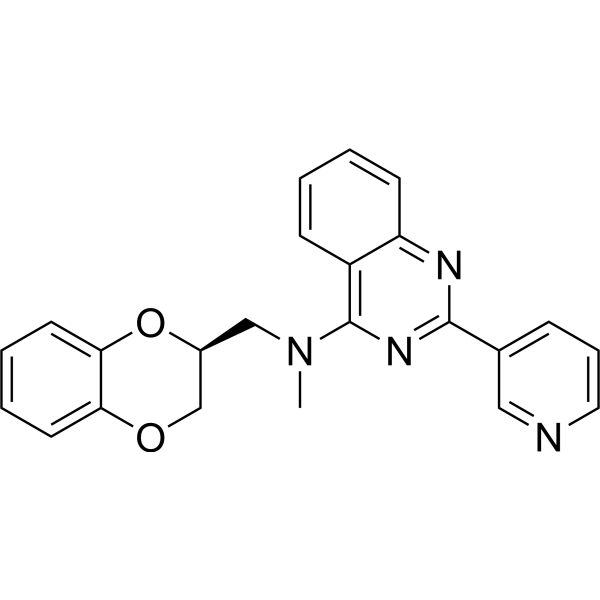
AZD3988 is an orally active diacylglycerol acyl transferase-1 (DGAT-1) inhibitor. AZD3988 has excellent DGAT-1 (human) potency with an IC50 value of 0. 6 nM. AZD3988 can be used for the research of metabolic diseases such as diabetes, obesity .
loading...
    loading...
Cat. No.: HY-D1581
CAS No.: 878674-84-1
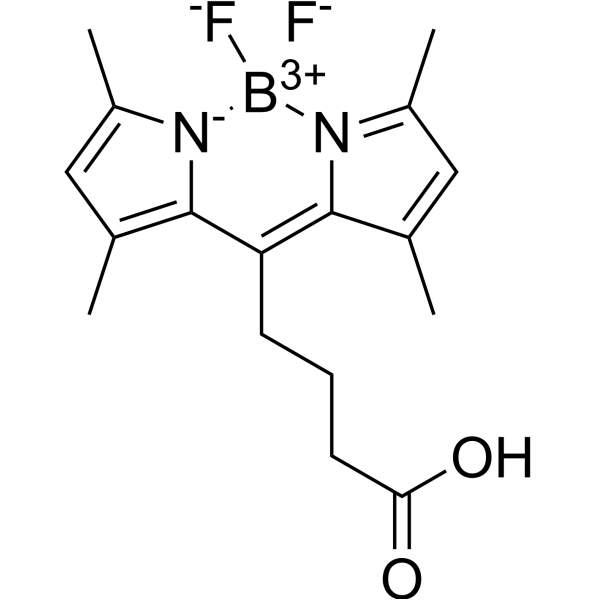
BODIPY 505/515-8-C3-COOH is a green fluorescing derivative, as a fluorescent dye for imaging lipid droplets in nannochloropsis. BODIPY 505/515-8-C3-COOH can be used for the research of flow cytometric high-throughput screening and cell sorting .
loading...
    loading...
Cat. No.: HY-147372
CAS No.: 945189-68-4
Purity:  98.92%
Target:  

TGF-beta/Smad

Research Areas:  

Metabolic Disease

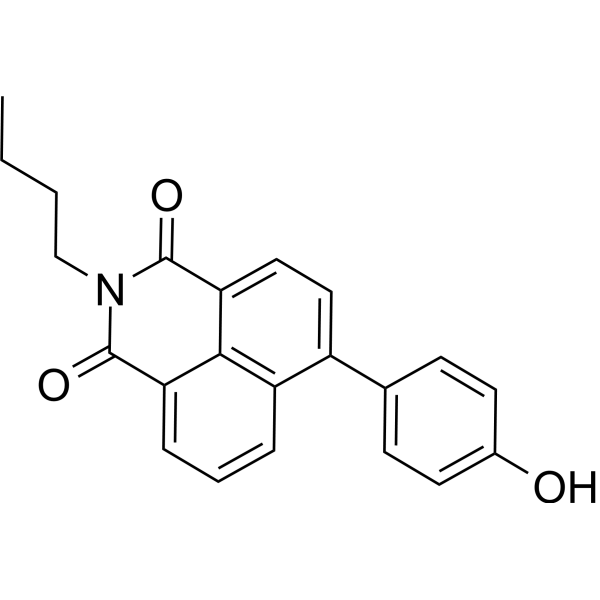
SJ000063181 is a potent BMP signaling activator. SJ000063181 activates BMP4 and the phosphorylation of SMAD1/5/8 (p-SMAD1/5/8). SJ000063181 induces ventralization in zebrafish embryos .
loading...
    loading...
Cat. No.: HY-160250
CAS No.: 2097024-37-6
Target:  

Fluorescent Dye UGT

Research Areas:  

Metabolic Disease

UGT1A1-IN-1 is a UGT1A1 inhibitor and fluorescent probe (Ex=370 nm, Em=520 nm), with an IC50 of 1.33 μM and a Ki of 5.02 μM. UGT1A1-IN-1 is selectively glucuronidated by UGT1A1 at the bilirubin homologous binding site, and its PET effect is blocked along with this reaction, triggering fluorescence changes. UGT1A1-IN-1 can serve as a substitute for bilirubin to detect UGT1A1 activity and perform high-throughput screening of UGT1A1 modulators .
loading...
    loading...
Cat. No.: HY-136797
CAS No.: 1622060-51-8
Target:  

Dengue Virus

Research Areas:  

Infection

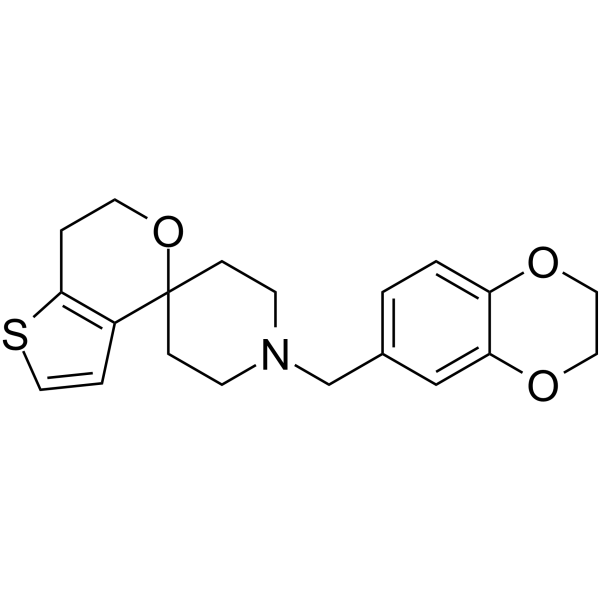
BP13944 is a potential small molecule inhibitor discovered by high-throughput screening. It can effectively inhibit the expression of dengue virus (DENV) replicons with an EC50 value of 1.03±0.09 μM. BP13944 can inhibit the replication or viral RNA synthesis of all four serotypes of DENV, but is ineffective against Japanese encephalitis virus. BP13944 may target the DENV NS3 protease, and the E66G amino acid substitution in the NS3 protease region will cause the virus to become resistant to BP13944. BP13944 has no obvious cytotoxicity. As there is currently no effective dengue vaccine and treatment, BP13944, as an effective small molecule inhibitor, may become a potential agent for the treatment of dengue in the future.
loading...
    loading...
Cat. No.: HY-137115
CAS No.: 334658-24-1
Target:  

Smo

Research Areas:  

Cancer

BODIPY-Cyclopamine is a fluorescently labeled ligand for the Smoothened (SMO) receptor. The activation of SMO is regulated by Patch protein, and over-activated SMO signaling pathways are associated with tumorigenesis. The NanoBRET (Nanofluorescein bioluminescence resonance energy transfer) technique used in the study can sensitively detect the resonance energy transfer between SMO and BODIPY-Cyclopamine, which can be used for high-throughput screening and kinetic analysis. Studying the binding site of BODIPY-Cyclopamine on SMO can also further explore SMO-targeted drugs .
loading...
    loading...
Cat. No.: HY-112091
CAS No.: 1443138-53-1
Purity:  99.55%
Target:  

Bacterial

Research Areas:  

Infection

GSK2200150A, identified by high-throughput screening (HTS) campaign, is an anti-tuberculosis (TB) agent.
loading...
    loading...
Cat. No.: HY-P6299
CAS No.: 944792-75-0
Research Areas:  

Neurological Disease Cancer

MAX8 is a synthetic β-hairpin peptide that folds rapidly and self-assembles into a β-sheet-rich fibrous hydrogel network via non-covalent crosslinking. MAX8 hydrogel exhibits excellent shear-thinning and self-healing properties, enabling precise delivery via syringe and maintaining local retention after implantation. MAX8 hydrogel can uniformly encapsulate cells while preserving their viability and morphology, and protect growth factors (e.g., NGF) and chemotherapeutic drugs from degradation. MAX8 is applicable for spinal cord injury repair, medulloblastoma treatment, and three-dimensional high-throughput drug screening .
loading...
    loading...
Cat. No.: HY-P10699
CAS No.: 487036-63-5
Research Areas:  

Neurological Disease Cancer

MAX1 is a synthetic β-hairpin peptide that folds rapidly and self-assembles into a β-sheet-rich fibrous hydrogel network via non-covalent crosslinking. MAX1 hydrogel exhibits excellent shear-thinning and self-healing properties, enabling precise delivery via syringe and maintaining local retention after implantation. MAX1 hydrogel can uniformly encapsulate cells while preserving their viability and morphology, and protect growth factors (e.g., NGF) and chemotherapeutic drugs from degradation. MAX1 is applicable for spinal cord injury repair, medulloblastoma treatment, and three-dimensional high-throughput drug screening .
loading...
    loading...
Cat. No.: HY-D2983
CAS No.: 2310262-15-6
ARHB is a highly selective and sensitive NAT2 fluorescent probe suitable for real-time detection of NAT2 activity in various bacteria. ARHB can successfully penetrate the bacterial cells, and the fluorescence intensity is positively correlated with the expression level of NAT2. ARHB is used for high-throughput screening of natural inhibitors for tuberculosis .
loading...
    loading...
Cat. No.: HY-135711
CAS No.: 1305116-69-1
Research Areas:  

Metabolic Disease

PDE8B-IN-1 is a selective inhibitor of phosphodiesterase 8B (PDE8B) with the activity of enhancing insulin secretion. PDE8B-IN-1 showed good efficacy in high-throughput screening and optimized its ligand efficiency through rapid deconstruction. PDE8B-IN-1 showed high target selectivity and good bioavailability in preclinical development, providing a basis for exploring its potential inhibitory use .
loading...
    loading...
Cat. No.: HY-118012
CAS No.: 392237-10-4
Target:  

Flavivirus

Research Areas:  

Infection

Flaviviruses-IN-1 is an inhibitor of several viruses belonging to the Flaviviridae family, with activity to inhibit viral infection. Flaviviruses-IN-1 is able to specifically inhibit multiple viruses of the Flaviviridae family. The mechanism of action of Flaviviruses-IN-1 is related to the modulation of the host cell immune response to viral infection. Flaviviruses-IN-1 was identified as a potential candidate compound in a high-throughput screening. Flaviviruses-IN-1 provides a new strategy for inhibiting infections caused by the Flaviviridae family .
loading...
    loading...
Cat. No.: HY-123702
CAS No.: 660817-08-3
Research Areas:  

Cancer

CAP-53194 is a selective Plk1 inhibitor with potential anticancer activity. CAP-53194 was identified by a high-throughput virtual screening approach using molecular docking, showing 100-fold selectivity for Plk1 over Plk2-4 and other cell cycle kinases. CAP-53194 is able to effectively exploit subtle differences between the binding sites of Plk1 and other Ser/Thr kinases, thereby enhancing their inhibitory effects. CAP-53194 meets the Lipinski compound analog criteria and passes other ADMET filters, indicating good compound compatibility. CAP-53194 belongs to a new class of potential Plk1 inhibitors suitable for subsequent compound development and testing .
loading...
    loading...
Cat. No.: HY-L032V
41,631 compounds
A unique collection of 4,0000+ fragment compounds for high-throughput screening (HTS).
Cat. No.: HY-L001V
33,907 compounds
A unique collection of 33,907 bioactive compounds including natural products, enzyme inhibitors, receptor ligands, and drugs for high throughput screening (HTS) and high content screening (HCS).
Cat. No.: HY-L0087V
503,810 compounds
Life Chemicals Collection of small organic molecules for high-throughput screening currently contains 503,810 off-the-shelf products. The Collection is being permanently replenished with de novo designed products having optimal physicochemical parameters for drug discovery.
Cat. No.: HY-115585
CAS No.: 1026295-98-6
Target:  

HDAC

Research Areas:  

Others

HDAC-IN-2 (Compound 6) is an inhibitor of histone deacetylase 4 (HDAC4). HDAC-IN-2 has affinity for Class IIa enzymes. HDAC-IN-2 is a useful research tool for high-throughput screening and follow-up chemistry .
loading...
    loading...
Cat. No.: HY-L109
807 compounds

Protein protein interactions (PPI) have pivotal roles in life processes. The studies showed that aberrant PPI are associated with various diseases, including cancer, infectious diseases, and neurodegenerative diseases. The classic drug targets are usually enzymes, ion channels, or receptors, the PPI indicate new potential therapeutic targets. Therefore, targeting PPI is a new direction in treating diseases and an essential strategy for the development of new drugs.

However, the design of modulators targeting PPI still faces tremendous challenges, such the difficult PPI interfaces for the drug design, lack of ligands reference, lack of guidance rules for the PPI modulators development and high-resolution PPI proteins structures.

With the development of high-throughput technology, high-throughput screening is also gradually used for the identification of PPI inhibitors, but the compound library used for conventional target screening is not very effective in screening PPI inhibitors. To improve screening efficiency, MCE carefully selected 807 PPI inhibitors and mainly targeting MDM2-p53, Keap1-Nrf2, PD-1/PD-L1, Myc-Max, etc. MCE Protein-protein Interaction Inhibitor Library is a useful tool for PPI drug discovery and related research.

Cat. No.: HY-184527
CAS No.: 1372609-54-5
Synonyms: 2-Chloro-4-nitrophenyl ferulate
Research Areas:  

Others

CNPF (2-Chloro-4-nitrophenyl ferulate) is a chromogenic substrate of Feruloyl esterase A (derived from Aspergillus niger). CNPF can be hydrolyzed by this enzyme to release the chromophore. CNPF has a superior signal-to-noise ratio and is suitable for high-throughput screening of feruloyl esterase .
loading...
    loading...
Cat. No.: HY-L947
1,859 compounds

Built on druggable heterocyclic backbones with tunable electrophilic warheads (halogens, cyano groups), our electrophilic heterocyclic fragment library targets non-conserved cysteine/lysine residues and screens covalent ligands through an electrophile-first workflow. It generates high-quality dual-functional fragments for KRAS, BTK and other popular targets, supporting MS and DEL high-throughput screening to accelerate covalent drug lead discovery.

MCE Electrophilic Heterocyclic Fragment Library Built on druggable heterocyclic backbones with tunable electrophilic warheads (halogens, cyano groups), our electrophilic heterocyclic fragment library targets non-conserved cysteine/lysine residues and screens covalent ligands through an electrophile-first workflow. It generates high-quality dual-functional fragments for KRAS, BTK and other popular targets, supporting MS and DEL high-throughput screening to accelerate covalent drug lead discovery.

