

180 Results for "

human neuronal

" in MedChemExpress (MCE) Product Catalog:
Products (180)

180 Results for "human neuronal" in MCE Product Catalog:

27
27 Publications Verification
Cat. No.: HY-P1363B
CAS No.: 107761-42-2
Target:  

Amyloid-β

Research Areas:  

Neurological Disease

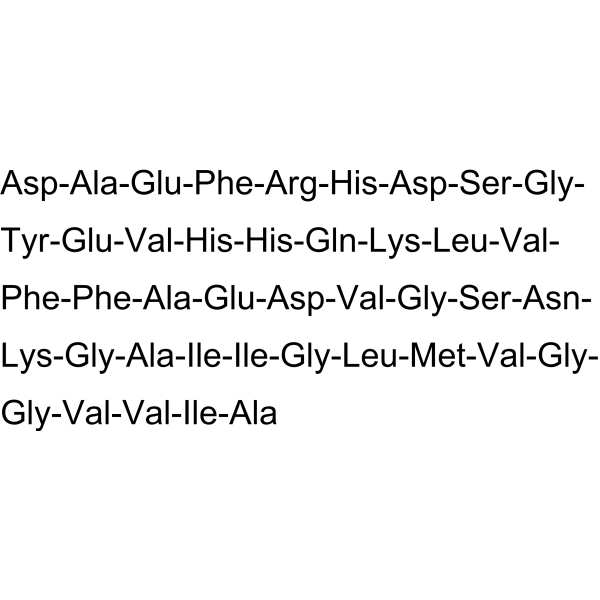
β-Amyloid (1-42), human, HFIP-treated, a 42-amino acid peptide that has been treated with HFIP from β-Amyloid (1-42), human (HY-P1363A), is a brain-penetrant amyloid protein fragment, which can be used in research on Alzheimer's disease and Down’s syndrome. β-Amyloid (1-42), human, HFIP-treated remaining as a monomer exhibits antioxidant and neuroprotective effects. β-Amyloid (1-42), human, HFIP-treated, after being dissolved in DMSO to form the stock solution, on the one hand, can form soluble oligomers (AβOs) when incubated at 4°C, which have synaptic toxicity and neurotoxicity; on the other hand, it can be incubated at 37°C to form insoluble fibrils, with lower neurotoxicity, and participating in the oxidative damage process. Aβ42 oligomers bind to various neuronal surface receptors (such as PrPc, mGluR5, NMDA receptors, etc.), triggering oxidative stress, calcium homeostasis imbalance, and synaptic toxicity via activating downstream signaling pathways, leading to neuronal dysfunction and death .
loading...
    loading...
27
27 Publications Verification
Cat. No.: HY-P1363
Synonyms: Amyloid β-peptide (1-42) (human) TFA
Target:  

Amyloid-β

Research Areas:  

Neurological Disease

β-Amyloid (1-42) (Amyloid β-peptide (1-42), human TFA, a 42-amino acid peptide that has not been treated with HFIP, is a brain-penetrant amyloid protein fragment, which can be used in research on Alzheimer's disease and Down’s syndrome. β-Amyloid (1-42), human TFA remaining as a monomer exhibits antioxidant and neuroprotective effects. β-Amyloid (1-42), human TFA, after being monomericized by HFIP and dissolved in DMSO to form the stock solution, on the one hand, can form soluble oligomers (AβOs) when incubated at 4 °C, which have synaptic toxicity and neurotoxicity; on the other hand, it can be incubated at 37 °C to form insoluble fibrils, with lower neurotoxicity, and participating in the oxidative damage process. Aβ42 oligomers bind to various neuronal surface receptors (such as PrPc, mGluR5, NMDA receptors, etc.), triggering oxidative stress, calcium homeostasis imbalance, and synaptic toxicity via activating downstream signaling pathways, leading to neuronal dysfunction and death .
loading...
    loading...
27
27 Publications Verification
Cat. No.: HY-P1363A
CAS No.: 107761-42-2
Synonyms: Amyloid β-peptide (1-42) (human)
Target:  

Amyloid-β

Research Areas:  

Neurological Disease

β-Amyloid (1-42) (Amyloid β-peptide (1-42)), human, a 42-amino acid peptide that has not been treated with HFIP, is a brain-penetrant amyloid protein fragment, which can be used in research on Alzheimer's disease and Down’s syndrome. β-Amyloid (1-42), human remaining as a monomer exhibits antioxidant and neuroprotective effects. β-Amyloid (1-42), human, after being monomericized by HFIP and dissolved in DMSO to form the stock solution, on the one hand, can form soluble oligomers (AβOs) when incubated at 4 °C, which have synaptic toxicity and neurotoxicity; on the other hand, it can be incubated at 37 °C to form insoluble fibrils, with lower neurotoxicity, and participating in the oxidative damage process. Aβ42 oligomers bind to various neuronal surface receptors (such as PrPc, mGluR5, NMDA receptors, etc.), triggering oxidative stress, calcium homeostasis imbalance, and synaptic toxicity via activating downstream signaling pathways, leading to neuronal dysfunction and death .
loading...
    loading...
19
19 Cited Publications
Cat. No.: HY-16900
CAS No.: 61413-54-5
Synonyms: (R,S)-Rolipram; (±)-Rolipram; ZK 62711
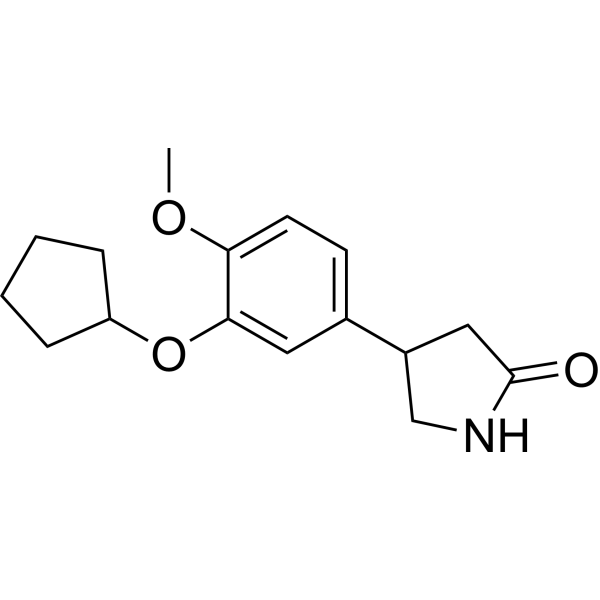
Rolipram is a PDE4 inhibitor, with blood-brain barrier permeability, that reverses β-amyloid-induced learning and memory impairment in rats. Rolipram elevates intracellular cAMP and clevels and regulates the cAMP/CREB signaling pathway, thereby alleviating neuroinflammation and apoptotic responses. Rolipram promotes neuronal differentiation of human bone marrow mesenchymal stem cells and inhibits Methamphetamine- and morphine-induced hyperlocomotion in mice. Rolipram also reduces the viability of glioblastoma stem-like cells and enhances Bevacizumab (HY-P9906)-induced cell death. Rolipram inhibits the expression of proinflammatory cytokines and enhances central noradrenergic transmission. Rolipram is mainly used in studies related to various central nervous system diseases including Alzheimer's disease, major depressive disorder, glioblastoma multiforme, and multiple sclerosis .
loading...
    loading...
11
11 Cited Publications
Cat. No.: HY-153169
CAS No.: 2754428-18-5
Purity:  99.30%
Synonyms: 6PPD-Quinone
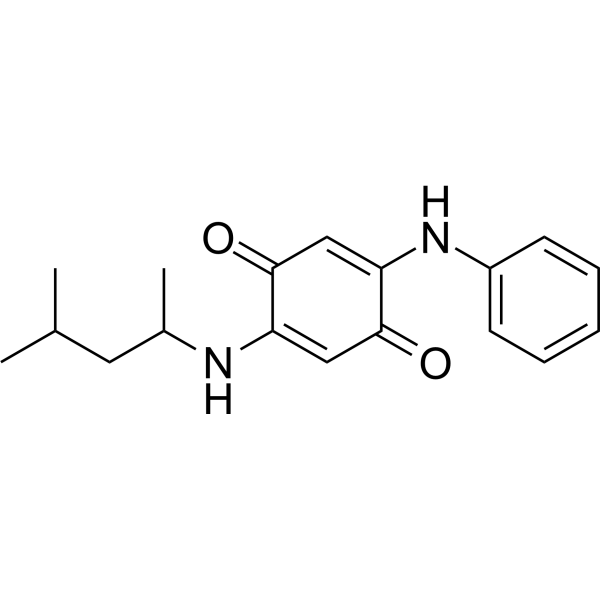
6PPD-Q (6PPD-Quinone) is an environmental pollutant that can be detected in human urine and is widely present in the environment. 6PPD-Q targets and binds to CNR2, CNR1, AA2AR, LCAT, and TRPA1, with CNR2 exhibiting the highest binding affinity, potentially acting as a CNR2 receptor agonist to activate cannabinoid receptors. 6PPD-Q induces intestinal inflammation and barrier damage by disrupting mitochondrial function, reducing neuronal glycolysis metabolites and TCA cycle intermediates, and exacerbating α-synuclein (α-syn) aggregation. 6PPD-Q is applicable in research on environmental toxicology, neurodegenerative diseases, and inflammation-related disorders .
loading...
    loading...
6
6 Cited Publications
Cat. No.: HY-N0762
CAS No.: 31524-62-6
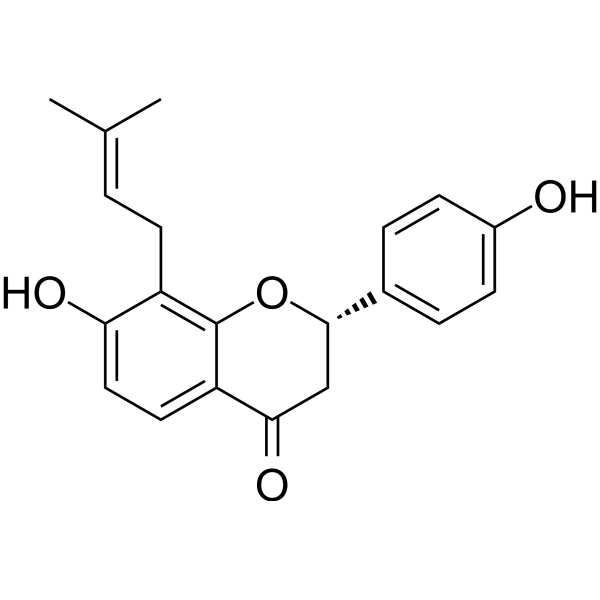
Isobavachin is an orally active, blood-brain barrier-penetrating prenylated flavonoid present in Psoralea corylifolia. Isobavachin inhibits human CYP2B6, CYP2C9, CYP2C19, UGT1A1, UGT1A9, and UGT2B7. Isobavachin suppresses MAPK activation, NF-κB nuclear translocation, overexpression of iNOS/COX-2, FcεRI-mediated signaling pathways, and RANKL-induced osteoclastogenesis. Isobavachin induces autophagy, cytotoxicity, neuronal differentiation, and NRF2 activation; it alleviates oxidative damage, inflammatory responses, apoptosis, iron accumulation, mitochondrial biogenesis, and mast cell degranulation. Isobavachin is applicable to research related to liver injury, inflammatory diseases, osteoporosis, liver cancer, prostate cancer, glioma, periodontitis-induced bone loss, and Alzheimer's disease .
loading...
    loading...
5
5 Cited Publications
Cat. No.: HY-P0221
CAS No.: 137061-48-4
Synonyms: Pituitary Adenylate Cyclase Activating Polypeptide 38
PACAP (1-38), human, ovine, rat is a PAC1 receptor agonist. PACAP (1-38), human, ovine, rat binds to PACAP type I receptor, PACAP type II receptor VIP1, and PACAP type II receptor VIP2 with IC50s of 4 nM, 2 nM, and 1 nM, respectively. PACAP (1-38), human, ovine, rat increases the α-secretase activity. PACAP (1-38), human, ovine, rat elevates cytosolic Ca 2+, increases proliferation and increases phosphorylation of extracellular regulates kinase (ERK) and the epidermal growth factor receptor (EGFR). PACAP (1-38), human, ovine, rat demonstrates potent, efficacious, and sustained stimulatory effects on sympathetic neuronal NPY and catecholamine production. PACAP (1-38), human, ovine, rat can be used for neurotrophic and neuroprotective research .
loading...
    loading...
5
5 Cited Publications
Cat. No.: HY-B0553
CAS No.: 554-57-4
Synonyms: L584601
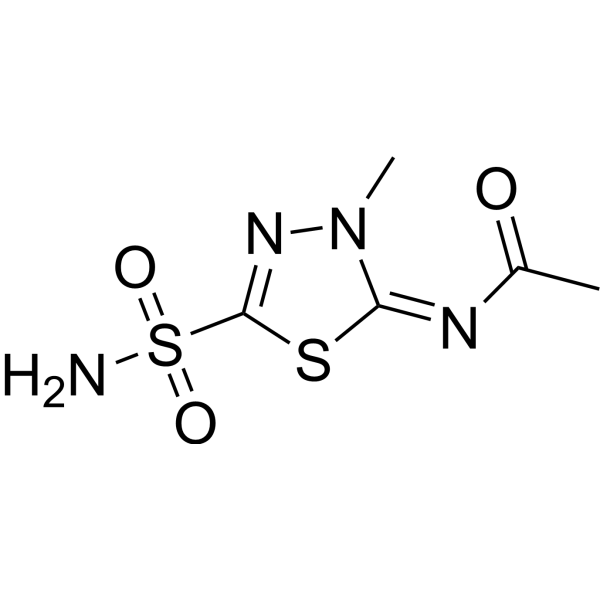
Methazolamide (L584601) is a BBB-penetrable and orally active carbonic anhydrase inhibitor, with a Ki of 14 nM for human carbonic anhydrase II. Methazolamide can reduce intraocular pressure and has a neuroprotective effect, being able to inhibit neuronal apoptosis. Methazolamide can be used in the research of ophthalmic diseases such as glaucoma and cerebrovascular diseases such as subarachnoid hemorrhage .
loading...
    loading...
3
3 Cited Publications
Cat. No.: HY-P99407
CAS No.: 2097151-87-4
Synonyms: VX 15/2503

Target:  

Inhibitory Antibodies

Research Areas:  

Neurological Disease Cancer

Pepinemab (VX 15/2503) is a human monoclonal antibody against SEMA4D, a signalling protein 4D (SEMA4D), also known as CD100, which is a regulator of neuronal development and plays a role in a variety of cellular processes. Pepinemab can be used in the study of various neurodegenerative diseases such as Alzheimer's disease by blocking the activity of SEMA4D .
loading...
    loading...
2
2 Cited Publications
Cat. No.: HY-12119
CAS No.: 210354-22-6
Purity:  ≥98.0%
Target:  

NO Synthase

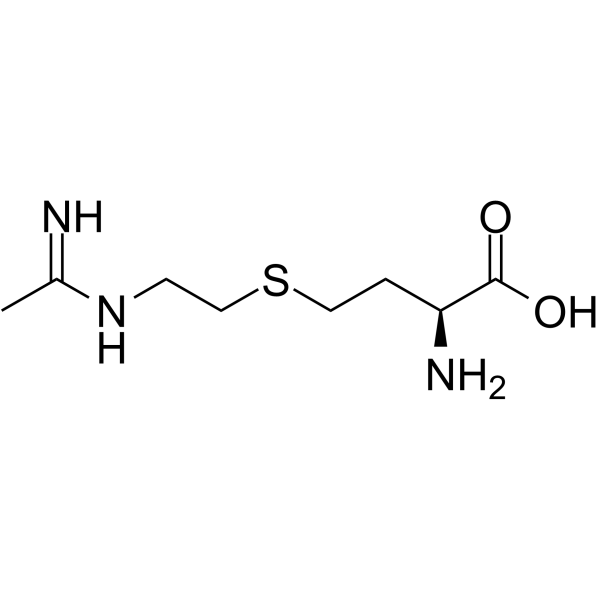
GW274150 is a potent, selective, orally active and NADPH-dependent inhibitor of human inducible nitric oxide synthase (iNOS) (IC50=2.19 μM; Kd=40 nM) and rat iNOS (ED50=1.15 μM). GW274150 also displays less potency for both humans or rats endothelial NOS (eNOS) and neuronal NOS (nNOS). GW274150 exerts a protective role in an acute model of lung injury inflammation .
loading...
    loading...
2
2 Cited Publications
Cat. No.: HY-12119A
CAS No.: 438542-15-5
Purity:  99.85%
Target:  

NO Synthase

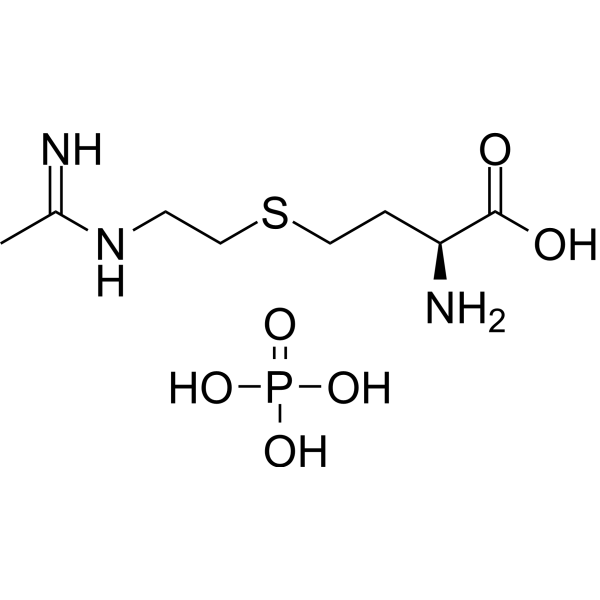
GW274150 phosphate is a potent, selective, orally active and NADPH-dependent inhibitor of human inducible nitric oxide synthase (iNOS) (IC50=2.19 μM; Kd=40 nM) and rat iNOS (ED50=1.15 μM). GW274150 phosphate displays less potency for both humans or rats endothelial NOS (eNOS) and neuronal NOS (nNOS). GW274150 phosphate exerts a protective role in an acute model of lung injury inflammation .
loading...
    loading...
2
2 Cited Publications
Cat. No.: HY-B0985
CAS No.: 136-40-3
Target:  

TRP Channel

Research Areas:  

Neurological Disease

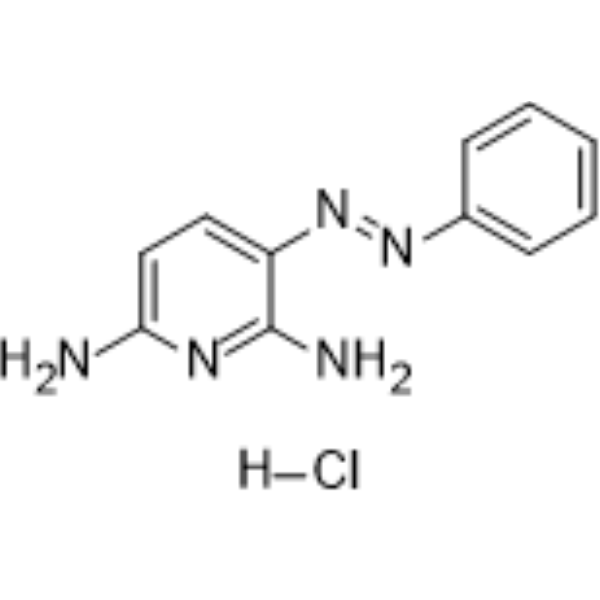
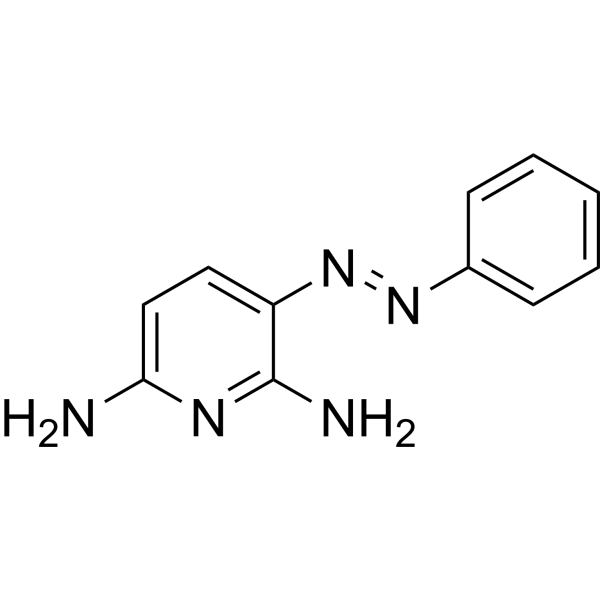
Phenazopyridine hydrochlorideis a competitive SARM1 inhibitor, with IC50 145 μM. Phenazopyridine hydrochlorideis a TRPM8 antagonist. Phenazopyridine hydrochloride has a local anesthetic/analgesic effect. Phenazopyridine hydrochlorideis used to relieve painful symptoms of conditions such as cystitis and urethritis. Phenazopyridine hydrochloridecan promote neuronal differentiation and can also be used in the study of traumatic brain injury, peripheral neuropathy and neurodegenerative diseases .
loading...
    loading...
2
2 Cited Publications
Cat. No.: HY-B0985A
CAS No.: 94-78-0
Target:  

TRP Channel

Research Areas:  

Neurological Disease

Phenazopyridine is a competitive SARM1 inhibitor, with IC50 145 μM. Phenazopyridine is a TRPM8 antagonist. Phenazopyridine has a local anesthetic/analgesic effect. Phenazopyridine is used to relieve painful symptoms of conditions such as cystitis and urethritis. Phenazopyridine can promote neuronal differentiation and can also be used in the study of traumatic brain injury, peripheral neuropathy and neurodegenerative diseases .
loading...
    loading...
1
1 Cited Publications
Cat. No.: HY-134992
CAS No.: 1337918-83-8
Purity:  99.54%
Synonyms: Zavegepant; BHV-3500
Target:  

CGRP Receptor

Research Areas:  

Neurological Disease

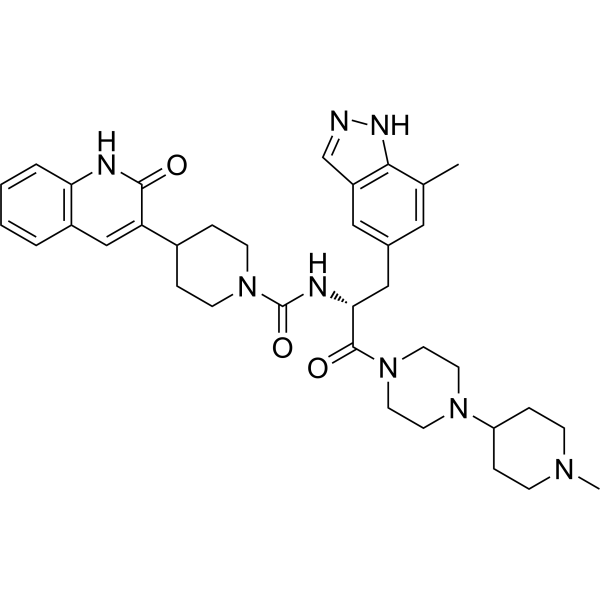
Vazegepant (Zavegepant; BHV-3500) is an orally active calcitonin gene-related peptide (CGRP) receptor antagonist with a Ki of 23 pM for human CGRP receptor and an EC50 of 880 pM for reversing CGRP-induced vasodilation in human intracranial arteries. Vazegepant can block CGRP-mediated vasodilation in the trigeminal vascular system and inhibit neuronal circuit sensitization. Vazegepant can be used in migraine-related research .
loading...
    loading...
1
1 Cited Publications
Cat. No.: HY-P71002
Purity:  ≥ 90%, as determined by reducing SDS-PAGE.
Synonyms: NRCAM; Uncharacterized Protein NRCAM; neuronal Cell Adhesion Molecule; Ng-CAM-Related; NgCAM-Related Cell Adhesion Molecule; NRCAM Protein; neuronal Surface Protein Bravo; NEDNMS; KIAA0343; HBravo; Bravo; Nr-CAM; neuronal Cell Adhesion Molecule Short Isof
Species:  
Human
Source:  
HEK293
loading...
    loading...
1
1 Cited Publications
Cat. No.: HY-P7748A
Purity:  ≥ 95%, as determined by reducing SDS-PAGE.
Synonyms: CTSD; Cathepsin D (Lysosomal Aspartyl Protease); Prev. CPSD; Lysosomal Aspartyl Protease; CLN10; Cathepsin D Isoform 2; Ceroid-Lipofuscinosis, neuronal 10; HEL-S-130P; Epididymis Secretory Sperm Binding Protein Li 130P; Cathepsin D; Lysosomal Aspartyl Pep
Species:  
Human
Source:  
HEK293
loading...
    loading...
1
1 Cited Publications
Cat. No.: HY-P7748
Purity:  ≥ 95%, as determined by reducing SDS-PAGE.
Synonyms: CTSD; Cathepsin D (Lysosomal Aspartyl Protease); Prev. CPSD; Lysosomal Aspartyl Protease; CLN10; Cathepsin D Isoform 2; Ceroid-Lipofuscinosis, neuronal 10; HEL-S-130P; Epididymis Secretory Sperm Binding Protein Li 130P; Cathepsin D; Lysosomal Aspartyl Pep
Species:  
Human
Source:  
HEK293
loading...
    loading...
1
1 Cited Publications
Cat. No.: HY-P73302
Purity:  ≥ 90%, as determined by reducing SDS-PAGE.
Synonyms: CDH2; N-Cadherin; Prev. NCAD; Calcium-Dependent Adhesion Protein, neuronal; CDHN; CD325 Antigen; Neural Cadherin; N-Cadherin 1; Cadherin-2; ARVD14; CD325; ADHD8; Cadherin 2, Type 1, N-Cadherin (neuronal); ACOGS; Cadherin 2; CDw325
Species:  
Human
Source:  
HEK293
loading...
    loading...
1
1 Cited Publications
Cat. No.: HY-132131
CAS No.: 1414976-20-7
Purity:  99.36%
Synonyms: Zavegepant hydrochloride; BHV-3500 hydrochloride
Target:  

CGRP Receptor

Research Areas:  

Neurological Disease

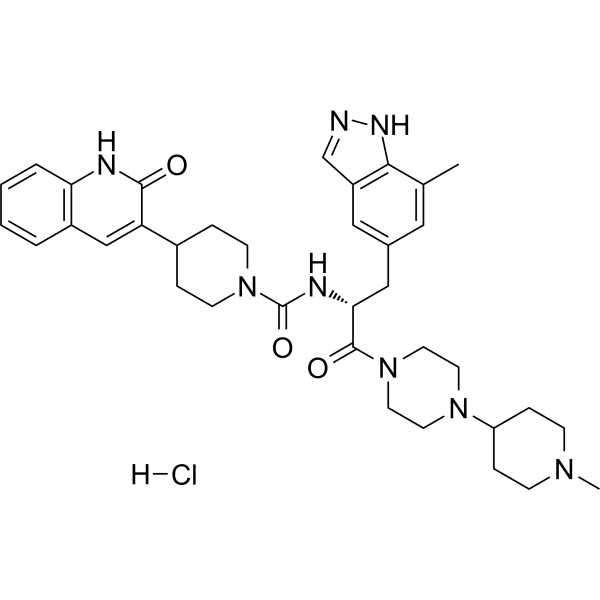
Vazegepant (Zavegepant hydrochloride; BHV-3500 hydrochloride) hydrochloride is an orally active calcitonin gene-related peptide (CGRP) receptor antagonist with a Ki of 23 pM for human CGRP receptor and an EC50 of 880 pM for reversing CGRP-induced vasodilation in human intracranial arteries. Vazegepant hydrochloride can block CGRP-mediated vasodilation in the trigeminal vascular system and inhibit neuronal circuit sensitization. Vazegepant hydrochloride can be used in migraine-related research .
loading...
    loading...
1
1 Cited Publications
Cat. No.: HY-P74491
Purity:  ≥ 90%, as determined by reducing SDS-PAGE.
Synonyms: TRIB3; C20orf97; NIPK; SKIP3; TRB3; Tribbles homolog 3; TRB-3; neuronal cell death-inducible putative kinase; SINK; p65-interacting inhibitor of NF-kappa-B; neuronal Cell Death Inducible Putative Kinase; Chromosome 20 Open Reading Frame 97; P65-Interactin
Species:  
Human
Source:  
Sf9 insect cells
loading...
    loading...

