1. Search Result
Search Result
Results for "

hyphae

" in MedChemExpress (MCE) Product Catalog:

18

Inhibitors & Agonists

4

Natural
Products

1

Isotope-Labeled Compounds

Cat. No. Product Name Target Research Areas Chemical Structure
  • HY-B1858
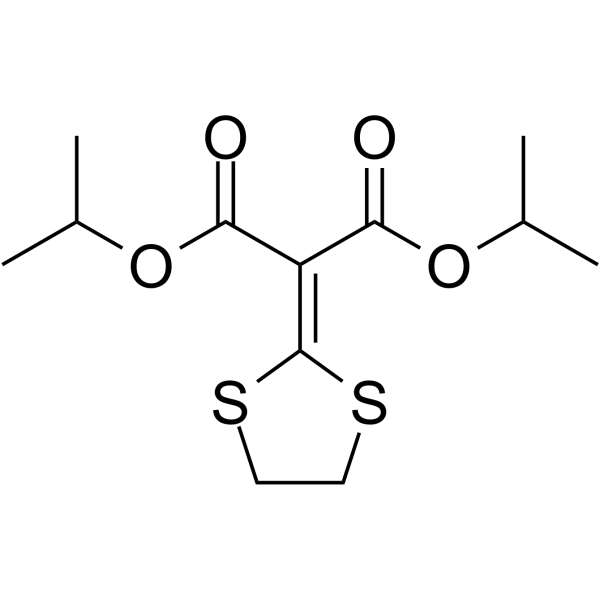
    Isoprothiolane
    2 Publications Verification

    Environmental Pollutants Parasite Fungal Interleukin Related Infection Metabolic Disease Inflammation/Immunology
    Isoprothiolane is a blast fungicide with antifungal, anti-inflammatory and insecticidal activities. Isoprothiolane primarily acts on fungi during the penetration and growth stages of infecting hyphae. Isoprothiolane can be used as an insecticide, pesticide, etc. In addition, Isoprothiolane can reduce serum phospholipid and total lipid concentrations, regulating lipid metabolism. Isoprothiolane is also used in the research of fatty liver .
    Isoprothiolane
  • HY-N7107

    Environmental Pollutants Fungal Infection Metabolic Disease
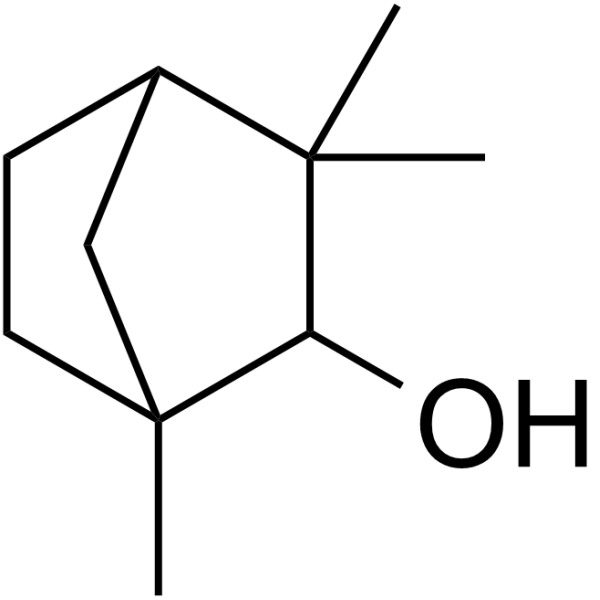
    Fenchyl alcohol is a monoterpene alcohol that can be used as a fragrance. Fenchyl alcohol has antifungal activity and can inhibit the formation of biofilms and hyphae of Candida albicans. Fenchyl alcohol also has a strong inhibitory effect on the rumen microbial activity of sheep and deer .
    Fenchyl alcohol
  • HY-W782599

    Fungal PKC Calcineurin Infection
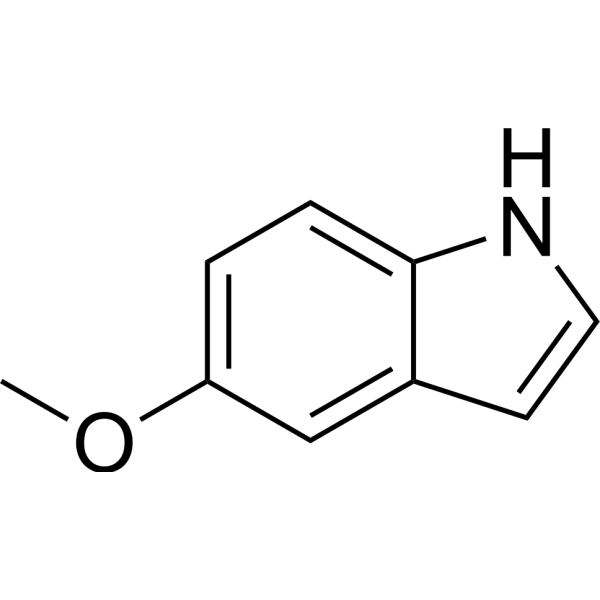
    Senkyunolide B is a phthalide found in Angelica sinensis. Senkyunolide B has broad antifungal activities. Senkyunolide B affects the spore germination and hyphae growth of Aspergillus fumigatus via down-regulating phosphatidylinositol-PKC-calcineurin axis and the expression of ENG genes .
    Senkyunolide B
  • HY-120921

    RH-7281

    Fungal Microtubule/Tubulin Infection
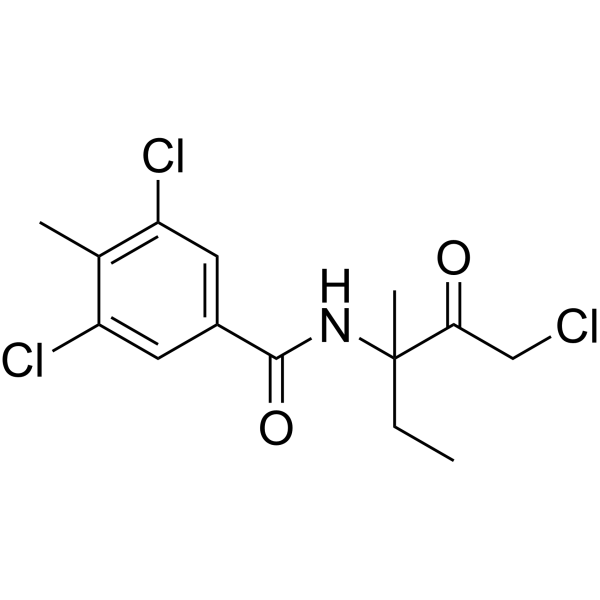
    Zoxamide (RH-7281) is an oomycete Fungicide and covalent β-tubulin inhibitor. RH-7281 inhibits the assembly of tubulin into microtubules in vitro. Zoxamide binds covalently to β-tubulin, disrupting microtubule assembly and the cytoskeleton. Zoxamide blocks nuclear division in germinated hyphae of Phytophthora capsici and inhibits hyphal growth of Phytophthora capsici .
    Zoxamide
  • HY-156090

    Mitochondrial Metabolism Fungal Infection
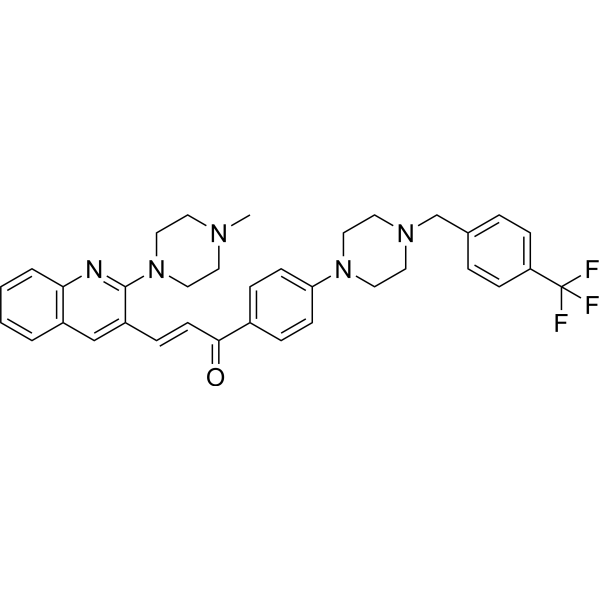
    PK-10 is a synergistic antibacterial agent of Fluconazole (HY-B0101) and has strong antifungal activity against a variety of Fluconazole-resistant Candida albicans strains. PK-10 combined with Fluconazole can inhibit hyphae formation and induce the accumulation of reactive oxygen species. It further causes damage to mitochondrial membrane potential, reduces intracellular ATP content, and leads to mitochondrial dysfunction .
    PK-10
  • HY-151284

    Bacterial Fungal Infection
    Antifungal agent 38 is a geterocyclic disulfide, an antifungal and antibacterial agent. Antifungal agent 38 induces the shrinkage of hyphae, disrupts the integrity of the plasma membrane, and causes the damage and leakage of cell contents .
    Antifungal agent 38
  • HY-159481

    Succinate Dehydrogenase Fungal Infection Inflammation/Immunology
    SDH-IN-17 (compound C32), a hydrazide-containing flavonol derivative, is a potent succinate dehydrogenase (SDH) inhibitor with an IC50 of 8.42 μM. SDH-IN-17 can occupy the active site and form strong interactions with the key residues of SDH. SDH-IN-17 exhibits antifungal activity against Rhizoctonia solani (EC50=0.170 μg/mL). SDH-IN-17 disrupts the normal growth of hyphae by affecting the structural integrity of the cell membrane and cellular respiration. SDH-IN-17 has the potential for plant disease control research .
    SDH-IN-17
  • HY-N7107R

    Reference Standards Fungal Infection Metabolic Disease
    Fenchyl alcohol is a monoterpene alcohol that can be used as a fragrance. Fenchyl alcohol has antifungal activity and can inhibit the formation of biofilms and hyphae of Candida albicans. Fenchyl alcohol also has a strong inhibitory effect on the rumen microbial activity of sheep and deer .
    Fenchyl alcohol (Standard)
  • HY-147970

    Fungal Infection
    Antifungal agent 34 (compound 6i) is a potent antifungal agent. Antifungal agent 34 shows a potent antifungal activity against Candida albicans, with a MIC of 4 µg/mL. Antifungal agent 34 shows significant inhibition on Candida albicans hyphae and biofilm development. Antifungal agent 34 exhibits no cytotoxicity to mammalian cells .
    Antifungal agent 34
  • HY-163397

    Fungal Infection
    Antibacterial agent 196 (compound 6b) is a coumarin derivative containing oxime ether structure, and shows antifungal activity, with the EC50 of 0.46 μg/mL against Rhizoctonia solani .
    Antibacterial agent 196
  • HY-B1858S

    Isotope-Labeled Compounds Fungal Interleukin Related Parasite Infection Metabolic Disease Inflammation/Immunology
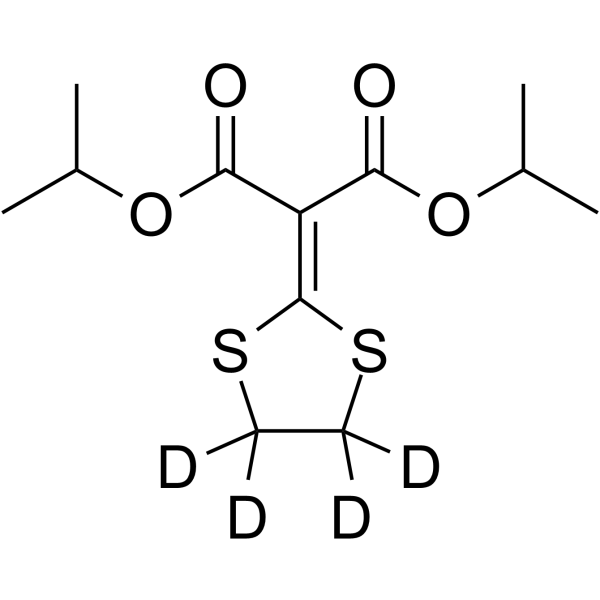
    Isoprothiolane-d4 is the deuterium labeled Isoprothiolane (HY-B1858). Isoprothiolane is a blast fungicide with antifungal, anti-inflammatory and insecticidal activities. Isoprothiolane primarily acts on fungi during the penetration and growth stages of infecting hyphae. Isoprothiolane can be used as an insecticide, pesticide, etc. In addition, Isoprothiolane can reduce serum phospholipid and total lipid concentrations, regulating lipid metabolism. Isoprothiolane is also used in the research of fatty liver .
    Isoprothiolane-d4
  • HY-B1858R

    Reference Standards Fungal Interleukin Related Parasite Infection Metabolic Disease Inflammation/Immunology
    Isoprothiolane (Standard) is the analytical standard of Isoprothiolane (HY-B1858). This product is intended for research and analytical applications. Isoprothiolane is a blast fungicide with antifungal, anti-inflammatory and insecticidal activities. Isoprothiolane primarily acts on fungi during the penetration and growth stages of infecting hyphae. Isoprothiolane can be used as an insecticide, pesticide, etc. In addition, Isoprothiolane can reduce serum phospholipid and total lipid concentrations, regulating lipid metabolism. Isoprothiolane is also used in the research of fatty liver .
    Isoprothiolane (Standard)
  • HY-151280

    Bacterial Fungal Infection
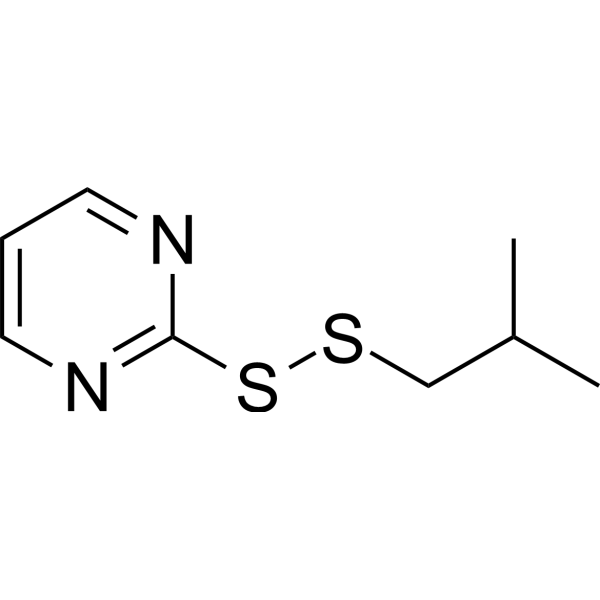
    Antifungal agent 37 is a geterocyclic disulfide, with antifungal activity .
    Antifungal agent 37
  • HY-159585

    Cytochrome P450 Fungal Infection
    CYP51-IN-20 (compound 5b) is an inhibitor of CYP51 and has antifungal activity. CYP51-IN-20 has a significant inhibitory effect on Candida albicans ATCC 10231, downregulates ERG11 (Cyp51) gene expression, and significantly reduces the yeast-to-hyphae morphological transition. CYP51-IN-20 can synergize with Voriconazole (HY-76200) to occupy the entire CYP51 binding site and exert a synergistic inhibitory effect in the Glechoma moth model .
    CYP51-IN-20
  • HY-174388

    Fungal Herbicide Reactive Oxygen Species (ROS) Infection
    Antifungal agent 134 (Compound B13) is an antifungal agent with EC50s of 3.24, 1.89, 1.70, 0.36, 4.27, and 1.50 μg/mL for Botrytis cinerea, Alternaria solani, Fusarium graminearum, Rhizoctonia solani, Colletotrichum orbiculare, and Alternaria alternata, respectively. Antifungal agent 134 can disrupt the cell membrane and mitochondria of the hyphae, leading to significant ROS accumulation. Antifungal agent 134 also has significant herbicidal activities against field weeds, such as Amaranthus retroflexus L and Abutilon theophrasti Medicus. Antifungal agent 134 can be used for crop diseases and field weeds research .
    Antifungal agent 134
  • HY-181492

    Fungal Infection Inflammation/Immunology
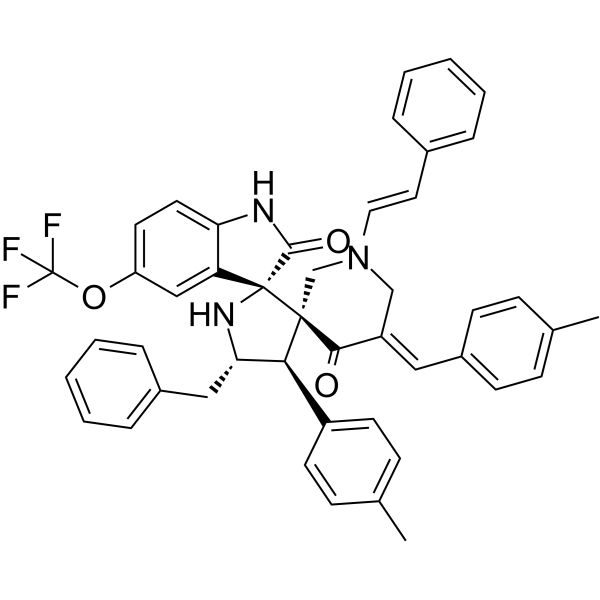
    Antifungal agent 155 hydrochloride is an antifungal agent. Antifungal agent 155 hydrochloride induces bent, twisted, abnormally swollen hyphae, compromises fungal hyphal plasma membrane integrity, and triggers fungal cell death. Antifungal agent 155 hydrochloride can be used for the research of fusarium keratitis .
    Antifungal agent 155 hydrochloride
  • HY-170378

    Fungal Infection
    Laccase-IN-5 (Compound 2b) is the inhibitor for Laccase with an IC50 of 0.82 μM. Laccase-IN-5 increases the cell membrane permeability, limits the growth of hyphae, destorys the cell wall, and induces oxidative stress responses. Laccase-IN-5 exhibits antifungal activity against various plant pathogenic fungi and oomycetes, inhibits B. dothidea with an EC50 of 0.96 mg/L .
    Laccase-IN-5
  • HY-N16760

    Microtubule/Tubulin HIV Infection
    Wikstrol B (compound 5) is a biflavonoid microtubule/tubulin inhibitor and HIV-1 inhibitor. Wikstrol B has an IC50 value of 184 μM for microtubule polymerization and an EC50 of 3.02 μM against HIV-1, acting on early events of HIV-1 replication. Wikstrol B exerts antifungal activity by inducing morphological deformation of Pyricularia oryzae hyphae and exerts anti-mitotic activity by inhibiting microtubule polymerization. Wikstrol B can be used in research related to antifungal, antitumor, and anti-AIDS applications. Wikstrol B can be naturally extracted from the roots of Wikstroemia indica .
    Wikstrol B

Inquiry Online

Your information is safe with us. * Required Fields.

Salutation


Country or Region *

Applicant Name *


Organization Name *

Department *


Email Address *


Product Name *

Cat. No.


Requested quantity *

Phone Number *


Remarks

Inquiry Online

Inquiry Information

Product Name:
Cat. No.:
Quantity:
MCE Japan Authorized Agent:

