
10 Results for "

islet structure

" in MedChemExpress (MCE) Product Catalog:
Products (10)

10 Results for "islet structure" in MCE Product Catalog:

74
74 Publications Verification
Cat. No.: HY-13443A
CAS No.: 914454-01-6
Purity:  99.91%
Synonyms: Exenatide acetate
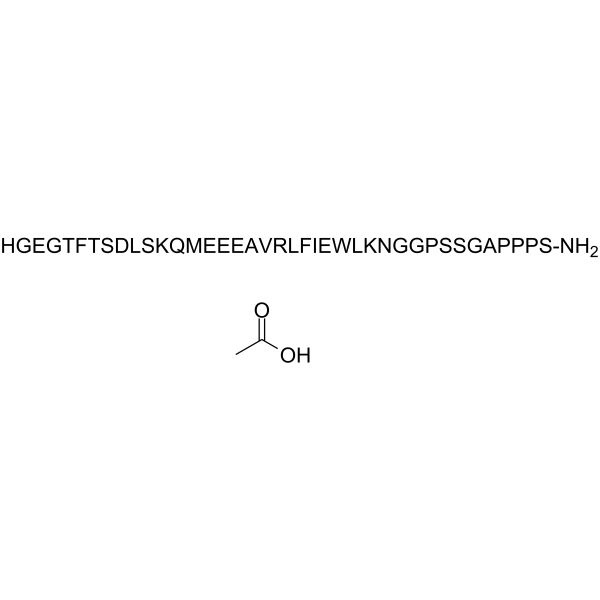
Exendin-4 acetate (Exenatide acetate) is an orally active, blood-brain barrier-permeable glucagon-like peptide-1 receptor (GLP‑1 receptor) agonist that resists degradation mediated by dipeptidyl peptidase IV. Exendin-4 acetate mediates multiple glucose-regulating effects, including stimulation of glucose-dependent insulin secretion, inhibition of glucagon production, increase in β-cell mass, delay of gastric emptying, reduction of food intake, improvement of peripheral insulin sensitivity, and restoration of normal islet structure. Exendin-4 acetate inhibits oxidative stress, alleviates inflammatory responses, and reduces neuronal apoptosis. Exendin-4 acetate reduces the aggregation level of mutant huntingtin, improves motor function, prolongs survival time, and regulates the expression levels of leptin and ghrelin. Exendin-4 acetate can be used in research related to type 2 diabetes, acute ischemic stroke, and Huntington's disease .
loading...
    loading...
74
74 Publications Verification
Cat. No.: HY-13443
CAS No.: 141758-74-9
Purity:  99.95%
Synonyms: Exenatide
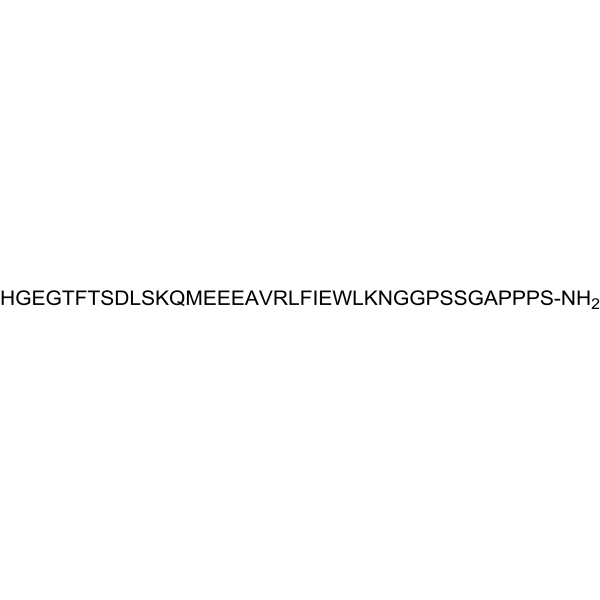
Exendin‑4 (Exenatide) is an orally active, blood-brain barrier-permeable glucagon-like peptide-1 receptor (GLP‑1 receptor) agonist that resists degradation mediated by dipeptidyl peptidase IV. Exendin‑4 mediates multiple glucose-regulating effects, including stimulation of glucose-dependent insulin secretion, inhibition of glucagon production, increase in β-cell mass, delay of gastric emptying, reduction of food intake, improvement of peripheral insulin sensitivity, and restoration of normal islet structure. Exendin‑4 inhibits oxidative stress, alleviates inflammatory responses, and reduces neuronal apoptosis. Exendin‑4 reduces the aggregation level of mutant huntingtin, improves motor function, prolongs survival time, and regulates the expression levels of leptin and ghrelin. Exendin‑4 can be used in research related to type 2 diabetes, acute ischemic stroke, and Huntington's disease .
loading...
    loading...
2
2 Cited Publications
Cat. No.: HY-13981
CAS No.: 1165910-22-4
Purity:  99.93%
Synonyms: LGD-4033
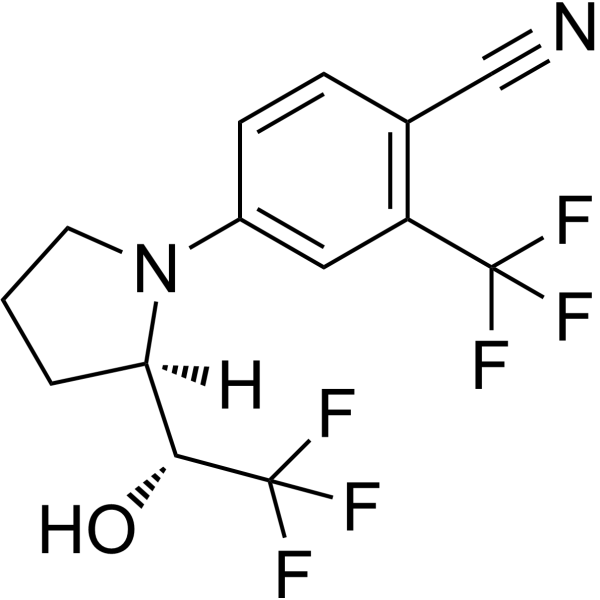
Ligandrol is an orally active, selective androgen receptor (AR) agonist. Ligandrol enhances protein synthesis, inhibits muscle breakdown and oxidative stress, improves muscle cell viability and bone tissue microstructure, and reduces Cisplatin (HY-17394)-induced muscle toxicity and apoptosis. Ligandrol promotes muscle growth, protects bone structure, and has anti-diabetic, anti-apoptotic and antioxidant effects. Ligandrol can antagonize Streptozotocin (HY-13753) damage to pancreatic islets and improve the symptoms of type 2 diabetes .
loading...
    loading...
Cat. No.: HY-W012846
CAS No.: 2418-52-2
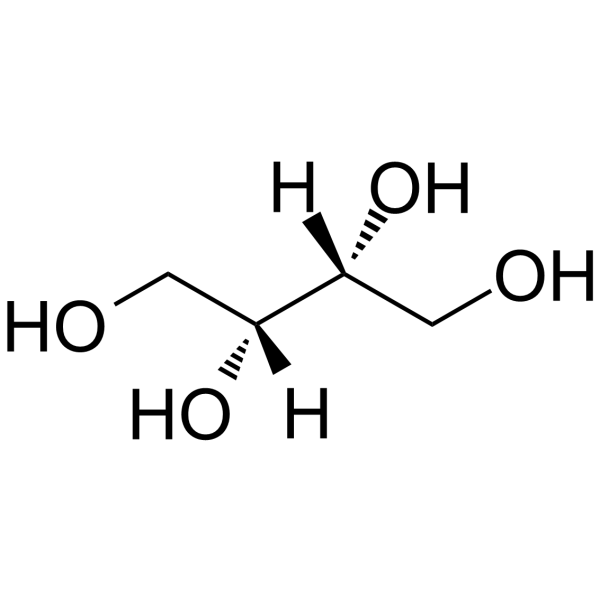
D-Threitol is a naturally occurring four-carbon sugar alcohol and an α-glucosidase (α‑glucosidase) inhibitor with an IC50 of 49 mM against yeast α-glucosidase, and it is orally active. D-Threitol modulates gut microbiota composition, increases microbial diversity, enriches beneficial bacterial genera, and restores fecal short-chain fatty acid levels. D-Threitol reduces body weight gain and fat accumulation, improves glucose tolerance and insulin sensitivity, and alleviates liver, kidney, and pancreatic tissue damage. D-Threitol inhibits hepatic accumulation of ceramides and diacylglycerols. D-Threitol preserves glomerular morphology and islet structure in diabetes models. D-Threitol is also a low-calorie sweetener. D-Threitol serves as a cryoprotective polyol that stabilizes protein structure at low temperatures. D-Threitol is used in research on type 2 diabetes and as an antifreeze agent for the Alaskan beetle .
loading...
    loading...
Cat. No.: HY-P3926
CAS No.: 309244-90-4
Synonyms: hIAPP (8-37)
Target:  

Amylin Receptor

Research Areas:  

Metabolic Disease

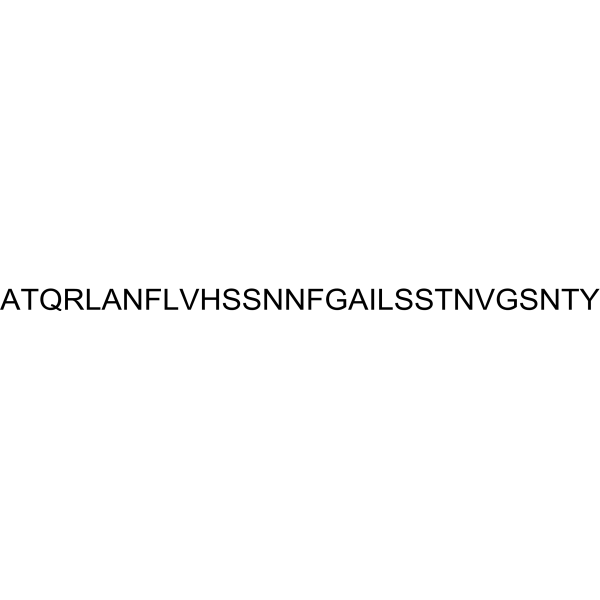
Amylin (8-37) (human) (hIAPP (8-37)) is a 8-37 fragment of human islet amyloid polypeptide (IAPP). The duplex folding structure in the Amylin (8-37) (human) assembly has a hairpin structure .
loading...
    loading...
Cat. No.: HY-13443S
Synonyms: Exenatide (Leu-13C6,15N) TFA
Exendin-4 (Leu- 13C6, 15N) TFA (Exenatide (Leu- 13C6, 15N) TFA) is the 13C, 15N-labeled Exendin-4 (HY-13443). Exendin‑4 (Exenatide) is an orally active, blood-brain barrier-permeable glucagon-like peptide-1 receptor (GLP‑1 receptor) agonist that resists degradation mediated by dipeptidyl peptidase IV. Exendin‑4 mediates multiple glucose-regulating effects, including stimulation of glucose-dependent insulin secretion, inhibition of glucagon production, increase in β-cell mass, delay of gastric emptying, reduction of food intake, improvement of peripheral insulin sensitivity, and restoration of normal islet structure. Exendin‑4 inhibits oxidative stress, alleviates inflammatory responses, and reduces neuronal apoptosis. Exendin‑4 reduces the aggregation level of mutant huntingtin, improves motor function, prolongs survival time, and regulates the expression levels of leptin and ghrelin. Exendin‑4 can be used in research related to type 2 diabetes, acute ischemic stroke, and Huntington's disease .
loading...
    loading...
Cat. No.: HY-P1544
CAS No.: 94071-26-8
Cerebellin is a neuromodulatory hexadecapeptide that serves as a marker for Purkinje cell maturation. Cerebellin stimulates norepinephrine release via the adenylate cyclase/PKA-dependent signaling pathway. Cerebellin reduces insulin secretion from pancreatic islets under high-glucose conditions. Cerebellin also regulates synaptic structure formation and controls catecholamine secretion in peripheral tissues. Cerebellin can be used in neurological research .
loading...
    loading...
Cat. No.: HY-W012846R
CAS No.: 2418-52-2
D-Threitol (Standard) is the analytical standard of D-Threitol (HY-W012846). This product is intended for research and analytical applications. D-Threitol is a naturally occurring four-carbon sugar alcohol and an α-glucosidase (α‑glucosidase) inhibitor with an IC50 of 49 mM against yeast α-glucosidase, and it is orally active. D-Threitol modulates gut microbiota composition, increases microbial diversity, enriches beneficial bacterial genera, and restores fecal short-chain fatty acid levels. D-Threitol reduces body weight gain and fat accumulation, improves glucose tolerance and insulin sensitivity, and alleviates liver, kidney, and pancreatic tissue damage. D-Threitol inhibits hepatic accumulation of ceramides and diacylglycerols. D-Threitol preserves glomerular morphology and islet structure in diabetes models. D-Threitol is also a low-calorie sweetener. D-Threitol serves as a cryoprotective polyol that stabilizes protein structure at low temperatures. D-Threitol is used in research on type 2 diabetes and as an antifreeze agent for the Alaskan beetle .
loading...
    loading...
Cat. No.: HY-P1544A
Cerebellin TFA is a neuromodulatory hexadecapeptide that serves as a marker for Purkinje cell maturation. Cerebellin TFA stimulates norepinephrine release via the adenylate cyclase/PKA-dependent signaling pathway. Cerebellin TFA reduces insulin secretion from pancreatic islets under high-glucose conditions. Cerebellin TFA also regulates synaptic structure formation and controls catecholamine secretion in peripheral tissues. Cerebellin TFA can be used in neurological research .
loading...
    loading...
Cat. No.: HY-189086
CAS No.: 504402-21-5
Target:  

GPR119

Research Areas:  

Metabolic Disease

AS1535907 is an orally active GPR119 agonist with an EC50 of 1.5 μM in HEK293 cells. AS1535907 activates GPR119, driving dose-dependent intracellular cAMP accumulation and Glucose (D-Glucose) (HY-B0389)-stimulated insulin secretion. AS1535907 lowers blood glucose and increases early plasma insulin levels in diabetic mice. AS1535907 protects pancreatic β-cell function and islet structure. AS1535907 can be used for research on type 2 diabetes .
loading...
    loading...

