


1. Search Result
Search Result
Results for "

leave

" in MedChemExpress (MCE) Product Catalog:

68

Inhibitors & Agonists

2

Screening Libraries

1

Biochemical Assay Reagents

2

Peptides

2

Natural
Products

6

Click Chemistry

Cat. No. Product Name Target Research Areas Chemical Structure
  • HY-135753

    BAS 9052

    Environmental Pollutants Acetyl-CoA Carboxylase Others
    Sethoxydim is a postemergent herbicide. Sethoxydim inhibits plant acetyl-coenzyme A carboxylase (ACCase) activity .
    Sethoxydim
  • HY-W052066

    Biochemical Assay Reagents Others
    tert-Butyl (3-chloropropyl)carbamate is a compound with a t-butyl and a terminal choloride. The cholorine (Cl) is a good leaving group for nucleophilic substitution reactions. The Boc group can be deprotected under mild acidic conditions to form the free amine.
    tert-Butyl (3-chloropropyl)carbamate
  • HY-W591374

    ADC Linker Cancer
    DBCO-PEG4-Val-Ala-PAB-PNP is a cleavable ADC linker. The Val-Ala linkers can be cleaved by Cathepsin B. The DBCO groups is commonly used for Click Chemistry reactions. PEG spacer improves the compound's aqueous solubility. PNP is a good leaving group.
    DBCO-PEG4-Val-Ala-PAB-PNP
  • HY-W250928D

    Fluorescent Dye Others
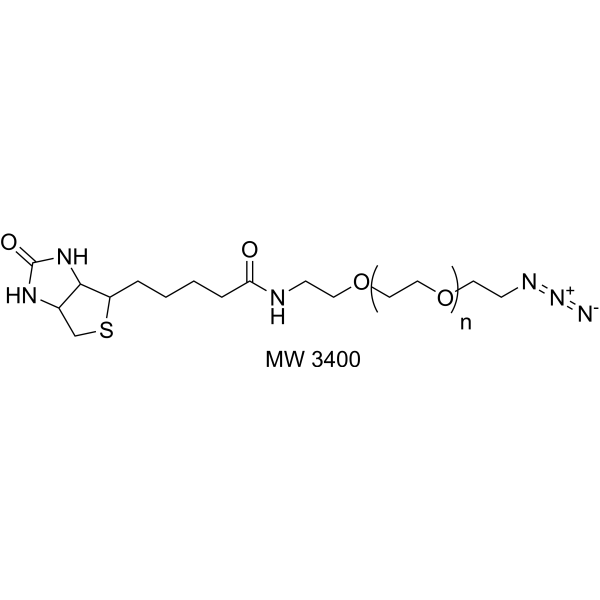
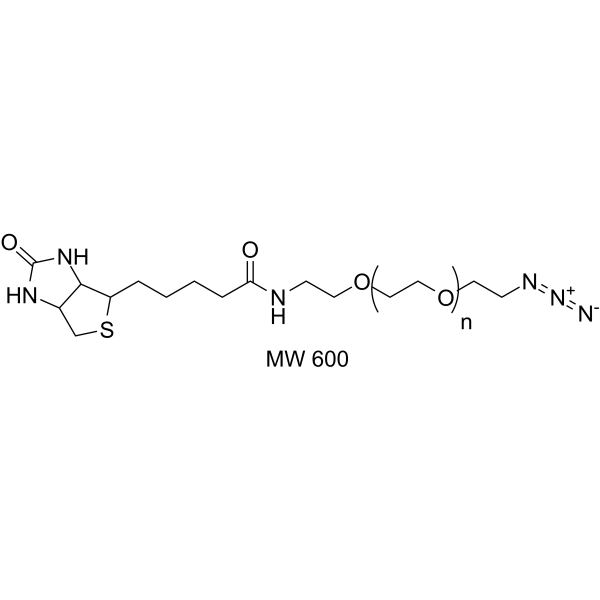
    Biotin-PEG3400-azide is a biotin labeled PEG derivative. Biotin is an enzyme co-factor, can be used for labeling protein; PEG is a hydrophilic and water-soluble polymer with low toxicity; azide, is a moderately good leaving group, can react with alkyne by Cu-catalyzation, which improve the efficiency of biotin binding targets. It contains an azide group and can undergo copper-catalyzed azide-alkyne cycloaddition (CuAAc) with molecules containing alkyne groups. It can also undergo ring strain-promoted alkyne-azide cycloaddition (SPAAC) with molecules containing DBCO or BCN groups.
    Biotin-PEG3400-azide
  • HY-W250928C

    Fluorescent Dye Others
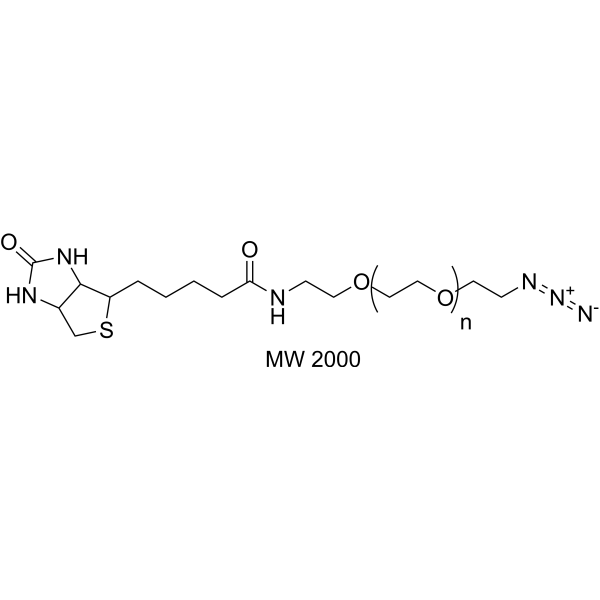
    Biotin-PEG2000-azide is a biotin labeled PEG derivative. Biotin is an enzyme co-factor, can be used for labeling protein; PEG is a hydrophilic and water-soluble polymer with low toxicity; azide, is a moderately good leaving group, can react with alkyne by Cu-catalyzation, which improve the efficiency of biotin binding targets. It contains an azide group and can undergo copper-catalyzed azide-alkyne cycloaddition (CuAAc) with molecules containing alkyne groups. It can also undergo ring strain-promoted alkyne-azide cycloaddition (SPAAC) with molecules containing DBCO or BCN groups.
    Biotin-PEG2000-azide
  • HY-W032015

    n-Octyl Bromide

    Biochemical Assay Reagents Others
    1-Bromooctane (n-Octyl Bromide) posesses a terminal bromine. The bromine is a very good leaving group for nucleophilic substitution reactions.
    1-Bromooctane
  • HY-P0271A
    Syntide 2 TFA
    2 Publications Verification

    CaMK Neurological Disease
    Syntide 2 (TFA), a Ca 2+- and calmodulin (CaM)-dependent protein kinase II (CaMKII) substrate peptide, selectively inhibits the gibberellin (GA) response, leaving constitutive and abscisic acid-regulated events unaffected .
    Syntide 2 TFA
  • HY-W016455

    Biochemical Assay Reagents Others
    6-Bromo-1-hexanol posesses a terminal bromine and hydroxylic group. The bromine is a very good leaving group for nucleophilic substitution reactions. The hydroxyl group enables further derivatization or replacement with other reactive functional groups.
    6-Bromo-1-hexanol
  • HY-W014159

    Biochemical Assay Reagents Others
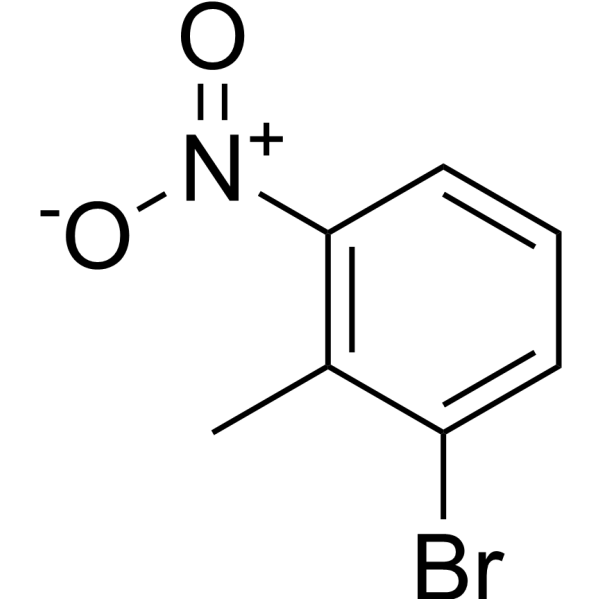
    1-Bromo-2-methyl-3-nitrobenzene is an organic synthesis intermediate. 1-Bromo-2-methyl-3-nitrobenzene participates in chemical reactions such as electrophilic substitution and coupling through the bromine atom and nitro group in the molecule, and acts as a synthetic precursor. 1-Bromo-2-methyl-3-nitrobenzene can construct complex molecular structures by relying on the leaving property of bromine and the electron-withdrawing property of nitro group, and can be used in the synthesis of benzimidazole VISTA inhibitors in medicinal chemistry .
    1-Bromo-2-methyl-3-nitrobenzene
  • HY-N11166

    Others Others
    3,5,7,8,3′,4′-Hexamethoxyflavone is a flavonoid. 3,5,7,8,3′,4′-Hexamethoxyflavone can be isolated from the leaves of Melicope triphylla MERR .
    3,5,7,8,3′,4′-Hexamethoxyflavone
  • HY-W053842

    Biochemical Assay Reagents Others
    tert-Butyl 3-iodopropylcarbamate is a compound with a t-butyl and a terminal iodine. The iodine (I) is a very good leaving group for nucleophilic substitution reactions. The Boc group can be deprotected under mild acidic conditions to form the free amine.
    tert-Butyl 3-iodopropylcarbamate
  • HY-W615327

    Biochemical Assay Reagents Others
    Bis-sulfone NHS Ester is a bis-alkylating labeling reagent that is selective for the cysteine sulfur atoms from a native disulfide. These reagents undergo bis-alkylation to conjugate both thiols derived from the two cysteine residues of a reduced native disulfide bond such as the interchain disulfide bonds of an antibody. The reaction results in covalent rebridging of the disulfide bond via a three carbon bridge leaving the protein structurally intact.
    Bis-sulfone NHS ester
  • HY-W190881

    Biochemical Assay Reagents Others
    N3-PEG11-CH2CH2Br is a PEG linker containing a bromine and an azide group. The hydrophilic PEG spacer increases solubility in aqueous media. The azide group can react with alkyne, BCN, DBCO via Click Chemistry to yield a stable triazole linkage. The bromine (Br) is a very good leaving group for nucleophilic substitution reactions.
    N3-PEG11-CH2CH2Br
  • HY-120137

    Histone Methyltransferase Cancer
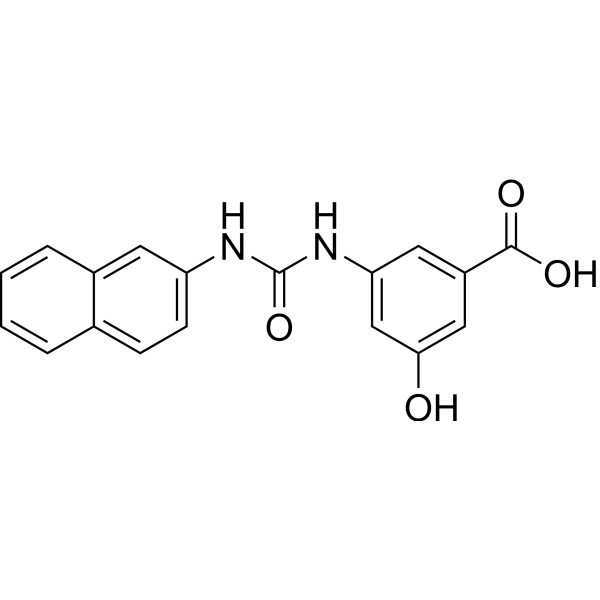
    CMP-5 is a potent, specific, and selective PRMT5 inhibitor, while displays no activity against PRMT1, PRMT4, and PRMT7 enzymes. CMP-5 selectively blocks S2Me-H4R3 by inhibiting PRMT5 methyltransferase activity on histone preparations. CMP-5 prevents Epstein-Barr virus (EBV)-driven B-lymphocyte transformation but leaving normal B cells unaffected .
    CMP-5
  • HY-P0271

    CaMK Autophagy Neurological Disease
    Syntide 2, a Ca 2+- and calmodulin (CaM)-dependent protein kinase II (CaMKII) substrate peptide, selectively inhibits the gibberellin (GA) response, leaving constitutive and abscisic acid-regulated events unaffected .
    Syntide 2
  • HY-172291

    ADC Linker Cancer
    Mal-amide-PEG8-Val-Cit-PAB-PNP is a cleavable ADC linker featuring a maleimide, a PEG spacer, a Val-Cit dipeptide, a PAB. and a PNP carbonate. Maleimide is a thiol-specific covalent linker which is used to label cysteine residues in proteins while the PNP group acts as a highly activated leaving group. Val-Cit linkers are cleaved by cytoplasmic peptidases.
    Mal-amide-PEG8-Val-Cit-PAB-PNP
  • HY-178380

    HDAC Reactive Oxygen Species (ROS) Apoptosis Necroptosis Biochemical Assay Reagents Caspase Bcl-2 Family Inflammation/Immunology Cancer
    HDAC8-IN-14, a curcuminoid derivative, is a selective HDAC8 inhibitor with a Ki of 9 nM. HDAC8-IN-14 induces the production of reactive oxygen species (ROS), disrupts mitochondrial membrane potential, and promotes apoptosis. HDAC8-IN-14 can significantly promote the accumulation of cells in the sub-G0/G1 phase, consistent with apoptotic or necrotic cell death. HDAC8-IN-14 induces upregulation of cytochrome c, cleaved caspase-3, and the pro-apoptotic protein Bak while leaving the anti-apoptotic Bcl-2 levels unaltered. HDAC8-IN-14 can be used for the study of leukemia .
    HDAC8-IN-14
  • HY-135753R

    BAS 9052 (Standard)

    Reference Standards Acetyl-CoA Carboxylase Others
    Sethoxydim (Standard) is the analytical standard of Sethoxydim. This product is intended for research and analytical applications. Sethoxydim is a postemergent herbicide. Sethoxydim inhibits plant acetyl-coenzyme A carboxylase (ACCase) activity .
    Sethoxydim (Standard)
  • HY-N10894

    Others Others
    Murrayacarpin B is a phenolic compound. Murrayacarpin B can be isolated from the leaves and fruits of F. carica .
    Murrayacarpin B
  • HY-W395122

    Biochemical Assay Reagents Others
    Mal-PEG1-PNP-carbonate is a amine-reactive compound. PNP is a good leaving group. The maleimide group will react with a thiol group to form a covalent bond, enabling the connection of biomolecule with a thiol.
    Mal-PEG1-PNP-carbonate
  • HY-W878813

    Biochemical Assay Reagents Others
    Tos-PEG22-Tos is a PEG linker containing two tosyl groups. The hydrophilic PEG spacer increases solubility in aqueous media. The tosyl group is a very good leaving group for nucleophilic substitution reactions.
    Tos-PEG22-Tos
  • HY-W393115

    Biochemical Assay Reagents Others
    Diethyl 6-bromohexylphosphonate is a short linker featuring a bromide and a diethyl phosphonate. The bromide is a good leaving group which can be easily displaced by nucleophiles like alcohols, amines or thiols, while the diethyl phosphonate may be hydrolyzed to allow for esterification.
    Diethyl (6-bromohexyl)phosphonate
  • HY-W190836

    Biochemical Assay Reagents Others
    Azide-PEG2-Tos is a small PEG linker featuring an azide and a tosylate. Tosylates are good leaving groups which are easily displaced by nucleophiles while azide is a click chemistry handle which is used to react with terminal alkynes or strained cyclooctynes.
    N3-PEG2-Tos
  • HY-W096068

    Biochemical Assay Reagents Others
    Propargyl-PEG5-Ms represents a bifunctional linker possessing a proparygyl group reactive towards azides in copper (I) click chemistry to form stable triazoles with the target compound as well as a mesyl group which is a good leaving group for nucleophilic reactions.
    Propargyl-PEG4-mesyl ester
  • HY-W777866

    Biochemical Assay Reagents Others
    (Rac)-1-Linoleoyl-2-stearoyl-3-chloropropanediol is a diacylglycerol that contains Linoleic acid at the sn-1 position and stearic acid group at the sn-2 position. The chlorine is a good leaving group and can undergo substitution reactions.
    (Rac)-1-Linoleoyl-2-stearoyl-3-chloropropanediol
  • HY-W451433

    Biochemical Assay Reagents Others
    OTs-PEG1-NHCbz is a PEG linker containing a tosyl group and benzyl (Cbz) protecting group. The hydrophilic PEG spacer increases the water solubility of the compound in aqueous media. The tosyl group is a very good leaving group for nucleophilic substitution reactions. The benzyl protecting group can be removed via hydrogenolysis to form a free amine.
    OTs-PEG1-NHCbz
  • HY-W460133

    Biochemical Assay Reagents Others
    tert-Butyl (2-(2-(2-iodoethoxy)ethoxy)ethyl)carbamate is a PEG linker containing a Boc protected amine and an iodine group. The protected amine can be deprotected under mild acidic conditions. Iodine (I) is a very good leaving group for nucleophilic substitution reactions. The hydrophilic PEG spacer increases solubility in aqueous media.
    tert-Butyl (2-(2-(2-iodoethoxy)ethoxy)ethyl)carbamate
  • HY-122125

    Drug Derivative Neurological Disease
    RX 336M is a dihydrocodeinone analogue. RX 336M induces behaviors consisting of consisting of behavioral activation, rapid forepaw movements, excessive grooming, and whole body "wet-dog" shakes (WDS) (rapid twisting of the head and trunk with the forepaws leaving the ground). RX 336M can be used for the study of neurological disease .
    RX 336M
  • HY-W800760

    E3 Ligase Ligand-Linker Conjugates Cancer
    (S, R, S)-AHPC-PEG6-Tos is a combination of a von Hippel-Lindau (VHL)-recruiting ligand and PEGylated crosslinker with a tosyl group. The tosyl group is a good leaving group for nucleophilic substitution reactions. (S, R, S)-AHPC-PEG2-Tos is useful for synthesis of PROTAC compounds and molecules for targeted protein degradation.
    (S,R,S)-AHPC-PEG6-Tos
  • HY-W572763

    Biochemical Assay Reagents Others
    Tos-PEG6-acid is a PEG linker containing a tosyl group and a terminal carboxylic acid. The hydrophilic PEG spacer increases solubility in aqueous media. The tosyl group is a very good leaving group for nucleophilic substitution reactions. The terminal carboxylic acid can react with primary amine groups in the presence of activators (e.g. HATU) to form a stable amide bond.
    Tos-PEG6-acid
  • HY-122047

    Autophagy Cancer
    SW063058 is an autophagy inducer that specifically disrupts the binding of Beclin 1 to Bcl-2 while leaving the interaction between Bcl-2 and pro-apoptotic members like Bax and BIM unaffected. By inhibiting the negative regulatory effects of Bcl-2 on Beclin 1, which is crucial for the initiation of autophagy, SW063058 promotes autophagic activity without triggering cytotoxicity, apoptosis, or other forms of cell death in vitro.
    SW063058
  • HY-W190952

    Biochemical Assay Reagents Others
    Bis-sulfone-PEG4-NHS Ester is a bis-alkylating labeling reagent that is selective for the cysteine sulfur atoms from a native disulfide. These reagents undergo bis-alkylation to conjugate both thiols derived from the two cysteine residues of a reduced native disulfide bond such as the interchain disulfide bonds of an antibody. The reaction results in covalent rebridging of the disulfide bond via a three carbon bridge leaving the protein structurally intact. The hydrophilic PEG spacer increases solubility in aqueous media.
    Bis-sulfone-PEG4-NHS ester
  • HY-113846A

    Histone Methyltransferase Cancer
    CMP-5 dihydrochloride is a potent, specific, and selective PRMT5 inhibitor, while displays no activity against PRMT1, PRMT4, and PRMT7 enzymes. CMP-5 dihydrochloride selectively blocks S2Me-H4R3 by inhibiting PRMT5 methyltransferase activity on histone preparations. CMP-5 dihydrochloride prevents EBV-driven B-lymphocyte transformation but leaving normal B cells unaffected .
    CMP-5 dihydrochloride
  • HY-113846

    Histone Methyltransferase Cancer
    CMP-5 hydrochloride is a potent, specific, and selective PRMT5 inhibitor, while displays no activity against PRMT1, PRMT4, and PRMT7 enzymes. CMP-5 hydrochloride selectively blocks S2Me-H4R3 by inhibiting PRMT5 methyltransferase activity on histone preparations. CMP-5 hydrochloride prevents EBV-driven B-lymphocyte transformation but leaving normal B cells unaffected .
    CMP-5 hydrochloride
  • HY-W394551

    Biochemical Assay Reagents Others
    Methyl 3,4-dibromo-2,5-dioxo-2,5-dihydro-1H-pyrrole-1-carboxylate is a small pyrrolidone molecule which features two bromine atoms and a methyl ester. The unsaturated dibromo motif is a covalent ligand for thiol groups, and may be used to label cysteine residues in proteins. The presence of two leaving groups on this molecule allows this linker to bind two thiols at a time. The methyl ester can be saponified to link this molecule to amines to form larger structures.
    Methyl 3,4-dibromo-2,5-dioxo-2,5-dihydro-1H-pyrrole-1-carboxylate
  • HY-W396413

    Biochemical Assay Reagents Others
    4-Chlorobutoxy(trimethyl)silane is a silane compound with a terminal cholorine. The cholorine (Cl) is a good leaving group for nucleophilic substitution reactions. The trimethylsilane is commonly used for surface modifications.
    (4-Chlorobutoxy)trimethylsilane
  • HY-W591314

    Biochemical Assay Reagents Others
    m-PEG11-Ms is a PEG linker featuring a methoxy cap and a mesylate group. The methoxy cap is inert while the mesylate is a good leaving group which is easily displaced by nucleophiles such as alcohols and amines.
    M-PEG11-Ms
  • HY-W348170

    Biochemical Assay Reagents Others
    tert-Butyl((5-iodopentyl)oxy)dimethylsilane is a silane compound with a terminal iodine group. The trimethylsilane is commonly used for surface modifications. The iodine (I) is a very good leaving group for nucleophilic substitution reactions.
    tert-Butyl((5-iodopentyl)oxy)dimethylsilane
  • HY-W800806

    Biochemical Assay Reagents Others
    Heptyl 8-bromooctanoate is an ester compound that has a terminal bromine. Heptyl 8-bromooctanoate is formed by coupling 8-Bromooctanoic acid to Heptanol. The bromine (Br) is a very good leaving group for nucleophilic substitution reactions.
    Heptyl 8-bromooctanoate
  • HY-W800678

    Biochemical Assay Reagents Others
    Bromoacetamido-PEG2-AZD is a PEG linker containing an AZD group and a bromide group which is a very good leaving group for nucleophilic substitution reactions. The hydrophilic PEG spacer increases solubility in aqueous media.
    Bromoacetamido-PEG2-AZD
  • HY-W800842

    Biochemical Assay Reagents Others
    1-Ethylnonyl 8-bromooctanoate is a lipid featuring a bromide along an octanoate chain linking to a C11 chain. 1-Ethylnonyl 8-bromooctanoate can be derivatized via substitution at the bromide leaving group.
    1-Ethylnonyl 8-bromooctanoate
  • HY-W248726

    Biochemical Assay Reagents Others
    tert-Butyl (6-iodohexyl)carbamate is a six carbon linker containing an iodine group and a t-butyl ester. The iodine (I) acts as a good leaving group for nucleophilic substitution reactions. The t-butyl ester groups can be deprotected under acidic conditions.
    tert-Butyl (6-iodohexyl)carbamate
  • HY-172720

    Biochemical Assay Reagents Others
    Azide-PEG5-Ms serves as a PEG linker containing an azide that reacts with BCN, DBCO, alkyne via Click Chemistry and mesyl group that is a good leaving group for nucleophilic substitution reactions. The PEG spacer imparts water solubility.
    Azide-PEG5-Ms
  • HY-W190738

    Biochemical Assay Reagents Others
    Azide-PEG8-Tos is a small PEG linker featuring an azide and a tosylate. Tosylates are good leaving groups which are easily displaced by nucleophiles while azide is a click chemistry motif which is used to react with terminal alkynes or strained cyclooctynes.
    Azide-PEG8-Tos
  • HY-W251756

    Biochemical Assay Reagents Others
    3-(2-Iodoethoxy)prop-1-yne is a crosslinker that can be used in copper catalyzed azide-alkyne Click Chemistry to form a stable triazole linkage with azides. The iodine (I) acts as a good leaving group for nucleophilic substitution reactions.
    3-(2-Iodoethoxy)prop-1-yne
  • HY-W591972

    Biochemical Assay Reagents Others
    6-Hydroxyhexyl 4-methylbenzenesulfonate is a six carbon linker containing a hydroxyl group and a tosyl group. The hydroxyl group enables further derivatization or replacement with other reactive functional groups. The tosyl group is a very good leaving group for nucleophilic substitution reactions.
    6-Hydroxyhexyl 4-methylbenzenesulfonate
  • HY-W591971

    Biochemical Assay Reagents Others
    5-((tert-Butoxycarbonyl)amino)pentyl 4-methylbenzenesulfonate is a PEG linker containing a Boc protected amine and a tosyl group. The protected amine can be deprotected under mild acidic conditions. The tosyl group is a very good leaving group for nucleophilic substitution reactions.
    5-((tert-Butoxycarbonyl)amino)pentyl 4-methylbenzenesulfonate
  • HY-W800661

    Biochemical Assay Reagents Others
    Tos-PEG3-methyl ester is a PEG linker with tosyl and methyl ester moieties. The tosyl group is a very good leaving group for nucleophilic substitution reactions. The hydrophilic PEG linker increases the water solubility of the compound. Methyl ester can be hydrolyzed under strong basic condition.
    Tos-PEG3-methyl ester
  • HY-W800662

    Biochemical Assay Reagents Others
    Bromo-PEG2-methyl ester is a PEG linker containing a bromide moiety and a methyl ester. The bromide (Br) is a very good leaving group for nucleophilic substitution reactions. The hydrophilic PEG spacer increases solubility in aqueous media. Methyl ester can be hydrolyzed under strong basic condition.
    Bromo-PEG2-methyl ester
  • HY-W591973

    Biochemical Assay Reagents Others
    OTs-C6-NHBoc is a six carbon linker containing a tosyl group and Boc-protected amine group. The tosyl group is a very good leaving group for nucleophilic substitution reactions. The Boc group can be deprotected under mild acidic conditions to form a free amine.
    OTs-C6-NHBoc

Inquiry Online

Your information is safe with us. * Required Fields.

Salutation


Country or Region *

Applicant Name *


Organization Name *

Department *


Email Address *


Product Name *

Cat. No.


Requested quantity *

Phone Number *


Remarks

Inquiry Online

Inquiry Information

Product Name:
Cat. No.:
Quantity:
MCE Japan Authorized Agent:

