


10 Results for "

lectin pathway

" in MedChemExpress (MCE) Product Catalog:
Products (10)

10 Results for "lectin pathway" in MCE Product Catalog:

1
1 Cited Publications
Cat. No.: HY-P99376
CAS No.: 2108782-45-0
Synonyms: OMS 721; Anti-MASP2 Reference Antibody (narsoplimab)

Target:  

SARS-CoV

Research Areas:  

Infection

Narsoplimab (OMS 721) is a high-affinity fully human immunoglobulin gamma 4 (IgG4) monoclonal antibody that binds MASP-2 and blocks lectin pathway activation. Narsoplimab can be used in research of hematopoietic stem-cell transplantation and SARS-CoV-2 .
loading...
    loading...
Cat. No.: HY-P99965
CAS No.: 1917321-26-6
Synonyms: SKY59; RO7112689; RG-6107
Crovalimab (SKY59; RO7112689) is a novel humanized antibody against C5 in a pH-dependent manner with KDs of 15.2 nM and 16.8 μM at pH 7.4 and 5.8, respectively. Crovalimab binds human FcRn with great affinity (KD: 17 μM at pH 6.0). Crovalimab can block cleavage of C5 by the C5 convertase and inhibite the activity of a C5 variant (p.Arg885His). Crovalimab inhibits C5b-9 formation significantly in all three complement pathways, the classical pathway (CP), lectin pathway (LP), and alternative pathway (AP). Crovalimab has the potential for paroxysmal nocturnal hemoglobinuria (PNH) and complement-mediated diseases research .
loading...
    loading...
Cat. No.: HY-N0642
CAS No.: 6155-35-7
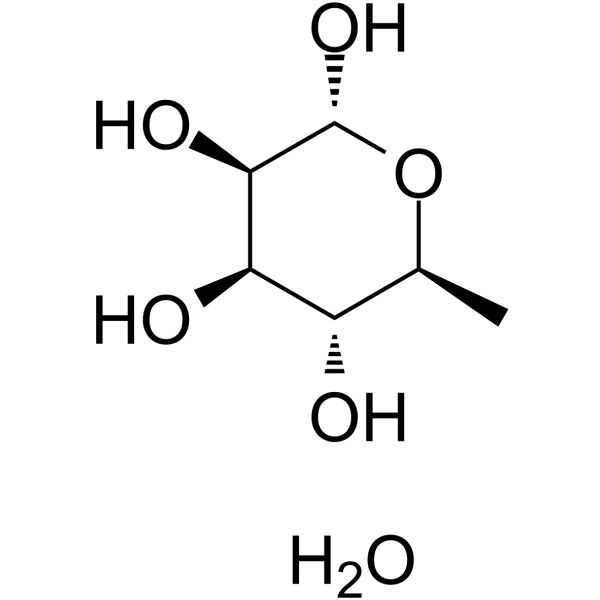
α-L-Rhamnose monohydrate is a neutral sugar present in plants, animals, viruses and bacteria. α-L-Rhamnose monohydrate is a ligand for α-L-rhamnose-recognizing lectin sites, trigger intracellular signaling pathways. α-L-Rhamnose monohydrate induces rhaE and rhaA expression as a specific carbon source in Aspergillus nidulans, while glucose inhibits its cellular uptake. α-L-Rhamnose monohydrate induces rapid and transient increases in intracellular free Ca 2+ concentration in normal human dermal fibroblasts .
loading...
    loading...
Cat. No.: HY-122700
CAS No.: 1386455-51-1
Purity:  99.45%
Target:  

Complement System

Research Areas:  

Inflammation/Immunology

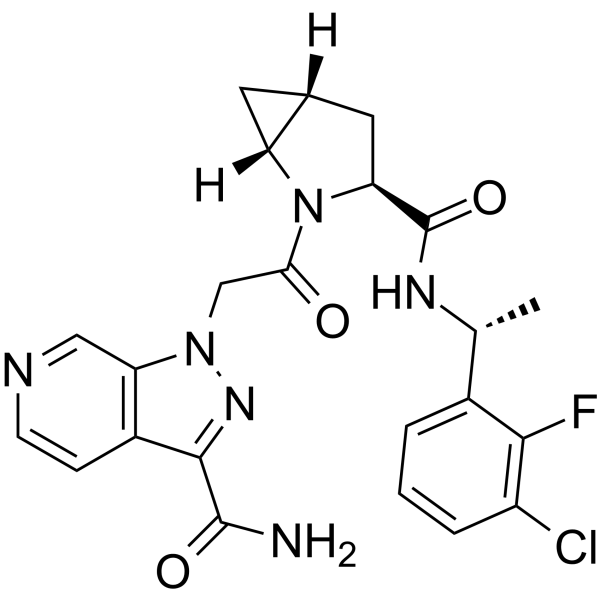
Factor D inhibitor 6 is a potent, highly selective and orally active factor D (FD) inhibitor with an IC50 of 30 nM and a Kd of 6 nM. Factor D inhibitor 6 is inactive against factor B, lassical and lectin complement-pathway activation, and a broad assay panel of receptors, ion channels, kinases and proteases .
loading...
    loading...
Cat. No.: HY-P990025
CAS No.: 2579031-19-7
Synonyms: ARGX-117

Target:  

Complement System

Research Areas:  

Inflammation/Immunology

Empasiprubar (ARGX-117) is a humanized inhibitory monoclonal antibody targeting complement C2. Empasiprubar binds to the Sushi-2 domain of C2, preventing the formation of C3 pre convertase and inhibiting the activation of classical and lectin pathways upstream of C3 activation. Empasiprubar can prevent complement mediated autoimmune hemolytic anemia and antibody mediated organ transplant rejection. Empasiprubar can prevent neuroglial lymphoconjunctival injury in GM1 antibody mediated mouse models .
loading...
    loading...
Cat. No.: HY-172090
CAS No.: 3103336-29-1
Target:  

Ser/Thr Protease

Research Areas:  

Inflammation/Immunology

MASP-2-IN-1 (Compound 77) is a selective MASP-2 inhibitor with an IC50 of 0.0114 μM, and an IC50 of 13.2 μM against MASP-3. MASP-2-IN-1 inhibits the catalytic activity of MASP-2 in the lectin complement pathway. MASP-2-IN-1 is applicable to the research of immune diseases .
loading...
    loading...
Cat. No.: HY-N5123
CAS No.: 6014-42-2
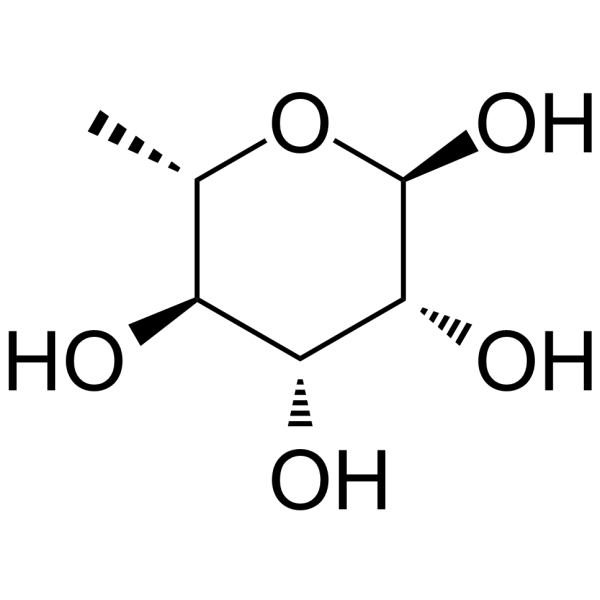
α-L-Rhamnose is a neutral sugar present in plants, animals, viruses and bacteria. α-L-Rhamnose is a ligand for α-L-rhamnose-recognizing lectin sites, trigger intracellular signaling pathways. α-L-Rhamnose induces rhaE and rhaA expression as a specific carbon source in Aspergillus nidulans, while glucose inhibits its cellular uptake. α-L-Rhamnose induces rapid and transient increases in intracellular free Ca 2+ concentration in normal human dermal fibroblasts .
loading...
    loading...
Cat. No.: HY-P992463

Target:  

Ser/Thr Protease

Research Areas:  

Endocrinology

SHR-2010 is a fully humanized monoclonal antibody targeting MASP-2. SHR-2010 selectively inhibits lectin pathway activation without affecting classical or alternative complement pathways. SHR-2010 can be used for the research of IgA nephropathy .
loading...
    loading...
Cat. No.: HY-P992456

Target:  

Complement System

SAR-443809 is a monoclonal antibody targeting complement factor Bb that inhibits the alternative complement pathway. SAR-443809 blocks the cleavage of C3 and factor B via selective binding to the activated form factor Bb, with a KD of 7.3 nM for human factor Bb. SAR-443809 inhibits the amplification loop of the alternative complement pathway and C3 activation, reduces C3b deposition, and blocks the activation of pathways associated with intravascular and extravascular hemolysis. SAR-443809 can be used for research on hematological and renal disorders mediated by abnormal alternative complement pathway activity .
loading...
    loading...
Cat. No.: HY-L237
327 compounds

Pattern Recognition Receptors (PRRs) are a crucial class of protein molecules expressed in cells of the innate immune system. The core function of Pattern Recognition Receptors is to recognize Pathogen-Associated Molecular Patterns (PAMPs) and Damage-Associated Molecular Patterns (DAMPs). Upon recognizing and binding to PAMPs or DAMPs, PRRs rapidly initiate intracellular signaling pathways (such as the NF-κB, IRF, and inflammasome pathways). This triggers the production of inflammatory factors, chemokines, and type I interferons, thereby initiating inflammatory responses to eliminate pathogens or repair damage. PRRs represent the body's first line of defense against infection, and the rapidity and broad specificity of their response are crucial for host survival. However, aberrant activation of PRR signaling is also a cause of many chronic inflammatory diseases, autoimmune disorders, and neurodegenerative diseases. Therefore, precisely regulating PRR activity has become a key therapeutic strategy for these conditions.

MCE has cataloged 327 inhibitors targeting key PRRs, such as NLRs, TLRs, C-type Lectin Receptors (CLRs), and cGAS, to support drug discovery efforts for chronic inflammatory diseases.

