

11 Results for "

lysosomal processing

" in MedChemExpress (MCE) Product Catalog:
Products (11)

11 Results for "lysosomal processing" in MCE Product Catalog:

12
12 Cited Publications
Cat. No.: HY-118630
CAS No.: 351986-85-1
Purity:  98.93%
Target:  

PIKfyve Autophagy

Research Areas:  

Cancer

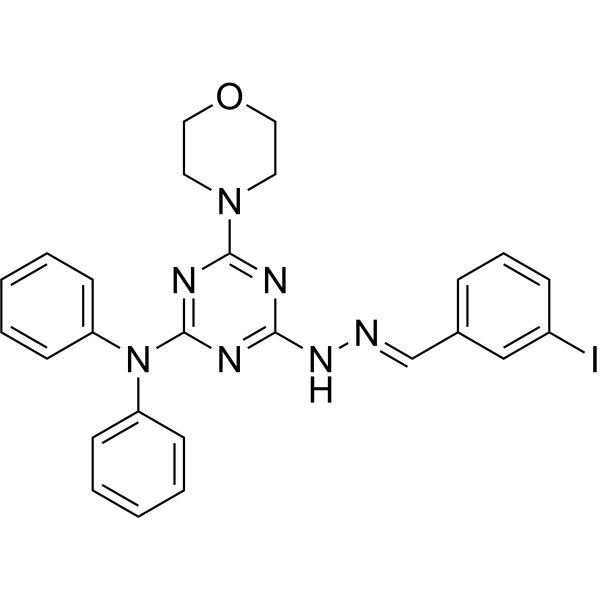
Vacuolin-1 is a potent and cell-permeable lysosomal exocytosis inhibitor. Vacuolin-1 blocks the Ca 2+-dependent exocytosis of lysosomes and prevents the release of lysosomal content without affecting the process of resealing. vacuolin‐1 is a potent and selective PIKfyve inhibitor and inhibits late‐stage autophagy by impairing lysosomal maturation. Vacuolin-1 can induce vacuole formation and increase the percentage of enucleated cells .
loading...
    loading...
1
1 Cited Publications
Cat. No.: HY-161949
CAS No.: 1369963-51-8
Target:  

Potassium Channel

Research Areas:  

Neurological Disease

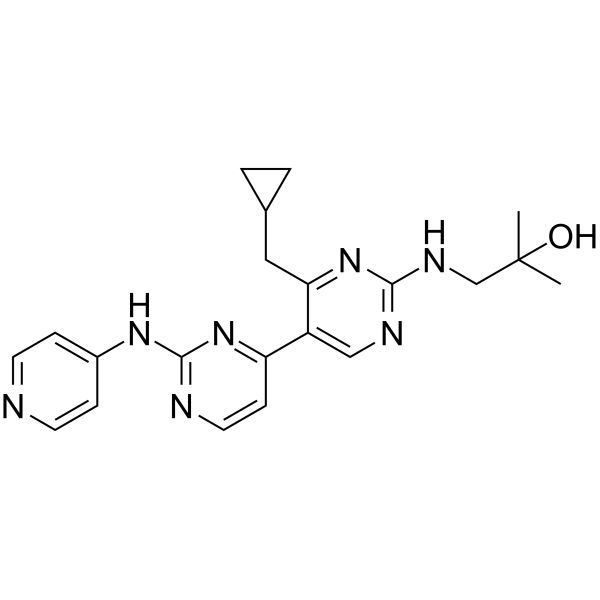
AP-6 is a selective inhibitor of TMEM175 with activity in modulating lysosomal function. Acute inhibition of TMEM175 by AP-6 increases lysosomal macromolecular catabolism, thereby accelerating macrophage and other digestive processes. AP-6 may be used in Parkinson's disease research .
loading...
    loading...
Cat. No.: HY-123058
CAS No.: 1383716-46-8
Purity:  99.19%
Target:  

PI3K Autophagy

Research Areas:  

Cancer

Vps34-IN-4 (compound 19) is a potent, selective, and orally active inhibitor of VPS34. Vps34-IN-4 inhibits the autophagy in vivo. Autophagy is a dynamic process that regulates lysosomal-dependent degradation of cellular components .
loading...
    loading...
Cat. No.: HY-E70185
Synonyms: EC:3.2.1.24; MAN2B1; LAMAN
Lysosomal α-mannosidase (EC:3.2.1.24) is a low pH-activated exoglycosidase that hydrolyzes α-mannosidic linkages on mannan and N-linked oligosaccharides, and its activation requires Zn 2+. As the major exoglycosidase in the glycoprotein degradation pathway, lysosomal α-mannosidase cleaves α1,2-, α1,3- and α1,6-mannosidic linkages during a non-random, ordered degradation process to generate Man1GlcNAc1-2 for further lysosomal processing. Lysosomal α-mannosidase can be used in studies related to α-mannosidosis .
loading...
    loading...
Cat. No.: HY-144605
CAS No.: 2768472-28-0
Purity:  97.39%
Target:  

EGFR PROTACs

Research Areas:  

Cancer

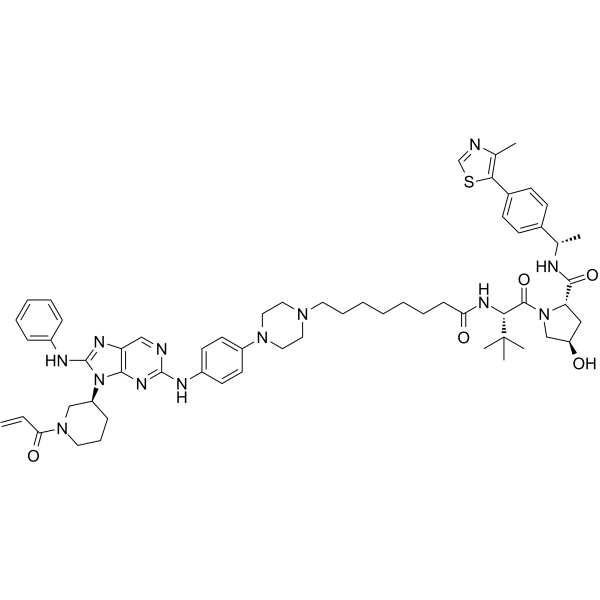
PROTAC EGFR degrader 3 is a selective EGFR mutant PROTAC degrader with activity against EGFR L858R/T790M and EGFR del19, with DC50 values of 1.56 nM and 0.49 nM, respectively. PROTAC EGFR degrader 3 induces degradation via formation of a ternary complex with VHL, ubiquitination, and lysosomal processing. PROTAC EGFR degrader 3 inhibits tumor cell proliferation. PROTAC EGFR degrader 3 can be used for the research of non-small cell lung cancer .
loading...
    loading...
Cat. No.: HY-E70228
CAS No.: 60748-73-4
Target:  

Ser/Thr Protease

Research Areas:  

Cancer

Cathepsin H, human liver is an aminopeptidase and an endopeptidase. Involved in the catabolism of proteins in the lysosomal system. Cathepsin H, human liver has a key role in the regulation of the biological behavior of tumor cells and the pathological processes of brain diseases .
loading...
    loading...
Cat. No.: HY-D2992
KSA02 is a two-dimensional intelligent fluorescent probe. KSA02 not only detects the activity of the aging-related β-galactosidase (SA-β-gal), but also can simultaneously sense the pH value changes of the lysosomal microenvironment where SA-β-gal is located. KSA02 can distinguish between aging and cancer, track the aging process, and evaluate the efficacy of anti-aging agents. KSA02 can be used for the study of aging biology .
loading...
    loading...
Cat. No.: HY-173150
CAS No.: 106928-29-4
Target:  

YAP

Hapalindole Q (Compound (+)-1) is an autophagy (Autophagy) inhibitor targeting YAP1. Hapalindole Q binds to the Hippo pathway transcription factor YAP1 with a Kd of 9.13 μM and induces its degradation via the chaperone-mediated autophagy (CMA) pathway. This process inhibits Rab7-mediated fusion of autophagosomes and lysosomes, thereby reducing overall autophagy levels without affecting lysosomal function. Hapalindole Q holds promise for research in cancer (e.g., liver cancer, breast cancer, etc.) .
loading...
    loading...
Cat. No.: HY-P10669
CAS No.: 2999646-19-2
Target:  

Caspase Apoptosis

Research Areas:  

Cancer

NDI-Lyso is a lysosome-targeted anticancer agent that induces the formation of rigid long fibers in cancer cell lysosomes through an enzyme-instructed self-assembly (EISA) mechanism catalyzed by cathepsin B. This process triggers lysosomal swelling, membrane permeabilization (LMP), and membrane disruption, ultimately leading to cancer cell apoptosis via a non-classical caspase-independent pathway. NDI-Lyso exhibits significant selective anticancer activity in various cancer cell lines and drug-resistant cancer cells (IC50 ~10 μM) while showing low toxicity to normal cells (IC50 > 60 μM) .
loading...
    loading...
Cat. No.: HY-L029
2,035 compounds

Autophagy is a lysosomal degradation pathway that is essential for cell survival, differentiation, development, and homeostasis. The process of autophagy in mammalian cells is as follows: a portion of cytoplasm, including organelles, is enclosed by a phagophore or isolation membrane to form an autophagosome. The outer membrane of the autophagosome subsequently fuses with the endosome and then the lysosome, and the internal material is degraded. Autophagy plays a wide variety of physiological and pathophysiological roles. Defective autophagy contributes to various pathologies, including infections, cancer, neurodegeneration, aging, and heart disease.

MCE provides a unique collection of 2,035 autophagy pathway-related compounds that is a useful tool for the research of autophagy-related regulation and diseases.

Cat. No.: HY-P992066

Research Areas:  

Inflammation/Immunology

Anti-Mouse DDR2 Antibody (DAB0065) is a mAb that specifically targets mouse discoidin domain receptor DDR2 without cross-reacting with DDR1. Anti-Mouse DDR2 Antibody (DAB0065) binds to the extracellular domain of native mouse DDR2, induces endocytosis and lysosomal degradation of DDR2, and this process is independent of collagen binding. Anti-Mouse DDR2 Antibody (DAB0065) exhibits significant therapeutic effects in both the unilateral ureteral obstruction (UUO) mouse model of renal fibrosis and the bleomycin (HY-108345)-induced mouse model of pulmonary fibrosis, effectively downregulating the mRNA expression of type I collagen Col1a1 and fibronectin Fn1. Anti-Mouse DDR2 Antibody (DAB0065) can be humanized and has the potential to be developed as a targeted agent for diseases such as idiopathic pulmonary fibrosis and renal fibrosis .
loading...
    loading...
  • 1

