1. Search Result
Search Result
Results for "

medical

" in MedChemExpress (MCE) Product Catalog:

152

Inhibitors & Agonists

16

Screening Libraries

23

Fluorescent Dyes

44

Biochemical Assay Reagents

4

Peptides

1

MCE Kits

21

Natural
Products

4

Isotope-Labeled Compounds

4

Click Chemistry

7

Oligonucleotides

Cat. No. Product Name Target Research Areas Chemical Structure
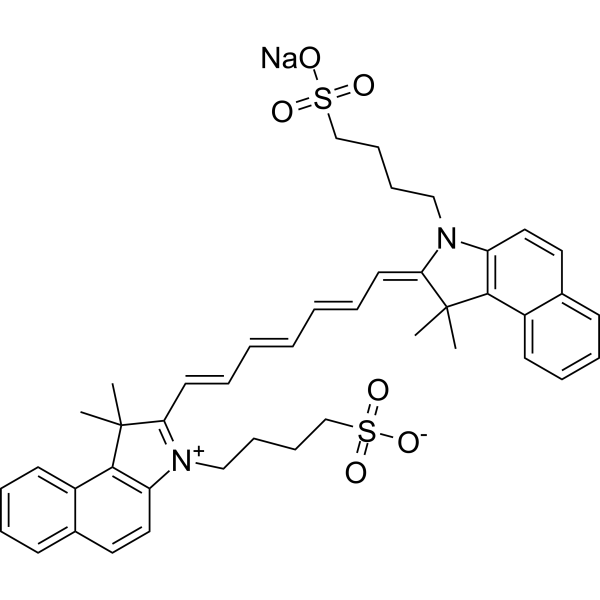
  • HY-D0711
    Indocyanine green
    Maximum Cited Publications
    41 Publications Verification

    Foxgreen; IC Green; Cardiogreen

    Fluorescent Dye Cancer
    Indocyanine green (Foxgreen) is a low toxicic fluorescent agent that has been widely used in medical diagnostics, such as determining cardiac output, hepatic function, and liver blood flow, and for ophthalmic angiography (Ex/Em = 785/813 nm) .
    Indocyanine green
  • HY-D0860

    Biochemical Assay Reagents Others
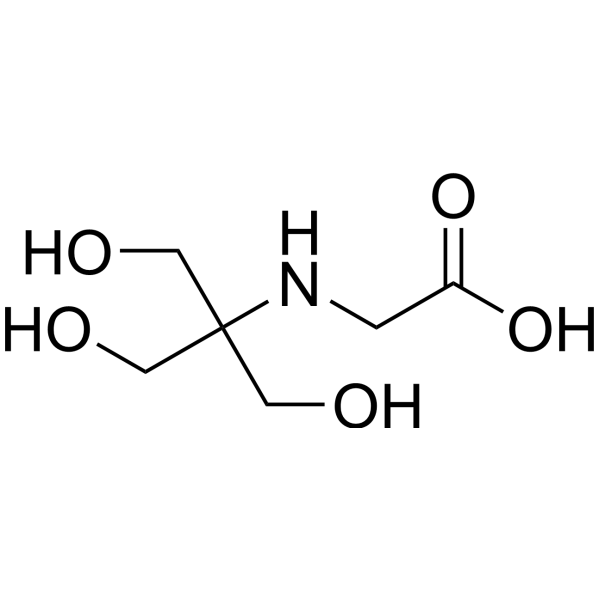
    Tricine is widely used as a buffer in protein electrophoresis, nucleic acid analysis, and immunology, which can help adjust pH and stabilize chemical reactions. In addition, the compound can also be used in research in certain medical fields, such as in antibody detection and drug screening.
    Tricine
  • HY-W013242

    cis-11-Eicosenoic acid

    Endogenous Metabolite Reactive Oxygen Species (ROS) PKC ERK STAT Inflammation/Immunology
    Gondoic acid (cis-11-Eicosenoic acid), a monounsaturated long-chain fatty acid, is contained in a variety of plant oils and nuts. Gondoic acid can exert anti-inflammatory activity by inhibiting the production of ROS and the PKCθ/ERK/STAT3 signaling pathway. Gondoic acid can be used as a raw material for medical supplies and a moisturizing ingredient in cosmetic creams .
    Gondoic acid
  • HY-W110551

    Biochemical Assay Reagents Interleukin Related Infection Inflammation/Immunology
    2-Methacryloyloxyethyl phosphorylcholine is a polymer monomer containing a phospholipid polar group. 2-Methacryloyloxyethyl phosphorylcholine polymers modify the surface properties of materials and reduce protein-surface interactions, reduce IL-8 production, inhibit cell, Staphylococcus aureus, and Porphyromonas gingivalis adhesion. 2-Methacryloyloxyethyl phosphorylcholine is used in the study of medical device-associated infections, periodontitis, and dental caries .
    2-Methacryloyloxyethyl phosphorylcholine
  • HY-D0904

    S-Acetylthiocholine iodide; ATCh iodide

    Biochemical Assay Reagents Others
    Acetylthiocholine iodide can be used as a substrate for certain enzymes, such as cholinesterase, etc., and can be used to determine the activity level of these enzymes. In addition, the compound is used in some medical research, for example in the fields of neuroscience and organ physiology.
    Acetylthiocholine iodide
  • HY-N0175
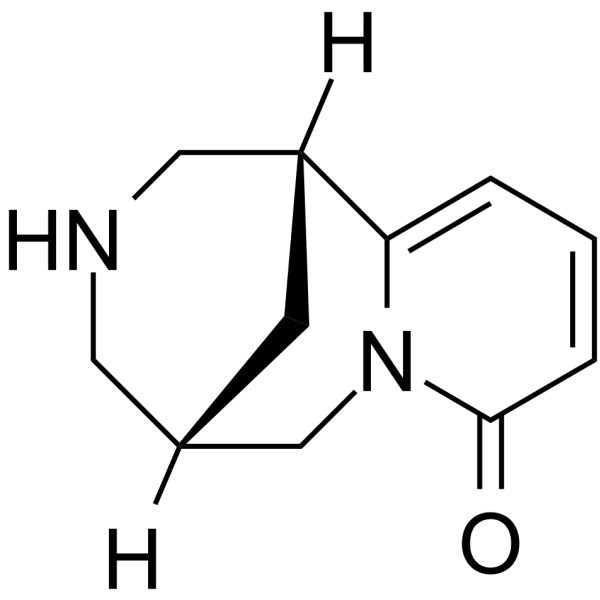
    Cytisinicline
    1 Publications Verification

    Cytisine; Sophorine; Baptitoxine

    nAChR Metabolic Disease Cancer
    Cytisinicline (Cytisine) is an alkaloid. Cytisinicline (Cytisine) is a partial agonist of α4β2 nAChRs , and partial to full agonist at β4 containing receptors and α7 receptors . Has been used medically to help with smoking cessation .
    Cytisinicline
  • HY-128748

    Endogenous Metabolite Others
    DL-Glyceraldehyde is a bioactive substance involved in cellular energy metabolism and a key intermediate in sugar metabolism pathways (such as glycolysis and gluconeogenesis). During glycolysis, DL-Glyceraldehyde is converted by enzymes into other metabolites to provide energy for cells; during gluconeogenesis, DL-Glyceraldehyde participates in the synthesis of glucose as a precursor. In the field of medical research, DL-Glyceraldehyde can be used to study diseases related to sugar metabolism, such as diabetes, tumors, etc[1][2].
    DL-Glyceraldehyde
  • HY-W017766

    PHMB

    Environmental Pollutants Bacterial Infection
    Poly(hexamethylenebiguanide) hydrochloride (PHMB) is an antimicrobial and antiviral agent. Poly(hexamethylenebiguanide) hydrochloride is active against both Gram-positive and Gram-negative bacteria. Poly(hexamethylenebiguanide) hydrochloride works by adsorbing to the surface of cellulose, which can damage microbial cell membranes and interfere with metabolism. Poly(hexamethylenebiguanide) hydrochloride is widely used in medical, clothing and household textiles, and cosmetic fields .
    Poly(hexamethylenebiguanide) hydrochloride
  • HY-Y0308

    Environmental Pollutants Biochemical Assay Reagents Others
    Disodium phosphate is commonly used as a food additive, buffer and laboratory reagent. Disodium phosphate has unique chemical properties that make it an important ingredient in the manufacture of fertilizers, detergents and water treatment products. Additionally, it is used in various medical applications such as osmotic laxatives and electrolyte replacement solutions.
    Disodium phosphate
  • HY-W723152

    Drug Intermediate Inflammation/Immunology
    Poly(D,L-lactide-co-glycolide) is a biodegradable polymer copolymer. Poly(D,L-lactide-co-glycolide) undergoes degradation through ester bond hydrolysis into lactic acid and glycolic acid. These two products can be naturally eliminated through metabolism in the body (such as the tricarboxylic acid cycle), without the risk of long-term accumulation. Poly(D,L-lactide-co-glycolide) can be used in medical sutures, implants, and drug delivery systems .
    Poly(D,L-lactide-co-glycolide)
  • HY-N0073
    Sarsasapogenin
    4 Publications Verification

    Parigenin; Sarsagenin

    Endogenous Metabolite NF-κB Metabolic Disease Inflammation/Immunology Cancer
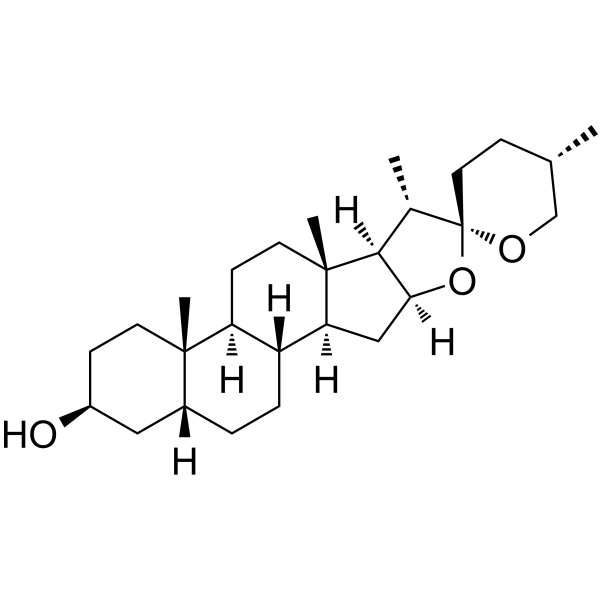
    Sarsasapogenin is a sapogenin from the Chinese medical herb Anemarrhena asphodeloides Bunge, with antidiabetic, anti-oxidative, anticancer and anti-inflamatory activities.
    Sarsasapogenin
  • HY-W115786

    Environmental Pollutants Biochemical Assay Reagents Reactive Oxygen Species (ROS) TNF Receptor Interleukin Related Inflammation/Immunology Cancer
    Kaolin is a family of kaolinitic clays, which is found in the earth's crust. Kaolin alleviates the toxicity of graphene oxide for mammalian cells. Kaolin can be utilized in industrial, cosmetic and medical fields, excipient .
    Kaolin
  • HY-130735

    JF646, SE; JF646, NHS

    Fluorescent Dye Others
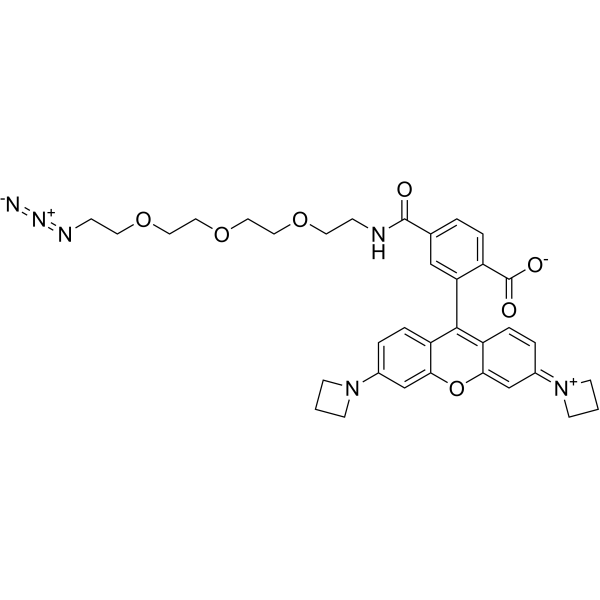
    Janelia Fluor 646, SE (JF646, SE) is a red fluorescent dye can be used in cellular imaging . Janelia Fluor products are licensed under U.S. Pat. Nos. 9,933,417, 10,018,624 and 10,161,932 and other patents from Howard Hughes Medical Institute.
    Janelia Fluor® 646, SE
  • HY-113004

    Endogenous Metabolite Metabolic Disease
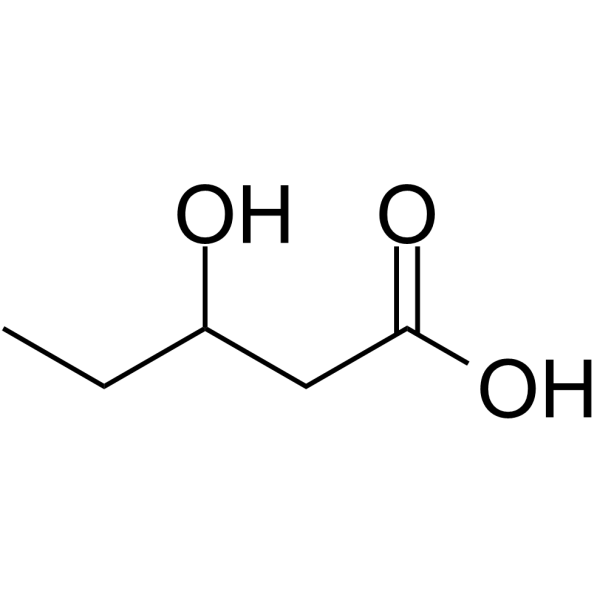
    3-Hydroxyvaleric acid is a five-carbon ketone body byproduct that can undergo an anaplerotic reaction to replenish the intermediates of the tricarboxylic acid cycle. 3-Hydroxyvaleric acid is one of the important monomers for the synthesis of polyhydroxyalkanoates (PHA). PHA is a type of biodegradable plastic that is widely used in environmentally friendly packaging, disposable products, and medical materials .
    3-Hydroxyvaleric acid
  • HY-N2555
    Tilianin
    2 Publications Verification

    Others Cardiovascular Disease Metabolic Disease Inflammation/Immunology
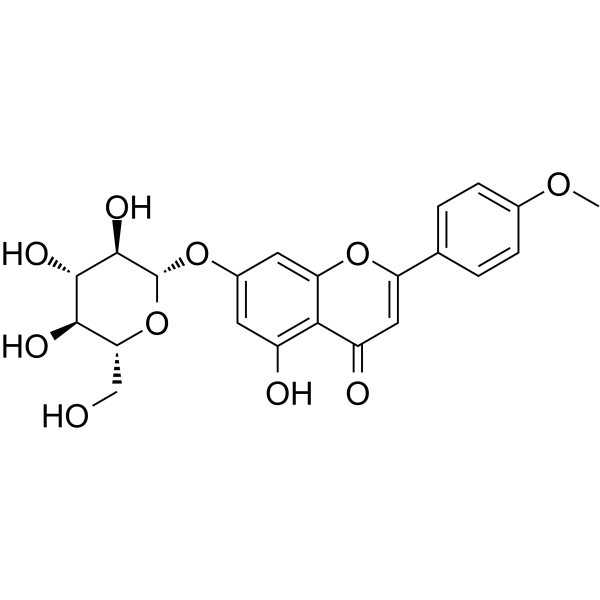
    Tilianin is an active flavonoid glycoside found in many medical plants, with potential anti-hypertensive, myocardial-protective, anti-diabetic, anti-hyperlipidemic, anti-inflammatory and antioxidant effects .
    Tilianin
  • HY-N10473
    Pulcherriminic acid
    3 Publications Verification

    Bacterial Fungal Infection
    Pulcherriminic acid is a cyclic dipeptide antimicrobial agent with high affinity for Fe 3+, found mainly in Bacillus and yeast. Pulcherriminic acid chelates iron ions through a non-enzymatic reaction to form the extracellular red pigment pulcherrimin, which competes for iron nutrition and thus achieves an antibacterial effect. Pulcherriminic acid has great applications in food, agriculture and medical industries .
    Pulcherriminic acid
  • HY-W749209

    Anhydrous sodium acetate-13C2

    Endogenous Metabolite
    Acetic acid-13C2 is a stable isotope labeled compound with biomarker and metabolic tracking activity. Acetic acid-13C2 is often used in biochemical research for the analysis of metabolic pathways. Acetic acid-13C2 is also used in medical imaging and compound development to improve the understanding of biological processes.
    Acetic acid-13C2 sodium
  • HY-34717

    Tetra-n-butylammonium tetrafluoroborate

    Biochemical Assay Reagents Others
    Tetrabutylammonium tetrafluoroborate is an inorganic salt commonly used in organic synthesis reactions and electrochemical applications. It is usually used as a catalyst or reagent, and is widely used in the field of organic synthesis, such as fluorination reaction, olefin addition and cyclization reaction, etc. In addition, it can also be used in electrochemical deposition and electroplating, and plays an important role in some electronic devices. Although it has no direct application in the medical field, it plays an important role in chemical research and industrial production.
    Tetrabutylammonium tetrafluoroborate
  • HY-W088089

    Fluorescent Dye Cancer
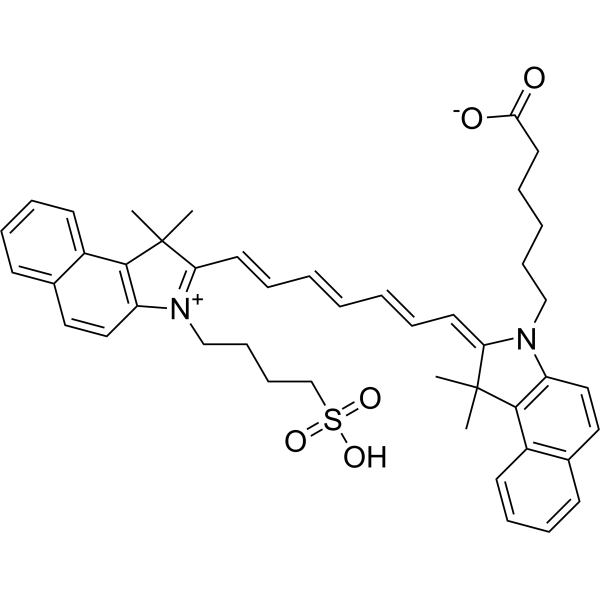
    ICG-carboxylic acid is near-infrared (NIR) fluorescent probe. ICG is a fluorescent dye used in medical diagnostics. ICG has absorption peaking at 800 nm and can absorb the near IR laser energy and release heat in the dyed tissue (Ex/Em = 785/810 nm) .
    ICG-carboxylic acid
  • HY-B2210

    DIPA; Diisopropylamine dichloroacetate

    Biochemical Assay Reagents Others
    Diisopropylammonium dichloroacetate is an organic compound commonly used as a catalyst and ligand for organic reactions. It can promote various organic chemical reactions, such as olefin addition, carbonylation reaction and asymmetric catalytic reaction, etc. In addition, the compound is also widely used in the research of some medical fields, for example, in the application of anti-tumor therapy.
    Diisopropylammonium dichloroacetate
  • HY-42935A
    Heptanoate sodium
    1 Publications Verification

    Enanthate sodium

    Biochemical Assay Reagents Others
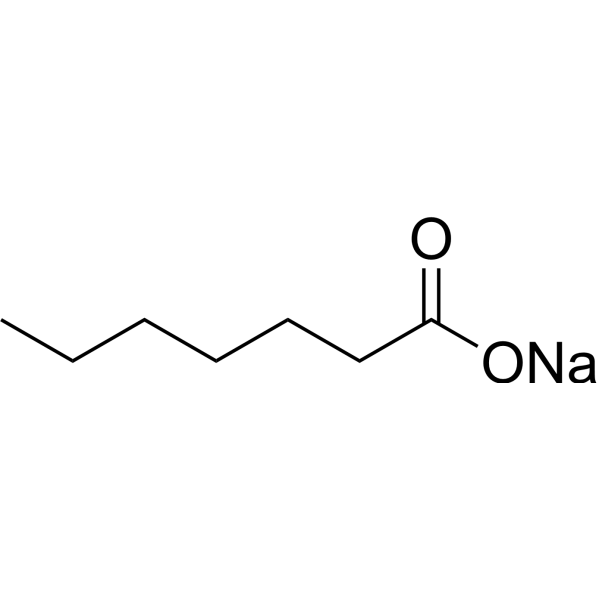
    Heptanoate sodium is an organic sodium salt compound widely used in various industries and laboratories. It can be used as surfactant, emulsifier, lubricant and preservative, etc., and plays an important role in some electronic devices. In addition, Heptanoate sodium is also used in the preparation of certain chemicals and raw materials such as paints, plastics, fragrances, etc. Although the compound has no direct medical application, it plays an important role in chemical research and industrial production.
    Heptanoate sodium
  • HY-103620

    ROCK Inflammation/Immunology Cancer
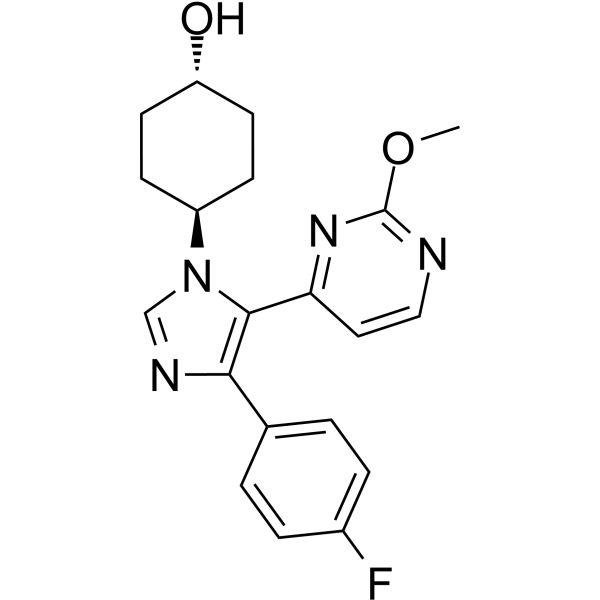
    ROCK2-IN-2 (Example 2) is a ROCK2 inhibitor that can be used for the study of multiple medical disorders, such as fibrosis, inflammatory disorders, autoimmune disorders, and cardiovascular disorders .
    ROCK2-IN-2
  • HY-D0711R

    Foxgreen (Standard); IC Green (Standard); Cardiogreen (Standard)

    Fluorescent Dye Reference Standards Others
    Indocyanine green (Standard) is the analytical standard of Indocyanine green. This product is intended for research and analytical applications. Indocyanine green (Foxgreen) is a low toxicic fluorescent agent that has been widely used in medical diagnostics, such as determining cardiac output, hepatic function, and liver blood flow, and for ophthalmic angiography .
    Indocyanine green (Standard)
  • HY-W127351

    Liposome Others
    Cholesterol decanoate is an organic compound belonging to the class of esters. It is formed from the reaction between cholesterol and capric acid. Cholesterol decanoate has several applications in the pharmaceutical industry, particularly as a bioactive compound with potential research potential for improving a range of medical conditions, such as high cholesterol and inflammation-related diseases. Additionally, it has potential applications as a food additive to improve texture and stability.
    Cholesterol decanoate
  • HY-131029

    JF646, Maleimide

    Fluorescent Dye Others
    Janelia Fluor® 646, Maleimide (JF646, Maleimide) is a red fluorescent dye that contains a maleimide group. JF646, Maleimide can be used in cellular imaging . Janelia Fluor® products are licensed under U.S. Pat. Nos. 9,933,417, 10,018,624 and 10,161,932 and other patents from Howard Hughes Medical Institute.
    Janelia Fluor® 646, Maleimide
  • HY-ER010

    Imidazole hydrochloride

    Biochemical Assay Reagents Others
    1H-Imidazole hydrochloride can be used as ligand, buffer and catalyst, etc., and also plays an important role in the process of drug synthesis and extraction of natural products. In addition, the compound is widely used in certain industrial fields, such as in the manufacturing process of plastics, coatings, textiles and electronic materials. Although the compound has no direct medical applications, it plays an important role in chemical research and laboratory studies.
    1H-Imidazole hydrochloride
  • HY-21336

    SHP2 Others
    3-Azetidinemethanol hydrochloride, an intermediate, can be used in the synthesis of SHP2 inhibitor .
    3-Azetidinemethanol hydrochloride
  • HY-W777012

    Fluorescent Dye
    Acridinium C2 NHS ester is a chemiluminescent label that is active for the development of protein and nucleic acid probes. Acridinium C2 NHS ester can be used in bioanalysis and diagnostics to provide highly sensitive detection solutions. Acridinium C2 NHS ester is widely used in medical research, especially in the monitoring and analysis of biomolecules.
    Acridinium C2 NHS ester
  • HY-B2134

    Others Metabolic Disease
    Casanthranol is a concentrated mixture of anthranol glycosides from cascara sagrada (dried bark of Rhamnus p.). Casanthranol can be used as a laxative in constipation and various medical conditions, stimulant laxative. Casanthranol encourages bowel movements by acting on the intestinal wall to increase muscle contractions. Casanthranol is protective in a PFF-induced toxicity model (EC50 = 34.2 μM) of N2a cells .
    Casanthranol
  • HY-W004293

    Tridecyl Alcohol

    Environmental Pollutants Biochemical Assay Reagents Others
    1-Tridecanol is an organic compound commonly used as a surfactant, lubricant, and stabilizer, among others. It can be used in some cleaning products, preservatives and plastic additives, and can help enhance their performance and stability. In addition, the compound is used in some industrial fields, for example in the manufacture of products such as cellulose and paints. Although the compound has no direct medical application, it plays an important role in consumer products and industrial production.
    1-Tridecanol
  • HY-159770A

    Radionuclide-Drug Conjugates (RDCs) Cancer
    (S)-EB-FAPI-B2 (Compound II-11) is a precursor for radiopharmaceutical labeling, which can be combined with radionuclides to create radionuclide drug conjugates (RDCs). RDCs have the capability to specifically target biomolecules and can be used in medical imaging .
    (S)-EB-FAPI-B2
  • HY-P10732

    Radionuclide-Drug Conjugates (RDCs) Cancer
    DOTA-cyclo(RGDfK) is a radionuclide conjugate (RDC), which is capable of binding to a radionuclide. RDC has the ability to specifically target biomolecules and can be used in medical imaging or therapy .
    DOTA-cyclo(RGDfK)
  • HY-142699

    Somatostatin Receptor Inflammation/Immunology
    SSTR4 agonist 2 is a potent agonist of somatostatin receptor subtype 4 (SSTR4). SSTR4 pathway inhibits nociceptive and inflammatory processes. SSTR4 agonist 2 has the potential for the research of medical disorders related to SSTR4 (extracted from patent WO2014184275A1, compound 107) .
    SSTR4 agonist 2
  • HY-N0175R

    Cytisine (Standard); Sophorine (Standard); Baptitoxine (Standard)

    Reference Standards nAChR Metabolic Disease Cancer
    Cytisinicline (Standard) is the analytical standard of Cytisinicline. This product is intended for research and analytical applications. Cytisinicline (Cytisine) is an alkaloid. Cytisinicline (Cytisine) is a partial agonist of α4β2 nAChRs , and partial to full agonist at β4 containing receptors and α7 receptors . Has been used medically to help with smoking cessation .
    Cytisinicline (Standard)
  • HY-N8669

    LIM Kinase (LIMK) Cancer
    Curcolonol is a furan type sesquiterpene. Curcolonol can be isolated from several medical herbs. Curcolonol has inhibitory activity for LIM kinase 1. Curcolonol can be used for the research of breast cancer .
    Curcolonol
  • HY-N0073R

    Parigenin (Standard); Sarsagenin (Standard)

    Reference Standards Endogenous Metabolite NF-κB Metabolic Disease Inflammation/Immunology Cancer
    Sarsasapogenin (Standard) is the analytical standard of Sarsasapogenin. This product is intended for research and analytical applications. Sarsasapogenin is a sapogenin from the Chinese medical herb Anemarrhena asphodeloides Bunge, with antidiabetic, anti-oxidative, anticancer and anti-inflamatory activities.
    Sarsasapogenin (Standard)
  • HY-W873634

    TRAP-Pr

    Radionuclide-Drug Conjugates (RDCs) Cancer
    TRAP-Pr is a radionuclide conjugate (RDC) that can bind to the radionuclide [68]Ga. RDCs have the ability to specifically target biomolecules and can be used in medical imaging or therapy. TRAP-Pr can be further functionalized with acetone and used in click chemistry CuAAC reactions to conjugate other labeled molecules.
    TRAP
  • HY-W008992

    8-Hydroxyquinoline sulfate hydrate

    Biochemical Assay Reagents Others
    Quinolin-8-ol sulfate hydrate is an organic compound commonly used in dyes and as a raw material for chemical analysis. It can cooperate with metal ions to form dyes, and is widely used in the fields of dyes, printing and textile manufacturing. In addition, the compound also has good toxicity and biocompatibility, and is also used in some medical fields.
    Quinolin-8-ol sulfate hydrate
  • HY-W005507

    2-imidazolidinone, 1-methyl-

    Biochemical Assay Reagents Others
    1-Methylimidazolidin-2-one is an organic compound commonly used as a solvent and intermediate. It can play a buffering and stabilizing role in some organic synthesis reactions, and can be used as a solvent in some chemical reactions and industrial production processes. In addition, the compound also has good toxicity and biocompatibility, and is widely used in some medical fields.
    1-Methylimidazolidin-2-one
  • HY-P5486

    Bacterial Others
    Tet-20 is a biological active peptide. (Tet-20, is a synthetic cathelicidin-derived peptide. It was tested as infection-resistant coating for medical devices. When tethered on an implant surface Tet-20 exhibited broad antimicrobial activities both in vivo and in vitro. It can stop biofilm formation and appears to be non-toxic to eukaryotic cells)
    Tet-20
  • HY-131022

    JF549 TFA

    Fluorescent Dye Others
    Janelia Fluor® 549 TFA (JF549 TFA) is a fluorescent dye with the absorption maximum (λab (max)) of 549 nm and emission maximum (λem (max)) of 571 nm . Janelia Fluor® products are licensed under U.S. Pat. Nos. 9,933,417, 10,018,624 and 10,161,932 and other patents from Howard Hughes Medical Institute.
    Janelia Fluor® 549 TFA
  • HY-W010750

    TOTM

    Biochemical Assay Reagents Others
    Trioctyl trimellitate (TOTM) is a plasticizer. Trioctyl trimellitate increases material plasticity by interacting with PVC molecular chains. Trioctyl trimellitate is promising for research of the safety of medical device materials .
    Trioctyl trimellitate
  • HY-12691

    Biochemical Assay Reagents Cancer
    BFCAs-1 is a bifunctional chelator commonly used in medical imaging and biochemistry.
    BFCAs-1
  • HY-DY1027

    Fluorescent Dye Cancer
    Indocyanine green (Foxgreen) (solution) is a low toxicic fluorescent agent that has been widely used in medical diagnostics, such as determining cardiac output, hepatic function, and liver blood flow, and for ophthalmic angiography (Ex/Em = 785/813 nm) .
    Solvent and concentration: DMSO: 10 mM
    Indocyanine green (solution)
  • HY-W011118

    Radionuclide-Drug Conjugates (RDCs) Cancer
    DTPA anhydride is a bifunctional chelator whose anhydride can react with amino groups in proteins (such as lysine residues) to form stable amide bonds. DTPA anhydride can also bind to radionuclides to synthesize radionuclide-labeled drug conjugates (RDCs). RDCs have the ability to specifically target biomolecules and can be used in medical imaging or therapy.
    DTPA anhydride
  • HY-W127331

    Liposome Others
    Cholesterol hexanoate is an organic compound belonging to the class of esters. It is formed from the reaction between cholesterol and caproic acid. Cholesterol hexanoate has several applications in the pharmaceutical industry, particularly as a bioactive compound with potential research potential for improving a range of medical conditions, such as high cholesterol and inflammation-related diseases. Additionally, it has potential applications as a food additive to improve texture and stability.
    Cholesterol hexanoate
  • HY-W127403

    Cholesteryl trans-9-octadecenoate

    Biochemical Assay Reagents Others
    Cholesteryl elaidate is an organic compound belonging to the class of esters. It is formed from the reaction between cholesterol and elaidic acid, producing a white crystalline solid with a mildly sweet taste. Cholesteryl elaidate has several applications in the pharmaceutical industry, particularly as a bioactive compound with potential research potential for improving a range of medical conditions, such as high cholesterol and inflammation-related diseases. Additionally, it has potential applications as a food additive to improve texture and stability.
    Cholesteryl elaidate
  • HY-W250312

    Environmental Pollutants Biochemical Assay Reagents Others
    Polycaprolactone is a biodegradable polyester commonly used in various biomedical and industrial applications. It is a white waxy polymer that can be molded into various shapes and forms. Polycaprolactone has various properties suitable for these applications, including low melting point, high flexibility and slow biodegradation rate. It can be used as a raw material for the production of tissue engineering scaffolds, drug delivery systems, and medical implants. In addition, it is used as a binder in the production of adhesives, coatings and paints.
    Polycaprolactone
  • HY-W087913

    Biochemical Assay Reagents Others
    alpha-Naphtholphthalein is an indicator that is light yellow at pH 6 and gradually shows a clear color change with increasing pH to light green-green-blue. alpha-Naphtholphthalein can be impregnated into cotton-blend fabrics and used to develop medical supplies for wound pH monitoring, such as medical gauze, hospital gowns and compression bandages .
    alpha-Naphtholphthalein
  • HY-D1905

    Fluorescent Dye Cancer
    ICG acid is a fluorescent dye used in medical diagnostics. ICG acid has absorption peaking at 800 nm and can absorb the near IR laser energy and release heat in the dyed tissue. ICG acid has been used in fluorescence-guided surgery to identify critical structures, including intra-abdominal tumors .
    ICG acid

Inquiry Online

Your information is safe with us. * Required Fields.

Salutation


Country or Region *

Applicant Name *


Organization Name *

Department *


Email Address *


Product Name *

Cat. No.


Requested quantity *

Phone Number *


Remarks

Inquiry Online

Inquiry Information

Product Name:
Cat. No.:
Quantity:
MCE Japan Authorized Agent:

