18 Results for "

micelle-forming biosurfactant

" in MedChemExpress (MCE) Product Catalog:
Products (18)

18 Results for "micelle-forming biosurfactant" in MCE Product Catalog:

7
7 Publications Verification
Cat. No.: HY-129555
CAS No.: 252023-70-4
Purity:  98.96%
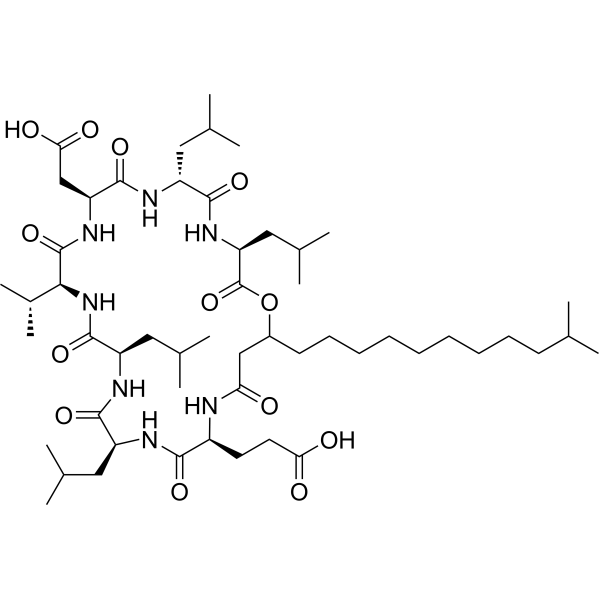
Surfactin is a potent cyclic lipopeptide biosurfactants consists of four isomers (Surfactin A, B, C and D), which mediates flux of mono-and divalent cations, such as calcium, across lipid bilayer membranes. Surfactin can act as an antimicrobial adjuvant with anti-bacterial, anti-fungal, antimycoplasma and hemolytic effects . Surfactin also has antiviral activity against a variety of enveloped viruses .
loading...
    loading...
4
4 Cited Publications
Cat. No.: HY-15435
CAS No.: 75621-03-3
Purity:  99.91%
Research Areas:  

Others

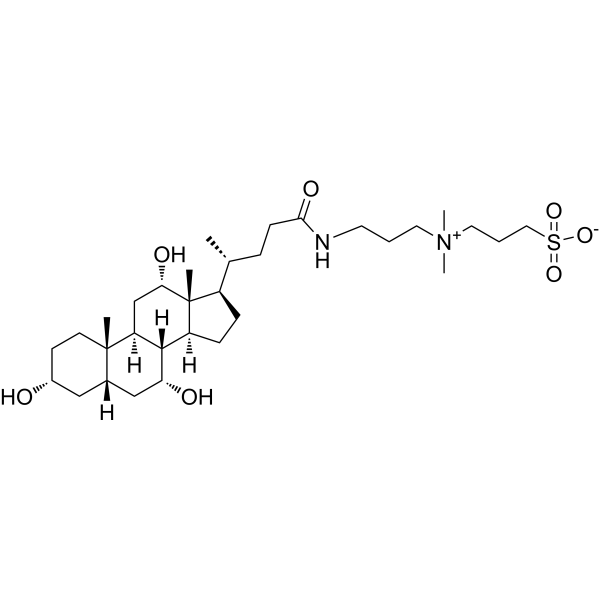
CHAPS is a cholic acid-derived, sulfobetaine-type zwitterionic detergent and micelle-forming agent. CHAPS exhibits properties of weak cationic or nonionic surfactants in different solution systems, undergoes micellization, and forms small, loose hydrophilic aggregates that are temperature-dependent. CHAPS stabilizes mononucleosomes under different ionic strengths, reduces nucleosome sequence specificity, promotes sliding of histone cores along DNA, solubilizes Tamm-Horsfall protein to reduce its interference with urinary exosome isolation, and maintains vesicle structure and the activity of related proteins at the same time. CHAPS is used to recover native folded fusion proteins, enhance the binding capacity of GST fusion proteins, and restore GST enzyme activity. However, CHAPS cannot refold proteins denatured by urea, guanidine hydrochloride or heat, nor can it construct the structure of intrinsically disordered proteins. CHAPS is commonly used in research on the separation and purification of membrane proteins .
loading...
    loading...
4
4 Cited Publications
Cat. No.: HY-15435A
CAS No.: 331717-45-4
Purity:  ≥98.0%
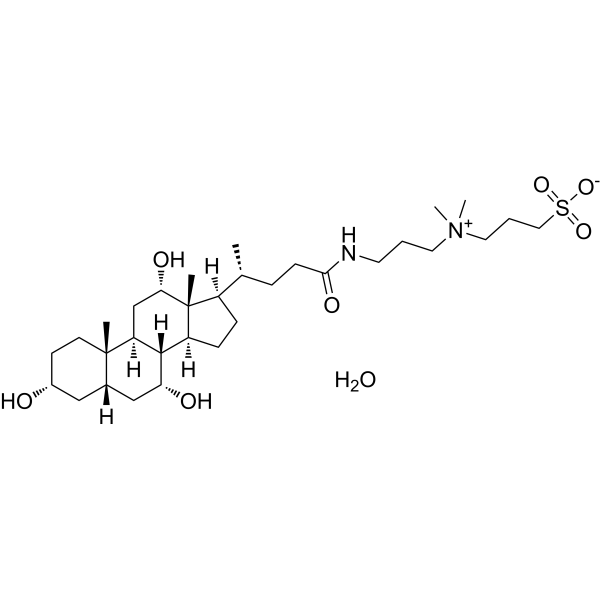
CHAPS hydrate is a cholic acid-derived, sulfobetaine-type zwitterionic detergent and micelle-forming agent. CHAPS hydrate exhibits properties of weak cationic or nonionic surfactants in different solution systems, undergoes micellization, and forms small, loose hydrophilic aggregates that are temperature-dependent. CHAPS hydrate stabilizes mononucleosomes under different ionic strengths, reduces nucleosome sequence specificity, promotes sliding of histone cores along DNA, solubilizes Tamm‑Horsfall protein to reduce its interference with urinary exosome isolation, and maintains vesicle structure and the activity of related proteins at the same time. CHAPS hydrate is used to recover native folded fusion proteins, enhance the binding capacity of GST fusion proteins, and restore GST enzyme activity. However, CHAPS hydrate cannot refold proteins denatured by urea, guanidine hydrochloride or heat, nor can it construct the structure of intrinsically disordered proteins. CHAPS hydrate is commonly used in research on the separation and purification of membrane proteins .
loading...
    loading...
1
1 Cited Publications
Cat. No.: HY-N7435
CAS No.: 54814-64-1
Synonyms: (±)-Massoia lactone
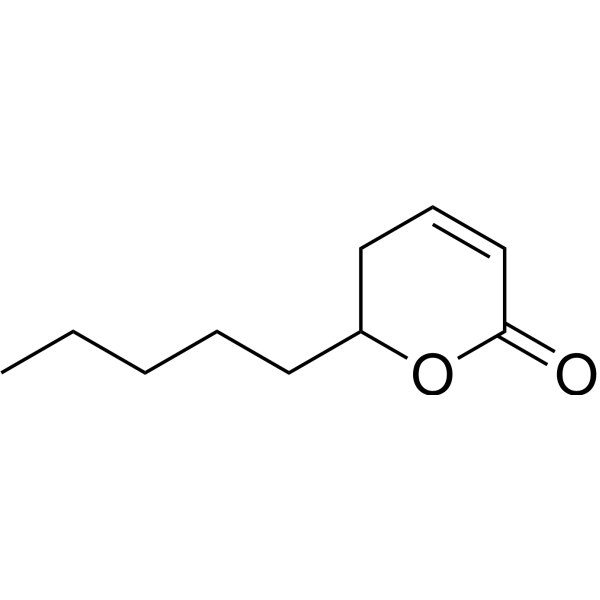
Massoia lactone ((±)-Massoia lactone) is a natural lactone-based biosurfactant with antifungal (fungal), antibiofilm, and cytotoxic activities. Massoia lactone inhibits fungal hyphal growth and spore germination, and induces fungal cell necrosis by forming membrane pores, reducing ergosterol, elevating ROS, and causing leakage of intracellular components. Massoia lactone inhibits the viability and proliferation of tumor cells. Massoia lactone degrades the extracellular polymeric substances of polymicrobial biofilms, penetrates the biofilm matrix, inhibits the growth of planktonic oral bacteria (bacterial), and reduces surface tension through its amphiphilic properties. Massoia lactone is a low-toxicity, biodegradable food additive with a coconut cream aroma, which can be used for flavor improvement and also serves as a quality control marker for Cs-4 mycelium. Massoia lactone can be used for research on Fusarium head blight, malignant tumors, and oral polymicrobial biofilm-associated dental diseases .
loading...
    loading...
Cat. No.: HY-W099580
CAS No.: 544-76-3
Synonyms: n-Hexadecane; Cetane
Hexadecane (n-Hexadecane; Cetane) is a long-chain n-alkane, oil component, and model hydrophobic compound. Hexadecane acts as a substrate for microbial degradation.Hexadecane induces microbial biosurfactant and bioemulsifier synthesis .
loading...
    loading...
Cat. No.: HY-W588250
CAS No.: 24730-31-2
Target:  

Integrin

Research Areas:  

Inflammation/Immunology

Surfactin C1 is an amphiphilic biosurfactants. Surfactin C1 inhibits leukemic cell (HL-60) adhesion to human umbilical vein endothelial cells (HUVEC). Surfactin C1 inhibits adhesion melecules expression, such as ICAM-1 and VCAM-1 .
loading...
    loading...
Cat. No.: HY-N7078
CAS No.: 469-77-2
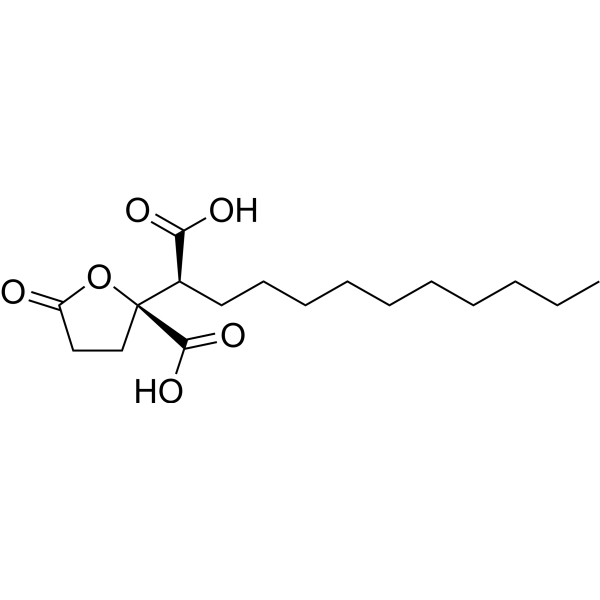
Spiculisporic acid is a γ-butenolide isolated from the cultue of Aspergillus sp . Spiculisporic acid is a microbial biosurfactant and has anti-oxidative stress actions .
loading...
    loading...
Cat. No.: HY-W040216
CAS No.: 85261-19-4
Synonyms: N-Nonanoyl-N-methylglucamine
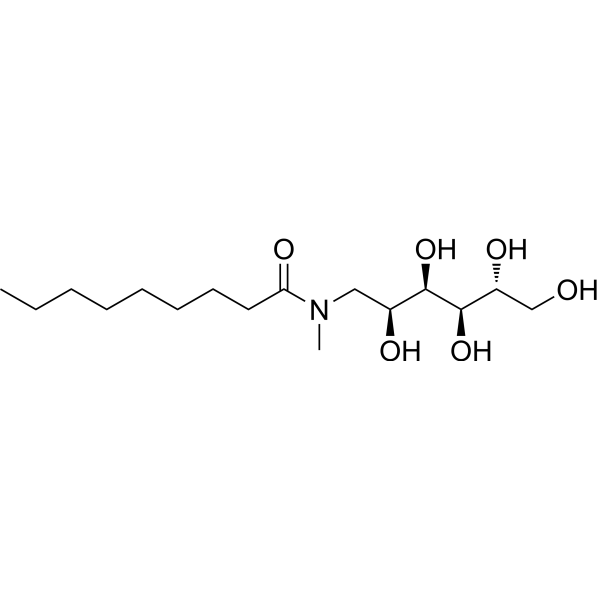
MEGA-9 (N-Nonanoyl-N-methylglucamine) is a green, biodegradable glycosyl nonionic surfactant and micelle-forming agent. MEGA-9 acts as a membrane solubilizer, forms vesicles, solubilizes milk fat, eliminates non-specific reactions of test strips, and restores antigen-antibody reactions in cheddar cheese homogenates for the detection of staphylococcal enterotoxin B (SEB) .
loading...
    loading...
Cat. No.: HY-D1005A7
CAS No.: 9003-11-6
Synonyms: PEG-PPG-PEG, 2400 (Average)
Poloxamer 125 (L45) (PEG-PPG-PEG, 2400 (Average)) is a block polymer of polyoxyethylene and polyoxypropylene, belonging to water-soluble non-ionic biosurfactants with properties such as emulsification and wetting. Poloxamer 125 (L45) has thermosensitive characteristics and can form thermoreversible hydrogels in aqueous solutions, presenting a fluid state at room temperature and transforming into a viscous gel under body temperature conditions; when its concentration is higher than the critical micelle concentration, it can also self-assemble into micelles in aqueous systems. Poloxamer 125 (L45) enables controlled drug release, prolongs the local retention time of drugs, and is often used as a drug delivery carrier. Poloxamer 125 (L45) can be applied in the fields of cosmetics, biomedicine and tissue engineering .
loading...
    loading...
Cat. No.: HY-W250300
CAS No.: 4536-30-5
Synonyms: Ethylene glycol monododecyl ether
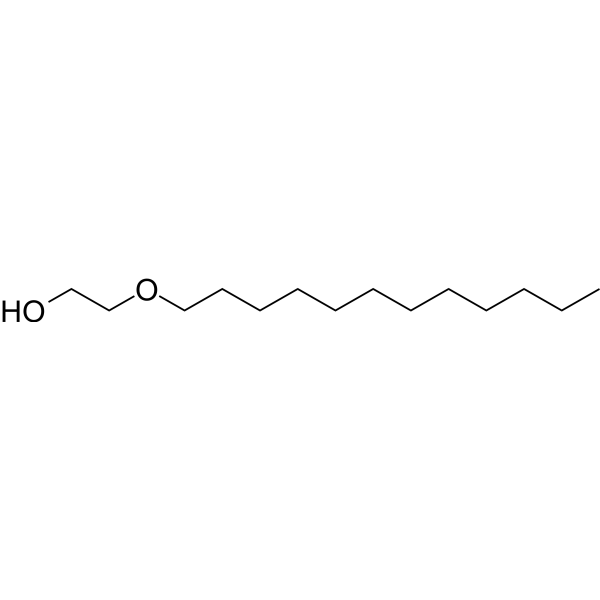
2-(Dodecyloxy) ethanol (Ethylene glycol monododecyl ether) is a nonionic ether monohydroxy C12 surfactant with a fragrance-like odor similar to jasmone and gardenia. 2-(Dodecyloxy) ethanol acts as a phase transition inducer and micelle-forming agent. 2-(Dodecyloxy) ethanol also serves as a skin penetration enhancer .
loading...
    loading...
Cat. No.: HY-P1712A
Research Areas:  

Metabolic Disease

Arthrofactin (TFA) is an effective lipopeptide biosurfactant in Pseudomonas sp. MIS38. Arthrofactin (TFA) production is associated with multiple ATP dependent active transporter systems .
loading...
    loading...
Cat. No.: HY-P3100
CAS No.: 939960-34-6
Target:  

Parasite

Research Areas:  

Infection

Orfamide A is a major metabolite of insecticidal biosurfactant in Pseudomonas sp. F6 and has aphidicidal activity. Orfamide A can be used for aphid control in organic agriculture. Orfamide A exhibits dose-dependent mortality against aphids with an LC50 value of 34.5 μg/mL .
loading...
    loading...
Cat. No.: HY-172558
CAS No.: 3029766-02-4
Research Areas:  

Others

MEL-A is a glycolipid biosurfactant. MEL-A can be produced from vegetable oils by Pseudozyma yeasts. MEL-A can improve the low-temperature fluidity of biodiesel and hydrocarbon fuels. MEL-A is composed of a mixture of MEL-A isoforms with variable lengths of the fatty acid chain. MEL-A can significantly increases gene transfection by cationic liposomes via membrane fusion .
loading...
    loading...
Cat. No.: HY-N16657
CAS No.: 189757-88-8
Synonyms: LI-F 04b
Fusaricidin B (LI-F 04b) is a lipopeptide biosurfactant. Fusaricidin B can be isolated from the culture broth of Bacillus polymyxa KT-8. Fusaricidin B exhibits activity against Gram-positive bacteria (especially Staphylococcus aureus FDA 209P and Micrococcus luteus IFO 3333), but its activity is weaker than that of the mixture of Fusaricidin C and D .
loading...
    loading...
Cat. No.: HY-153936
CAS No.: 5129-58-8
Target:  

Apoptosis ROS Kinase

Research Areas:  

Others

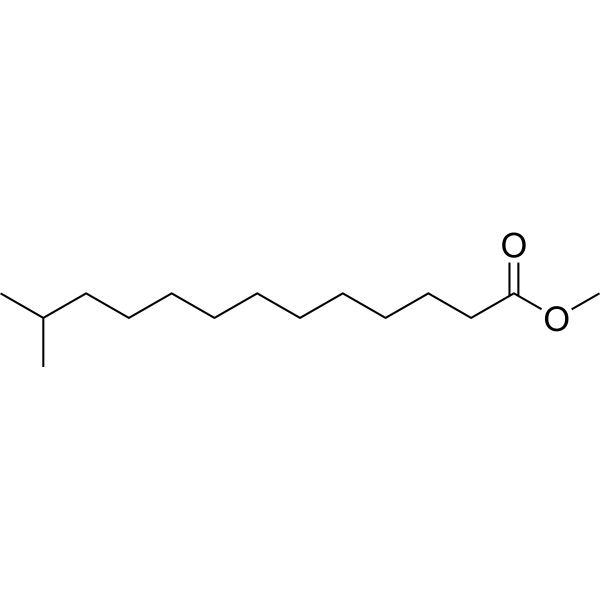
Methyl 12-methyltridecanoate is a biosurfactant. Methyl 12-methyltridecanoate provides a novel approach for functionalizing the silver nanoparticles higher biocompatibility in vivo environmental .
loading...
    loading...
Cat. No.: HY-N7078R
CAS No.: 469-77-2
Spiculisporic acid (Standard) is the analytical standard of Spiculisporic acid (HY-N7078). This product is intended for research and analytical applications. Spiculisporic acid is a γ-butenolide isolated from the cultue of Aspergillus sp . Spiculisporic acid is a microbial biosurfactant and has anti-oxidative stress actions .
loading...
    loading...
Cat. No.: HY-P11862
CAS No.: 2097822-76-7
Synonyms: MBJ-0173
Category:  

Microorganisms

Malpinin A (MBJ-0173) is a dehydrohexapeptide biosurfactant with significant anthelmintic activity. Malpinin A specifically accumulates in the nematode digestive tract, thereby effectively inhibiting nematode feeding and proliferation without causing paralysis. Malpinin A can be used in studies related to plant-parasitic nematode infection .
loading...
    loading...
Cat. No.: HY-N7435R
CAS No.: 54814-64-1
Synonyms: (±)-Massoia lactone (Standard)
Massoia lactone (Standard) ((±)-Massoia lactone (Standard)) is the analytical standard of Massoia lactone (HY-N7435). This product is intended for research and analytical applications. Massoia lactone ((±)-Massoia lactone) is a natural lactone-based biosurfactant with antifungal (fungal), antibiofilm, and cytotoxic activities. Massoia lactone inhibits fungal hyphal growth and spore germination, and induces fungal cell necrosis by forming membrane pores, reducing ergosterol, elevating ROS, and causing leakage of intracellular components. Massoia lactone inhibits the viability and proliferation of tumor cells. Massoia lactone degrades the extracellular polymeric substances of polymicrobial biofilms, penetrates the biofilm matrix, inhibits the growth of planktonic oral bacteria (bacterial), and reduces surface tension through its amphiphilic properties. Massoia lactone is a low-toxicity, biodegradable food additive with a coconut cream aroma, which can be used for flavor improvement and also serves as a quality control marker for Cs-4 mycelium. Massoia lactone can be used for research on Fusarium head blight, malignant tumors, and oral polymicrobial biofilm-associated dental diseases .
loading...
    loading...
  • 1

