

1. Search Result
Search Result
Pathways Recommended: Neuronal Signaling
Results for "

neuronal receptors

" in MedChemExpress (MCE) Product Catalog:

240

Inhibitors & Agonists

4

Screening Libraries

2

Fluorescent Dyes

3

Biochemical Assay Reagents

29

Peptides

1

Inhibitory Antibodies

25

Natural
Products

34

Isotope-Labeled Compounds

1

Click Chemistry

4

Oligonucleotides

1

GMP Molecules

Cat. No. Product Name Target Research Areas Chemical Structure
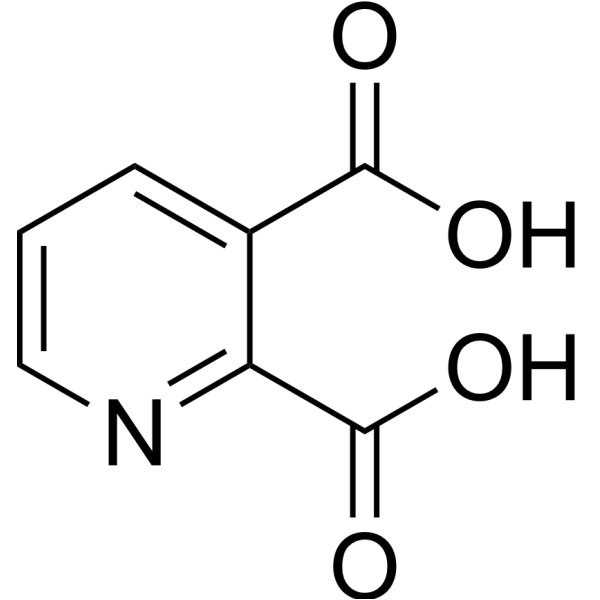
  • HY-100807
    Quinolinic acid
    5+ Cited Publications

    MOFs iGluR Endogenous Metabolite Reactive Oxygen Species (ROS) NO Synthase Apoptosis Neurological Disease Inflammation/Immunology
    Quinolinic acid, an endogenous metabolite of tryptophan, is a N-methyl-D-aspartate receptor (NMDA receptor) agonist. Quinolinic acid increases glutamate efflux, induces the generation of ROS, activates nitric oxide synthase, produces excessive NO, leading to calcium ion influx and neuronal apoptosis .
    Quinolinic acid
  • HY-105182
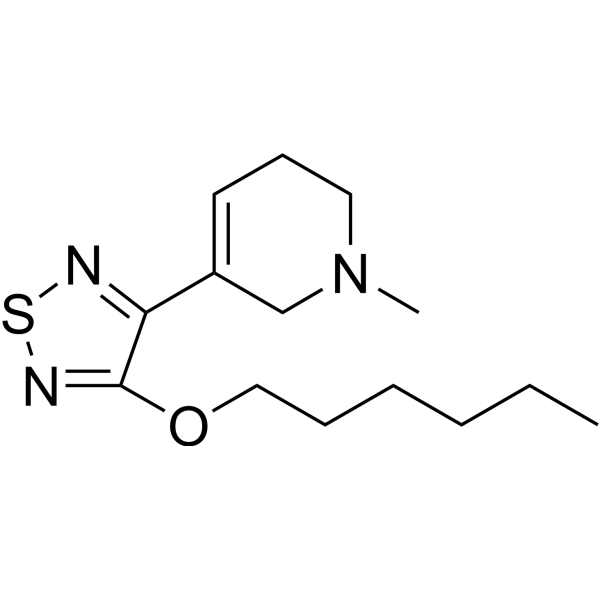
    Xanomeline
    5+ Cited Publications

    LY-246708

    mAChR Neurological Disease
    Xanomeline, as an effective and selective muscarinic type 1 and type 4 (M1/M4) receptor agonist, increases neuronal excitability. Xanomeline can be used for the research of neurological disorders, such as schizophrenia .
    Xanomeline
  • HY-13694
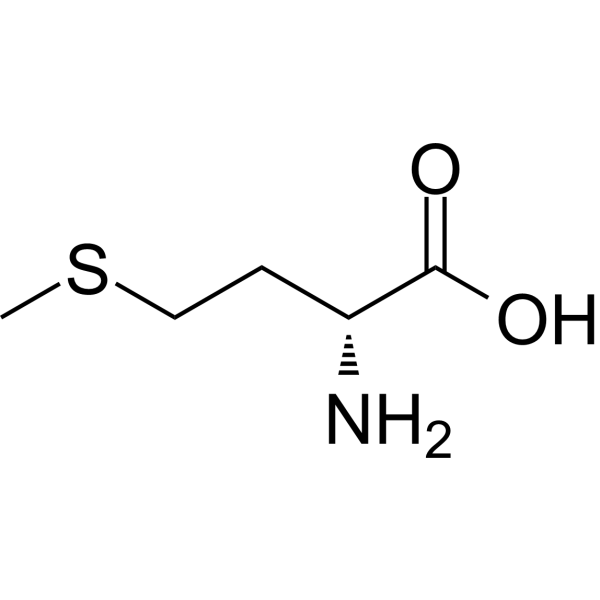
    Methionine
    5+ Cited Publications

    MRX-1024; D-Methionine

    GABA Receptor Endogenous Metabolite Neurological Disease Cancer
    Methionine (MRX-1024; D-Methionine) is an effective chemoprotective agent which can also inhibit the neuronal activity through GABAA receptor activation.
    Methionine
  • HY-B1240
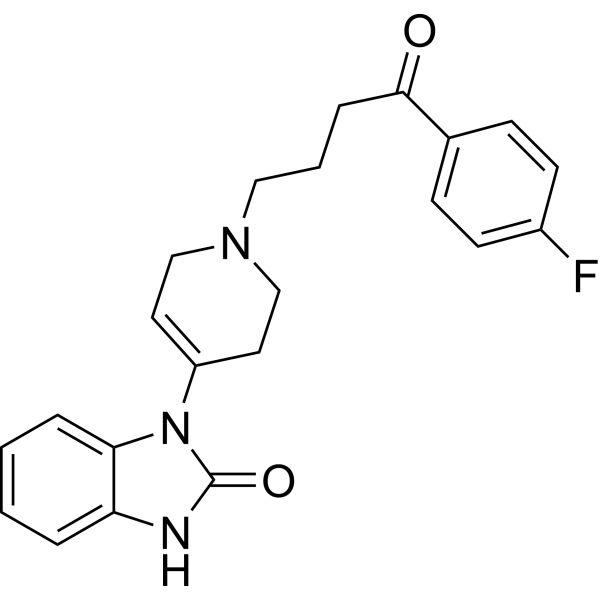
    Droperidol
    5 Publications Verification

    Dehydrobenzperidol

    Dopamine Receptor GABA Receptor nAChR Neurological Disease
    Droperidol (Dehydrobenzperidol) is a butyrophenone pamine-2 receptor antagonist that inhibits the activation of GABA(A) and neuronal nicotinic receptors (nAChR), with IC50 values of 12.6 nM and 5.8 μM. Droperidol has anesthetic and sedative properties .
    Droperidol
  • HY-105182A
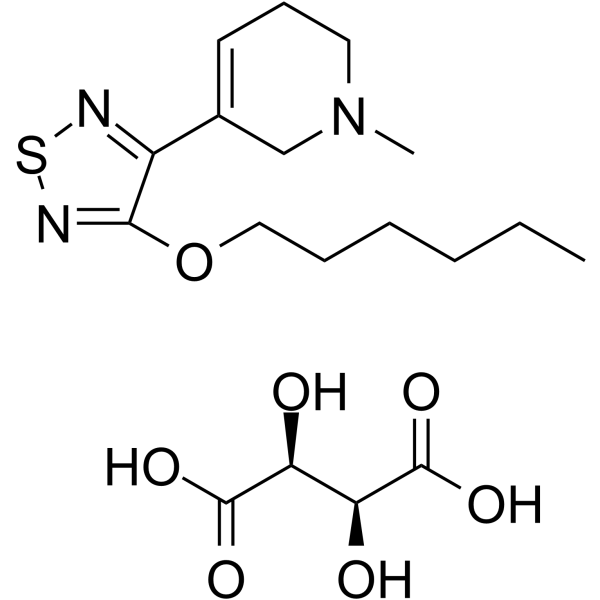
    Xanomeline tartrate
    5+ Cited Publications

    LY 246708 tartrate

    mAChR Neurological Disease
    Xanomeline (LY 246708) is the potent agonist of muscarinic M1/M4 receptor with antipsychotic-like activity. Xanomeline (LY 246708) increases neuronal excitability. Xanomeline (LY 246708) can be used for the research of schizophrenia .
    Xanomeline tartrate
  • HY-17001A
    Flupirtine
    1 Publications Verification

    D 9998

    Potassium Channel iGluR GABA Receptor Neurological Disease Inflammation/Immunology
    Flupirtine (D 9998) is an orally active, blood-brain barrier-crossing non-opioid analgesic and neuroprotective agent. Flupirtine is a neuronal potassium channel opener (Kv7 activator), a NMDA receptor antagonist and a GABA receptor activator. Flupirtine stabilizes blood-brain-barrier integrity, reduces oxidative stress and brain leukocyte infiltration, enhances angioneurogenesis, suppresses calcium influx, stabilizes neuronal resting membrane potential, and counteracts focal cerebral ischemia. Flupirtine exhibits analgesic, muscle relaxant properties, protects neurons from excitotoxic, ischemic, or cytokine-mediated death. Flupirtine functions as a non-opioid analgesic without antipyretic or antiphlogistic properties, shows no relevant affinity to opiate receptor. Flupirtine can be used for the research of focal cerebral ischemia, pain, Alzheimer’s disease, or multiple sclerosis .
    Flupirtine
  • HY-17001
    Flupirtine Maleate
    1 Publications Verification

    D 9998 Maleate

    Potassium Channel iGluR GABA Receptor Neurological Disease Inflammation/Immunology
    Flupirtine (D 9998) Maleate is an orally active, blood-brain barrier-crossing non-opioid analgesic and neuroprotective agent. Flupirtine Maleate is a neuronal potassium channel opener (Kv7 activator), a NMDA receptor antagonist and a GABA receptor activator. Flupirtine Maleate stabilizes blood-brain-barrier integrity, reduces oxidative stress and brain leukocyte infiltration, enhances angioneurogenesis, suppresses calcium influx, stabilizes neuronal resting membrane potential, and counteracts focal cerebral ischemia. Flupirtine Maleate exhibits analgesic, muscle relaxant properties, protects neurons from excitotoxic, ischemic, or cytokine-mediated death. Flupirtine Maleate functions as a non-opioid analgesic without antipyretic or antiphlogistic properties, shows no relevant affinity to opiate receptor. Flupirtine Maleate can be used for the research of focal cerebral ischemia, pain, Alzheimer’s disease, or multiple sclerosis .
    Flupirtine Maleate
  • HY-N1163

    (-)-Tetrahydroalstonine

    Adrenergic Receptor Atg8/LC3 Akt mTOR Neurological Disease Endocrinology
    Tetrahydroalstonine ((-)-Tetrahydroalstonine) is an indole alkaloid and a selective α₂-adrenergic receptor antagonist. Tetrahydroalstonine exhibits certain neuroprotective effects. Tetrahydroalstonine can regulate autophagy-lysosomal function by activating the Akt/mTOR pathway, significantly reducing OGD/R-induced primary cortical neuronal injury .
    Tetrahydroalstonine
  • HY-P0102

    nAChR Neurological Disease Metabolic Disease
    Dipeptide diaminobutyroyl benzylamide diacetate, a Wagerlin-1-mimicking peptide, is a nAChR antagonist. Dipeptide diaminobutyroyl benzylamide diacetate mimics Waglerin-1 to block neuromuscular junction nicotinic acetylcholine receptors, partially inhibits neuronal signal transduction, and relaxes muscles. Dipeptide diaminobutyroyl benzylamide diacetate reduces appearance of facial wrinkles linked to repeated muscle movement.Dipeptide diaminobutyroyl benzylamide diacetate can be used for the research of mild-to-moderate fine and coarse periocular and perioral wrinkles and periorbital ageing .
    Dipeptide diaminobutyroyl benzylamide diacetate
  • HY-16974
    Afoxolaner
    1 Publications Verification

    GABA Receptor Chloride Channel Parasite Infection
    Afoxolaner is an orally active isoxazoline insecticide/acaricide against Ixodes scapularis in dogs. Afoxolaner acts on the insect γ-aminobutyric acid receptor (GABA) and glutamate receptors, inhibiting GABA & glutamate-regulated uptake of chloride ions, resulting in excess neuronal stimulation and death of the arthropod .
    Afoxolaner
  • HY-100807S
    Quinolinic acid-d3
    2 Publications Verification

    Isotope-Labeled Compounds iGluR Endogenous Metabolite Reactive Oxygen Species (ROS) NO Synthase Apoptosis Neurological Disease Inflammation/Immunology
    Quinolinic acid-d3 is the deuterium labeled Quinolinic acid. Quinolinic acid, an endogenous metabolite of tryptophan, is a N-methyl-D-aspartate receptor (NMDA receptor) agonist. Quinolinic acid increases glutamate efflux, induces the generation of ROS, activates nitric oxide synthase, produces excessive NO, leading to calcium ion influx and neuronal apoptosis.
    Quinolinic acid-d3
  • HY-P1333
    Dynorphin A
    2 Publications Verification

    Opioid Receptor Apoptosis Caspase Endogenous Metabolite Neurological Disease
    Dynorphin A is an endogenous opioid peptide involved in inhibitory neurotransmission in the central nervous system (CNS). Dynorphin A is a highy potent kappa opioid receptor (KOR) agonist, and is also an agonist for other opioid receptors, such as mu (MOR) and delta (DOR). Dynorphin A can induce neuronal death, and can be used in the research of neurological disease .
    Dynorphin A
  • HY-P99797

    JR-141

    Transferrin Receptor Neurological Disease
    Pabinafusp alfa (JR-141) is a transferrin receptor-targeting antibody consisting of Iduronate 2-sulfatase (HY-P76399) and an anti-human transferrin receptor antibody. Pabinafusp alfa is blood-brain permeable and prevents heparan sulfate (HS) deposition in the central nervous system of mucopolysaccharidosis II (MPS II) mice. Pabinafusp alfa improves learning and prevents central nervous system neuronal damage in mice .
    Pabinafusp alfa
  • HY-110175
    CX614
    1 Publications Verification

    iGluR Neurological Disease
    CX614 is a positive variant modulator of AMPA receptors that enhances excitatory postsynaptic potentials (amplitude and duration) by blocking and slowing the inactivation of responses to glutamate and automatically evokes excitatory postsynaptic currents in neuronal cultures. CX614 can be used in the study of psychiatric disorders such as depression .
    CX614
  • HY-15430A
    Encenicline hydrochloride
    5 Publications Verification

    EVP-6124 hydrochloride

    nAChR Neurological Disease
    Encenicline hydrochloride (EVP-6124 hydrochloride) is a novel partial agonist of α7 neuronal nicotinic acetylcholine receptors (nAChRs).
    Encenicline hydrochloride
  • HY-100807R
    Quinolinic acid (Standard)
    5+ Cited Publications

    Reference Standards iGluR Endogenous Metabolite Reactive Oxygen Species (ROS) NO Synthase Apoptosis Neurological Disease Inflammation/Immunology
    Quinolinic acid (Standard) is the analytical standard of Quinolinic acid. This product is intended for research and analytical applications. Quinolinic acid, an endogenous metabolite of tryptophan, is a N-methyl-D-aspartate receptor (NMDA receptor) agonist. Quinolinic acid increases glutamate efflux, induces the generation of ROS, activates nitric oxide synthase, produces excessive NO, leading to calcium ion influx and neuronal apoptosis.
    Quinolinic acid (Standard)
  • HY-W009081

    Free Fatty Acid Receptor Neurological Disease
    Tricosanoic acid is an endogenous agonist of long-chain saturated fatty acids and free fatty acid receptor FFAR1, which can activate hair growth. Tricosanoic acid (C23:0) has the activity of improving cognitive function by regulating neuronal membrane fluidity, inhibiting neuroinflammatory response, participating in myelination and neuronal energy metabolism. Tricosanoic acid expression levels are low in the prefrontal cortex of Alzheimer's disease (AD) models; while better cognitive performance corresponds to higher serum concentration levels. Tricosanoic acid can be used as a biomarker for diseases related to cognitive decline .
    Tricosanoic acid
  • HY-P4086

    RABV nAChR Neurological Disease Cancer
    Chimeric Rabies Virus Glycoprotein Fragment (RVG-9R) is a cell-penetrating peptide that is synthesized by adding nona-arginine motif to the carboxy terminus of RVG (rabies virus glycoprotein). Chimeric Rabies Virus Glycoprotein Fragment (RVG-9R) binds to
    nAChR
    on neuronal cells to mediate receptor-mediated endocytosis and targeted siRNA delivery. Chimeric Rabies Virus Glycoprotein Fragment (RVG-9R) protects complexed siRNA from degradation, enhances transcellular siRNA delivery in neuronal cells, and promotes efficient, pecific gene silencing. Chimeric Rabies Virus Glycoprotein Fragment (RVG-9R) can be used for the researches of neurological disease and cancer .
    Chimeric Rabies Virus Glycoprotein Fragment (RVG-9R)
  • HY-P11094

    TET Protein Neurological Disease
    Tet1-Cys peptide is a peptide with the sequence HLNILSTLWKYRC. Tet1 (HLNILSTLWKYR) (HY-P10998) can specifically bind to the neuronal ganglioside receptor GT1b, possessing neuronal targeting capabilities. The Tet1-Cys peptide sequence has an added Cys, which can be used for drug conjugation for research on drug delivery .
    Tet1-Cys peptide
  • HY-13694S

    MRX-1024-d3; D-Methionine-d3

    Isotope-Labeled Compounds GABA Receptor Endogenous Metabolite Cancer
    Methionine-d3 is the deuterium labeled Methionine. Methionine (MRX-1024; D-Methionine) is an effective chemoprotective agent which can also inhibit the neuronal activity through GABAA receptor activation.
    Methionine-d3
  • HY-101765

    Cannabinoid Receptor Neurological Disease Inflammation/Immunology
    GW 833972A is a selective CB₂ receptor agonist with pEC₅₀ of the human CB₂ receptor for GW 833972A of 7.3, and its selectivity for the CB₂ receptor is approximately 1000 times higher than that for the CB₁ receptor. GW 833972A inhibits induced neuronal depolarization and suppresses coughing caused by citric acid in guinea pig models. GW 833972A can be used for the study of chronic cough .
    GW 833972A
  • HY-139201D

    PDLHB (MW 4000-15000)

    CaSR Others
    Poly-D-lysine hydrobromide (MW 4000-15000) (PDLHB (MW 4000-15000)) is an artificially synthesized polymer matrix widely used in neuronal cell culture. Poly-D-lysine hydrobromide is also known as a calcium-sensing receptor (CaSR) agonist peptide .
    Poly-D-lysine hydrobromide (MW 4000-15000)
  • HY-P10927

    BRINP2-related peptide

    AP-1 PKA Metabolic Disease
    BRP is a 12-peptide derived from BRINP2 that can cross the blood-brain barrier. BRP induces the central activation of FOS in neuronal cells via the cAMP-PKA-CREB signaling pathway. BRP exerts anorectic and anti-obesity effects without triggering nausea or aversive responses. The action of BRP is independent of the leptin, GLP-1 receptor and melanocortin 4 receptor pathways. BRP is applicable to obesity-related research .
    BRP
  • HY-107675

    Deformylflustrabromine hydrochloride; dFBr hydrochloride

    nAChR Neurological Disease
    Desformylflustrabromine hydrochloride is a selective agonist of α4β2 neuronal nicotinic acetylcholine receptor (nAChR) with a pEC50 of 6.48.
    Desformylflustrabromine hydrochloride
  • HY-P1212

    CST-14 (mouse, rat)

    Somatostatin Receptor Neurological Disease
    Cortistatin 14, mouse, rat (CST-14, human, rat), a neuropeptide with neuronal depressant and sleep modulating properties, can bind to all five cloned somatostatin receptors (SSTRs) and ghrelin receptor to exert its biological activities and co-exists with GABA within the cortex and hippocampus .
    Cortistatin 14 (mouse, rat)
  • HY-136146

    nAChR Neurological Disease
    SUVN-911 is a potent, selective, brain penetrated and orally bioavailable neuronal nicotinic acetylcholine α4β2 receptor antagonist, with a Ki of 1.5 nM. SUVN-911 has antidepressant activity .
    SUVN-911
  • HY-120553
    B-355252
    1 Publications Verification

    Apoptosis Neurological Disease
    B355252, a phenoxy thiophene sulfonamide small molecule, is a potent NGF receptor agonist. B355252 potentiates NGF-induced neurite outgrowth. B355252 protects ischemic neurons from neuronal loss by attenuating DNA damage, reducing ROS production and the LDH level, and preventing neuronal apoptosis. B355252 has anti-apoptotic effects in glutamate-induced excitotoxicity, as well as in a murine hippocampal cell line (HT22) model of Parkinson disease (PD) .
    B-355252
  • HY-100807S2

    Isotope-Labeled Compounds iGluR Endogenous Metabolite Reactive Oxygen Species (ROS) NO Synthase Apoptosis Neurological Disease Inflammation/Immunology
    Quinolinic acid-13C4, 15N is an isotopic labeled Quinolinic acid (HY-100807). Quinolinic acid, an endogenous metabolite of tryptophan, is a N-methyl-D-aspartate receptor (NMDA receptor) agonist. Quinolinic acid increases glutamate efflux, induces the generation of ROS, activates nitric oxide synthase, produces excessive NO, leading to calcium ion influx and neuronal apoptosis.
    Quinolinic acid-13C4,15N
  • HY-12394

    Dosulepin; Dothep

    Histamine Receptor 5-HT Receptor Neurological Disease
    Dothiepin (Dosulepin; Dothep) is an antidepressant agent with sedative/anxiolytic activity. Dothiepin is an inhibitor preferring of noradrenaline uptake than serotonin uptake. Dothiepin facilitates noradrenergic neurotransmission via inhibiting the neuronal uptake. Dothiepin is also an antagonist of histamine H1-receptor without cardiotoxicity. Dothiepin exhibits significant analgesic activity in psychogenic facial pain,idiopathic fibromyalgia syndrome or rheumatoid arthritis .
    Dothiepin
  • HY-10965

    KW-3902

    Adenosine Receptor Neurological Disease
    Rolofylline (KW-3902) is a potent, selective adenosine A1 receptor antagonist that is under development for the treatment of patients with acute congestive heart failure and renal impairment. Rolofylline is metabolized primarily to the pharmacologically active M1-trans and M1-cis metabolites by cytochrome P450 (CYP450) . Rolofylline is alleviating the presynaptic dysfunction and restores neuronal activity as well as dendritic spine levels in vitro, is an interesting candidate to combat the hypometabolism and neuronal dysfunction associated with Tau-induced neurodegenerative diseases .
    Rolofylline
  • HY-123489

    THDOC

    GABA Receptor Neurological Disease
    3α,21-Dihydroxy-5α-pregnan-20-one (THDOC), an endogenous neurosteroid, is a positive modulator of GABAA receptors. 3α,21-Dihydroxy-5α-pregnan-20-one potentiates neuronal response to low concentrations of GABA at α4β1δ GABAA receptors in vitro.
    3α,21-Dihydroxy-5α-pregnan-20-one
  • HY-P10998

    TET Protein Neurological Disease
    Tet1 peptide is a peptide that specifically binds to neurons. Tet1 peptide binds to GT1B ganglioside and trisialoganglioside clostridial toxin receptor on the surface of neuronal cells, and can be used in peptide conjugation and drug delivery research .
    Tet1 peptide
  • HY-120875

    RAR/RXR Neurological Disease
    HX600 is a synthetic agonist for RXR (Retinoid X Receptor) heterodimer complex. HX600 prevents ischemia-induced neuronal damage. HX600 has orally bioactivity .
    HX600
  • HY-108038

    nAChR Neurological Disease
    ABT-107 is a selective α7 neuronal nicotinic receptor agonist. ABT-107 protects against nigrostriatal damage in rats with unilateral 6-hydroxydopamine lesions .
    ABT-107
  • HY-13694S1

    MRX-1024-d4; D-Methionine-d4

    GABA Receptor Endogenous Metabolite Cancer
    Methionine-d4 is the deuterium labeled Methionine. Methionine (MRX-1024; D-Methionine) is an effective chemoprotective agent which can also inhibit the neuronal activity through GABAA receptor activation.
    Methionine-d4
  • HY-110131

    nAChR Neurological Disease
    A 85380 hydrochloride is a novel, high affinity neuronal nicotinic acetylcholine receptor (nAChR) agonist. A 85380 hydrochloride exhibits selectivity for the α4β2 nAChR subtypes. A 85380 hydrochloride has a broad-spectrum analgesic profile .
    A 85380 hydrochloride
  • HY-NP144

    Biochemical Assay Reagents Neurological Disease
    Nerve Growth Factor 7S,murine submaxillary gland is a high-molecular-weight α2β2γ2 neurotrophic factor complex isolated from murine submaxillary glands. Nerve Growth Factor 7S,murine submaxillary gland prevents the binding of active β-NGF dimers to neuronal receptors by sequestering the receptor-interacting region of β-NGF within the complex. Nerve Growth Factor 7S,murine submaxillary gland lacks neurotrophic activity due to the sequestration of β-NGF dimers and the occlusion of receptor-binding sites. Nerve Growth Factor 7S,murine submaxillary gland can be used in research related to neurodegenerative diseases .
    Nerve Growth Factor 7S,murine submaxillary gland
  • HY-15430

    EVP-6124

    nAChR Neurological Disease
    Encenicline (EVP-6124) is a novel partial agonist of α7 neuronal nicotinic acetylcholine receptors (nAChRs).
    Encenicline
  • HY-N1369S

    Isotope-Labeled Compounds Calcium Channel Neurological Disease
    Menthol-d4 is the deuterium labeled Menthol. Menthol is a natural analgesic compound. Menthol could cause a feeling of coolness due to stimulation of ‘cold’ receptors by inhibiting Ca++ currents of neuronal membranes .
    Menthol-d4
  • HY-100807S1

    Isotope-Labeled Compounds iGluR Endogenous Metabolite Reactive Oxygen Species (ROS) NO Synthase Apoptosis Neurological Disease
    Quinolinic acid- 13C7 is the 13C labeled Quinolinic acid (HY-100807). Quinolinic acid, an endogenous metabolite of tryptophan, is a N-methyl-D-aspartate receptor (NMDA receptor) agonist. Quinolinic acid increases glutamate efflux, induces the generation of ROS, activates nitric oxide synthase, produces excessive NO, leading to calcium ion influx and neuronal apoptosis.
    Quinolinic acid-13C7
  • HY-P5623B
    RVG TFA
    1 Publications Verification

    RVG29 TFA; RDP TFA; Rabies Virus Glycoprotein-29 TFA

    Bacterial Infection
    RVG TFA is a peptide derived from Rabies Virus Glycoprotein that binds to the α-7 subunit of nicotinic acetylcholine receptors (AchR) of neuronal cells. RVG enhances delivery of Mycobacterium tuberculosis antigens to antigen-presenting cells .
    RVG TFA
  • HY-N14827

    SM-216289

    Drug Derivative Neurological Disease
    Xanthofulvin (SM-216289) is an inhibitor of semaphorin 3A. Xanthofulvin blocks its binding to receptors, inhibits growth cone collapse, and accelerates olfactory nerve regeneration in rats in vivo. Xanthofulvin can be used in studies related to traumatic neuronal injury .
    Xanthofulvin
  • HY-13047

    Dexmecamylamine hydrochloride; TC-5214 hydrochloride

    nAChR Neurological Disease
    S-(+)-Mecamylamine (hydrochloride) is a neuronal nicotinic receptor modulator with antidepressant activity.
    S-(+)-Mecamylamine hydrochloride
  • HY-19665

    LY303870

    Neurokinin Receptor Neurological Disease Inflammation/Immunology
    Lanepitant (LY303870) is a selective neurokinin-1 (NK-1) receptor antagonist. Lanepitant blocks neurogenic inflammation and pain transmission by preventing the binding of substance P to NK-1 receptors on both neuronal and non-neuronal tissues. Lanepitant can be used to study osteoarthritis .
    Lanepitant
  • HY-139581

    SUVN-911 free base

    nAChR Neurological Disease
    Ropanicant (SUVN-911 free base) is a novel, potent, selective, and orally active neuronal nicotinic acetylcholine α4β2 receptor antagonist for the research of depression .
    Ropanicant
  • HY-16974R

    Reference Standards GABA Receptor Chloride Channel Parasite Infection
    Afoxolaner (Standard) is the analytical standard of Afoxolaner. This product is intended for research and analytical applications. Afoxolaner is an orally active isoxazoline insecticide/acaricide against Ixodes scapularis in dogs. Afoxolaner acts on the insect γ-aminobutyric acid receptor (GABA) and glutamate receptors, inhibiting GABA & glutamate-regulated uptake of chloride ions, resulting in excess neuronal stimulation and death of the arthropod .
    Afoxolaner (Standard)
  • HY-110230

    D 9998-d4 hydrochloride

    Isotope-Labeled Compounds Potassium Channel iGluR GABA Receptor Neurological Disease Inflammation/Immunology
    Flupirtine-d4 (D 9998-d4) hydrochloride is the deuterium labeled Flupirtine hydrochloride (HY-W709349). Flupirtine hydrochloride is an orally active, blood-brain barrier-crossing non-opioid analgesic and neuroprotective agent. Flupirtine hydrochloride is a neuronal potassium channel opener (Kv7 activator), a NMDA receptor antagonist and a GABA receptor activator. Flupirtine hydrochloride stabilizes blood-brain-barrier integrity, reduces oxidative stress and brain leukocyte infiltration, enhances angioneurogenesis, suppresses calcium influx, stabilizes neuronal resting membrane potential, and counteracts focal cerebral ischemia. Flupirtine hydrochloride exhibits analgesic, muscle relaxant properties, protects neurons from excitotoxic, ischemic, or cytokine-mediated death. Flupirtine hydrochloride functions as a non-opioid analgesic without antipyretic or antiphlogistic properties, shows no relevant affinity to opiate receptor. Flupirtine hydrochloride can be used for the research of focal cerebral ischemia, pain, Alzheimer’s disease, or multiple sclerosis .
    Flupirtine-d4 hydrochloride
  • HY-105182AR

    LY 246708 tartrate (Standard)

    Reference Standards mAChR Neurological Disease
    Xanomeline (tartrate) (Standard) is the analytical standard of Xanomeline (tartrate). This product is intended for research and analytical applications. Xanomeline (LY 246708) is the potent agonist of muscarinic M1/M4 receptor with antipsychotic-like activity. Xanomeline (LY 246708) increases neuronal excitability. Xanomeline (LY 246708) can be used for the research of schizophrenia .
    Xanomeline tartrate (Standard)
  • HY-P5833

    κ-Bgt

    nAChR Neurological Disease
    κ-Bungarotoxin (κ-Bgt) is a potent, selective, and slowly reversible antagonist of α3β2 neuronal nicotinic acetylcholine receptors with an IC50 of 2.30 nM .
    κ-Bungarotoxin
  • HY-103532

    GABA Receptor Neurological Disease
    CGP 46381 is an orally active GABAB receptor antagonist with IC50 of 4.9 μM. CGP 46381 blocks the neuronal depression induced by iontophoretically applied baclofen (HY-B0007) .
    CGP46381

Inquiry Online

Your information is safe with us. * Required Fields.

Salutation


Country or Region *

Applicant Name *


Organization Name *

Department *


Email Address *


Product Name *

Cat. No.


Requested quantity *

Phone Number *


Remarks

Inquiry Online

Inquiry Information

Product Name:
Cat. No.:
Quantity:
MCE Japan Authorized Agent:

