1. Search Result
Search Result
Results for "

nutrient source

" in MedChemExpress (MCE) Product Catalog:

7

Inhibitors & Agonists

6

Biochemical Assay Reagents

Cat. No. Product Name Target Research Areas Chemical Structure
  • HY-W034953
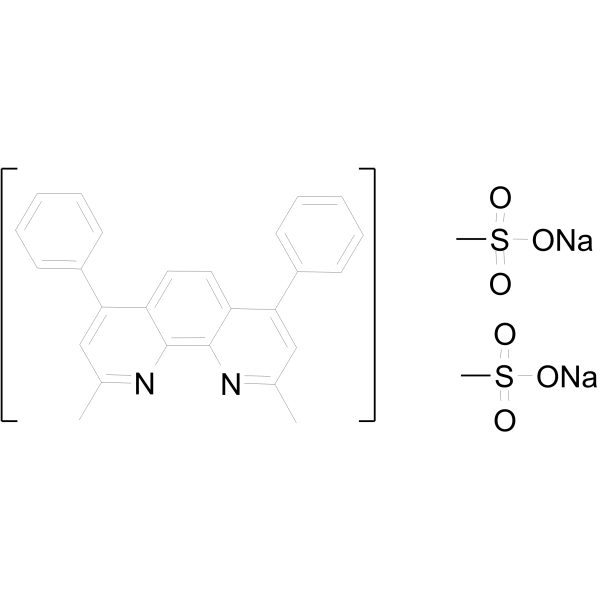
    Bathocuproine disulfonate disodium
    2 Publications Verification

    Biochemical Assay Reagents Others
    Bathocuproine disulfonate disodium (BCS) is an organic compound used as a highly sensitive colorimetric reagent for copper ions in biochemical and analytical applications. It has a bright yellow color and absorbs light at specific wavelengths, so it can be used to detect and quantify trace copper. In biochemical applications, BCS is commonly used to study the role of copper ions in various biological processes. Copper is an essential nutrient for many organisms, but it can also be toxic in high concentrations, so accurate measurement of copper levels is important to understand its impact on living systems. In terms of analysis, BCS is often used in environmental monitoring and water quality testing to detect copper pollution. It can detect copper even at very low concentrations, making it an invaluable tool for identifying potential sources of pollution and assessing the impact of industrial activities on aquatic ecosystems.
    Bathocuproine disulfonate disodium
  • HY-W116336D

    Biochemical Assay Reagents Fungal Bacterial Infection Cancer
    Zinc oxide, <100 nm particle size is a nitrate reductase modulator and growth promoter with plant stress resistance activity and oral toxicity. Zinc oxide, <100 nm particle size acts as a nutrient source for maize plants. By enhancing nitrate reductase activity and reducing free proline levels, it significantly improves plant height, root length and dry matter weight of maize, and its growth-promoting effect is comparable to that of traditional zinc sulfate fertilizer. Zinc oxide, <100 nm particle size induces anemia-related and persistent tissue inflammatory damage, leading to obvious histopathological adverse reactions in the stomach, pancreas, eyes and prostate of rats. Zinc oxide, <100 nm particle size acts as a non-toxic antibacterial agent and selective cytotoxin against multiple bacteria, fungi and spores .
    Zinc oxide, <100 nm particle size
  • HY-W133891

    Peptones, soybean

    Biochemical Assay Reagents Others
    Peptone from soy (peptones, soybean) is a peptone. Peptone from soy provides nitrogen and carbon sources, as well as other nutrients. Peptone from soy can stimulate/regulate the biosynthesis of cyclic eicosanoids. Peptone from soy induces dose-dependent contraction of guinea pig lung parenchyma. Peptone from soy can be used in microbial and cell culture .
    Peptone from soya
  • HY-158361

    Biochemical Assay Reagents Others
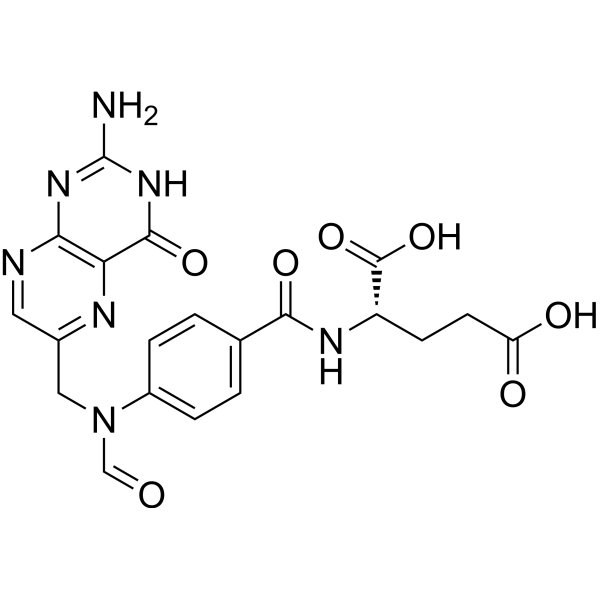
    Malt extract can be used as a nutrient source for culture media. Malt extract is a kind of biological materials or organic compounds that are widely used in life science research .
    Malt extract
  • HY-W039760

    Biochemical Assay Reagents Others
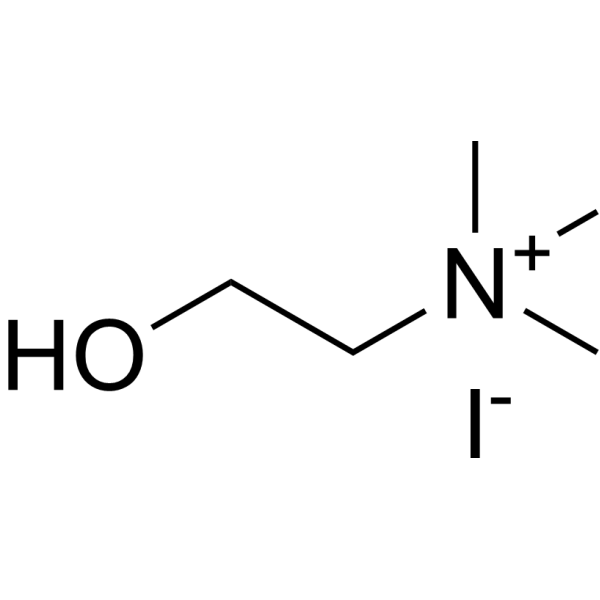
    2-Hydroxy-N,N,N-trimethylethan-1-aminium iodide, also known as choline iodide, is a quaternary ammonium salt commonly used in organic synthesis and biochemical research. It is a water-soluble compound derived from choline, an essential nutrient found in many foods. Choline iodide has been used as a source of choline groups in various chemical reactions and in microbiology as a selective agent for isolating bacteria. In addition, its potential role in cognitive impairment and liver disease has also been studied.
    Choline iodide
  • HY-145504

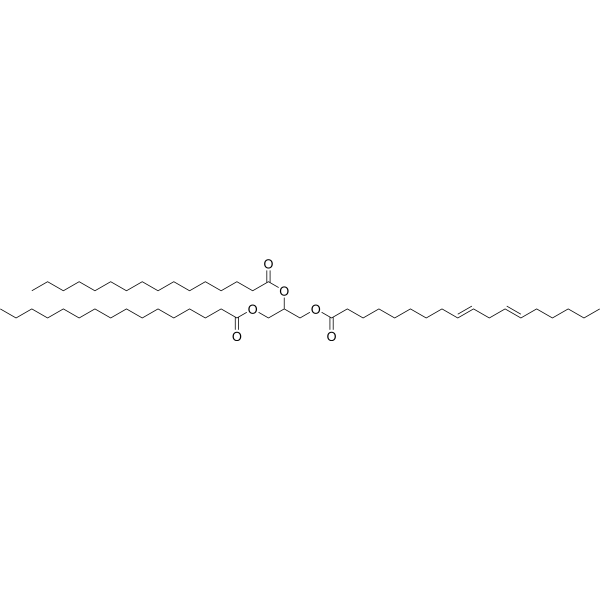
    1,2-Palmitin-3-Linoelaidin

    Biochemical Assay Reagents Metabolic Disease
    12-Dipalmitoyl-3-Linoelaidoyl-rac-glycerol is a triacylglycerol containing palmitic acid (HY-N0830) at the sn-1 and sn-2 positions and linoelaidic acid (HY-W071746) at the sn-3 position. Palmitic acid is a long-chain saturated fatty acid commonly found in both animals and plants. Palmitic acid can induce the expression of glucose-regulated protein 78 (GRP78) and CCAAT/enhancer binding protein homologous protein (CHOP) in in mouse granulosa cells. Linolelaidic acid, an omega-6 trans fatty acid, acts as a source of energy. Linolelaidic acid is an essential nutrient, adding in enteral, parenteral, and infant formulas. Linolelaidic acid can be used for heart diseases research .
    12-Dipalmitoyl-3-Linoelaidoyl-rac-glycerol
  • HY-182832

    Dry skim milk; Non-fat milk solids; Skimmed milk powder

    Biochemical Assay Reagents Others
    Skim milk powder (dry skim milk) is a nutrient source for microbial culture media. It provides a variety of nutrients, including protein, lactose, and minerals, supporting the growth of various microorganisms. Skim milk powder can also be used in the sealing process of Western blotting experiments.
    Skim Milk powder

Inquiry Online

Your information is safe with us. * Required Fields.

Salutation


Country or Region *

Applicant Name *


Organization Name *

Department *


Email Address *


Product Name *

Cat. No.


Requested quantity *

Phone Number *


Remarks

Inquiry Online

Inquiry Information

Product Name:
Cat. No.:
Quantity:
MCE Japan Authorized Agent:

