1. Search Result
Search Result
Results for "

optically active

" in MedChemExpress (MCE) Product Catalog:

23

Inhibitors & Agonists

2

Fluorescent Dyes

6

Biochemical Assay Reagents

1

Peptides

8

Natural
Products

1

Oligonucleotides

Cat. No. Product Name Target Research Areas Chemical Structure
  • HY-111095B

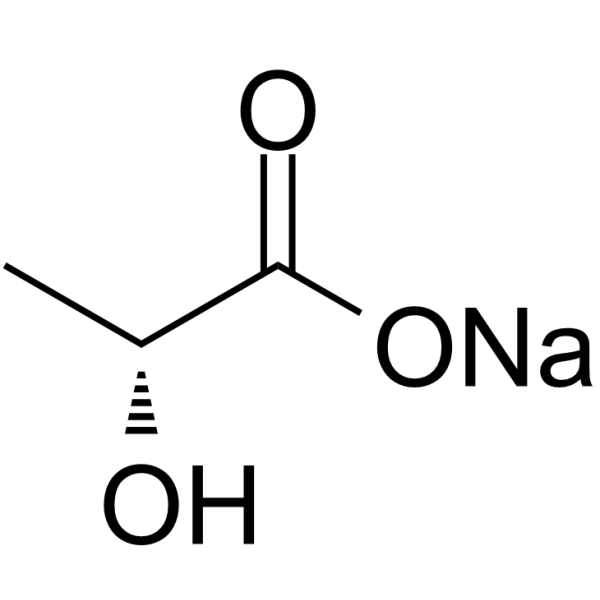
    (R)-2-Hydroxypropionic acid sodium

    Endogenous Metabolite Drug Isomer Neurological Disease Metabolic Disease
    D-(-)-Lactic acid ((R)-2-Hydroxypropionic acid) sodium is an orally active, toxic optical isomer of Lactic acid (HY-B2227), mainly derived from overproduction by intestinal bacteria or exogenous intake. D-(-)-Lactic acid sodium can induce intoxication, characterized by severe metabolic acidosis accompanied by neurological symptoms .
    D-(-)-Lactic acid sodium
  • HY-D0850

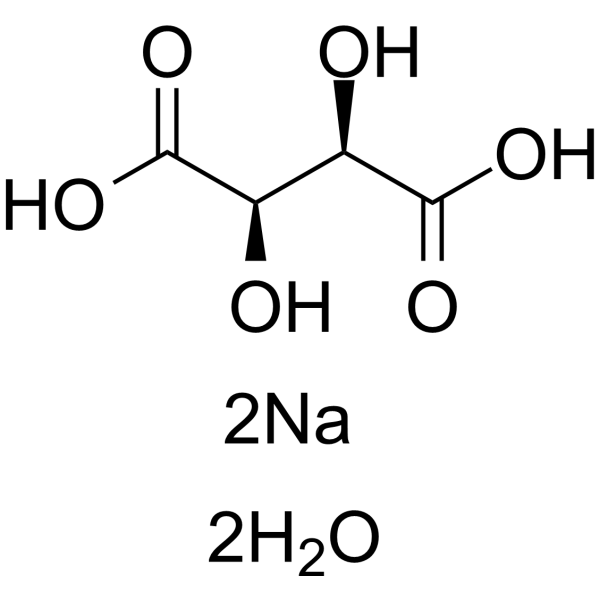
    Sodium tartrate dibasic dihydrate; Sodium tartrate dihydrate

    Phosphatase Endogenous Metabolite Cardiovascular Disease
    Tartaric acid disodium dehydrate (L-(+) -tartaric acid) is an orally active weak organic acid that can be isolated from grapes. Tartaric acid disodium dehydrate has vasodilatory and antihypertensive effects. Tartaric acid disodium dehydrate can be used as flavorings and antioxidants in a range of foods and beverages. Tartaric acid disodium dehydrate can be used in laser frequency doubling and optical limiting applications .
    Tartaric acid disodium dihydrate
  • HY-41982
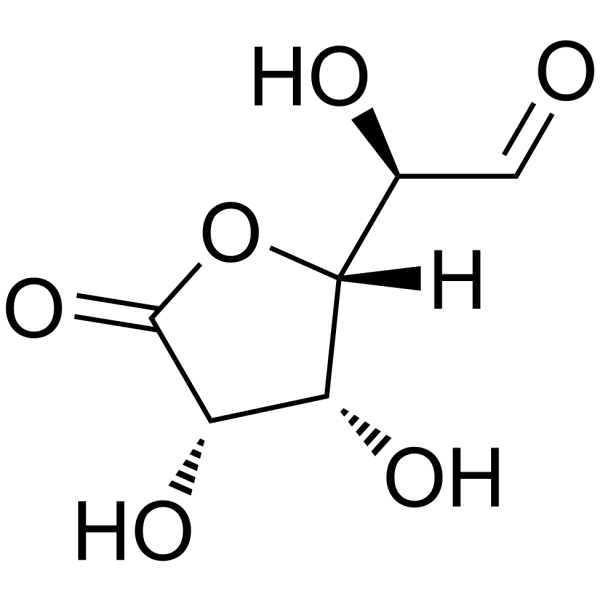
    D-Glucuronic acid lactone
    1 Publications Verification

    D-Glucurono-6,3-lactone; D-Glucurono-γ-lactone; D-Glucuronolactone; Dicurone; Glucoxy; Glucurolactone; Glucurone

    Environmental Pollutants Endogenous Metabolite Drug Derivative Cardiovascular Disease Metabolic Disease
    D-Glucuronic acid lactone (D-Glucurono-6,3-lactone; D-Glucurono-γ-lactone; D-Glucuronolactone; Dicurone; Glucoxy; Glucurolactone; Glucurone) is an endogenous metabolite and a glucuronic acid derivative. D-Glucuronic acid lactone serves as a starting reagent for the synthesis of 2,3,4-tris (tert-butyldimethylsilyl) glucuronic acid trichloroethyl ester, which is used to prepare 1-O-acyl glucuronic acids for the anti-inflammatory agent mL-3000 (HY-B1452), synthesize optically active glucuronic acids, and produce long-chain alkyl glucuronides. D-Glucuronic acid lactone shows potential for use in studies of reversible cerebral vasoconstriction syndrome (RCVS) .
    D-Glucuronic acid lactone
  • HY-D0053

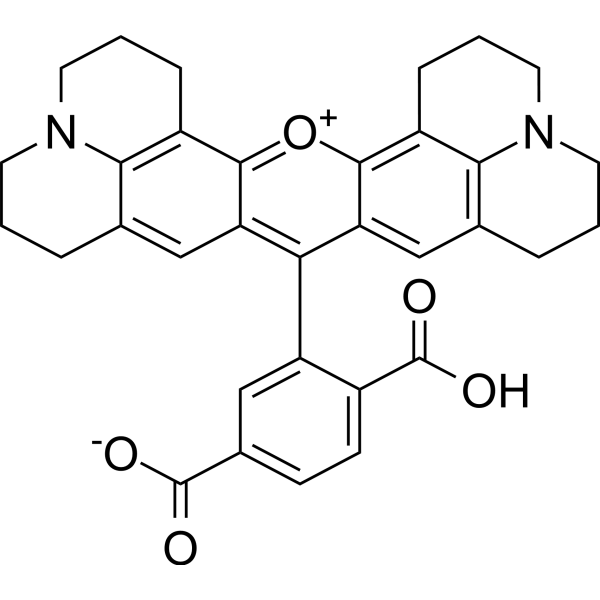
    6-Carboxy-X-rhodamine

    Fluorescent Dye Others
    6-ROX is a selective fluorescent probe and potential inhibitor of COX-2. 6-ROX binds to the active site of COX-2 and inhibits its conversion of arachidonic acid into prostaglandins. 6-ROX is often used in the field of optical imaging related to tumors and inflammation, and helps detect diseased tissues with high expression of COX-2 .
    6-ROX
  • HY-W073013

    MOFs Others
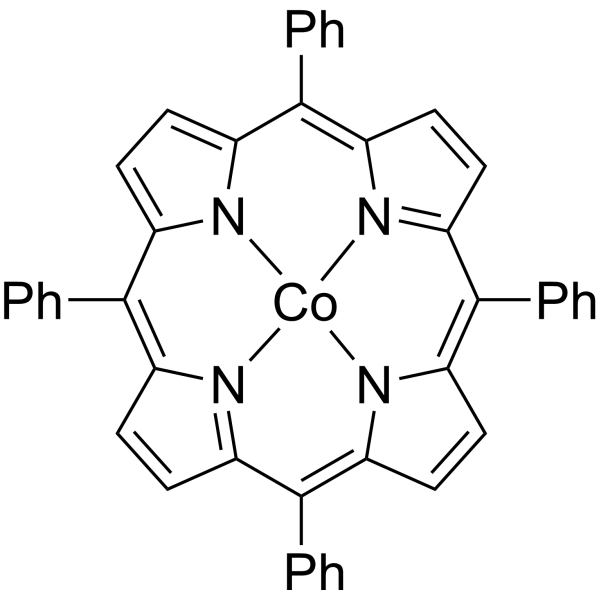
    5,10,15,20-Tetraphenyl-21H,23H-porphine cobalt(II), commonly known as CoTPP or cobalt porphyrin, is a coordination compound. 5,10,15,20-Tetraphenyl-21H,23H-porphine cobalt(II) is widely used in various fields such as catalysis, sensing, and organic electronics because of its unique electronic and optical properties. An efficient catalyst for reactions including oxidation, reduction, and CH bond activation, moreover, it has been used as a fluorescent probe for detecting oxygen content in biological systems and as an active material in organic solar cells.
    Cobalt(II) TPP
  • HY-W007729

    Biochemical Assay Reagents Others
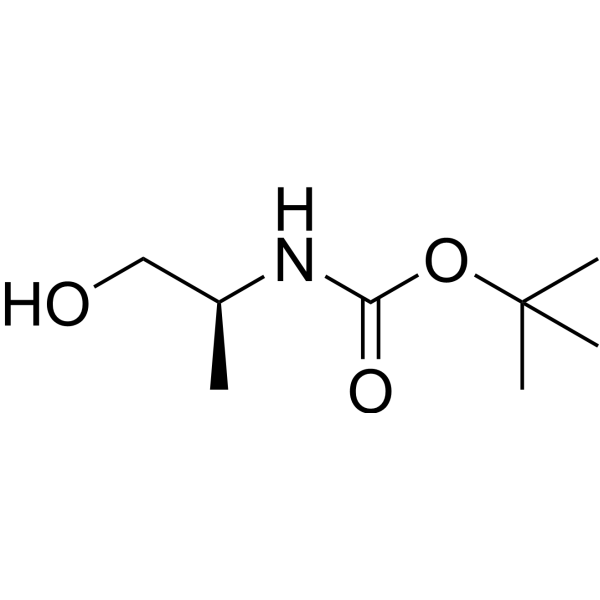
    Boc-L-Alaninol is a Boc-protected chiral amino alcohol. Boc-L-Alaninol can be used in the synthesis of optically active bipyridine-containing polymers .
    Boc-L-Alaninol
  • HY-N7259B

    Others Others
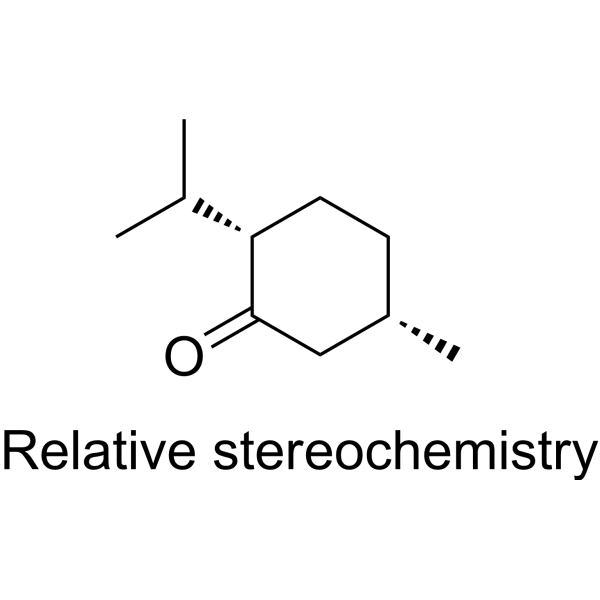
    (±)-Isomenthone is a naturally active compound, a racemate of Isomenthone. (±)-Isomenthone has optical activity and is mainly used to measure the activity .
    (±)-Isomenthone
  • HY-41984

    D-Glucose diacetonide; 1,2:5,6-Diisopropylidene-D-glucose

    Biochemical Assay Reagents Drug Intermediate Others
    Diacetone-D-glucose (D-Glucose diacetonide) is a sugar-derived secondary alcohol that serves as an important pharmaceutical intermediate for the synthesis of other active compounds .
    Diacetone-D-glucose
  • HY-W109973

    L-(+)-Tartaric acid diammonium

    Endogenous Metabolite Cardiovascular Disease
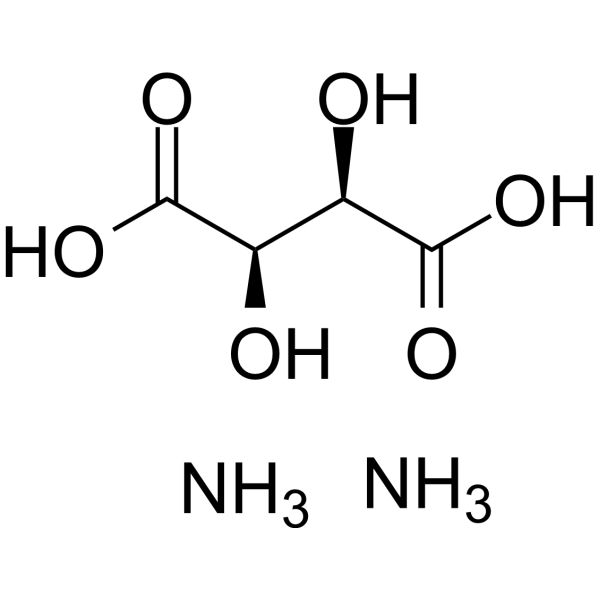
    L-Tartaric acid diammonium (L-(+) -tartaric acid) is an orally active weak organic acid that can be isolated from grapes. L-Tartaric acid diammonium has vasodilatory and antihypertensive effects. L-Tartaric acid diammonium can be used as flavorings and antioxidants in a range of foods and beverages. L-Tartaric acid diammonium can be used in laser frequency doubling and optical limiting applications .
    L-Tartaric acid diammonium
  • HY-D1460

    Bacterial β-glucuronidase Infection
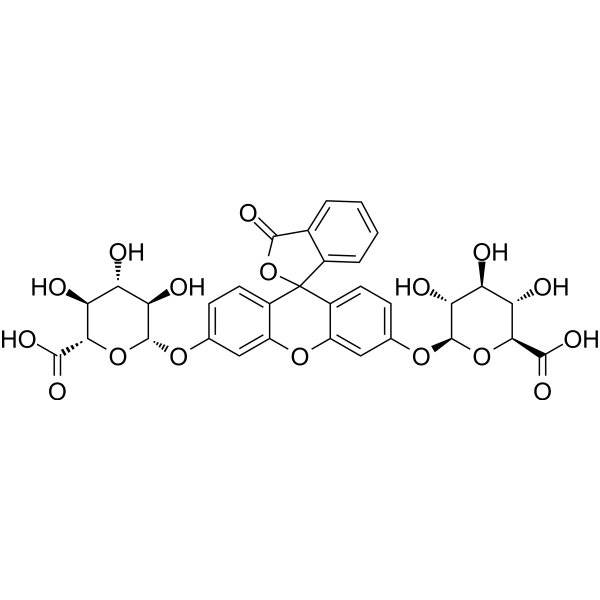
    Fluorescein Di-β-D-Glucuronide is an orally active fluorescent probe substrate and an indicator of β-glucuronidase (βG) activity in intestinal bacteria. Fluorescein Di-β-D-Glucuronide can be used for non-invasive time-lapse optical imaging of βG activity in intestinal bacteria in nude mice. Fluorescein Di-β-D-Glucuronide supports the quantitative analysis of bacterial βG enzyme activity and inhibition .
    Fluorescein Di-β-D-Glucuronide
  • HY-W141955

    Amino Acid Derivatives Others
    γ-Carboxy-DL-glutamic acid is a glutamic acid derivative. γ-Carboxy-DL-glutamic acid is optically active .
    γ-Carboxy-DL-glutamic acid
  • HY-N10637

    Others Others
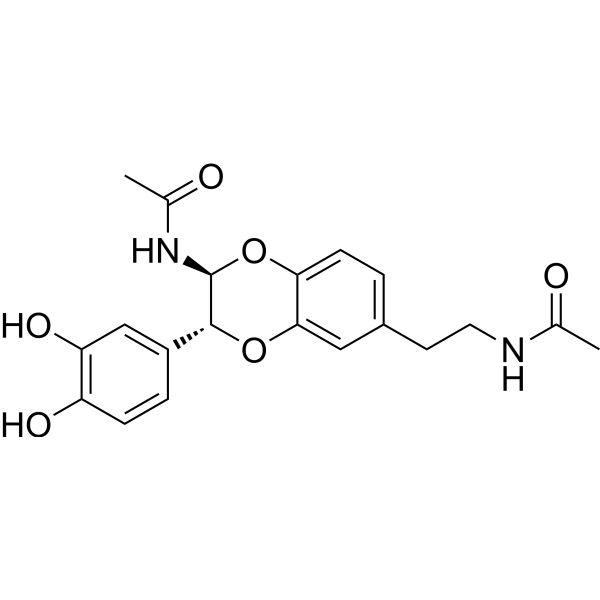
    N-Acetyldopamine dimer-1 is a 2-(3',4'-dihydroxyphenyl)-1,4-benzodioxane derivative. N-Acetyldopamine dimer-1 is optically active, can be isolated from crude agent "Zentai," a cast-off shell of the cicada of Cryptotympana sp. (Cicadidae) .
    N-Acetyldopamine dimer-1
  • HY-W100434

    Drug Intermediate Others
    1-(4-Methylphenyl)ethanol is an aromatic secondary alcohol that can be synthesized into optically active, biodegradable polymers through chemical enzymatic methods .
    1-(4-Methylphenyl)ethanol
  • HY-Z15823

    Dexverapamil

    Calcium Channel Potassium Channel Somatostatin Receptor Arrestin Apoptosis P-glycoprotein Metabolic Disease Inflammation/Immunology
    (R)-Verapamil (Dexverapamil) is an optically enantiomer of the oral-active Verapamil (HY-14275). (R)-Verapamil has a relatively low affinity for L-type calcium channels (Cav1.2) (IC50 > 300 μM), and its IC50 for sodium channels (sodium channel) is 3.19 μM. (R)-Verapamil exhibits SSTR2 agonistic activity, with an EC50 of 1.3 μM. (R)-Verapamil significantly downregulates the expression of TXNIP protein in diabetic mouse models and significantly inhibits β-cell apoptosis (apoptosis), effectively controlling blood sugar. (R)-Verapamil can be used as a PET tracer for the function of P-glycoprotein (P-gp) .
    (R)-Verapamil
  • HY-W040430A

    Endogenous Metabolite Others
    (S)-Nornicotine (hydrochloride) is an optically active nornicotine compound, can be used for research of dopamine-related conditions and disease states .
    (S)-Nornicotine hydrochloride
  • HY-152106A

    Phosphodiesterase (PDE) Cardiovascular Disease
    (+)-BAY-7081 is an optical isomer of BAY-7081 (HY-152106). BAY-7081 is a potent, selective, orally active and soluble cyanopyridone-based PDE9A inhibitor with an IC50 of 15 nM .
    (+)-BAY-7081
  • HY-125700

    (-)-Bao Gong Teng A

    mAChR Cardiovascular Disease Neurological Disease
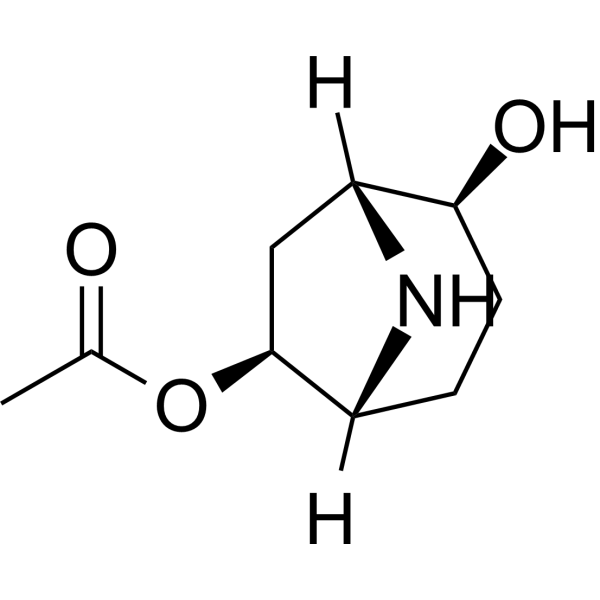
    Baogongteng A ((-)-Bao Gong Teng A) is an optically active tropane alkaloid with hypotensive and miotic activity, and can be isolated from the Chinese herb Erycibe obtusifolia Benth. Baogongteng A is also a muscarinic agonist. Baogongteng A can be used for cardiovascular and glaucoma research .
    Baogongteng A
  • HY-Y0293R

    L-(+)-Tartaric acid (Standard)

    Reference Standards Endogenous Metabolite Cardiovascular Disease
    L-Tartaric acid (Standard) is the analytical standard of L-Tartaric acid. This product is intended for research and analytical applications. L-tartaric acid (L-(+) -tartaric acid) is an orally active weak organic acid that can be isolated from grapes. L-Tartaric acid has vasodilatory and antihypertensive effects. L-Tartaric acid can be used as flavorings and antioxidants in a range of foods and beverages. L-Tartaric acid can be used in laser frequency doubling and optical limiting applications .
    L-Tartaric acid (Standard)
  • HY-111095BR

    (R)-2-Hydroxypropionic acid sodium (Standard)

    Reference Standards Endogenous Metabolite Drug Isomer Neurological Disease Metabolic Disease
    D-(-)-Lactic acid ((R)-2-Hydroxypropionic acid) sodium (Standard) is the analytical standard of Malvidin-3-glucoside sodium. This product is intended for research and analytical applications. D-(-)-Lactic acid sodium is an orally active, toxic optical isomer of Lactic acid (HY-B2227), mainly derived from overproduction by intestinal bacteria or exogenous intake. D-(-)-Lactic acid sodium can induce intoxication, characterized by severe metabolic acidosis accompanied by neurological symptoms .
    D-(-)-Lactic acid sodium (Standard)
  • HY-D0850R

    Sodium tartrate dibasic dihydrate (Standard); Sodium tartrate dihydrate (Standard)

    Reference Standards Phosphatase Endogenous Metabolite Cardiovascular Disease
    Tartaric acid (disodium dihydrate) (Standard) is the analytical standard of Tartaric acid (disodium dihydrate). This product is intended for research and analytical applications. Tartaric acid disodium dehydrate (L-(+) -tartaric acid) is an orally active weak organic acid that can be isolated from grapes. Tartaric acid disodium dehydrate has vasodilatory and antihypertensive effects. Tartaric acid disodium dehydrate can be used as flavorings and antioxidants in a range of foods and beverages. Tartaric acid disodium dehydrate can be used in laser frequency doubling and optical limiting applications [4].
    Tartaric acid disodium dihydrate (Standard)
  • HY-163151

    PI3K Akt p38 MAPK Neurological Disease Inflammation/Immunology
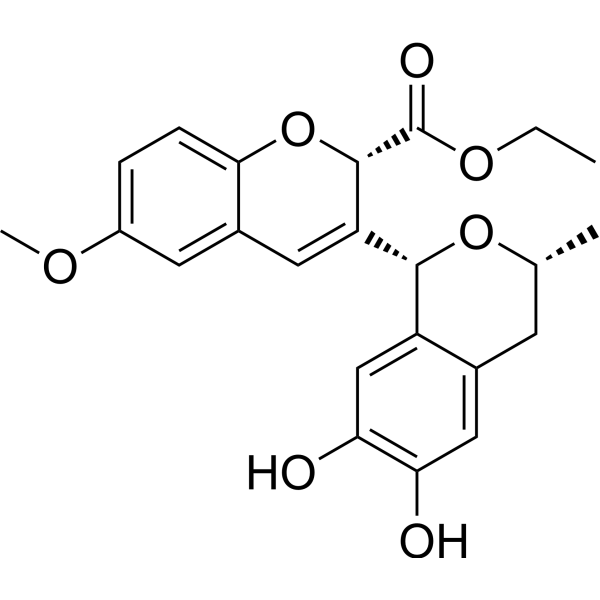
    JE-133 is an optically active isochromane-2H-chromene conjugate. JE-133 exhibits antioxidant and anti-inflammatory activities. JE-133 is a neuroprotective agent that effectively inhibits neuronal oxidative damage associated with PI3K/Akt and MAPK signaling pathways. JE-133 can also inhibit lipopolysaccharide (LPS) (HY-D1056)-induced neuroinflammation by regulating JAK/STAT and Nrf2 signaling pathways .
    JE-133
  • HY-15191B

    (S)-BI-97C1

    Bcl-2 Family Cancer
    (S)-Sabutoclax ((S)-BI-97C1), an optically pure apogossypol derivative, is pan-active inhibitor of antiapoptotic B-cell lymphoma/leukemia-2 (Bcl-2) family proteins. (S)-Sabutoclax (Compound II) inhibits the binding of BH3 peptides to Bcl-XL, Bcl-2, Mcl-1, and Bfl-1 with IC50 values of 0.31, 0.32, 0.20, and 0.62 μM, respectively. (S)-Sabutoclax also potently inhibits cell growth of human prostate cancer, lung cancer, and lymphoma cell lines with EC50 values of 0.13, 0.56, and 0.049 μM, respectively. (S)-Sabutoclax can be used for the research of apoptosis-based therapies against cancer .
    (S)-Sabutoclax
  • HY-135614

    (S)-(+)-Lunacrine

    Biochemical Assay Reagents Others
    (+)-Lunacrine is an optically active compound.
    (+)-Lunacrine

Inquiry Online

Your information is safe with us. * Required Fields.

Salutation


Country or Region *

Applicant Name *


Organization Name *

Department *


Email Address *


Product Name *

Cat. No.


Requested quantity *

Phone Number *


Remarks

Inquiry Online

Inquiry Information

Product Name:
Cat. No.:
Quantity:
MCE Japan Authorized Agent:

