1. Search Result
Search Result
Results for "

oral carcinogenesis

" in MedChemExpress (MCE) Product Catalog:

8

Inhibitors & Agonists

3

Natural
Products

1

Isotope-Labeled Compounds

Cat. No. Product Name Target Research Areas Chemical Structure
  • HY-111355B

    Sirtuin Endogenous Metabolite PKC AMPK DOCK Metabolic Disease Inflammation/Immunology Cancer
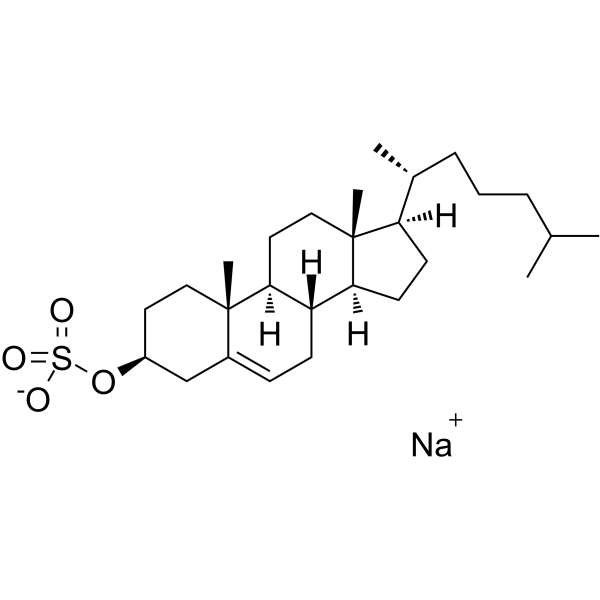
    Cholesterol sulfate sodium is a naturally occurring, orally active cholesterol derivative that is widely distributed in various tissues and body fluids. Cholesterol sulfate sodium acts as a DOCK2 inhibitor, with IC50 values of 2 μM and 2.9 μM against mouse and human targets, respectively. Cholesterol sulfate sodium restricts excessive neutrophil infiltration and alleviates intestinal inflammation and damage. Cholesterol sulfate sodium serves as an activator of protein kinase C (PKC), which promotes squamous cell differentiation and inhibits skin carcinogenesis. Cholesterol sulfate sodium regulates cholesterol homeostasis and cellular metabolism by activating the AMPK-Sirt1 pathway. Cholesterol sulfate sodium can be used in research related to actinic keratitis, ulcerative colitis, skin cancer, and other conditions .
    Cholesteryl sulfate sodium
  • HY-111355

    Endogenous Metabolite DOCK PKC AMPK Sirtuin Metabolic Disease Inflammation/Immunology Cancer
    Cholesterol sulfate is a naturally occurring, orally active cholesterol derivative that is widely distributed in various tissues and body fluids. Cholesterol sulfate acts as a DOCK2 inhibitor, with IC50 values of 2 μM and 2.9 μM against mouse and human targets, respectively. Cholesterol sulfate restricts excessive neutrophil infiltration and alleviates intestinal inflammation and damage. Cholesterol sulfate serves as an activator of protein kinase C (PKC), which promotes squamous cell differentiation and inhibits skin carcinogenesis. Cholesterol sulfate regulates cholesterol homeostasis and cellular metabolism by activating the AMPK-Sirt1 pathway. Cholesterol sulfate can be used in research related to actinic keratitis, ulcerative colitis, skin cancer, and other conditions .
    Cholesterol sulfate
  • HY-111355S

    Isotope-Labeled Compounds Sirtuin Endogenous Metabolite PKC AMPK DOCK Metabolic Disease Inflammation/Immunology Cancer
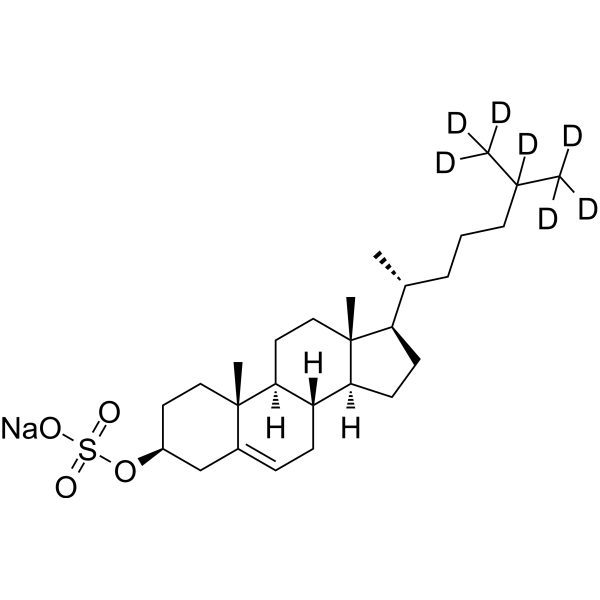
    Cholesterol sulfate sodium-d7 is the deuterium labeled Cholesterol sulfate sodium. Cholesterol sulfate sodium is a naturally occurring, orally active cholesterol derivative that is widely distributed in various tissues and body fluids. Cholesterol sulfate sodium acts as a DOCK2 inhibitor, with IC50 values of 2 μM and 2.9 μM against mouse and human targets, respectively. Cholesterol sulfate sodium restricts excessive neutrophil infiltration and alleviates intestinal inflammation and damage. Cholesterol sulfate sodium serves as an activator of protein kinase C (PKC), which promotes squamous cell differentiation and inhibits skin carcinogenesis. Cholesterol sulfate sodium regulates cholesterol homeostasis and cellular metabolism by activating the AMPK-Sirt1 pathway. Cholesterol sulfate sodium can be used in research related to actinic keratitis, ulcerative colitis, skin cancer, and other conditions.
    Cholesterol sulfate-d7 sodium
  • HY-141439

    Keap1-Nrf2 Quinone Reductase Glutathione S-transferase Apoptosis TNF Receptor Inflammation/Immunology Cancer
    TBE 31 is an orally active Keap1/Nrf2 pathway activator and NQO1 inducer with a Dm value of 1.1 nM for NQO1. TBE 31 binds to cysteine residues of Keap1, inhibits ubiquitination and degradation of Nrf2, thereby activating the expression of ARE-dependent genes. TBE 31 induces cytoprotective enzymes including NQO1 and GST isoforms, promotes Nrf2 accumulation, and upregulates Nrf2-regulated genes related to antioxidation and lipid metabolism. TBE 31 inhibits pro-inflammatory responses, formation of AFB1-DNA adducts, endoplasmic reticulum stress, cell apoptosis (apoptosis), hepatic fibrosis, oxidative stress, and the expression of ChREBP. TBE 31 reduces the number of tumors in a mouse model of ultraviolet-induced skin carcinogenesis. TBE 31 enhances nerve growth factor-induced neurite outgrowth. TBE 31 attenuates LPS-induced serum TNF-α levels and immobility time in mice. TBE 31 can be used in research related to liver cancer, skin cancer, inflammation-related depression, and non-alcoholic steatohepatitis .
    TBE 31
  • HY-127149

    Ro 40-8757

    Apoptosis Reactive Oxygen Species (ROS) Caspase Cancer
    Mofarotene (Ro 40-8757), an arotinoid, is anticancer compound. Mofarotene induces apoptosis, associated with mitochondrial membrane depolarization, activation of caspase-3 and -9, and enhanced production of reactive oxygen species. Mofarotene inhibits hematopoiesis in vitro by inhibiting maturation from primitive progenitor cells .
    Mofarotene
  • HY-106162A

    NO Synthase Cardiovascular Disease Inflammation/Immunology Cancer
    ONO-1714 is an orally active nitric oxide synthase inhibitor. ONO-1714 attenuates endotoxin-induced acute lung injury, reduces intestinal ischemia–reperfusion injury, represses biliary carcinogenesis .
    ONO-1714
  • HY-N2457

    (25R)-3β-Hydroxy-5α-spirostan-6-one; 6-Oxotigogenin

    Reactive Oxygen Species (ROS) Inflammation/Immunology Cancer
    Laxogenin ((25R)-3β-Hydroxy-5α-spirostan-6-one; 6-Oxotigogenin) is an orally active myostatin (myostatin) inhibitor. Laxogenin promotes myogenesis and enhances the formation and maturation of myotubes. Laxogenin downregulates ROS. When added to the culture medium for cultured meat production, Laxogenin improves the texture, quality and nutritional value of cultured meat. Laxogenin reduces the average number of tumors in a two-stage mouse lung carcinogenesis model. Laxogenin can be used in research related to myogenesis and lung cancer .
    Laxogenin
  • HY-177995

    Monoisoamyl meso-2,3-dimercaptosuccinic acid

    Reactive Oxygen Species (ROS) SOD Neurological Disease Cancer
    MiADMSA (Monoisoamyl meso-2,3-dimercaptosuccinic acid) is an orally active thiol chelator that can effectively remove heavy metals such as arsenic and lead from the body of animals. Arsenic binds with two vicinal sulfhydryl groups available in MiADMSA leading to marked reduction in body arsenic burden and also marked reduction in various oxidative stress parameters and antioxidant enzymes like-ROS, nitrite, TBARS, GSH, SOD and catalase. MiADMSA attenuates urinary bladder carcinogenesis, protects against oxidative stress, ameliorates copper-induced histopathology, reverses neurotoxicity, and is safe in animals. MiADMSA can be used in studies of bladder cancer, arsenic, and lead-induced developmental neurotoxicity .
    MiADMSA

Inquiry Online

Your information is safe with us. * Required Fields.

Salutation


Country or Region *

Applicant Name *


Organization Name *

Department *


Email Address *


Product Name *

Cat. No.


Requested quantity *

Phone Number *


Remarks

Inquiry Online

Inquiry Information

Product Name:
Cat. No.:
Quantity:
MCE Japan Authorized Agent:

