9 Results for "

penicillin-binding protein 2

" in MedChemExpress (MCE) Product Catalog:
Products (9)

9 Results for "penicillin-binding protein 2" in MCE Product Catalog:

11
11 Publications Verification
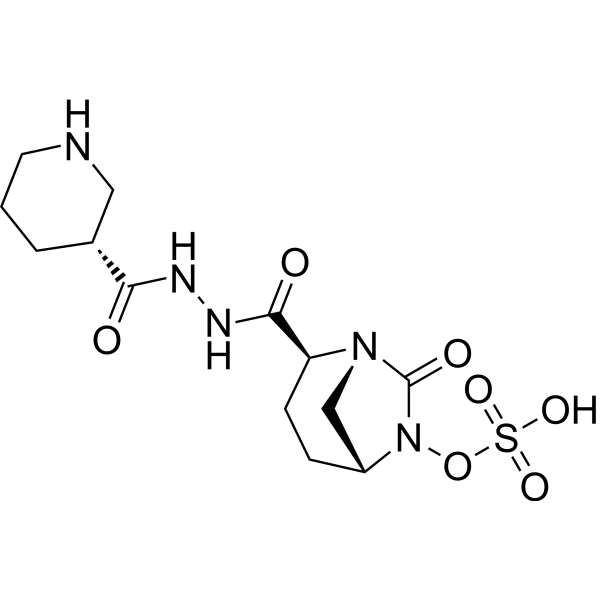
Cat. No.: HY-120859
CAS No.: 1436861-97-0
Purity:  99.32%
Synonyms: WCK-5107
Zidebactam (WCK-5107) is a potent β-lactamase inhibitor . Zidebactam also is a penicillin-binding protein2 (PBP2) inhibitor with an IC50 of 0.26 μg/mL .
loading...
    loading...
1
1 Cited Publications
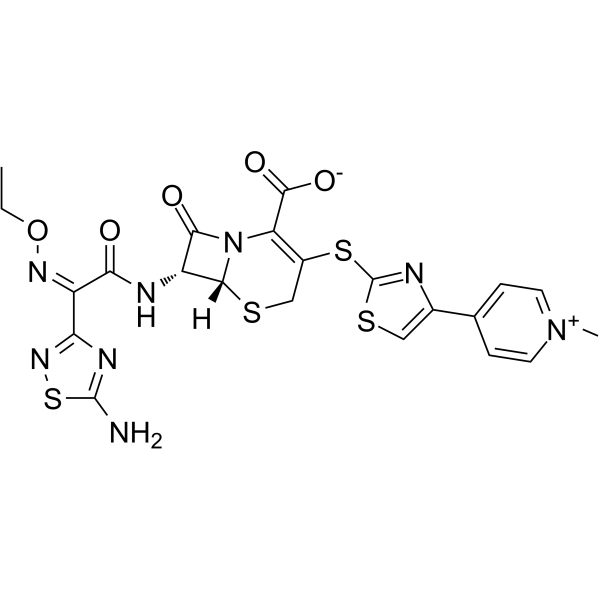
Cat. No.: HY-105049
CAS No.: 189345-04-8
Purity:  96.14%
Synonyms: T-91825; PPI-0903M
Target:  

Bacterial Antibiotic

Research Areas:  

Infection

Ceftaroline (T-91825) is a cephalosporin compound and the active form of Ceftaroline fosamil (HY-14737). Ceftaroline exhibits activity against Gram-positive bacteria, Gram-negative bacteria, and some anaerobic bacteria. Ceftaroline binds to penicillin-binding proteins 2 and 2A, thereby inhibiting the synthesis of bacterial peptidoglycan and cell wall, and acts as a bactericide, synergist, and resistance inhibitor. Ceftaroline can be used in research related to complicated skin and soft tissue infections, community-acquired pneumonia, Enterococcus faecalis infective endocarditis, and bacterial infections .
loading...
    loading...
1
1 Cited Publications
Cat. No.: HY-105049A
Ceftaroline hydrochloride is a cephalosporin compound and the active form of Ceftaroline fosamil (HY-14737). Ceftaroline hydrochloride exhibits activity against Gram-positive bacteria, Gram-negative bacteria, and some anaerobic bacteria. Ceftaroline hydrochloride binds to penicillin-binding proteins 2 and 2A, thereby inhibiting the synthesis of bacterial peptidoglycan and cell wall, and acts as a bactericide, synergist, and resistance inhibitor. Ceftaroline hydrochloride can be used in research related to complicated skin and soft tissue infections, community-acquired pneumonia, Enterococcus faecalis infective endocarditis, and bacterial infections .
loading...
    loading...
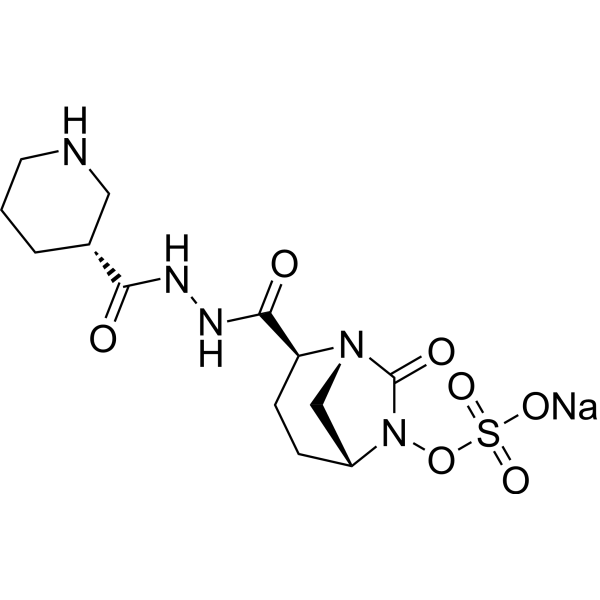
Cat. No.: HY-120859A
CAS No.: 1706777-46-9
Synonyms: WCK-5107 sodium salt
Zidebactam sodium salt (WCK-5107 sodium salt) is a potent β-lactamase inhibitor . Zidebactam also is a penicillin-binding protein2 (PBP2) inhibitor with an IC50 of 0.26 μg/mL .
loading...
    loading...
Cat. No.: HY-120859R
CAS No.: 1436861-97-0
Synonyms: WCK-5107 (Standard)
Zidebactam (Standard) is the analytical standard of Zidebactam. This product is intended for research and analytical applications. Zidebactam (WCK-5107) is a potent β-lactamase inhibitor . Zidebactam also is a penicillin-binding protein2 (PBP2) inhibitor with an IC50 of 0.26 μg/mL .
loading...
    loading...
Cat. No.: HY-120366
CAS No.: 1452460-79-5
WCK-5153 is a Penicillin-Binding Protein 2 (PBP2) inhibitor with an IC50 of 0.14 μg/ml (for P. aeruginosa PBP2) and acts as a β-lactam enhancer against Pseudomonas aeruginosa. WCK-5153 can be used in studies of multidrug-resistant (MDR) pathogens .
loading...
    loading...
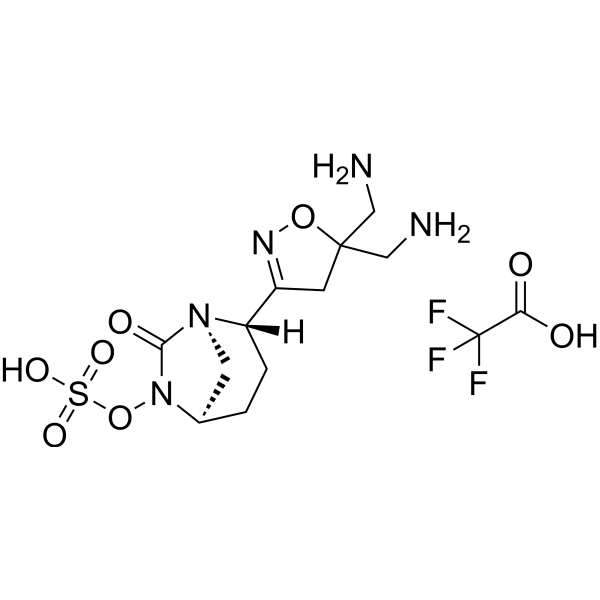
Cat. No.: HY-139699
CAS No.: 2842084-52-8
Synonyms: LCB18-055
GT-055 (LCB18-055) is a broad-spectrum β-lactamase inhibitor and penicillin-binding protein 2 (PBP2) inhibitor. GT-055 inactivates β-lactamase, protects GT-1 from hydrolysis, and binds tightly to PBP2, thereby inhibiting cell wall biosynthesis. GT-055 can be used for research on bacterial infections .
loading...
    loading...
Cat. No.: HY-187939
CAS No.: 2092930-66-8
Synonyms: LCB18-055 free base
GT-055 free base (LCB18-055 free base) is a broad-spectrum β-lactamase inhibitor and penicillin-binding protein 2 (PBP2) inhibitor. GT-055 free base inactivates β-lactamase, protects GT-1 from hydrolysis, and binds tightly to PBP2, thereby inhibiting cell wall biosynthesis. GT-055 free base can be used for research on bacterial infections .
loading...
    loading...
Cat. No.: HY-105049B
CAS No.: 614758-10-0
Synonyms: T-91825 chloride hydrochloride; PPI-0903M chloride hydrochloride
Ceftaroline chloride hydrochloride (T-91825 chloride hydrochloride) is a cephalosporin compound and the active form of Ceftaroline fosamil (HY-14737). Ceftaroline chloride hydrochloride exhibits activity against Gram-positive bacteria, Gram-negative bacteria, and some anaerobic bacteria. Ceftaroline chloride hydrochloride binds to penicillin-binding proteins 2 and 2A, thereby inhibiting the synthesis of bacterial peptidoglycan and cell wall, and acts as a bactericide, synergist, and resistance inhibitor. Ceftaroline chloride hydrochloride can be used in research related to complicated skin and soft tissue infections, community-acquired pneumonia, Enterococcus faecalis infective endocarditis, and bacterial infections .
loading...
    loading...

