1. Search Result
Search Result
Results for "

phosphatidylcholine lipid

" in MedChemExpress (MCE) Product Catalog:

21

Inhibitors & Agonists

1

Fluorescent Dyes

5

Biochemical Assay Reagents

1

Peptides

4

Natural
Products

2

Isotope-Labeled Compounds

7

Oligonucleotides

Cat. No. Product Name Target Research Areas Chemical Structure
  • HY-125854
    Phosphatidylcholines, egg
    2 Publications Verification

    Liposome Cholinesterase (ChE) Monoamine Oxidase Apoptosis Neurological Disease Metabolic Disease Inflammation/Immunology
    Phosphatidylcholines, egg are a type of phosphatidylcholine that can be isolated and extracted from eggs, primarily present in egg yolks. As a major phospholipid component of cell membranes, Phosphatidylcholines, egg play a key role in providing nutrition and protection to the body. Phosphatidylcholines, egg can inhibit oxidative stress and neurotoxicity, exerting neuroprotective effects. Additionally, Phosphatidylcholines, egg can suppress the lymphatic absorption of cholesterol in the intestine and are also used in research on intestinal lipid absorption .
    Phosphatidylcholines, egg
  • HY-P5282

    Acyltransferase Cardiovascular Disease Metabolic Disease
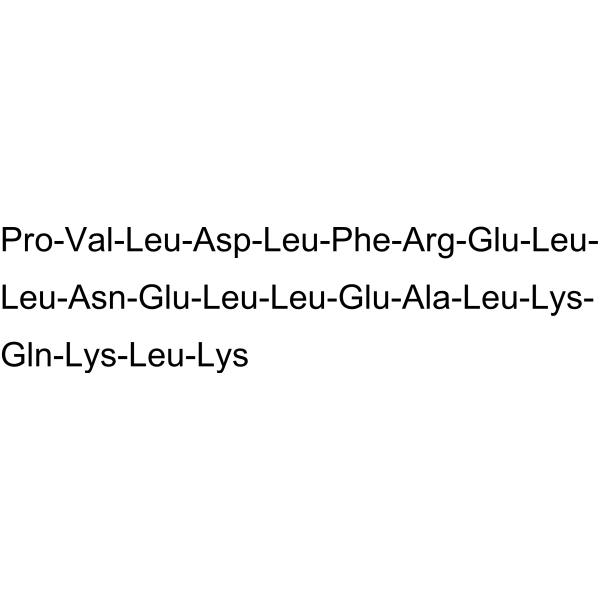
    ApoA-I mimetic peptide is an ApoA-I mimetic peptide. ApoA-I mimetic peptide has good phosphatidylcholine: cholesterol acyltransferase (LCAT) activation activity. ApoA-I mimetic peptide can be used to synthesize peptide/lipid complexes. ApoA-I mimetic peptide can be used in atherosclerosis research. (The sequence is: PVLDLFRELLNELLEALKQKLK) .
    ApoA-I mimetic peptide
  • HY-154487

    Biochemical Assay Reagents Neurological Disease
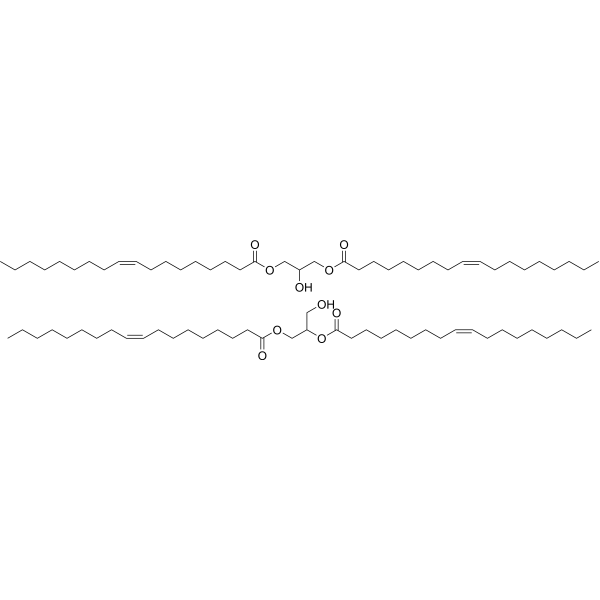
    Glycerol dioleate is a lipid capable of forming Lyotropic Liquid Crystal (LLC). When formulated with phosphatidylcholine and exposed to aqueous media, glycerol dioleate constructs an inverted hexagonal (HII) phase structure with sustained-release properties. The in-situ forming gel prepared by optimizing glycerol dioleate with phosphatidylcholine and N-methyl-2-pyrrolidone enables stable release of Risperidone (HY-11018) for up to 60 days in vitro and in vivo. Glycerol dioleate causes minimal side effects in rabbits, making it an ideal carrier component for the development of antischizophrenia agents .Note: Lyotropic liquid crystals (Lyotropic Liquid Crystal, LLC) are ordered fluid phases self-assembled by amphipathic molecules (e.g., lipids, surfactants) in solvents (usually water) at specific concentrations .
    Glycerol dioleate
  • HY-N7814
    2-Hydroxypalmitic acid
    1 Publications Verification

    Endogenous Metabolite Drug Intermediate Infection
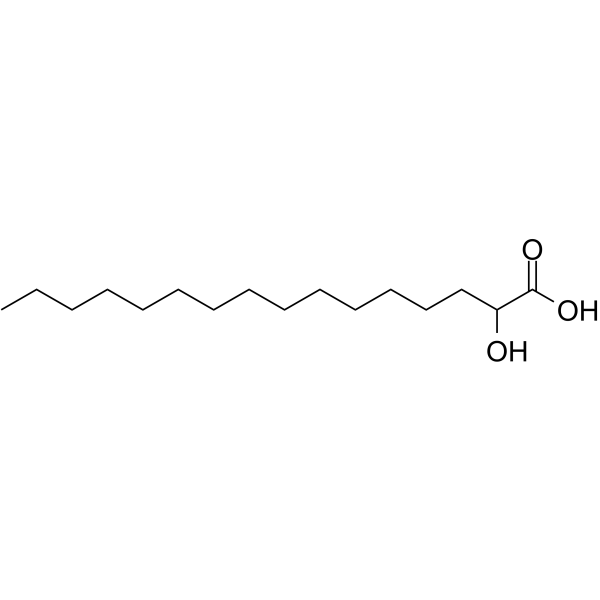
    2-Hydroxypalmitic acid is an intermediate in the phytosphingosine metabolic pathway. 2-Hydroxypalmitic acid is exclusively incorporated into sphingolipids and not used for other lipids. 2-Hydroxypalmitic acid promotes the production of odd-carbon phosphatidylcholine species. 2-Hydroxypalmitic acid is applicable to studies of Saccharomyces cerevisiae infection .
    2-Hydroxypalmitic acid
  • HY-112747

    LPI; PE (soy)

    Phospholipase Infection
    Soy PE (LPI) is the most abundant phospholipid in prokaryotes and the second most abundant found in the membrane of mammalian, plant, and yeast cells, comprising approximately 25% of total mammalian phospholipids. In the brain, phosphatidylethanolamine comprises almost half of the total phospholipids. It is synthesized mainly through the cytidine diphosphate-ethanolamine and phosphatidylserine decarboxylation pathways, which occur in the endoplasmic reticulum (ER) and mitochondrial membranes, respectively. It is a precursor in the synthesis of phosphatidylcholine and arachidonoyl ethanolamide and is a source of ethanolamine used in various cellular functions. In E.coli, phosphatidylethanolamine deficiency prevents proper assembly of lactose permease, suggesting a role as a lipid chaperone. It is a cofactor in the propagation of prions in vitro and can convert recombinant mammalian proteins into infectious molecules even in the absence of RNA. This product contains phosphatidylethanolamine molecular species with variable fatty acyl chain lengths at the sn-1 and sn-2 positions .
    Soy PE
  • HY-124370

    9Z,11E-CLA; Methyl 9(Z),11(E)-octadecadienoate; (9Z,11E)-SFE 19:2

    Endogenous Metabolite Cardiovascular Disease Cancer
    9 (Z),11 (E)-Conjugated linoleic acid methyl ester (9Z,11E-CLA; Methyl 9 (Z),11 (E)-octadecadienoate; (9Z,11E)-SFE 19:2) is an isomer of Linoleic acid (HY-N0729), and is a conjugated linoleic acid mainly found in meat and dairy products. Conjugated linoleic acid is a bioactive fatty acid that improves body composition, enhances immune system function, and exhibits anti-cancer and anti-atherosclerotic effects .
    9(Z),11(E)-Conjugated linoleic acid methyl ester
  • HY-W440982

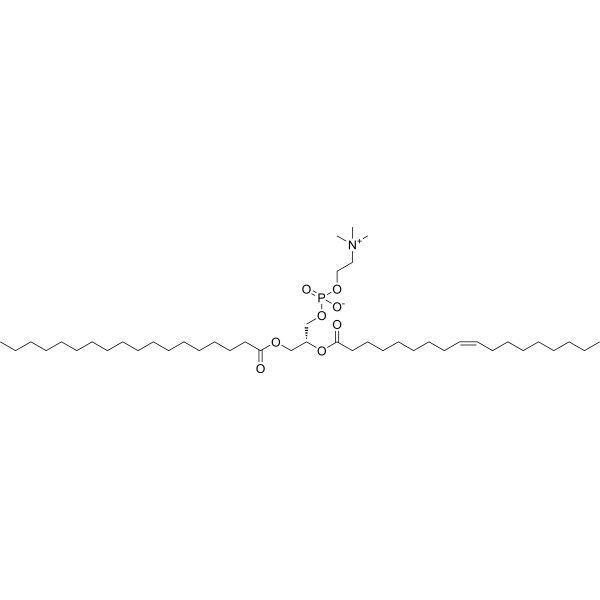
    PC(18:0/18:1); 2-Oleoyl-1-stearoyl-sn-glycero-3-phosphocholine

    Liposome Others
    SOPC (PC (18:0/18:1)) is a phosphatidylcholine lipid, which is an unsaturated phospholipid containing a cis double bond. When SOPC binds to Imatinib (HY-15463), Imatinib easily penetrates into its unsaturated liposome bilayer structure, and SOPC forms ordered, larger parallel stripe domains .
    SOPC
  • HY-W019833

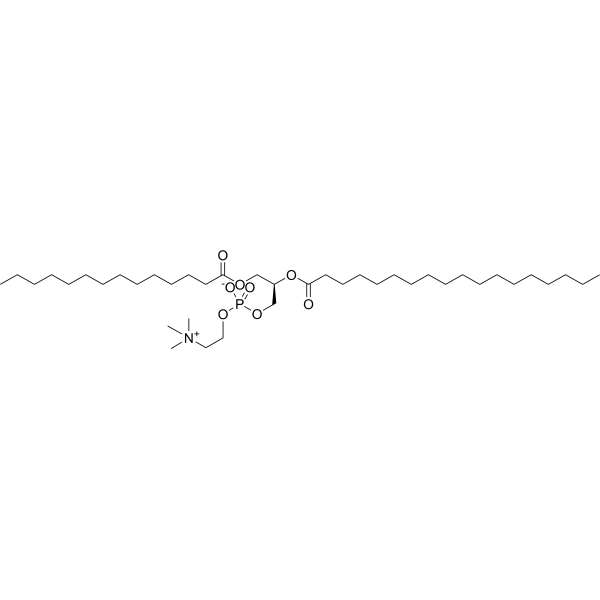
    PC(14:0/18:0); 1-Myristoyl-2-stearoyl-sn-glycero-3-phosphocholine

    Endogenous Metabolite Metabolic Disease
    MSPC is an asymmetrical phosphatidylcholine containing a myristic acid (14:0) at the sn-1 position and a stearic acid (18:0) at the sn-2 position. It can self assemble in water to form lipid bilayers. Reagent grade, for research purpose.
    MSPC
  • HY-142989

    Liposome HIV HCV HBV Infection Cancer
    1,2-Didocosahexaenoyl-sn-glycero-3-phosphocholine is a polyunsaturated phospholipid that serves as a component of lipid monolayers and small unilamellar vesicles. 1,2-Didocosahexaenoyl-sn-glycero-3-phosphocholine can be used to prepare endoplasmic reticulum-targeted liposomes (PERLs), which are composed of 1,2-didocosahexaenoyl-sn-glycero-3-phosphoethanolamine, l-α-phosphatidylinositol and l-α-phosphatidylserine at a molar ratio of 1.5:1.5:1:1. PERLs reduce cholesterol levels in human peripheral blood mononuclear cells (PBMCs) and decrease HIV-1 particle secretion from HIV-1-infected PBMCs. Liposomes formed from 1,2-Didocosahexaenoyl-sn-glycero-3-phosphocholine exhibit cytotoxicity against leukemia cells. 1,2-Didocosahexaenoyl-sn-glycero-3-phosphocholine is applicable to studies related to hepatitis C virus infection, HIV infection, hepatitis B virus infection and leukemia .
    1,2-Didocosahexaenoyl-sn-glycero-3-phosphocholine
  • HY-142991

    POPG

    Liposome Others
    1-Palmitoyl-2-oleoyl-sn-glycero-3-phosphatidylglycerol (POPG) is an anionic phosphatidylglycerol that often serves as a key component to co-construct model phospholipid bilayers with phosphatidylcholine (e.g., at a 3:1 POPC:POPG ratio) for investigating the structure and dynamics of transmembrane proteins. 1-Palmitoyl-2-oleoyl-sn-glycero-3-phosphatidylglycerol acts as a fundamental material for mimicking the physicochemical properties of biological membranes and enables the elucidation of membrane protein interaction mechanisms .
    1-Palmitoyl-2-oleoyl-sn-glycero-3-phosphatidylglycerol
  • HY-W329357
    15:0 Lyso PC
    1 Publications Verification

    Endogenous Metabolite Cardiovascular Disease
    15:0 Lyso PC is a lysophosphatidylcholine (Lyso PC), a product of phospholipase A2 (PLA2) hydrolysis of phosphatidylcholine (PC) and is involved in cell membrane remodeling and inflammatory signaling. 15:0 Lyso PC demonstrates significant lipid metabolism disturbances in the serum with ischemic heart disease (IHD) and ischemic cardiomyopathy (ICM). 15:0 Lyso PC can be used as a lipid biomarker for cardiovascular disease .
    15:0 Lyso PC
  • HY-152922

    C16(plasm)-18:2-PC; ​1-1(Z)-Hexadecenyl-2-Linoleoyl-sn-glycero-3-PC; PC(P-16:0/18:2)

    Biochemical Assay Reagents Others
    1-(1(Z)-Hexadecenyl)-2-linoleoyl-sn-glycero-3-phosphocholine (C16(plasm)-18:2-PC; 1-1(Z)-Hexadecenyl-2-Linoleoyl-sn-glycero-3-PC; PC(P-16:0/18:2)) is a phosphatidylcholine, which can be used in lipid preparations and as a marker in metabolomic research .
    1-(1(Z)-Hexadecenyl)-2-linoleoyl-sn-glycero-3-phosphocholine
  • HY-W338792

    1-Decanoyl-2-hydroxy-sn-glycero-3-phosphatidylcholine

    Endogenous Metabolite Others
    1-Decanoyl-sn-glycero-3-phosphocholine (1-Decanoyl-2-hydroxy-sn-glycero-3-phosphatidylcholine) is a lipidic compound that can be found in sperm membrane lipids .
    1-Decanoyl-sn-glycero-3-phosphocholine
  • HY-W590535

    1,2-DNPC; 1,2-Dinonadecanoyl-sn-glycero-3-phosphocholine

    Liposome Cancer
    19:0 PC is a saturated phospholipid that has been used as a standard for the quantification of phosphatidylcholines in human synovial fluid. It has also been used to study dynamics of lipid bilayer phase transition.
    19:0 PC
  • HY-W020798

    Fluorescent Dye Others
    1-Palmitoyl-2-[3-(diphenylhexatriene)propanoyl]-sn-phosphatidylcholine is a fluorescent probe with a polar phosphatidylethanolamine head group for the determination of surface lipid oxidation in lipoproteins and plasma .
    1-Palmitoyl-2-[3-(diphenylhexatriene)propanoyl]-sn-phosphatidylcholine
  • HY-146925S

    Isotope-Labeled Compounds Endogenous Metabolite Cardiovascular Disease
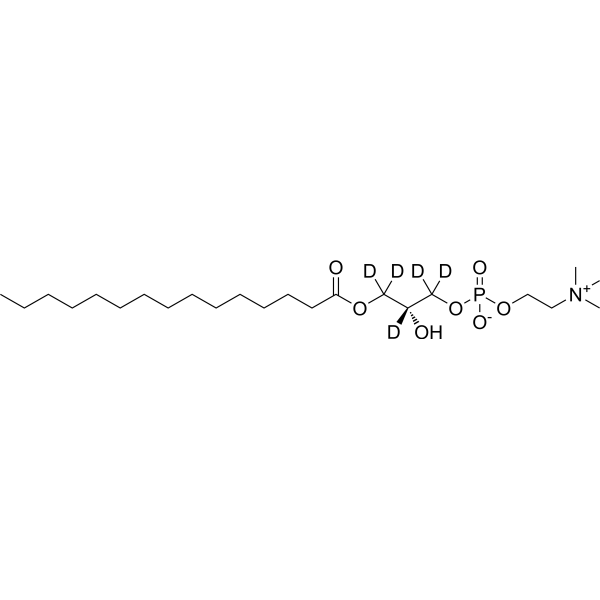
    15:0 Lyso PC-d5 is deuterium labeled 15:0 Lyso PC (HY-W329357). 15:0 Lyso PC is a lysophosphatidylcholine (Lyso PC), a product of phospholipase A2 (PLA2) hydrolysis of phosphatidylcholine (PC) and is involved in cell membrane remodeling and inflammatory signaling. 15:0 Lyso PC demonstrates significant lipid metabolism disturbances in the serum of patients with ischemic heart disease (IHD) and ischemic cardiomyopathy (ICM). 15:0 Lyso PC can be used as a lipid biomarker for cardiovascular disease.
    15:0 Lyso PC-d5
  • HY-W340113

    1,2-Dipentadecanoyl-sn-glycero-3-phosphocholine

    Biochemical Assay Reagents Others
    15:0 PC (1,2-Dipentadecanoyl-sn-glycero-3-phosphocholine) is a phosphatidylcholine that can be used for giant unilamellar lipid vesicles (GUVs) preparation .
    15:0 PC
  • HY-183589

    Ferroptosis Reactive Oxygen Species (ROS) Metabolic Disease
    Ferroptosis-IN-26 is a CEPT1-targeting ferroptosis inhibitor. Ferroptosis-IN-26 enhances CEPT1-dependent phosphatidylcholine remodeling to enrich cellular membranes with monounsaturated fatty acid-containing phosphatidylcholine (PC-MUFA). Ferroptosis-IN-26 suppresses lipid peroxidation. Ferroptosis-IN-26 can be used for the research of acute liver injury .
    Ferroptosis-IN-26
  • HY-N18891

    Others Others
    Phosphatidylcholine is a phospholipid found in the seeds of Heracleum lehmannianum and constitutes the most abundant phospholipid component in the plant's seed lipid complex .
    Phosphatidylcholine
  • HY-141617S1

    Isotope-Labeled Compounds Metabolic Disease
    1-Palmitoyl-2-hydroxy-sn-glycero-3-PE-d31 is the deuterium labeled 1-Palmitoyl-2-hydroxy-sn-glycero-3-PE (HY-141617). 1-Palmitoyl-2-hydroxy-sn-glycero-3-PE is a naturally occurring choline phospholipid that can be synthesized from phosphatidylcholine and fatty acids. 1-Palmitoyl-2-hydroxy-sn-glycero-3-PE is used as a structure-related lipid control .
    1-Palmitoyl-2-hydroxy-sn-glycero-3-PE-d31
  • HY-N11884

    Endogenous Metabolite Inflammation/Immunology
    Ubiquinone Q3 is an isoprenoid-chain ubiquinone homologue found in Saccharomyces cerevisiae, Escherichia coli, and Rhodospirillum rubrum. Ubiquinone Q3 has antioxidant activity and traps lipid peroxyl radicals .
    Ubiquinone Q3

Inquiry Online

Your information is safe with us. * Required Fields.

Salutation


Country or Region *

Applicant Name *


Organization Name *

Department *


Email Address *


Product Name *

Cat. No.


Requested quantity *

Phone Number *


Remarks

Inquiry Online

Inquiry Information

Product Name:
Cat. No.:
Quantity:
MCE Japan Authorized Agent: