6 Results for "

phosphorylated β-catenin

" in MedChemExpress (MCE) Product Catalog:
Products (6)

6 Results for "phosphorylated β-catenin" in MCE Product Catalog:

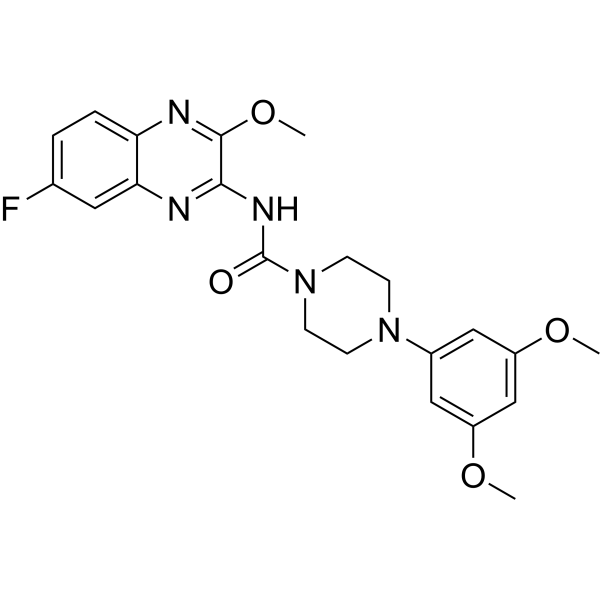
Cat. No.: HY-123611
CAS No.: 888478-45-3
Purity:  99.67%
Synonyms: RX-5902
Research Areas:  

Cancer

Supinoxin (RX-5902) is an orally active inhibitor of phosphorylated-p68 RNA helicase (P-p68) and a potent first-in-class anti-cancer agent. Supinoxin interacts with Y593 phosphorylated-p68 and attenuates the nuclear shuttling of β-catenin. Supinoxin induces cell apoptosis and inhibits growth of TNBC cancer cell lines with IC50s ranging from 10 nM to 20 nM .
loading...
    loading...
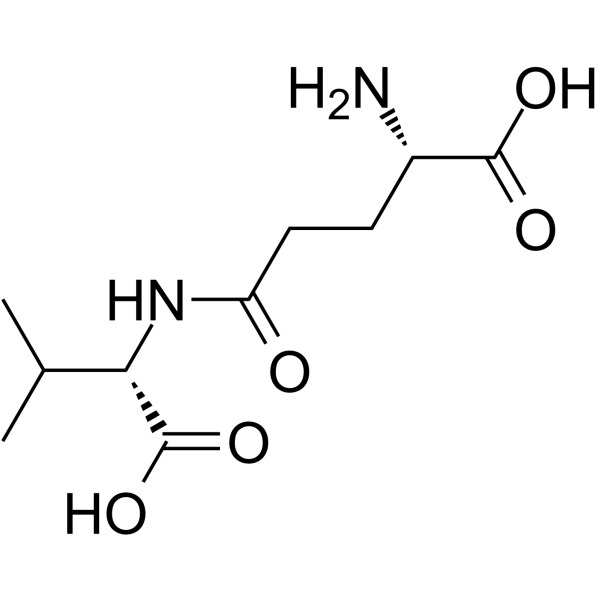
Cat. No.: HY-12557
CAS No.: 2746-34-1
Purity:  99.73%
Synonyms: γ-Glu-Val
γ‑Glutamylvaline (γ-Glu-Val) is a calcium‑sensing receptor (CaSR) agonist. γ‑Glutamylvaline activates CaSR and facilitates its binding to β‑arrestin 2 to modulate inflammatory and metabolic homeostasis signaling. γ‑Glutamylvaline inhibits TNF‑α‑induced IL‑6/MCP‑1 and enhances adiponectin/PPARγ in adipocytes. γ‑Glutamylvaline upregulates Wnt5a, restores β‑catenin phosphorylation, and reduces serine‑phosphorylated IRS‑1 in adipocytes. γ-Glutamylvaline can be used for the research of low-grade chronic inflammation .
loading...
    loading...
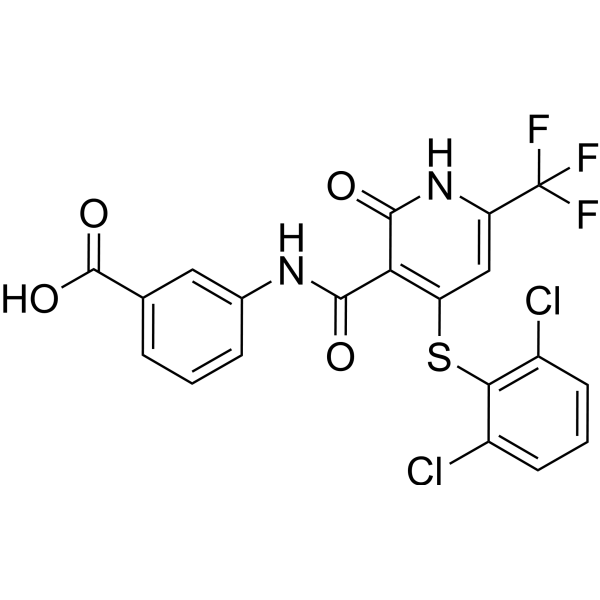
Cat. No.: HY-141449
CAS No.: 2763260-36-0
Purity:  99.89%
Research Areas:  

Cancer

NRX-103094 is a Molecular glue and β-catenin/β-TrCP interaction enhancer, with an EC50 of 62 nM for the binding of pSer33/S37A β-catenin peptide to recombinant β-TrCP/Skp1 complex. NRX-103094 shows selectivity for Ser37 phosphorylation-deficient β-catenin, and has no effect on wild-type doubly phosphorylated β-catenin or other β-TrCP substrates. NRX-103094 can be used in research related to colorectal cancer and ovarian endometrioid adenocarcinoma .
loading...
    loading...
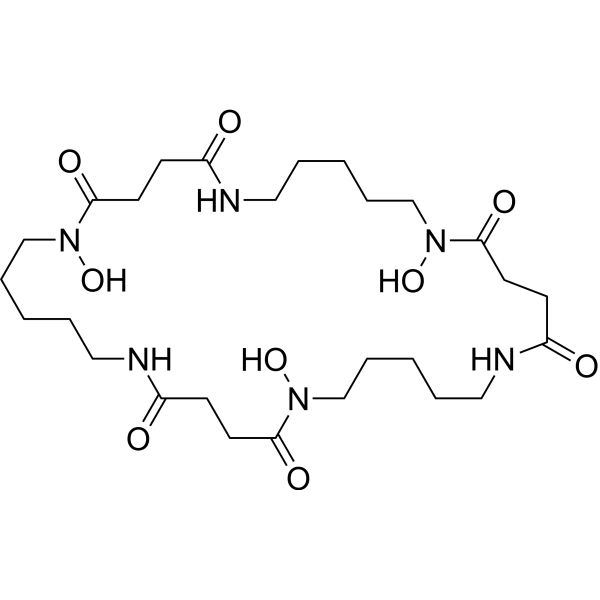
Cat. No.: HY-124452
CAS No.: 26605-16-3
Purity:  95.00%
Synonyms: Desferrioxamine E; Nocardamin
Nocardamine (Desferrioxamine E; Nocardamin) is a cyclic trihydroxamate siderophore with iron ion chelation, antioxidant, antibacterial and other activities. Nocardamine is synthesized by Pseudomonas stutzeri under iron-deficient conditions, and excessive iron ions significantly inhibit its biosynthesis process. Nocardamine increases the level of phosphorylated ERK protein, promotes nuclear translocation of β-catenin, and restores the downregulated expression of SIRT1 protein. Nocardamine alleviates cellular oxidative stress, reduces ROS content, and simultaneously repairs the ability to form mineralized nodules and the expression of osteogenic markers. Nocardamine induces FoxA gene transcription and protein expression to assist Pseudomonas aeruginosa in iron ion uptake; it also selectively inhibits the proliferation of mycobacteria. Nocardamine induces spindle-shaped morphological changes in BM-N4 insect cells, and sufficient iron ions inhibit this cellular morphological change. Nocardamine is suitable for research related to bacterial infections .
loading...
    loading...
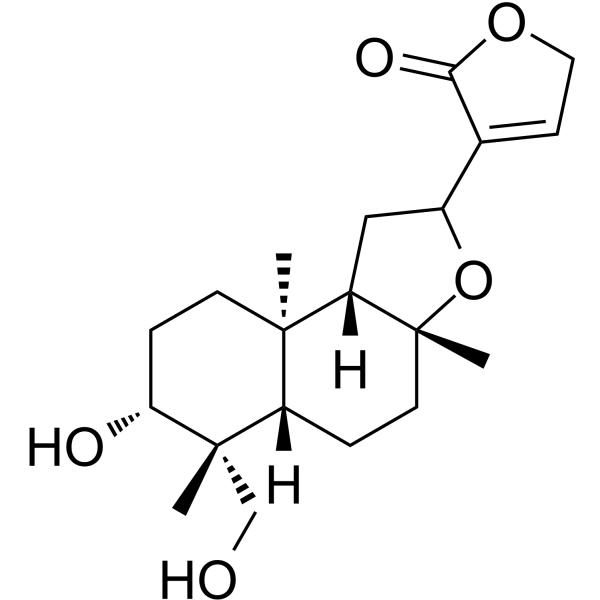
Cat. No.: HY-N10359
CAS No.: 4176-96-9
Isoandrographolide is an orally active NLRP3 inflammasome inhibitor and AKT/GSK-3β/β-catenin pathway inhibitor. Isoandrographolide inhibits the expression of NLRP3, ASC, and caspase-1, and reduces the levels of phosphorylated AKT, phosphorylated GSK-3β, and β-catenin. Isoandrographolide alleviates inflammatory responses, reduces collagen deposition, suppresses epithelial-mesenchymal transition (EMT), induces differentiation of leukemia cells, inhibits the growth of leukemia cells, protects lung and kidney tissues, regulates cytokine levels, and also exhibits hepatoprotective effects. Isoandrographolide can be used in studies related to silicosis, murine myeloid leukemia, renal tubulointerstitial fibrosis, and non-alcoholic fatty liver disease .
loading...
    loading...
Cat. No.: HY-139062
CAS No.: 486991-52-0
Synonyms: C6 Ceramide (d18:1/6:0) Urea; Cer(d18:1/6:0) Urea; D-erythro-Urea-C6-Ceramide
Research Areas:  

Cancer

C6 Urea Ceramide (Cer(d18:1/6:0) Urea) is an inhibitor of neutral ceramidase. C6 Urea Ceramide increases total ceramide levels in wild-type mouse embryonic fibroblasts (MEFs) and HT-29 colon cancer cells. C6 Urea Ceramide (5-10 μM) inhibits proliferation of HT-29 cells and induces apoptosis and autophagy, but is not toxic to non-cancerous cells. C6 Urea Ceramide decreases total and phosphorylated β-catenin levels in HT-29 and HCT116 cells, and induces colocalization of β-catenin with the 20S proteasome. C6 Urea Ceramide (1.25, 2.5, and 5 mg/kg) reduced tumor growth and increased C16, C18, C20, and C24 ceramide levels in tumor tissues in the HT-29 mouse xenograft model.
loading...
    loading...

