21 Results for "

phosphorylated-AKT

" in MedChemExpress (MCE) Product Catalog:
Products (21)

21 Results for "phosphorylated-AKT" in MCE Product Catalog:

2
2 Cited Publications
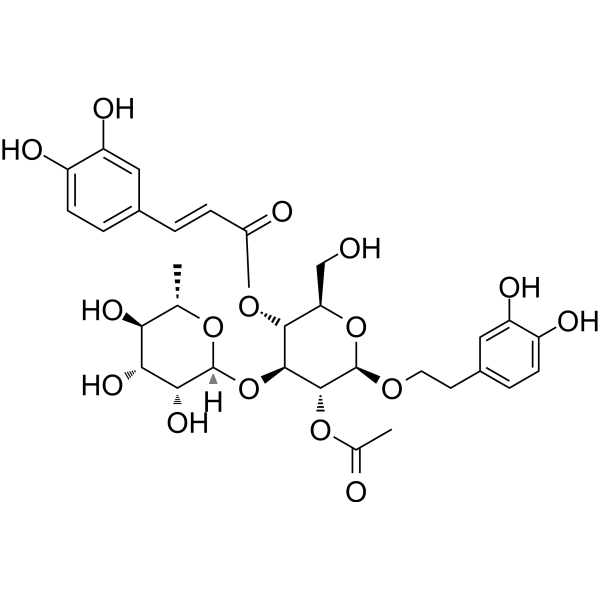
Cat. No.: HY-N0026
CAS No.: 94492-24-7
Synonyms: 2'-AA
2'-Acetylacteoside (2'-AA) is a natural compound with oral activity and blood-brain barrier permeability. 2'-Acetylacteosideexhibits MAO‑B inhibitory activity (IC50 = 17.71 μM, Ki = 13.81 μM). 2'-Acetylacteoside downregulates the expression of RANK, TRAF6, NF‑κB, NFATc1 and IKKβ, disrupts the RANKL/RANK interaction, blocks downstream signaling pathways, and increases the level of phosphorylated Akt. 2'-Acetylacteoside possesses potent anti-osteoclastogenic, anti-bone resorptive, pro-neurogenic, neuroprotective and antioxidant activities. 2'-Acetylacteoside can be used in the research of osteoporosis, ischemic stroke and Parkinson's disease .
loading...
    loading...
1
1 Cited Publications
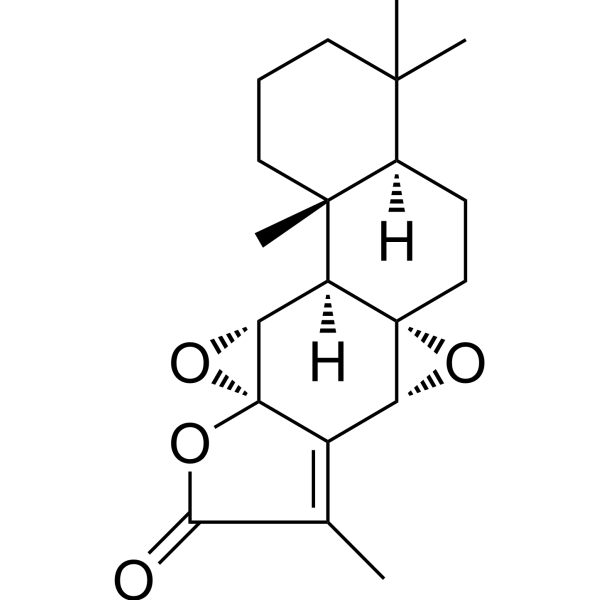
Cat. No.: HY-N0732
CAS No.: 37905-08-1
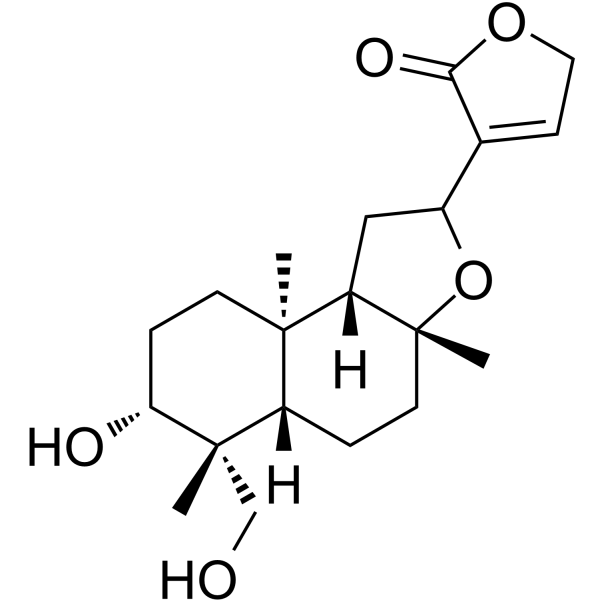
Jolkinolide B is a bioactive diterpene isolated from the roots of Euphorbia fischeriana Steud with oral activity. Jolkinolide B downregulates XIAP, cIAP1, cIAP2, and phosphorylated Akt, upregulates Smac, activates caspase-3 and caspase-9, and inhibits NF-κB, TGFβ/smad3 and JAK/STAT3 pathways. Jolkinolide B exerts comprehensive biological effects including inducing cancer cell apoptosis, suppressing inflammatory responses, improving lung function, alleviating hepatic steatosis and eliminating intracellular Mycobacterium tuberculosis. Jolkinolide B can be used for the research of leukemia, histiocytic lymphoma, asthma, metabolic dysfunction-associated steatotic liver disease and tuberculosis .
loading...
    loading...
1
1 Cited Publications
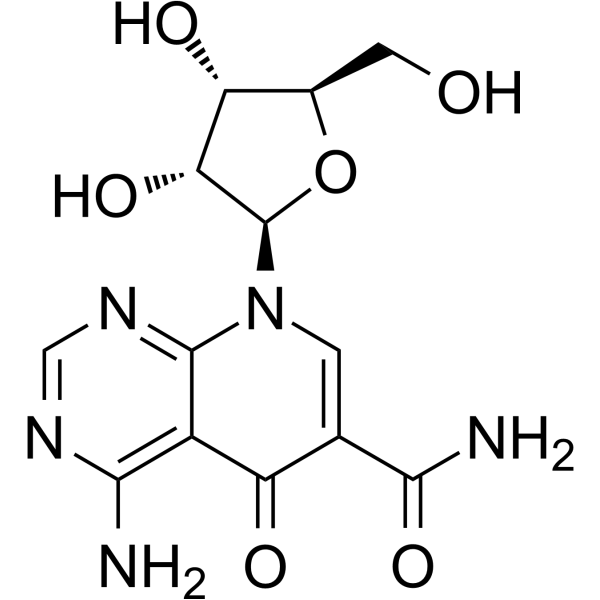
Cat. No.: HY-110077
CAS No.: 36707-00-3
Purity:  99.62%
Target:  

Akt Apoptosis Caspase PARP

Research Areas:  

Cancer

API-1 is a potent selective Akt/PKB inhibitor that reduces the level of phosphorylated Akt (IC50 = 0.8 μM). API-1 binds to the PH domain and inhibits Akt membrane translocation. API-1 induces c-FLIP degradation. API-1 reduces cell proliferation and induces apoptosis. API-1 decreases tumor growth in mouse xenograft model .
loading...
    loading...
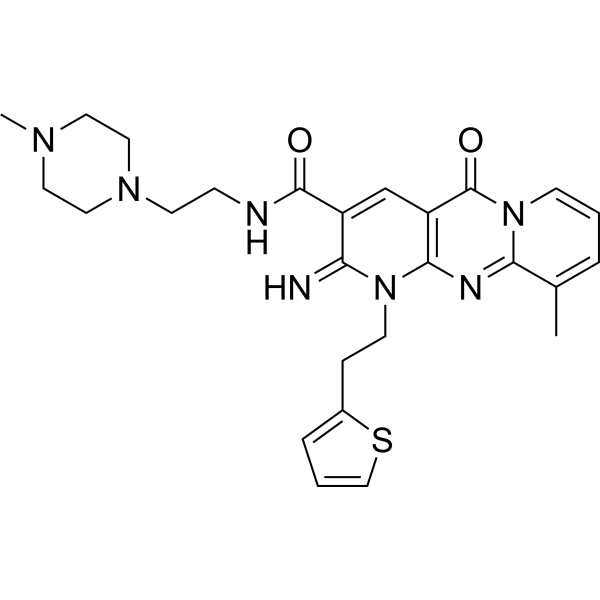
Cat. No.: HY-173405
CAS No.: 3055319-82-6
Target:  

Ras PI3K Akt

Research Areas:  

Cancer

VVD-699 is a covalent blocker of the RAS-p110α interaction with oral activity. VVD-699 inhibits activation of PI3Kα (IC50: 104 nM in H358 cells) . VVD-699 inhibits phosphorylated AKT. VVD-699 can be used for the research of KRAS mutant/amplified cancer .
loading...
    loading...
Cat. No.: HY-113438
CAS No.: 70981-96-3
Purity:  97.3%
15(S)-HPETE is a precursor of 15(S)-HETE (HY-113336). 15(S)-HPETE is a product of Arachidonic acid (HY-109590) in the 15-lipoxygenase pathway. 15(S)-HPETE reduces Bcl-2, Akt, and phosphorylated Akt protein levels. 15(S)-HPETE induces Apoptosis. 15(S)-HPETE antagonizes the angiogenic effects of 15(S)-HETE. 15(S)-HPETE exhibits antitumor effects against chronic myeloid leukemia. 15(S)-HPETE can be used in adipose tissue explant studies .
loading...
    loading...
Cat. No.: HY-156382
CAS No.: 2136270-56-7
Purity:  99.71%
Target:  

Akt ERK E1/E2/E3 Enzyme

Research Areas:  

Cancer

SPOP-IN-1 is a selective SPOP E3 ubiquitin ligase inhibitor. SPOP-IN-1 leads to the accumulation of tumor suppressors PTEN and DUSP7 and decreased levels of phosphorylated AKT and ERK in clear-cell renal cell carcinoma .
loading...
    loading...
Cat. No.: HY-158990
CAS No.: 2883669-12-1
GE1111 is a MRGPRX2 antagonist (IC50 = 9.4 μM). GE1111 inhibits MRGPRX2/MRGPRB2-mediated mast cell activation. GE1111 reduces the expressions of TSLP, IL-13, MCP-1, TNF-α, IL-1β and periostin, maintains the expression levels of claudin 1 and involucrin, restores the phagocytic activity of macrophages, and attenuates the activation of STIM1 and phosphorylated AKT. GE1111 exerts anti-inflammatory and anti-allergic effects in multiple animal models. GE1111 is applicable to the research related to rosacea, atopic dermatitis and ulcerative colitis .
loading...
    loading...
Cat. No.: HY-160187A
CAS No.: 3055022-23-3
Target:  

Cadherin MMP Akt FAK ERK NF-κB

Research Areas:  

Cancer

(Rac)-AAA is a regulator and inhibitor targeting GPR75. By blocking the 20-HETE-induced downregulation of GPR75 expression, (Rac)-AAA effectively inhibits the activation of key downstream signaling pathways including EGFR, AKT, NF-κB and FAK. (Rac)-AAA reverses 20-HETE-mediated epithelial-mesenchymal transition, which is specifically characterized by downregulating vimentin (vimentin), upregulating E-Cadherin, as well as reducing MMP-2 activity and cancer cell migration ability. (Rac)-AAA also abolishes the 20-HETE-induced upregulation of HIC-5 expression and anchorage-independent growth, and modulates the subcellular localization of PKC-α and phosphorylated AKT. (Rac)-AAA is investigated in androgen-independent prostate cancer (castration-resistant prostate cancer) .
loading...
    loading...
Cat. No.: HY-15211
CAS No.: 623165-93-5
Research Areas:  

Neurological Disease Cancer

MRK 003 is an orally active γ-secretase inhibitor. MRK 003 targets the Notch signaling pathway by blocking the proteolytic cleavage of Notch receptors. MRK 003 inhibits tumor cell proliferation, induces apoptosis, downregulates anti-apoptotic proteins, upregulates phosphorylated Akt, suppresses angiogenesis, and overcomes microenvironment-mediated proliferative protection. MRK 003 can be used in research related to lung cancer, multiple myeloma, non-Hodgkin's lymphoma, pancreatic ductal adenocarcinoma, glioblastoma, and breast cancer .
loading...
    loading...
Cat. No.: HY-N10359
CAS No.: 4176-96-9
Isoandrographolide is an orally active NLRP3 inflammasome inhibitor and AKT/GSK-3β/β-catenin pathway inhibitor. Isoandrographolide inhibits the expression of NLRP3, ASC, and caspase-1, and reduces the levels of phosphorylated AKT, phosphorylated GSK-3β, and β-catenin. Isoandrographolide alleviates inflammatory responses, reduces collagen deposition, suppresses epithelial-mesenchymal transition (EMT), induces differentiation of leukemia cells, inhibits the growth of leukemia cells, protects lung and kidney tissues, regulates cytokine levels, and also exhibits hepatoprotective effects. Isoandrographolide can be used in studies related to silicosis, murine myeloid leukemia, renal tubulointerstitial fibrosis, and non-alcoholic fatty liver disease .
loading...
    loading...
Cat. No.: HY-176421
CAS No.: 3070438-85-3
PROTAC PI3K/110β degrader-1 is a VHL-recruiting PROTAC degrader targeting PI3K/110β, with DC50 values of 0.416 μM (MCF-7) and 19.66 μM (A549), respectively. PROTAC PI3K/110β degrader-1 recruits VHL to induce proteasomal degradation of PI3K/110β. It activates endoplasmic reticulum stress (ERS)-mediated mitochondrial apoptosis via the PERK/ATF4/CHOP unfolded protein response (UPR) pathway, downregulates p-AKT and Bcl-2, upregulates Bax, cleaved-caspase-9 and cleaved-caspase-3, inhibits the expression and activity of P-gp, and exerts synergistic anti-tumor effects with Doxorubicin (Adriamycin, ADM) (HY-15142A) and Cisplatin (DDP) (HY-17394). PROTAC PI3K/110β degrader-1 can be used in research related to multidrug-resistant cancers .
loading...
    loading...
Cat. No.: HY-N3665
CAS No.: 145643-96-5
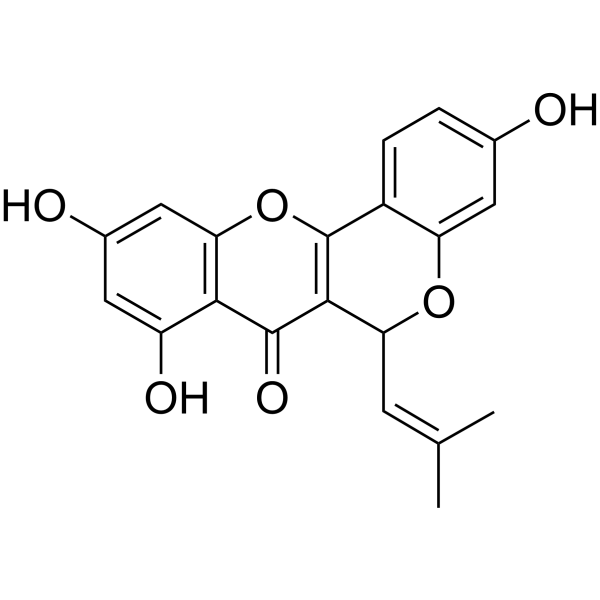
Cyclocommunol is a GST inhibitor with an IC50 of 3.0 μM. Cyclocommunol downregulates the expression of the anti-apoptotic (apoptosis) protein Mcl-1, reduces the levels of phosphorylated Akt and mTOR, and induces caspase-dependent apoptosis, reactive oxygen species (ROS) production and autophagy. Cyclocommunol can be used in research related to oral squamous cell carcinoma, breast cancer, lung cancer, norovirus-induced gastroenteritis and bacterial infections .
loading...
    loading...
Cat. No.: HY-117885
CAS No.: 1350821-45-2
Target:  

PDK-1

Research Areas:  

Cancer

PF-5177624 is a specific and potent inhibitor of PDK1, a key enzyme in the PI3K/AKT signaling pathway that is frequently dysregulated in breast cancer. PDK1 phosphorylates AKT at T308 and other substrates, activating downstream signaling pathways that are important for tumor progression. PF-5177624 blocks IGF-1-stimulated PDK1 activity and downstream AKT and p70S6K phosphorylation, reducing cell proliferation and transformation in breast cancer cells .
loading...
    loading...
Cat. No.: HY-169431
Research Areas:  

Cancer

VEGFR-2/AKT-IN-2 (Compound 5) is a VEGFR-2/AKT inhibitor (IC50: 0.061 μM for VEGFRin HepG2 cell). VEGFR-2/AKT-IN-2 reduces total and phosphorylated AKT as well as up-regulates BAX and Caspase-3 and down-regulates Bcl-2 in cells, thereby promoting Apoptosis. VEGFR-2/AKT-IN-2 causes cell cycle arrest in S phase. VEGFR-2/AKT-IN-2 inhibits the growth of human liver tumor cells .
loading...
    loading...
Cat. No.: HY-N0026R
CAS No.: 94492-24-7
Synonyms: 2'-AA (Standard)
2'-Acetylacteoside (Standard) is the analytical standard of 2'-Acetylacteoside (2'-AA) (HY-N0026). This product is intended for research and analytical applications. 2'-Acetylacteoside is a natural compound with oral activity and blood-brain barrier permeability. 2'-Acetylacteosideexhibits MAO‑B inhibitory activity (IC50 = 17.71 μM, Ki = 13.81 μM). 2'-Acetylacteoside downregulates the expression of RANK, TRAF6, NF‑κB, NFATc1 and IKKβ, disrupts the RANKL/RANK interaction, blocks downstream signaling pathways, and increases the level of phosphorylated Akt. 2'-Acetylacteoside possesses potent anti-osteoclastogenic, anti-bone resorptive, pro-neurogenic, neuroprotective and antioxidant activities. 2'-Acetylacteoside can be used in the research of osteoporosis, ischemic stroke and Parkinson's disease .
loading...
    loading...
Cat. No.: HY-N0732R
CAS No.: 37905-08-1
Jolkinolide B (Standard) is the analytical standard of Jolkinolide B (HY-N0732). This product is intended for research and analytical applications. Jolkinolide B is a bioactive diterpene isolated from the roots of Euphorbia fischeriana Steud with oral activity. Jolkinolide B downregulates XIAP, cIAP1, cIAP2, and phosphorylated Akt, upregulates Smac, activates caspase-3 and caspase-9, and inhibits NF-κB, TGFβ/smad3 and JAK/STAT3 pathways. Jolkinolide B exerts comprehensive biological effects including inducing cancer cell apoptosis, suppressing inflammatory responses, improving lung function, alleviating hepatic steatosis and eliminating intracellular Mycobacterium tuberculosis. Jolkinolide B can be used for the research of leukemia, histiocytic lymphoma, asthma, metabolic dysfunction-associated steatotic liver disease and tuberculosis .
loading...
    loading...
Cat. No.: HY-119134
CAS No.: 253440-95-8
Target:  

Akt

Research Areas:  

Cancer

PX-316 is an Akt inhibitor. PX-316 can phosphorylate Akt, but does not inhibit the phosphorylation of PDK1 or PKC. PX-316 uniquely increases the expression of a group of mitochondrial-related genes. PX-316 can be used for the study of colon cancer and breast cancer .
loading...
    loading...
Cat. No.: HY-123795
CAS No.: 1801911-70-5
Target:  

Ras Akt ERK VEGFR

Research Areas:  

Cancer

NY0123 is a EPAC1 inhibitor. NY0123 significantly inhibits the expression of EPAC1, phosphorylated AKT, phosphorylated ERK1/2 and phosphorylated VEGFR2. NY0123 inhibits angiogenesis and tumor growth of triple-negative breast cancer. NY0123 is applicable to relevant research on triple-negative breast cancer .
loading...
    loading...
Cat. No.: HY-183059
Target:  

MAP4K

Research Areas:  

Neurological Disease

TNIK-IN-11 is a TNIK inhibitor with a human TNIK pIC50 of 7.80. TNIK-IN-11 inhibits TNIK kinase activity and promotes neurite outgrowth. TNIK-IN-11 activates AKT signaling via increased phosphorylated AKT levels, and induces gene expression changes including upregulation of neuronal differentiation and morphological remodeling genes. TNIK-IN-11 can be used for the research of dup15q syndrome .
loading...
    loading...
Cat. No.: HY-N20721
CAS No.: 21416-14-8
Pancracine is an alkaloid. Pancracine upregulates p27, phosphorylated p38 MAPK and phosphorylated p53, while downregulating phosphorylated Akt and phosphorylated Rb. Pancracine induces G1 cell cycle arrest and Apoptosis in cells. Pancracine inhibits the replication of pseudotyped HIV-1 and Dengue virus. Pancracine can be used in research related to lung adenocarcinoma, acute lymphoblastic leukemia, cutaneous epidermoid carcinoma, human immunodeficiency virus infection and dengue virus infection .
loading...
    loading...

