



Cyclocommunol
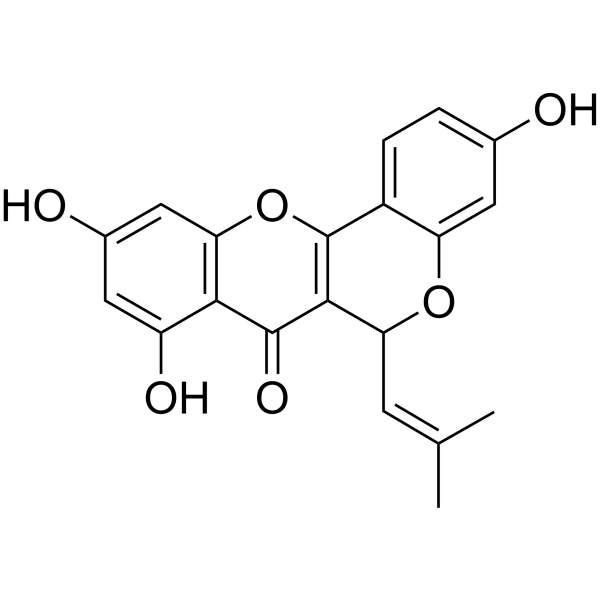
Cyclocommunol is a GST inhibitor with an IC50 of 3.0 μM. Cyclocommunol downregulates the expression of the anti-apoptotic (apoptosis) protein Mcl-1, reduces the levels of phosphorylated Akt and mTOR, and induces caspase-dependent apoptosis, reactive oxygen species (ROS) production and autophagy. Cyclocommunol can be used in research related to oral squamous cell carcinoma, breast cancer, lung cancer, norovirus-induced gastroenteritis and bacterial infections.
For research use only. We do not sell to patients.
- CAS No.: 145643-96-5
- Formula: C20H16O6
- Molecular Weight:352.34
-
Storage:
Please store the product under the recommended conditions in the Certificate of Analysis.

To place orders, for customer services and technical support, please contact: MedChemExpress USA
Tel: 609-228-6898 E-mail: [email protected] [email protected]


-
 Biological Activity
-
Chemical Information
- Protocols
- Purity & Documentation
- References
-
 Help & FAQs




Biological Activity
Description
IC50 & Target
[2]|
Mcl-1 |
Akt |
mTOR |
Cellular Effect
|
Cell Line

|
Type | Value | Description | References |
|---|---|---|---|---|
| Ca9-22 | IC50 |
5.6 μM
|
Suppression of cell viability against human oral squamous cell carcinoma Ca922 cells incubated for 24 hrs by MTT assay.
Suppression of cell viability against human oral squamous cell carcinoma Ca922 cells incubated for 24 hrs by MTT assay.
|
29433680 |
| Ca9-22 | IC50 |
5.0 μM
|
Suppression of cell viability against human oral squamous cell carcinoma Ca922 cells incubated for 48 hrs by MTT assay.
Suppression of cell viability against human oral squamous cell carcinoma Ca922 cells incubated for 48 hrs by MTT assay.
|
29433680 |
| MCF7 | IC50 |
> 100 μM
|
Cytotoxicity against human MCF-7 breast cancer cells, with no detectable cytotoxicity observed.
Cytotoxicity against human MCF-7 breast cancer cells, with no detectable cytotoxicity observed.
|
40017003 |
| NCI-H460 | IC50 |
> 100 μM
|
Cytotoxicity against human NCI-H460 lung cancer cells, with no detectable cytotoxicity observed.
Cytotoxicity against human NCI-H460 lung cancer cells, with no detectable cytotoxicity observed.
|
40017003 |
In Vitro
Cyclocommunol (CYC) (1-5 μM; 24-48 h) potently inhibits the viability of human oral squamous cell carcinoma cell lines SCC2095 and Ca922, with IC50 values of 4.2 μM and 5.0 μM respectively after 48 h of incubation[1].
Cyclocommunol (compound 1) at concentrations greater than 100 μM shows no detectable cytotoxicity against MCF-7 human breast cancer cells or NCI-H460 human lung cancer cells[5].
Cyclocommunol (1-5 μM; 48 h) induces concentration-dependent apoptosis in human oral squamous cell carcinoma cell line SCC2095[1].
Cyclocommunol (1-5 μM; 48 h) activates caspase-dependent apoptosis, induces DNA damage, downregulates the Akt/mTOR pathway in human oral squamous cell carcinoma cell lines SCC2095 and Ca922 after 48 h of incubation, and regulates the expression of pro-apoptotic and anti-apoptotic proteins in SCC2095 cells[1].
Cyclocommunol (3 μM; 12-48 h) exhibits pro-apoptotic activity that is partially dependent on Mcl-1[1].
Cyclocommunol (3 μM; 3 h) induces reactive oxygen species production in the human oral squamous cell carcinoma cell line SCC2095[1].
Cyclocommunol (2-5 μM; 48 h) induces autophagy in the human oral squamous cell carcinoma cell line SCC2095[1].
Cyclocommunol (compound 5) at 100 μM weakly inhibits 15-LOX activity[2].
Cyclocommunol (compound 8) potently inhibits GST activity in cell-free biochemical assays, with an IC50 value of 3.0 μM[3].
Cyclocommunol exhibits weak antibacterial activity against Staphylococcus aureus, Escherichia coli, Pseudomonas aeruginosa, and Salmonella enterica in agar diffusion assays[5].
MedChemExpress (MCE) has not independently confirmed the accuracy of these methods. They are for reference only. Further protocols information, click here.
-
Cell Line:SCC2095 and Ca922 human oral squamous cell carcinoma cells
-
Concentration:1, 2, 3, 5 μM
-
Incubation Time:24, 48 h
-
Result:Suppressed cell viability in both cell lines in a concentration- and time-dependent manner.
-
Cell Line:SCC2095 human oral squamous cell carcinoma cells
-
Concentration:1, 2, 3, 5 μM
-
Incubation Time:48 h
-
Result:Increased the percentage of apoptotic cells in a concentration-dependent manner.
-
Cell Line:SCC2095 and Ca922 human oral squamous cell carcinoma cells
-
Concentration:1, 2, 3, 5 μM
-
Incubation Time:48 h
-
Result:Caused concentration-dependent PARP cleavage, caspase-9 activation, caspase-3 activation, increased phosphorylation of p53 and H2AX, downregulated phosphorylation of Akt (Ser473) and mTOR (Ser2448), decreased expression of anti-apoptotic proteins Mcl-1 and survivin, and increased expression of pro-apoptotic protein Bax in SCC2095 cells.
Downregulated phosphorylation of Akt and mTOR in a concentration-dependent manner in Ca922 cells.
-
Cell Line:SCC2095 human oral squamous cell carcinoma cells
-
Concentration:2, 3, 5 μM
-
Incubation Time:48 h
-
Result:Induced formation of GFP-LC3 puncta (autophagosomes) at 5 μM.
Caused concentration-dependent upregulation of LC3B-II, p62, and Atg5 protein expression.
Increased the percentage of cells with acidic vesicular organelles to 24.1% at 2 μM and 30.6% at 3 μM.
-
Cell Line:SCC2095 human oral squamous cell carcinoma cells
-
Concentration:3 μM
-
Incubation Time:12, 48 h
-
Result:Partially reversed cyclocommunol-mediated PARP cleavage and caspase-3 activation via Mcl-1 overexpression.
Partially rescued cell viability from cyclocommunol-induced cytotoxicity via Mcl-1 overexpression.
Decreased Mcl-1 expression in a time-dependent manner at 3 μM over 48 h.


Chemical Information
-
CAS No. 145643-96-5
-
Molecular Weight 352.34
-
Formula C20H16O6
-
SMILES
C/C(C)=C\C1C2=C(OC3=C(C(O)=CC(O)=C3)C2=O)C4=CC=C(O)C=C4O1
-
Structure Classification
-
Shipping
Room temperature in continental US; may vary elsewhere.
-
Storage
Please store the product under the recommended conditions in the Certificate of Analysis.

Protocols
-
RNA extraction experimental
By lysing cells, releasing RNA, and removing impurities such as proteins and DNA, high-purity RNA products are finally obtained. The commonly used traditional method is the guanidine isothiocyanate/phenol/chloroform method (Trizol), which is suitable for a variety of animal materials including animal tissues, microorganisms, cultured cells, etc., and most plant materials.
-
Detection of Apoptosis
Apoptosis, also called programmed cell death, is generally characterized by distinct morphological characteristics.
-
TUNEL staining for apoptotic DNA fragmentation
TUNEL staining detects DNA strand breaks by using terminal deoxynucleotidyl transferase to add labeled nucleotides to exposed 3′-OH DNA termini, generating either microscopic staining in fixed cells or tissue sections, or fluorescence/cytometric signal in cell suspensions. TUNEL positivity reflects DNA fragmentation but should not be interpreted alone as definitive apoptosis, because TUNEL can also label necrotic, autolytic, mechanically damaged, or DNA-repair-associated DNA breaks.
-
Annexin V plus membrane-impermeant dye apoptosis staining
Annexin V-based apoptosis assays rely on the detection of phosphatidylserine (PS) externalization from the inner leaflet of the plasma membrane to the outer leaflet, an early biochemical hallmark of apoptosis. Fluorescently labeled Annexin V binds PS in a calcium-dependent manner, enabling identification of early apoptotic cells by flow cytometry or fluorescence microscopy. When combined with a membrane-impermeant DNA-binding dye (e. g. , propidium iodide), this approach allows discrimination between viable (Annexin V−/dye−), early apoptotic (Annexin V+/dye−), and late apoptotic or necrotic (Annexin V+/dye+) cell populations by assessing membrane integrity and PS exposure.
-
ROS/oxidative-stress fluorescent staining
ROS/oxidative-stress fluorescent staining uses cell-permeant fluorogenic probes that become fluorescent after oxidation inside cells or tissues; commonly used examples include DCFH-DA/DCFDA for broad cellular oxidant detection, DHE for superoxide-related signal detection, MitoSOX for mitochondrial superoxide-related signal detection, and CellROX probes for oxidative-stress-associated fluorescence readouts. The assay detects probe oxidation rather than a single ROS species unless the probe and analysis method have been chemically validated for that species. DCFH-DA enters cells, is deacetylated by intracellular esterases to DCFH, and produces fluorescent DCF after oxidation, so the readout is used as an operational measure of total cellular oxidative stress rather than a species-specific ROS measurement. DHE and MitoSOX can report superoxide-related oxidation, but red fluorescence alone can include non-specific ethidium-like oxidation products; HPLC or optimized spectral approaches are
-
Autophagy
Autophagy is a process in which eukaryotic cells use lysosomes to degrade their own cytoplasmic proteins and damaged organelles under the regulation of autophagy related gene (Atg). Microtubule-associated proteins light chain 3 (LC3) is recognized as autophagy marker, which transfers from cytoplasmic LC3 (LC3-I) to membrane type (LC3-II). LC3-II/I ratio could be detected by Western Blot and fluorescence microscopy.
-
Apoptosis Solutions
Apoptosis is a regulated, generally non-lytic cell-death pathway that removes unwanted, damaged, infected, or abnormal cells through coordinated morphological changes, caspase activation, DNA fragmentation, and membrane remodeling. The intrinsic apoptosis pathway is controlled mainly by mitochondrial outer membrane permeabilization, BCL-2 family proteins, cytochrome c release, apoptosome formation, caspase-9 activation, and downstream executioner caspase-3/7 activation. The extrinsic apoptosis pathway is initiated by death receptors such as Fas, TNFR, and TRAIL receptors, which recruit adaptor proteins and activate caspase-8 before engaging executioner caspases or mitochondrial amplification through BID cleavage. Apoptosis is linked to many phenotypes, including cancer cell killing, tissue homeostasis, immune regulation, neurodegeneration, infection response, and treatment-induced cytotoxicity; unresolved questions include how apoptosis interacts with necroptosis, pyroptosis, ferroptos
-
Lysosome and acidic-vesicle live-cell staining
Lysosome and acidic-vesicle live-cell staining detects acidic intracellular compartments by using membrane-permeant acidotropic probes that accumulate in low-pH vesicles, including lysosomes, late endosomes, autolysosomes, and acidic phagosomes. LysoTracker staining is commonly used as an intensity-based readout of acidic lysosomal compartment abundance or enlargement, while acridine orange produces green fluorescence in less concentrated compartments and red fluorescence after concentration-dependent accumulation in acidic vesicular organelles. Loss or reduction of acridine-orange red signal can be used as a readout of lysosomal membrane permeabilization or reduced acidic-vesicle integrity. This protocol is designed for live cultured cells and can be adapted for fluorescence microscopy, high-content imaging, plate-reader readout, or flow cytometry when the selected literature supports the readout. Because these dyes report acidotropic accumulation rather than lysosome identity alone,
-
Macroautophagy Solutions
Macroautophagy is a conserved lysosome-dependent degradation pathway in which cytoplasmic material is sequestered into double-membrane autophagosomes and delivered to lysosomes for degradation and recycling. The pathway supports cellular homeostasis during nutrient limitation, organelle stress, protein-aggregate accumulation, infection, differentiation, and tissue remodeling by coupling cargo sequestration, autophagosome maturation, lysosomal fusion, and degradation of cargo-derived macromolecules. The core molecular sequence includes initiation by nutrient- and stress-regulated autophagy machinery, autophagosome nucleation, LC3/ATG8-family conjugation to autophagosomal membranes, cargo selection through receptors such as SQSTM1/p62, autophagosome-lysosome fusion, and lysosomal degradation. LC3 was identified as a mammalian homolog of yeast Atg8 that localizes to autophagosomal membranes after processing, and p62/SQSTM1 was shown to connect ubiquitinated cargo with autophagic degradati
-
Breast Cancer Modeling
Breast cancer is a heterogeneous cancer, and it has been distinguished into four subtypes: luminal A, luminal B, HER2-positive and basal-like. Molecular mutations, epigenetic alterations, hormone exposure and immune microenvironment are related to the progression of breast cancer.


Purity & Documentation
References

Calculators
Concentration (start) × Volume (start) = Concentration (final) × Volume (final)


Cyclocommunol Related Classifications
HY-N3665 Related Classifications
 Powered by Bioz