Search Result
Results for "
plant herbicide
" in MedChemExpress (MCE) Product Catalog:
5
Biochemical Assay Reagents
16
Isotope-Labeled Compounds
| Cat. No. |
상품명 |
Target |
연구분야 |
Chemical Structure |
-
- HY-W019870
-
-
-
- HY-18572
-
2,4-D
1 Publications Verification
2,4-Dichlorophenoxyacetic acid
|
Environmental Pollutants
Herbicide
Apoptosis
DNA/RNA Synthesis
|
Cancer
|
|
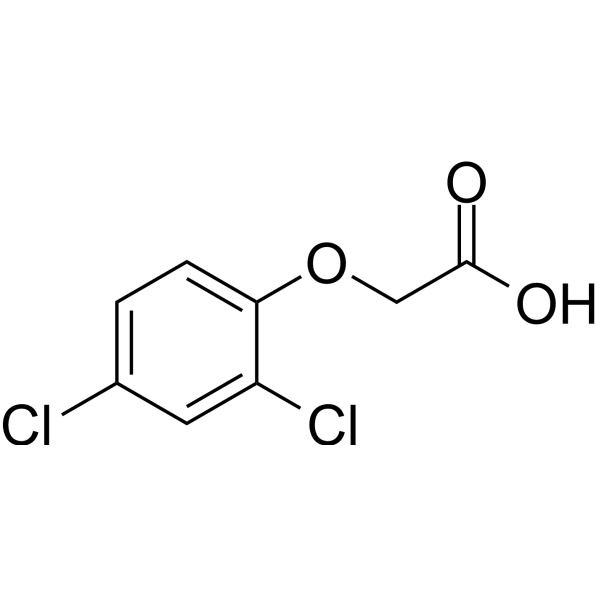
2,4-D (2, 4-dichlorophenoxyacetic acid) is a selective herbicide that can be used for the control of broad-leaved weeds. 2,4-D can induce apoptosis. 2,4-D inhibits DNA and protein synthesis, thereby preventing normal plant growth and development .
|
-
-
- HY-147092
-
|
|
Environmental Pollutants
Microtubule/Tubulin
Herbicide
|
Infection
|
|
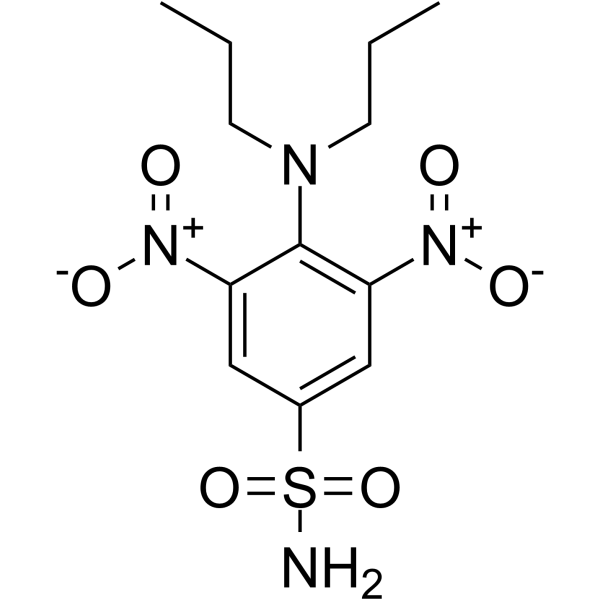
Oryzalin is a dinitroaniline herbicide with antimitotic and antileishmanial activities. Oryzalin can bind to plant tubulin, inhibit the polymerization of microtubules in plant cells, and affect chromosome migration. Oryzalin can also be used to induce chromosome doubling .
|
-
-
- HY-134094
-
-
-
- HY-100427
-
|
CL29926; (±)-Imazamox
|
Environmental Pollutants
Acetolactate Synthase (ALS)
|
Others
|
|
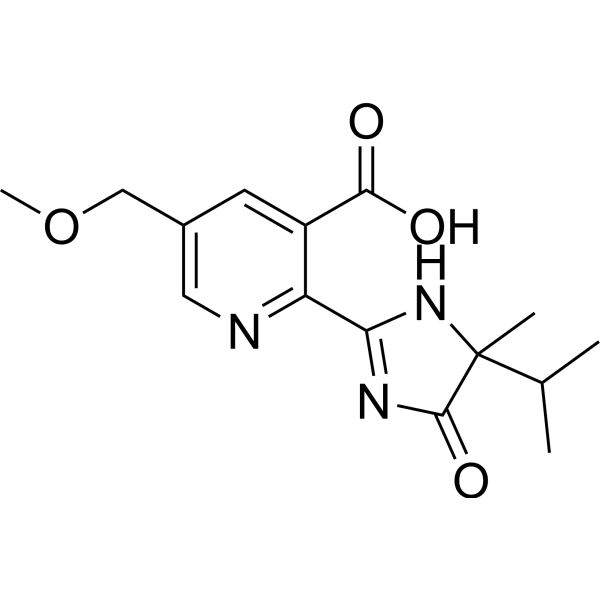
Imazamox (CL29926) is a systemic herbicide that inhibits the production of acetolactate synthase (ALS) in plants with high selectivity, high activity, safety and broadspectrum activity, which would then inhibit plant growth and ultimately lead to plant death .
|
-
-
- HY-12853
-
|
|
Environmental Pollutants
Reactive Oxygen Species (ROS)
|
Others
|
|
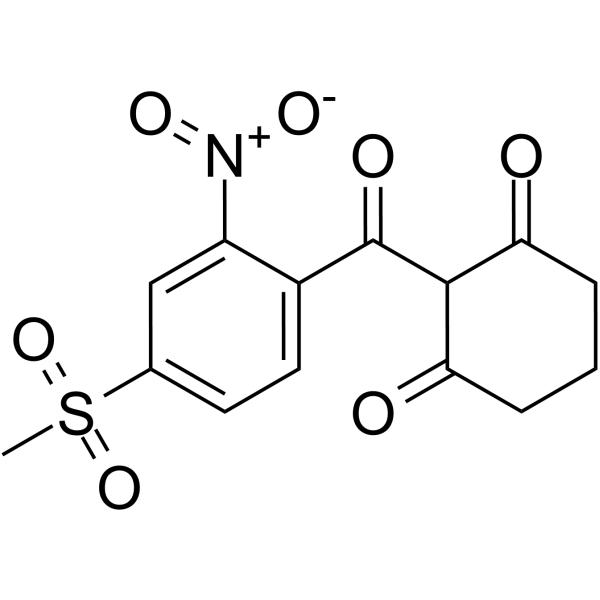
Mesotrione is a herbicide belongs to the benzoylcyclohexanedione family. Mesotrione is a potent and competitive and reversible inhibitor of HPPD enzyme. Mesotrione is selective to maize due to rapid metabolism and relative high tolerance by the susceptible crop plant .
|
-
-
- HY-137551
-
|
|
Environmental Pollutants
Protoporphyrinogen IX oxidase
Herbicide
|
Others
|
|
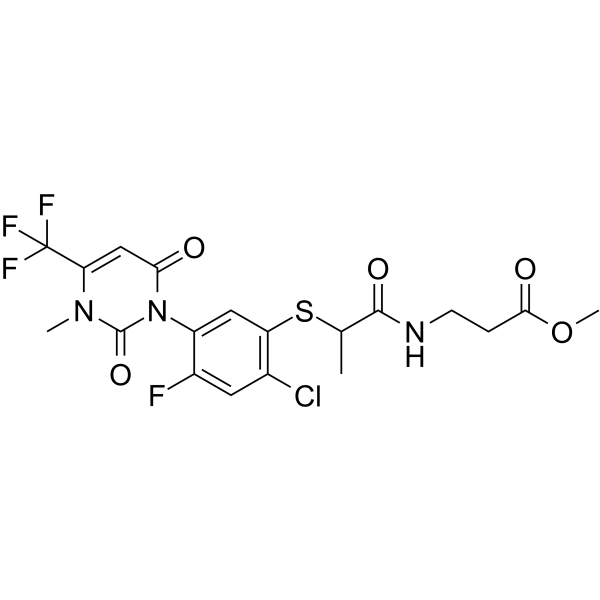
Tiafenacil is a new protoporphyrinogen IX oxidase (PPO)-inhibiting herbicide, with IC50 values of 22 to 28 nM for various plant species, including amaranth (Amaranthus tuberculatus), soybean (Glycine max), arabidopsis (Arabidopsis thaliana), and rapeseed (Brassica napus) .
|
-
-
- HY-B2046
-
-
-
- HY-116954
-
|
|
DNA/RNA Synthesis
|
Others
|
|
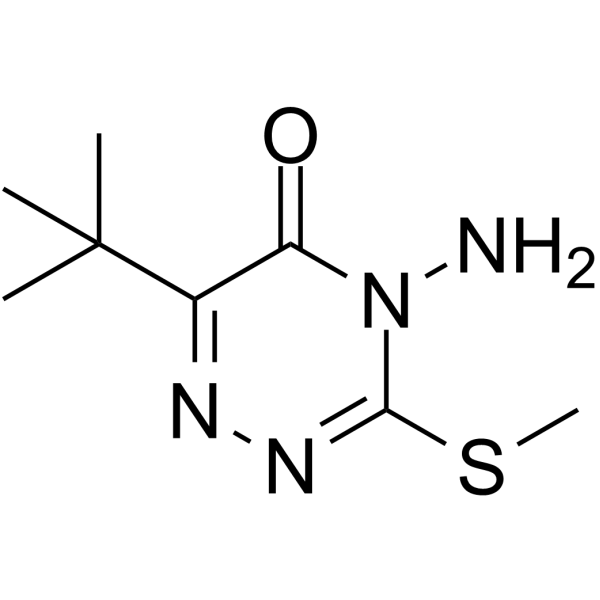
Metribuzin is a low-cost non-selective herbicide belonging to the chemical class of triazinones. Metribuzin inhibits plant DNA synthesis and acts on photosystem II, ultimately suppressing photosynthesis. Metribuzin provides excellent control of important annual grass and broadleaf weeds .
|
-
-
- HY-136633
-
|
|
Environmental Pollutants
Herbicide
|
Others
|
|
Pyroxasulfone is a broad-spectrum pyrazole Herbicide. Pyroxasulfone is effective against a variety of annual grass weeds and some broadleaf weeds. Pyroxasulfone causes reduced plant height, decreased above-ground dry weight and yield loss in pinto beans and red Mexican beans .
|
-
-
- HY-B1972
-
|
Napropamid
|
Environmental Pollutants
DNA/RNA Synthesis
Herbicide
|
Others
|
|
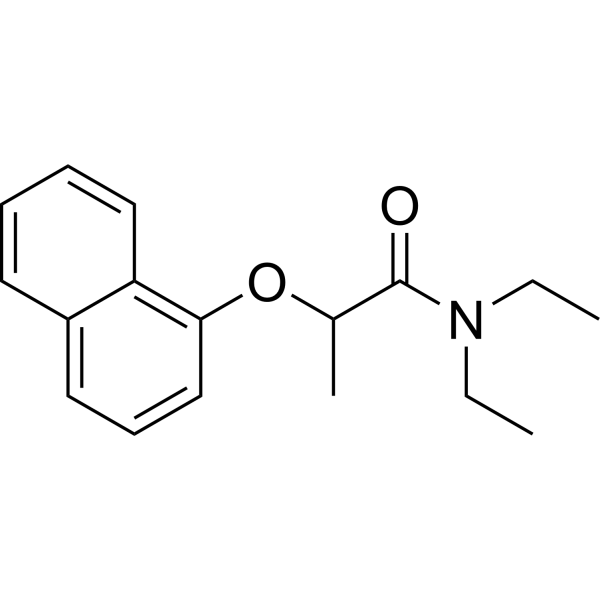
Napropamide (Napropamid) is an amide herbicide that can be used to control weeds in fruits, vegetables, tobacco, and ornamental plants. Napropamide mainly exerts its effect by inhibiting DNA synthesis and cell division. Napropamide has moderate to high persistence in the field, with a half-life of 24-131 days, and is prone to photodegradation .
|
-
-
- HY-18572A
-
|
2,4-Dichlorophenoxyacetic acid sodium
|
Environmental Pollutants
Apoptosis
Herbicide
DNA/RNA Synthesis
|
Cancer
|
|
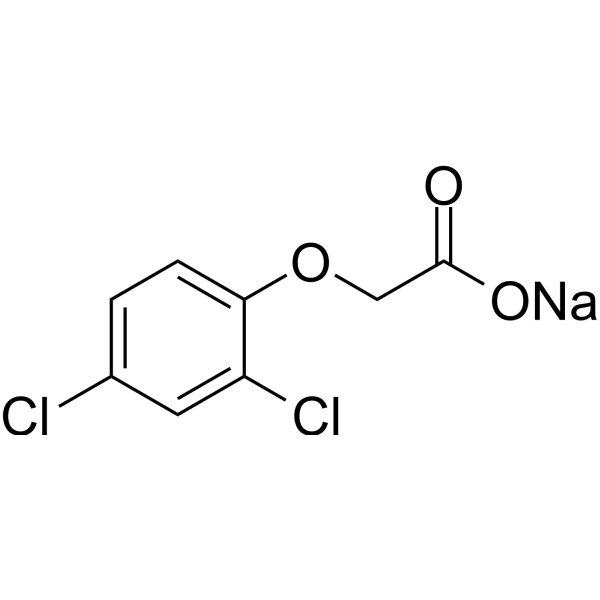
2,4-D (2,4-Dichlorophenoxyacetate) sodium is a selective herbicide that can be used for the control of broad-leaved weeds. 2,4-D sodium salt can induce < b>apoptosis. 2,4-D sodium salt inhibits DNA and protein synthesis, thereby preventing normal plant growth and development .
|
-
-
- HY-122494A
-
|
SF-1293 sodium
|
Herbicide
Bacterial
|
Infection
|
|
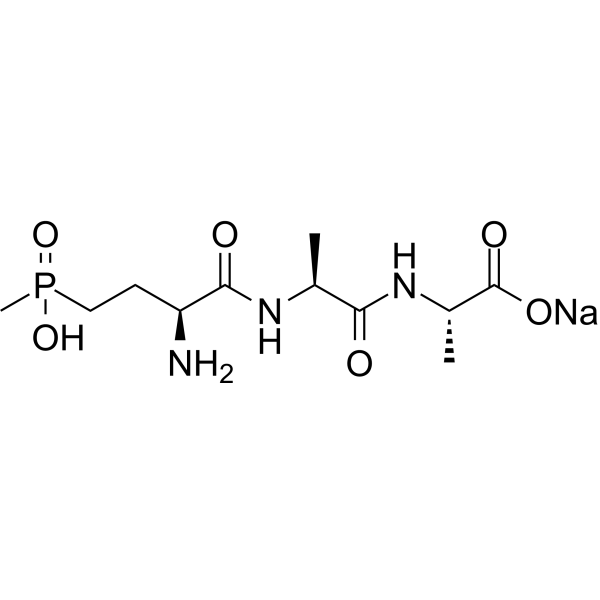
Bialaphos (SF-1293) sodium is a phosphinothricinylalanylalanine. Bialaphos sodium also acts as a precursor of herbicides and antibacterial agents. After entering bacterial or plant cells, Bialaphos sodium is converted into phosphinothricin, an inhibitor of glutamine synthetase .
|
-
-
- HY-128075
-
|
|
Environmental Pollutants
Herbicide
|
Cancer
|
|
Acifluorfen, a protoporphyrinogen oxidase (PROTOX) inhibitor herbicide, promotes the accumulation of protoporphyrin IX (PPIX), and induces tumors in the rodent liver. Acifluorfen causes strong photooxidative destruction of pigments and lipids in sensitive plant species .
|
-
-
- HY-119435
-
|
|
Herbicide
Environmental Pollutants
|
Others
|
|
Triallate is a selective thiocarbamate herbicide. Triallate regulates the biosynthesis of very-long-chain fatty acids and inhibits the elongation and division of plant cells. Triallate is used to control wild oats in barley, spring wheat, durum wheat, winter wheat and sugar beets .
|
-
-
- HY-111939
-
|
BAY-NTN 6867
|
Environmental Pollutants
Microtubule/Tubulin
|
Others
|
|
Amiprofos methyl (BAY-NTN 6867) is a phosphoric amide herbicide. Amiprofos methyl is a specific and potent antimicrotubule agent. Amiprofos methyl directly poisons microtubule dynamics in plant cells .
|
-
-
- HY-119737
-
-
-
- HY-59354
-
-
-
- HY-170505
-
|
|
Microtubule/Tubulin
Herbicide
|
Others
|
|
Icafolin-methyl is a herbicide and plant β-tubulin (Microtubule/Tubulin) inhibitor. Icafolin-methyl binds to the β-tubulin region of the Colchicine (HY-16569) binding site, thereby blocking the polymerization of plant tubulin. As a non-selective herbicide, Icafolin-methyl exhibits post-emergence activity against weeds in both cool-season and warm-season cropping systems, including resistant ryegrass and darnel biotypes. Icafolin-methyl can be used for herbicide research .
|
-
-
- HY-135753
-
-
-
- HY-W014240
-
|
|
Environmental Pollutants
Herbicide
|
Others
|
|
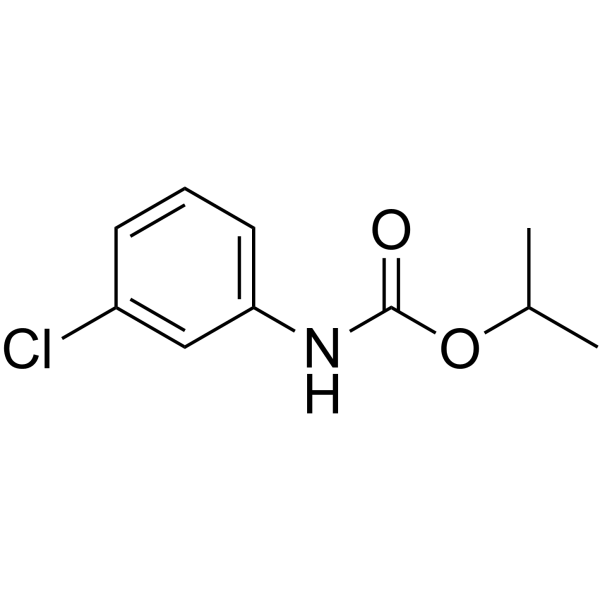
Chlorpropham is a carbamate herbicide and plant growth regulator. Chlorpropham inhibits mitosis and cell division by interfering with the organisation of the spindle microtubules .
|
-
-
- HY-W004643
-
|
AK-II
|
Fungal
Herbicide
|
Infection
|
|
Akardite II (AK-II) is a stabilizer for nitrocellulose (NC) propellants as it scavenges NOx. Akardite II helps control a variety of plant pathogens and weeds, which can be used as fungicides and herbicides .
|
-
-
- HY-19698
-
|
4-CPA; p-Chlorophenoxyacetic acid
|
Environmental Pollutants
Biochemical Assay Reagents
Herbicide
|
Others
|
|
4-Chlorophenoxyacetic acid (4-CPA) is a widely used herbicide and plant growth regulator. 4-Chlorophenoxyacetic acid (4-CPA) mimics endogenous auxin and regulates plant cell division, differentiation and gene expression. 4-Chlorophenoxyacetic acid (4-CPA) is used to control weeds and promote fruit growth .
|
-
-
- HY-124438
-
|
|
Antibiotic
Fungal
|
Infection
|
|
Herbicidin A is an adenosine-derived nucleoside antibiotic, but also is a herbicide against dicotyledonous plants. Herbicidin A can be isolated from Streptomyces scopuliridis M40 .
|
-
-
- HY-170920
-
|
|
Cytochrome P450
SOD
Glutathione S-transferase
Acetolactate Synthase (ALS)
|
Others
|
|
Herbicide safener-4 (Compound I-15) is a Herbicide safener, improving the herbicide resistance of crops without reducing the herbicidal effect on targeted weed species. Herbicide safener-4 competitively binds to the ALS active site with Mesosulfuron-methyl (HY-126987). Herbicide safener-4 enhances GSH (HY-D0187), GST, CYP450, POD, SOD and ALS activity in plants .
|
-
-
- HY-W019870A
-
|
|
Herbicide
|
Neurological Disease
|
|
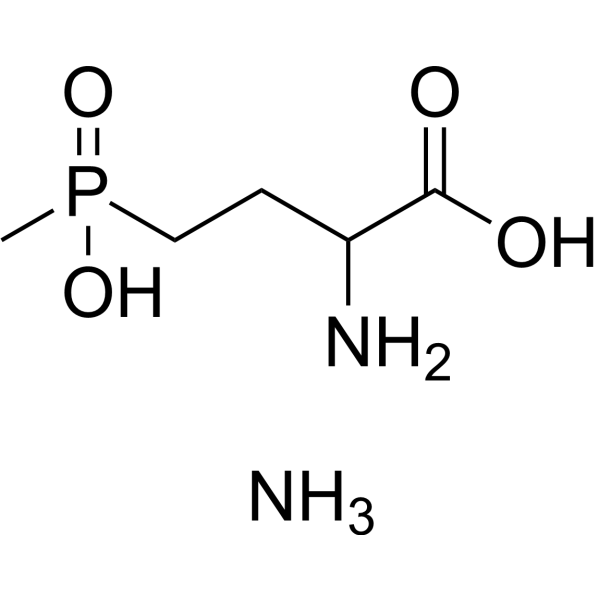
Glufosinate, a phosphinic acid analogue of glutamic acid, is a herbicide which is converted by plant cells into PT (L-phosphinothricin). Glufosinate exerts neurotoxic activity .
|
-
-
- HY-19698A
-
|
4-CPA sodium; p-Chlorophenoxyacetic acid sodium
|
Biochemical Assay Reagents
Herbicide
|
Others
|
|
4-Chlorophenoxyacetic acid sodium is a widely used herbicide and plant growth regulator. 4-Chlorophenoxyacetic acid sodium mimics endogenous auxin and regulates plant cell division, differentiation and gene expression. 4-Chlorophenoxyacetic acid sodium is used to control weeds and promote fruit growth .
|
-
-
- HY-B2020
-
|
|
Environmental Pollutants
Herbicide
|
Others
|
|
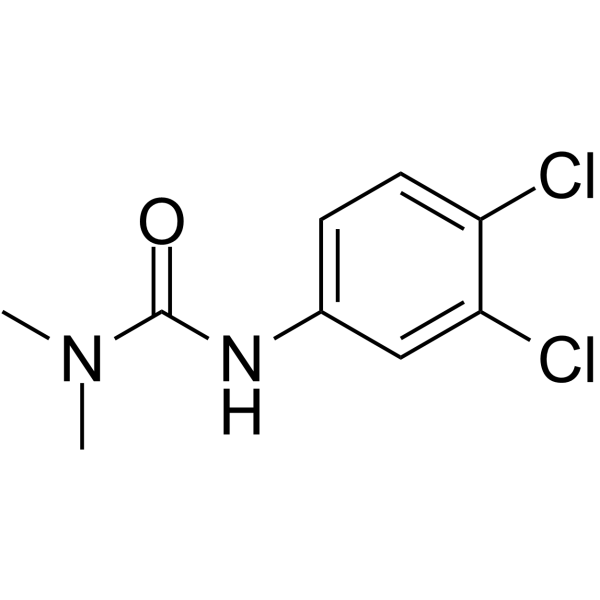
Fenuron is a water-soluble herbicide used to control annual broad-leaved weeds and woody plants, which is widely applied in the fields of beans, spinach, sugar beet, and other fruits .
|
-
-
- HY-W019870R
-
|
|
Herbicide
Reference Standards
|
Neurological Disease
|
|
Glufosinate (ammonium) (Standard) is the analytical standard of Glufosinate (ammonium). This product is intended for research and analytical applications. Glufosinate ammonium, a phosphinic acid analogue of glutamic acid, is an herbicide which is converted by plant cells into PT (L-phosphinothricin). Glufosinate ammonium exerts neurotoxic activity .
|
-
-
- HY-134094R
-
|
|
Herbicide
Reference Standards
|
Inflammation/Immunology
|
|
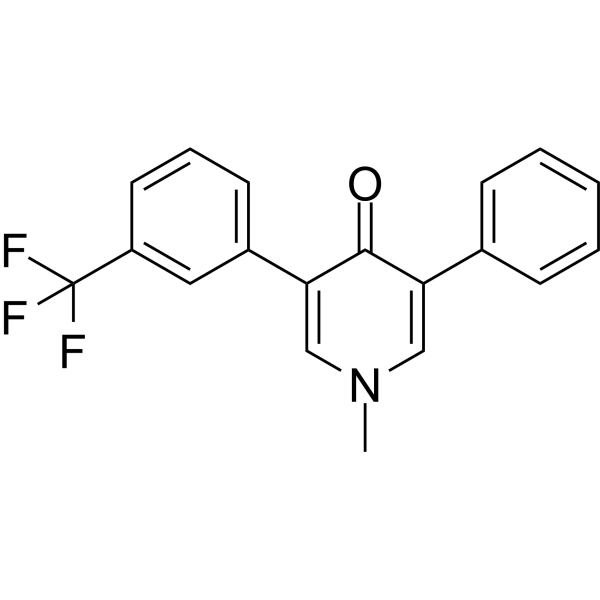
Fluridone (Standard) is the analytical standard of Fluridone. This product is intended for research and analytical applications. Fluridone is a herbicide, particularly to eliminate aquatic plant growth in water reservoirs and irrigation channels. Fluridone is a potent Abscisic acid (ABA) biosynthesis inhibitor, and has anti-inflammatory effects .
|
-
-
- HY-18572S
-
|
2,4-Dichlorophenoxyacetic acid-13C6
|
Isotope-Labeled Compounds
Herbicide
DNA/RNA Synthesis
Apoptosis
|
Cancer
|
|
2,4-D- 13C6 is the 13C-labeled 2,4-D (HY-18572). 2,4-D (2,4-Dichlorophenoxyacetic acid) is a selective systemic herbicide for the control of broad-leaved weeds. 2,4-D acts as a plant hormone, causing uncontrolled growth in the meristematic tissues. 2,4-D inhibits DNA and protein synthesis and thereby prevents normal plant growth and development .
|
-
-
- HY-100427R
-
|
CL29926 (Standard); (±)-Imazamox (Standard)
|
Reference Standards
Acetolactate Synthase (ALS)
|
Others
|
|
Imazamox (Standard) is the analytical standard of Imazamox. This product is intended for research and analytical applications. Imazamox (CL29926) is a systemic herbicide that inhibits the production of acetolactate synthase (ALS) in plants with high selectivity, high activity, safety and broadspectrum activity, which would then inhibit plant growth and ultimately lead to plant death .
|
-
-
- HY-W014240S1
-
|
|
Isotope-Labeled Compounds
Mitosis
|
Others
|
|
Chlorpropham-d7 is the deuterium labeled Chlorpropham . Chlorpropham is a carbamate herbicide and plant growth regulator. Chlorpropham inhibits mitosis and cell division by interfering with the organisation of the spindle microtubules .
|
-
-
- HY-59354S
-
|
|
DNA/RNA Synthesis
|
Cancer
|
|
Maleic hydrazide-d2 is the deuterium labeled Maleic hydrazide . Maleic hydrazide is extensively used as a systemic plant growth regulator and as a herbicide. Maleic hydrazide acts as an inhibitor of the synthesis of nucleic acids and proteins .
|
-
-
- HY-162883
-
|
|
SHMT
|
Others
|
|
SHMT-IN-4 (Compound 9ay) is a herbicide that targets and inhibits serine hydroxymethyltransferase (SHMT1) with an IC50 value of 193.8 g a.i./ha (active ingredient content per hectare). SHMT-IN-4 interferes with amino acid synthesis and metabolism in plants by binding to SHMT1, thereby inhibiting plant growth. Additionally, SHMT-IN-4 shows no significant toxicity to maize and honeybees .
|
-
-
- HY-136369
-
-
-
- HY-B2051
-
-
-
- HY-136374
-
|
|
Herbicide
|
Others
|
|
Haloxyfop-P-methyl is an aryloxyphenoxypropionate herbicide. Haloxyfop-P-methyl can be absorbed by roots or foliage and hampers lipogenesis and increases oxidative stress in target plants .
|
-
-
- HY-B1845
-
|
|
Environmental Pollutants
Herbicide
|
Others
|
|
Florasulam is a targeted post-emergent herbicide belonging to the triazolopyrimidine sulfonanilide class, which functions by inhibiting acetolactate synthase (ALS) in plants. Located in the chloroplasts, ALS plays a crucial role in the biosynthesis of branched-chain amino acids. When Florasulam inhibits ALS, it disrupts plant cell division, reduces growth, and ultimately leads to plant death.
|
-
-
- HY-W714225
-
|
Monosodium methylarsonate
|
Environmental Pollutants
Herbicide
|
Others
|
|
Sodium methylarsonate (Monosodium methylarsonate) is an organoarsenic compound with environmental toxicity that can be used as a herbicide to control weeds. Sodium methylarsonate interferes with plant metabolic processes, particularly by hindering photosynthesis and protein synthesis, ultimately leading to plant death. Additionally, sodium methylarsonate can induce the production of metallothioneins (MTs) in fish .
|
-
-
- HY-B0868
-
|
|
Herbicide
|
Others
|
|
2,4-D isooctyl ester, a synthetic auxin herbicide, is a TIR1 protein transport inhibitor. 2,4-D isooctyl ester interacts with TIR1 to facilitate auxin signal transduction, activating auxin-mediated growth responses. 2,4-D isooctyl ester functions as a pro-herbicide bio-transformed into phytotoxic 2,4-D post-plant absorption, disrupting normal plant growth. 2,4-D isooctyl ester can be used to control broadleaf weeds .
|
-
-
- HY-136633R
-
|
|
Herbicide
Reference Standards
|
Others
|
|
Pyroxasulfone (Standard) is the analytical standard of Pyroxasulfone. This product is intended for research and analytical applications. Pyroxasulfone is a broad-spectrum pyrazole herbicide used primarily for all-season residual weed control in corn and soybeans. Pyroxasulfone is active against a variety of annual grasses and some broad-leaved weeds, and can be absorbed through roots and stems to inhibit early seedling growth of sensitive plants. Pyroxasulfone can be used to study herbicide effects and weed resistance .
|
-
-
- HY-W052234
-
|
|
Insecticide
|
Others
|
|
4-Fluorophenoxyacetic acid is a herbicide and plant defense inducer. 4-Fluorophenoxyacetic can inhibit the heading of monocotyledonous weeds and induce their sterility. Additionally, 4-Fluorophenoxyacetic acid can induce the defense mechanism of cereals to suppress pest populations and increase the yield of field crops .
|
-
-
- HY-116954R
-
|
|
Reference Standards
DNA/RNA Synthesis
|
Others
|
|
Metribuzin (Standard) is the analytical standard of Metribuzin. This product is intended for research and analytical applications. Metribuzin is a low-cost non-selective herbicide that belongs to the chemical class of triazinones. Metribuzin hinders DNA synthesis in treated plants and acts on photosystem II, ultimately inhibiting photosynthesis. Metribuzin provides good control of important annual grass and broad-leaf weeds .
|
-
-
- HY-B2046R
-
-
-
- HY-W076490
-
|
IPO 4328; N-Methyl-N'-phenylurea; 1-Methyl-3-phenylurea
|
Herbicide
|
Others
|
|
Defenuron (IPO 4328) is a herbicide for controlling undesirable grasses and broad-leaved plants in a variety of crops .
|
-
-
- HY-147092R
-
|
|
Reference Standards
Microtubule/Tubulin
Herbicide
|
Infection
|
|
Oryzalin (Standard) is the analytical standard of Oryzalin (HY-147092). This product is intended for research and analytical applications. Oryzalin is a dinitroaniline herbicide with antimitotic and antileishmanial activities. Oryzalin can bind to plant tubulin, inhibit the polymerization of microtubules in plant cells, and affect chromosome migration. Oryzalin can also be used to induce chromosome doubling .
|
-
-
- HY-111939R
-
|
BAY-NTN 6867 (Standard)
|
Reference Standards
Microtubule/Tubulin
|
Others
|
|
Amiprofos methyl (Standard) is the analytical standard of Amiprofos methyl. This product is intended for research and analytical applications. Amiprofos methyl (BAY-NTN 6867) is a phosphoric amide herbicide. Amiprofos methyl is a specific and potent antimicrotubule agent. Amiprofos methyl directly poisons microtubule dynamics in plant cells .
|
-
-
- HY-136376R
-
|
|
Herbicide
Reference Standards
|
Others
|
|
Mefenpyr-diethyl (Standard) is the analytical standard of Mefenpyr-diethyl. This product is intended for research and analytical applications. Mefenpyr-diethyl is an herbicide safener. Mefenpyr-diethyl enhances plant tolerance to herbicides by inducing the expression of antioxidant enzymes such as GST. Mefenpyr-diethyl protects crops against herbicide injury .
|
-
-
- HY-W705846
-
|
|
Herbicide
|
Infection
|
|
Pyraflufen is a pyrazolylphenyl herbicide that can be used for selective control of broadleaf weeds. Pyraflufen can inhibit plant enzyme protoporphyrinogen oxidase.
|
-
- HY-W414724
-
|
|
Herbicide
|
Others
|
|
Methabenzthiazuron is a herbicide, which inhibits the plants' growth through inhibition of photosynthesis. Methabenzthiazuron can be used for weed control in cereal crops .
|
-
- HY-W616313
-
|
|
Herbicide
|
Others
|
|
Cyprosulfamide serves as a herbicide that safeguards plants against salinity stress while promoting vigorous growth, including the development of new tillers and early flowering.
|
-
- HY-100427S
-
|
CL29926-13C,d3; (±)-Imazamox-13C,d3
|
Acetolactate Synthase (ALS)
Isotope-Labeled Compounds
|
Others
|
|
Imazamox- 13C,d3 is the 13C- and deuterium labeled Imazamox. Imazamox (CL29926) is a systemic herbicide that inhibits the production of acetolactate synthase (ALS) in plants with high selectivity, high activity, safety and broadspectrum activity, which would then inhibit plant growth and ultimately lead to plant death .
|
-
- HY-135753R
-
|
BAS 9052 (Standard)
|
Reference Standards
Acetyl-CoA Carboxylase
|
Others
|
|
Sethoxydim (Standard) is the analytical standard of Sethoxydim. This product is intended for research and analytical applications. Sethoxydim is a postemergent herbicide. Sethoxydim inhibits plant acetyl-coenzyme A carboxylase (ACCase) activity .
|
-
- HY-B1845R
-
|
|
Endogenous Metabolite
Reference Standards
|
Others
|
|
Florasulam (Standard) is the analytical standard of Florasulam. This product is intended for research and analytical applications. Florasulam is a targeted post-emergent herbicide belonging to the triazolopyrimidine sulfonanilide class, which functions by inhibiting acetolactate synthase (ALS) in plants. Located in the chloroplasts, ALS plays a crucial role in the biosynthesis of branched-chain amino acids. When Florasulam inhibits ALS, it disrupts plant cell division, reduces growth, and ultimately leads to plant death.
|
-
- HY-W616313S
-
|
|
Isotope-Labeled Compounds
HBV
Herbicide
|
Others
|
|
Cyprosulfamide-d4 is deuterium labeled Cyprosulfamide. Cyprosulfamide serves as a herbicide that safeguards plants against salinity stress while promoting vigorous growth, including the development of new tillers and early flowering .
|
-
- HY-121158
-
|
S-2846
|
Herbicide
|
Others
|
|
Butamifos (S-2846) is an organophosphoramidate herbicide used to control annual weeds with low toxicity to mammals. Butamifos acts on the growing points of susceptible plants, causing severe radial enlargement of the affected tissues .
|
-
- HY-B2051R
-
|
|
Fungal
Reference Standards
|
Others
|
|
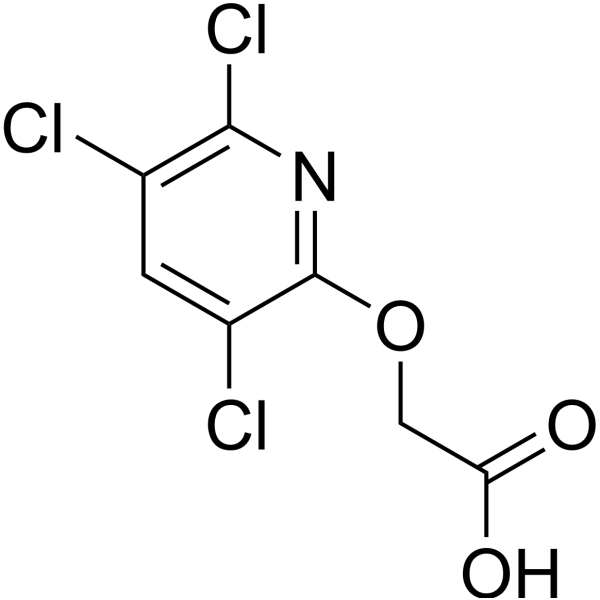
Triclopyr (Standard) is the analytical standard of Triclopyr. This product is intended for research and analytical applications. Triclopyr, a foliar systemic herbicide and fungicide, is widely used for broadleaf and woody plant control. Triclopyr has severe toxicity .
|
-
- HY-W014240R
-
|
|
Herbicide
Mitosis
Reference Standards
|
Others
|
|
Chlorpropham (Standard) is the analytical standard of Chlorpropham. This product is intended for research and analytical applications. Chlorpropham is a carbamate herbicide and plant growth regulator. Chlorpropham inhibits mitosis and cell division by interfering with the organisation of the spindle microtubules .
|
-
- HY-W414724R
-
|
|
Herbicide
Reference Standards
|
Others
|
|
Methabenzthiazuron (Standard) is the analytical standard of Methabenzthiazuron. This product is intended for research and analytical applications. Methabenzthiazuron is a herbicide, which inhibits the plants' growth through inhibition of photosynthesis. Methabenzthiazuron can be used for weed control in cereal crops .
|
-
- HY-118985
-
|
|
Endogenous Metabolite
|
Cancer
|
|
Acifluorfen sodium, a protoporphyrinogen oxidase (PROTOX) inhibitor herbicide, promotes the accumulation of protoporphyrin IX (PPIX), and induces tumors in the rodent liver. Acifluorfen sodium causes strong photooxidative destruction of pigments and lipids in sensitive plant species .
|
-
- HY-19698AR
-
|
4-CPA sodium (Standard); p-Chlorophenoxyacetic acid sodium (Standard)
|
Biochemical Assay Reagents
Reference Standards
|
Others
|
|
4-Chlorophenoxyacetic acid (sodium) (Standard) is the analytical standard of 4-Chlorophenoxyacetic acid (sodium). This product is intended for research and analytical applications. 4-Chlorophenoxyacetic acid (sodium) (4-CPA (sodium); p-Chlorophenoxyacetic acid (sodium)) is a chlorophenol compound that can act as a plant growth regulator and herbicide. At low concentrations, 4-Chlorophenoxyacetic acid sodium promotes plant growth, while at high concentrations, it inhibits plant growth (especially in dicotyledonous plants). 4-Chlorophenoxyacetic acid (sodium) is a kind of biological materials or organic compounds that are widely used in life science research .
|
-
- HY-59354R
-
|
|
Reference Standards
DNA/RNA Synthesis
|
Cancer
|
|
Maleic hydrazide (Standard) is the analytical standard of Maleic hydrazide. This product is intended for research and analytical applications. Maleic hydrazide is extensively used as a systemic plant growth regulator and as a herbicide. Maleic hydrazide acts as an inhibitor of the synthesis of nucleic acids and proteins .
|
-
- HY-W710697
-
|
Triclopyr 2-butoxyethylester
|
Herbicide
|
Others
|
|
Triclopyr ester (Triclopyr 2-butoxyethylester) is a bioactive substance with activity in controlling harmful woody plants. Triclopyr ester showed toxicity to honeybees (Apis mellifera) in greenhouse trials. Triclopyr ester in combination with other herbicides is effective in removing the canopy of plants such as honey trees and whitebrush. Triclopyr ester can quickly assess its weeding effectiveness when treating trees in greenhouses, providing potential treatment options for field experiments .
|
-
- HY-119737R
-
|
|
Reference Standards
Acetolactate Synthase (ALS)
|
Metabolic Disease
|
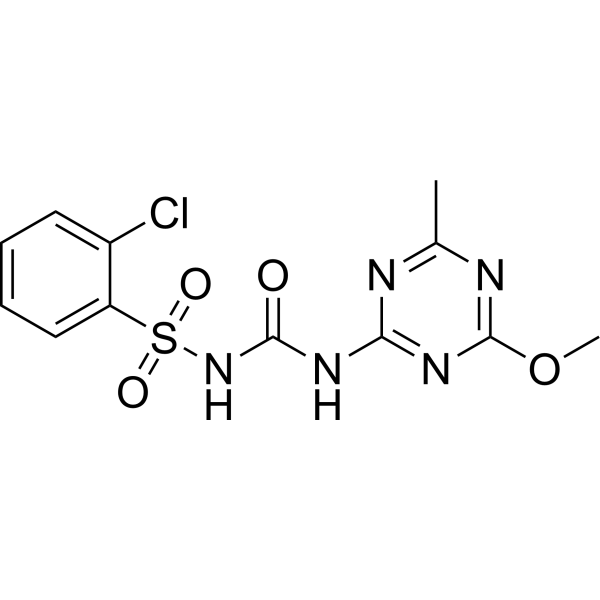
|
Chlorsulfuron (Standard) is the analytical standard of Chlorsulfuron. This product is intended for research and analytical applications. Chlorsulfuron blocks the biosynthesis of the amino acids valine and isoleucine in plants. Chlorsulfuron completely alleviates herbicide-induced growth inhibition. The site of action of Chlorsulfuron is the enzyme acetolactate synthase .
|
-
- HY-B2020R
-
|
|
Herbicide
Reference Standards
|
Others
|
|
Fenuron (Standard) is the analytical standard of Fenuron. This product is intended for research and analytical applications. Fenuron is a water-soluble herbicide used to control annual broad-leaved weeds and woody plants, which is widely applied in the fields of beans, spinach, sugar beet, and other fruits .
|
-
- HY-N8357R
-
|
|
Reference Standards
Endogenous Metabolite
|
Others
|
|
Fenuron (Standard) is the analytical standard of Fenuron. This product is intended for research and analytical applications. Fenuron is a water-soluble herbicide used to control annual broad-leaved weeds and woody plants, which is widely applied in the fields of beans, spinach, sugar beet, and other fruits .
|
-
- HY-136374R
-
|
|
Herbicide
Reference Standards
|
Others
|
|
Haloxyfop-P-methyl (Standard) is the analytical standard of Haloxyfop-P-methyl. This product is intended for research and analytical applications. Haloxyfop-P-methyl is an aryloxyphenoxypropionate herbicide. Haloxyfop-P-methyl can be absorbed by roots or foliage and hampers lipogenesis and increases oxidative stress in target plants .
|
-
- HY-12853R
-
|
|
Reference Standards
Reactive Oxygen Species (ROS)
|
Others
|
|
Mesotrione (Standard) is the analytical standard of Mesotrione. This product is intended for research and analytical applications. Mesotrione is a herbicide belongs to the benzoylcyclohexanedione family. Mesotrione is a potent and competitive and reversible inhibitor of HPPD enzyme. Mesotrione is selective to maize due to rapid metabolism and relative high tolerance by the susceptible crop plant .
|
-
- HY-133813AR
-
|
|
Reference Standards
Drug Metabolite
|
Neurological Disease
|
|
2,4-D Butyl ester (Standard) is the analytical standard of 2,4-D Butyl ester. This product is intended for research and analytical applications. 2,4-D Butyl ester is an organic phenoxy herbicide and used to control woody broad-leaf weeds. 2,4-D butyl ester produces its herbicidal effect by mimicking natural plant growth hormones causing plants to grow too rapidly to survive .
|
-
- HY-14397AR
-
|
Indometacin sodium hydrate (Standard)
|
Reference Standards
COX
Bacterial
Influenza Virus
Antibiotic
|
Inflammation/Immunology
Cancer
|
|
Dimethenamide-P (Standard) is the analytical standard of Dimethenamide-P. This product is intended for research and analytical applications. Dimethenamide-P is an amide herbicide effective for the pre-emergence management of annual grasses, small-seeded broadleaf weeds, and sedges in ornamental plants, functioning by inhibiting the synthesis of long-chain fatty acids.
|
-
- HY-128075R
-
|
|
Herbicide
Reference Standards
|
Cancer
|
|
Acifluorfen (Standard) is the analytical standard of Acifluorfen. This product is intended for research and analytical applications. Acifluorfen, a protoporphyrinogen oxidase (PROTOX) inhibitor herbicide, promotes the accumulation of protoporphyrin IX (PPIX), and induces tumors in the rodent liver. Acifluorfen causes strong photooxidative destruction of pigments and lipids in sensitive plant species .
|
-
- HY-18572S1
-
|
|
Isotope-Labeled Compounds
Herbicide
DNA/RNA Synthesis
Apoptosis
|
Cancer
|
|
2,4-D-d3 is the deuterium labeled 2,4-D (HY-18572) . 2,4-D (2,4-Dichlorophenoxyacetic acid) is a selective systemic herbicide for the control of broad-leaved weeds. 2,4-D acts as a plant hormone, causing uncontrolled growth in the meristematic tissues. 2,4-D inhibits DNA and protein synthesis and thereby prevents normal plant growth and development .
|
-
- HY-W874850
-
|
|
Herbicide
|
|
|
Fluorodifen is a selective herbicide with the activity of inhibiting weed growth. Fluorodifen can effectively control the growth of various annual and perennial broadleaf weeds and some grass weeds, and is widely used in the field management of various crops. By acting on the photosynthesis of plants and the regulation of their growth hormones, Fluorodifen ensures the healthy growth and harvest of crops.
|
-
- HY-B2046S
-
-
- HY-180202
-
|
|
Herbicide
Transketolase
|
Others
|
|
Transketolase-IN-7 (compound 4m) is a potent herbicide that exhibits inhibitory activity against C. rotundus with an IC50 of 6.66 mg/L. Transketolase-IN-7 is a transketolase (TK) inhibitor that interacts with the TK enzyme by forming hydrogen bonds. Transketolase-IN-7 can be used for research of plant herbicides .
|
-
- HY-185451
-
|
|
Herbicide
|
Others
|
|
Herbicidal agent 15 is a uracilpyridine herbicide. Herbicidal agent 15 controls harmful plants and acts on plants, their seeds, and their habitat to manage unwanted vegetation .
|
-
- HY-119633
-
|
|
Herbicide
|
Others
|
|
Perfluidone is a selective 3-ketoacyl-CoA synthase (KCS) inhibitor with IC50s of 0.21 and 7.60 μM for CER6 (KCS6) and FAE1 (KCS18), respectively. Perfluidone significantly inhibits very-long-chain fatty acid (VLCFA) synthesis. Perfluidone has phytotoxic activity and inhibits Lemna paucicostata growth. Perfluidone can be uses as a plant growth regulator and herbicide for agriculture research .
|
-
- HY-181407
-
|
|
Herbicide
Glutathione S-transferase
Cytochrome P450
SOD
|
Others
|
|
Herbicide safener-5 is a herbicide (Herbicide) safener. Herbicide safener-5 promotes plant growth recovery, enhances the activities of detoxifying enzymes (ALS, GST, CYP450, POD), and reduces SOD activity. Herbicide safener-5 is applicable to herbicide-related research .
|
-
- HY-W714215
-
|
|
Herbicide
|
Others
|
|
Sebuthylazine is a herbicide. Sebuthylazine is selectively and systematically absorbed and migrated through plant roots. Sebuthylazine inhibits photosynthesis in photosystem II .
|
-
- HY-W714182
-
|
|
Herbicide
|
Others
|
|
Dimethametryn is a methylthio-triazine herbicide mainly used for controlling broadleaf weeds in paddy fields. Dimethametryn blocks plant photosynthesis by inhibiting electron transport and non-cyclic photophosphorylation of photosystem II, ultimately causing chlorosis, necrosis and death of sensitive plants .
|
-
- HY-W714199
-
|
Potablan
|
Herbicide
|
Others
|
|
Monalide (Potablan) is a soil-applied and contact herbicide that acts both via absorption by plant roots from the soil and through contact with the aboveground parts of plants. Monalide inhibits weed growth. Monalide decomposes within several weeks in soil and leaves no residues on crops .
|
-
- HY-136369R
-
|
|
Herbicide
Mitosis
Reference Standards
|
Others
|
|
Ethofumesate (Standard) is the analytical standard of Ethofumesate. This product is intended for research and analytical applications. Ethofumesate, a chiral herbicide, acts by inhibiting mitosis and reducing photosynthesis and plant respiration .
|
-
- HY-136369S
-
|
|
Isotope-Labeled Compounds
Herbicide
|
Others
|
|
Ethofumesate-d5 is the deuterium labeled Ethofumesate (HY-136369). Ethofumesate, a chiral herbicide, acts by inhibiting mitosis and reducing photosynthesis and plant respiration .
|
-
- HY-W669241
-
|
|
Herbicide
|
Others
|
|
Dimethenamide-P is an amide herbicide effective for the pre-emergence management of annual grasses, small-seeded broadleaf weeds, and sedges in ornamental plants, functioning by inhibiting the synthesis of long-chain fatty acids.
|
-
- HY-W721333
-
|
|
Herbicide
Acetolactate Synthase (ALS)
|
Others
|
|
Pyrimisulfan is a potent acetolactate synthase (ALS) inhibitor and a broad‑spectrum herbicide. Pyrimisulfan selectively inhibits plant acetolactate synthase. Pyrimisulfan controls a wide spectrum of paddy weeds including annual grasses, sedges, broadleaf weeds, and sulfonylurea‑resistant biotypes pre‑ and postemergence, with long residual activity and excellent rice safety. Pyrimisulfan can be used for research on paddy herbicides .
|
-
- HY-160735
-
|
|
Herbicide
Glutaminase
|
Others
|
|
L-Phosphinothricin is a glutamine synthetase inhibitor and a non-selective herbicide. L-Phosphinothricin acts as a competitive inhibitor, induces toxic ammonium ion accumulation in plants and bacteria, and indirectly blocks the photosynthesis process. L-Phosphinothricin exerts herbicidal activity against both monocotyledonous and dicotyledonous plant species, is primarily absorbed through plant leaves, exhibits limited translocation in plants, and undergoes rapid degradation by soil microorganisms with no root uptake. L-Phosphinothricin can be used for research on weed control in agricultural and non-crop scenarios .
|
-
- HY-W727532
-
|
|
HPPD
Herbicide
|
Others
|
|
Fenpyrazone is a 4-hydroxyphenylpyruvate dioxygenase (HPPD) inhibitor as well as a post-emergence herbicide. By inhibiting the activity of HPPD, Fenpyrazone indirectly blocks carotenoid biosynthesis in plants, causing bleaching of new tissues in sensitive plants, followed by necrosis and eventual death. Fenpyrazone is used in studies on controlling annual monocotyledonous and dicotyledonous weeds in summer maize fields .
|
-
- HY-W714973
-
|
|
Herbicide
|
Others
|
|
Halauxifen-methyl is a 6-arylpicolinic acid herbicide. As a synthetic auxin, Halauxifen-methyl interferes with the normal growth and development of sensitive weeds by mimicking the action of endogenous plant auxins, causing malformation, uncontrolled growth and eventual death .
|
-
- HY-W703578
-
|
|
Herbicide
|
Others
|
|
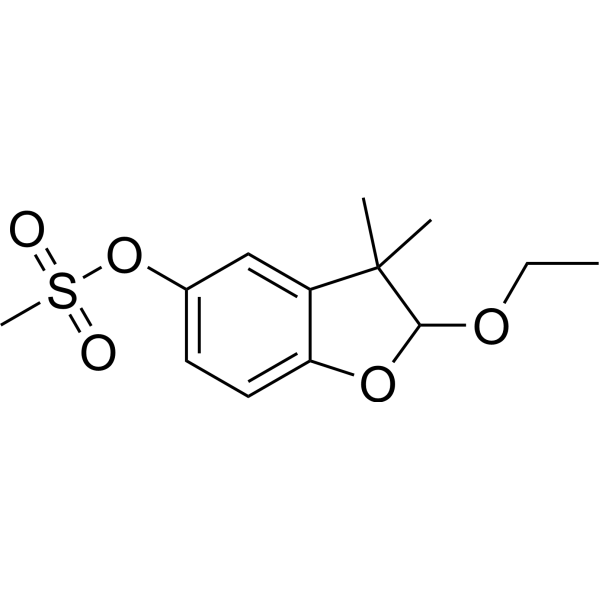
Cinmethylin is a herbicide. Cinmethylin inhibits plant fatty acid biosynthesis. Cinmethylin reduces the emergence rate and above-ground biomass of rigid ryegrass. Cinmethylin kills weeds by inhibiting cell division at root meristems. Cinmethylin exhibits activity against paddy field weeds including Echinochloa crus-galli (L.) var. formosensis and Scirpus juncoides var. ohwianus. Cinmethylin is applicable to agricultural herbicide research .
|
-
- HY-N12990
-
|
MyA
|
Herbicide
Fungal
|
Others
|
|
Myrigalone A (MyA) is a plant ethylene biosynthesis inhibitor and natural herbicide . Myrigalone A possesses antioxidant, antifungal, and antimicrobial activities. Myrigalone A interferes with auxin homeostasis during seed germination. Myrigalone A delays seed germination, inhibits the formation of roots, hypocotyls, and root hairs, and causes developmental delay in specific organisms. Myrigalone A triggers the induction of detoxification programs, alters the metabolism of gibberellins, cis-(+)-12-oxophytodienoic acid, and jasmonic acid, disrupts the antioxidant system and oxidative signaling, and impairs the function of aquaporins and water uptake in imbibed seeds. Myrigalone A can be used in studies related to herbicides and plant growth regulators .
|
-
- HY-W752907
-
|
|
Isotope-Labeled Compounds
Herbicide
|
Neurological Disease
|
|
Glufosinate-d8 is the deuterium labeled Glufosinate (HY-W019870A). Glufosinate, a phosphinic acid analogue of glutamic acid, is a herbicide which is converted by plant cells into PT (L-phosphinothricin). Glufosinate exerts neurotoxic activity .
|
-
- HY-W721611
-
|
|
Herbicide
|
Others
|
|
Terbucarb is a phenylcarbamate herbicide. Terbucarb disrupts the mitotic microtubule organizing centers in plant cells, leading to the formation of multipolar spindles and branched phragmoplasts, thereby inhibiting plant growth. An "anaphase star" pattern induced by Terbucarb is observed in onion root tips. Terbucarb is cytotoxic to isolated rat hepatocytes, inducing cell death accompanied by depletion of intracellular ATP, protein thiols and glutathione .
|
-
- HY-W720329
-
|
|
Herbicide
DNA/RNA Synthesis
|
Others
|
|
Indaziflam is an alkyltriazine herbicide. Indaziflam targets the cellulose synthase complex and inhibits cellulose biosynthesis in plant cell walls. Indaziflam induces radial swelling of plants, ectopic lignification, inhibition of root and hypocotyl elongation, abnormal root and cell morphology, and also induces DNA strand breaks and micronucleus formation in HepG2 cells. Indaziflam can be used for research on monocot weed control .
|
-
- HY-W747529
-
|
|
Herbicide
|
Others
|
|
Fluthiacet-methyl is an isoxazole herbicide and also a protoporphyrinogen oxidase (Protox) inhibitor. Fluthiacet-methyl inhibits chlorophyll biosynthesis in cotyledons of velvetleaf and cotton. Fluthiacet-methyl induces electrolyte leakage in cotyledons of sensitive plants such as velvetleaf and cotton. Fluthiacet-methyl induces the accumulation of protoporphyrin IX in cotton cotyledons .
|
-
- HY-W669241R
-
|
|
Endogenous Metabolite
Reference Standards
|
Others
|
|
Dimethenamide-P (Standard) is the analytical standard of Dimethenamide-P. This product is intended for research and analytical applications. Dimethenamide-P is an amide herbicide effective for the pre-emergence management of annual grasses, small-seeded broadleaf weeds, and sedges in ornamental plants, functioning by inhibiting the synthesis of long-chain fatty acids.
|
-
- HY-W713147
-
|
|
Herbicide
|
Others
|
|
Thiencarbazone-methyl is a triazole herbicide and also a substrate for microbial degradation. Thiencarbazone-methyl can be degraded by specific fungi and strains. Thiencarbazone-methyl has intrinsic toxicity to the bladder and urinary function. Thiencarbazone-methyl possesses herbicidal activity and can be applied to corn, wheat, lawns and ornamental plants .
|
-
- HY-121158R
-
|
S-2846 (Standard)
|
Herbicide
Reference Standards
|
Others
|
|
Butamifos (Standard) is the analytical standard of Butamifos. This product is intended for research and analytical applications. Butamifos (S-2846) is an organophosphoramidate herbicide used to control annual weeds with low toxicity to mammals. Butamifos acts on the growing points of susceptible plants, causing severe radial enlargement of the affected tissues .
|
-
- HY-121139
-
|
2,2,3,3-Tetrafluoropropionic acid; 3H-Tetrafluoropropionic acid
|
Herbicide
|
Others
|
|
Flupropanate (2,2,3,3-Tetrafluoropropionic acid; 3H-Tetrafluoropropionic acid) is a soil-active selective herbicide and plant growth inhibitor that acts by inhibiting radicle growth and lipid biosynthesis in sensitive plants. Flupropanate exhibits high-efficiency control of Stipa weeds (such as Nassella neesiana and N. trichotoma) in pastures, and reduces the coverage of the invasive species Eragrostis curvula. Meanwhile, Flupropanate is sensitive to gramineous plants like ryegrass, but shows good selective tolerance to plantain, chicory and some leguminous plants. Studies show that in the protected area with Mediterranean climate in southwestern Australia, Flupropanate produces no significant non-target effects on native plant communities, functional groups or the endangered species Grevillea curviloba, indicating high ecological safety .
|
-
- HY-W547534
-
|
2,4-Dichlorophenoxyacetic acid ammonium
|
Herbicide
DNA/RNA Synthesis
Apoptosis
|
Cancer
|
|
2,4-D (2, 4-dichlorophenoxyacetic acid) ammonium is a selective herbicide that can be used for the control of broad-leaved weeds. 2,4-D ammonium can induce apoptosis. 2,4-D ammonium inhibits DNA and protein synthesis, thereby preventing normal plant growth and development .
|
-
- HY-18572S2
-
|
|
Isotope-Labeled Compounds
Herbicide
DNA/RNA Synthesis
Apoptosis
|
Cancer
|
|
2,4-D-d5 (2,4-Dichlorophenoxyacetic acid-d5) is the deuterium labeled 2,4-D (HY-18572) . 2,4-D (2,4-Dichlorophenoxyacetic acid) is a selective systemic herbicide for the control of broad-leaved weeds. 2,4-D acts as a plant hormone, causing uncontrolled growth in the meristematic tissues. 2,4-D inhibits DNA and protein synthesis and thereby prevents normal plant growth and development .
|
-
- HY-176729
-
|
|
Phytohormone
|
Others
|
|
KeIKK5 is a strigolactone (SL) biosynthesis inhibitor. KeIKK5 significantly reduces the level of 4-deoxystrigolactone (4-DO) in rice by inhibiting the activity of CYP711A enzyme. KeIKK5 can effectively inhibit the germination of root parasitic weeds. KeIKK5 can be used in the research of plant hormone regulation and new agricultural herbicides .
|
-
- HY-119435R
-
|
|
Herbicide
Reference Standards
Environmental Pollutants
|
Others
|
|
Triallate (Standard) is the analytical standard of Triallate (HY-119435). This product is intended for research and analytical applications. Triallate is a selective thiocarbamate herbicide. Triallate regulates the biosynthesis of very-long-chain fatty acids and inhibits the elongation and division of plant cells. Triallate is used to control wild oats in barley, spring wheat, durum wheat, winter wheat and sugar beets
|
-
- HY-W052988
-
|
|
Herbicide
|
Others
|
|
Aminocyclopyrachlor-methyl is a herbicide that acts as an indole-3-acetic acid (IAA) mimic. Aminocyclopyrachlor-methyl targets the IAA signaling pathway and is readily absorbed through both the leaves and roots of susceptible plants. Aminocyclopyrachlor-methyl markedly inhibits the growth and biomass of trumpetcreeper (Campsis radicans) and the growth and regrowth of mugwort (Artemisia vulgaris), thereby effectively controlling both weeds .
|
-
- HY-B0859
-
MCPA
1 Publications Verification
|
Environmental Pollutants
Cytochrome P450
Herbicide
|
Metabolic Disease
|
|
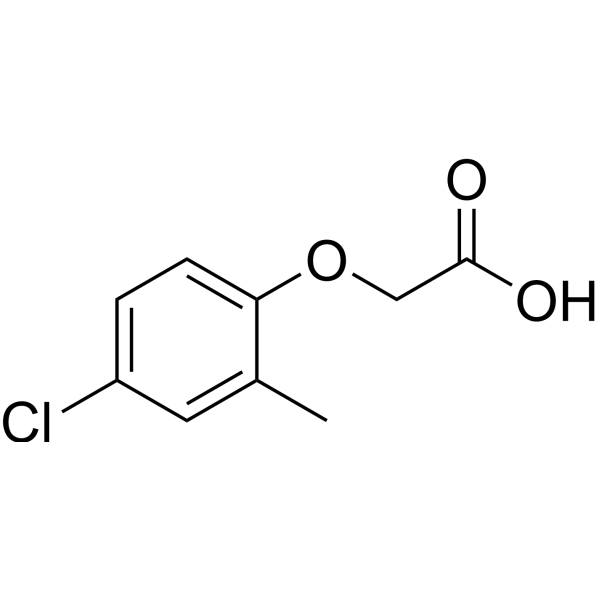
MCPA is an orally active phenoxyacetic acid herbicide. MCPA interferes with membrane integrity, energy metabolism (decreases ATP levels), and redox balance in plant cells. MCPA increases hepatic cytochrome P-450 levels and increases aniline hydroxylase and 7-ethoxycoumarin O-deethylase activities. MCPA can be used to control broadleaf weeds .
|
-
- HY-B0859A
-
|
|
Herbicide
Cytochrome P450
|
Metabolic Disease
|
|
MCPA sodium is an orally active phenoxyacetic acid herbicide. MCPA sodium interferes with membrane integrity, energy metabolism (decreases ATP levels), and redox balance in plant cells. MCPA sodium increases hepatic cytochrome P-450 levels and increases aniline hydroxylase and 7-ethoxycoumarin O-deethylase activities. MCPA sodium can be used to control broadleaf weeds .
|
-
- HY-B2007
-
|
|
Environmental Pollutants
Acetyl-CoA Carboxylase
Herbicide
|
Metabolic Disease
Inflammation/Immunology
|
|
Fluazifop-P-butyl is an orally active herbicide and ACCase inhibitor. Fluazifop-P-butyl blocks the formation of malonyl-CoA, disrupts lipid synthesis in sensitive plants, and exhibits concentration-dependent phytotoxicity to non-target maize seedlings. Fluazifop-P-butyl induces oxidative stress in male Wistar rats, impairs their liver and kidney functions, and disrupts testicular function .
|
-
- HY-N11409A
-
|
|
Herbicide
|
Others
|
|
Shikimate-3-phosphate lithium is the salt form of Shikimate-3-phosphate. Shikimate-3-phosphate lithium is a central microbial, parasite and plant metabolite, as a product of the shikimate kinase-catalysed reaction. Shikimate-3-phosphate lithium serves as an enzyme substrate for 5-enolpyruvoyl-shikimate 3-phosphate synthase, which is a target of anti-infectives and of herbicides .
|
-
- HY-N16818
-
|
|
Herbicide
|
Others
|
|
9-epi-Blumenol C is a C13-norisoprenoid (carotenoid derivative) compound with allelopathic and antifungal activities, and can regulate plant growth. The IC50 values ??of 9-epi-Blumenol C for watercress roots and hypocotyls are 2780 μM and 2240 μM, respectively, and for perennial ryegrass roots and coleoptiles are 3290 μM and 2950 μM, respectively. 9-epi-Blumenol C exhibits allelopathic activity through a mechanism involving direct inhibition of plant growth and degradation of arbuscular mycorrhizal fungi (AMF) colonization, thereby weakening nutrient uptake and stress resistance in neighboring plants. 9-epi-Blumenol C can be used in herbicide development and research related to plant competition mechanisms. 9-epi-Blumenol C can be obtained from the dried fallen leaves of Metasequoia glyptostroboides (a plant of the cypress family, genus Metasequoia) through extraction with 70% methanol and purification by ethyl acetate extraction .
|
-
- HY-W874850R
-
|
|
Endogenous Metabolite
Reference Standards
|
|
|
Fluorodifen (Standard) is the analytical standard of Fluorodifen. This product is intended for research and analytical applications. Fluorodifen is a selective herbicide with the activity of inhibiting weed growth. Fluorodifen can effectively control the growth of various annual and perennial broadleaf weeds and some grass weeds, and is widely used in the field management of various crops. By acting on the photosynthesis of plants and the regulation of their growth hormones, Fluorodifen ensures the healthy growth and harvest of crops.
|
-
- HY-W008484
-
|
|
Environmental Pollutants
Herbicide
|
Infection
|
|
Aminopyralid is a synthetic auxin herbicide. Aminopyralid provides foliar and soil residual weed control, and also increases forage yield in bahiagrass pastures. When present as a soil residue, Aminopyralid causes phytotoxicity, reduced plant height, decreased flower number and fruit yield loss in rotated vegetable crops. Aminopyralid is registered for the control of annual and perennial broadleaf weeds in pastures, permanent grasslands and non-cropped areas .
|
-
- HY-B1972R
-
|
Napropamid (Standard)
|
Herbicide
Reference Standards
DNA/RNA Synthesis
|
Others
|
|
Napropamide (Standard) (Napropamid (Standard)) is the analytical standard of Napropamide (HY-B1972). This product is intended for research and analytical applications. Napropamide (Napropamid) is an amide herbicide that can be used to control weeds in fruits, vegetables, tobacco, and ornamental plants. Napropamide mainly exerts its effect by inhibiting DNA synthesis and cell division. Napropamide has moderate to high persistence in the field, with a half-life of 24-131 days, and is prone to photodegradation.
|
-
- HY-W724357
-
|
Napropamid-d10
|
Isotope-Labeled Compounds
DNA/RNA Synthesis
Herbicide
|
Others
|
|
Napropamide-d10 (Napropamid-d10) is the deuterium labeled Napropamide (HY-B1972). Napropamide (Napropamid) is an amide herbicide that can be used to control weeds in fruits, vegetables, tobacco, and ornamental plants. Napropamide mainly exerts its effect by inhibiting DNA synthesis and cell division. Napropamide has moderate to high persistence in the field, with a half-life of 24-131 days, and is prone to photodegradation .
|
-
- HY-121242
-
|
VEL-5026
|
Photosystem II
|
Others
|
|
Buthidazole is a selective herbicide for weed control in corn. Buthidazole inhibits photosynthetic electron transport at two distinct sites in the photosynthetic electron transport chain. The major site of inhibition was on the reducing side of photosystem II. Another site of electron transport inhibition is on the oxidizing side of photosystem II. Buthidazole inhibits corn photosynthesis and prevents starch accumulation in bundle sheath chloroplasts and some ultrastructural disruption of mesophyl chloroplasts of corn plants .
|
-
- HY-18572AR
-
|
2,4-Dichlorophenoxyacetic acid sodium (Standard)
|
Reference Standards
Herbicide
DNA/RNA Synthesis
Apoptosis
|
Cancer
|
|
2,4-D sodium (Standard) is the analytical standard of 2,4-D sodium (HY-18572A). This product is intended for research and analytical applications. 2,4-D sodium is a selective herbicide that can be used for the control of broad-leaved weeds. 2,4-D sodium can induce < b>apoptosis. 2,4-D sodium inhibits DNA and protein synthesis, thereby preventing normal plant growth and development .
|
-
- HY-B0860
-
Diuron
2 Publications Verification
|
Environmental Pollutants
Reactive Oxygen Species (ROS)
Herbicide
MDM-2/p53
|
Cancer
|
|
Diuron is an orally active phenylurea herbicide. Diuron inhibits photosynthesis in plants by blocking the formation of ATP and NADH. Diuron increases the production of ROS. Diuron increases expression of p53 in certain cell lines. Diuron has herbicidal activity against annual and perennial broadleaf weeds and grass weeds. Diuron promotes DMBA/BBN-induced bladder cancer. Diuron can be used in breast cancer research .
|
-
- HY-W040194
-
|
|
Environmental Pollutants
Herbicide
|
Metabolic Disease
|
|
Clomazone is a broad spectrum herbicide, mainly used to control annual broadleaf weeds and grass weeds in various crops such as rice, soybeans, and peanuts. Clomazone inhibits carotenoid biosynthesis, and treated plants show typical "albinism" symptoms due to the destruction of chloroplast membrane structure leading to chlorophyll degradation. Clomazone exhibits multiple toxic effects on non-target organisms, including aquatic lethality, developmental malformations, liver damage, mitochondrial dysfunction, and hematotoxicity .
|
-
- HY-W713900
-
|
|
Isotope-Labeled Compounds
Herbicide
Cytochrome P450
|
Metabolic Disease
|
|
MCPA-d3-1 is the deuterium labeled MCPA (HY-B0859). MCPA is an orally active phenoxyacetic acid herbicide. MCPA interferes with membrane integrity, energy metabolism (decreases ATP levels), and redox balance in plant cells. MCPA increases hepatic cytochrome P-450 levels and increases aniline hydroxylase and 7-ethoxycoumarin O-deethylase activities. MCPA can be used to control broadleaf weeds .
|
-
- HY-59354S1
-
|
1,2-Dihydro-3,6-pyridazine-13C4-dione; 3,6-Dihydroxypyridazine-13C4; 3,6-Pyridazine-13C4-diol; Maleic hydrazide-13C4
|
Isotope-Labeled Compounds
DNA/RNA Synthesis
|
Cancer
|
|
1,2-Dihydropyridazine-3,6-dione-3,4,5,6- 13C4 (1,2-Dihydro-3,6-pyridazine- 13C4-dione) is 13C labeled Maleic hydrazide. Maleic hydrazide is extensively used as a systemic plant growth regulator and as a herbicide. Maleic hydrazide acts as an inhibitor of the synthesis of nucleic acids and proteins .
|
-
- HY-18572R
-
|
2,4-Dichlorophenoxyacetic acid (Standard)
|
Reference Standards
Herbicide
DNA/RNA Synthesis
Apoptosis
|
Cancer
|
|
2,4-D (Standard) is the analytical standard of 2,4-D (HY-18572). This product is intended for research and analytical applications. 2,4-D (2, 4-dichlorophenoxyacetic acid) is a selective herbicide that can be used for the control of broad-leaved weeds. 2,4-D can induce apoptosis. 2,4-D inhibits DNA and protein synthesis, thereby preventing normal plant growth and development .
|
-
- HY-B0859S1
-
|
|
Isotope-Labeled Compounds
Herbicide
Cytochrome P450
|
Metabolic Disease
|
|
MCPA-d3 is the deuterium labeled MCPA (HY-B0859). MCPA is an orally active phenoxyacetic acid herbicide. MCPA interferes with membrane integrity, energy metabolism (decreases ATP levels), and redox balance in plant cells. MCPA increases hepatic cytochrome P-450 levels and increases aniline hydroxylase and 7-ethoxycoumarin O-deethylase activities. MCPA can be used to control broadleaf weeds .
|
-
- HY-B0859S
-
|
4-Chloro-2-Methylphenoxyacetic acid-13C8
|
Isotope-Labeled Compounds
Herbicide
Cytochrome P450
|
Metabolic Disease
|
|
MCPA- 13C8 is the 13C-labeled MCPA (HY-B0859). MCPA is an orally active phenoxyacetic acid herbicide. MCPA interferes with membrane integrity, energy metabolism (decreases ATP levels), and redox balance in plant cells. MCPA increases hepatic cytochrome P-450 levels and increases aniline hydroxylase and 7-ethoxycoumarin O-deethylase activities. MCPA can be used to control broadleaf weeds .
|
-
- HY-B0859R
-
|
|
Herbicide
Reference Standards
Cytochrome P450
|
Metabolic Disease
|
|
MCPA (Standard) is the analytical standard of MCPA (HY-B0859). This product is intended for research and analytical applications. MCPA is an orally active phenoxyacetic acid herbicide. MCPA interferes with membrane integrity, energy metabolism (decreases ATP levels), and redox balance in plant cells. MCPA increases hepatic cytochrome P-450 levels and increases aniline hydroxylase and 7-ethoxycoumarin O-deethylase activities. MCPA can be used to control broadleaf weeds .
|
-
- HY-W040279
-
|
|
Herbicide
Acetolactate Synthase (ALS)
|
Others
|
|
Prosulfuron is a fluorinated sulfonylurea herbicide with a reported acute oral LD50 of 546 mg/kg in female rats. Prosulfuron acts by inhibiting acetolactate synthase (ALS) to block the biosynthesis of branched-chain amino acids (valine, leucine and isoleucine) in plants, thereby suppressing weed growth. Prosulfuron may disrupt the soil microbial community balance in alkaline soils with minimal chemical degradation. Prosulfuron has low toxicity to humans and mammals, and can be used for the research of broadleaf weed control in maize and sweet corn .
|
-
- HY-B2007R
-
|
|
Reference Standards
Acetyl-CoA Carboxylase
|
Metabolic Disease
|
|
Fluazifop-P-butyl (Standard) is the analytical standard of Fluazifop-P-butyl (HY-B2007). This product is intended for research and analytical applications. Fluazifop-P-butyl is an orally active herbicide and ACCase inhibitor. Fluazifop-P-butyl blocks the formation of malonyl-CoA, disrupts lipid synthesis in sensitive plants, and exhibits concentration-dependent phytotoxicity to non-target maize seedlings. Fluazifop-P-butyl induces oxidative stress in male Wistar rats, impairs their liver and kidney functions, and disrupts testicular function .
|
-
- HY-B0860S
-
|
|
Isotope-Labeled Compounds
Herbicide
Reactive Oxygen Species (ROS)
MDM-2/p53
|
Cancer
|
|
Diuron-d6 is the deuterium labeled Diuron (HY-B0860). Diuron is an orally active phenylurea herbicide. Diuron inhibits photosynthesis in plants by blocking the formation of ATP and NADH. Diuron increases the production of ROS. Diuron increases expression of p53 in certain cell lines. Diuron has herbicidal activity against annual and perennial broadleaf weeds and grass weeds. Diuron promotes DMBA/BBN-induced bladder cancer. Diuron can be used in breast cancer research .
|
-
- HY-W040194R
-
|
|
Herbicide
Reference Standards
|
Metabolic Disease
|
|
Clomazone (Standard) is the analytical standard of Clomazone (HY-W040194). This product is intended for research and analytical applications. Clomazone is a broad spectrum herbicide, mainly used to control annual broadleaf weeds and grass weeds in various crops such as rice, soybeans, and peanuts. Clomazone inhibits carotenoid biosynthesis, and treated plants show typical "albinism" symptoms due to the destruction of chloroplast membrane structure leading to chlorophyll degradation. Clomazone exhibits multiple toxic effects on non-target organisms, including aquatic lethality, developmental malformations, liver damage, mitochondrial dysfunction, and hematotoxicity.
|
-
- HY-B0860R
-
|
|
Herbicide
Reference Standards
Reactive Oxygen Species (ROS)
MDM-2/p53
|
Cancer
|
|
Diuron (Standard) is the analytical standard of Diuron (HY-B0860). This product is intended for research and analytical applications. Diuron is an orally active phenylurea herbicide. Diuron inhibits photosynthesis in plants by blocking the formation of ATP and NADH. Diuron increases the production of ROS. Diuron increases expression of p53 in certain cell lines. Diuron has herbicidal activity against annual and perennial broadleaf weeds and grass weeds. Diuron promotes DMBA/BBN-induced bladder cancer. Diuron can be used in breast cancer research .
|
-
- HY-115894
-
|
|
Herbicide
|
Infection
|
|
DapL-IN-1 is an inhibitor of L,L-diaminoheptanoic acid aminotransferase (DapL) with the characteristics of inhibiting DapL activity in bacteria and plants. DapL-IN-1 can be used to design and discover new biocides such as antibiotics, herbicides or algaecides with the potential to be non-toxic to animals. DapL-IN-1 shows differential sensitivity in inhibiting different DapL homologues, which can provide important information for further drug development. DapL-IN-1 may affect its biological activity by affecting the interaction with residues adjacent to the active site, which may lead to different binding modes .
|
-
- HY-167959
-
|
|
Herbicide
|
Infection
|
|
MCPA-isooctyl is a selective conductive phenoxycarboxylate herbicide and an alternative to 2,4-D Butyl ester (HY-B0867). MCPA-isooctyl effectively controls broadleaf weeds in various crop fields via post-emergence foliar or soil treatment. MCPA-isooctyl is absorbed by the roots, stems and leaves of plants; it is easily metabolized and detoxified in gramineous crops, but difficult to metabolize in dicotyledonous weeds, causing stem and leaf distortion, root deformation, and eventually weed death. When formulated into chitosan nanoparticles, MCPA-isooctyl still significantly inhibits the growth of weeds in wheat fields, and reduces their chlorophyll content and biomass at low doses .
|
-
- HY-W923189
-
|
|
Interleukin Related
COX
TNF Receptor
NOD-like Receptor (NLR)
NO Synthase
PERK
p38 MAPK
Reactive Oxygen Species (ROS)
Caspase
Autophagy
Herbicide
|
Inflammation/Immunology
Cancer
|
|
Neral is a plant-derived anti-inflammatory, antioxidant and anticancer agent. Neral inhibits the phosphorylation of ERK1/2, p38 MAPK and IκB in macrophages induced by LPS (HY-D1056), suppresses the secretion of TNF-α and IL-6, as well as the expression of pro-IL-1β, iNOS and COX-2 in cells, and reduces the production of ROS in cells. Neral inhibits the activation of the NLRP3 inflammasome, and decreases the activation of caspase-1 and the secretion of IL-1β in mouse macrophages. Neral induces autophagy, and exhibits antiproliferative activity both in in vitro breast cancer cell models and mouse xenograft models. Neral regulates brassinosteroid, jasmonic acid and ethylene signaling pathways, and induces the expression of AP2/ERF-ERF and bHLH family genes in rice roots. Neral acts as a herbicide safener, alleviates the damage induced by Fenoxaprop-P-ethyl (HY-B2013), and promotes the elongation of rice roots. Neral can be used in research related to breast cancer, inflammatory and immune system diseases, and herbicide safeners .
|
-
- HY-119417A
-
|
|
Herbicide
|
Others
|
|
Chloramben sodium is a herbicide with anti-growth activity against plants. Chloramben sodium can be effectively removed by photo-Fenton reaction under natural pH conditions, showing good degradation performance. The removal rate of chloramben sodium is consistent with different electrodes, mainly due to the oxidation mediated by the hydroxyl ions formed in the Fenton reaction. Chloramben sodium is almost completely mineralized using IrO2-based electrodes at high current density, indicating that it can be effectively degraded under light. Chloramben sodium leads to the formation of persistent chlorine derivatives in chlorine-containing environments, so the removal rate and mineralization rate are slightly reduced. Chloramben sodium can form intermediates with a variety of aromatic compounds and organic acids, reflecting the complexity of its transformation in the environment .
|
-
-
- HY-19698
-
|
4-CPA; p-Chlorophenoxyacetic acid
|
Biochemical Assay Reagents
|
|
4-Chlorophenoxyacetic acid (4-CPA) is a widely used herbicide and plant growth regulator. 4-Chlorophenoxyacetic acid (4-CPA) mimics endogenous auxin and regulates plant cell division, differentiation and gene expression. 4-Chlorophenoxyacetic acid (4-CPA) is used to control weeds and promote fruit growth .
|
-
- HY-19698A
-
|
4-CPA sodium; p-Chlorophenoxyacetic acid sodium
|
Biochemical Assay Reagents
|
|
4-Chlorophenoxyacetic acid sodium is a widely used herbicide and plant growth regulator. 4-Chlorophenoxyacetic acid sodium mimics endogenous auxin and regulates plant cell division, differentiation and gene expression. 4-Chlorophenoxyacetic acid sodium is used to control weeds and promote fruit growth .
|
-
- HY-B2020
-
|
|
Biochemical Assay Reagents
|
|
Fenuron is a water-soluble herbicide used to control annual broad-leaved weeds and woody plants, which is widely applied in the fields of beans, spinach, sugar beet, and other fruits .
|
-
- HY-19698AR
-
|
4-CPA sodium (Standard); p-Chlorophenoxyacetic acid sodium (Standard)
|
Biochemical Assay Reagents
|
|
4-Chlorophenoxyacetic acid (sodium) (Standard) is the analytical standard of 4-Chlorophenoxyacetic acid (sodium). This product is intended for research and analytical applications. 4-Chlorophenoxyacetic acid (sodium) (4-CPA (sodium); p-Chlorophenoxyacetic acid (sodium)) is a chlorophenol compound that can act as a plant growth regulator and herbicide. At low concentrations, 4-Chlorophenoxyacetic acid sodium promotes plant growth, while at high concentrations, it inhibits plant growth (especially in dicotyledonous plants). 4-Chlorophenoxyacetic acid (sodium) is a kind of biological materials or organic compounds that are widely used in life science research .
|
-
- HY-B2020R
-
|
|
Biochemical Assay Reagents
|
|
Fenuron (Standard) is the analytical standard of Fenuron. This product is intended for research and analytical applications. Fenuron is a water-soluble herbicide used to control annual broad-leaved weeds and woody plants, which is widely applied in the fields of beans, spinach, sugar beet, and other fruits .
|
| Cat. No. |
상품명 |
Category |
Target |
Chemical Structure |
-
- HY-18572
-
-
-
- HY-W019870A
-
|
|
Microorganisms
Source Classification
|
Herbicide
|
|
Glufosinate, a phosphinic acid analogue of glutamic acid, is a herbicide which is converted by plant cells into PT (L-phosphinothricin). Glufosinate exerts neurotoxic activity .
|
-
-
- HY-18572R
-
|
2,4-Dichlorophenoxyacetic acid (Standard)
|
Ketones, Aldehydes, Acids
Endogenous metabolite
Source Classification
|
Reference Standards
Herbicide
DNA/RNA Synthesis
Apoptosis
|
|
2,4-D (Standard) is the analytical standard of 2,4-D (HY-18572). This product is intended for research and analytical applications. 2,4-D (2, 4-dichlorophenoxyacetic acid) is a selective herbicide that can be used for the control of broad-leaved weeds. 2,4-D can induce apoptosis. 2,4-D inhibits DNA and protein synthesis, thereby preventing normal plant growth and development .
|
-
-
- HY-N8357R
-
-
-
- HY-N12990
-
|
MyA
|
Structural Classification
Flavonoids
Ketones, Aldehydes, Acids
Plants
Dihydrochalcones
Myrica gale L.
Source Classification
Myricaceae
|
Herbicide
Fungal
|
|
Myrigalone A (MyA) is a plant ethylene biosynthesis inhibitor and natural herbicide . Myrigalone A possesses antioxidant, antifungal, and antimicrobial activities. Myrigalone A interferes with auxin homeostasis during seed germination. Myrigalone A delays seed germination, inhibits the formation of roots, hypocotyls, and root hairs, and causes developmental delay in specific organisms. Myrigalone A triggers the induction of detoxification programs, alters the metabolism of gibberellins, cis-(+)-12-oxophytodienoic acid, and jasmonic acid, disrupts the antioxidant system and oxidative signaling, and impairs the function of aquaporins and water uptake in imbibed seeds. Myrigalone A can be used in studies related to herbicides and plant growth regulators .
|
-
-
- HY-N16818
-
|
|
Structural Classification
Terpenoids
Sesquiterpenes
Plants
Anacardiaceae
Source Classification
|
Herbicide
|
|
9-epi-Blumenol C is a C13-norisoprenoid (carotenoid derivative) compound with allelopathic and antifungal activities, and can regulate plant growth. The IC50 values ??of 9-epi-Blumenol C for watercress roots and hypocotyls are 2780 μM and 2240 μM, respectively, and for perennial ryegrass roots and coleoptiles are 3290 μM and 2950 μM, respectively. 9-epi-Blumenol C exhibits allelopathic activity through a mechanism involving direct inhibition of plant growth and degradation of arbuscular mycorrhizal fungi (AMF) colonization, thereby weakening nutrient uptake and stress resistance in neighboring plants. 9-epi-Blumenol C can be used in herbicide development and research related to plant competition mechanisms. 9-epi-Blumenol C can be obtained from the dried fallen leaves of Metasequoia glyptostroboides (a plant of the cypress family, genus Metasequoia) through extraction with 70% methanol and purification by ethyl acetate extraction .
|
-
| Cat. No. |
상품명 |
Chemical Structure |
-
- HY-18572S2
-
|
|
|
2,4-D-d5 (2,4-Dichlorophenoxyacetic acid-d5) is the deuterium labeled 2,4-D (HY-18572) . 2,4-D (2,4-Dichlorophenoxyacetic acid) is a selective systemic herbicide for the control of broad-leaved weeds. 2,4-D acts as a plant hormone, causing uncontrolled growth in the meristematic tissues. 2,4-D inhibits DNA and protein synthesis and thereby prevents normal plant growth and development .
|
-
-
- HY-18572S
-
|
|
|
2,4-D- 13C6 is the 13C-labeled 2,4-D (HY-18572). 2,4-D (2,4-Dichlorophenoxyacetic acid) is a selective systemic herbicide for the control of broad-leaved weeds. 2,4-D acts as a plant hormone, causing uncontrolled growth in the meristematic tissues. 2,4-D inhibits DNA and protein synthesis and thereby prevents normal plant growth and development .
|
-
-
- HY-B0860S
-
|
|
|
Diuron-d6 is the deuterium labeled Diuron (HY-B0860). Diuron is an orally active phenylurea herbicide. Diuron inhibits photosynthesis in plants by blocking the formation of ATP and NADH. Diuron increases the production of ROS. Diuron increases expression of p53 in certain cell lines. Diuron has herbicidal activity against annual and perennial broadleaf weeds and grass weeds. Diuron promotes DMBA/BBN-induced bladder cancer. Diuron can be used in breast cancer research .
|
-
-
- HY-W014240S1
-
|
|
|
Chlorpropham-d7 is the deuterium labeled Chlorpropham . Chlorpropham is a carbamate herbicide and plant growth regulator. Chlorpropham inhibits mitosis and cell division by interfering with the organisation of the spindle microtubules .
|
-
-
- HY-59354S
-
|
|
|
Maleic hydrazide-d2 is the deuterium labeled Maleic hydrazide . Maleic hydrazide is extensively used as a systemic plant growth regulator and as a herbicide. Maleic hydrazide acts as an inhibitor of the synthesis of nucleic acids and proteins .
|
-
-
- HY-B0859S1
-
|
|
|
MCPA-d3 is the deuterium labeled MCPA (HY-B0859). MCPA is an orally active phenoxyacetic acid herbicide. MCPA interferes with membrane integrity, energy metabolism (decreases ATP levels), and redox balance in plant cells. MCPA increases hepatic cytochrome P-450 levels and increases aniline hydroxylase and 7-ethoxycoumarin O-deethylase activities. MCPA can be used to control broadleaf weeds .
|
-
-
- HY-100427S
-
|
|
|
Imazamox- 13C,d3 is the 13C- and deuterium labeled Imazamox. Imazamox (CL29926) is a systemic herbicide that inhibits the production of acetolactate synthase (ALS) in plants with high selectivity, high activity, safety and broadspectrum activity, which would then inhibit plant growth and ultimately lead to plant death .
|
-
-
- HY-W616313S
-
|
|
|
Cyprosulfamide-d4 is deuterium labeled Cyprosulfamide. Cyprosulfamide serves as a herbicide that safeguards plants against salinity stress while promoting vigorous growth, including the development of new tillers and early flowering .
|
-
-
- HY-18572S1
-
|
|
|
2,4-D-d3 is the deuterium labeled 2,4-D (HY-18572) . 2,4-D (2,4-Dichlorophenoxyacetic acid) is a selective systemic herbicide for the control of broad-leaved weeds. 2,4-D acts as a plant hormone, causing uncontrolled growth in the meristematic tissues. 2,4-D inhibits DNA and protein synthesis and thereby prevents normal plant growth and development .
|
-
-
- HY-B2046S
-
|
|
|
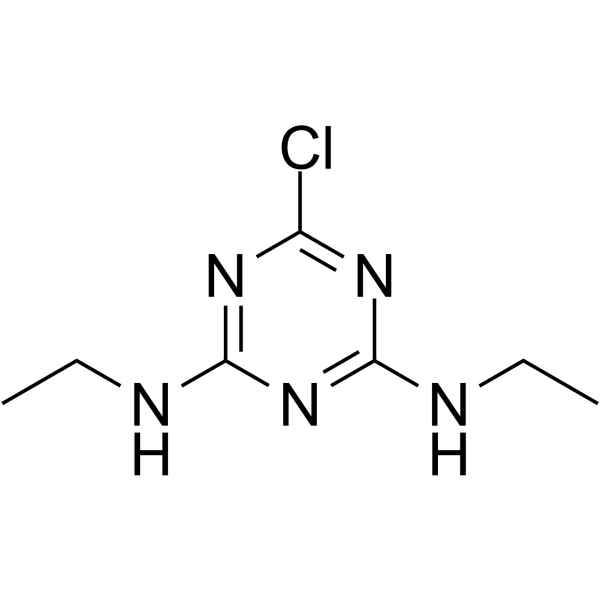
Simazine-d10 is the deuterium labeled Simazine (HY-B2046). Simazine is a triazine herbicide. Simazine is widely used in agriculture, potted plant and tree production. In addition, Simazine can induce the apoptosis of immune cells in the spleen of mice and inhibit the proliferation of B cells and T cells in mice .
|
-
-
- HY-W713900
-
|
|
|
MCPA-d3-1 is the deuterium labeled MCPA (HY-B0859). MCPA is an orally active phenoxyacetic acid herbicide. MCPA interferes with membrane integrity, energy metabolism (decreases ATP levels), and redox balance in plant cells. MCPA increases hepatic cytochrome P-450 levels and increases aniline hydroxylase and 7-ethoxycoumarin O-deethylase activities. MCPA can be used to control broadleaf weeds .
|
-
-
- HY-59354S1
-
|
|
|
1,2-Dihydropyridazine-3,6-dione-3,4,5,6- 13C4 (1,2-Dihydro-3,6-pyridazine- 13C4-dione) is 13C labeled Maleic hydrazide. Maleic hydrazide is extensively used as a systemic plant growth regulator and as a herbicide. Maleic hydrazide acts as an inhibitor of the synthesis of nucleic acids and proteins .
|
-
-
- HY-B0859S
-
|
|
|
MCPA- 13C8 is the 13C-labeled MCPA (HY-B0859). MCPA is an orally active phenoxyacetic acid herbicide. MCPA interferes with membrane integrity, energy metabolism (decreases ATP levels), and redox balance in plant cells. MCPA increases hepatic cytochrome P-450 levels and increases aniline hydroxylase and 7-ethoxycoumarin O-deethylase activities. MCPA can be used to control broadleaf weeds .
|
-
-
- HY-136369S
-
|
|
|
Ethofumesate-d5 is the deuterium labeled Ethofumesate (HY-136369). Ethofumesate, a chiral herbicide, acts by inhibiting mitosis and reducing photosynthesis and plant respiration .
|
-
-
- HY-W752907
-
|
|
|
Glufosinate-d8 is the deuterium labeled Glufosinate (HY-W019870A). Glufosinate, a phosphinic acid analogue of glutamic acid, is a herbicide which is converted by plant cells into PT (L-phosphinothricin). Glufosinate exerts neurotoxic activity .
|
-
-
- HY-W724357
-
|
|
|
Napropamide-d10 (Napropamid-d10) is the deuterium labeled Napropamide (HY-B1972). Napropamide (Napropamid) is an amide herbicide that can be used to control weeds in fruits, vegetables, tobacco, and ornamental plants. Napropamide mainly exerts its effect by inhibiting DNA synthesis and cell division. Napropamide has moderate to high persistence in the field, with a half-life of 24-131 days, and is prone to photodegradation .
|
-
Your information is safe with us. * Required Fields.
Inquiry Information
- 상품명:
- Cat. No.:
- 수량:
- MCE Japan Authorized Agent:

