1. Search Result
Search Result
Pathways Recommended: MAPK/ERK Pathway
Results for "

polyol pathway

" in MedChemExpress (MCE) Product Catalog:

13

Inhibitors & Agonists

1

Biochemical Assay Reagents

2

Natural
Products

1

Isotope-Labeled Compounds

1

Oligonucleotides

Cat. No. Product Name Target Research Areas Chemical Structure
  • HY-N7426

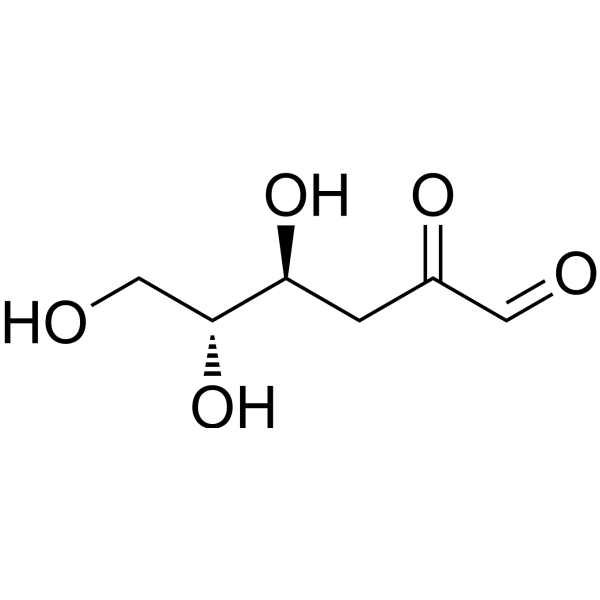
    3-Deoxy-D-glucosone

    GLP Receptor Metabolic Disease
    3-Deoxyglucosone (3-Deoxy-D-glucosone) is a reactive intermediate of the Maillard reaction and the polyol pathway. 3-Deoxyglucosone rapidly reacts with protein amino groups to form advanced glycation end products (AGEs), such as imidazolone, it is the most specific AGE for 3-DG. 3-Deoxyglucosone synergizes with low glucose to potentiate GLP-1 secretion and is considered as a biomarker for diabetes .
    3-Deoxyglucosone
  • HY-N0538

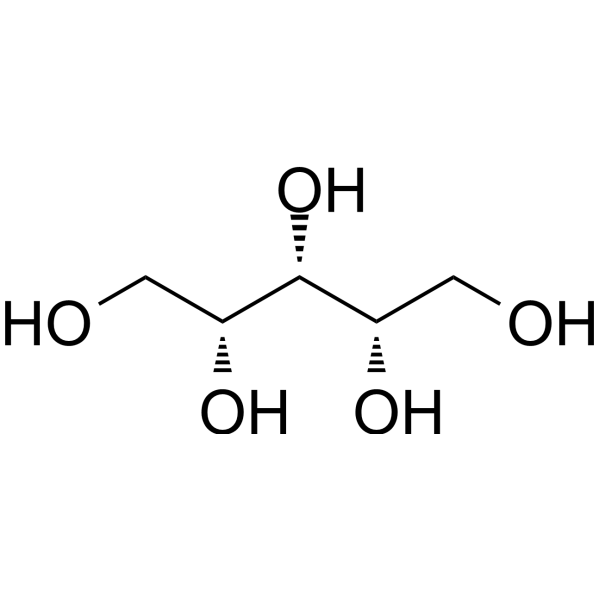
    Xylite

    Environmental Pollutants Endogenous Metabolite Bacterial Autophagy Atg7 Atg8/LC3 Metabolic Disease Cancer
    Xylitol can be classified as a polyol and sugar alcohol, exhibiting inhibitory activity on cancer cell proliferation. It induces autophagy (Autophagy) and cell death in A549 cells by activating the autophagy signaling pathway, as evidenced by the increased expression of LC3-II and Atg5-Atg12 upon Xylitol treatment. Additionally, Xylitol inhibits acetaldehyde production by Candida species, thereby reducing their carcinogenic potential. In vivo, Xylitol induces alterations in the gut microbiota of mice, which may enhance cholesterol accumulation and upregulate hepatic ChREBP, while also slowing tumor growth in the B16F10 melanoma C57BL/6 mouse model .
    Xylitol
  • HY-50289
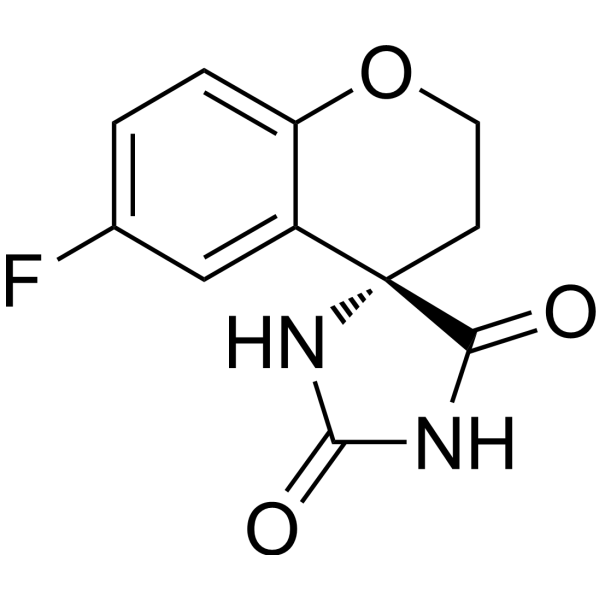
    Sorbinil
    2 Publications Verification

    Aldose Reductase Metabolic Disease
    Sorbinil is an aldose reductase inhibitor (ARI) that prevents the accumulation of sorbitol in cells or animals. Sorbinil is useful in studying diabetes and diabetic complications, reducing AR activity and inhibiting the polyol pathway.
    Sorbinil
  • HY-B0400B

    Sorbito, for cell culture; D-Glucitol, for cell culture

    Environmental Pollutants Biochemical Assay Reagents Others
    D-Sorbitol (D-Glucitol), for cell culture is a six-carbon sugar alcohol that can be used as a sugar substitute. D-Sorbitol, for cell culture serves as an osmotic regulator, cryoprotectant and carbon source in various plant and microbial cell culture media .
    D-Sorbitol, for cell culture
  • HY-E70398

    L-Iditol dehydrogenase; polyol dehydrogenase; SDH

    Biochemical Assay Reagents Metabolic Disease
    Sorbitol dehydrogenase (L-Iditol dehydrogenase) is an oxidoreductasea and catalyses the conversion of sorbitol to fructose with NAD + as the coenzyme. Sorbitol dehydrogenase catalyses pH-dependent redox reactions between NAD +/NADH and sorbitol/fructose. Sorbitol dehydrogenase is implicated in diabetic complications and is a biomarker of drug-induced liver injury. Sorbitol dehydrogenase can be used for the research of diabetes and liver injury .
    Sorbitol dehydrogenase
  • HY-B1202
    Alrestatin
    1 Publications Verification

    AY-22284

    Aldose Reductase Metabolic Disease
    Alrestatin (AY-22284) is an aldose reductase inhibitor. Alrestatin reduces fructose levels in the uterine fluid of mice. Alrestatin interferes with sperm capacitation and impairs fertilization function in mice. Alrestatin decreases basal and tyramine-induced norepinephrine release in rat pancreatic specimens in vitro. Alrestatin enhances glucose- and arginine-stimulated insulin secretion in vivo. Alrestatin can be used in studies related to diabetes and reproductive diseases .
    Alrestatin
  • HY-131542

    Aldose Reductase Apoptosis Metabolic Disease
    APPA is an aldose reductase inhibitor. APPA can effectively prevent apoptosis and the symptoms of Streptozotocin (HY-13753)-induced diabetes by inhibiting the polyol pathway in rats. APPA has the potential for diabetic nephropathy (DN) research .
    APPA
  • HY-50289R

    Aldose Reductase Metabolic Disease
    Sorbinil (Standard) is the analytical standard of Sorbinil. This product is intended for research and analytical applications. Sorbinil is an aldose reductase inhibitor (ARI) that prevents the accumulation of sorbitol in cells or animals. Sorbinil is useful in studying diabetes and diabetic complications, reducing AR activity and inhibiting the polyol pathway .
    Sorbinil (Standard)
  • HY-175639

    Aldose Reductase Metabolic Disease Inflammation/Immunology
    ALR2-IN-8 is a potent aldose reductase (ALR2/AKR1B1) inhibitor with a KI of 7.34 nM. ALR2-IN-8 has extremely low toxicity to normal cells and has a weak direct killing effect on cancer cells. ALR2-IN-8 can used for the studies of diabetic and inflammation-linked disorders .
    ALR2-IN-8
  • HY-W768347

    Xylite-13C5

    Isotope-Labeled Compounds Bacterial Autophagy Endogenous Metabolite Atg8/LC3 Atg7 Cancer
    Xylitol- 13C5 (Xylite- 13C5) is the 13C-labeled Xylitol (HY-N0538). Xylitol can be classified as a polyol and sugar alcohol, exhibiting inhibitory activity on cancer cell proliferation. It induces autophagy (Autophagy) and cell death in A549 cells by activating the autophagy signaling pathway, as evidenced by the increased expression of LC3-II and Atg5-Atg12 upon Xylitol treatment. Additionally, Xylitol inhibits acetaldehyde production by Candida species, thereby reducing their carcinogenic potential. In vivo, Xylitol induces alterations in the gut microbiota of mice, which may enhance cholesterol accumulation and upregulate hepatic ChREBP, while also slowing tumor growth in the B16F10 melanoma C57BL/6 mouse model .
    Xylitol-13C5
  • HY-B1202A

    AY-22284A

    Aldose Reductase Metabolic Disease
    Alrestatin (AY-22284) sodium is an aldose reductase inhibitor. Alrestatin sodium reduces fructose levels in the uterine fluid of mice. Alrestatin sodium interferes with sperm capacitation and impairs fertilization function in mice. Alrestatin sodium decreases basal and tyramine-induced norepinephrine release in rat pancreatic specimens in vitro. Alrestatin sodium enhances glucose- and arginine-stimulated insulin secretion in vivo. Alrestatin sodium can be used in studies related to diabetes and reproductive diseases .
    Alrestatin sodium
  • HY-119058

    CP-744809

    Aldose Reductase Metabolic Disease
    ARI-809 (CP-744809) is a highly selective, orally active aldose reductase inhibitor with an IC50 of 1 nM. ARI-809 blocks excessive glucose flux through the polyol pathway. ARI-809 normalizes elevated sorbitol and fructose levels in sciatic nerve tissues of diabetic rat models, inhibits sorbitol accumulation in lens tissues, and brings elevated urinary albumin excretion close to normal. ARI-809 can be used in diabetes research .
    ARI-809
  • HY-182311

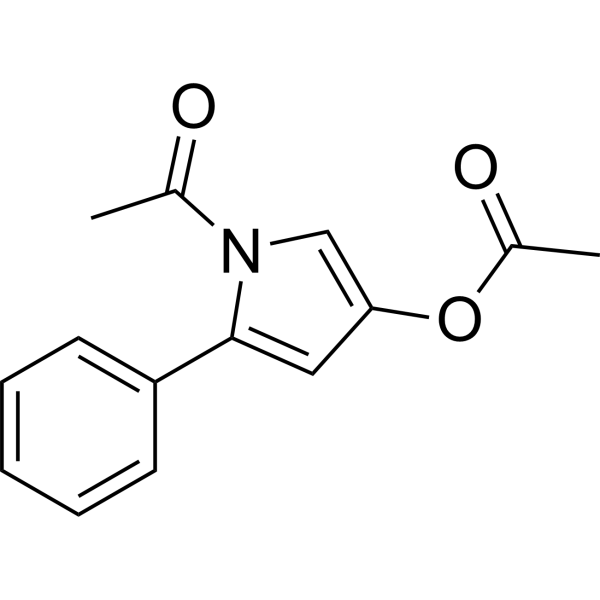
    Aldose Reductase Glycosidase Metabolic Disease
    ALR2/α-Glucosidase-IN-1 (Compound 4) is a competitive ALR2 inhibitor and competitive α-glucosidase inhibitor, with an IC50 of 0.250 μM against ALR2 and an IC50 of 0.561 μM against α-glucosidase. ALR2/α-Glucosidase-IN-1 binds to the active sites of ALR2 and α-glucosidase, and inhibits enzymatic activity by competing with their respective substrates. ALR2/α-Glucosidase-IN-1 can be used in diabetes-related research .
    ALR2/α-Glucosidase-IN-1

Inquiry Online

Your information is safe with us. * Required Fields.

Salutation


Country or Region *

Applicant Name *


Organization Name *

Department *


Email Address *


Product Name *

Cat. No.


Requested quantity *

Phone Number *


Remarks

Inquiry Online

Inquiry Information

Product Name:
Cat. No.:
Quantity:
MCE Japan Authorized Agent:

