24 Results for "

postsynaptic potential

" in MedChemExpress (MCE) Product Catalog:
Products (24)

24 Results for "postsynaptic potential" in MCE Product Catalog:

25
25 Publications Verification
Cat. No.: HY-100403
CAS No.: 298690-60-5
Purity:  99.67%
Target:  

mGluR

Research Areas:  

Cancer

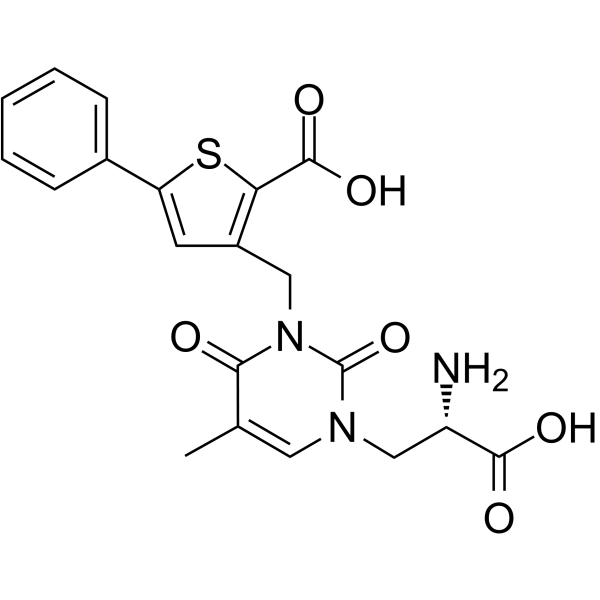
Ro 67-7476 is a potent positive allosteric modulator of mGluR1 and potentiates glutamate-induced calcium release in HEK293 cells expressing rat mGluR1a with an EC50 of 60.1 nM . Ro 67-7476 is a potent P-ERK1/2 agonist and activates ERK1/2 phosphorylation in the absence of exogenously added glutamate (EC50=163.3 nM) .
loading...
    loading...
3
3 Cited Publications
Cat. No.: HY-A0081
CAS No.: 146-56-5
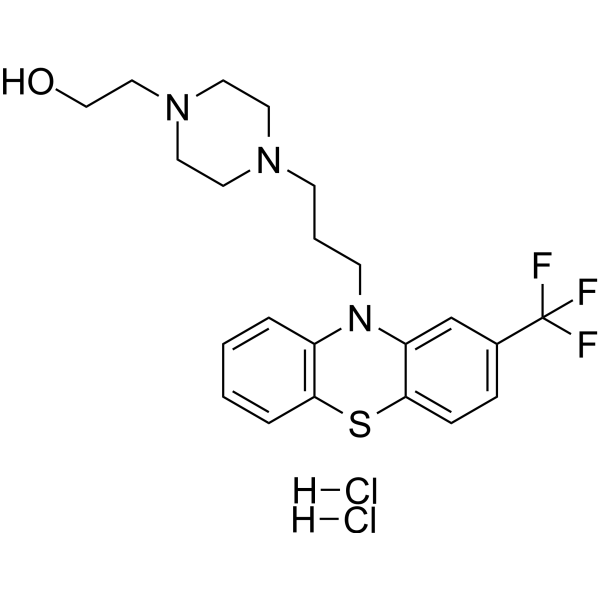
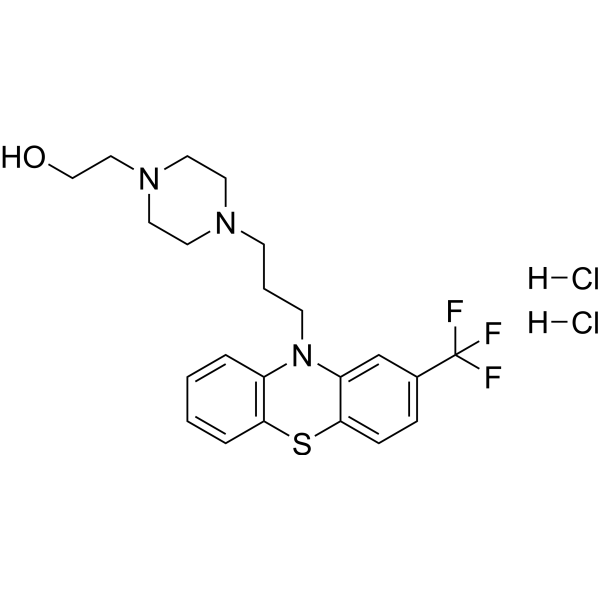
Fluphenazine dihydrochloride is a potent, orally active phenothiazine-based dopamine receptor antagonist. Fluphenazine dihydrochloride blocks neuronal voltage-gated sodium channels. Fluphenazine dihydrochloride acts primarily through antagonism of postsynaptic dopamine-2 receptors in mesolimbic, nigrostriatal, and tuberoinfundibular neural pathways. Fluphenazine dihydrochloride can antagonize Methylphenidate-induced stereotyped gnawing and inhibit climbing behaviour in mice. Fluphenazine dihydrochloride can be used for researching psychosis and painful peripheral neuropathy associated with diabetes and has potential to inhibit SARS-CoV-2 .
loading...
    loading...
3
3 Cited Publications
Cat. No.: HY-119980
CAS No.: 69-23-8
Purity:  98.70%
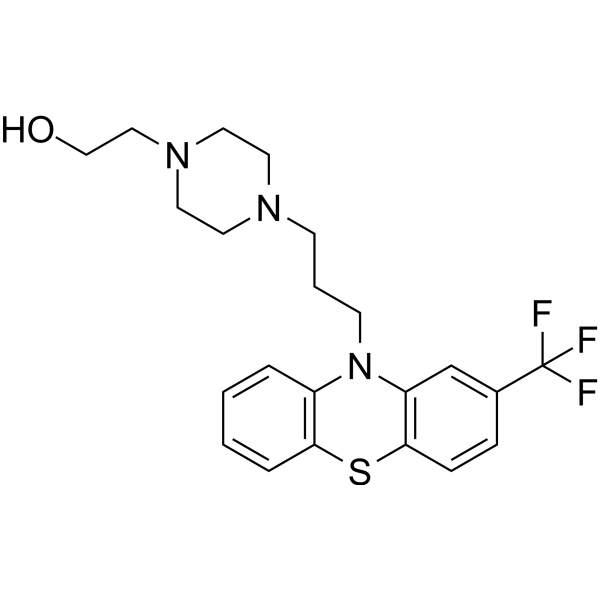
Fluphenazine is a potent, orally active phenothiazine-based dopamine receptor antagonist. Fluphenazine blocks neuronal voltage-gated sodium channels. Fluphenazine acts primarily through antagonism of postsynaptic dopamine-2 receptors in mesolimbic, nigrostriatal, and tuberoinfundibular neural pathways. Fluphenazine can antagonize Methylphenidate-induced stereotyped gnawing and inhibit climbing behaviour in mice. Fluphenazine can be used for researching psychosis and painful peripheral neuropathy associated with diabetes and has potential to inhibit SARS-CoV-2 .
loading...
    loading...
1
1 Cited Publications
Cat. No.: HY-110175
CAS No.: 191744-13-5
Purity:  99.94%
Target:  

iGluR

Research Areas:  

Neurological Disease

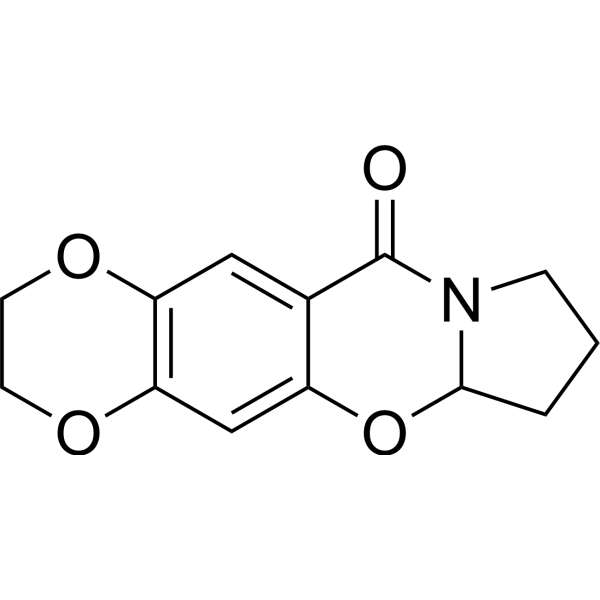
CX614 is a positive variant modulator of AMPA receptors that enhances excitatory postsynaptic potentials (amplitude and duration) by blocking and slowing the inactivation of responses to glutamate and automatically evokes excitatory postsynaptic currents in neuronal cultures. CX614 can be used in the study of psychiatric disorders such as depression .
loading...
    loading...
1
1 Cited Publications
Cat. No.: HY-13527
CAS No.: 192927-92-7
Purity:  98.68%
LY310762 is a selective 5-HT1D receptor antagonist (Ki=249 nM) with a weak affinity for 5-HT1B receptor. LY310762 effectively abolishes the renal vasodilatory effects of 5-HTpostsynaptic potential (EPSC) amplitude .
loading...
    loading...
Cat. No.: HY-107601
CAS No.: 936095-50-0
Purity:  99.95%
Synonyms: ACET
Target:  

iGluR

Research Areas:  

Neurological Disease

UBP316 (ACET) is a highly potent and selective kainate receptor GluK1 (GluR5) antagonist, with a Kb value of 1.4 nM. UBP316 is effective at blocking the depression of both field excitatory postsynaptic potentials (fEPSPs) and monosynaptically-evoked GABAergic transmission induced by ATPA, a GluK1 selective agonist .
loading...
    loading...
Cat. No.: HY-117575A
CAS No.: 149055-79-8
Purity:  98.32%
Target:  

5-HT Receptor

Research Areas:  

Neurological Disease

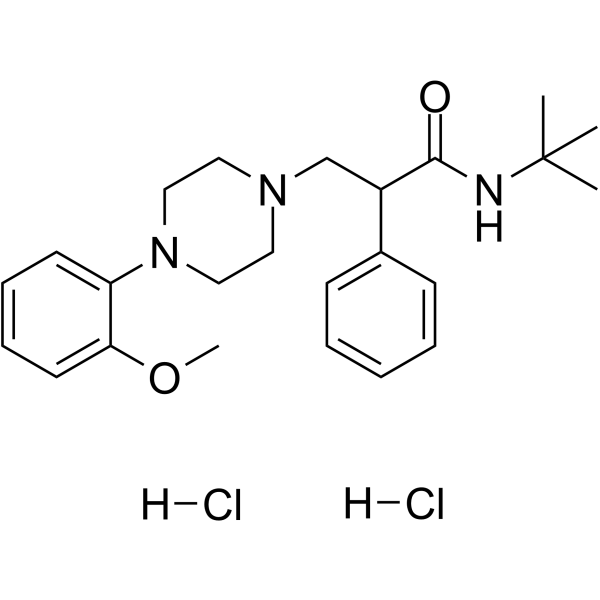
WAY-100135 dihydrochloride is a selective antagonist at presynaptic and postsynaptic 5-HT1A receptor, with an IC50 of 34 nM at the rat hippocampal 5-HT1A receptor. WAY-100135 dihydrochloride has potential antipsychotic properties .
loading...
    loading...
Cat. No.: HY-P1386
CAS No.: 251939-41-0
Synonyms: Dynamin II (828–842)
Target:  

iGluR

Research Areas:  

Neurological Disease

D15, a peptide with 15 aa segment of dynamin, is an AMPAR endocytosis inhibitor. D15 blocks the interaction of dynamin with amphiphysin 1 and 2. D15 significantly increases AMPAR excitatory postsynaptic potential (EPSC) amplitude of medium spiny neurons (MSNs) in Sapap3 KO mice. D15 can be used for neuropsychiatric disorder research .
loading...
    loading...
Cat. No.: HY-119980S
CAS No.: 1323633-98-2
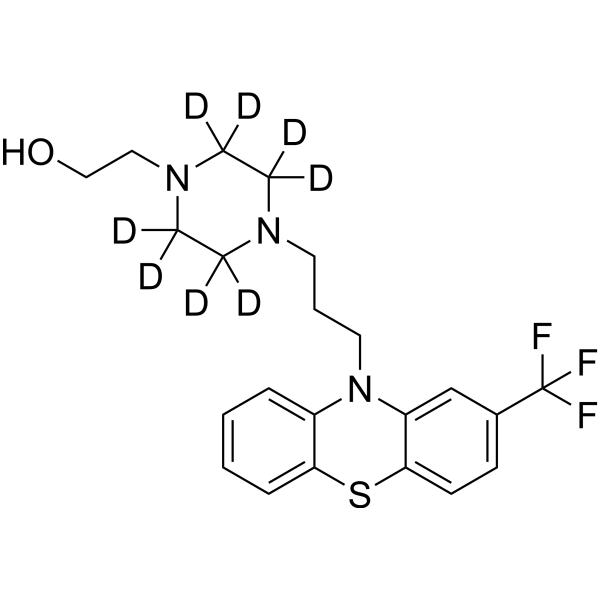
Fluphenazine-d8 is the deuterium labeled Fluphenazine. Fluphenazine is a potent, orally active phenothiazine-based dopamine receptor antagonist. Fluphenazine blocks neuronal voltage-gated sodium channels. Fluphenazine acts primarily through antagonism of postsynaptic dopamine-2 receptors in mesolimbic, nigrostriatal, and tuberoinfundibular neural pathways. Fluphenazine can antagonize Methylphenidate-induced stereotyped gnawing and inhibit climbing behaviour in mice. Fluphenazine can be used for researching psychosis and painful peripheral neuropathy associated with diabetes and has potential to inhibit SARS-CoV-2 .
loading...
    loading...
Cat. No.: HY-129517
CAS No.: 773109-55-0
Target:  

iGluR

Research Areas:  

Neurological Disease

UBP714 exhibts agonistic activity for recombinant GluN1/GluN2 receptor by binding to the positive allosteric site (PAM) of NMDARs. UBP714 enhances NMDAR-mediated field excitatory postsynaptic potentials (f-EPSPs) in Xenopus oocytes .
loading...
    loading...
Cat. No.: HY-B1789
CAS No.: 80880-90-6
Target:  

mAChR

Research Areas:  

Neurological Disease

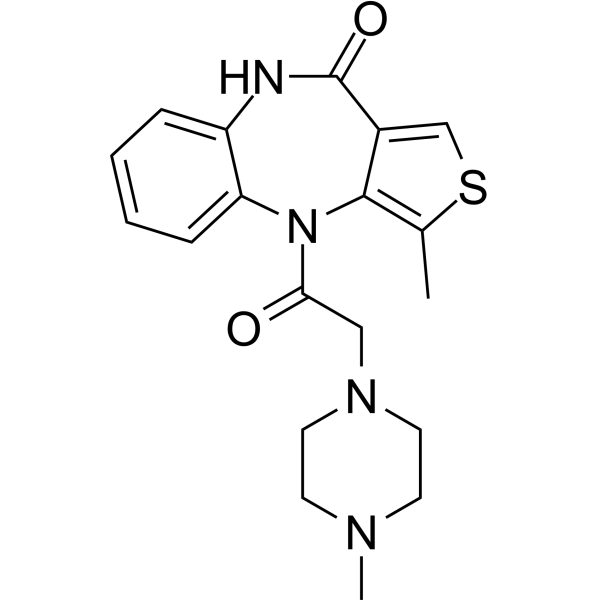
Telenzepine is an antimuscarinic agent with Kis of 0.94 nM (M1 mAChR) and 17.8 nM (M2 mAChR) binding to muscarinic receptors. Telenzepine effectively blocks synaptic transmission promoted by muscarinic or M1 receptor agonists. Thus, Telenzepine can reduce the amplitude of extracellular slow excitatory postsynaptic potentials (EC50=38 nM) and slow inhibitory postsynaptic potentials (EC50=253 nM) .
loading...
    loading...
Cat. No.: HY-P2590
CAS No.: 113611-68-0
Target:  

Peptides

Research Areas:  

Others

Tnrnflrfamide is a neuropeptide that modulates the receptor muscles of the lobster abdominal stretch receptors and their exoskeletal muscle homologues. Tnrnflrfamide enhances motor performance, including the amplitude of excitatory postsynaptic potentials and the development of nerve-evoked tension .
loading...
    loading...
Cat. No.: HY-100785A
CAS No.: 2935387-13-4
Synonyms: γDGG acetate; γ-D-Glutamylglycine acetate
Target:  

iGluR

Research Areas:  

Neurological Disease

gamma-DGG acetate (γDGG acetate) is a competitive AMPA receptor blocker. gamma-DGG acetate is also a reversible Excitatory post-synaptic potentials (e.p.s.p.s) antagonist .
loading...
    loading...
Cat. No.: HY-P1716
CAS No.: 149471-11-4
Target:  

PKC

Research Areas:  

Neurological Disease

Neuropeptide DF2 is a DRNFLRFamide neuropeptide orignally isolated from crayfish. which enhances transmitter release and stimulates the amplitude of excitatory post-synaptic potentials (EPSP) through the calcium/calmodulin-dependent protein kinase .
loading...
    loading...
Cat. No.: HY-171979
CAS No.: 2149042-90-8
Target:  

iGluR

Research Areas:  

Neurological Disease

Fluorolintane exhibits high affinity for N-methyl-D-aspartate (NMDA) receptors with a Ki of 87.92 nM. Fluorolintane inhibits prepulse inhibition in rats. Fluorolintane also inhibits NMDA receptor-induced field excitatory postsynaptic potentials in rat hippocampal slices .
loading...
    loading...
Cat. No.: HY-168771
CAS No.: 71822-19-0
Synonyms: γDGG TFA; γ-D-Glutamylglycine TFA
Target:  

iGluR

Research Areas:  

Neurological Disease

gamma-DGG TFA is the antagonist for excitatory amino acid, that blocks NMDA-(HY-17551), Kainate-(HY-N2309) and Quisqualate-(HY-12597) induced depolarization, and antagonises the excitatory postsynaptic potential (e.p.s.p.) in rat hippocampal slices .
loading...
    loading...
Cat. No.: HY-116431
CAS No.: 128719-90-4
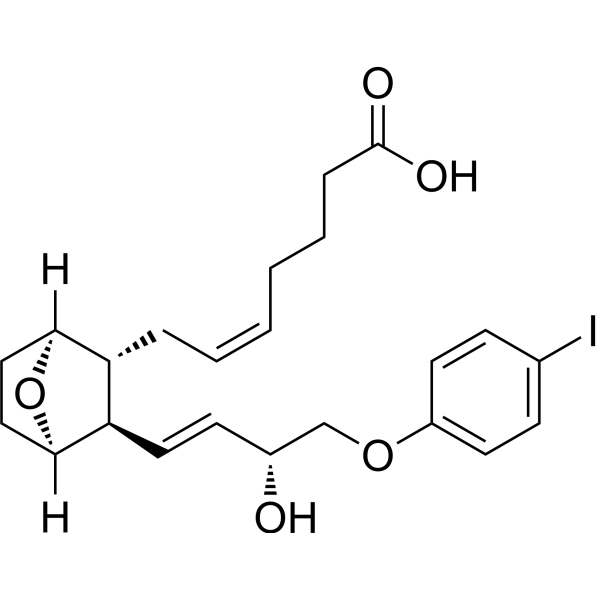
I-BOP is an agonist for thromboxane A2 receptor (TP) with a KD of 0.61 nM. I-BOP promotes proliferation through activation of PI3K pathway in vascular smooth muscle . I-BOP dose-dependently biphasicly affects the excitatory postsynaptic potential (e.p.s.p.) in hippocampal neurons .
loading...
    loading...
Cat. No.: HY-119980B
CAS No.: 1254-47-3
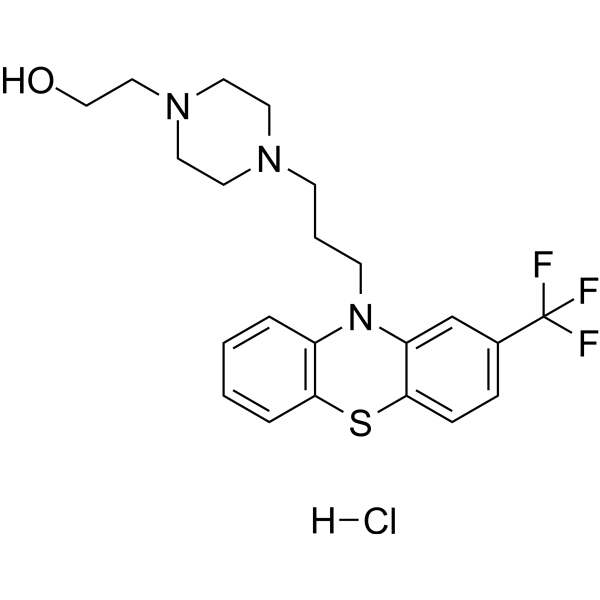
Fluphenazine hydrochloride is a potent, orally active phenothiazine-based dopamine receptor antagonist. Fluphenazine hydrochloride blocks neuronal voltage-gated sodium channels. Fluphenazine hydrochloride acts primarily through antagonism of postsynaptic dopamine-2 receptors in mesolimbic, nigrostriatal, and tuberoinfundibular neural pathways. Fluphenazine hydrochloride can antagonize Methylphenidate-induced stereotyped gnawing and inhibit climbing behaviour in mice. Fluphenazine hydrochloride can be used for researching psychosis and painful peripheral neuropathy associated with diabetes and has potential to inhibit SARS-CoV-2 .
loading...
    loading...
Cat. No.: HY-119980A
CAS No.: 3093-66-1
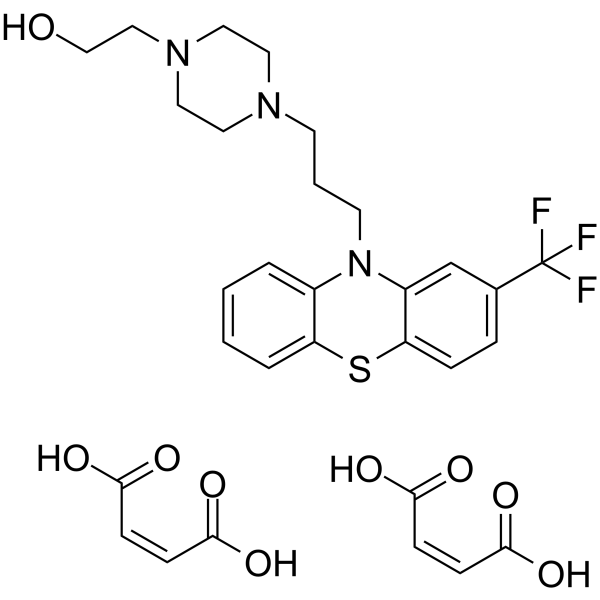
Fluphenazine dimaleate is a potent, orally active phenothiazine-based dopamine receptor antagonist. Fluphenazine dimaleate blocks neuronal voltage-gated sodium channels. Fluphenazine dimaleate acts primarily through antagonism of postsynaptic dopamine-2 receptors in mesolimbic, nigrostriatal, and tuberoinfundibular neural pathways. Fluphenazine dimaleate can antagonize Methylphenidate-induced stereotyped gnawing and inhibit climbing behaviour in mice. Fluphenazine dimaleate can be used for researching psychosis and painful peripheral neuropathy associated with diabetes and has potential to inhibit SARS-CoV-2 .
loading...
    loading...
Cat. No.: HY-119980BS
Fluphenazine-d6 (hydrochloride) is deuterium labeled Fluphenazine (hydrochloride). Fluphenazine hydrochloride is a potent, orally active phenothiazine-based dopamine receptor antagonist. Fluphenazine hydrochloride blocks neuronal voltage-gated sodium channels. Fluphenazine hydrochloride acts primarily through antagonism of postsynaptic dopamine-2 receptors in mesolimbic, nigrostriatal, and tuberoinfundibular neural pathways. Fluphenazine hydrochloride can antagonize Methylphenidate-induced stereotyped gnawing and inhibit climbing behaviour in mice. Fluphenazine hydrochloride can be used for researching psychosis and painful peripheral neuropathy associated with diabetes and has potential to inhibit SARS-CoV-2 .
loading...
    loading...

