17 Results for "

quinolone alkaloid

" in MedChemExpress (MCE) Product Catalog:
Products (17)

17 Results for "quinolone alkaloid" in MCE Product Catalog:

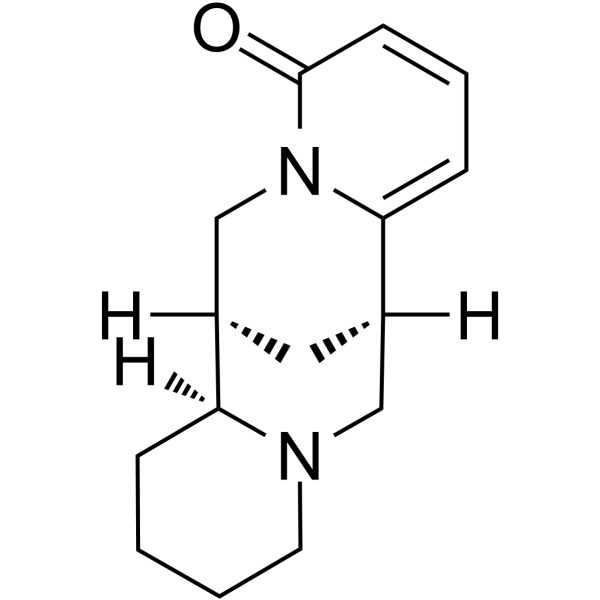
Cat. No.: HY-N5009
CAS No.: 486-90-8
Thermopsine is a quinolone-type alkaloid. Thermopsine exhibits low to moderate anti-E. faecalis activity .
loading...
    loading...
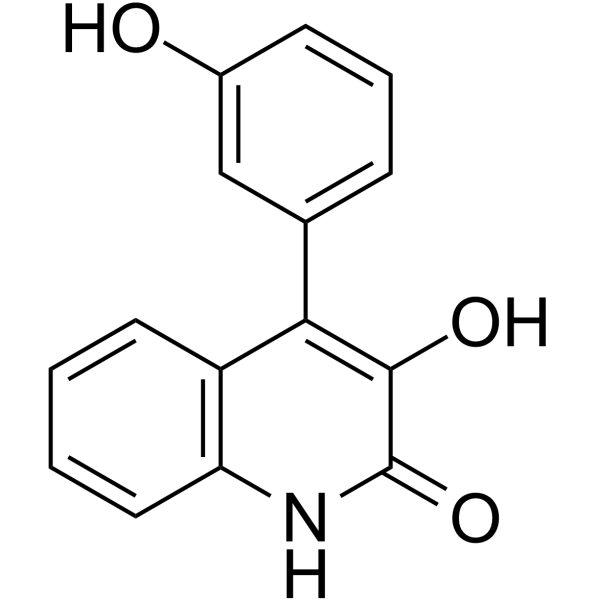
Cat. No.: HY-116474
CAS No.: 14484-44-7
Purity:  99.93%
Viridicatol is a quinolone alkaloid with anti-inflammatory, antibacterial, antifungal, osteogenic and chondrogenic activities. Viridicatol reduces the phosphorylation levels of ERK, JNK, p38 and STAT6; inhibits MMP-2, MMP-9, NF-κB signaling pathway and PTP1B; downregulates genes related to mast cell activation; and binds to SHN3 to activate the Wnt/SHN3 signaling pathway. Viridicatol inhibits the expression of pro-inflammatory mediators and cytokines, and promotes osteogenic/chondrogenic differentiation. Viridicatol can be used in studies related to fibrosarcoma, allergy, bacterial infection, fungal infection and osteoporosis .
loading...
    loading...
Cat. No.: HY-N2060
CAS No.: 15266-38-3
Evocarpine, a quinolone alkaloid that could be isolated from Evodiae fructus, inhibitss Ca 2+ influx through voltage-dependent calcium channels. Antimycobacterial activity .
loading...
    loading...
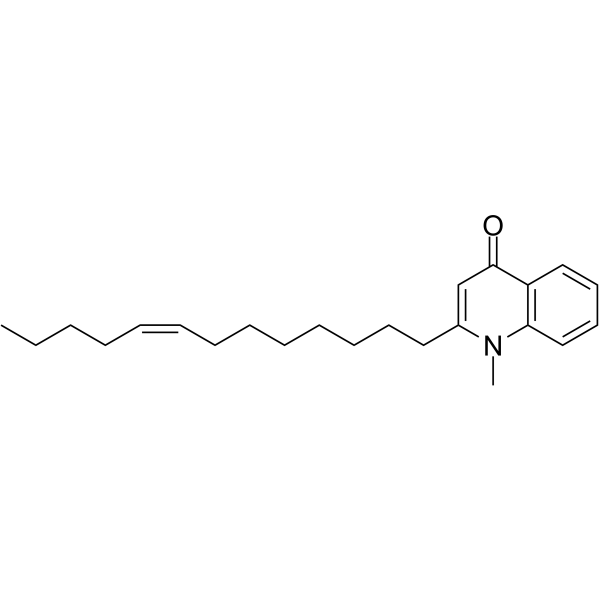
Cat. No.: HY-N9530
CAS No.: 120693-53-0
1-Methyl-2-[(4Z,7Z)-4,7-tridecadienyl]-4(1H)-quinolone, a quinolone alkaloid, is a diacylglycerol acyltransferase inhibitor and angiotensin II receptor blocker, with IC50s of 20.1 μM and 34.1 μM, respectively. 1-Methyl-2-[(4Z,7Z)-4,7-tridecadienyl]-4(1H)-quinolone shows potent anti-Helicobacter pylori activity with the MIC of 10 μg/mL .
loading...
    loading...
Cat. No.: HY-N9520
CAS No.: 120693-52-9
Methyl-2-[(6Z,9Z)-6,9-pentadecadienyl]-4(1H)-quinolone9 is an antagonist of angiotensin II receptor (IC50=48.2 μM). Methyl-2-[(6Z,9Z)-6,9-pentadecadienyl]-4(1H)-quinolone9 is a quinolone alkaloid from Evodia rutaecarpa .
loading...
    loading...
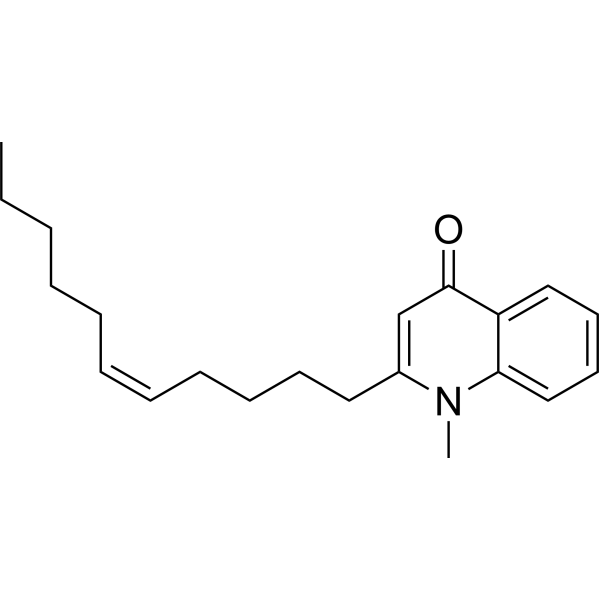
Cat. No.: HY-N0968
CAS No.: 120693-49-4
1-Methyl-2-[(Z)-6-undecenyl]-4(1H)-quinolone, as a colorless oil, is a quinolone alkaloid isolated from the fruit of Evodia rutaecarpa BENTHAM (Rutaceae) .
loading...
    loading...
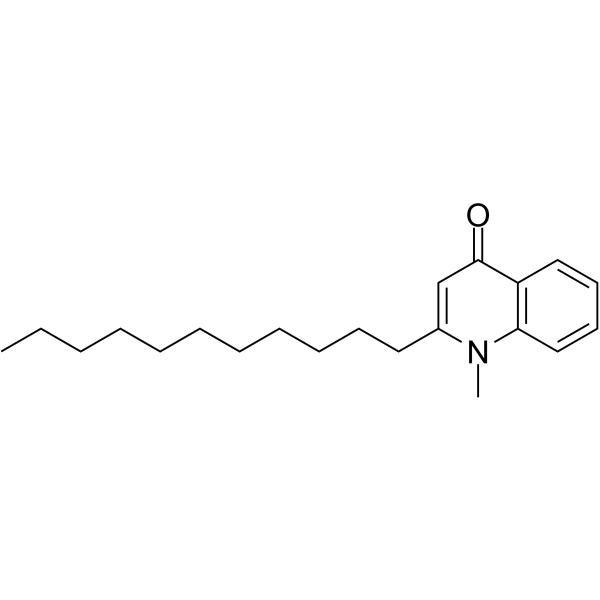
Cat. No.: HY-N1638
CAS No.: 59443-02-6
1-Methyl-2-undecyl-4(1H)-quinolone is a potent, irreversible and selective inhibitor of type B monoamine oxidase (MAO-B). 1-Methyl-2-undecyl-4(1H)-quinolone shows a selective inhibition of MAO-B activity with the IC50 and Ki values of 15.3 μM and 9.91 μM, respectively, but did not inhibit type A MAO (MAO-A) activity. Methyl-2-undecyl-4(1H)-quinolone, as a quinolone alkaloid, is isolated from fresh leaves and fruits of Evodia rutaecarpa HOOK. f. et THOMS .
loading...
    loading...
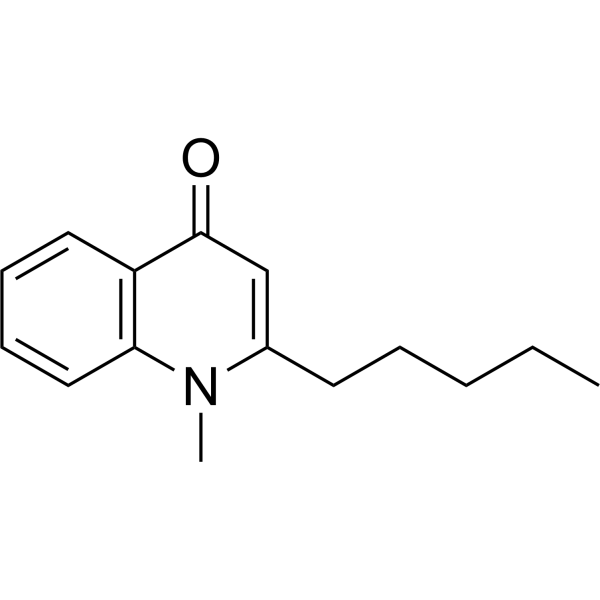
Cat. No.: HY-N1637
CAS No.: 22048-98-2
1-Methyl-2-pentyl-4(1H)-quinolinone, a quinolone alkaloid isolated from the fruits of Evodia Rutaecarpa, possesses antibacterial and cytotoxic activities for cancer cells .
loading...
    loading...
Cat. No.: HY-133935
CAS No.: 27661-27-4
Benaxibine is an alkaloid belonging to the quinolone family of compounds. Benaxibine has a variety of biological activities, including anti-inflammatory, antioxidant, anti-tumor and immune-enhancing effects. Benaxibine can be used for screening and research of diseases such as inflammation and tumor .
loading...
    loading...
Cat. No.: HY-N10907
CAS No.: 182056-11-7
4(1H)-Quinolinone, 1-methyl-2-(5Z)-5-undecen-1-yl- (compound 2) is a quinolone alkaloid that can be isolated from Cnidium. 4(1H)-Quinolinone, 1-methyl-2-(5Z)-5-undecen-1-yl- has methicillin-resistant Staphylococcus aureus (MRSA) activity, with MIC values of 32 μg/mL (ATCC 33591) and 16 μM/mL (ATCC 25923), respectively .
loading...
    loading...
Cat. No.: HY-116474R
CAS No.: 14484-44-7
Viridicatol (Standard) is the analytical standard of Viridicatol (HY-116474). This product is intended for research and analytical applications. Viridicatol is a quinolone alkaloid with anti-inflammatory, antibacterial, antifungal, osteogenic and chondrogenic activities. Viridicatol reduces the phosphorylation levels of ERK, JNK, p38 and STAT6; inhibits MMP-2, MMP-9, NF-κB signaling pathway and PTP1B; downregulates genes related to mast cell activation; and binds to SHN3 to activate the Wnt/SHN3 signaling pathway. Viridicatol inhibits the expression of pro-inflammatory mediators and cytokines, and promotes osteogenic/chondrogenic differentiation. Viridicatol can be used in studies related to fibrosarcoma, allergy, bacterial infection, fungal infection and osteoporosis .
loading...
    loading...
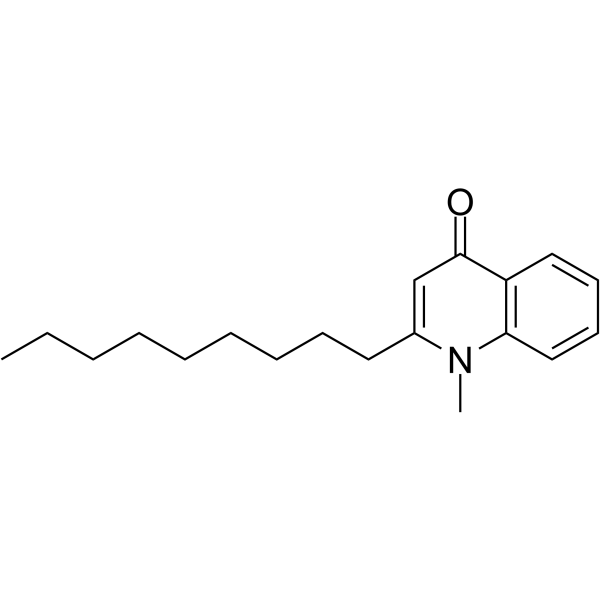
Cat. No.: HY-N1636
CAS No.: 68353-24-2
1-Methyl-2-nonyl-4(1H)-quinolone, a quinolone alkaloid, is a potent and selective MAO-B (monoamine oxidase) inhibitor. 1-Methyl-2-nonyl-4(1H)-quinolone exhibites inhibitory activity on leukotriene biosynthesis, with an IC50 of 12.1 μM .
loading...
    loading...
Cat. No.: HY-N21683
CAS No.: 6872-52-2
(+)-Ribaline is a dihydrofuro-4-quinolone tertiary alkaloid that can be found in the trunk bark of Balfourodendron riedelianum .
loading...
    loading...
Cat. No.: HY-105608
CAS No.: 131-28-2
Synonyms: Narcein
Narceine (Narcein), a quinolone derivative, is an opium alkaloid with anti-diabetic property .
loading...
    loading...
Cat. No.: HY-402321
CAS No.: 80554-60-5
2-Octyl-4(1H)-quinolone (Compound 14) is a quinolinone alkaloid that can be isolated from Ruta graveolens .
loading...
    loading...
Cat. No.: HY-N16462
CAS No.: 124201-44-1
Target:  

Bacterial

2-(2-Heptenyl)-3-methyl-4(1H)-quinolone is a quinoline alkaloid found in Burkholderia sp. VY81. 2-(2-Heptenyl)-3-methyl-4(1H)-quinolone is promising for research of bacterial diseases in rice (e.g., soft rot) and other plant pathogens (e.g., Pythium ultimum, Fusarium oxysporum) .
loading...
    loading...
Cat. No.: HY-L0107V
13,236 compounds
Natural products are small molecules produced naturally by any organism including primary and secondary metabolites. Nowadays, new drugs based on Natural products are successfully applied to treat tumors, viral and bacterial diseases, and nervous disorders. In response to the current drug discovery demand, we created this natural product-like compound library with 13,236 in-stock synthetic compounds similar to natural ones. The library was designed by 2D fingerprint similarity filtering, chemical descriptor-based and natural-likeness scoring selection. These compounds are useful tools for high throughput screening (HTS) and high content screening (HCS) programs.
  • 1