
15 Results for "

receptor dimerization

" in MedChemExpress (MCE) Product Catalog:
Products (15)

15 Results for "receptor dimerization" in MCE Product Catalog:

1
1 Cited Publications
Cat. No.: HY-121833
CAS No.: 286935-60-2
Purity:  95.76%
Target:  

Trk Receptor Akt ERK

Research Areas:  

Neurological Disease Cancer

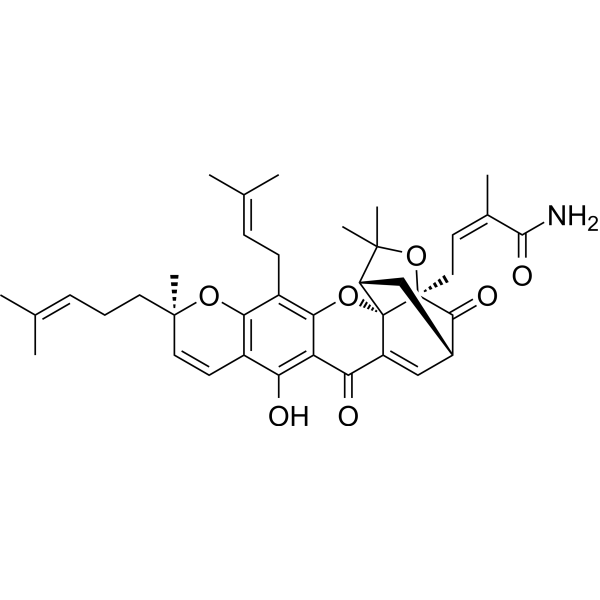
Gambogic amide is a potent and selective agonist of TrkA and also induces its tyrosine phosphorylation and activation of downstream signaling, including Akt and MAPK. Gambogic amide specifically interacts with the cytoplasmic juxtamembrane domain of the TrkA receptor and triggers its dimerization, leading to activation. Gambogic amide has neuroprotective activity preventing glutamate-induced neuronal cell death. Gambogic amide has improved efficacy in a transient middle cerebral artery occlusion model of stroke and could be used to study neurodegenerative diseases and stroke .
loading...
    loading...
Cat. No.: HY-P99245
CAS No.: 1448221-67-7
Synonyms: RG 7155; RO 5509554

Target:  

c-Fms

Research Areas:  

Cancer

Emactuzumab(RG 7155) is a specific monoclonal antibody that inhibits colonystimulating factor 1 receptor (CSF1R) activation. Emactuzumab has high affinity for CSF-1R with Ki value of 0.2 nM to blocks CSF-1R dimerization. Emactuzumab can be used for the research of several diseases, such as diffuse-type tenosynovial giant cell tumour (dt-GCT) .
loading...
    loading...
Cat. No.: HY-13636A
CAS No.: 1316849-17-8
Synonyms: ICI 182780 (S enantiomer); ZD 9238 (S enantiomer); ZM 182780 (S enantiomer)
Research Areas:  

Cancer

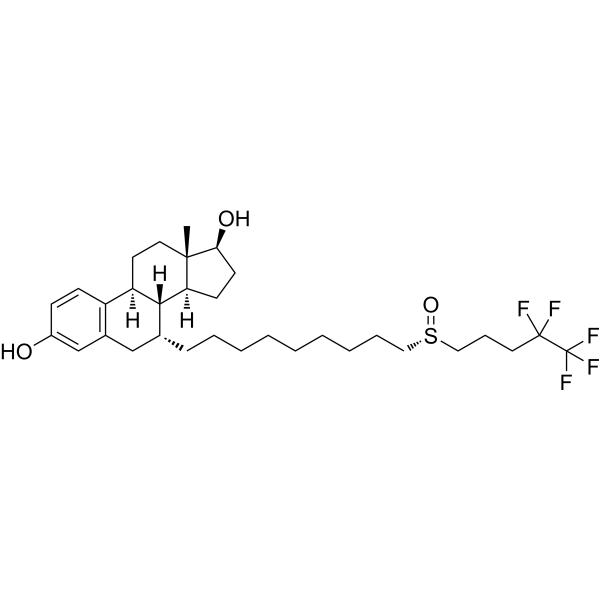
Fulvestrant (ICI 182780; ZD 9238) S enantiomer is the S-enantiomer of Fulvestrant (HY-13636), a potent estrogen receptor inhibitor. Fulvestrant binds to and blocks the estrogen receptor, promotes its degradation, and thereby inhibits receptor dimerization, nucleocytoplasmic shuttling and transcriptional activity. Fulvestrant effectively blocks estrogen signaling, MAPK pathway activation and ER-regulated protein expression. Fulvestrant induces apoptosis, inhibits the proliferation of breast cancer and prolactinoma cells, and reduces the mineralization level, alkaline phosphatase activity and osteocalcin expression of preosteoblasts. Prenatal exposure to Fulvestrant impairs ovarian follicular development and causes ovarian structural damage. Fulvestrant has been widely used in studies related to breast cancer, prolactinoma and other conditions .
loading...
    loading...
Cat. No.: HY-176205
CAS No.: 3024588-48-2
Synonyms: AB801
Target:  

TAM Receptor

Research Areas:  

Cancer

Ligritinib (AB801) is an orally active AXL receptor tyrosine kinase inhibitor, with a IC50 of 1.8 nM, Ki of 0.024 nM, and Kd of 0.093 nM against human targets. It exhibits broad selectivity against the human kinome, including high selectivity for MERTK and TYRO3. Ligritinib blocks the AXL signaling pathway independent of dimerization inducers, and acts as both a tumor growth inhibitor and an AXL inducer. Ligritinib can be used in research related to clear cell renal cell carcinoma, advanced solid tumors, and non-small cell lung cancer .
loading...
    loading...
Cat. No.: HY-P991240
CAS No.: 2070921-00-3
Synonyms: KTN-3379
Target:  

EGFR

Research Areas:  

Cancer

CDX-3379 is a humanized monoclonal antibody inhibitor targeting ErbB3. CDX-3379 binds to ErbB3, blocking the dimerization of ErbB3 with other receptors, thereby inhibiting the phosphorylation of ErbB3. CDX-3379 can inhibit the growth and proliferation of tumor cells. CDX-3379 is promising for research of tumors expressing ErbB3 and NRG1, such as HNSCC .
loading...
    loading...
Cat. No.: HY-W008356
CAS No.: 137553-42-5
Target:  

Drug Intermediate

Research Areas:  

Infection Metabolic Disease

2-Fluoro-4-iodobenzonitrile is a building block, which can be used to synthesize L. infantum trypanothione reductase (Li-TryR) dimerization and oxidoreductase activity inhibitors. 2-Fluoro-4-iodo benzonitrile can also be used to synthesize transient receptor potential ankyrin 1 (TRPA1) antagonists .
loading...
    loading...
Cat. No.: HY-P3833
CAS No.: 166664-90-0
Synonyms: Anti-estrogen
Target:  

Estrogen Receptor/ERR

Research Areas:  

Endocrinology

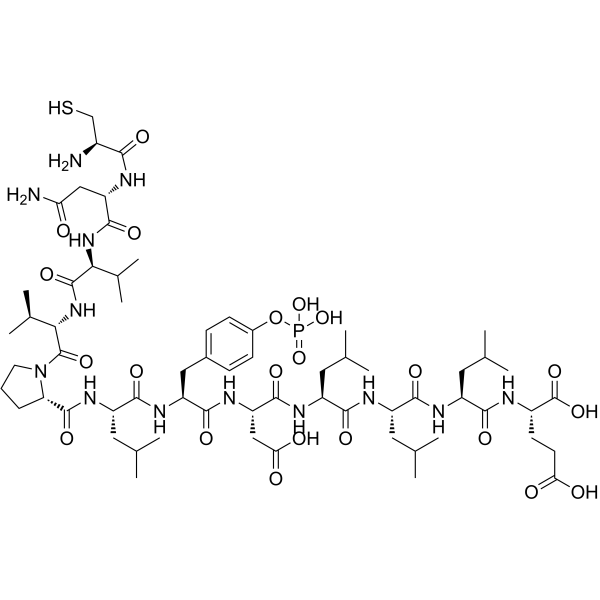
Yp537 is an estrogen receptor (ER) inhibitor that blocks dimerization of the human estrogen receptor .
loading...
    loading...
Cat. No.: HY-170951
CAS No.: 3068489-78-8
Target:  

Androgen Receptor

Research Areas:  

Cancer

AR antagonist 10 (Compound Y5) is potent and orally active androgen receptor (AR) antagonist with an IC50 of 0.04 μM. AR antagonist 10 demonstrates dual mechanisms of action, antagonizes AR by disrupting AR dimerization, and induces AR degradation via the ubiquitin-proteasome pathway. AR antagonist 10 exhibits excellent activity against variant drug-resistant AR mutants. AR antagonist 10 effectively suppresses the tumor growth of the LNCaP xenograft. AR antagonist 10 is potential to be used for drug-resistant prostate cancer .
loading...
    loading...
Cat. No.: HY-178148
CAS No.: 3064715-04-1
Target:  

Androgen Receptor

Research Areas:  

Endocrinology Cancer

AR antagonist 17 is a selective, orally active, low brain-penetrant Androgen Receptor (AR) antagonist (IC50 = 0.010 μM), effectively blocking AR dimerization and nuclear translocation, and demonstrating potent efficacy in several castration-resistant prostate cancer (CRPC) cells. AR antagonist 17 showed superior efficacy against variant drug-resistant AR mutants. AR antagonist 17 can inhibit tumor growth in an LNCaP xenograft model without apparent toxicity. AR antagonist 17 can be used for the study of castration-resistant prostate cancer (CRPC) .
loading...
    loading...
Cat. No.: HY-159922
Target:  

Androgen Receptor

Research Areas:  

Cancer

AR antagonist 9 is an orally bioavailable selective androgen receptor (AR) antagonist that exerts anticancer effects by disrupting the dimerization of AR ligand-binding domains, showing potential for overcoming drug resistance in prostate cancer (PCa). Its AR antagonistic activity has an IC50 value of 0.051 μM, comparable to Enzalutamide (HY-70002) (IC50 = 0.060 μM). AR antagonist 9 demonstrated superior efficacy against ARF876L/T877A and ARW741C mutants compared to Enzalutamide (HY-70002). Furthermore, AR antagonist 9 exhibited favorable pharmacokinetic properties, with an oral bioavailability of F = 66.24% in rats. In the LNCaP xenograft mouse model, oral administration of AR antagonist 9 significantly inhibited tumor growth. AR antagonist 9 holds promise for research into overcoming PCa drug resistance .
loading...
    loading...
Cat. No.: HY-P3833A
Synonyms: Anti-estrogen TFA
Target:  

Estrogen Receptor/ERR

Research Areas:  

Endocrinology

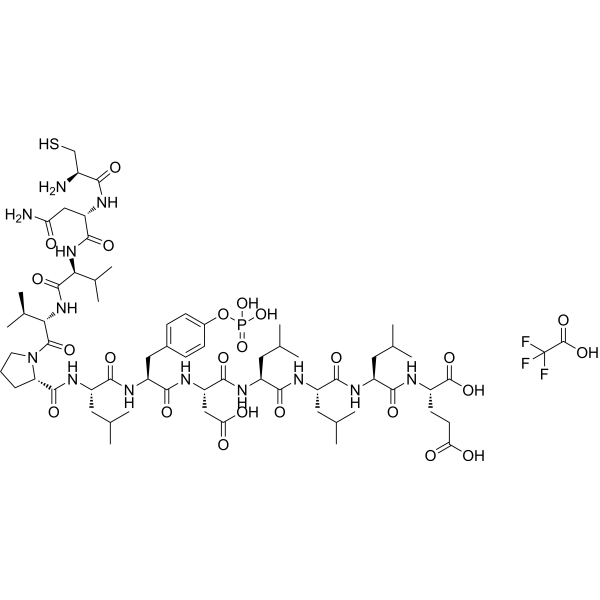
Yp537 TFA is an estrogen receptor (ER) inhibitor that blocks dimerization of the human estrogen receptor .
loading...
    loading...
Cat. No.: HY-174721
Target:  

mRNA

Research Areas:  

Cancer

Human EGFR mRNA encodes the human epidermal growth factor receptor (EGFR) protein, a member of the protein kinase superfamily. IGF1R plays a critical role in transformation events. EGFR is a cell surface protein that binds to epidermal growth factor, thus inducing receptor dimerization and tyrosine autophosphorylation leading to cell proliferation.
loading...
    loading...
Cat. No.: HY-184715
CAS No.: 872546-39-9
Target:  

Bacterial

Research Areas:  

Infection

LasR-IN-6 is a LasR inhibitor with an IC50 of 0.261 μM, and exhibits antibacterial activity against Pseudomonas aeruginosa. LasR-IN-6 stably binds to the active site of LasR via hydrophobic interactions, disrupts receptor dimerization, and interferes with quorum sensing. LasR-IN-6 inhibits protease production, biofilm formation, twitching motility and swarming motility in Pseudomonas aeruginosa. LasR-IN-6 can be used in studies related to Pseudomonas aeruginosa infection .
loading...
    loading...
Cat. No.: HY-159739
CAS No.: 708291-86-5
Target:  

Androgen Receptor

Research Areas:  

Cancer

M17-B15 is an androgen receptor dimerization inhibitor with an IC50 of 30 nM. M17-B15 effectively disrupts AR self-association, thereby suppressing AR signaling. M17-B15 exhibits extraordinary anti- prostate cancer (PCa) efficacy in vitro and in mouse xenograft tumor models.M17-B15 can be used for the study of prostate cancer .
loading...
    loading...
Cat. No.: HY-L008
753 compounds

The Janus kinase (JAK)/signal transducer and activator of transcription (STAT) pathway is central to signaling by cytokine receptors, a superfamily of more than 30 transmembrane proteins that recognize specific cytokines, and is critical in blood formation and immune response. Canonical JAK/STAT signaling begins with the association of cytokines and their corresponding transmembrane receptors. Activated JAKs then phosphorylate latent STAT monomers, leading to dimerization, nuclear translocation, and DNA binding. In mammals, there are four JAKs (JAK1, JAK2, JAK3, TYK2) and seven STATs (STAT1, STAT2, STAT3, STAT4, STAT5a, STAT5b, STAT6). Since the JAK/STAT pathway plays a major role in many fundamental processes, such as apoptosis and inflammation, dysfunctional proteins in the pathway may lead to a number of diseases. For example, alterations in JAK/STAT signalling can result in cancer and diseases affecting the immune system, such as severe combined immunodeficiency disorder (SCID).

MCE provides 753 compounds that can be used in the study of the JAK/STAT signaling pathway and related diseases.

  • 1

