19 Results for "

ribosome function

" in MedChemExpress (MCE) Product Catalog:
Products (19)

19 Results for "ribosome function" in MCE Product Catalog:

15
15 Publications Verification
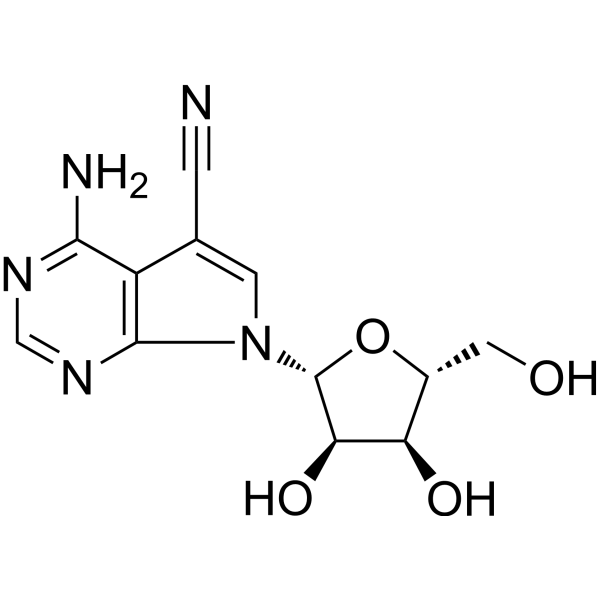
Cat. No.: HY-103248
CAS No.: 606-58-6
Purity:  99.78%
Synonyms: Vengicide
Toyocamycin (Vengicide) is an adenosine analog produced by Streptomyces diastatochromogenes, acts as an XBP1 inhibitor. Toyocamycin blocks RNA synthesis and ribosome function, and induces apoptosis. Toyocamycin affects IRE1α-XBP1 pathway, and inhibits XBP1 mRNA cleavage with an IC50 value of 80 nM with affecting IRE1α auto-phosphorylation. Toyocamycin specifically inhibits CDK9 with an IC50 value of 79 nM .
loading...
    loading...
3
3 Cited Publications
Cat. No.: HY-113225B
CAS No.: 103192-46-7
Synonyms: GTP tritris solution (100 mM)
Research Areas:  

Cancer

Guanosine triphosphate tritris (GTP tritris) (100 mM) serves as a vital enhancer of myogenic cell differentiation and plays a critical role in modulating miRNA-myogenic regulator factors. It also facilitates the release of exosomes enriched with guanosine and guanosine-derived molecules, and is regarded as an activated precursor for RNA synthesis. In mitochondrial function, GTP participates in the import of proteins into the matrix, which is essential for various regulated pathways, and is involved in initiating peptide synthesis through the binding of formylmethionyl-tRNA to the ribosome, as well as polypeptide chain elongation. Additionally, GTP acts as a phosphate and pyrophosphate carrier that channels chemical energy into specific biosynthetic pathways. It activates signal transducing G proteins that regulate cellular processes such as proliferation and differentiation, and its hydrolysis by small GTPases, including Ras and Rho, is integral to both proliferation and apoptosis. Furthermore, the small GTPase Rab is instrumental in vesicle docking, fusion, and formation. Beyond signal transduction, GTP is an energy-rich precursor in the enzymatic biosynthesis of DNA and RNA.
loading...
    loading...
1
1 Cited Publications
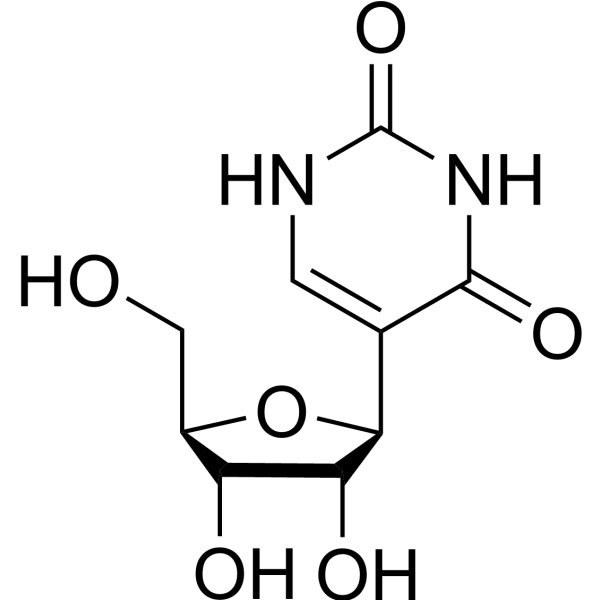
Cat. No.: HY-113061
CAS No.: 1445-07-4
Purity:  99.93%
Pseudouridine is an isomer of uridine and the most abundant modified nucleoside in non-coding RNA. It fine-tunes and stabilizes regional structures in rRNA and tRNA, maintaining their functions in mRNA decoding, ribosome assembly, processing, and translation. Pseudouridine-modified tRNA fragments can inhibit aberrant protein synthesis and hold promise for research on myelodysplastic syndrome (MDS)-related leukemia. .
loading...
    loading...
1
1 Cited Publications
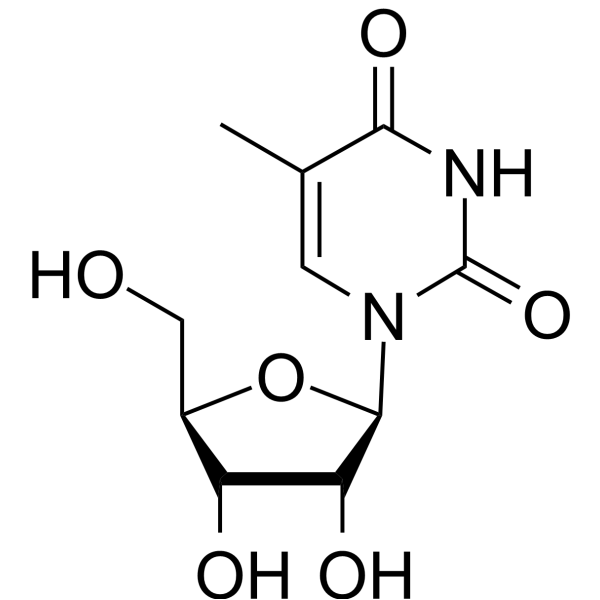
Cat. No.: HY-W009444
CAS No.: 1463-10-1
5-Methyluridine (m 5U) is an RNA modified nucleotide generated by RNA methyltransferases (such as TrmA and RumA), which mainly targets specific uracil sites in RNA molecules such as the T arm of tRNA and rRNA. 5-Methyluridine relies on enzyme recognition of RNA secondary/tertiary structures (such as the T loop of tRNA or the specific stem-loop structure of rRNA) and participates in physiological processes such as translation accuracy and ribosome function by stabilizing RNA folding or regulating base pairing .
loading...
    loading...
1
1 Cited Publications
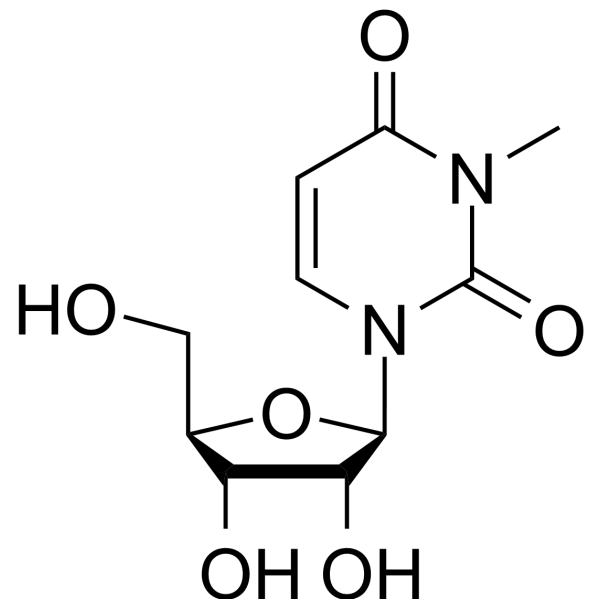
Cat. No.: HY-113138
CAS No.: 2140-69-4
Purity:  99.05%
Synonyms: N3-Methyluridine
3-Methyluridine (m 3U; N3-Methyluridine) is a methylated nucleotide present in ribosomal RNA (rRNA), mainly targeting specific base sites of RNA molecules such as 23S rRNA. 3-Methyluridine can introduce a methyl group at the N3 position of uracil, affecting the secondary structure stability and base pairing ability of RNA, and regulating ribosome function. For example, it affects ribosomal subunit binding and tRNA interaction. 3-Methyluridine is often used as a key raw material for the synthesis of modified nucleotides, and is used to construct RNA oligonucleotides containing methylation modifications to study the effects of RNA methylation on gene expression and drug resistance .
loading...
    loading...
1
1 Cited Publications
Cat. No.: HY-B1173
CAS No.: 464-49-3
Synonyms: D-(+)-Camphor; (1R)-(+)-Camphor
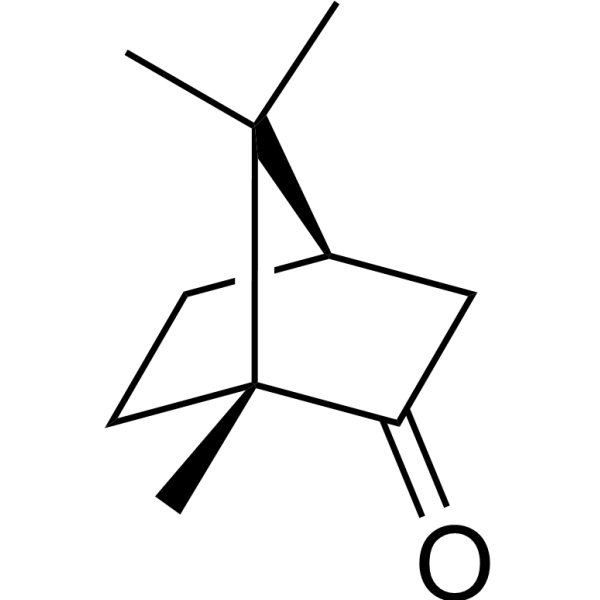
(+)-Camphor (D-(+)-Camphor; (1R)-(+)-Camphor) is an isomer of Camphor. Camphor is an agonist of monoterpenoid transient receptor potential (TRP) channels (such as TRPV1, TRPV3, TRPM8) and an inhibitor of TRPA1 channels. Camphor's derivatives have multiple biological activities, including antibacterial, antiviral, antioxidant, analgesic and anticancer. Camphor can selectively activate cold-sensitive TRP channels and inhibit TRPA1-mediated nociceptive signals. Camphor stimulates the cold-sensing nerve endings in the skin and regulates the activity of ion channels to exert analgesic, anti-inflammatory and anti-itching effects. It also has anti-proliferative and anti-mutagenic activities on tumor cells, which may be related to inhibiting ribosome function or inducing cell apoptosis. Camphor can be absorbed through the skin and (+)-Camphor can be used in the study of muscle and joint pain and inflammation .
loading...
    loading...
1
1 Cited Publications
Cat. No.: HY-139554A
Purity:  99.79%
Synonyms: KBP-7072 TFA
Target:  

Bacterial

Research Areas:  

Infection

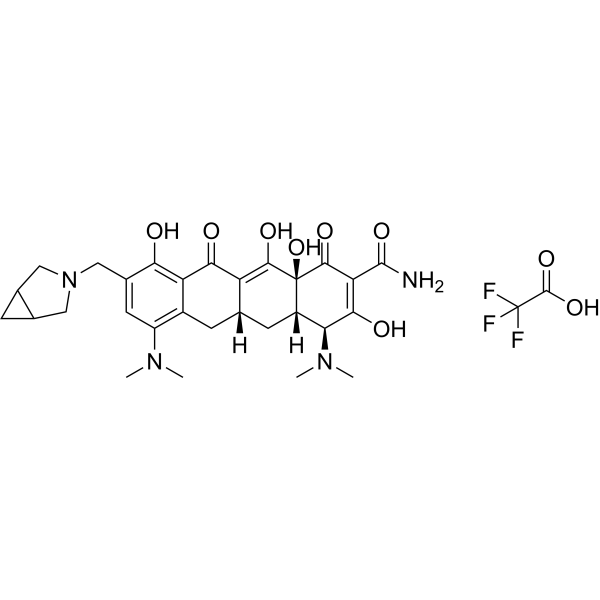
Zifanocycline (KBP-7072) TFA is an orally active, semi-synthetic aminomethylcycline antibiotic that inhibits the normal function of bacterial ribosomes. Zifanocycline TFA has broad spectrum in vitro antimicrobial activity against Gram-positive and Gram-negative bacteria, including many multidrug-resistant pathogens. Zifanocycline TFA is indicated for the study of acute bacterial skin and skin structure infections, community-acquired bacterial pneumonia, and complicated intra-abdominal infections .
loading...
    loading...
Cat. No.: HY-126396
CAS No.: 463356-00-5
Purity:  ≥99.0%
Target:  

Antibiotic CaMK Fungal

Research Areas:  

Infection

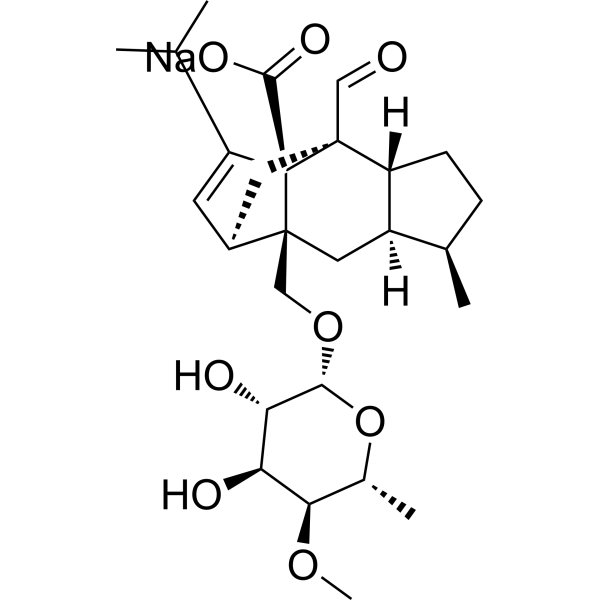
Sordarin sodium is an eEF2 inhibitor and antibiotic. Sordarin sodium's function is dependent on the diphthamide modification on eEF2. Sordarin sodium inhibits protein synthesis by preventing the binding of eEF2 to the ribosome complex. Sordarin sodium has antifungal activity .
loading...
    loading...
Cat. No.: HY-123035
CAS No.: 877773-32-5
Purity:  99.44%
Target:  

HSP Akt EGFR

Research Areas:  

Endocrinology

Gamendazole, an indazole carboxylic acid (ICA), is an orally active, selective HSP90AB1 (HSP90BETA) and EEF1A1 (eEF1A) inhibitor. Gamendazole binds to the C-terminal nucleotide binding pocket of HSP90 and cause downregulation of clients AKT1 and ERBB2, but stabilizes the HSP90 heterocomplex. Gamendazole specifically inhibits the actin bundling function of EEF1A1, but does not bind to the nucleotide docking pocket nor inhibits the ribosome charging or protein translation functions of EEF1A1. Gamendazole, an antispermatogenic compound with antifertility effects, has the potential for reversible non-hormonal male contraceptive agent research .
loading...
    loading...
Cat. No.: HY-113061R
CAS No.: 1445-07-4
Pseudouridine (Standard) is the analytical standard of Pseudouridine. This product is intended for research and analytical applications. Pseudouridine is an isomer of the nucleoside uridine, and the most abundant modified nucleoside in non-coding RNAs. Pseudouridine in rRNA and tRNA can fine-tune and stabilize the regional structure and help maintain their functions in mRNA decoding, ribosome assembly, processing and translation [4].
loading...
    loading...
Cat. No.: HY-139554
CAS No.: 1420294-56-9
Synonyms: KBP-7072
Target:  

Antibiotic Bacterial

Research Areas:  

Infection

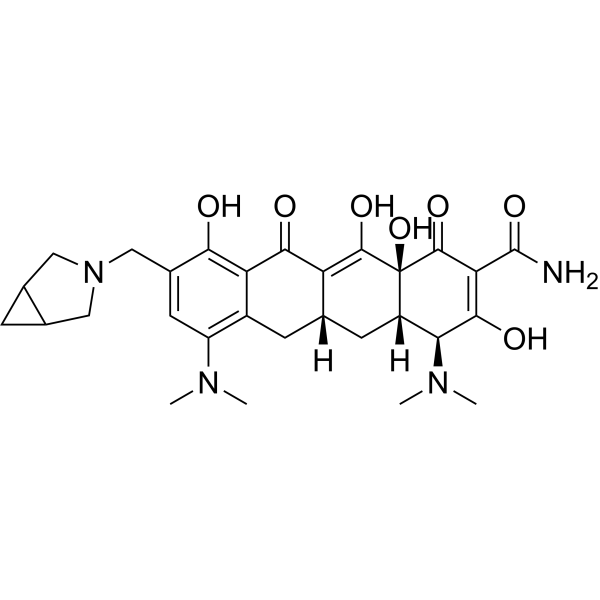
Zifanocycline (KBP-7072) is a semisynthetic third-generation aminomethylcycline antibiotic that inhibits the normal function of the bacterial ribosome. Zifanocycline exhibits a broad spectrum of in vitro antibacterial activity against Gram-positive and Gram-negative bacteria, including many multidrug-resistant pathogens. Zifanocycline is available in both oral and injectable formulations. Zifanocycline can be used for the research of acute bacterial skin and skin structure infections, community-acquired bacterial pneumonia, and complicated intra-abdominal infections .
loading...
    loading...
Cat. No.: HY-W768571
CAS No.: 2230887-15-5
Pseudouridine- 13C, 15N2 is the 13C- and 15N-labeled Pseudouridine (HY-113061). Pseudouridine is an isomer of uridine and the most abundant modified nucleoside in non-coding RNA. It fine-tunes and stabilizes regional structures in rRNA and tRNA, maintaining their functions in mRNA decoding, ribosome assembly, processing, and translation. Pseudouridine-modified tRNA fragments can inhibit aberrant protein synthesis and hold promise for research on myelodysplastic syndrome (MDS)-related leukemia. .
loading...
    loading...
Cat. No.: HY-175733
CAS No.: 3105591-09-8
Target:  

RIO Kinase Apoptosis

Research Areas:  

Cancer

CQ3196 is an orally active RIOK2 inhibitor with a Kd of 14 nM. CQ3196 effectively inhibits the ATPase activity of RIOK2, with an IC50 value of 72 nM. CQ3196 inhibits cell proliferation and colony formation in gastric cancer cell lines. CQ3196 induces cell apoptosis in HGC-27 and AGS cells. CQ3196 suppresses downstream signal pathway of RIOK2. CQ3196 reduces phosphorylation of mTOR and AKT. CQ3196 modulates ribosome function and protein synthesis. CQ3196 inhibits tumor growth and can be used for gastric cancer invtro and invivo research .
loading...
    loading...
Cat. No.: HY-B1173R
CAS No.: 464-49-3
Synonyms: D-(+)-Camphor (Standard); (1R)-(+)-Camphor (Standard)
(+)-Camphor (Standard) is the analytical standard of (+)-Camphor. This product is intended for research and analytical applications. (+)-Camphor (D-(+)-Camphor; (1R)-(+)-Camphor) is an isomer of Camphor. Camphor is an agonist of monoterpenoid transient receptor potential (TRP) channels (such as TRPV1, TRPV3, TRPM8) and an inhibitor of TRPA1 channels. Camphor's derivatives have multiple biological activities, including antibacterial, antiviral, antioxidant, analgesic and anticancer. Camphor can selectively activate cold-sensitive TRP channels and inhibit TRPA1-mediated nociceptive signals. Camphor stimulates the cold-sensing nerve endings in the skin and regulates the activity of ion channels to exert analgesic, anti-inflammatory and anti-itching effects. It also has anti-proliferative and anti-mutagenic activities on tumor cells, which may be related to inhibiting ribosome function or inducing cell apoptosis. Camphor can be absorbed through the skin and (+)-Camphor can be used in the study of muscle and joint pain and inflammation .
loading...
    loading...
Cat. No.: HY-113061S
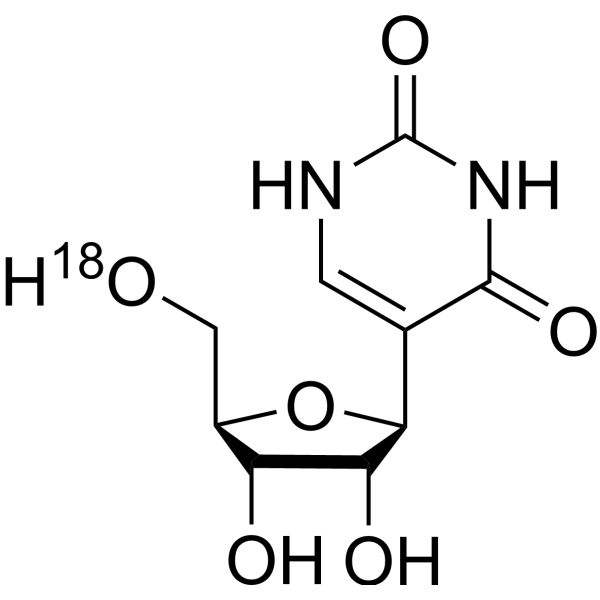
Pseudouridine- 18O is the 18O labeled Pseudouridine (HY-113061). Pseudouridine is an isomer of the nucleoside uridine, and the most abundant modified nucleoside in non-coding RNAs. Pseudouridine in rRNA and tRNA can fine-tune and stabilize the regional structure and help maintain their functions in mRNA decoding, ribosome assembly, processing and translation.
loading...
    loading...
Cat. No.: HY-139554AR
Synonyms: KBP-7072 TFA (Standard)
Research Areas:  

Infection

Zifanocycline (TFA) (Standard) is the analytical standard of Zifanocycline (TFA). This product is intended for research and analytical applications. Zifanocycline (KBP-7072) TFA is an orally active, semi-synthetic aminomethylcycline antibiotic that inhibits the normal function of bacterial ribosomes. Zifanocycline TFA has broad spectrum in vitro antimicrobial activity against Gram-positive and Gram-negative bacteria, including many multidrug-resistant pathogens. Zifanocycline TFA is indicated for the study of acute bacterial skin and skin structure infections, community-acquired bacterial pneumonia, and complicated intra-abdominal infections[1][2].
loading...
    loading...
Cat. No.: HY-103248R
CAS No.: 606-58-6
Synonyms: Vengicide (Standard)
DL-Aspartic acid (Standard) is the analytical standard of DL-Aspartic acid. This product is intended for research and analytical applications. DL-Aspartic acid (DL-Asp-OH) is a kind of biological materials or organic compounds that are widely used in life science research .
loading...
    loading...
Cat. No.: HY-181627
CAS No.: 3094990-88-9
ETC-501 is a blood-brain barrier-permeable, orally active, and selective MNK1/MNK2 inhibitor, with an IC50 of 0.033 μM against MNK1 and 0.111 μM against MNK2. ETC-501 inhibits glioblastoma cell proliferation, impairs DNA damage repair function, delays cell cycle progression, and suppresses ribosome biogenesis. ETC-501 enhances Temozolomide (HY-17364)-induced cellular senescence, attenuates the senescence-associated secretory phenotype, and increases cellular sensitivity to Navitoclax (HY-10087). ETC-501 is applicable to research related to glioblastoma .
loading...
    loading...
Cat. No.: HY-113138R
CAS No.: 2140-69-4
Synonyms: N3-Methyluridine (Standard)
3-Methyluridine (Standard) is the analytical standard of 3-Methyluridine. This product is intended for research and analytical applications. 3-Methyluridine (m3U; N3-Methyluridine) is a methylated nucleotide present in ribosomal RNA (rRNA), mainly targeting specific base sites of RNA molecules such as 23S rRNA. 3-Methyluridine can introduce a methyl group at the N3 position of uracil, affecting the secondary structure stability and base pairing ability of RNA, and regulating ribosome function. For example, it affects ribosomal subunit binding and tRNA interaction. 3-Methyluridine is often used as a key raw material for the synthesis of modified nucleotides, and is used to construct RNA oligonucleotides containing methylation modifications to study the effects of RNA methylation on gene expression and drug resistance .
loading...
    loading...
  • 1

