
1. Search Result
Search Result
Results for "

secreted protein

" in MedChemExpress (MCE) Product Catalog:

27

Inhibitors & Agonists

4

Screening Libraries

1

Fluorescent Dyes

4

Biochemical Assay Reagents

4

Peptides

3

Natural
Products

47

Recombinant Proteins

19

Antibodies

7

Oligonucleotides

Targets Recommended:
Cat. No. Product Name Target Research Areas Chemical Structure
  • HY-16592
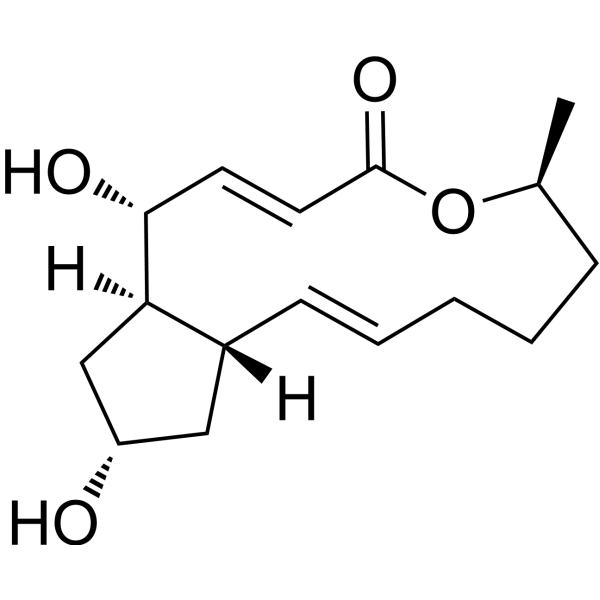
    Brefeldin A
    150+ Cited Publications

    BFA; Cyanein; Decumbin

    Autophagy Mitophagy HSV Antibiotic Bacterial Infection Cancer
    Brefeldin A (BFA) is a lactone antibiotic and a specific inhibitor of protein trafficking. Brefeldin A blocks the transport of secreted and membrane proteins from endoplasmic reticulum to Golgi apparatus . Brefeldin A is also an autophagy and mitophagy inhibitor . Brefeldin A inhibits HSV-1 and has anti-cancer activity .
    Brefeldin A
  • HY-10858
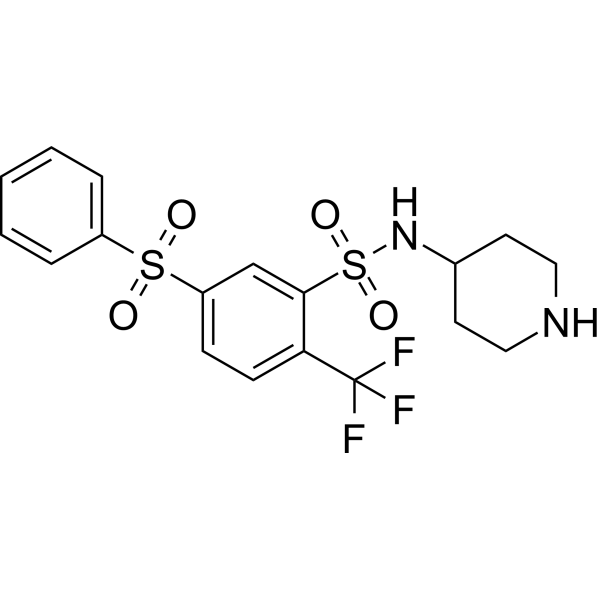
    WAY 316606
    4 Publications Verification

    sFRP-1 Wnt Cancer
    WAY 316606 is an inhibitor of the secreted protein sFRP-1, an endogenous antagonist of the secreted glycoprotein Wnt. The affinity of WAY-316606 for sFRP-1 is determined using the FP binding assay with IC50 of 0.5 μM .
    WAY 316606
  • HY-P10735

    Gastric inhibitory polypeptide(mouse); GIP(1-42) (mouse)

    Lipase Apoptosis Metabolic Disease
    GIP (Gastric inhibitory polypeptide) (mouse) is a gastrointestinal hormone that is secreted by the intestinal K cells, and also expressed in and secreted from pancreatic islets. GIP (mouse) promotes insulin secretion from pancreatic β cells via the G-protein-coupled GIP receptor (GIPR). GIP (mouse) promotes pancreatic β cell proliferation and inhibits apoptosis. GIP (mouse) also exerts direct lipogenic effects on adipose tissue .
    GIP (mouse)
  • HY-NP006
    Protein A
    1 Publications Verification

    SPA

    Endogenous Metabolite Apoptosis Inflammation/Immunology
    Protein A (SPA) is an immunoglobulin (Ig)-binding protein that exists on the bacterial surface and can be freely secreted into the extracellular environment. Protein A blocks opsonophagocytosis and induces B cell apoptosis in vitro by binding to the Fc region of antibodies and the Fab region of B cell receptors. Protein A can form toxic immune complexes with IgG, thereby inducing leukocyte necrosis. Protein A contributes to the virulence expression of Staphylococcus aureus. Protein A triggers allergic reactions in IgG-pretreated mouse models. Protein A can be used in studies related to immune system diseases .
    Protein A
  • HY-D0166A

    Biochemical Assay Reagents Others
    Neutral Red (IND) is an organic dye commonly used in biology and cytology laboratories. It can be used to stain living cells, secreted proteins and other molecular structures, etc., and has a wide range of applications in cell imaging and staining. In addition, Neutral Red (IND) is widely used in industrial fields such as water treatment, food processing and paper manufacturing, for example as an indicator or colorant. Although the compound has no direct medical application, it has important application value in the fields of biology, chemistry and industry.
    Neutral Red (IND)
  • HY-112331
    SJ000291942
    3 Publications Verification

    TGF-β Receptor Cancer
    SJ000291942 is an activator of the canonical bone morphogenetic proteins (BMP) signaling pathway. BMPs are members of the transforming growth factor beta (TGFβ) family of secreted signaling molecules.
    SJ000291942
  • HY-114164G

    Thrombin Protease Activated Receptor (PAR) MMP VEGFR Epigenetic Reader Domain Cardiovascular Disease Neurological Disease Inflammation/Immunology
    Murine Thrombin is a murine serine protease that plays a central role in blood coagulation. Murine Thrombin stimulates macrophages to polarize into a unique phenotype characterized by anti-inflammatory and pro-repair properties. Murine Thrombin activates PAR1, induces the production of MCP-1, MMP3 and VEGF in mouse intervertebral discs, and causes degradation of the cartilage matrix and destruction of intervertebral disc structure. Murine Thrombin activity increases significantly in paraoxon-induced status epilepticus .
    Murine Thrombin
  • HY-168894

    Ferroptosis JAK STAT p38 MAPK AMPK GSK-3 Apoptosis HSP TNF Receptor Cardiovascular Disease Neurological Disease Metabolic Disease Cancer
    CT-1 is a secreted protein belonging to the IL-6 cytokine family. Overexpression of CT-1 enhances cell proliferation, migration and angiogenesis via the ADMA/DDAH pathway. CT-1 inhibits the growth of triple-negative breast cancer cells by simultaneously inducing Ferroptosis in N2-type tumor-associated neutrophils and cancer cells. CT-1 activates the Jak/STAT-3, p42/p44 MAPK and AMPK pathways, and inhibits GSK-3β activity through phosphorylation to induce cardiomyocyte hypertrophy. CT-1 enhances the viability of cardiomyocytes and neurons, reduces cell Apoptosis, induces the expression of heat shock proteins (HSP) and BNP, and inhibits TNF levels. CT-1 exerts anti-tumor activity in mouse models of triple-negative breast cancer. CT-1 improves cognitive impairment in mice. CT-1 is applicable to the research of ischemic heart disease, triple-negative breast cancer, myocardial hypertrophy, Parkinson's disease, hypertensive heart disease, myocardial infarction, acute Chagas cardiomyopathy, high-fat diet-induced cognitive impairment and diabetes-related cognitive impairment .
    CT-1
  • HY-W089800

    trans-2-Nonen-1-al

    COX Lipoxygenase Apoptosis Cardiovascular Disease Inflammation/Immunology
    trans-2-Nonenal (trans-2-Nonen-1-al) is an endogenous peroxidation product of polyunsaturated fatty acids, acting as an inhibitor of COX and 12-LOX, as well as an inducer of apoptosis. trans-2-Nonenal is also a malodorous compound secreted by the human body, and its content gradually increases with aging. trans-2-Nonenal inhibits the activities of multiple enzymes such as platelet membrane-bound PTPase, preferentially covalently modifies proteins at lysine residues to form immunogenic adducts, and regulates platelet Arachidonic acid (HY-109590) metabolism. trans-2-Nonenal also exhibits significant cytotoxicity, reduces the viability of keratinocytes, promotes their apoptosis, and effectively decreases the thickness of epidermal models and the number of proliferating cells. trans-2-Nonenal is commonly used in studies of thrombotic, atherosclerotic diseases, renal adenocarcinoma, etc. .
    trans-2-Nonenal
  • HY-10860

    sFRP-1 Wnt β-catenin Metabolic Disease
    WAY-362692 is a secreted frizzled-related protein (sFRP-1) inhibitor (IC50 of 0.02 μM), targeting the netrin domain of sFRP-1. WAY-362692 can competitively inhibit the interaction between sFRP-1 and Wnt proteins, and activate the Wnt/β-catenin signaling pathway (EC50 = 0.03 μM). WAY-362692 can activate osteoblasts and promote bone remodeling. WAY-362692 can be used for the research of metabolic disease, such as osteoporosis .
    WAY-362692
  • HY-10858A
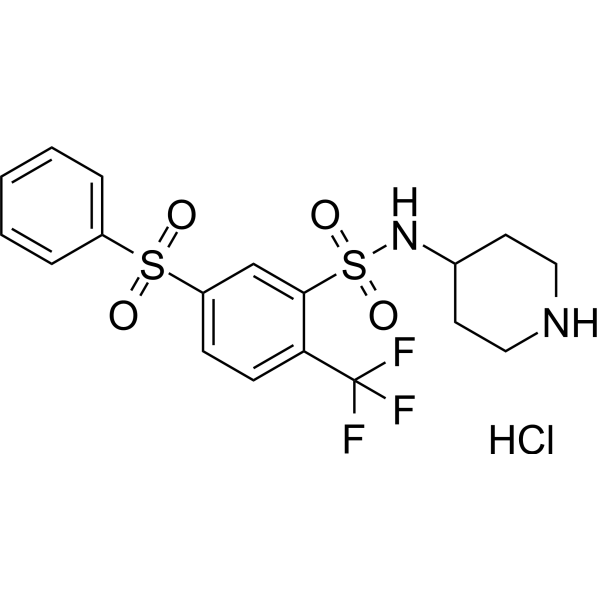
    WAY 316606 hydrochloride
    4 Publications Verification

    sFRP-1 Wnt Cancer
    WAY 316606 hydrochloride is an inhibitor of the secreted protein sFRP-1, an endogenous antagonist of the secreted glycoprotein Wnt. The affinity of WAY-316606 for sFRP-1 is determined using the FP binding assay with IC50 of 0.5 μM .
    WAY 316606 hydrochloride
  • HY-16592R

    BFA (Standard); Cyanein (Standard); Decumbin (Standard)

    Reference Standards Autophagy Mitophagy HSV Antibiotic Bacterial Infection Cancer
    Brefeldin A (Standard) (BFA (Standard)) is the analytical standard of Rutin. This product is intended for research and analytical applications. Brefeldin A (BFA) is a lactone antibiotic and a specific inhibitor of protein trafficking. Brefeldin A blocks the transport of secreted and membrane proteins from endoplasmic reticulum to Golgi apparatus. Brefeldin A is also an autophagy and mitophagy inhibitor. Brefeldin A inhibits HSV-1 and has anti-cancer activity.
    Brefeldin A (Standard)
  • HY-N7698

    Biochemical Assay Reagents Others
    Tetra-N-acetylchitotetraose is a linear chitosan oligosaccharide. Tetra-N-acetylchitotetraose is a component of the hpo-chitoo gosacchaπdes (LCOs) secreted from Rhizobia. Tetra-N-acetylchitotetraose is also a substrate for the Rhizobium leguminosarum nodulation protein NodB, a CO deacetylase .
    Tetra-N-acetylchitotetraose
  • HY-P0049A

    Arg8-vasopressin diacetate; AVP diacetate; ADH

    Apoptosis Vasopressin Receptor Neurological Disease Cancer
    Argipressin (diacetate) (AVP (diacetate), also known as antidiuretic hormone (ADH)) is a 9 amino acid neuropeptide secreted by the posterior pituitary. Argipressin (diacetate) (AVP (diacetate)) can regulate the biological effects of fluid balance, osmolality and cardiovascular through three separate G-protein coupled receptors (GPCRs), namely Avpr1a (V1a), Avpr1b (V1b) and Avpr2 (V2). Argipressin (diacetate) (AVP (diacetate)) also have potentially important effects on centrally regulated metabolic processes .
    Argipressin diacetate
  • HY-127113

    Leukotriene Receptor Cardiovascular Disease
    Q8, an effective antiangiogenic drug, is a CysLt1 antagonist (IC50 of 4.9 μM). Q8 is sufficient to reduce cellular levels of NF-κB and calpain-2 and secreted levels of the proangiogenic proteins intercellular adhesion molecule-1, vascular cell adhesion protein-1, and VEGF .
    Q8
  • HY-174662

    mRNA Inflammation/Immunology
    Human IFNG mRNA encodes the human interferon gamma (IFNG) protein, a member of the type II interferon class. IFNG is secreted by cells of both the innate and adaptive immune systems. The active protein is a homodimer that binds to the interferon gamma receptor which triggers a cellular response to viral and microbial infections.
    Human IFNG mRNA
  • HY-118481

    Lipase Infection
    H-Pro-Glu-OH is a protein secreted by pathogenic mycobacteria through the Type VII secretion system. H-Pro-Glu-OH targets LipY lipases to the cell Surface via the ESX-5 Pathway .
    H-Pro-Glu-OH
  • HY-174772

    mRNA Inflammation/Immunology
    Human CCL1 mRNA encodes the human C-C motif chemokine ligand 1 (CCL1) protein, a member of the CC subfamily. CCL1 is secreted by activated T cells and displays chemotactic activity for monocytes but not for neutrophils.
    Human CCL1 mRNA
  • HY-174533

    mRNA Cancer
    Human TGFB2 mRNA encodes the human transforming growth factor beta 2 (TGFB2) protein, a secreted ligand of the TGF-beta superfamily. TGFB2 has suppressive effects on interleukin-2 dependent T-cell growth.
    Human TGFB2 mRNA
  • HY-174700

    mRNA Cancer
    Human FGF21 mRNA encodes the human fibroblast growth factor 21 (FGF21) protein, a member of the fibroblast growth factor (FGF) family. FGF21 is a secreted endocrine factor that functions as a major metabolic regulator. It stimulates the uptake of glucose in adipose tissue.
    Human FGF21 mRNA
  • HY-145741

    Antibiotic Infection
    MptpB-IN-1 (Compound 13) is a potent and orally active inhibitor of MptpB. Mycobacterium tuberculosis protein-tyrosine-phosphatase B (MptpB) is a secreted virulence factor that subverts antimicrobial activity in the host. MptpB-IN-1 reduces multidrug-resistant mycobacterium tuberculosis survival and infection burden .
    MptpB-IN-1
  • HY-174534

    mRNA Cancer
    Human TGFB1 mRNA encodes the human transforming growth factor beta 1 (TGFB1) protein, a secreted ligand of the TGF-beta superfamily. TGFB1 can regulate cell proliferation, differentiation and growth, and also play a role in modulating expression and activation of other growth factors including interferon gamma and tumor necrosis factor alpha.
    Human TGFB1 mRNA
  • HY-W127485

    Biochemical Assay Reagents Others
    cis-9,10-Methyleneoctadecanoic acid is a cyclopropane fatty acid that has been found in bacteria and in the digestive glands of P. globosa. It is a component of the cell membrane of Staphylococcus aureus, and levels were reduced after treatment with carvacrol. cis-9,10-Methyleneoctadecanoic acid is secreted by H. pylori and enhances histamine- and dibutyryl cAMP-stimulated acid secretion in isolated guinea pig parietal cells. It also activates protein kinase C (PKC) in a calcium-dependent manner.
    cis-9,10-Methyleneoctadecanoic Acid
  • HY-P11092

    Endogenous Metabolite Neurological Disease
    TLQP-62 (mouse,rat) is a secreted C-terminal peptide that can be derived from protein VGF. TLQP-62 activates the BDNF-TrkB signaling pathway, inducing acute, transient phosphorylation of TrkB receptor and downstream CREB (Ser133) phosphorylation. TLQP-62 demonstrates excellent efficacy in promoting long-term fear memory formationin wild-type mice and reversing memory impairment in VGF heterozygous knock-out mice. TLQP-62 can be used for the study of memory-related neurological disorders (e.g., Alzheimer’s disease, frontotemporal dementia) .
    TLQP-62 (mouse,rat)
  • HY-174856

    PROTACs HBV Infection
    PROTAC HBeAg degrader-1 is a PROTAC targeting degradation agent for HBeAg. PROTAC HBeAg degrader-1 recruits the VHL E3 ligase but degrades HBV protein HBeAg through VHL-independent mechanism. PROTAC HBeAg degrader-1 decreases levels of secreted and intracellular HBeAg. PROTAC HBeAg degrader-1 can be used for the research of hepatitis B virus (HBV) . (Structure Note: Pink: HBeAg ligand (HY-174857); Blue: VHL Ligand (HY-125845); Black: linker; E3-linker (HY-135045))
    PROTAC HBeAg degrader-1
  • HY-10858R

    Reference Standards sFRP-1 Wnt Cancer
    WAY 316606 (Standard) is the analytical standard of WAY 316606 (HY-10858). This product is intended for research and analytical applications. WAY 316606 is an inhibitor of the secreted protein sFRP-1, an endogenous antagonist of the secreted glycoprotein Wnt. The affinity of WAY-316606 for sFRP-1 is determined using the FP binding assay with IC50 of 0.5 μM .
    WAY 316606 (Standard)
  • HY-174532

    mRNA Cancer
    Human TGFB3 mRNA encodes the human transforming growth factor beta 3 (TGFB3) protein, a secreted ligand of the TGF-beta superfamily. TGFB3 is involved in embryogenesis and cell differentiation, and may play a role in wound healing.
    Human TGFB3 mRNA

Inquiry Online

Your information is safe with us. * Required Fields.

Salutation


Country or Region *

Applicant Name *


Organization Name *

Department *


Email Address *


Product Name *

Cat. No.


Requested quantity *

Phone Number *


Remarks

Inquiry Online

Inquiry Information

Product Name:
Cat. No.:
Quantity:
MCE Japan Authorized Agent:

