

24 Results for "

senile

" in MedChemExpress (MCE) Product Catalog:
Products (24)

24 Results for "senile" in MCE Product Catalog:

29
29 Publications Verification
Cat. No.: HY-D0972
CAS No.: 1326-12-1
Synonyms: Thioflavin S; Direct Yellow 7
Thioflavine S is a fluorescent histochemical marker of dense core senile plaques. Thioflavine S can be used for Alzheimer's research .
loading...
    loading...
1
1 Cited Publications
Cat. No.: HY-B1124
CAS No.: 34161-24-5
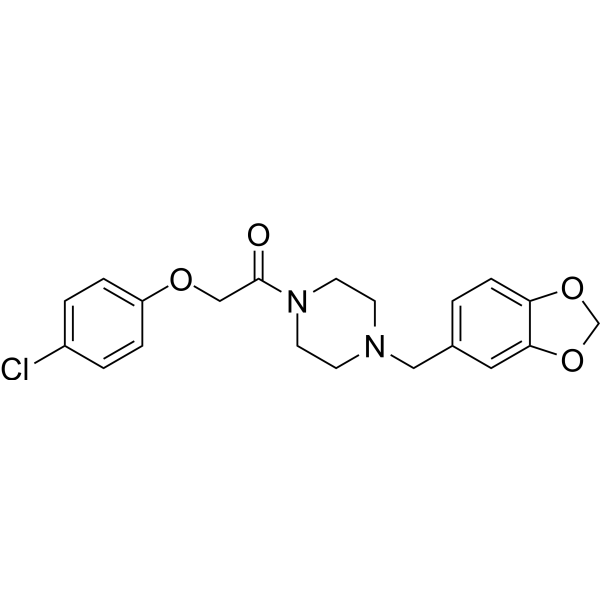
Fipexide, a parachloro-phenossiacetic acid derivative, is an orally active nootropic agent. Fipexide reduces striatal adenylate cyclase activity. Fipexide has positive effect on cognitive performance by dopaminergic neurotransmission. Fipexide is used for senile dementia research. Fipexide acts as a chemical inducer in callus formation, shoot regeneration and Agrobacterium infection .
loading...
    loading...
1
1 Cited Publications
Cat. No.: HY-N0008
CAS No.: 21082-33-7
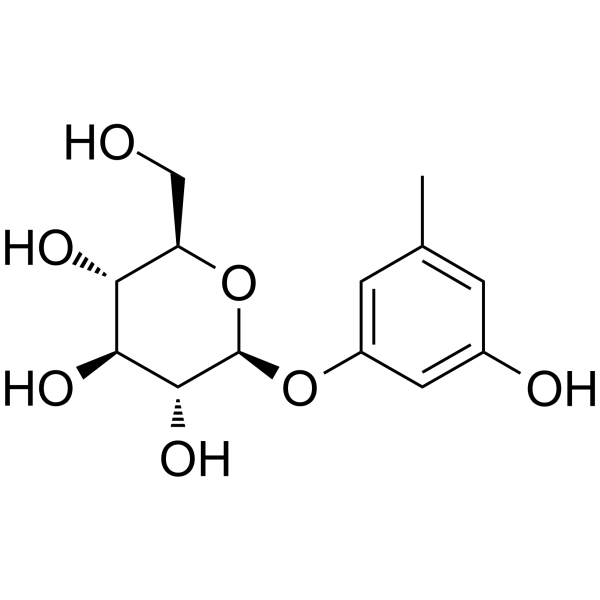
Orcinol glucoside is an orally active, blood-brain barrier permeable osteoblast proliferation promoter that targets the Nrf2/Keap1, mTOR and p38 signaling pathways. Orcinol glucoside promotes Nrf2 nuclear translocation, upregulates antioxidant enzyme levels, enhances the phosphorylation of mTOR and p70S6K, and inhibits the enzymatic activity of HAS2 as well as the nuclear translocation of GR. Orcinol glucoside also alleviates oxidative stress, inhibits autophagic flux, osteoclastogenesis and TGF-β1-induced M2 polarization, while reducing collagen deposition and effectively promoting the proliferation, differentiation and mineralization of osteoblasts. Orcinol glucoside also exhibits anti-pulmonary fibrosis, anxiolytic and antidepressant activities. Orcinol glucoside can be used in the research of senile and glucocorticoid-induced osteoporosis, idiopathic pulmonary fibrosis (IPF), anxiety and other related diseases .
loading...
    loading...
1
1 Cited Publications
Cat. No.: HY-B1124A
CAS No.: 34161-23-4
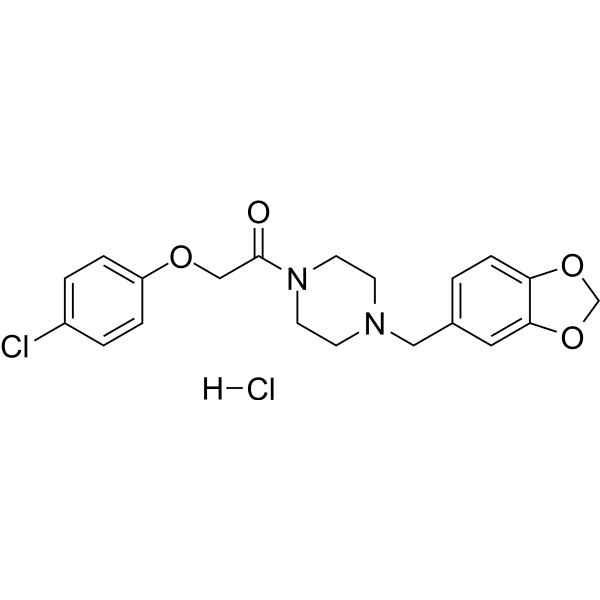
Fipexide hydrochloride, a parachloro-phenossiacetic acid derivative, is an orally active nootropic agent. Fipexide hydrochloride reduces striatal adenylate cyclase activity. Fipexide hydrochloride has positive effect on cognitive performance by dopaminergic neurotransmission. Fipexide hydrochloride is used for senile dementia research. Fipexide hydrochloride acts as a chemical inducer in callus formation, shoot regeneration and Agrobacterium infection .
loading...
    loading...
Cat. No.: HY-108296
CAS No.: 1043-21-6
Purity:  ≥95.0%
Synonyms: Catalin K
Pirenoxine (Catalin K) is an antioxidant with lens-protective activity. Pirenoxine inhibits lens sclerosis, prevents lipid peroxidation and suppresses lens protein opacification. Pirenoxine blocks benzoquinone acetic acid-induced cataract progression. Pirenoxine can be used in research related to presbyopia and cataracts .
loading...
    loading...
Cat. No.: HY-N0505
CAS No.: 100462-37-1
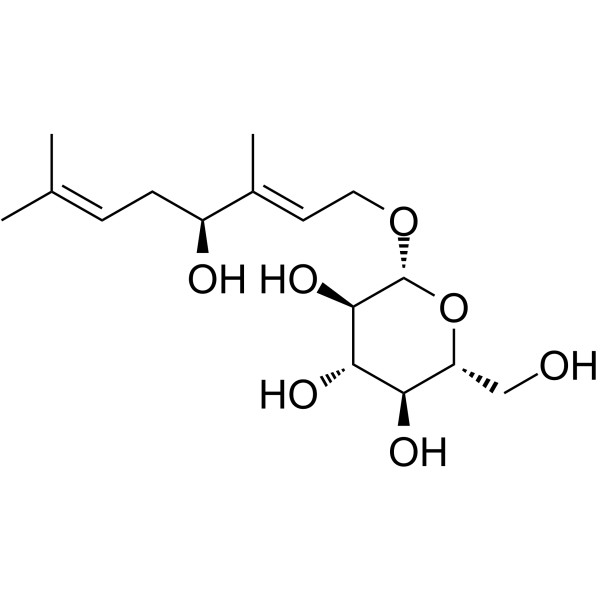
Rosiridin inhibits MAO A and MAO B with potential beneficial effect in depression and senile dementia. Rosiridin shows an inhibition of 83.8% against MAO B at 10 μM (pIC50=5.38) .
loading...
    loading...
Cat. No.: HY-158203
CAS No.: 1438900-88-9
Purity:  99.26%
Target:  

TGF-β Receptor

Research Areas:  

Others

BMP agonist 2 (derivative I-9) is a potent bone-inducing cytokine. BMP agonist 2 promotes bone tissue production by increasing the proportion and activity of osteoblasts. BMP agonist 2 promotes osteoblast proliferation and differentiation through the BMP2-ATF4 signaling axis, in which ATF4 is a transcription factor closely related to osteoblast differentiation and bone formation. BMP agonist 2 can be used in the study of senile osteoporosis (SOP) .
loading...
    loading...
Cat. No.: HY-P1387
CAS No.: 144409-98-3
Target:  

Amyloid-β Apoptosis

Research Areas:  

Neurological Disease

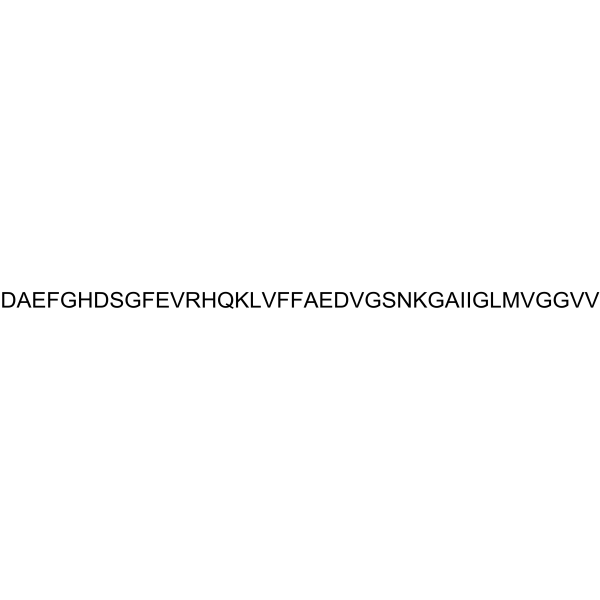
β-Amyloid (1-40) (rat) is a rat form of the amyloid β-peptide, which accumulates as an insoluble extracellular deposit around neurons, giving rise to the senile plaques associated with Alzheimer's disease (AD). β-Amyloid (1-40) (rat) increases 45Ca 2+ influx, induces neurodegeneration in the rat hippocampal neurons of the CA1 subfield. β-Amyloid (1-40) (rat) induces apoptosis. β-Amyloid (1-40) (rat) can be used for the research of Alzheimer's disease .
loading...
    loading...
Cat. No.: HY-164238
CAS No.: 62512-91-8
Research Areas:  

Endocrinology Cancer

LysoPC (18:3) is a type of lysophospholipid metabolite with biomarker properties. LysoPC (18:3) stably exists in human follicular fluid, and its abundance dynamically changes with age, synchronously regulating the body's lipid metabolism process, follicular development process and oocyte maturation process. The down-regulation of LysoPC (18:3) content is associated with breast cancer lesions and follicular aging changes accompanied by in vitro fertilization in elderly women. LysoPC (18:3) can be used in studies related to breast cancer and infertility in elderly women .
loading...
    loading...
Cat. No.: HY-P1051
CAS No.: 107015-83-8
Synonyms: Amyloid β-Protein (12-28)
Target:  

Amyloid-β

Research Areas:  

Neurological Disease

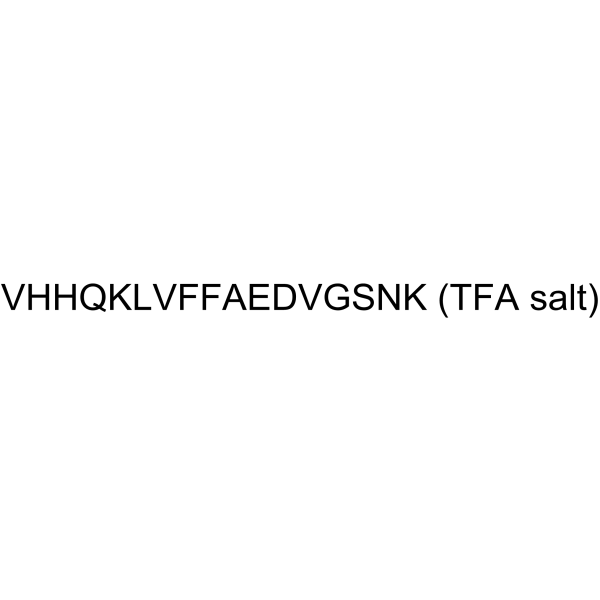
β-Amyloid (12-28) (Amyloid β-Protein (12-28)) is a peptide fragment of β-amyloid protein (β1-42). β1-42, a 42 amino acid protein , is the major component of senile plaque cores. β-Amyloid (12-28) shows aggregation properties. β-Amyloid (12-28) has the potential for Alzheimer’s disease research .
loading...
    loading...
Cat. No.: HY-N0505R
CAS No.: 100462-37-1
Rosiridin (Standard) is the analytical standard of Rosiridin. This product is intended for research and analytical applications. Rosiridin inhibits MAO A and MAO B with potential beneficial effect in depression and senile dementia. Rosiridin shows an inhibition of 83.8% against MAO B at 10 μM (pIC50=5.38) .
loading...
    loading...
Cat. No.: HY-B1124AR
CAS No.: 34161-23-4
Fipexide (hydrochloride) (Standard) is the analytical standard of Fipexide (hydrochloride). This product is intended for research and analytical applications. Fipexide hydrochloride, a parachloro-phenossiacetic acid derivative, is an orally active nootropic agent. Fipexide hydrochloride reduces striatal adenylate cyclase activity. Fipexide hydrochloride has positive effect on cognitive performance by dopaminergic neurotransmission. Fipexide hydrochloride is used for senile dementia research. Fipexide hydrochloride acts as a chemical inducer in callus formation, shoot regeneration and Agrobacterium infection .
loading...
    loading...
Cat. No.: HY-B1124R
CAS No.: 34161-24-5
Fipexide (Standard) is the analytical standard of Fipexide. This product is intended for research and analytical applications. Fipexide, a parachloro-phenossiacetic acid derivative, is an orally active nootropic agent. Fipexide reduces striatal adenylate cyclase activity. Fipexide has positive effect on cognitive performance by dopaminergic neurotransmission. Fipexide is used for senile dementia research. Fipexide acts as a chemical inducer in callus formation, shoot regeneration and Agrobacterium infection .
loading...
    loading...
Cat. No.: HY-101669
CAS No.: 134069-68-4
Target:  

Calcium Channel

Research Areas:  

Neurological Disease

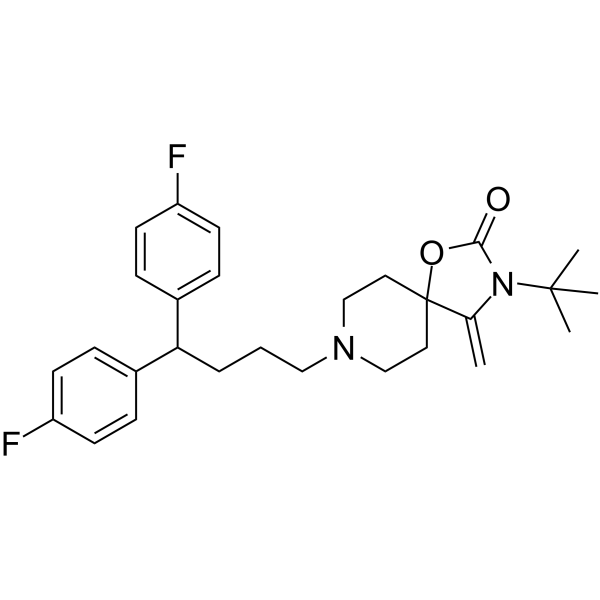
TDN345 is a Ca 2+ antagonist, used for the treatment of vascular and senile dementia including Alzheimer's disease.
loading...
    loading...
Cat. No.: HY-135595
CAS No.: 334758-18-8
Research Areas:  

Metabolic Disease

6-Raloxifene-β-D-glucopyranoside, a derivative of Raloxifene, is a benzothiophene glucuronidated at the 6' postion. 6-Raloxifene-β-D-glucopyranoside is a selective and orally active estrogen receptor antagonist. 6-Raloxifene-β-D-glucopyranoside can be used for inhibiting bone loss and resorption, and lowering lipid levels. 6'-Raloxifene-β-D-glucopyranoside, compound Ia, is extracted from patent US5567820A .
loading...
    loading...
Cat. No.: HY-153039R
CAS No.: 7444-29-3
Rosiridin (Standard) is the analytical standard of Rosiridin. This product is intended for research and analytical applications. Rosiridin inhibits MAO A and MAO B with potential beneficial effect in depression and senile dementia. Rosiridin shows an inhibition of 83.8% against MAO B at 10 μM (pIC50=5.38) .
loading...
    loading...
Cat. No.: HY-P1051A
Synonyms: Amyloid β-Protein (12-28) TFA; Amyloid Beta-Peptide (12-28) (human) TFA; β-Amyloid protein fragment(12-28) TFA
Target:  

Amyloid-β

Research Areas:  

Neurological Disease

β-Amyloid (12-28) (TFA) (Amyloid β-Protein (12-28) (TFA)) is a peptide fragment of β-amyloid protein (β1-42). β1-42, a 42 amino acid protein , is the major component of senile plaque cores. β-Amyloid (12-28) (TFA) shows aggregation properties. β-Amyloid (12-28) (TFA) has the potential for Alzheimer’s disease research .
loading...
    loading...
Cat. No.: HY-158030
CAS No.: 2986486-82-0
Target:  

HDAC

Research Areas:  

Neurological Disease

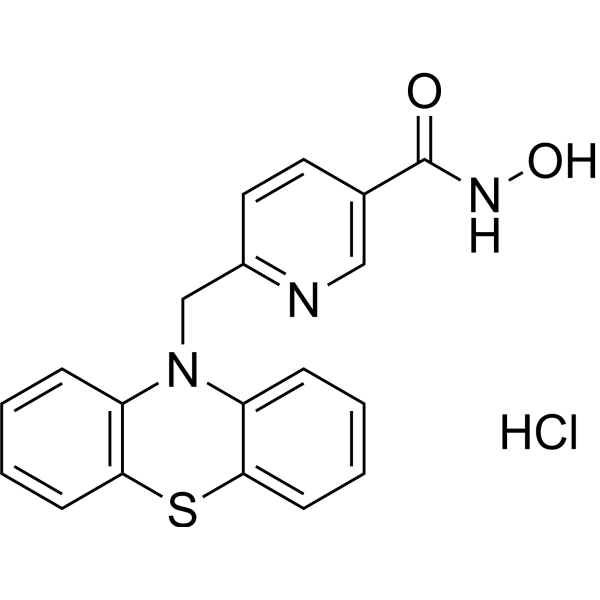
HDAC6-IN-37 (compound W5) is an inhibitor of HDAC6 and has neuroprotective effects. HDAC6-IN-37 can restore the morphology of hippocampal neurons, reduce the expression of Aβ, Tau, and p-Tau proteins in the hippocampus of AD rats, and inhibit the formation of senile plaques and neurofibrillary tangles. Thus, HDAC6-IN-37 improves the Aβ/Cu 2+-induced AD model in rats, regulates oxidative stress status, and balances neurotransmitter disorders in brain tissue .
loading...
    loading...
Cat. No.: HY-130398
CAS No.: 87075-23-8
Aerophobin-2 is a bromine compound, which can be isolated from sponge Verongia aerophoba. Aerophobin-2 inhibits aggregation of α-synuclein (α-syn) and phosphorylated α-synuclein (pSyn), exhibits neuroprotective efficacy .
loading...
    loading...
Cat. No.: HY-DY1093
CAS No.: 1326-12-1
Synonyms: Thioflavin S (solution); Direct Yellow 7 (solution)
Thioflavine S (solution) (Thioflavin S (solution)) is a fluorescent histochemical marker of dense core senile plaques. Thioflavine S can be used for Alzheimer's research .
Solvent and concentration: ddH2O: 10 mg/mL
loading...
    loading...

