Search Result
Results for "
sulfonic acid
" in MedChemExpress (MCE) Product Catalog:
9
Biochemical Assay Reagents
5
Isotope-Labeled Compounds
| Cat. No. |
Product Name |
Target |
Research Areas |
Chemical Structure |
-
- HY-157424
-
|
PAPS tetralithium salt
|
Biochemical Assay Reagents
|
Metabolic Disease
|
|
3′-Phosphoadenosine 5′-phosphosulfate tetralithium salt (PAPS tetralithium salt) is the cosubstrate and the source of sulfonic acid groups in sulfation reactions. 3′-Phosphoadenosine 5′-phosphosulfate tetralithium salt is important for maintaining sulfation balance in living organisms .
|
-
-
- HY-D0869
-
|
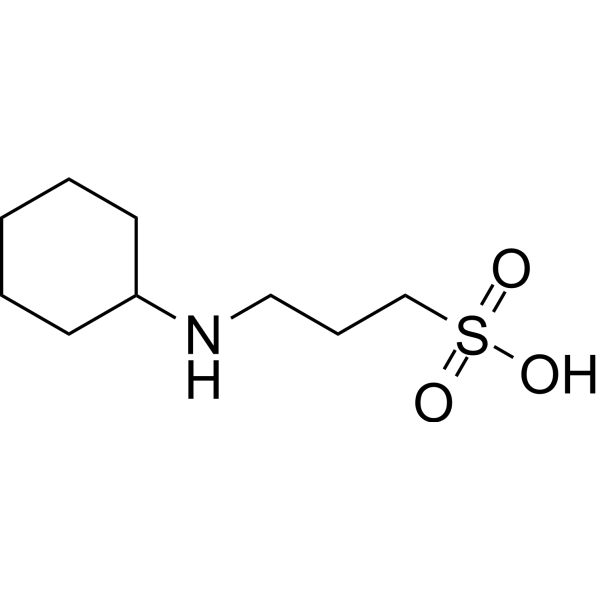
N-Cyclohexyl-3-aminopropanesulfonic acid
|
Biochemical Assay Reagents
|
Others
Cancer
|
|
CAPS, cyclohexylaminopropane sulfonic acid, is a surfactant. CAPS can be used as biological buffer (0.05 M, pH 11) for dialysis .
|
-
-
- HY-148163
-
|
|
Biochemical Assay Reagents
|
Others
|
|
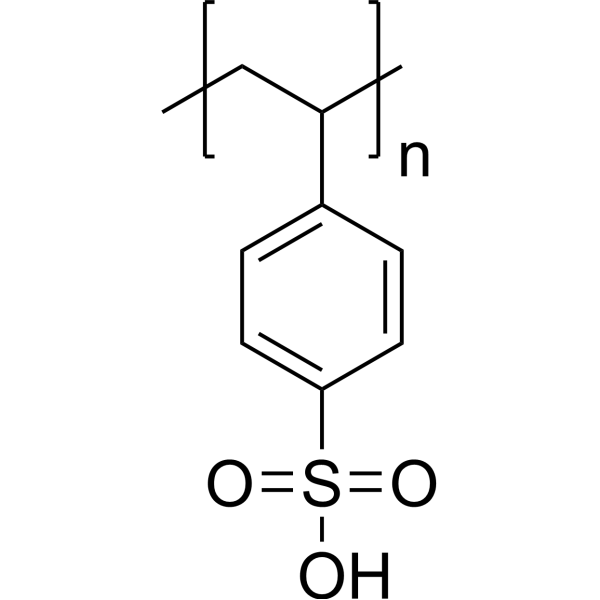
Polystyrene sulfonic acid (30% in water) is a potentially toxic hazardous substance. Polystyrene-derived microplastics (PS-MPs) are harmful to zebrafish hearts and induce male reproductive toxicity in mice. MCE offers Polystyrene products in solution packaging .
|
-
-
- HY-114360
-
|
|
Endogenous Metabolite
COX
Interleukin Related
Glutathione Peroxidase
TNF Receptor
|
Neurological Disease
Metabolic Disease
Inflammation/Immunology
Cancer
|
|
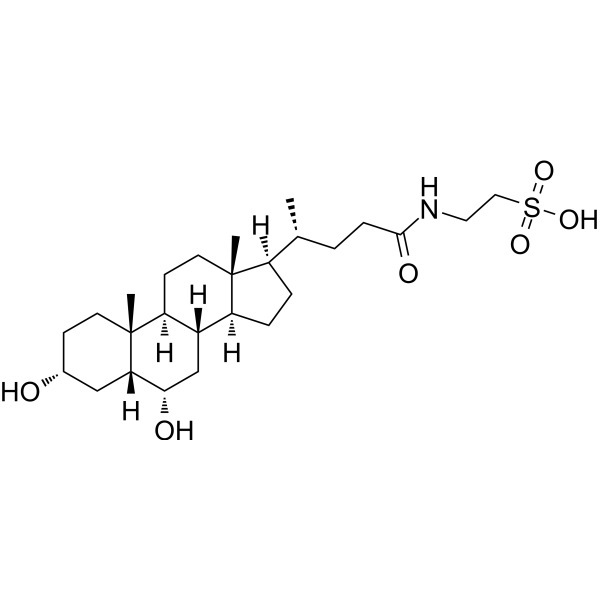
Taurohyodeoxycholic acid is an orally active 6 alpha-hydroxylated bile acid. Taurohyodeoxycholic acid decreases colonic MPO activity, TNF-α, lL-6 serum levels and the expression of COX-2. Taurohyodeoxycholic acid alleviates trinitrobenzene sulfonic acid induced ulcerative colitis via regulating Th1/Th2 and Th17/Treg cells balance. Taurohyodeoxycholic acid ameliorates high-fat diet-induced nonalcoholic fatty liver disease in mice. Taurohyodeoxycholic acid prevents Taurochenodeoxycholic acid (HY-N2027)-induced hepatotoxicity in bile fistula rats. Taurohyodeoxycholic acid can be used for the study of nonalcoholic fatty liver disease (NAFLD), colitis and biliary fistula .
|
-
-
- HY-119347
-
|
|
IFNAR
STAT
|
Inflammation/Immunology
Cancer
|
|
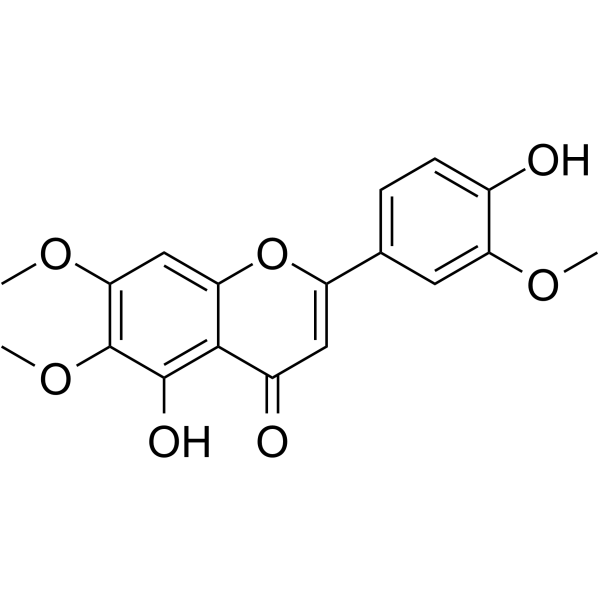
Cirsilineol, a natural flavone compound, selectively inhibits IFN-γ/STAT1/T-bet signaling in intestinal CD4 + T cells. Cirsilineol has potent immunosuppressive and anti-tumor properties. Cirsilineol significantly ameliorates trinitro-benzene sulfonic acid (TNBS)-induced T-cell-mediated experimental colitis in mice .
|
-
-
- HY-D0006
-
|
|
Fluorescent Dye
|
Others
|
|
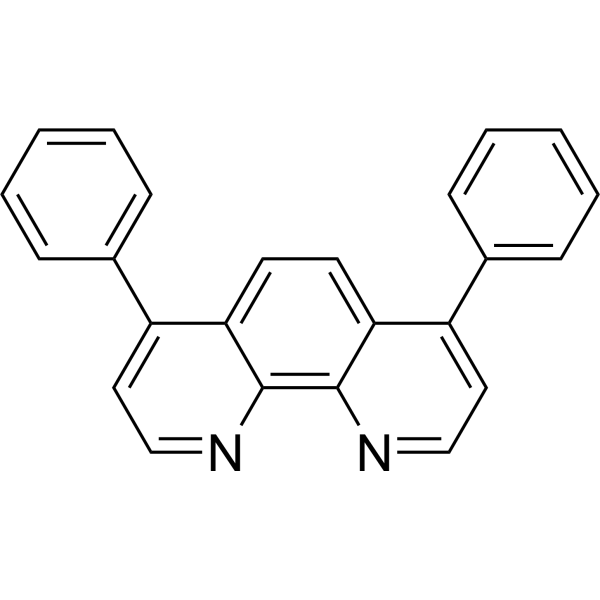
Bathophenanthroline is a nitrogen-containing organic ligand that can form stable complexes with transition metal ions such as Ru 2+. In proteomics, Bathophenanthroline is often used for in-gel protein staining. The negatively charged sulfonic acid groups of Bathophenanthroline interact electrostatically with the positively charged amino acid residues of proteins, thereby achieving specific binding to proteins and enhancing the fluorescent signal of detection. Bathophenanthroline can be used for protein separation and detection in SDS-PAGE gels in the field of proteomics, as well as other fluorescence studies[1]. Ex/Em=532 nm/610 nm[1].
|
-
-
- HY-139116
-
-
-
- HY-P3815
-
|
|
Casein Kinase
|
Others
|
|
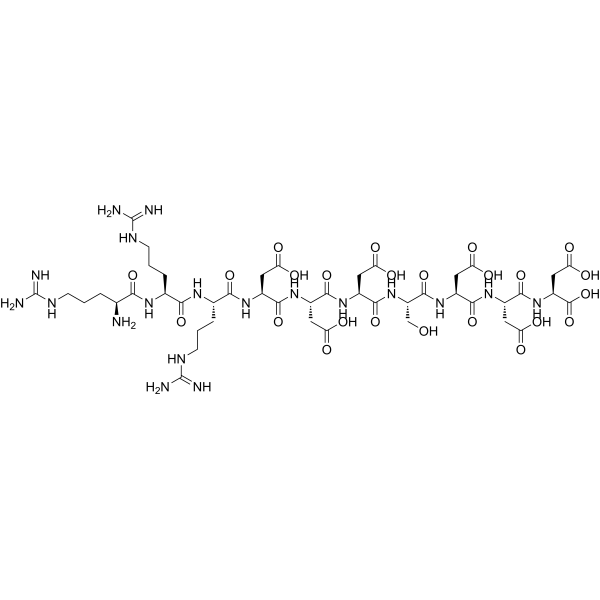
Casein Kinase 2 Substrate Peptide is a common CK2 substrate peptide. Casein Kinase 2 Substrate Peptide is synthesized with its C-terminus conjugated to 5-[(2-aminoethyl)amino]naphthalene-1-sulfonic acid (EDANS). Casein Kinase 2 Substrate Peptide can be used for protein kinase CK2 activity determination .
|
-
-
- HY-W012218
-
|
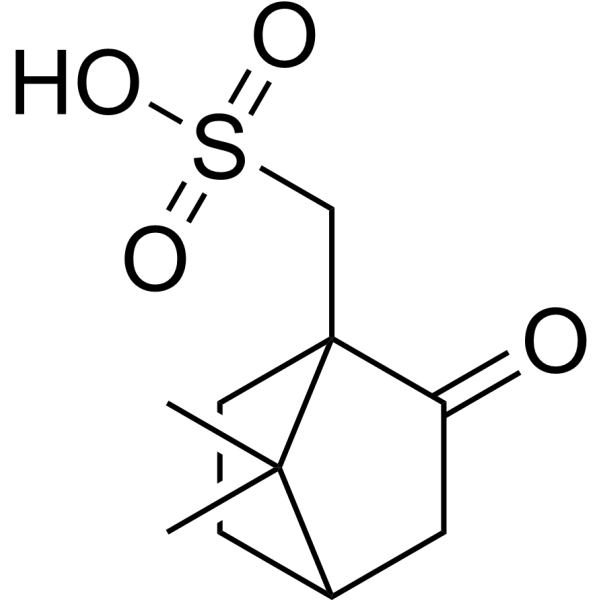
(±)-10-Camphorsulfonic acid
|
Biochemical Assay Reagents
|
Others
|
|
(±)-Camphor-10-sulfonic acid is a racemate of Camphor-10-sulfonic acid. (±)-Camphor-10-sulfonic acid can be used as an organocatalyst in performing a huge array of organic transformations .
|
-
-
- HY-W097491
-
|
|
Amino Acid Derivatives
|
Others
|
|
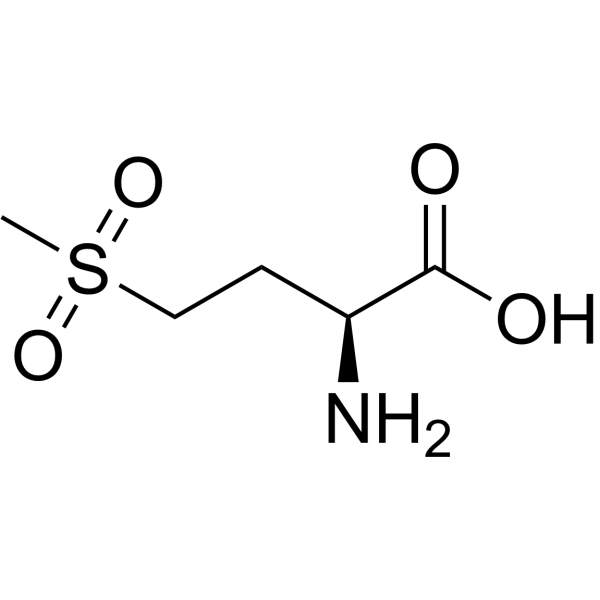
L-Methionine sulfone is a sulfonic acid derivative of L-Methionine (HY-N0326). L-Methionine in the presence of a number of oxidizing systems is readily converted to L-Methionine sulfone .
|
-
-
- HY-W110888
-
|
|
GLUT
|
Neurological Disease
|
|
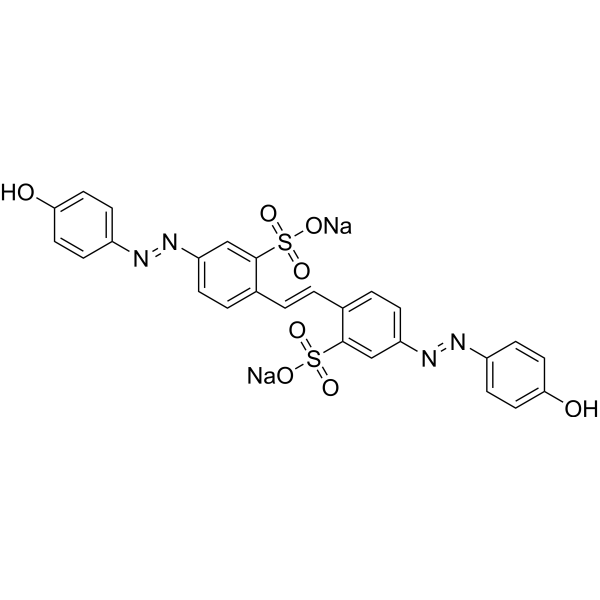
Brilliant Yellow, a diazo-containing sulfonic aci, is also a potent VGLUT-specific inhibitor. Brilliant Yellow is membrane-impermeable. However, there are some Brilliant Yellow analogs with low cytotoxicity and cell penetration. Brilliant Yellow analogs work on glutamatergic transmission in hippocampal neurons .
|
-
-
- HY-140047
-
|
|
PROTAC Linkers
|
Cancer
|
|
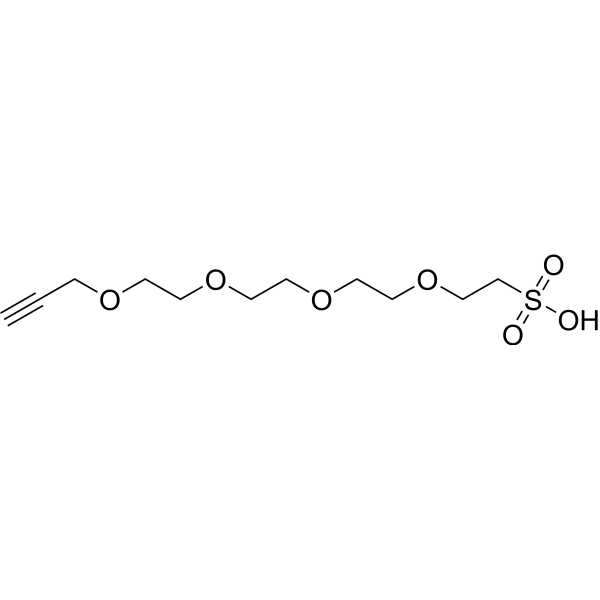
Propargyl-PEG4-sulfonic acid is a PEG-based PROTAC linker that can be used in the synthesis of PROTACs . Propargyl-PEG4-sulfonic acid is a click chemistry reagent, it contains an Alkyne group and can undergo copper-catalyzed azide-alkyne cycloaddition (CuAAc) with molecules containing Azide groups.
|
-
-
- HY-W013430
-
|
|
Fluorescent Dye
|
Others
|
|
4-Amino-3-hydroxynaphthalene-1-sulfonic acid is utilized as a fluorescent dye. 4-Amino-3-hydroxynaphthalene-1-sulfonic acid forms polypyrrole (PPy) conducting film with pyrrole, and is utilized in electrochemie .
|
-
-
- HY-140001
-
|
|
PROTAC Linkers
|
Cancer
|
|
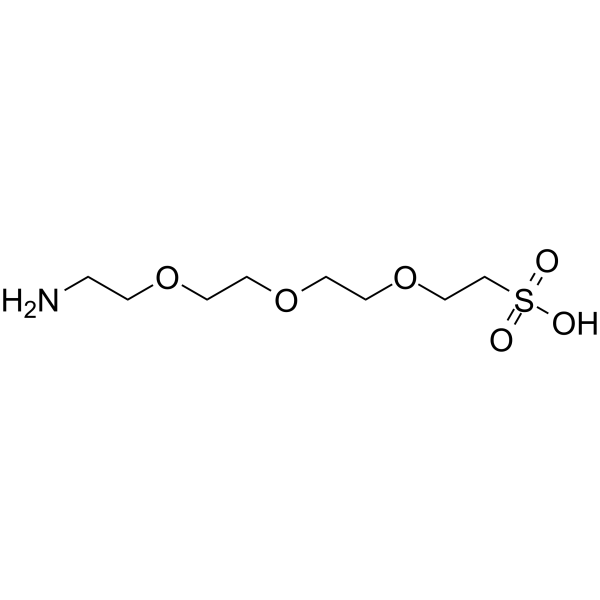
Amino-PEG3-C2-sulfonic acid is a PEG-based PROTAC linker that can be used in the synthesis of PROTACs .
|
-
-
- HY-W587405
-
|
Methyl (1S)-(+)-10-camphorsulfonate
|
Drug Intermediate
|
Others
|
|
Camphor sulfonic acid methyl ester (Methyl (1S)-(+)-10-camphorsulfonate) is a compound related to Camphor (HY-N0808) and can be used for the synthesis of 1S-(+)-camphorsulfonic acid .
|
-
-
- HY-46846
-
|
|
Environmental Pollutants
Biochemical Assay Reagents
|
Others
|
|
Styrene-divinylbenzene sulfonated copolymer is a cation exchange resin prepared from sulfonic acid group-containing microporous styrene/divinylbenzene (DVB) copolymer. Styrene-divinylbenzene sulfonated copolymer serves as the core matrix material for most bilirubin adsorbents. It also acts as a hydrophilic cell immobilization carrier, whose porous structure provides an ideal environment for microbial growth and biochemical reactions .
|
-
-
- HY-W411827
-
|
4:2 FTSA
|
Biochemical Assay Reagents
|
Others
|
|
1H,1H,2H,2H-Perfluorohexanesulfonic acid (4:2 FTSA) is a short-chain perfluoroalkyl sulfonic acid with 6 carbon atoms that can bind to human serum albumin .
|
-
-
- HY-D0097
-
|
|
Fluorescent Dye
|
Others
|
|
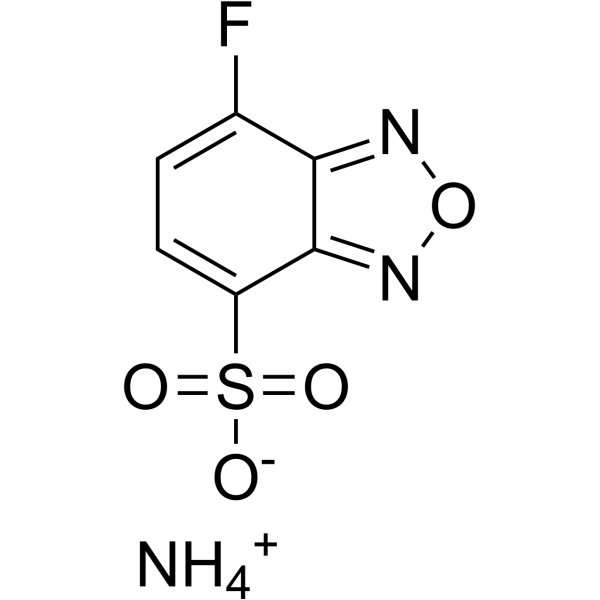
7-Fluorobenzofurazan-4-sulfonic acid ammonium is a fluorescent label. 7-Fluorobenzofurazan-4-sulfonic acid ammonium can be used for detecting dissolved thiol-disulfide (e.g., Cys, GSH) .
|
-
-
- HY-Y0848R
-
|
(R)-(-)-10-Camphorsulfonic acid (Standard)
|
Reference Standards
|
|
|
(R)-Camphor-10-sulfonic acid (Standard) is the analytical standard of (R)-Camphor-10-sulfonic acid. This product is intended for research and analytical applications.
|
-
-
- HY-D0881
-
|
N,N-Bis(4-sulfobutyl)-3-methylaniline
|
Biochemical Assay Reagents
|
Others
|
|
4,4'-(m-Tolylazanediyl)bis(butane-1-sulfonic acid) is a biochemical reagent that can be used as a biological material or organic compound for life science related research.
|
-
-
- HY-D1175
-
-
-
- HY-Y0606
-
|
(+)-10-Camphorsulfonic acid
|
Lipase
|
Metabolic Disease
|
|
(+)-Camphor-10-sulfonic acid ((+)-10-Camphorsulfonic acid) is an effective pancreatic lipase (PL) inhibitor. (+)-Camphor-10-sulfonic acid is promising for research of obesity .
|
-
-
- HY-140047A
-
|
|
PROTAC Linkers
|
Cancer
|
|
Propargyl-PEG4-sulfonic acid sodium is a PEG-based PROTAC linker that can be used in the synthesis of PROTACs. Propargyl-PEG4-sulfonic acid sodium is a click chemistry reagent, it contains an Alkyne group and can undergo copper-catalyzed azide-alkyne cycloaddition (CuAAc) with molecules containing Azide groups .
|
-
-
- HY-W015467
-
|
Pyridine-3-sulphonic acid
|
Drug Derivative
|
Metabolic Disease
|
|
Pyridine-3-sulfonic acid (Pyridine-3-sulphonic acid) is an orally active structural analog of Nicotine acid (HY-B0143). Pyridine-3-sulfonic acid significantly reduces hepatic cholesterol synthesis in rats but lacks cholesterol-lowering activity. Pyridine-3-sulfonic acid does not interfere with the metabolism of Nicotine acid .
|
-
-
- HY-W613221
-
|
|
PROTAC Linkers
|
Cancer
|
|
Sulfonic chloride-C4-COOMe is a PROTAC linker that can be used in the synthesis of PROTACs.
|
-
-
- HY-W024881
-
|
2,3,3-Trimethylindolenine-5-sulfonic acid potassium salt
|
Drug Intermediate
|
Others
|
|
Potassium 2,3,3-trimethylindole-5-sulfonate (2,3,3-Trimethylindolenine-5-sulfonic acid potassium salt) is an indole derivative containing a sodium sulfonate group and is commonly used as a key intermediate in dye synthesis. Potassium 2,3,3-trimethylindole-5-sulfonate can be coupled to peptides, proteins, nucleic acids, RNA, DNA, carbohydrates, polymers, and small molecules via the sulfonyl substituent .
|
-
-
- HY-W879228
-
|
|
Fluorescent Dye
|
Others
|
|
Disulfo-ICG-DBCO disodium is a double sulfonic acid-modified indocyanine green. Disulfo-ICG-DBCO disodium can react with d-AzAla modified bacteria to detect the bacteria by copper-free click chemistry-mediated photothermal lysis and measurement of ATP bioluminescence .
|
-
-
- HY-178292
-
|
|
Phosphatase
|
Cancer
|
|
VHR-IN-3 (Compound 1) is a selective vaccinia H1-related (VHR) phosphatase inhibitor with a Ki of 0.81 μM. VHR-IN-3 mimics the phosphate group through the sulfonic acid group and competitively binds to the catalytic active center of VHR. VHR-IN-3 can be used for the research of cervical cancer .
|
-
-
- HY-D0897
-
|
N-(1-Naphthyl)-3-aminopropanesulfonic acid sodium
|
Biochemical Assay Reagents
|
Others
|
|
3-(1-naphthalenylamino)-1-Propanesulfonic acid sodium salt is a compound belonging to the class of sulfonic acids. It is commonly used in the pharmaceutical industry as a buffer and stabilizer for drugs and other medicines. 3-(1-naphthalenylamino)-1-Propanesulfonic acid sodium salt helps to maintain the pH and stability of the drug, thereby improving the efficacy and shelf life of the drug. It can also be used as a dispersant in the production of nanoparticles and other materials.
|
-
-
- HY-15048
-
|
|
PARP
|
Inflammation/Immunology
|
|
GPI 15427 is a potent inhibitor of the enzyme poly (ADP-ribose) polymerase-1 (PARP-1), which plays a harmful role during inflammation. In a rat model of gut injury and inflammation, including splanchnic artery occlusion (SAO) shock and dinitrobenzene sulfonic acid (DNBS)-induced colitis, GPI 15427 demonstrates strong anti-inflammatory effects that reduces inflammatory cell infiltration, histological injury. GPI 15427 also diminishes the accumulation of poly (ADP-ribose) in the ileum and colon of treated rats .
|
-
-
- HY-W698382
-
-
-
- HY-115402
-
|
|
Fluorescent Dye
|
Others
|
|
DAz-1 is a sulfonic acid probe for living cells, which can directly detect sulfonic acid-modified proteins in living cells and is cell-permeable .
|
-
-
- HY-W012218R
-
|
(±)-10-Camphorsulfonic acid (Standard)
|
Reference Standards
Biochemical Assay Reagents
|
Others
|
|
(±)-Camphor-10-sulfonic acid (Standard) is the analytical standard of (±)-Camphor-10-sulfonic acid. This product is intended for research and analytical applications. (±)-Camphor-10-sulfonic acid is a racemate of Camphor-10-sulfonic acid. (±)-Camphor-10-sulfonic acid can be used as an organocatalyst in performing a huge array of organic transformations .
|
-
-
- HY-133054
-
|
|
PROTAC Linkers
|
Cancer
|
|
PEG4-sulfonic acid is a PEG-based PROTAC linker that can be used in the synthesis of PROTACs .
|
-
-
- HY-140170
-
|
|
PROTAC Linkers
|
Cancer
|
|
m-PEG4-sulfonic acid is a PEG-based PROTAC linker that can be used in the synthesis of PROTACs .
|
-
-
- HY-140168
-
|
|
PROTAC Linkers
|
Cancer
|
|
Carboxy-PEG4-sulfonic acid is a PEG-based PROTAC linker that can be used in the synthesis of PROTACs .
|
-
-
- HY-140166
-
|
|
PROTAC Linkers
|
Cancer
|
|
Bis-PEG4-sulfonic acid is a PEG-based PROTAC linker that can be used in the synthesis of PROTACs .
|
-
-
- HY-140174
-
|
|
PROTAC Linkers
|
Cancer
|
|
Boc-PEG4-sulfonic acid is a PEG-based PROTAC linker that can be used in the synthesis of PROTACs .
|
-
-
- HY-140175
-
|
|
PROTAC Linkers
|
Cancer
|
|
Butoxycarbonyl-PEG5-sulfonic acid is a PEG-based PROTAC linker that can be used in the synthesis of PROTACs .
|
-
-
- HY-140169
-
|
|
PROTAC Linkers
|
Cancer
|
|
Carboxy-PEG5-sulfonic acid is a PEG-based PROTAC linker that can be used in the synthesis of PROTACs .
|
-
-
- HY-140165
-
|
|
PROTAC Linkers
|
Cancer
|
|
Bis-PEG3-sulfonic acid is a PEG-based PROTAC linker that can be used in the synthesis of PROTACs .
|
-
-
- HY-140171
-
|
|
PROTAC Linkers
|
Cancer
|
|
m-PEG5-sulfonic acid is a PEG-based PROTAC linker that can be used in the synthesis of PROTACs .
|
-
-
- HY-140173
-
|
|
PROTAC Linkers
|
Cancer
|
|
Boc-PEG2-sulfonic acid is a PEG-based PROTAC linker that can be used in the synthesis of PROTACs .
|
-
-
- HY-140167
-
|
|
PROTAC Linkers
|
Cancer
|
|
Carboxy-PEG2-sulfonic acid is a PEG-based PROTAC linker that can be used in the synthesis of PROTACs .
|
-
-
- HY-139483S
-
-
-
- HY-140172
-
|
|
PROTAC Linkers
|
Cancer
|
|
Boc-NH-PEG3-sulfonic acid is a PEG-based PROTAC linker that can be used in the synthesis of PROTACs .
|
-
-
- HY-121507
-
|
|
PROTAC Linkers
|
Cancer
|
|
Hydroxy-PEG2-C2-sulfonic acid is a PEG-based PROTAC linker can be used in the synthesis of PROTACs.
|
-
-
- HY-W720219S
-
-
-
- HY-140164
-
|
|
PROTAC Linkers
|
Cancer
|
|
Azido-PEG2-C2-sulfonic acid is a PEG-based PROTAC linker that can be used in the synthesis of PROTACs . Azido-PEG2-C2-sulfonic acid is a click chemistry reagent, it contains an Azide group and can undergo copper-catalyzed azide-alkyne cycloaddition reaction (CuAAc) with molecules containing Alkyne groups. It can also undergo strain-promoted alkyne-azide cycloaddition (SPAAC) reactions with molecules containing DBCO or BCN groups.
|
-
-
- HY-D1524
-
|
1,8-EDNAS
|
Fluorescent Dye
|
Others
|
|
N-(Aminoethyl)-8-naphthylamine-1-sulfonic acid is a fluorescent reagent .
|
-
- HY-D1524A
-
|
1,8-EDNAS sodium
|
Fluorescent Dye
|
Others
|
|
N-(Aminoethyl)-8-naphthylamine-1-sulfonic acid sodium (1,8-EDNAS sodium) is a multifunctional dye. Dyes are important tools in biological experiments. They can help researchers observe and analyze cell structures, track biomolecules, evaluate cell functions, distinguish cell types, detect biomolecules, study tissue pathology and monitor microorganisms. Their applications range from basic scientific research to clinical A wide range of diagnostics. Dyes are also widely used in traditional fields such as textile dyeing, as well as in emerging fields such as functional textile processing, food pigments and dye-sensitized solar cells.
|
-
- HY-176972
-
|
|
ADC Payload
DNA/RNA Synthesis
|
Cancer
|
|
Di(MMY-SJG)-Ph-prop-2-yne-1-sulfonic acid (Compound 5) is a cytotoxic pyrrolobenzodiazepine (PBD) dimer derivative. Di(MMY-SJG)-Ph-prop-2-yne-1-sulfonic acid exhibits moderate DNA alkylating activity. Di(MMY-SJG)-Ph-prop-2-yne-1-sulfonic acid can be used as the payload of ADC, thereby demonstrating strong antigen-dependent cytotoxicity .
|
-
- HY-N11997
-
|
|
Cholinesterase (ChE)
|
Neurological Disease
|
|
Feralolide is a dihydroisocoumarin isolated from the methanolic extract of aloe vera resin. Feralolide is also a dual inhibitor of AChE and BuChE, with IC50s of 55 μg/mL and 52 μg/mL respectively. Feralolide has antioxidant activity and inhibits 2,2-diphenyl-1-picrylhydrazyl (DPPH) and 2, 2′-azinobis-3-ethylbenzothiazoline-6-sulfonic acid (ABTS). Feralolide could be used in research into cognitive disorders such as Alzheimer's disease, potentially restoring and enhancing memory .
|
-
- HY-W835383
-
|
|
Fluorescent Dye
|
Others
|
|
Sulfo-Cy5.5-COOH is a sulfonated Cy5.5 fluorescent dye containing a sulfonic acid group and a carboxylic acid group. The fluorescence wavelength of Sulfo-Cy5.5-COOH is in the near-infrared region and has strong penetrating power.
|
-
- HY-119347R
-
|
|
Reference Standards
IFNAR
STAT
|
Inflammation/Immunology
Cancer
|
|
Cirsilineol (Standard) is the analytical standard of Cirsilineol. This product is intended for research and analytical applications. Cirsilineol, a natural flavone compound, selectively inhibits IFN-γ/STAT1/T-bet signaling in intestinal CD4+ T cells. Cirsilineol has potent immunosuppressive and anti-tumor properties. Cirsilineol significantly ameliorates trinitro-benzene sulfonic acid (TNBS)-induced T-cell-mediated experimental colitis in mice .
|
-
- HY-111093
-
|
|
CaMK
|
Neurological Disease
|
|
Protein kinase inhibitor 8 (Compound CK59) is a calmodulin-dependent protein kinase II (CaMKII) inhibitor. By inhibiting the activity of CaMKII, Protein kinase inhibitor 8 can attenuate the cytotoxicity induced by perfluorooctane sulfonic acid (PFOS) and alleviate the downregulation of GLT-1 expression caused by PFOS, thereby reducing neuronal damage. Protein kinase inhibitor 8 may be useful in research related to neurodegenerative diseases .
|
-
- HY-N11768
-
|
|
NF-κB
Interleukin Related
Toll-like Receptor (TLR)
|
Inflammation/Immunology
|
|
4-Methoxylonchocarpin is an orally active anti-inflammatory agent. 4-methoxylonchocarpin inhibits the binding of LPS to Toll-like Receptor (TLR) TLR4 to inhibit NF-κB activation and TNF Receptor and IL-6 expression. 4-Methoxylonchocarpin also inhibits the phosphorylation of TGF-beta activated kinase 1 and TNBS-induced expression of IL-1β, IL-17A, and TNF. 4-methoxylonchocarpin can improve 2,4, 6-trinitrobenzene sulfonic acid (TNBS)-induced colitis mouse model .
|
-
- HY-173390
-
|
|
Drug Intermediate
Biochemical Assay Reagents
|
Others
|
|
BCN-E-BCN is a strained cycloalkyne-based probe designed for detecting protein sulfenylation, the primary intermediate in protein oxidation. This structurally constrained cycloalkyne compound specifically recognizes sulfenic acid groups formed during thiol oxidation, while remaining completely unreactive toward other oxidative states (such as free thiols, sulfinic, or sulfonic acid groups). Researchers can leverage its efficient conjugation with azide-bearing tags through copper-free click chemistry to amplify detection signals. Compared to conventional detection methods, BCN-E-BCN demonstrates superior reaction kinetics and enhanced sensitivity. With these advantages, BCN-E-BCN shows great promise as an effective tool for protein oxidation research .
|
-
- HY-W014447R
-
|
|
Reference Standards
|
|
|
Isoquinoline-5-sulfonic acid (Standard) is the analytical standard of Isoquinoline-5-sulfonic acid. This product is intended for research and analytical applications.
|
-
- HY-W788246
-
-
- HY-W739418
-
-
- HY-W714698
-
|
|
Isotope-Labeled Compounds
|
Others
|
|
Dimethachlor ethane sulfonic acid sodium salt-d6 is the deuterium labeled Sodium 2-((2,6-dimethylphenyl)(2-methoxyethyl)amino)-2-oxoethane-1-sulfonate (HY-W714703).
|
-
- HY-E70905
-
|
|
Endogenous Metabolite
|
Metabolic Disease
|
|
Taurine Dioxygenase, E. coli (EC 1.14.11.17) is a Fe(II) and α-ketoglutaric aciddependent dioxygenase, which enables E.coli to use taurine as a sulfur source. Taurine Dioxygenase catalyzes the conversion of the amino acid taurine (2-aminoethane-1-sulfonic acid) to sulfite and aminoacetaldehyde.
|
-
- HY-21196S
-
|
Tridecafluorohexanesulfonic acid sodium; Tridecafluorohexane-1-sulfonic acid sodium
|
Isotope-Labeled Compounds
|
Others
|
|
Perfluorohexanesulfonic acid- 13C3 sodium is the 13C-labeled
|
-
- HY-D0869S
-
|
|
Isotope-Labeled Compounds
|
Others
|
|
3-(Cyclohexylamino)-1-propanesulfonic Acid-d17 is the deuterium labeled CAPS . CAPS, cyclohexylaminopropane sulfonic acid, is a surfactant. CAPS can be used as biological buffer (0.05 M, pH 11) for dialysis .
|
-
| Cat. No. |
Product Name |
Type |
-
- HY-D0006
-
|
|
Fluorescent Dyes
|
|
Bathophenanthroline is a nitrogen-containing organic ligand that can form stable complexes with transition metal ions such as Ru 2+. In proteomics, Bathophenanthroline is often used for in-gel protein staining. The negatively charged sulfonic acid groups of Bathophenanthroline interact electrostatically with the positively charged amino acid residues of proteins, thereby achieving specific binding to proteins and enhancing the fluorescent signal of detection. Bathophenanthroline can be used for protein separation and detection in SDS-PAGE gels in the field of proteomics, as well as other fluorescence studies[1]. Ex/Em=532 nm/610 nm[1].
|
-
- HY-D0097
-
|
|
Fluorescent Dyes
|
|
7-Fluorobenzofurazan-4-sulfonic acid ammonium is a fluorescent label. 7-Fluorobenzofurazan-4-sulfonic acid ammonium can be used for detecting dissolved thiol-disulfide (e.g., Cys, GSH) .
|
-
- HY-D1175
-
|
|
Fluorescent Dyes
|
|
Alizarin cyanin green F is an alizarin dye that reacts with calcium possibly via sulfonic acid and/or OH groups.
|
-
- HY-W879228
-
|
|
Fluorescent Dyes
|
|
Disulfo-ICG-DBCO disodium is a double sulfonic acid-modified indocyanine green. Disulfo-ICG-DBCO disodium can react with d-AzAla modified bacteria to detect the bacteria by copper-free click chemistry-mediated photothermal lysis and measurement of ATP bioluminescence .
|
-
- HY-115402
-
|
|
Fluorescent Dyes
|
|
DAz-1 is a sulfonic acid probe for living cells, which can directly detect sulfonic acid-modified proteins in living cells and is cell-permeable .
|
-
- HY-D1524
-
|
1,8-EDNAS
|
Fluorescent Dyes
|
|
N-(Aminoethyl)-8-naphthylamine-1-sulfonic acid is a fluorescent reagent .
|
-
- HY-D1524A
-
|
1,8-EDNAS sodium
|
Fluorescent Dyes
|
|
N-(Aminoethyl)-8-naphthylamine-1-sulfonic acid sodium (1,8-EDNAS sodium) is a multifunctional dye. Dyes are important tools in biological experiments. They can help researchers observe and analyze cell structures, track biomolecules, evaluate cell functions, distinguish cell types, detect biomolecules, study tissue pathology and monitor microorganisms. Their applications range from basic scientific research to clinical A wide range of diagnostics. Dyes are also widely used in traditional fields such as textile dyeing, as well as in emerging fields such as functional textile processing, food pigments and dye-sensitized solar cells.
|
| Cat. No. |
Product Name |
Type |
-
- HY-D0869
-
|
N-Cyclohexyl-3-aminopropanesulfonic acid
|
Biochemical Assay Reagents
|
|
CAPS, cyclohexylaminopropane sulfonic acid, is a surfactant. CAPS can be used as biological buffer (0.05 M, pH 11) for dialysis .
|
-
- HY-W012218
-
|
(±)-10-Camphorsulfonic acid
|
Biochemical Assay Reagents
|
|
(±)-Camphor-10-sulfonic acid is a racemate of Camphor-10-sulfonic acid. (±)-Camphor-10-sulfonic acid can be used as an organocatalyst in performing a huge array of organic transformations .
|
-
- HY-W110888
-
|
|
Biochemical Assay Reagents
|
|
Brilliant Yellow, a diazo-containing sulfonic aci, is also a potent VGLUT-specific inhibitor. Brilliant Yellow is membrane-impermeable. However, there are some Brilliant Yellow analogs with low cytotoxicity and cell penetration. Brilliant Yellow analogs work on glutamatergic transmission in hippocampal neurons .
|
-
- HY-D0881
-
|
N,N-Bis(4-sulfobutyl)-3-methylaniline
|
Biochemical Assay Reagents
|
|
4,4'-(m-Tolylazanediyl)bis(butane-1-sulfonic acid) is a biochemical reagent that can be used as a biological material or organic compound for life science related research.
|
-
- HY-W015467
-
|
Pyridine-3-sulphonic acid
|
Biochemical Assay Reagents
|
|
Pyridine-3-sulfonic acid (Pyridine-3-sulphonic acid) is an orally active structural analog of Nicotine acid (HY-B0143). Pyridine-3-sulfonic acid significantly reduces hepatic cholesterol synthesis in rats but lacks cholesterol-lowering activity. Pyridine-3-sulfonic acid does not interfere with the metabolism of Nicotine acid .
|
-
- HY-W698382
-
-
- HY-W012218R
-
|
(±)-10-Camphorsulfonic acid (Standard)
|
Biochemical Assay Reagents
|
|
(±)-Camphor-10-sulfonic acid (Standard) is the analytical standard of (±)-Camphor-10-sulfonic acid. This product is intended for research and analytical applications. (±)-Camphor-10-sulfonic acid is a racemate of Camphor-10-sulfonic acid. (±)-Camphor-10-sulfonic acid can be used as an organocatalyst in performing a huge array of organic transformations .
|
-
- HY-W788246
-
-
- HY-W739418
-
| Cat. No. |
Product Name |
Target |
Research Area |
-
- HY-P3815
-
|
|
Casein Kinase
|
Others
|
|
Casein Kinase 2 Substrate Peptide is a common CK2 substrate peptide. Casein Kinase 2 Substrate Peptide is synthesized with its C-terminus conjugated to 5-[(2-aminoethyl)amino]naphthalene-1-sulfonic acid (EDANS). Casein Kinase 2 Substrate Peptide can be used for protein kinase CK2 activity determination .
|
-
- HY-W097491
-
|
|
Amino Acid Derivatives
|
Others
|
|
L-Methionine sulfone is a sulfonic acid derivative of L-Methionine (HY-N0326). L-Methionine in the presence of a number of oxidizing systems is readily converted to L-Methionine sulfone .
|
| Cat. No. |
Product Name |
Category |
Target |
Chemical Structure |
| Cat. No. |
Product Name |
Chemical Structure |
-
- HY-139483S
-
|
|
|
Epinephrine Sulfonic acid-d3 is the deuterium labeled Epinephrine Sulfonic acid .
|
-
-
- HY-W720219S
-
|
|
|
2-Amino-2-methylpropane-1-sulfonic acid-d6 is deuterium-labeled 2-Amino-2-methylpropane-1-sulfonic acid (HY-W720219) .
|
-
-
- HY-W714698
-
|
|
|
Dimethachlor ethane sulfonic acid sodium salt-d6 is the deuterium labeled Sodium 2-((2,6-dimethylphenyl)(2-methoxyethyl)amino)-2-oxoethane-1-sulfonate (HY-W714703).
|
-
-
- HY-21196S
-
|
|
|
Perfluorohexanesulfonic acid- 13C3 sodium is the 13C-labeled
|
-
-
- HY-D0869S
-
|
|
|
3-(Cyclohexylamino)-1-propanesulfonic Acid-d17 is the deuterium labeled CAPS . CAPS, cyclohexylaminopropane sulfonic acid, is a surfactant. CAPS can be used as biological buffer (0.05 M, pH 11) for dialysis .
|
-
| Cat. No. |
Product Name |
|
Classification |
-
- HY-132278
-
|
|
|
Azide
|
|
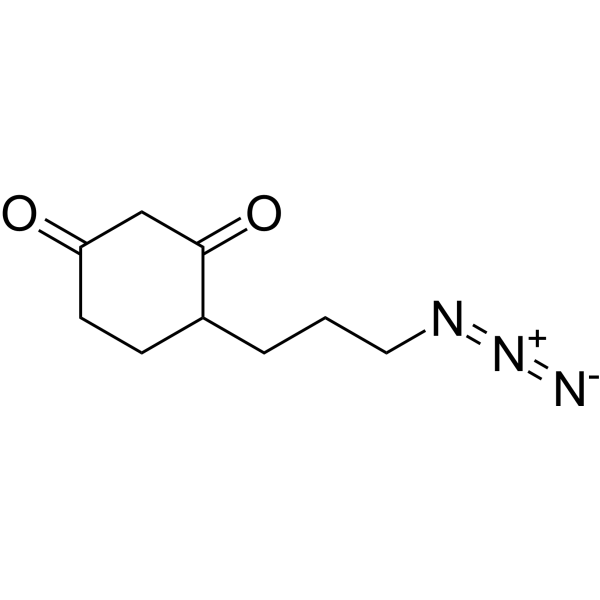
DAz-2 is a sulfonic acid probe for living cells, which can directly detect sulfonic acid-modified proteins in living cells and is cell-permeable .
|
-
- HY-140047
-
|
|
|
Alkynes
PROTAC Synthesis
|
|
Propargyl-PEG4-sulfonic acid is a PEG-based PROTAC linker that can be used in the synthesis of PROTACs . Propargyl-PEG4-sulfonic acid is a click chemistry reagent, it contains an Alkyne group and can undergo copper-catalyzed azide-alkyne cycloaddition (CuAAc) with molecules containing Azide groups.
|
-
- HY-W879228
-
|
|
|
DBCO
|
|
Disulfo-ICG-DBCO disodium is a double sulfonic acid-modified indocyanine green. Disulfo-ICG-DBCO disodium can react with d-AzAla modified bacteria to detect the bacteria by copper-free click chemistry-mediated photothermal lysis and measurement of ATP bioluminescence .
|
-
- HY-115402
-
|
|
|
Azide
|
|
DAz-1 is a sulfonic acid probe for living cells, which can directly detect sulfonic acid-modified proteins in living cells and is cell-permeable .
|
-
- HY-140164
-
|
|
|
PROTAC Synthesis
Azide
|
|
Azido-PEG2-C2-sulfonic acid is a PEG-based PROTAC linker that can be used in the synthesis of PROTACs . Azido-PEG2-C2-sulfonic acid is a click chemistry reagent, it contains an Azide group and can undergo copper-catalyzed azide-alkyne cycloaddition reaction (CuAAc) with molecules containing Alkyne groups. It can also undergo strain-promoted alkyne-azide cycloaddition (SPAAC) reactions with molecules containing DBCO or BCN groups.
|
| Cat. No. |
Product Name |
|
Classification |
-
- HY-157424
-
|
PAPS tetralithium salt
|
|
Nucleotide Analogs
Adenine Nucleotide
|
|
3′-Phosphoadenosine 5′-phosphosulfate tetralithium salt (PAPS tetralithium salt) is the cosubstrate and the source of sulfonic acid groups in sulfation reactions. 3′-Phosphoadenosine 5′-phosphosulfate tetralithium salt is important for maintaining sulfation balance in living organisms .
|
Your information is safe with us. * Required Fields.
Inquiry Information
- Product Name:
- Cat. No.:
- Quantity:
- MCE Japan Authorized Agent:

