


1. Search Result
Search Result
Results for "

surface antigen

" in MedChemExpress (MCE) Product Catalog:

68

Inhibitors & Agonists

2

Biochemical Assay Reagents

5

Peptides

22

Inhibitory Antibodies

13

Natural
Products

136

Recombinant Proteins

1

Isotope-Labeled Compounds

104

Antibodies

4

Oligonucleotides

Cat. No. Product Name Target Research Areas Chemical Structure
  • HY-P99045
    Sacituzumab
    4 Publications Verification

    HRS7; hRS7

    ADC Antibody TROP2 Cancer
    Sacituzumab is a humanized IgG1 monoclonal antibody targeting Trophoblast cell surface antigen 2 (TROP2). Sacituzumab demonstrates a lack of antitumor effects alone and does not inhibit the function of TROP-2 during tumor metastasis, binding to the linear epitopes of TROP-2 protein. Sacituzumab can be used for the synthesis of antibody-drug conjugates (ADC) drug Sacituzumab govitecan (HY-132254). Sacituzumab govitecan can be used in the field of triple-negative breast cancer .
    Sacituzumab
  • HY-141598
    Datopotamab deruxtecan
    2 Publications Verification

    DS-1062; Dato-DXd

    TROP2 Antibody-Drug Conjugates (ADCs) Topoisomerase Cancer
    Datopotamab deruxtecan (DS-1062; Dato-DXd) is a trophoblast cell surface antigen 2 (TROP2)-directed antibody-drug conjugate (ADC). Datopotamab deruxtecan has a potent antitumor activity .
    Datopotamab deruxtecan
  • HY-P99843
    Datopotamab
    1 Publications Verification

    TROP2 ADC Antibody Cancer
    Datopotamab (CDP7657) is a humanized anti trophoblast cell surface antigen 2 (TROP2) antibody. Datopotamab can generate antibody drug conjugates (ADC) (HY-141598) with DNA topoisomerase I inhibitor Deruxtecan (HY-13631E). Datopotamab can be used in the study of triple negative breast cancer and non-small cell lung cancer .
    Datopotamab
  • HY-P99971

    ADC Antibody Transmembrane Glycoprotein Cancer
    Gemtuzumab is a monoclonal IgG4-κ antibody targeting CD33 antigen. Gemtuzumab affects cell necrosis by specifically targeting CD33 expressed on the surface of leukaemic cell blasts in acute myeloid leukemia (AML). Gemtuzumab can be used for synthesis of antibody-drug conjugate (ADC), Gemtuzumab ozogamicin (HY-109539). Gemtuzumab ozogamicin consists of a cytotoxic derivative of Calicheamicin (a cytotoxic antibiotic), and a monoclonal antibody. Gemtuzumab ozogamicin can be used for the research of acute myeloid leukemia. Recommend Isotype Controls: Human IgG4 (S228P) kappa, Isotype Control (HY-P99003) .
    Gemtuzumab
  • HY-P99011
    Cibisatamab
    2 Publications Verification

    CD3 Cancer
    Cibisatamab, a T cell bispecific antibody, binds Carcino-Embryonic Antigen (CEA) on cancer cells and CD3 on T cells. Cibisatamab triggers T cell killing of cancer cell lines expressing moderate to high levels of CEA at the cell surface. Cibisatamab can be used for colorectal cancer research .
    Cibisatamab
  • HY-P99045A

    ADC Antibody TROP2 Cancer
    Sacituzumab (powder) is a humanized IgG1 monoclonal antibody targeting Trophoblast cell surface antigen 2 (TROP2). Sacituzumab (powder) demonstrates a lack of antitumor effects alone and does not inhibit the function of TROP-2 during tumor metastasis, binding to the linear epitopes of TROP-2 protein. Sacituzumab (powder) can be used for the synthesis of antibody-drug conjugates (ADC) drug Sacituzumab govitecan (HY-132254). Sacituzumab govitecan can be used in the field of triple-negative breast cancer .
    Sacituzumab (powder)
  • HY-N0699
    Daphnoretin
    3 Publications Verification

    Dephnoretin; Thymelol

    PKC Influenza Virus NOD-like Receptor (NLR) Apoptosis HBV JNK PI3K Akt CDK Caspase Bcl-2 Family Infection Inflammation/Immunology Cancer
    Daphnoretin (Dephnoretin; Thymelol) is a protein kinase C (PKC) activator that inhibits the expression of hepatitis B virus (HBV) surface antigen (HBsAg) and exhibits antiviral activity. Daphnoretin exerts its antitumor effects by inhibiting the activation of the PI3K/AKT signaling pathway and triggers the mitochondrial apoptosis pathway. Daphnoretin alleviates chondrocyte apoptosis and inflammatory responses by inhibiting endoplasmic reticulum stress and activation of the NLRP3 inflammasome. Daphnoretin regulates the differentiation and maturation of dendritic cells, inhibits their immunostimulatory function by downregulating the phosphorylation level of JNK, and thus exerts a protective effect in skin graft rejection .
    Daphnoretin
  • HY-P99152

    Muromanab-CD3

    CD3 Interleukin Related IFNAR Inflammation/Immunology Cancer
    Muromonab (Muromonab-CD3; OKT3) is a mouse monoclonal antibody targeting the CD3 antigen. Muromonab specifically binds to the CD3 antigen on the surface of human and higher primate T cells. Muromonab blocks the function of T cell receptors to recognize foreign antigens and inhibits T cell-mediated immune responses, including cell-mediated lymphocyte lysis and T cell proliferation responses. Muromonab can be used to study acute kidney, liver, heart and combined kidney-pancreas transplant rejection, and can also be used to study graft-versus-host disease in bone marrow transplant patients .
    Muromonab
  • HY-P99798

    AMG 420; BI-836909

    CD3 Cancer
    Pacanalotamab (AMG 420; BI-836909) is a bispecific T-cell engager (BiTE) targeting to BCMA and CD3E. BCMA refers to B cell maturation antigen, as Pacanalotamab redirecting T cells to BCMA expressing cells on the cell surface. Pacanalotamab conducts T-cell redirected lysis of human multiple myeloma (MM) cell lines .
    Pacanalotamab
  • HY-P990015

    VIR-3434

    HBV Infection
    Tobevibart (VIR-3434) is a human IgG1 lambda monoclonal antibody against hepatitis B virus (HBV) surface antigen (HBsAg). Tobevibart shows potent neutralization against HBsAg from all HBV genotypes in vitro and inhibits viral entry of HBV and hepatitis delta virus (HDV). Recommend Isotype Controls: Human IgG1 lambda2, Isotype Control (HY-P990096) .
    Tobevibart
  • HY-147266

    VIR-2218 sodium

    Small Interfering RNA (siRNA) HBV Infection
    Elebsiran (VIR-2218) sodium is a siRNA that targets and degrades hepatitis B virus (HBV) and hepatitis D virus (HDV) RNA transcripts. Elebsiran sodium leads to a significant decrease in HBV surface antigen (HBsAg) and a reduction in viral load. Elebsiran sodium binds to the sialic acid-depleted glycoprotein receptor (ASGPR) on the surface of liver cells through the GalNAc ligand, achieving liver-targeted delivery and demonstrating improved liver safety. Elebsiran sodium can be used for the study of chronic HBV/HDV infections .
    Elebsiran sodium
  • HY-P990785

    ABBV-383; TNB 383B

    CD3 Cardiovascular Disease Inflammation/Immunology Cancer
    Etentamig is a BCMA × CD3 bispecific T-cell engager (BiTE) that can inhibit the activity of B-cell maturation antigen (BCMA) and activate the T-cell surface glycoprotein CD3 complex. Etentamig can be used for research in multiple myeloma, immunoglobulin light chain amyloidosis, and cardiovascular diseases .
    Etentamig
  • HY-P99230

    Integrin CD22 Cancer
    Pinatuzumab is a humanized monoclonal antibody targeting cell-surface antigen CD22. Pinatuzumab can be used to synthesize antibody-drug conjugate (ADC) such as Pinatuzumab vedotin (HY-141602). Pinatuzumab can be studied in research on cancer such as non-Hodgkin lymphoma. Recommend Isotype Controls: Human IgG1 kappa, Isotype Control (HY-P99001) .
    Pinatuzumab
  • HY-145638A

    RO7445482 sodium

    HBV Infection
    Xalnesiran (RO7445482) sodium is a small interfering RNA molecule that targets a conserved region of the
    hepatitis B virus (HBV) genome . Xalnesiran sodium can be used for the research of chronic hepatitis B infection .
    Xalnesiran sodium
  • HY-P991674

    BJT-778

    HBV Infection Inflammation/Immunology
    Brelovitug (BJT-778) is a humanized IgG1 neutralizing monoclonal antibody targeting hepatitis B surface antigen (HBsAg). Brelovitug binds with high affinity to HBsAg purified from HBV serotypes ad and ay, with Kd values of 0.22 nM and 0.39 nM, respectively. Brelovitug binds with high affinity to HBsAg of HBV genotypes A, B, C and D, with IC50 values of 0.07, 0.02, 0.02 and 0.07 nM, respectively. Brelovitug can be used in research related to chronic hepatitis B and chronic hepatitis D .
    Brelovitug
  • HY-133721

    HBV Infection Inflammation/Immunology
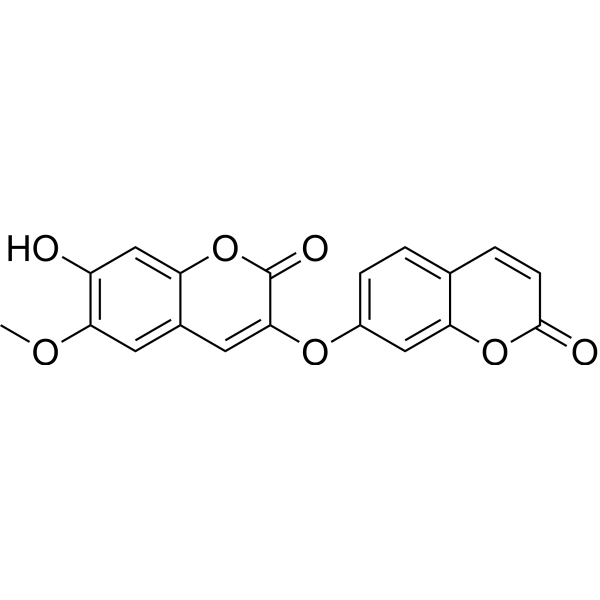
    Chamaechromone is a biflavonoid ingredient isolated from the roots of Stellera chamaejasme L. (Thymelaeaceae). Chamaechromone possesses anti-hepatitis B virus (HBV) effects against the surface antigen of HBV (HBsAg) secretion and has insecticidal activities .
    Chamaechromone
  • HY-P5290

    Radionuclide-Drug Conjugates (RDCs) PSMA Cancer
    HYNIC-PSMA is a ligand for molecular imaging of tumors. Hynic-psma consists of two components: HYNIC (6-hydrazinonicotinamide) and PSMA (Prostate-Specific Membrane Antigen). HYNIC is a compound used to attach radioactive isotopes to targeted molecules, such as 188Re-HYNIC-PSMA. PSMA is a membrane antigen that is specifically expressed on the surface of prostate cancer cells. HYNIC-PSMA can be used in prostate cancer research . HYNIC-PSMA can be used for the synthesis/research of Radionuclide-Drug Conjugates (RDCs).
    HYNIC-PSMA
  • HY-P9998

    UB421

    HIV Cancer
    Semzuvolimab is a human IgG1κ antibody, targeting to p55, T cell surface antigen T4/Leu-3 (CD4). Human CD4 antibodies can neutralize HIV infection and have the potential to inhibit HAART stable HIV infection .
    Semzuvolimab
  • HY-157745

    mPEG40000-SC; mPEG40000-Succinimidyl ester

    Biochemical Assay Reagents Others
    m-PEG-NHS ester (mPEG-SC; mPEG-Succinimidyl ester) (MW 40000) is a polyethylene glycol derivative. m-PEG-NHS ester serves as a modifying agent that reacts with free amino groups on the surface of protein or polypeptide molecules to form stable amide bonds, thereby covalently linking PEG chains to biomacromolecules, improving their antigenicity and immunogenicity, and facilitating the preparation of injectable formulations .
    m-PEG40000-NHS ester
  • HY-P2455

    Listeriolysin O (91-99)

    Bacterial Infection Inflammation/Immunology
    LLO (91-99) (Listeriolysin O (91-99)) is an exotoxin and class I MHC-restricted T-cell epitope of listeriolysin (LLO). LLO (91-99) is processed by antigen-presenting cells, binds to MHC class I molecules and is presented to the cell surface. LLO (91-99) induces CTL responses and effectively eliminates Listeria from infected cells. LLO (91-99) can be used in the research of Listeria infections (e.g., listeriosis) .
    LLO (91-99)
  • HY-110147B

    Furin Infection
    SSM3 tetraTFA hydrate is a potent synthetic furin inhibitor with an EC50 and a Ki of 54 nM and 12 nM, respectively. SSM3 tetraTFA hydrate is able to block furin-dependent cell surface processing of anthrax protective antigen-83 in vitro .
    SSM3 tetraTFA hydrate
  • HY-P99541

    anti-hepatitis B; OST 577; SDZ-OST 577

    HBV Infection
    Tuvirumab (OST 577; SDZ-OST 577) is a human IgG1 subclass monoclonal antibody directed against HBV surface antigen (HBsAg). Tuvirumab binds specifically and with high affinity (K=3.6 nM) to HBsAg. Tuvirumab has the potential for chronic hepatitis B research .
    Tuvirumab
  • HY-156209

    Biochemical Assay Reagents Cardiovascular Disease Cancer
    Gb3 (d18:1/16:0) (Compound 1) is the P k antigen of the P blood group system. Gb3 (d18:1/16:0) acts as a cell surface receptor. Gb3 (d18:1/16:0) is used for research on Burkitt's lymphoma, teratocarcinoma, embryonal carcinoma, and Fabry's disease .
    Gb3(d18:1/16:0)
  • HY-165084

    Soy PS sodium

    Liposome Inflammation/Immunology
    L-a-Phosphatidylserine sodium is an antigen targeting phosphatidylserine (PS) and can induce the production of polyclonal antibodies. L-a-Phosphatidylserine can trigger complement-dependent immune damage by binding to PS on the cell membrane surface. After L-a-Phosphatidylserine is recognized by antibodies, it activates the complement system, causing liposome membrane damage and content release, and then participates in the regulation of immune response and cell apoptosis signaling. L-a-Phosphatidylserine can be used in immunological research, such as antibody specificity analysis and complement activation mechanism research .
    L-a-Phosphatidylserine sodium
  • HY-P991176

    RO7443904

    CD19 CD28 Cancer
    RG-6333 is a bispecific agonist targeting CD19 and CD28. RG-6333 specifically recognizes and binds to the CD19 antigen on the surface of B-cell malignancies to locate tumor cells. RG-6333 activates T cells by binding to CD28, overcoming activation barriers to enhance anti-tumor immunity. RG-6333 can be used in the study of relapsed/refractory non-Hodgkin's lymphoma. The recommended isotype control is human IgG1 kappa, isotype control (HY-P99001) .
    RG-6333
  • HY-W048513

    DNA/RNA Synthesis Cancer
    7-Deaza-2'-deoxyadenosine is an isosteric dATP analog of 2'-deoxyadenosine. 7-Deaza-2'-deoxyadenosine is recognized by various DNA polymerases and incorporated into DNA strands as a substrate. 7-Deaza-2'-deoxyadenosine undergoes a bioorthogonal inverse electron demand Diels-Alder reaction with tetrazine-modified molecules, enabling site-specific labeling of DNA, surface antibody immobilization and intracellular fluorescent labeling. 7-Deaza-2'-deoxyadenosine reduces the DNA curvature of d(A6)·d(T6) fragments and the stability of DNA/RNA double helices, and leads to decreased antisense activity against SV40 T Antigen. 7-Deaza-2'-deoxyadenosine finds application in the research field of SV40 T Antigen-related cancers .
    7-Deaza-2'-deoxyadenosine
  • HY-147266A

    VIR-2218

    HBV Small Interfering RNA (siRNA) Infection
    Elebsiran (VIR-2218) is a siRNA that targets and degrades hepatitis B virus (HBV) and hepatitis D virus (HDV) RNA transcripts. Elebsiran leads to a significant decrease in HBV surface antigen (HBsAg) and a reduction in viral load. Elebsiran binds to the sialic acid-depleted glycoprotein receptor (ASGPR) on the surface of liver cells through the GalNAc ligand, achieving liver-targeted delivery and demonstrating improved liver safety. Elebsiran can be used for the study of chronic HBV/HDV infections .
    Elebsiran
  • HY-W145682

    Blood Group H

    Biochemical Assay Reagents Others
    Blood group H carbohydrate is a carbohydrate containing two monosaccharides, fucose and galactose, linked by α1-2 glycosidic bonds. It is the precursor of ABO blood group antigens, which are present on the surface of red blood cells and play a role in immune recognition and transfusion compatibility. Type H disaccharides have diverse applications in biochemical research, especially in the study of carbohydrate-protein interactions and the biosynthesis of blood group antigens. In addition, it can be used as a diagnostic tool to identify ABO blood group phenotypes.
    Blood group H disaccharide
  • HY-126970

    HBV Infection
    HBF-0259 is a potent and selective inhibitor of hepatitis B virus (HBV) surface antigen (HBsAg) secretion, with an EC50 of 1.5 μM in HepG2.2.15 cells. HBF-0259 has no effect on HBV DNA synthesis .
    HBF-0259
  • HY-P11122

    IFNAR Interleukin Related Inflammation/Immunology
    MSP-1 P2 is a synthetic peptide of merozoite surface protein-1 (MSP-1). MSP-1 P2 stimulates umbilical cord blood lymphocytes to produce IFN-γ and IL-13, and this immune response is primarily mediated by CD4+ T cells. MSP-1 P2 can be used as a specific antigen stimulus to detect T cell responses and cytokine levels .
    MSP-1 P2
  • HY-156209S

    Isotope-Labeled Compounds Biochemical Assay Reagents Cardiovascular Disease Cancer
    Gb3(d18:1/16:0)-d9 is deuterium labeled Gb3(d18:1/16:0) (HY-156209). Gb3 (d18:1/16:0) (Compound 1) is the P k antigen of the P blood group system. Gb3 (d18:1/16:0) acts as a cell surface receptor. Gb3 (d18:1/16:0) is used for research on Burkitt's lymphoma, teratocarcinoma, embryonal carcinoma, and Fabry's disease .
    Gb3(d18:1/16:0)-d9
  • HY-177300

    Toll-like Receptor (TLR) HBV IFNAR Interleukin Related Infection Inflammation/Immunology
    TLR7/8 agonist 13 is an orally active dual agonist of TLR7 (lowest effective concentrations (LEC) [hTLR7] = 1.6 μM) and TLR8 (LEC [hTLR8] = 1.6 μM). TLR7/8 agonist 13 exhibits agonistic activity against human peripheral blood mononuclear cells (hPBMCs) (LEC [hPBMC] = 0.5 μM). TLR7/8 agonist 13 induces endogenous IFNα, activating myeloid dendritic cells and monocytes toward a TH1 phenotype in mice and cynomolgus monkeys. TLR7/8 agonist 13 reduces viral load and HBV surface antigen expression in a mouse model of chronic AAV-HBV infection. TLR7/8 agonist 13 has the potential to indirectly induce IFNγ, which may promote HBV antigen-specific CD8 T cell-mediated responses. TLR7/8 agonist 13 can be used to study hepatitis B virus .
    TLR7/8 agonist 13
  • HY-175459

    PROTACs FAK Inflammation/Immunology Cancer
    PROTAC FAK degrader 3 is a selective FAK PROTAC degrader (DC50 = 1.08 nM). PROTAC FAK degrader 3 induces FAK degradation dependent on the ubiquitin-proteasome system and its binding to FAK and CRBN. PROTAC FAK degrader 3 upregulates MHC-I gene transcription and tumor cell surface expression by inhibiting the non-catalytic activity of FAK, leading to increased antigen presentation and activation of cytotoxic CD8 T cells. PROTAC FAK degrader 3 enhances in vivo anti-tumor activity by promoting MHC-I expression and enhancing T cell activation. PROTAC FAK degrader 3 can be used in cancer research targeting FAK degradation in ovarian cancer, hepatocellular carcinoma, and other cancers. (Pink: FAK-IN-3:HY-143407, Blue: Thalidomide-4-OH:HY-103596, Blue + Black: FAK ligand-3: HY-W939883, Black: Linker) .
    PROTAC FAK degrader 3
  • HY-171181

    HBV Infection
    ZINC20451377 is a small molecule targeting hepatitis B (HBV) surface antigen (HBsAg) and can effectively inhibit wild-type hepatitis B and tenofovir (HY-13910)-resistant hepatitis B .
    ZINC20451377
  • HY-145052

    HBV Infection
    HBV-IN-9 is a potent HBsAg (HBV Surface antigen) inhibitor (IC50=10 nM) and HBV DNA production inhibitor (IC50=0.15 nM in HepG2.2.15 cells) . From patent WO2018001952A1, example 20.
    HBV-IN-9
  • HY-110147A

    Furin Infection
    SSM3 tetraTFA is a potent synthetic furin inhibitor with an EC50 and a Ki of 54 nM and 12 nM, respectively. SSM3 tetraTFA is able to block furin-dependent cell surface processing of anthrax protective antigen-83 in vitro .
    SSM3 tetraTFA
  • HY-145060

    HBV Infection
    HBV-IN-12 is a potent hepatitis B surface antigen (HBsAg) inhibitor. From patent WO2021204252A1, compound 1_B .
    HBV-IN-13
  • HY-P2783

    HBV Infection
    Destruxin B2 (compound 5) is a natural depsipeptide that can be inhibits hepatitis B surface antigen (HBsAg) secretion in Hep3B cells with an IC50 1.30 μM .
    Destruxin B2
  • HY-N2882

    HBV Infection
    Apigenin-4'-α-L-rhamnoside is a potent inhibitor of HBV. Apigenin-4'-α-L-rhamnoside inhibits the secretory level of HBV surface antigen (HBsAg) in HepG2.2.15 cells .
    Apigenin-4'-α-L-rhamnoside
  • HY-N12105

    HBV Infection
    Dihydrodehydrodiconiferyl alcohol 9-O-β-D-xylopyranoside is an anti-hepatitis B virus (anti-HBV) agent. Dihydrodehydrodiconiferyl alcohol 9-O-β-D-xylopyranoside inhibits HBV surface antigen (HBsAg) and HBV e antigen (HBeAg) secretion on Hep G2.2.15 cell line, with IC50 values of 1.67 and >2.15 mM, respectively .
    Dihydrodehydrodiconiferyl alcohol 9-O-β-D-xylopyranoside
  • HY-145053

    HBV Infection
    HBV-IN-10 is an enantiomer of compound 6 (WO2021204258A1). Compound 6 is a hepatitis B surface antigen (HBsAg) inhibitor (0.001 μM< EC50 ≤0.05 μM). From patent WO2021204258A1, compound 6 .
    HBV-IN-10
  • HY-W754691

    HBV Infection
    Glaziovine is an antiviral agent found in Hypserpa nitida. Glaziovine exhibits significant inhibitory activity against HBV, capable of suppressing hepatitis B virus surface antigen (HBsAg) secretion in Hep G2.2.15 cells transfected with HBV, with an IC50 of 8 nM .
    Glaziovine
  • HY-173278

    HBV Potassium Channel Infection
    AIC263282 is a potent Hepatitis B Virus (HBV) capsid assembly modulator with an EC50 of 3.8 nM. AIC263282 shows an IC50 of 61 nM for hERG. AIC263282 exhibits activity against viral replication and hepatitis B surface antigen (HBsAG) on primary human hepatocytes .
    AIC263282
  • HY-N3093

    (+)-Periglaucine B

    HBV Infection
    Periglaucine B ((+)-Periglaucine B) is an alkaloid and an HBsAg inhibitor. Periglaucine B can be isolated from Pericampylus glaucus. Periglaucine B inhibits the secretion of hepatitis B virus (HBV) surface antigen (HBsAg) in Hep G2.2.15 cells with an IC50 of 0.47 mM .
    Periglaucine B
  • HY-145053A

    HBV Infection
    (5S,8R)-HBV-IN-10 is an enantiomer of compound 6 (WO2021204258A1). Compound 6 is a hepatitis B surface antigen (HBsAg) inhibitor (0.001 μM< EC50 ≤0.05 μM). From patent WO2021204258A1, compound 6 .
    (5S,8R)-HBV-IN-10
  • HY-N3094

    HBV HIV Infection
    Periglaucine A, a hasubanane-type alkaloid, can be isolated from Pericampylus glaucus. Periglaucine A can inhibits HBV surface antigen (HBsAg) secretion in Hep G2.2.15 cells. Periglaucine A also shows anti-HIV-1 activity in C8166 cells (EC50: 204 μM) .
    Periglaucine A
  • HY-145713

    HBV-IN-19

    HBV Infection
    GS-8873 is an orally active inhibitor for the production of hepatitis B virus (HBV) surface antigen (HBsAg) with an EC50 of 4 nM. GS-8873 exhibits good pharmacokinetic characters in rats and metabolic stability in human hepatocytes. GS-8873 causes neurofunctional deficits in rats and cynomolgus monkeys .
    GS-8873
  • HY-145059

    HBV Infection
    HBV-IN-12 is a potent hepatitis B surface antigen (HBsAg) inhibitor (0.001 μM< EC50 ≤0.05 μM). HBV-IN-12 shows anti-HBV DNA activity (0.001 μM<EC50 ≤0.02 μM). From patent WO2021204252A1, compound 15 .
    HBV-IN-12
  • HY-P4046

    HIV Inflammation/Immunology
    HBV Seq2 aa:179-186 serve as effective motifs for CTL response in H-2b system after in vitro restimulation of the primed T cells. HBV Seq2 aa:179-186 is a novel epitope identified on the surface antigen of hepatitis B virus .
    HBV Seq2 aa:179-186
  • HY-157174

    Others Inflammation/Immunology
    Mannosamine-desthiobiotin adduct (compound MDTBA) is a carrier immunogenicity-reducing hapten that reduces the immunogenicity of protein carriers upon conjugation to available free amines on the carrier protein surface. Conjugation of Mannosamine-desthiobiotin adduct to hsIgG significantly (>1-fold) reduced the immunogenicity of hsIgG. Mannosamine-desthiobiotin adduct can be used in antigen design research .
    Mannosamine–desthiobiotin adduct

Inquiry Online

Your information is safe with us. * Required Fields.

Salutation


Country or Region *

Applicant Name *


Organization Name *

Department *


Email Address *


Product Name *

Cat. No.


Requested quantity *

Phone Number *


Remarks

Inquiry Online

Inquiry Information

Product Name:
Cat. No.:
Quantity:
MCE Japan Authorized Agent:

