9 Results for "

tanning

" in MedChemExpress (MCE) Product Catalog:
Products (9)

9 Results for "tanning" in MCE Product Catalog:

1
1 Cited Publications
Cat. No.: HY-Y0335
CAS No.: 96-26-4
Synonyms: Dihydroxyacetone
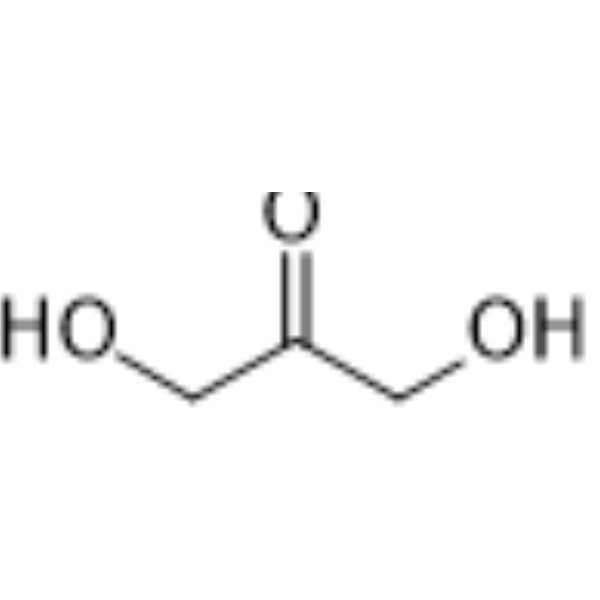
1,3-Dihydroxyacetone (DHA), the main active ingredient in sunless tanning skin-care preparations and an important precursor for the synthesis of various fine chemicals, is produced on an industrial scale by microbial fermentation of glycerol (HY-B1659) in Gluconobacter oxydans. 1,3-Dihydroxyacetone is also used for synthesis of new biodegradable polymers by combining with lactic acid (HY-B2227) .
loading...
    loading...
1
1 Cited Publications
Cat. No.: HY-N2466
CAS No.: 75921-69-6
Synonyms: MT-I; [Nle4,D-Phe7]-α-MSH
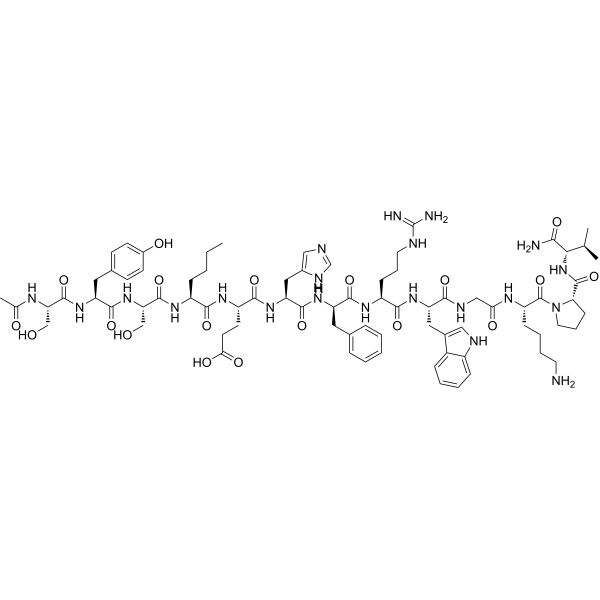
Melanotan I (MT-I; [Nle4,D-Phe7]-α-MSH) is an α-MSH (HY-P0252) analog, synthetic melanotropic peptide, and melanocortin receptor (MCR) agonist. Melanotan I induces skin tanning by mimicking the action of α-MSH on the melanocortin 1 receptor (MC1R) in melanocytes. As an appetite suppressant, Melanotan I impairs the ability of insulin to inhibit endogenous glucose production, suppresses leptin secretion from adipose tissue, and thereby reduces voluntary feed intake in ewes. Melanotan I can be used in research related to UV-induced skin damage, polymorphic light eruption, ruminant feeding, and sexual dysfunction .
loading...
    loading...
1
1 Cited Publications
Cat. No.: HY-N2466A
CAS No.: 1566590-77-9
Synonyms: MT-I acetate; [Nle4,D-Phe7]-α-MSH acetate
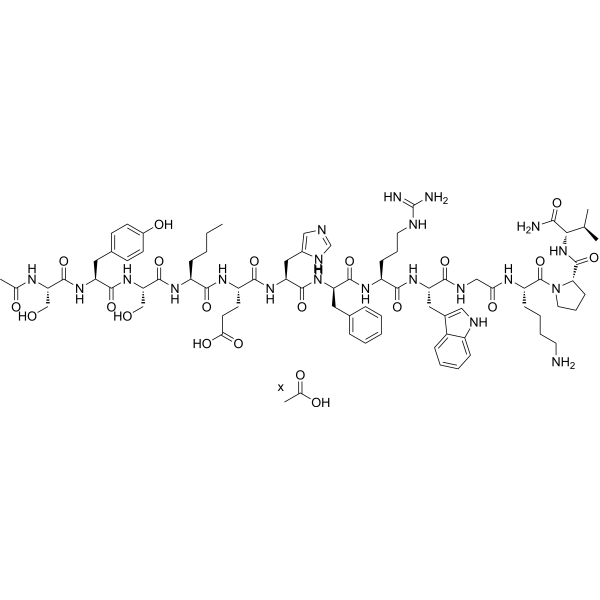
Melanotan I (MT-I; [Nle4,D-Phe7]-α-MSH) acetate is an α-MSH (HY-P0252) analog, synthetic melanotropic peptide, and melanocortin receptor (MCR) agonist. Melanotan I acetate induces skin tanning by mimicking the action of α-MSH on the melanocortin 1 receptor (MC1R) in melanocytes. As an appetite suppressant, Melanotan I acetate impairs the ability of insulin to inhibit endogenous glucose production, suppresses leptin secretion from adipose tissue, and thereby reduces voluntary feed intake in ewes. Melanotan I acetate can be used in research related to UV-induced skin damage, polymorphic light eruption, ruminant feeding, and sexual dysfunction .
loading...
    loading...
Cat. No.: HY-N2018
CAS No.: 6763-34-4
Synonyms: α-D-Xylopyranose
α-D-Xylose (α-D-Xylopyranose) is a basic component of the five-carbon fraction of biomass and a precursor of hemicellulose. α-D-Xylose participates in a variety of enzyme-catalyzed reactions, which in turn participate in a variety of metabolic pathways. In addition, α-D-Xylose is also used in tanning, dyeing and as a diabetic food .
loading...
    loading...
Cat. No.: HY-136537A
CAS No.: 58077-93-3
Purity:  99.94%
Synonyms: NBAD hydrochloride
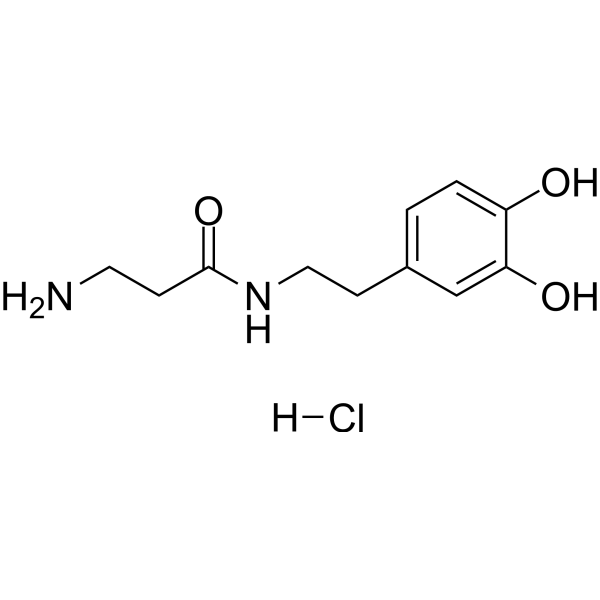
N-β-alanyldopamine hydrochloride (NBAD hydrochloride) is a tyrosine metabolite, Antibacterial agent and Antifungal agent. N-β-alanyldopamine hydrochloride exists in the hemolymph and cuticle during pupal cuticle tanning of the tobacco hornworm (Manduca sexta). N-β-alanyldopamine hydrochloride is the preferred substrate for pupal cuticular o-Diphenol oxidase during insect pupal cuticle tanning. N-β-alanyldopamine hydrochloride inhibits the growth of Escherichia coli, Bacillus megaterium and Saccharomyces cerevisiae in vitro. N-β-alanyldopamine hydrochloride can be used in studies related to microbial infections .
loading...
    loading...
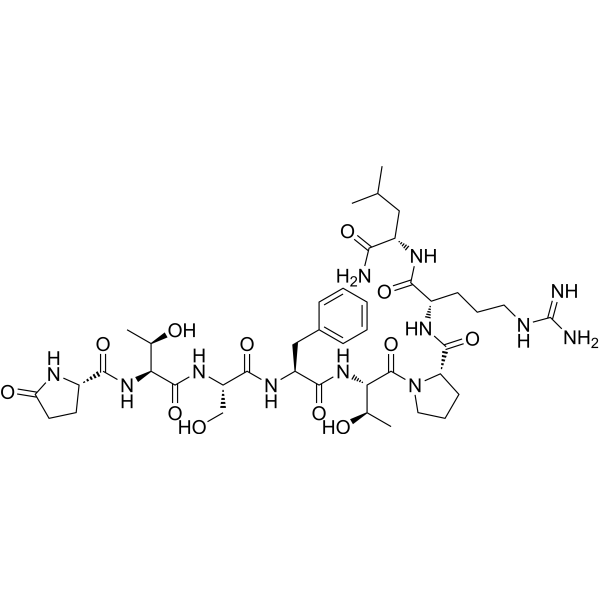
Cat. No.: HY-P1691
CAS No.: 104052-00-8
Target:  

Inhibitory Antibodies

Research Areas:  

Neurological Disease

Leucopyrokinin is a myotropic neuropeptide, which accelerates pupariation via central innervation, promotes tanning age dependently. Leucopyrokinin shapes the puparium by contracting and shrinking the integument .
loading...
    loading...
Cat. No.: HY-W747332
CAS No.: 1353867-77-2
Pyruvic aldehyde- 13C3 is the 13C-labeled Pyruvic aldehyde (HY-W020014). Pyruvic aldehyde is often used as a reagent in organic synthesis, as a flavoring agent, and in tanning.
loading...
    loading...
Cat. No.: HY-Y0335R
CAS No.: 96-26-4
Synonyms: Dihydroxyacetone (Standard)
1,3-Dihydroxyacetone (Standard) is the analytical standard of 1,3-Dihydroxyacetone. This product is intended for research and analytical applications. 1,3-Dihydroxyacetone (DHA), the main active ingredient in sunless tanning skin-care preparations and an important precursor for the synthesis of various fine chemicals, is produced on an industrial scale by microbial fermentation of glycerol (HY-B1659) in Gluconobacter oxydans. 1,3-Dihydroxyacetone is also used for synthesis of new biodegradable polymers by combining with lactic acid (HY-B2227) .
loading...
    loading...
Cat. No.: HY-118108
CAS No.: 476170-34-0
Target:  

Drug Derivative PKA

Research Areas:  

Others

Methylsilanol acetyltyrosine is an organosilicon derivative that primarily exhibits melanogenesis-promoting, anti-aging, and antioxidant activities. Methylsilanol acetyltyrosine promotes melanin synthesis and distribution by activating the cAMP signaling pathway and enhancing cell communication. Methylsilanol acetyltyrosine can be used in the development of tanning accelerators, as well as photoprotective and anti-photoaging cosmetics .
loading...
    loading...

