5 Results for "

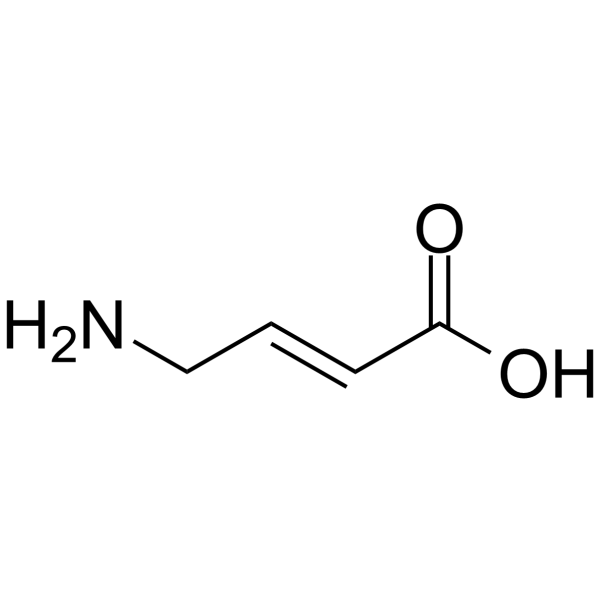
trans-4-Aminocrotonic acid

" in MedChemExpress (MCE) Product Catalog:
Products (5)

5 Results for "trans-4-Aminocrotonic acid" in MCE Product Catalog:

Cat. No.: HY-100800
CAS No.: 38090-53-8
Purity:  99.33%
Synonyms: trans-4-Aminocrotonic acid
Target:  

GABA Receptor

Research Areas:  

Neurological Disease

TACA (trans-4-Aminocrotonic acid) is a potent agonist of GABAA and GABAC receptors (KD= 0.6 μM). TACA also is GABA uptake inhibitor and substrate for GABA-T. TACA produces late biphasic responses in the MPG neurons .
loading...
    loading...
Cat. No.: HY-P10341
CAS No.: 1345835-12-2
Target:  

GCGR

Research Areas:  

Metabolic Disease

ZP3022 is a dual agonist of glucagon-like peptide-1 (GLP-1) and gastrin that has the ability to sustainably improve glycemic control. Additionally, ZP3022 can effectively increase β-cell mass, promote β-cell proliferation, and enhance the function of pancreatic islets. ZP3022 can be used in anti-diabetic research .
loading...
    loading...
Cat. No.: HY-100800R
CAS No.: 38090-53-8
Synonyms: trans-4-Aminocrotonic acid (Standard)
Research Areas:  

Neurological Disease

TACA (Standard) is the analytical standard of TACA (HY-100800). This product is intended for research and analytical applications. TACA (trans-4-Aminocrotonic acid) is a potent agonist of GABAA and GABAC receptors (KD= 0.6 μM). TACA also is GABA uptake inhibitor and substrate for GABA-T. TACA produces late biphasic responses in the MPG neurons .
loading...
    loading...
Cat. No.: HY-P11243
Target:  

Ephrin Receptor

Research Areas:  

Neurological Disease

EphA4 agonist compound 23 is a novel EphA4 agonist peptide mimic. EphA4 agonist compound 23 exhibits high affinity, high selectivity, and significant receptor activation ability. EphA4 agonist compound 23 is commonly used in the study of neurodegenerative diseases .
loading...
    loading...
Cat. No.: HY-P10876
Target:  

Amyloid-β

Research Areas:  

Neurological Disease

mcK6A1 is an inhibitor for the aggregation of amyloid-β (), that selectively binds to the 16KLVFFA21 segment of Aβ42, forms an extended β-folded structure, and inhibits the formation of Aβ42 oligomers. mcK6A1 can be used in research of Alzheimer's disease and other amyloid-related diseases .
loading...
    loading...

