8 Results for "

tumor cell nuclear necrosis

" in MedChemExpress (MCE) Product Catalog:
Products (8)

8 Results for "tumor cell nuclear necrosis" in MCE Product Catalog:

3
3 Cited Publications
Cat. No.: HY-W015490
CAS No.: 130-15-4
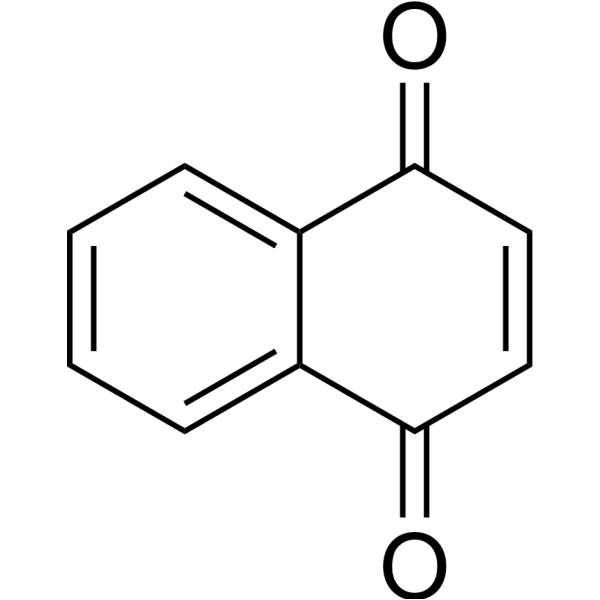
1,4-Naphthoquinone is an inhibitor with broad-spectrum inhibitory activity targeting DNA polymerase, NF-κB and monoamine oxidase (MAO-A/B), with antibacterial and anti-biofilm efficacy. 1,4-Naphthoquinone is a competitive inhibitor of MAO-B (Ki=1.4 μM) and a non-competitive inhibitor of MAO-A (Ki=7.7 μM). 1,4-Naphthoquinone inhibits DNA polymerase pol α, β, γ, δ, ε, λ with IC50 ranging from 5.57-128 μM. 1,4-Naphthoquinone inhibits tumor cell proliferation, induces apoptosis and necrosis, and has anti-angiogenic and anti-inflammatory activities by inducing oxidative stress, depleting glutathione (GSH), inhibiting DNA polymerase-mediated DNA synthesis and blocking NF-κB nuclear translocation. 1,4-Naphthoquinone can be used in anti-bacterial , anti-tumor and anti-inflammatory studies, including inhibition of melanoma and colon cancer cell growth and endothelial cell function, as well as LPS-induced inflammation models .
loading...
    loading...
1
1 Cited Publications
Cat. No.: HY-122308
CAS No.: 58139-23-4
Purity:  99.94%
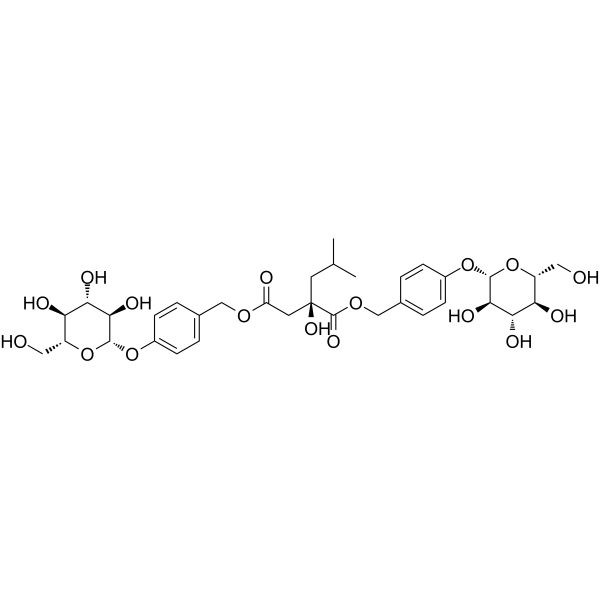
Militarine is a plant growth inhibitor and anti-inflammatory agent. Militarine inhibits the elongation of radicles and hypocotyls in seedlings of lettuce, Italian ryegrass and timothy grass. Militarine alleviates PM2.5-induced inflammatory injury and inhibits cell migration in human alveolar epithelial A549 cells by inhibiting the NF-κB signaling pathway, reducing oxidative stress and the release of inflammatory factors. Militarine can be used in studies related to PM2.5-induced pulmonary diseases .
loading...
    loading...
Cat. No.: HY-144439
CAS No.: 118666-03-8
Purity:  99.94%
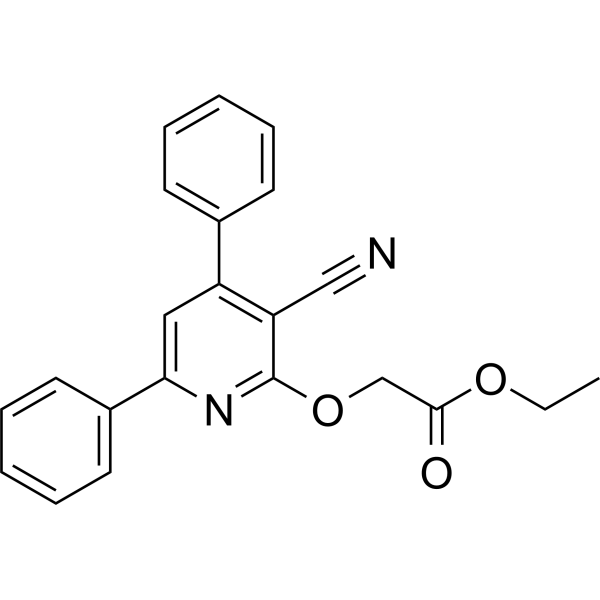
HTS07545 is a sulfide:quinone oxidoreductase (SQOR) inhibitor with an IC50 of 30 nM. HTS07545 inhibits SQOR function and mediates resistance to ferroptosis. HTS07545 reduces tumor volume and weight of pancreatic ductal adenocarcinoma. HTS07545 induces tumor cell nuclear necrosis. The combination of HTS07545 and Erastin (HY-15763) exerts a synergistic effect without causing significant weight loss in mice. HTS07545 can be used in studies related to pancreatic ductal adenocarcinoma and heart failure [1] [2].
loading...
    loading...
Cat. No.: HY-W015490S
CAS No.: 26473-08-5
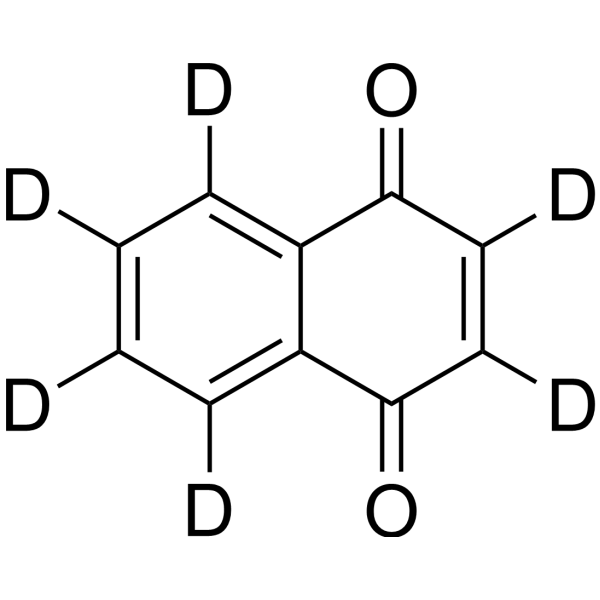
1,4-Naphthoquinone-d6 is the deuterium labeled 1,4-Naphthoquinone. 1,4-Naphthoquinone is an inhibitor with broad-spectrum inhibitory activity targeting DNA polymerase, NF-κB and monoamine oxidase (MAO-A/B), with antibacterial and anti-biofilm efficacy. 1,4-Naphthoquinone is a competitive inhibitor of MAO-B (Ki=1.4 μM) and a non-competitive inhibitor of MAO-A (Ki=7.7 μM). 1,4-Naphthoquinone inhibits DNA polymerase pol α, β, γ, δ, ε, λ with IC50 ranging from 5.57-128 μM. 1,4-Naphthoquinone inhibits tumor cell proliferation, induces apoptosis and necrosis, and has anti-angiogenic and anti-inflammatory activities by inducing oxidative stress, depleting glutathione (GSH), inhibiting DNA polymerase-mediated DNA synthesis and blocking NF-κB nuclear translocation. 1,4-Naphthoquinone can be used in anti-bacterial , anti-tumor and anti-inflammatory studies, including inhibition of melanoma and colon cancer cell growth and endothelial cell function, as well as LPS-induced inflammation models .
loading...
    loading...
Cat. No.: HY-N10009
CAS No.: 19275-49-1
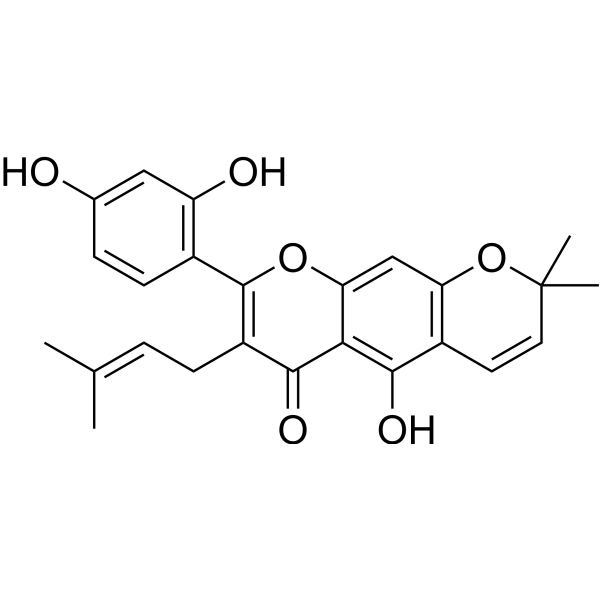
Cudraflavone B is a prenylated flavonoid with anti-inflammatory and anti-tumor properties. Cudraflavone B is also a dual inhibitor of COX-1 and COX-2. Cudraflavone B blocks the translocation of nuclear factor κB (NF-κB) from the cytoplasm to the nucleus in macrophages. Thus, Cudraflavone B inhibits tumor necrosis factor α (TNFα) gene expression and secretion. Cudraflavone B also triggers the mitochondrial apoptotic pathway, activates NF-κB, the MAPK p38, and ERK, and induced the expression of SIRT1. Thus Cudraflavone B inhibits the growth of human oral squamous cell carcinoma cells .
loading...
    loading...
Cat. No.: HY-W015490R
CAS No.: 130-15-4
1,4-Naphthoquinone is an inhibitor with broad-spectrum inhibitory activity targeting DNA polymerase, NF-κB and monoamine oxidase (MAO-A/B), with antibacterial and anti-biofilm efficacy. 1,4-Naphthoquinone is a competitive inhibitor of MAO-B (Ki=1.4 μM) and a non-competitive inhibitor of MAO-A (Ki=7.7 μM). 1,4-Naphthoquinone inhibits DNA polymerase pol α, β, γ, δ, ε, λ with IC50 ranging from 5.57-128 μM. 1,4-Naphthoquinone inhibits tumor cell proliferation, induces apoptosis and necrosis, and has anti-angiogenic and anti-inflammatory activities by inducing oxidative stress, depleting glutathione (GSH), inhibiting DNA polymerase-mediated DNA synthesis and blocking NF-κB nuclear translocation. 1,4-Naphthoquinone can be used in anti-bacterial , anti-tumor and anti-inflammatory studies, including inhibition of melanoma and colon cancer cell growth and endothelial cell function, as well as LPS-induced inflammation models .
loading...
    loading...
Cat. No.: HY-W001288
CAS No.: 1074-86-8
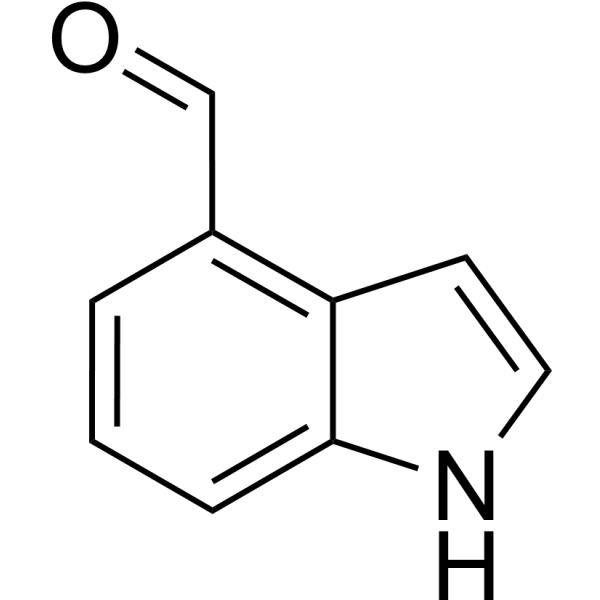
Indole-4-carboxaldehyde is an ergot alkaloid precursor that regulates glycosylation and inflammation. Indole-4-carboxaldehyde upregulates Glo-1, inhibits MGO-induced NF-κB activation, and suppresses MGO-induced expression of TNF-α and IFN-γ. Indole-4-carboxaldehyde inhibits MGO-induced formation of advanced glycation end products (AGE) and expression of their receptor (RAGE). Indole-4-carboxaldehyde is a core metabolite produced in the pedicels of Summer Black grapes after exogenous gibberellin treatment, and it directly promotes fruit enlargement and fruit set of Summer Black grapes. Indole-4-carboxaldehyde can be used in studies related to hepatic steatosis and plant growth regulation .
loading...
    loading...
Cat. No.: HY-W001288S
Indole-4-carboxaldehyde- 13C is the 13C-labeled Indole-4-carboxaldehyde (HY-W001288). Indole-4-carboxaldehyde is an ergot alkaloid precursor that regulates glycosylation and inflammation. Indole-4-carboxaldehyde upregulates Glo-1, inhibits MGO-induced NF-κB activation, and suppresses MGO-induced expression of TNF-α and IFN-γ. Indole-4-carboxaldehyde inhibits MGO-induced formation of advanced glycation end products (AGE) and expression of their receptor (RAGE). Indole-4-carboxaldehyde is a core metabolite produced in the pedicels of Summer Black grapes after exogenous gibberellin treatment, and it directly promotes fruit enlargement and fruit set of Summer Black grapes. Indole-4-carboxaldehyde can be used in studies related to hepatic steatosis and plant growth regulation .
loading...
    loading...

