

1. Search Result
Search Result
Results for "

water samples

" in MedChemExpress (MCE) Product Catalog:

45

Inhibitors & Agonists

14

Fluorescent Dyes

15

Biochemical Assay Reagents

8

MCE Kits

3

Natural
Products

3

Isotope-Labeled Compounds

4

Click Chemistry

6

Oligonucleotides

Cat. No. Product Name Target Research Areas Chemical Structure
  • HY-B0887
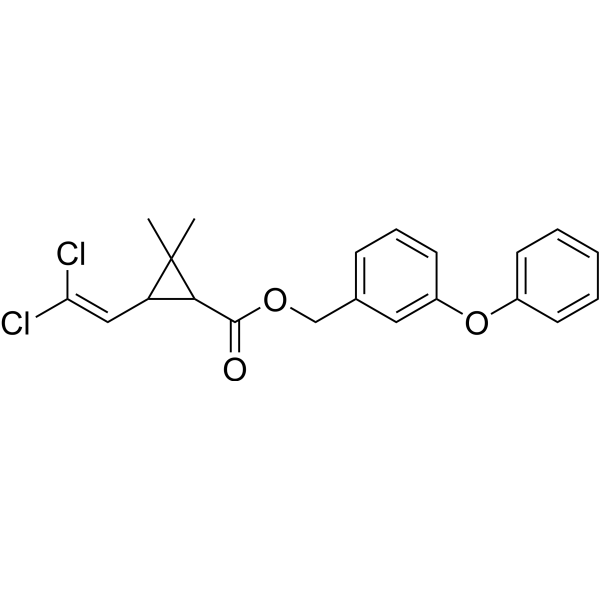
    Permethrin
    1 Publications Verification

    NRDC-143

    Environmental Pollutants Parasite Mitochondrial Metabolism Sodium Channel Infection Neurological Disease
    Permethrin (NRDC-143) is an insecticide, acaricide and a high selectively inhibitor of the Mitochondrial complex I, found in sediment and water samples. Permethrin shows estrogenic in vivo and anti-estrogenic activity in vitro. Permethrin also acts as a neurotoxin affecting neuron membranes by prolonging Sodium channel activation. Permethrin decreases resistance to bacterial infections in medaka (Oryzias latipes) .
    Permethrin
  • HY-B1306
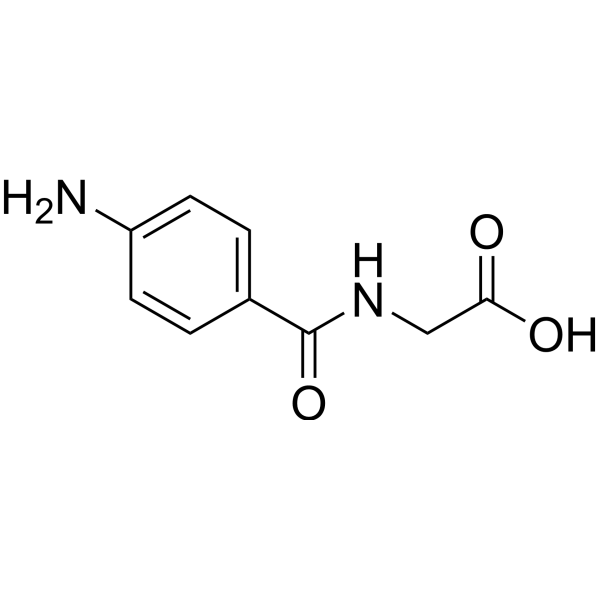
    4-Aminohippuric acid
    4 Publications Verification

    p-Aminohippuric acid

    Others Neurological Disease Metabolic Disease
    4-Aminohippuric acid (p-Aminohippuric acid) is a coordination ligand for metal ions (such as Cu 2+, Fe 3+, Hg 2+) and a functionalization reagent for nanomaterials. 4-Aminohippuric acid can coordinate with metal ions or modify the surface of materials such as carbon nanotubes and gold nanoparticles through amino and carboxyl groups. 4-Aminohippuric acid can form stable complexes with metal ions or participate in the synthesis of nanomaterials as a reducing agent/stabilizer, enriching metal ions or giving nanoparticles peroxidase-mimicking activity. 4-Aminohippuric acid can be used to construct highly sensitive electrochemical sensors or colorimetric sensors to detect and quantitatively analyze heavy metal ions such as copper, iron, and mercury in environmental water samples and biological samples. 4-Aminohippuric acid may also be a biomarker for attention-deficit/hyperactivity disorder (ADHD) .
    4-Aminohippuric acid
  • HY-D0836
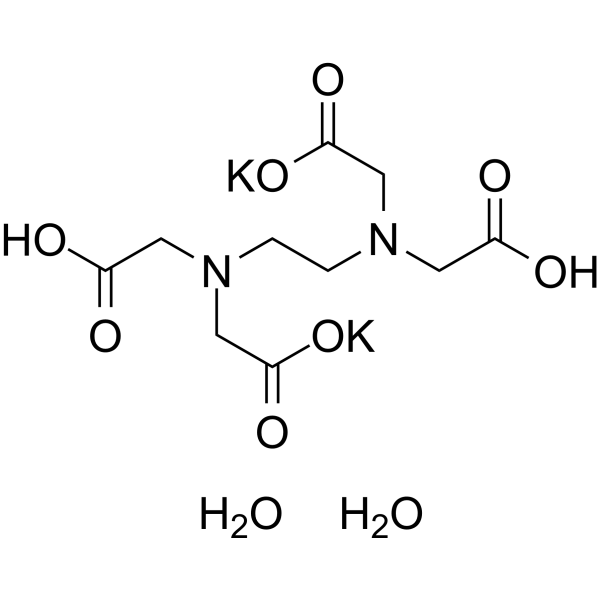
    EDTA dipotassium dihydrate
    25+ Cited Publications

    Ethylenediaminetetraacetic acid dipotassium dihydrate

    DNA/RNA Synthesis Others
    EDTA dipotassium dihydrate is a metal ion chelator that forms stable and water-soluble chelates with a variety of metal ions. EDTA dipotassium is commonly used as a blood anticoagulant, which can effectively prevent blood coagulation and maintain the morphology and function of cells in blood samples. In the industrial field, EDTA dipotassium can be used to remove the adverse effects of metal ions and prevent oxidation and deterioration caused by metal ions .
    EDTA dipotassium dihydrate
  • HY-Y1219H

    Biochemical Assay Reagents Others
    Silica gel, high-purity grade, 200-400 mesh is a low-density, high-surface-area, high-purity inert additive that can be used to prepare chromatographic column sieve plates based on the sol-gel method. Silica gel, high-purity grade prevents DNA degradation by absorbing water from plant leaves, and is suitable for the preservation of field-collected samples for subsequent DNA extraction, restriction endonuclease digestion, PCR amplification and gene sequencing. It can also be reused after being saturated with water. Silica gel, high-purity grade can provide a non-toxic, inert aquatic environment for embedded cells, allowing nutrients, oxygen and metabolic waste to diffuse freely and blocking external pollution, thereby maintaining the activity of fibroblasts and epithelial cells .
    Silica gel, high-purity grade, 200-400 mesh
  • HY-D1375

    Fluorescent Dye Others
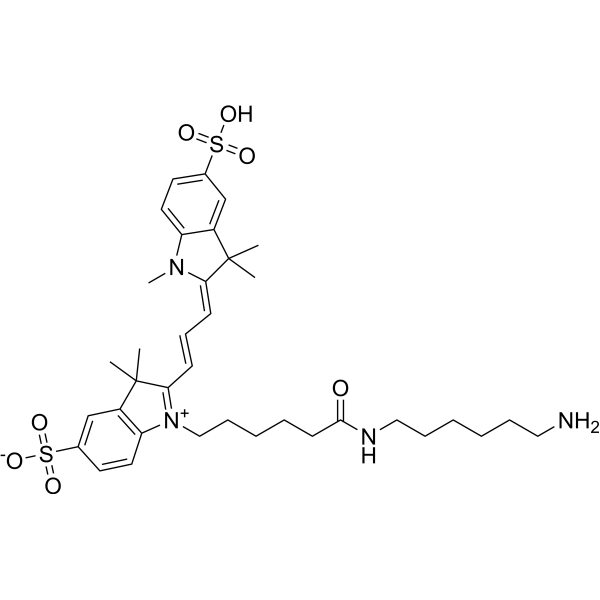
    Sulfo-Cy5 amine is a dye derivative of Cyanine 5 (Cy5) (HY-D0821) bearing an amine group. The sulfonate ion increases the water solubility of the compound, making it suitable for use in aqueous solutions. Cy5 is a near-infrared fluorescent dye commonly used in biolabeling and cell imaging. The amine functionality of Sulfo-Cy5 amine can react with carboxyl groups to form covalent bonds. Sulfo-Cy5 amine can bind to biomolecules such as proteins and antibodies to track their location and dynamic changes in biological samples.
    Sulfo-Cy5 amine
  • HY-W088069

    Biochemical Assay Reagents Others
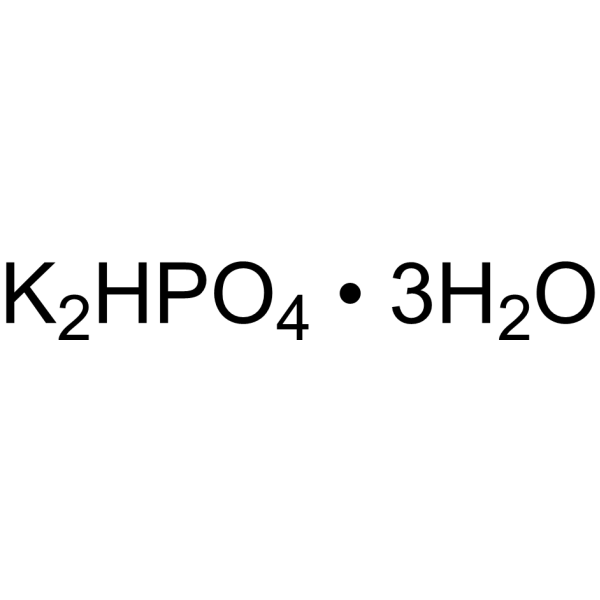
    Dipotassium hydrogen phosphate trihydrate, which is commonly used as a buffer and source of phosphorus and potassium in various applications, such as fertilizers, food processing, and pharmaceuticals, in biochemistry and molecular biology, Dipotassium hydrogen phosphate trihydrate is used in the preparation of cell culture media And reagent buffer system, in addition, it has been used in analytical chemistry as a reagent for the determination of calcium and magnesium ions in water samples.
    Dipotassium hydrogen phosphate trihydrate
  • HY-W587839

    Pregnane X Receptor (PXR) Endocrinology
    4,8-Dioxa-3H-perfluorononanoic acid is an ether-substituted polyfluoroalkyl compound and also a ligand of human pregnane X receptor (hPXR), which binds to the ligand-binding domain of hPXR. 4,8-Dioxa-3H-perfluorononanoic acid targets Arg-410, Lys-210, Lys-226, Met-323 and His-327 residues. Its binding process relies on long-range electrostatic interactions, and no significant hydrogen bonds form with hPXR residues. 4,8-Dioxa-3H-perfluorononanoic acid is used as a substitute for PFOA in Germany. 4,8-Dioxa-3H-perfluorononanoic acid is detectable in environmental matrices such as river water near fluoride production plants, accumulates in organisms including grass, deer liver and locusts, and is present in plasma samples of populations in southern Germany .
    4,8-Dioxa-3H-perfluorononanoic acid
  • HY-W440915

    Liposome Inflammation/Immunology
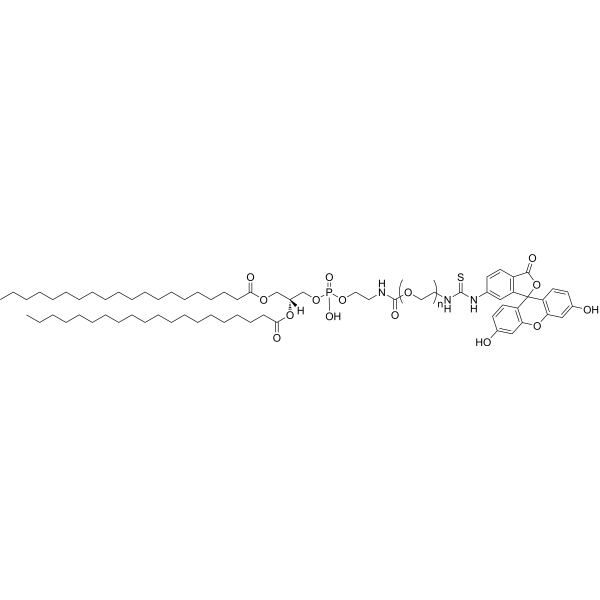
    DSPE-PEG2000-FITC is a PEG lipid conjugated with fluorescein. FITC is a green dye with a peak absorption at 494 nm and a maximum emission at 520 nm, which is used for staining biological samples or nanoparticles. DSPE-PEG2000-FITC spontaneously forms lipid bilayers or micelles in water and can be used to prepare liposomes for delivering substances such as mRNA vaccines .
    DSPE-PEG2000-FITC
  • HY-D1865

    Fluorescent Dye Others
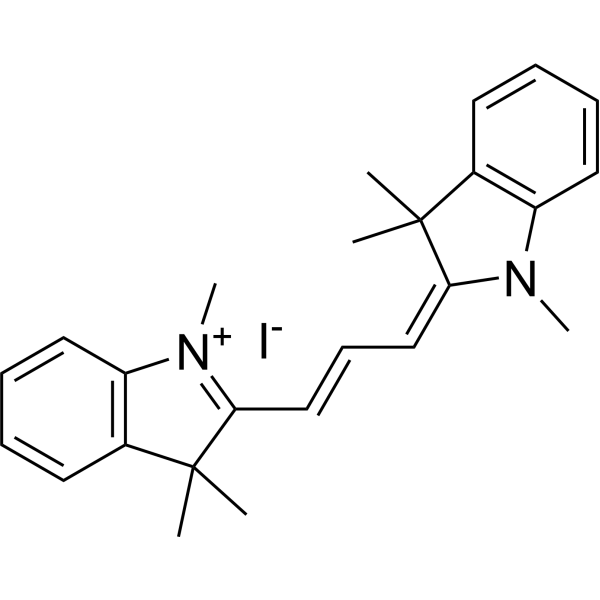
    Cy3 dimethyl iodide is a dye derivative of Cyanine 3 (Cy3) (HY-D0822) with a dimethyl group in the iodide salt form. The iodide salt form increases the water solubility of the compound, making it suitable for use in aqueous solutions. Cy3 is a near-infrared fluorescent dye commonly used in biolabeling and cell imaging. Cy3 dimethyl iodide binds to biomolecules such as proteins and antibodies to track their location and dynamic changes in biological samples.
    Cy3 dimethyl iodide
  • HY-151759

    Fluorescent Dye Cancer
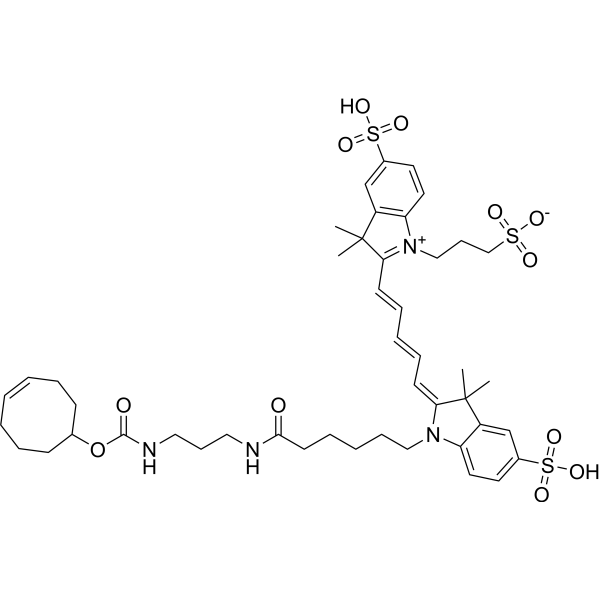
    Sulfo-Cy5-TCO is a water-soluble sulfonated Cy5 fluorescent reagent containing trans-cyclooctene (TCO). Sulfo-Cy5-TCO undergoes an inverse electron demand Diels‑Alder reaction with tetrazine-labeled fixed breast cancer cells to achieve cell labeling. Sulfo-Cy5-TCO is used for fluorescent labeling and imaging of biological samples such as proteins and cells .
    Sulfo-Cy5-TCO
  • HY-Y1219E

    Biochemical Assay Reagents Others
    Silica gel, high-purity grade, 130-270 mesh is a low-density, high-surface-area, high-purity inert additive that can be used to prepare chromatographic column sieve plates based on the sol-gel method. Silica gel, high-purity grade prevents DNA degradation by absorbing water from plant leaves, and is suitable for the preservation of field-collected samples for subsequent DNA extraction, restriction endonuclease digestion, PCR amplification and gene sequencing. It can also be reused after being saturated with water. Silica gel, high-purity grade can provide a non-toxic, inert aquatic environment for embedded cells, allowing nutrients, oxygen and metabolic waste to diffuse freely and blocking external pollution, thereby maintaining the activity of fibroblasts and epithelial cells .
    Silica gel, high-purity grade, 130-270 mesh
  • HY-D1272

    Sulfo-Cyanine3 amine

    Fluorescent Dye Others
    Sulfo-Cy3 amine is a dye derivative of Cyanine 3 (Cy3) (HY-D0822) bearing an amine group. The sulfonate ion increases the water solubility of the compound, making it suitable for use in aqueous solutions. Cy3 is a fluorescent dye with a fluorescence spectrum typically in the green to orange wavelength range. The amine functionality of Sulfo-Cy3 amine can react with carboxyl groups to form covalent bonds. Sulfo-Cy3 amine can bind to biological molecules such as proteins and antibodies to track their location and dynamic changes in biological samples.
    Sulfo-Cy3 amine
  • HY-116992

    Demosan; TERSAN SP(R)

    Environmental Pollutants Bacterial Infection
    Chloroneb (Demosan) is a pesticide with fungicidal and plant-protective activities. Chloroneb can be used to detect organochlorine pesticide residues, showing good selectivity, stability and reproducibility. Chloroneb has been applied to the detection of licorice, cucumber, river water and soil samples with satisfactory results .
    Chloroneb
  • HY-W440939

    Liposome Others
    Stearic acid-PEG3400-FITC is a PEG lipid which forms micelles in water and can be used for drug delivery applications. The FITC fluorescent can be easily traced by miscroscopy. FITC is a green dye with peak absorption at 494 nm and maximum emission at 520 nm and can be used for staining biological samples or nanoparticles. FITC can be easily traced by fluorescence microscopy.
    Stearic acid-PEG3400-FITC
  • HY-130767A

    Biochemical Assay Reagents Cancer
    Naphthol AS-TR Phosphate disodium is a water-soluble dye commonly used as an enzymatic substrate in various biochemical assays to detect alkaline phosphatase activity. Naphthol AS-TR Phosphate disodium has unique chemical properties that allow it to be hydrolyzed by alkaline phosphatase, forming a colored product that can be detected spectrophotometrically. This makes it a useful tool for monitoring enzyme activity in biological samples such as serum or urine.
    Naphthol AS-TR phosphate disodium
  • HY-Y1219C

    Biochemical Assay Reagents Others
    Silica gel, high-purity grade, 220-440 mesh is a low-density, high-surface-area, high-purity inert additive that can be used to prepare chromatographic column sieve plates based on the sol-gel method. Silica gel, high-purity grade prevents DNA degradation by absorbing water from plant leaves, and is suitable for the preservation of field-collected samples for subsequent DNA extraction, restriction endonuclease digestion, PCR amplification and gene sequencing. It can also be reused after being saturated with water. Silica gel, high-purity grade can provide a non-toxic, inert aquatic environment for embedded cells, allowing nutrients, oxygen and metabolic waste to diffuse freely and blocking external pollution, thereby maintaining the activity of fibroblasts and epithelial cells .
    Silica gel, high-purity grade, 220-440 mesh
  • HY-Y1219I

    Biochemical Assay Reagents Others
    Silica gel, high-purity grade, 70-230 mesh is a low-density, high-surface-area, high-purity inert additive that can be used to prepare chromatographic column sieve plates based on the sol-gel method. Silica gel, high-purity grade prevents DNA degradation by absorbing water from plant leaves, and is suitable for the preservation of field-collected samples for subsequent DNA extraction, restriction endonuclease digestion, PCR amplification and gene sequencing. It can also be reused after being saturated with water. Silica gel, high-purity grade can provide a non-toxic, inert aquatic environment for embedded cells, allowing nutrients, oxygen and metabolic waste to diffuse freely and blocking external pollution, thereby maintaining the activity of fibroblasts and epithelial cells .
    Silica gel, high-purity grade, 70-230 mesh
  • HY-Y1219D

    Biochemical Assay Reagents Others
    Silica gel, high-purity grade, 35-70 mesh is a low-density, high-surface-area, high-purity inert additive that can be used to prepare chromatographic column sieve plates based on the sol-gel method. Silica gel, high-purity grade prevents DNA degradation by absorbing water from plant leaves, and is suitable for the preservation of field-collected samples for subsequent DNA extraction, restriction endonuclease digestion, PCR amplification and gene sequencing. It can also be reused after being saturated with water. Silica gel, high-purity grade can provide a non-toxic, inert aquatic environment for embedded cells, allowing nutrients, oxygen and metabolic waste to diffuse freely and blocking external pollution, thereby maintaining the activity of fibroblasts and epithelial cells .
    Silica gel, high-purity grade, 35-70 mesh
  • HY-W009311

    4,4'-Bis(dimethylamino)thiobenzophenone

    Biochemical Assay Reagents Others
    Thiomichler's ketone (4,4'-Bis (dimethylamino) thiobenzophenone) is a heavy metal complexing agent and a colorimetric/spectrophotometric reagent. Thiomichler's ketone shows selectivity for Hg 2+ at pH 3, and exhibits activity towards Pd 2+ and Ag + at pH 3.5. Thiomichler's ketone enables accurate detection of trace Pd 2+ by forming an extractable Hg 2+ complex via micelle-mediated cloud point extraction, or generating a red coordination complex including Pd (TMK)4. Thiomichler's ketone is applicable for the determination of trace Pd 2+ in antibiotics and catalysts of automobile exhaust purifiers .
    Thiomichler's ketone
  • HY-B1306R

    p-Aminohippuric acid (Standard)

    Reference Standards Biochemical Assay Reagents Neurological Disease Metabolic Disease
    4-Aminohippuric acid (p-Aminohippuric acid) (Standard) is the analytical standard of 4-Aminohippuric acid (HY-B1306). This product is intended for research and analytical applications. 4-Aminohippuric acid (p-Aminohippuric acid) is a coordination ligand for metal ions (such as Cu 2+, Fe 3+, Hg 2+) and a functionalization reagent for nanomaterials. 4-Aminohippuric acid can coordinate with metal ions or modify the surface of materials such as carbon nanotubes and gold nanoparticles through amino and carboxyl groups. 4-Aminohippuric acid can form stable complexes with metal ions or participate in the synthesis of nanomaterials as a reducing agent/stabilizer, enriching metal ions or giving nanoparticles peroxidase-mimicking activity. 4-Aminohippuric acid can be used to construct highly sensitive electrochemical sensors or colorimetric sensors to detect and quantitatively analyze heavy metal ions such as copper, iron, and mercury in environmental water samples and biological samples. 4-Aminohippuric acid may also be a biomarker for attention-deficit/hyperactivity disorder (ADHD) .
    4-Aminohippuric acid (Standard)
  • HY-W998687

    Fluorescent Dye Others
    Cy5 dimethyl is a free non-activated dye. This dye has limited water solubility, but can be dissolved in mixtures of water with organic phase (DMF, DMSO, alcohols) to obtain useful concentrations of the material in solution. This molecule can be considered non-reactive dye for the use in control samples, and for instrument calibration.
    Cy5 dimethyl
  • HY-N16571

    Fluorescent Dye Endogenous Metabolite Others
    Marionol is a type of flavonol compound and belongs to the secondary metabolites of plants. Marionol exhibits significant specificity towards Cu²⁺ and possesses the characteristic of intramolecular proton transfer in excited state (ESIPT), enabling it to generate strong fluorescence upon excitation by ultraviolet light. The maximum excitation/emission wavelengths are 350 nm and 510 nm (depending on the solvent), respectively. Marionol can be used as a fluorescence probe for Cu²⁺ .
    Marionol
  • HY-B1306S

    p-Aminohippuric acid-d4

    Biochemical Assay Reagents Neurological Disease Metabolic Disease
    4-Aminohippuric acid-d4 (p-Aminohippuric acid-d4) is the deuterium labeled 4-Aminohippuric acid (HY-B1306). 4-Aminohippuric acid (p-Aminohippuric acid) is a coordination ligand for metal ions (such as Cu 2+, Fe 3+, Hg 2+) and a functionalization reagent for nanomaterials. 4-Aminohippuric acid can coordinate with metal ions or modify the surface of materials such as carbon nanotubes and gold nanoparticles through amino and carboxyl groups. 4-Aminohippuric acid can form stable complexes with metal ions or participate in the synthesis of nanomaterials as a reducing agent/stabilizer, enriching metal ions or giving nanoparticles peroxidase-mimicking activity. 4-Aminohippuric acid can be used to construct highly sensitive electrochemical sensors or colorimetric sensors to detect and quantitatively analyze heavy metal ions such as copper, iron, and mercury in environmental water samples and biological samples. 4-Aminohippuric acid may also be a biomarker for attention-deficit/hyperactivity disorder (ADHD) .
    4-Aminohippuric acid-d4
  • HY-B1659S2

    Trihydroxypropane-13C-1

    Isotope-Labeled Compounds Endogenous Metabolite Cardiovascular Disease Inflammation/Immunology Cancer
    Glycerol- 13C-1 (90% in water) is the 13C labeled Glycerol. Glycerol is used in sample preparation and gel formation for polyacrylamide gel electrophoresis .
    Glycerol-13C-1 (90% in water)
  • HY-32833

    Biochemical Assay Reagents Drug Intermediate Others
    2-Chloro-3-pyridinol is a biochemical reagent that can be used as a biological material or organic compound for life science related research. 2-Chloro-3-pyridinol can also be used in the synthesis of other active compounds. In addition, 2-Chloro-3-pyridinol is a halopyridinol disinfection by-product in drinking water samples .
    2-Chloro-3-pyridinol
  • HY-D2242

    Fluorescent Dye Others
    Sulfo-Cy7.5 DBCO is a dye derivative of Cyanine 7.5 (Cy7.5) (HY-D0926) bearing a DBCO group. The sulfonate ion increases the water solubility of the compound, making it suitable for use in aqueous solutions. Sulfo-Cy7.5 DBCO can bind to biomolecules such as proteins and antibodies to track their location and dynamic changes in biological samples .
    Sulfo-Cy7.5 DBCO
  • HY-163010

    Biochemical Assay Reagents Others
    Dicamba-propionic acid (DCa3) is a heterologous hapten that can be used to develop high-affinity monoclonal antibodies (mAb) against Dicamba. The Dicamba-propionic acid- developed mAb can be used to determine the residual amount of Dicamba in environmental water samples .
    Dicamba-propionic acid
  • HY-160240

    Fluorescent Dye Others Cancer
    HPI is a HS - fluorescent probe (Ex/Em=280/410 nm). HPI can be used to detect the HS - form of hydrogen sulfide (H2S) gas in environmental water samples .
    HPI
  • HY-W440934

    Liposome Others
    Stearic acid-PEG2000-Rhodamine is an amphiphilic PEG polymer which can form micelles in water. The rhodamine can be used for staining sample and easily traced by fluorescence microscopy. Rhodamine has maximum absorption at 570 nm and emission around 595 nm.
    Stearic acid-PEG2000-Rhodamine
  • HY-W344380

    Biochemical Assay Reagents
    Tetrahydro-2,5-dioxo-3-furansulfonic acid, sodium is a chemical reagent with excellent water determination activity. Tetrahydro-2,5-dioxo-3-furansulfonic acid, sodium is widely used as a titrant in Karl Fischer titration to determine the water content in various samples. Tetrahydro-2,5-dioxo-3-furansulfonic acid, sodium has important application value in chemical analysis.
    Tetrahydro-2,5-dioxo-3-furansulfonic acid, sodium
  • HY-W440938

    Liposome Others
    Stearic acid-PEG2000-FITC is an amphiphatic polyPEG which can self assemble to form micelles in water. The polymer can be used to encapsulate therapeutic agent. FITC is a green dye with peak absorption at 494 nm and maximum emission at 520 nm and can be used for staining biological samples or nanoparticles. FITC can be easily traced by fluorescence microscopy.
    Stearic acid-PEG2000-FITC
  • HY-116992R

    Demosan (Standard); TERSAN SP(R) (Standard)

    Bacterial Reference Standards Infection
    Chloroneb (Standard) is the analytical standard of Chloroneb. This product is intended for research and analytical applications. Chloroneb (Demosan) is a pesticide with fungicidal and plant-protective activities. Chloroneb can be used to detect organochlorine pesticide residues, showing good selectivity, stability and reproducibility. Chloroneb has been applied to the detection of licorice, cucumber, river water and soil samples with satisfactory results .
    Chloroneb (Standard)
  • HY-W440940

    Liposome Others
    Stearic acid-PEG5000-FITC is a PEG lipid which forms micelles in water and can be used for drug delivery applications. The FITC fluorescent can be easily traced by miscroscopy. FITC is a green dye with peak absorption at 494 nm and maximum emission at 520 nm and can be used for staining biological samples or nanoparticles. FITC can be easily traced by fluorescence microscopy.
    Stearic acid-PEG5000-FITC
  • HY-130767

    Biochemical Assay Reagents Others
    Naphthol AS-TR Phosphate is a water-soluble dye commonly used as an enzyme substrate in various biochemical assays to detect alkaline phosphatase activity. Naphthol AS-TR Phosphate has unique chemical properties that allow it to be hydrolyzed by alkaline phosphatase to form a colored product that can be detected spectrophotometrically. This makes it a useful tool for monitoring enzyme activity in biological samples such as serum or urine.
    Naphthol AS-TR phosphate
  • HY-W774926

    NRDC-143-d6

    Isotope-Labeled Compounds Na+/K+ ATPase Parasite Sodium Channel Mitochondrial Metabolism Infection Neurological Disease
    Permethrin-d6 (NRDC-143-d6) is deuterium labeled Permethrin. Permethrin (NRDC-143) is an insecticide, acaricide and a high selectively inhibitor of the Mitochondrial complex I, found in sediment and water samples. Permethrin shows estrogenic in vivo and anti-estrogenic activity in vitro. Permethrin also acts as a neurotoxin affecting neuron membranes by prolonging Sodium channel activation. Permethrin decreases resistance to bacterial infections in medaka (Oryzias latipes) .
    Permethrin-d6
  • HY-D1846

    Fluorescent Dye Others
    Sulfo-Cy7.5 dimethyl is a dye derivative of Cyanine 7.5 (Cy7.5) (HY-D0926) with a dimethyl group. The sulfonate ion increases the water solubility of the compound, making it suitable for use in aqueous solutions. Cy7.5 is a near-infrared fluorescent dye commonly used for biolabeling and cell imaging. Sulfo-Cy7.5 dimethyl binds to biomolecules such as proteins and antibodies to track their location and dynamic changes in biological samples.
    Sulfo-Cy7.5 dimethyl
  • HY-D1864

    Fluorescent Dye Others
    Sulfo-Cy7.5 dicarboxylic acid is a dye derivative of Cyanine 7.5 (Cy7.5) (HY-D0926) with carboxylic acid and sulfonate functional groups. The sulfonate ion increases the water solubility of the compound, making it suitable for use in aqueous solutions. Cy7.5 is a near-infrared fluorescent dye commonly used in biomedical research areas such as biomarkers and cell imaging. Sulfo-Cy7.5 dicarboxylic acid can be covalently bound to some biomolecules (especially antibodies, proteins, etc.) to track their location and dynamic changes in biological samples.
    Sulfo-Cy7.5 dicarboxylic acid
  • HY-D1866

    Fluorescent Dye Others
    Sulfo-Cy7.5 carboxylic acid is a dye derivative of Cyanine 7.5 (Cy7.5) (HY-D0926) with carboxylic acid and sulfonate ion (sulfonate) functional groups. The sulfonate ion increases the water solubility of the compound, making it suitable for use in aqueous solutions. Cy7.5 is a near-infrared fluorescent dye commonly used in biomedical research areas such as biomarkers and cell imaging. Sulfo-Cy7.5 carboxylic acid can be covalently bound to some biomolecules (especially antibodies, proteins, etc.) to track their location and dynamic changes in biological samples.
    Sulfo-Cy7.5 carboxylic acid
  • HY-D1861

    Fluorescent Dye Others
    Sulfo-Cy3 hydrazide is a Cyanine 3 (Cy3) (HY-D0822) dye derivative with hydrazine functionality. The sulfonate ion increases the water solubility of the compound, making it suitable for use in aqueous solutions. Cy3 is a fluorescent dye with a fluorescence spectrum typically in the green to orange wavelength range. The hydrazide group of Sulfo-Cy3 hydrazide can form hydrazinone coupling with molecules containing aldehydes or ketones to form covalent bonds. Therefore, Cy3 azide plus can bind to biomolecules such as proteins and antibodies to track their location and dynamic changes in biological samples.
    Sulfo-Cy3 hydrazide
  • HY-D1863

    Fluorescent Dye Others
    sulfo-Cy7.5 amine is a dye derivative of Cyanine 7.5 (Cy7.5) (HY-D0926) bearing an amine group. The sulfonate ion increases the water solubility of the compound, making it suitable for use in aqueous solutions. Cy7.5 is a near-infrared fluorescent dye commonly used for biolabeling and cell imaging. The amine functionality of sulfo-Cy7.5 amine can react with carboxyl groups to form covalent bonds. Sulfo-Cy7.5 amine can bind to biomolecules such as proteins and antibodies to track their location and dynamic changes in biological samples.
    sulfo-Cy7.5 amine
  • HY-D1859

    Fluorescent Dye Others
    Sulfo-Cy7.5 alkyne is a dye derivative of Cyanine 7.5 (Cy7.5) (HY-D0926) containing a sulfonate ion and an alkyne functional group. The sulfonate ion increases the water solubility of the compound, making it suitable for use in aqueous solutions. Cy7.5 is a near-infrared fluorescent dye commonly used for biolabeling and cell imaging. The alkyne functionality of Sulfo-Cy7.5 alkyne can react with molecules containing the azide functionality to form covalent bonds. Sulfo-Cy7.5 alkyne can bind to biomolecules such as proteins and antibodies to track their location and dynamic changes in biological samples.
    Sulfo-Cy7.5 alkyne
  • HY-D1850

    Fluorescent Dye Others
    Sulfo-Cy7.5 azide is a Cyanine 7.5 (Cy7.5) (HY-D0926) dye derivative with azide and sulfonate functional groups. The sulfonate ion increases the water solubility of the compound, making it suitable for use in aqueous solutions. Cy7.5 is a near-infrared fluorescent dye commonly used for biolabeling and cell imaging. The azide group of Sulfo-Cy7.5 azide can react chemically with molecules containing alkyne functionality, such as alkyne or cyclooctyne, to form covalent bonds. Therefore, Sulfo-Cy7.5 azide can bind to biomolecules such as proteins and antibodies to track their location and dynamic changes in biological samples. It contains an azide group and can undergo copper-catalyzed azide-alkyne cycloaddition (CuAAc) with molecules containing alkyne groups. It can also undergo ring strain-promoted alkyne-azide cycloaddition (SPAAC) with molecules containing DBCO or BCN groups.
    Sulfo-Cy7.5 azide
  • HY-D3009

    Fluorescent Dye Others
    LCE1 is an azacrown ether-based NIR fluorescence probe. LCT can be used for the detection of Pb 2+ in food, environmental water, plant and animal samples .
    LCE1
  • HY-W142795

    4-sec-BP

    Androgen Receptor Estrogen Receptor/ERR Metabolic Disease
    4-sec-Butylphenol (4-sec-BP) is an androgen receptor ligand that binds to the androgen receptor with a pIC50 of 4.07 . 4-sec-Butylphenol is an estrogen receptor agonist. 4-sec-Butylphenol can be found in industrial effluents, in production water of oil and gas platforms, as well as in river water samples .
    4-sec-Butylphenol
  • HY-131937

    Insecticide Infection
    Tebupirimfos is an insecticide .
    Tebupirimfos

Inquiry Online

Your information is safe with us. * Required Fields.

Salutation


Country or Region *

Applicant Name *


Organization Name *

Department *


Email Address *


Product Name *

Cat. No.


Requested quantity *

Phone Number *


Remarks

Inquiry Online

Inquiry Information

Product Name:
Cat. No.:
Quantity:
MCE Japan Authorized Agent:

