



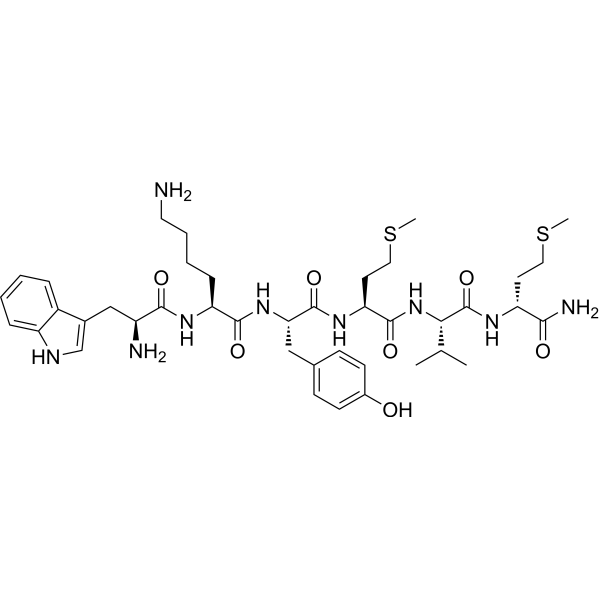
WKYMVm

Based on 1 Customer Validation
WKYMVm is a selective formylpeptide receptor 2 (FPR2) agonist. WKYMVm has a powerful anti-inflammatory effect that can reduce lung injury and spinal cord injury. WKYMVm ameliorates obesity by regulating lipid metabolism and leptin signaling. WKYMVm is involved in the regulation of immune cells by activating FPRs. WKYMVm can promote the chemotactic migration of immune cells and inhibit the apoptosis of phagocytes. In addition, WKYMVm may play a favorable or unfavorable role in tumors, depending on the type of tumor.
For research use only. We do not sell to patients.
- Purity : 98.64%
- CAS No.: 187986-17-0
- Formula: C41H61N9O7S2
- Molecular Weight:856.11
-
Storage:
Sealed storage, away from moisture and light.
Powder -80°C, 2 years , -20°C, 1 year* In solvent : -80°C, 6 months; -20°C, 1 month (sealed storage, away from moisture and light)

To place orders, for customer services and technical support, please contact: MedChemExpress USA
Tel: 609-228-6898 E-mail: [email protected] [email protected]


-
 Biological Activity
-
Chemical Information
-
Solvent & Solubility
- Protocols
- Purity & Documentation
- References
-
 Help & FAQs


-
HY-P1119
WRW4FPRL1 Antagonist -
HY-P0224
N-Formyl-Met-Leu-PheTNF Receptor Inhibitor -
HY-P1122
Cyclosporin HFPR-1 Inhibitor -

HY-P1118
Ac9-25FPR Agonist -
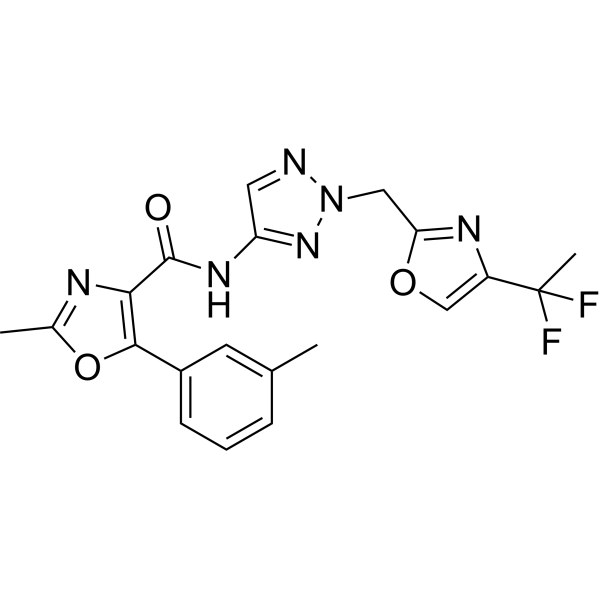
HY-124071
ACT-389949FPR2/ALX Agonist -
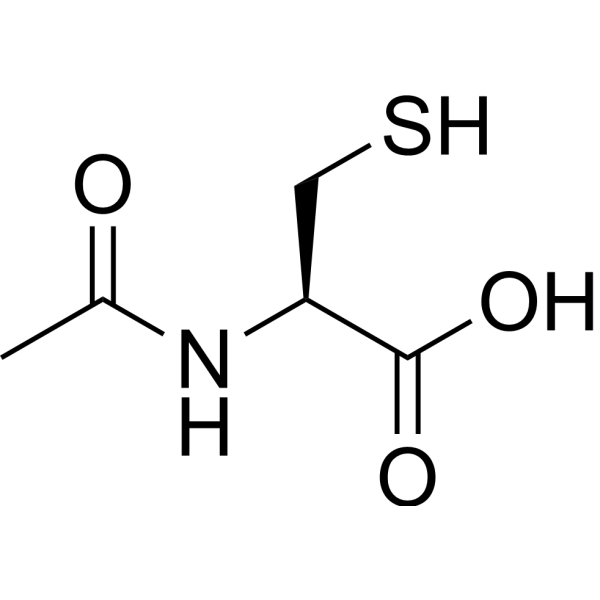
HY-B0215
AcetylcysteineMucolytic Agent -

HY-P1117
MMK1FPRL-1 Agonist -
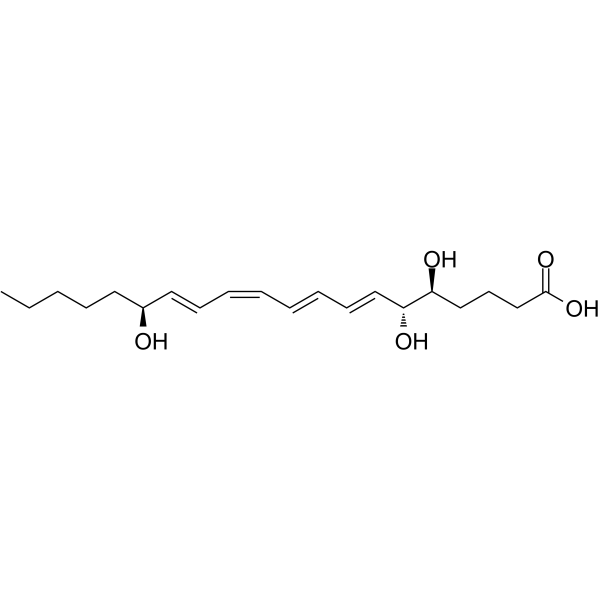
HY-113509
Lipoxin A4Anti-inflammatory Agent -
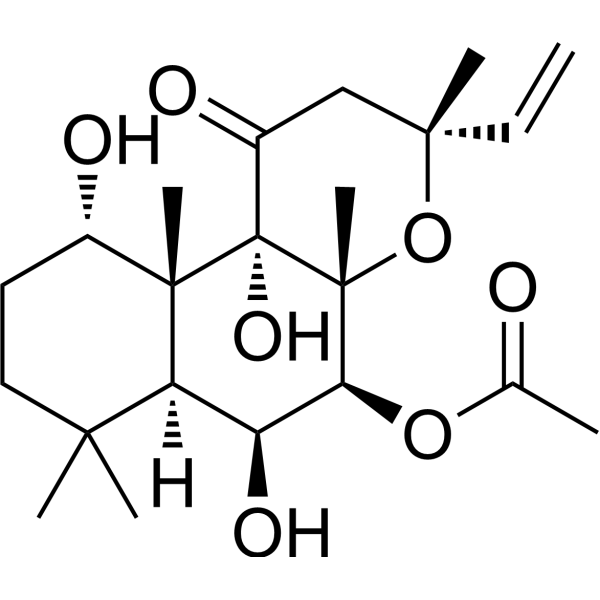
HY-15371
ForskolinAdenylate Cyclase Activator -
HY-103473
Boc-MLFFPR1 Antagonist -
HY-16381
PasireotideSomatostatin Agonist -
HY-P1116
PBP10Decapeptide


Biological Activity
Description
IC50 & Target
Cellular Effect
|
Cell Line

|
Type | Value | Description | References |
|---|---|---|---|---|
| HL-60 | EC50 |
0.001 μM
Compound: WKYMVm
|
Agonist activity at FPRL1 expressed in human HL60 cells assessed as induction of intracellular calcium flux by FLIPR3 calcium assay
Agonist activity at FPRL1 expressed in human HL60 cells assessed as induction of intracellular calcium flux by FLIPR3 calcium assay
|
[PMID: 19639995] |
| HL-60 | EC50 |
0.01 μM
Compound: WKYMVm
|
Agonist activity at FPRL2 expressed in human HL60 cells assessed as induction of intracellular calcium flux by FLIPR3 calcium assay
Agonist activity at FPRL2 expressed in human HL60 cells assessed as induction of intracellular calcium flux by FLIPR3 calcium assay
|
[PMID: 19639995] |
| HL-60 | EC50 |
0.5 μM
Compound: WKYMVm
|
Agonist activity at FPR1 expressed in human HL60 cells assessed as induction of intracellular calcium flux by FLIPR3 calcium assay
Agonist activity at FPR1 expressed in human HL60 cells assessed as induction of intracellular calcium flux by FLIPR3 calcium assay
|
[PMID: 19639995] |
In Vitro
WKYMVm (0-5 μmol/L; 2 h) inhibits the production of inflammatory cytokines (TNF-α, IL-6 and IL-1β) in LPS (HY-D1056) treated microglia [3].
WKYMVm (1-100 µM; 0-24 h) can increase FPR2 mRNA level and ERK phosphorylation level in HUVECs cells, promote HUVECs tube formation and cell proliferation[4].
MedChemExpress (MCE) has not independently confirmed the accuracy of these methods. They are for reference only.
In Vivo
WKYMVm (2.5 mg/kg; Intraperitoneal injection; 4 days) can alleviate hyperoxy-induced lung injury in neonatal mice[4].
WKYMVm (8 mg/kg; Subcutaneous injection; Once every two days; 2-5 weeks) improves obesity in high-fat fed mouse models[5].
MedChemExpress (MCE) has not independently confirmed the accuracy of these methods. They are for reference only.
-
Animal Model:Adult female Sprague-Dawley rats (200-220 g) with spinal cord injury[3]
-
Dosage:4 mg/kg
-
Administration:Intraperitoneal injection (i.p.); 3 times with 24 hours intervals
-
Result:Reduce structural disorders and neuronal loss.
Reduced the phosphorylation of ERK1/2 and NF-κB p65 but not p38.
-
Animal Model:Normoxia or hyperoxic treated newborn mouse pups of C57/BL6[4]
-
Dosage:2.5 mg/kg
-
Administration:Intraperitoneal injection (i.p.); daily from postnatal day (P) 5 to P8.
-
Result:Significantly attenuated hyperoxia-induced lung inflammation, as evidenced by increased inflammatory cytokines, neutrophils, and alveolar macrophages, and resultant lung injuries, which included impaired alveolarization and angiogenesis, an increased number of apoptotic cells, and reduced levels of growth factors in vivo, such as vascular endothelial growth factor and hepatocyte growth factor.
-
Animal Model:High fat diet treated male wild-type C57BL/6N mice aged 8 weeks old (21 ± 2 g)[5]
-
Dosage:8 mg/kg
-
Administration:Subcutaneous injection (i.h.); once every 2 days; 2 or 5 weeks
-
Result:Significantly attenuated body weight gain, food intake and increased insulin sensitivity.
Markedly ameliorated HFD-induced hepatic steatosis and adipose tissue hypertrophy.
Improved lipid metabolism in adipose tissue.
Improved leptin signalling in the hypothalamus.
- Detection of Apoptosis
- TUNEL staining for apoptotic DNA fragmentation
- Annexin V plus membrane-impermeant dye apoptosis staining
- Chemotaxis Gradient Chamber Assay 1
- Cell migration
- Apoptosis Solutions
- Research Protocol for Inflammation-related Diseases
- Inhalation Toxicity Study
- Research Protocol for Metabolic Diseases
- Chemotaxis Gradient Chamber Assay 2


Chemical Information
-
CAS No. 187986-17-0
-
Appearance Solid
-
Molecular Weight 856.11
-
Formula C41H61N9O7S2
-
Color White to off-white
-
Synonyms
WKYMVm-amide; W-Peptide
-
Sequence
Trp-Lys-Tyr-Met-Val-{d-Met}-NH2
-
Sequence Shortening
WKYMV-{d-Met}-NH2
-
Shipping
Room temperature in continental US; may vary elsewhere.
-
Storage
Sealed storage, away from moisture and light
Powder -80°C 2 years -20°C 1 year * In solvent : -80°C, 6 months; -20°C, 1 month (sealed storage, away from moisture and light)


Solvent & Solubility
In Vitro:
DMSO : ≥ 100 mg/mL (116.81 mM; Hygroscopic DMSO has a significant impact on the solubility of product, please use newly opened DMSO)
H2O : 2.5 mg/mL (2.92 mM; Need ultrasonic)
* "≥" means soluble, but saturation unknown.
Please refer to the solubility information to select the appropriate solvent. Once prepared, please aliquot and store the solution to prevent product inactivation from repeated freeze-thaw cycles.
Storage method and period of stock solution: -80°C, 6 months; -20°C, 1 month (sealed storage, away from moisture and light). When stored at -80°C, please use it within 6 months. When stored at -20°C, please use it within 1 month.
* Note: If you choose water as the stock solution, please dilute it to the working solution, then filter and sterilize it with a 0.22 μm filter before use.
Please refer to the solubility information to select the appropriate solvent. Once prepared, please aliquot and store the solution to prevent product inactivation from repeated freeze-thaw cycles.
Storage method and period of stock solution: -80°C, 6 months; -20°C, 1 month (sealed storage, away from moisture and light). When stored at -80°C, please use it within 6 months. When stored at -20°C, please use it within 1 month.
* Note: If you choose water as the stock solution, please dilute it to the working solution, then filter and sterilize it with a 0.22 μm filter before use.
Concentration (start) × Volume (start) = Concentration (final) × Volume (final)
In Vivo:
Select the appropriate dissolution method based on your experimental animal and administration route.
- For the following dissolution methods, please ensure to first prepare a clear stock solution using an In Vitro approach and then sequentially add co-solvents:
- To ensure reliable experimental results, the clarified stock solution can be appropriately stored based on storage conditions. As for the working solution for In Vivo experiments, it is recommended to prepare freshly and use it on the same day.
- The percentages shown for the solvents indicate their volumetric ratio in the final prepared solution. If precipitation or phase separation occurs during preparation, heat and/or sonication can be used to aid dissolution.
Add each solvent one by one: 10% DMSO 40% PEG300 5% Tween-80 45% Saline
Solubility: ≥ 2.5 mg/mL (2.92 mM); Clear solution
This protocol yields a clear solution of ≥ 2.5 mg/mL (saturation unknown).
Taking 1 mL working solution as an example, add 100 μL DMSO stock solution (25.0 mg/mL) to 400 μL PEG300, and mix evenly; then add 50 μL Tween-80 and mix evenly; then add 450 μL Saline to adjust the volume to 1 mL.
Preparation of Saline: Dissolve 0.9 g sodium chloride in ddH₂O and dilute to 100 mL to obtain a clear Saline solution.
In Vivo Dissolution Calculator
Please enter the basic information of animal experiments:
-
-
-
-
Recommended: Prepare an additional quantity of animals to account for potential losses during experiments.
Please enter your animal formula composition:
-
%DMSO +
Recommended: Keep the proportion of DMSO in working solution below 2% if your animal is weak.
-
%+
-
+%Tween-80 + +
-
%Saline +
The co-solvents required include: DMSO, . All of co-solvents are available by MedChemExpress (MCE). , Tween 80. All of co-solvents are available by MedChemExpress (MCE).
Working solution concentration: 0.22 mg/mL
Method for preparing stock solution: mg drug dissolved in μL DMSO. Stock solution concentration: mg/mL. * In solvent : -80°C, 6 months; -20°C, 1 month (sealed storage, away from moisture and light)
1. Take μL DMSO stock solution;
2. Add μL .
μL , mix evenly;
3. Then add μL Tween 80, mix evenly;
4. Then add μL
Please ensure that the stock solution in the first step is dissolved to a clear state, and add co-solvents in sequence. You can use ultrasonic heating (ultrasonic cleaner, recommended frequency 20-40 kHz), vortexing, etc. to assist dissolution.


Purity & Documentation
-
Data Sheet (280 KB)
-
SDS (252 KB)
- English - EN (252 KB)
- Français - FR (252 KB)
- Deutsch - DE (252 KB)
- Norwegian - NO (252 KB)
- Español - ES (252 KB)
- Swedish - SV (252 KB)
- Italian - IT (252 KB)
- Korean - KR (252 KB)
- Portuguese - PT (252 KB)
-
Handling Instructions (2659 KB)
References
[1]. Christophe T, et al. The synthetic peptide Trp-Lys-Tyr-Met-Val-Met-NH2 specifically activates neutrophils through FPRL1/lipoxin A4 receptors and is an agonist for the orphan monocyte-expressed chemoattractant receptor FPRL2. J Biol Chem. 2001 Jun 15;276(24):21585-93. [Content Brief]
[2]. Christophe T, et al. Phagocyte activation by Trp-Lys-Tyr-Met-Val-Met, acting through FPRL1/LXA4R, is not affected by lipoxin A4. Scand J Immunol. 2002 Nov;56(5):470-6. [Content Brief]
[3]. Zhang W, et al. WKYMVm/FPR2 Alleviates Spinal Cord Injury by Attenuating the Inflammatory Response of Microglia. Mediators Inflamm. 2022 Jul 27;2022:4408099. [Content Brief]
[4]. Kim YE, et al. WKYMVm hexapeptide, a strong formyl peptide receptor 2 agonist, attenuates hyperoxia-induced lung injuries in newborn mice. Sci Rep. 2019 May 2;9(1):6815. [Content Brief]
[5]. Kang JH, et al. WKYMVm ameliorates obesity by improving lipid metabolism and leptin signalling. J Cell Mol Med. 2023 Sep;27(18):2782-2791. [Content Brief]
[6]. Yang Y, et al. WKYMVm Works by Targeting Immune Cells. J Inflamm Res. 2023 Jan 6;16:45-55. [Content Brief]
[7]. Ma H, et al. Therapeutic potential of WKYMVm in diseases. Front Pharmacol. 2022 Sep 2;13:986963. [Content Brief]


Complete Stock Solution Preparation Table
Please refer to the solubility information to select the appropriate solvent. Once prepared, please aliquot and store the solution to prevent product inactivation from repeated freeze-thaw cycles.
Storage method and period of stock solution: -80°C, 6 months; -20°C, 1 month (sealed storage, away from moisture and light). When stored at -80°C, please use it within 6 months. When stored at -20°C, please use it within 1 month.
| Optional Solvent | Concentration Solvent Mass | 1 mg | 5 mg | 10 mg | 25 mg |
|---|---|---|---|---|---|
| H2O / DMSO | 1 mM | 1.1681 mL | 5.8404 mL | 11.6807 mL | 29.2019 mL |
| DMSO | 5 mM | 0.2336 mL | 1.1681 mL | 2.3361 mL | 5.8404 mL |
| 10 mM | 0.1168 mL | 0.5840 mL | 1.1681 mL | 2.9202 mL | |
| 15 mM | 0.0779 mL | 0.3894 mL | 0.7787 mL | 1.9468 mL | |
| 20 mM | 0.0584 mL | 0.2920 mL | 0.5840 mL | 1.4601 mL | |
| 25 mM | 0.0467 mL | 0.2336 mL | 0.4672 mL | 1.1681 mL | |
| 30 mM | 0.0389 mL | 0.1947 mL | 0.3894 mL | 0.9734 mL | |
| 40 mM | 0.0292 mL | 0.1460 mL | 0.2920 mL | 0.7300 mL | |
| 50 mM | 0.0234 mL | 0.1168 mL | 0.2336 mL | 0.5840 mL | |
| 60 mM | 0.0195 mL | 0.0973 mL | 0.1947 mL | 0.4867 mL | |
| 80 mM | 0.0146 mL | 0.0730 mL | 0.1460 mL | 0.3650 mL | |
| 100 mM | 0.0117 mL | 0.0584 mL | 0.1168 mL | 0.2920 mL |
* Note: If you choose water as the stock solution, please dilute it to the working solution, then filter and sterilize it with a 0.22 μm filter before use.


WKYMVm Related Classifications
HY-P1120 Related Classifications
 Powered by Bioz