



Sulodexide

Based on 1 Customer Validation
Sulodexide is a mixture of glycosaminoglycans available in soft capsule form for oral administration. It is composed of low molecular weight heparin (80%) and dermatan sulfate (20%). Sulodexide exhibits antithrombotic activity through interaction with antithrombin III (AT III) and heparin cofactor II (HC II), and inhibition of thrombin formation. Sulodexide exhibits profibrinolytic activity through release of tissue plasminogen activator (tPA). Sulodexide exhibits endothelial protective and anti-inflammatory effect, ameliorates chronic venous disease. Sulodexide is a glycosaminoglycan mixture available in soft gelatin capsule form for oral administration.
For research use only. We do not sell to patients.
- CAS No.: 57821-29-1
-
Storage:
Please store the product under the recommended conditions in the Certificate of Analysis.


To place orders, for customer services and technical support, please contact: MedChemExpress USA
Tel: 609-228-6898 E-mail: [email protected] [email protected]


-
 Biological Activity
-
Chemical Information
-
Solvent & Solubility
- Protocols
- Purity & Documentation
- References
-
 Help & FAQs


-

HY-100897A
Sulodexide solution -

HY-114164
Thrombin (MW 37kDa)Procoagulant/Anticoagulant -
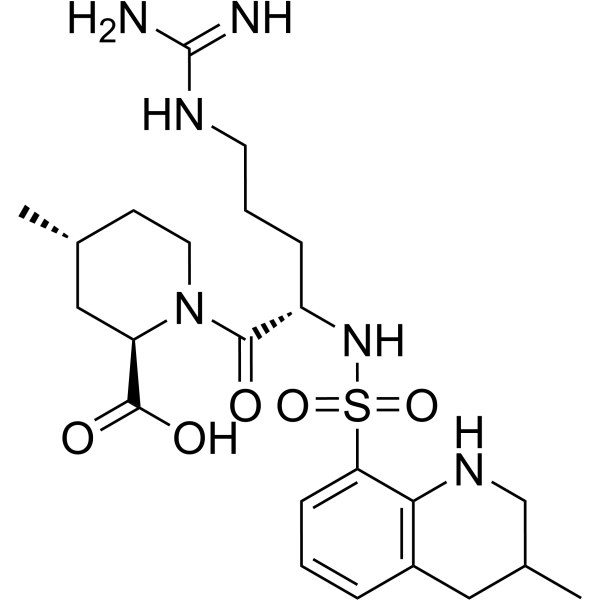
HY-B0375
ArgatrobanThrombin Inhibitor -
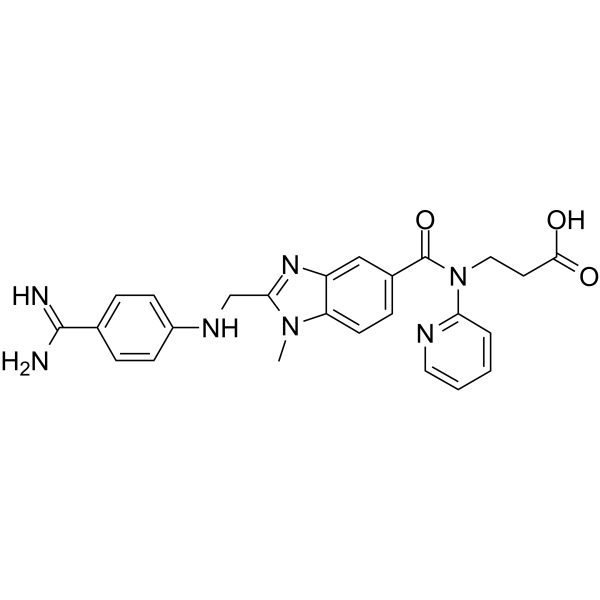
HY-10163
DabigatranThrombin Inhibitor -
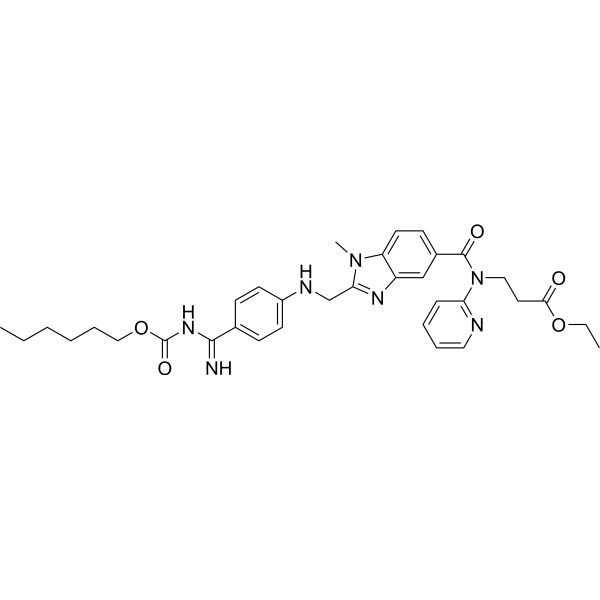
HY-10274
Dabigatran etexilateAntithrombotic Agent -
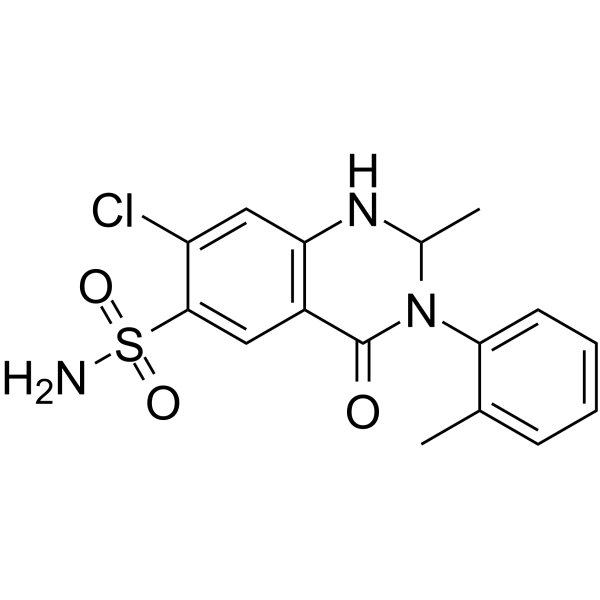
HY-B0209
MetolazoneDiuretics -

HY-10163R
Dabigatran (Standard)Thrombin Inhibitor -
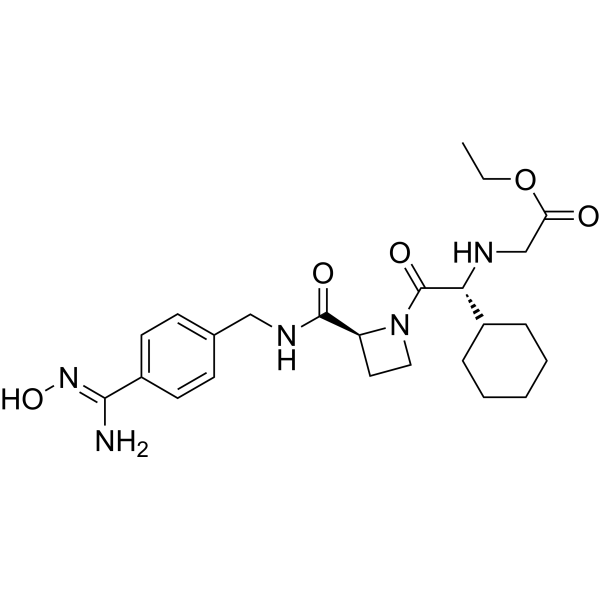
HY-10787
XimelagatranThrombin Inhibitor -
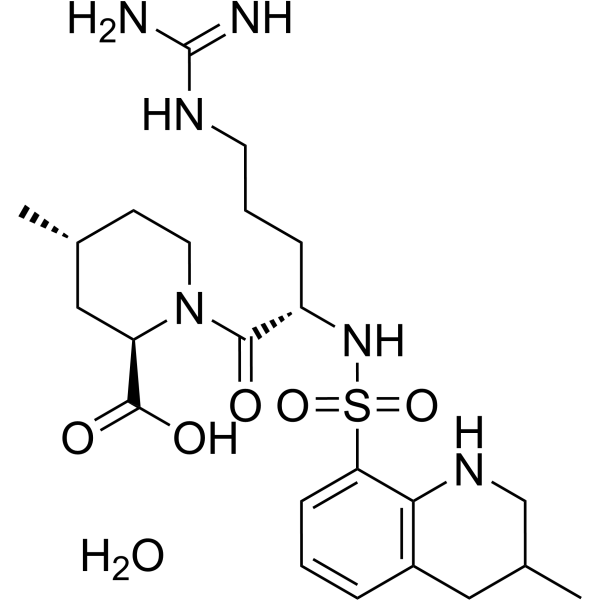
HY-B0375A
Argatroban monohydrateThrombin Inhibitor -
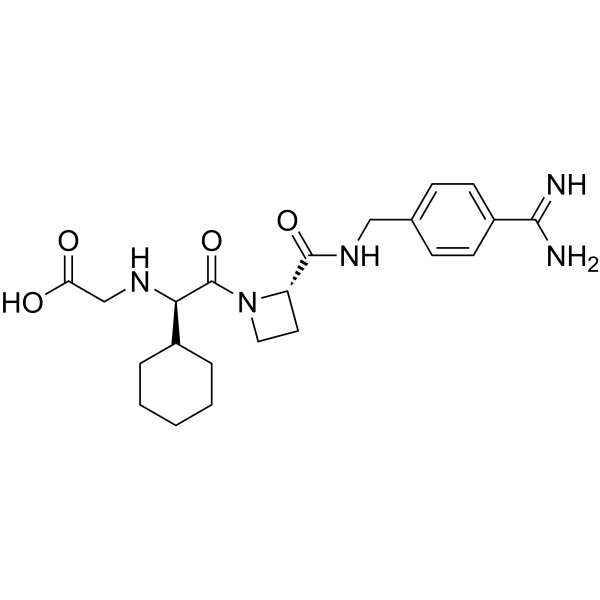
HY-129056
MelagatranThrombin Inhibitor -
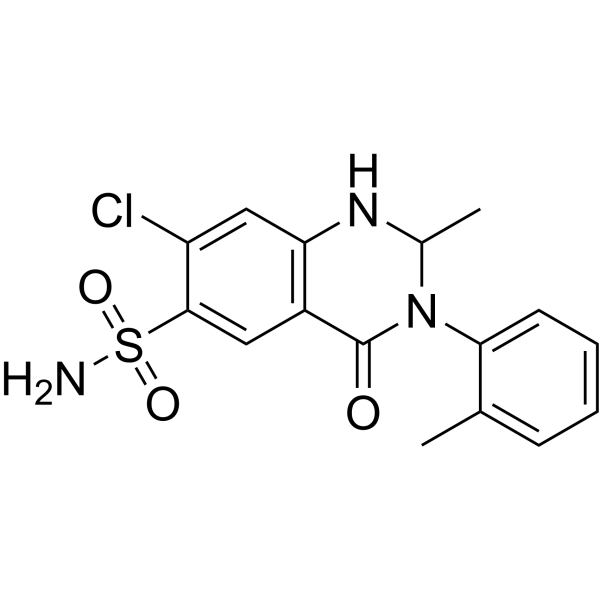
HY-B0209R
Metolazone (Standard)


Biological Activity
Description
In Vitro
Sulodexide (0–200 μg/mL, 24 hours) promotes fibronectin and collagen type III synthesis in mouse mesangial cells[2]. Sulodexide (50 µg/mL, 48 hours) significantly inhibits capillarization marker expression in LSECs[4]. Note: This product is in soft capsule form and has viscous contents.
MedChemExpress (MCE) has not independently confirmed the accuracy of these methods. They are for reference only. Further protocols information, click here.
-
Cell Line:Mouse mesangial cells (diabetic nephropathy)
-
Concentration:0–200 μg/mL
-
Incubation Time:24 hours
-
Result:Increased synthesis of fibronectin and collagen type III in cells, further enhanced under high glucose conditions.
-
Cell Line:Mouse liver sinusoidal endothelial cells (LSECs; liver fibrosis)
-
Concentration:50 µg/mL
-
Incubation Time:48 hours
-
Result:Significantly reduced expression of capillarization markers Edn1 and CD34.
In Vivo
MedChemExpress (MCE) has not independently confirmed the accuracy of these methods. They are for reference only.
-
Animal Model:Streptozotocin (HY-13753)-induced type I diabetic nephropathy in C57BL/6 mice model[2]
-
Dosage:1 mg/kg
-
Administration:Oral gavage (p.o.), once daily for 12 weeks
-
Result:Significantly reduced urinary albumin levels, improved renal function, increased GBM perlecan expression, reduced collagen I and IV deposition, and ERK activation.
-
Animal Model:Oxygen-induced retinopathy (OIR) model in ICR mice[3]
-
Dosage:5 mg/kg and 15 mg/kg
-
Administration:Intraperitoneal injection (i.p.), once daily for 5 days
-
Result:Significantly reduced avascular area, decreased neovascular tufts and lumens. Significantly inhibited expression of MMP-2, MMP-9, and VEGF
-
Animal Model:Thioacetamide (HY-Y0698)-induced liver fibrosis in C57BL/6 mice model[4]
-
Dosage:20 mg/kg
-
Administration:Intragastric administration (i.g.), once daily for 4 weeks
-
Result:Significantly reduced expression of fibrosis markers (Col1a1 and α-SMA), decreased hydroxyproline levels, and inhibited ECM deposition in liver tissue.
-
Animal Model:LPS (HY-D1056)-induced endotoxemia in C57BL/6J mice model[5]
-
Dosage:40 mg/kg
-
Administration:Intragastric administration (i.g.), single dose
-
Result:Significantly reduced plasma Syndecan-1 (SDC1) levels, increased survival rate, reduced lung injury, and restored endothelial glycocalyx damage.


Chemical Information
-
CAS No. 57821-29-1
-
Appearance Solid-Liquid Mixture
-
Color Colorless to light yellow
-
SMILES
[Sulodexide]
-
Synonyms
Vessel due F
-
Shipping
Room temperature in continental US; may vary elsewhere.
-
Storage
Please store the product under the recommended conditions in the Certificate of Analysis.


Solvent & Solubility
In Vitro:
DMSO : < 1 mg/mL (insoluble or slightly soluble)
Ethanol : < 1 mg/mL (insoluble)

Protocols
-
How to Select the Route of Administration for Mammals
Route-of-administration selection in mammals is a pharmacokinetic, pharmacodynamic, formulation, animal-welfare, and translational decision, not a default technical choice. The selected route should match the study goal: intravenous dosing is most useful when complete systemic exposure and rapid onset are required, oral dosing is most translational for orally intended medicines but is affected by absorption and first-pass metabolism, subcutaneous or intramuscular dosing can provide slower systemic exposure, and intraperitoneal dosing can be useful in rodent proof-of-concept studies but may have limited clinical translation. Published route-comparison studies show that the same compound can produce different exposure, onset, bioavailability, tissue distribution, and tolerability depending on route; therefore, route choice should be supported by pilot pharmacokinetic or pharmacodynamic evidence when the literature is insufficient. Unresolved questions include how to standardize route sel
-
Carbohydrates and Mucins: Alcian Blue/Alcian Blue-PAS Staining
Alcian Blue (AB) staining is a cationic copper phthalocyanine dye-based histochemical method that binds electrostatically to negatively charged acidic mucopolysaccharides (glycosaminoglycans and sialomucins), enabling visualization of acidic carbohydrate-rich structures such as epithelial mucins, cartilage matrix, and mast cell granules. Periodic Acid-Schiff (PAS) reaction detects neutral mucopolysaccharides and glycoconjugates by oxidizing vicinal diols to aldehydes, which subsequently react with Schiff reagent to produce a magenta signal. The combined Alcian Blue-PAS (AB-PAS) method allows simultaneous differentiation of acidic (blue) and neutral (magenta) mucins in the same tissue section, enabling mucin subtype discrimination in epithelial tissues and pathological lesions.
-
Research Protocol for Inflammation-related Diseases
The NLRP3 inflammasome is a cytosolic innate immune signaling platform that integrates priming signals and danger-signal activation to promote caspase-1 activation, maturation of IL-1β and IL-18, and gasdermin D-mediated pyroptotic cell death. The core experimental logic is to determine whether inflammatory disease phenotypes are driven by increased NLRP3 expression, ASC-containing inflammasome assembly, caspase-1 cleavage, GSDMD cleavage, and extracellular release of IL-1β/IL-18 rather than by nonspecific cell injury alone. The pathway is strongly linked to inflammation-related disease phenotypes because monosodium urate crystals activate NALP3/NLRP3 inflammasome signaling in gout-like crystal inflammation, cholesterol crystals activate NLRP3 inflammasomes in atherogenesis models, and DSS-induced intestinal inflammation has been reported to involve NLRP3 inflammasome activity. However, experimental colitis studies also show context-dependent protective effects of NLRP3 inflammasome co


Purity & Documentation
-
Data Sheet (283 KB)
-
SDS (251 KB)
- English - EN (251 KB)
- Français - FR (251 KB)
- Deutsch - DE (251 KB)
- Norwegian - NO (251 KB)
- Español - ES (251 KB)
- Swedish - SV (251 KB)
- Italian - IT (251 KB)
- Korean - KR (251 KB)
- Portuguese - PT (251 KB)
-
Handling Instructions (2659 KB)
References
[1]. Andreozzi GM. Sulodexide in the treatment of chronic venous disease. Am J Cardiovasc Drugs. 2012 Apr 1;12(2):73-81. [Content Brief]
[2]. Yung S, et al. Sulodexide decreases albuminuria and regulates matrix protein accumulation in C57BL/6 mice with streptozotocin-induced type I diabetic nephropathy[J]. PloS one, 2013, 8(1): e54501. [Content Brief]
[3]. Jo H, et al. Sulodexide inhibits retinal neovascularization in a mouse model of oxygen-induced retinopathy[J]. BMB reports, 2014, 47(11): 637. [Content Brief]
[4]. Huang R, et al. Sulodexide attenuates liver fibrosis in mice by restoration of differentiated liver sinusoidal endothelial cell[J]. Biomedicine & Pharmacotherapy, 2023, 160: 114396. [Content Brief]
[5]. Ying J, et al. Sulodexide improves vascular permeability via glycocalyx remodelling in endothelial cells during sepsis[J]. Frontiers in immunology, 2023, 14: 1172892. [Content Brief]

Calculators
Concentration (start) × Volume (start) = Concentration (final) × Volume (final)


Sulodexide Related Classifications
HY-100897 Related Classifications
 Powered by Bioz