



Benzydamine
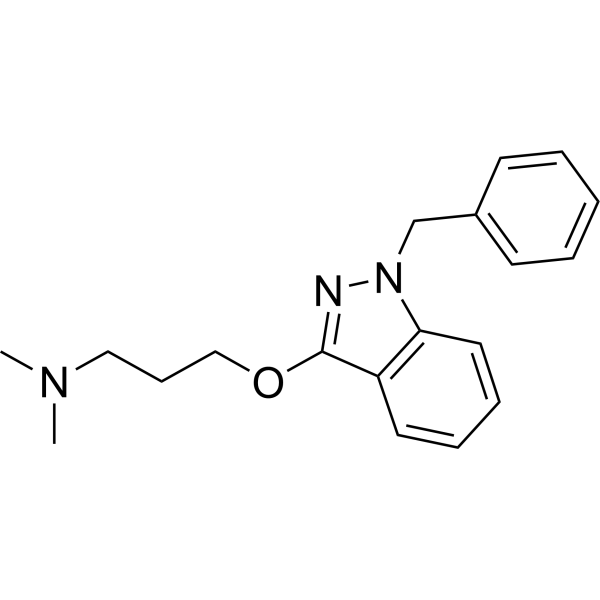
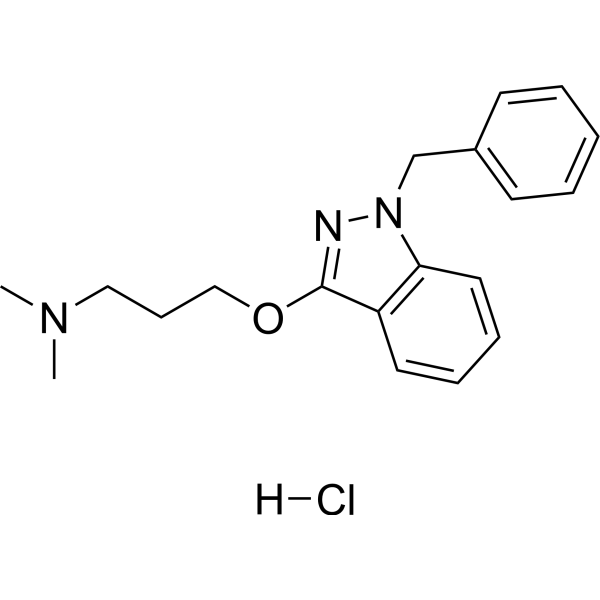
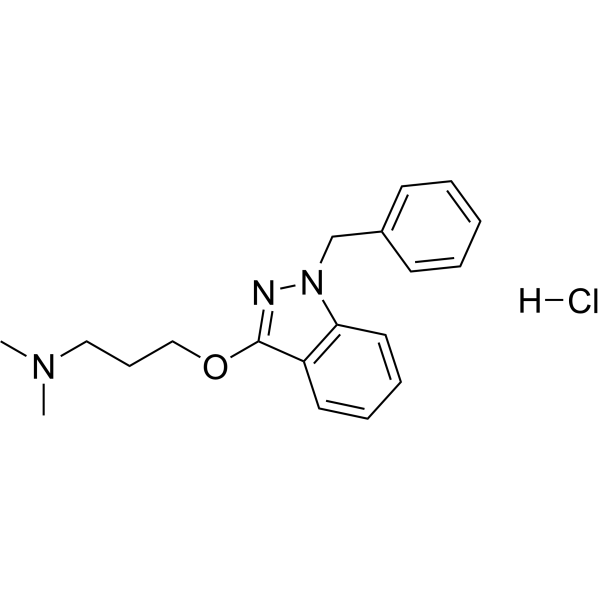
Benzydamine is an orally administered prostaglandin synthesis inhibitor that has anti-inflammatory, analgesic, antipyretic, and antibacterial properties. Benzydamine can inhibit TNF-α, stabilize cell membranes, and reduce oxidative stress within cells.
For research use only. We do not sell to patients.
- CAS No.: 642-72-8
- Formula: C19H23N3O
- Molecular Weight:309.41
-
Storage:
Please store the product under the recommended conditions in the Certificate of Analysis.

To place orders, for customer services and technical support, please contact: MedChemExpress USA
Tel: 609-228-6898 E-mail: [email protected] [email protected]


-
 Biological Activity
-
Chemical Information
- Protocols
- Purity & Documentation
- References
-
 Help & FAQs




Biological Activity
Description
Cellular Effect
|
Cell Line

|
Type | Value | Description | References |
|---|---|---|---|---|
| Sf21 | EC50 |
1.02 μM
Compound: 3
|
Activation of bovine sGC Enzyme (soluble Guanylate Cyclase) in Sf21 cells infected with baculo virus in the presence of 30 nM of PAPA/NO
Activation of bovine sGC Enzyme (soluble Guanylate Cyclase) in Sf21 cells infected with baculo virus in the presence of 30 nM of PAPA/NO
|
[PMID: 11141091] |
In Vitro
Benzydamine has a MIC of 0.5 mg/mL and a MLC of 1.0 mg/mL against Escherichia coli, ATCC 8739, and a MIC of 1.0 mg/mL and a MLC of 1.0 mg/mL against Proteus vulgaris, ATCC 13315[1].
Benzydamine (1.0 mg/mL, 24 h) inhibits the proliferation of Ps. Aeruginosa[1].
MedChemExpress (MCE) has not independently confirmed the accuracy of these methods. They are for reference only.
-
Cell Line:Ps. aeruginosa
-
Concentration:1.0 mg/mL
-
Incubation Time:24 h
-
Result:Inhibited the proliferation of Ps. aeruginosa.
Clinical Trial
| NCT Number | Sponsor | Condition | Start Date |
Phase
|
|---|---|---|---|---|
| NCT01329991 | Plexxikon| | 2011-05 | PHASE1 |


Chemical Information
-
CAS No. 642-72-8
-
Molecular Weight 309.41
-
Formula C19H23N3O
-
SMILES
CN(C)CCCOC1=NN(CC2=CC=CC=C2)C3=C1C=CC=C3
-
Shipping
Room temperature in continental US; may vary elsewhere.
-
Storage
Please store the product under the recommended conditions in the Certificate of Analysis.


Purity & Documentation
References
[1]. Fanaki NH, et al. Antimicrobial activity of benzydamine, a non-steroid anti-inflammatory agent. J Chemother. 1992 Dec;4(6):347-52. [Content Brief]
[2]. Quane PA, Pharmacology of benzydamine. Inflammopharmacology. 1998;6(2):95-107 [Content Brief]
[3]. R S Turnbull, et al. Benzydamine Hydrochloride (Tantum) in the management of oral inflammatory conditions. J Can Dent Assoc. 1995 Feb;61(2):127-34. [Content Brief]

Calculators
Concentration (start) × Volume (start) = Concentration (final) × Volume (final)


Benzydamine Related Classifications
HY-30235 Related Classifications
 Powered by Bioz