



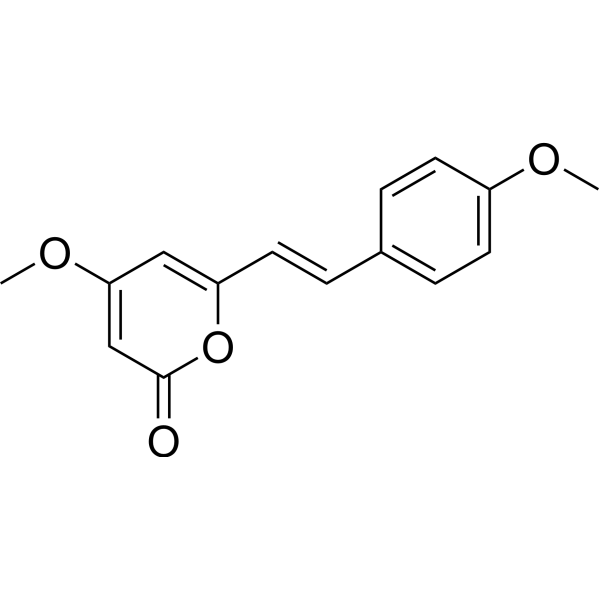
Yangonin
Based on 1 publication(s) in Google Scholar
Yangonin exhibits affinity for the human recombinant cannabinoid CB1 receptor with an IC50 and a Ki of 1.79 μM and 0.72 μM, respectively.
For research use only. We do not sell to patients.
- Purity: 99.65%
- CAS No.: 500-62-9
- Formula: C15H14O4
- Molecular Weight:258.27
-
Storage:
4°C, protect from light
* In solvent : -80°C, 6 months; -20°C, 1 month (protect from light)

To place orders, for customer services and technical support, please contact: MedChemExpress USA
Tel: 609-228-6898 E-mail: [email protected] [email protected]


-
 Biological Activity
-
Chemical Information
-
Solvent & Solubility
- Protocol
- Purity & Documentation
- References
-
 Help & FAQs


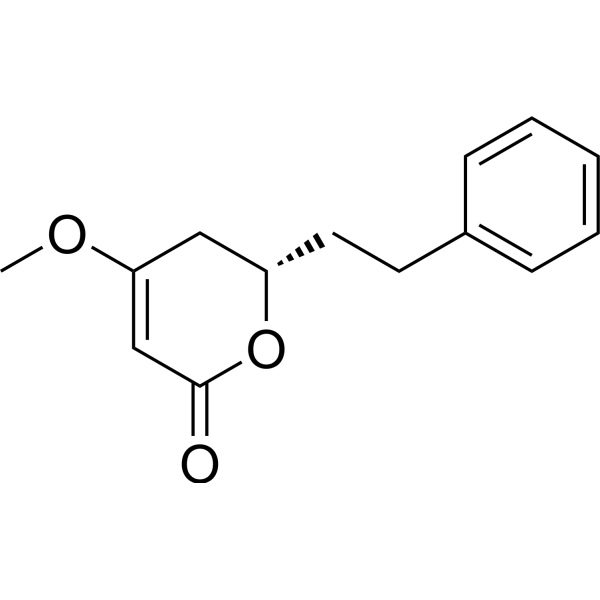
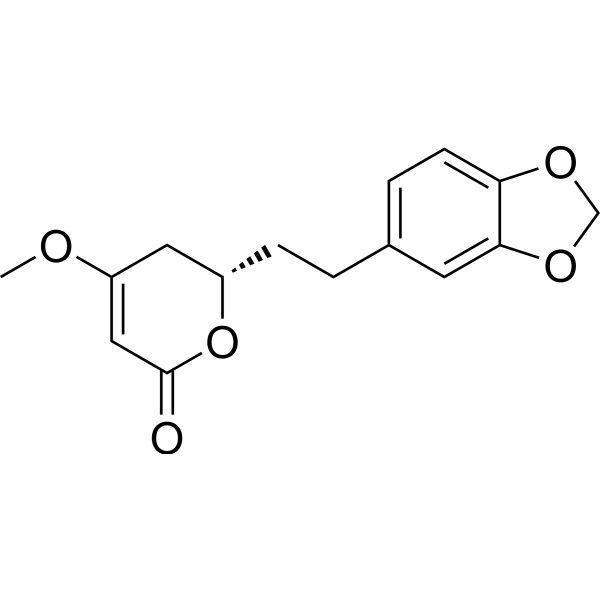
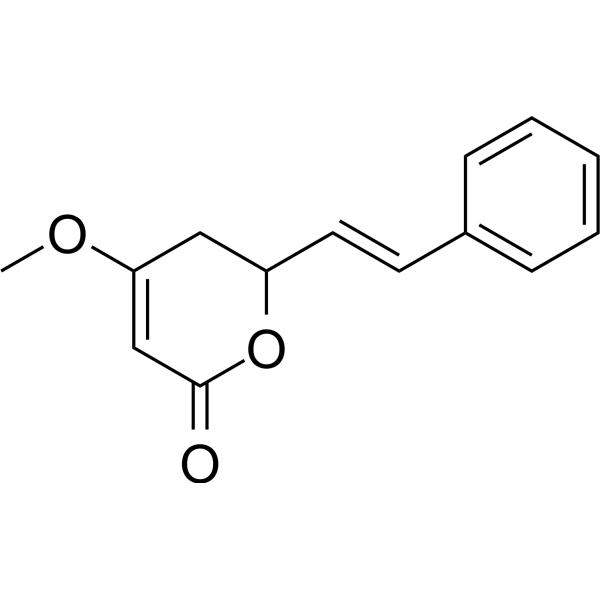
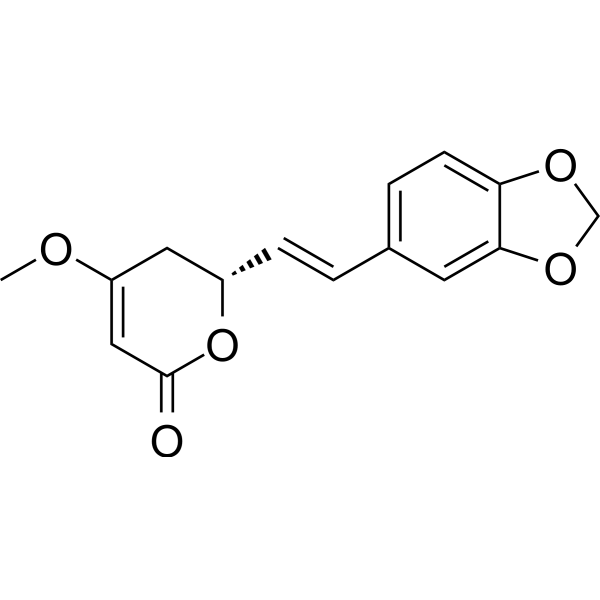
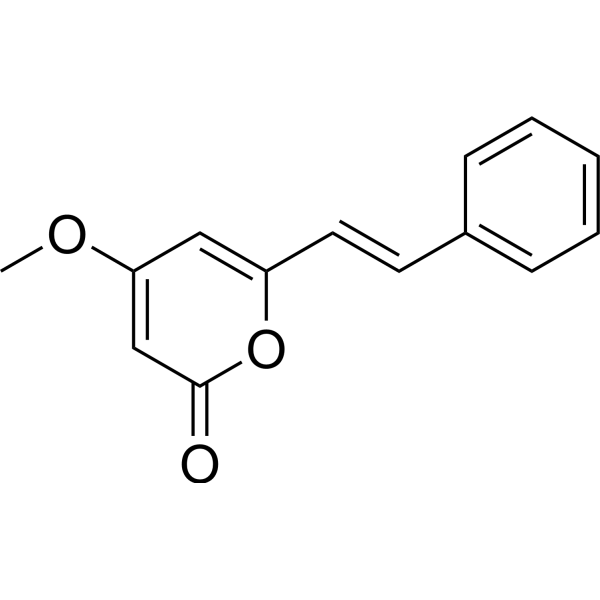
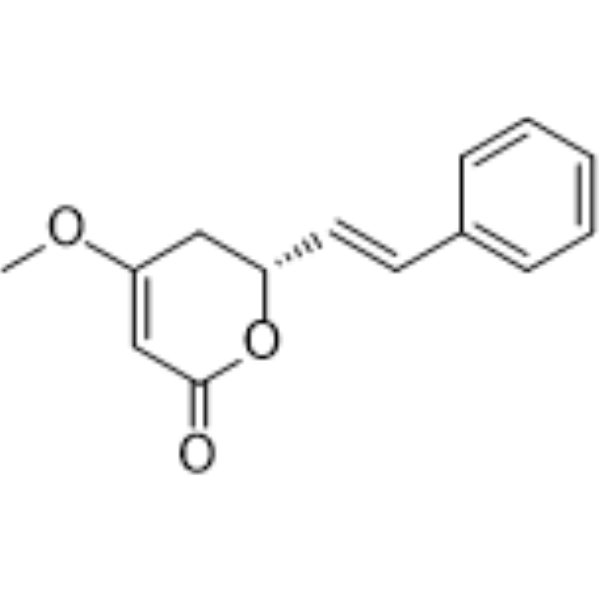
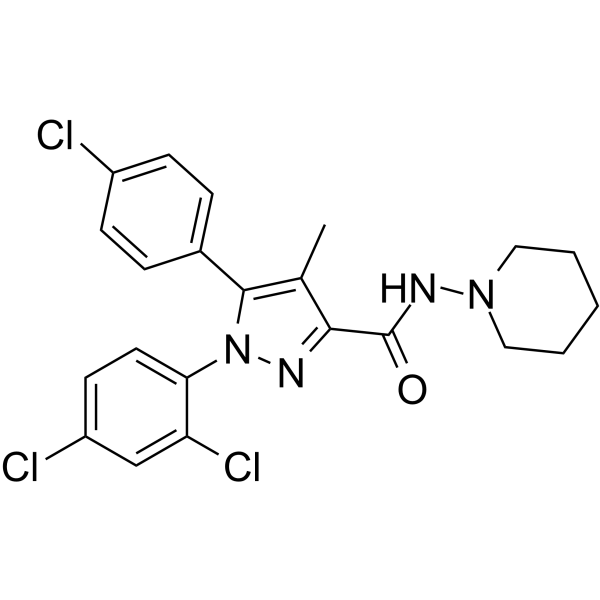
Publications Citing Use of MedChemExpress (MCE) Yangonin
More

Biological Activity
|
CB1 1.79 μM (IC50) |
CB1 0.72 μM (Ki) |
RelA |
Yangonin is one of the six major kavalactones found in Piper methysticum.Yangonin potently inhibits NF-κB activation through suppression of the transcriptional activity of the RelA/p65 subunit of NF-κB. Yangonin significantly inhibits the induced expression of the NF-κB-reporter gene. However, Yangonin does not interfere with TNF-α-induced inhibitor of κBα (IκBα) degradation, p65 nuclear translocation, and DNA-binding activity of NF-κB. Yangonin inhibits not only the induced NF-κB activation by overexpression of RelA/p65, but also transactivation activity of RelA/p65. Yangonin does not inhibit TNF-α-induced activation of p38, but it significantly impairs activation of ERK 1/2 and stress-activated protein kinase/JNK[2].
MedChemExpress (MCE) has not independently confirmed the accuracy of these methods. They are for reference only.


Chemical Information
-
CAS No. 500-62-9
-
Appearance Solid
-
Molecular Weight 258.27
-
Formula C15H14O4
-
Color Light yellow to yellow
-
SMILES
O=C1C=C(OC)C=C(/C=C/C2=CC=C(OC)C=C2)O1
-
Structure Classification
-
Initial Source
-
Shipping
Room temperature in continental US; may vary elsewhere.
-
Storage
4°C, protect from light
* In solvent : -80°C, 6 months; -20°C, 1 month (protect from light)


Publications (1)
-
Journal Impact Factor
-
Most Recent
-
Inflammopharmacology
Yangonin treats inflammatory osteoporosis by inhibiting the secretion of inflammatory factors and RANKL expression. [Abstract]2022 Aug;30(4):1445-1458. PMID: 35451724


Solvent & Solubility
DMSO : 25 mg/mL (96.80 mM; Need ultrasonic; Hygroscopic DMSO has a significant impact on the solubility of product, please use newly opened DMSO)
Please refer to the solubility information to select the appropriate solvent. Once prepared, please aliquot and store the solution to prevent product inactivation from repeated freeze-thaw cycles.
Storage method and period of stock solution: -80°C, 6 months; -20°C, 1 month (protect from light). When stored at -80°C, please use it within 6 months. When stored at -20°C, please use it within 1 month.
Please refer to the solubility information to select the appropriate solvent. Once prepared, please aliquot and store the solution to prevent product inactivation from repeated freeze-thaw cycles.
Storage method and period of stock solution: -80°C, 6 months; -20°C, 1 month (protect from light). When stored at -80°C, please use it within 6 months. When stored at -20°C, please use it within 1 month.
Concentration (start) × Volume (start) = Concentration (final) × Volume (final)
Select the appropriate dissolution method based on your experimental animal and administration route.
- For the following dissolution methods, please ensure to first prepare a clear stock solution using an In Vitro approach and then sequentially add co-solvents:
- To ensure reliable experimental results, the clarified stock solution can be appropriately stored based on storage conditions. As for the working solution for In Vivo experiments, it is recommended to prepare freshly and use it on the same day.
- The percentages shown for the solvents indicate their volumetric ratio in the final prepared solution. If precipitation or phase separation occurs during preparation, heat and/or sonication can be used to aid dissolution.
Add each solvent one by one: 10% DMSO 40% PEG300 5% Tween-80 45% Saline
Solubility: 2.5 mg/mL (9.68 mM); Suspended solution; Need ultrasonic
This protocol yields a suspended solution of 2.5 mg/mL. Suspended solution can be used for oral and intraperitoneal injection.
Taking 1 mL working solution as an example, add 100 μL DMSO stock solution (25.0 mg/mL) to 400 μL PEG300, and mix evenly; then add 50 μL Tween-80 and mix evenly; then add 450 μL Saline to adjust the volume to 1 mL.
Preparation of Saline: Dissolve 0.9 g sodium chloride in ddH₂O and dilute to 100 mL to obtain a clear Saline solution.
Please enter the basic information of animal experiments:
-
-
-
-
Recommended: Prepare an additional quantity of animals to account for potential losses during experiments.
Please enter your animal formula composition:
-
%DMSO +
Recommended: Keep the proportion of DMSO in working solution below 2% if your animal is weak.
-
%+
-
+%Tween-80 + +
-
%Saline +
The co-solvents required include: DMSO, . All of co-solvents are available by MedChemExpress (MCE). , Tween 80. All of co-solvents are available by MedChemExpress (MCE).
Working solution concentration: 0.22 mg/mL
Method for preparing stock solution: mg drug dissolved in μL DMSO. Stock solution concentration: mg/mL. * In solvent : -80°C, 6 months; -20°C, 1 month (protect from light)
1. Take μL DMSO stock solution;
2. Add μL .
μL , mix evenly;
3. Then add μL Tween 80, mix evenly;
4. Then add μL
Please ensure that the stock solution in the first step is dissolved to a clear state, and add co-solvents in sequence. You can use ultrasonic heating (ultrasonic cleaner, recommended frequency 20-40 kHz), vortexing, etc. to assist dissolution.

Protocol
HeLa cells are seeded at 1×10⁵ cells/mL in 96-well plates containing 100 μL of DMEM medium with 10% FBS and incubated overnight. Yangonin is dissolved in DMSO and DMSO is added to all plates to compensate the same volume of DMSO. After 24 h, the cells are pretreated with different concentrations of Yangonin (0.1-3 μM) for 1 h, followed by stimulation with or without TNF-α for 24 h. Subsequently, cells are cultured with MTT solution (5 mg/mL) for 3 h. The viable cells convert MTT to formazan, which generates a blue-purple color after dissolving in 150 μL of DMSO. The absorbance at 570 nm is measured by an ELISA plate reader[2].
MedChemExpress (MCE) has not independently confirmed the accuracy of these methods. They are for reference only.


Purity & Documentation
-
Data Sheet (275 KB)
-
SDS (393 KB)
- English - EN (393 KB)
- Français - FR (393 KB)
- Deutsch - DE (393 KB)
- Norwegian - NO (393 KB)
- Español - ES (393 KB)
- Swedish - SV (393 KB)
- Italian - IT (393 KB)
- Korean - KR (393 KB)
- Portuguese - PT (393 KB)
-
Handling Instructions (2659 KB)
References
[1]. Ligresti A, et al. Kavalactones and the endocannabinoid system: the plant-derived yangonin is a novel CB1 receptor ligand. Pharmacol Res. 2012 Aug;66(2):163-9. [Content Brief]
[2]. Ma J, et al. Yangonin blocks tumor necrosis factor-α-induced nuclear factor-κB-dependent transcription by inhibiting the transactivation potential of the RelA/p65 subunit. J Pharmacol Sci. 2012;118(4):447-54. [Content Brief]
[3]. Wruck CJ, et al. Kavalactones protect neural cells against amyloid beta peptide-induced neurotoxicity via extracellular signal-regulated kinase 1/2-dependent nuclear factor erythroid 2-related factor 2 activation. Mol Pharmacol. 2008 Jun;73(6):1785-95. [Content Brief]


Complete Stock Solution Preparation Table
Please refer to the solubility information to select the appropriate solvent. Once prepared, please aliquot and store the solution to prevent product inactivation from repeated freeze-thaw cycles.
Storage method and period of stock solution: -80°C, 6 months; -20°C, 1 month (protect from light). When stored at -80°C, please use it within 6 months. When stored at -20°C, please use it within 1 month.
| Optional Solvent | Concentration Solvent Mass | 1 mg | 5 mg | 10 mg | 25 mg |
|---|---|---|---|---|---|
| DMSO | 1 mM | 3.8719 mL | 19.3596 mL | 38.7192 mL | 96.7979 mL |
| 5 mM | 0.7744 mL | 3.8719 mL | 7.7438 mL | 19.3596 mL | |
| 10 mM | 0.3872 mL | 1.9360 mL | 3.8719 mL | 9.6798 mL | |
| 15 mM | 0.2581 mL | 1.2906 mL | 2.5813 mL | 6.4532 mL | |
| 20 mM | 0.1936 mL | 0.9680 mL | 1.9360 mL | 4.8399 mL | |
| 25 mM | 0.1549 mL | 0.7744 mL | 1.5488 mL | 3.8719 mL | |
| 30 mM | 0.1291 mL | 0.6453 mL | 1.2906 mL | 3.2266 mL | |
| 40 mM | 0.0968 mL | 0.4840 mL | 0.9680 mL | 2.4199 mL | |
| 50 mM | 0.0774 mL | 0.3872 mL | 0.7744 mL | 1.9360 mL | |
| 60 mM | 0.0645 mL | 0.3227 mL | 0.6453 mL | 1.6133 mL | |
| 80 mM | 0.0484 mL | 0.2420 mL | 0.4840 mL | 1.2100 mL |


Yangonin Related Classifications
HY-N0919 Related Classifications
 Powered by Bioz