



ω-Agatoxin IVA
Based on 1 publication(s) in Google Scholar
ω-Agatoxin IVA is a potent, selective P/Q type Ca2+ (Cav2.1) channel blocker with IC50 values of 2 nM and 90 nM. ω-Agatoxin IVA inhibits glutamate exocytosis and calcium influx elicited by high potassium. ω-Agatoxin IVA inhibits Capsaicin (HY-10448)-induced CGRP release and vasodilation. ω-Agatoxin IVA can be used for the research of neurological and cardiovascular disease.
For research use only. We do not sell to patients.
- Purity : 98.71%
- CAS No.: 145017-83-0
- Formula: C217H360N68O60S10
- Molecular Weight:5202.25
-
Storage:
Sealed storage, away from moisture.
Powder -80°C, 2 years , -20°C, 1 year* In solvent : -80°C, 6 months; -20°C, 1 month (sealed storage, away from moisture)

To place orders, for customer services and technical support, please contact: MedChemExpress USA
Tel: 609-228-6898 E-mail: [email protected] [email protected]


-
 Biological Activity
-
Chemical Information
-
Solvent & Solubility
- Protocols
- Purity & Documentation
- References
-
 Help & FAQs


-
HY-P0190
IberiotoxinCa2+-activated K+ Channel Inhibitor -
HY-P1074
SNX-482CaV2.3 Channel Blocker -
HY-P1075
CALP3Ca2+ Channel Blocker -
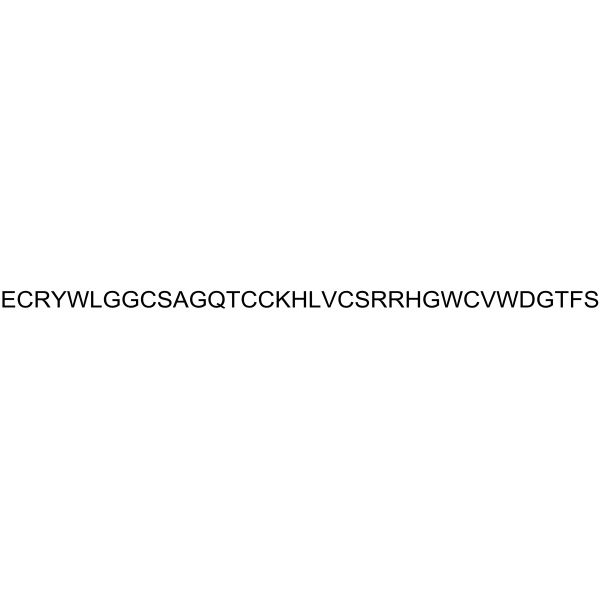
HY-P1073
ProTx-INaV/Cav Inhibitor -
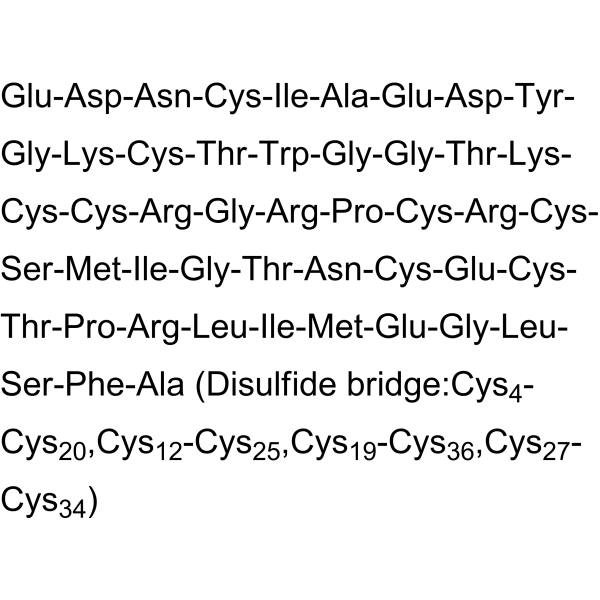
HY-P1079
ω-Agatoxin TKP/Q Type Ca2+ Channel Blocker -
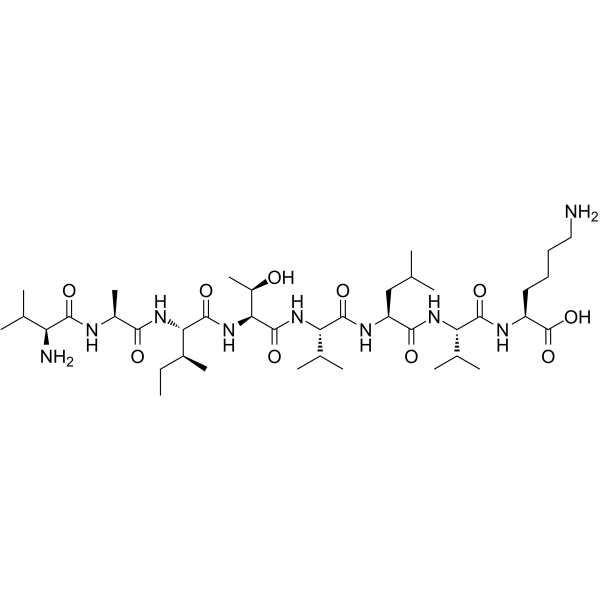
HY-P1077
CALP1Calmodulin Agonist -
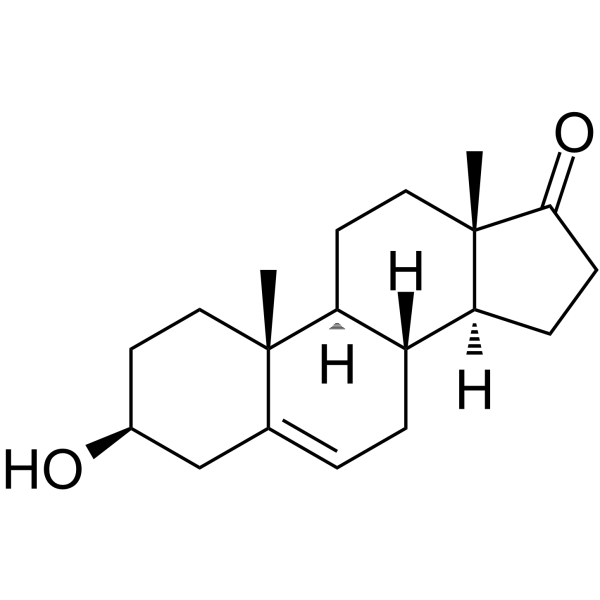
HY-14650
DHEASteroid Hormone -
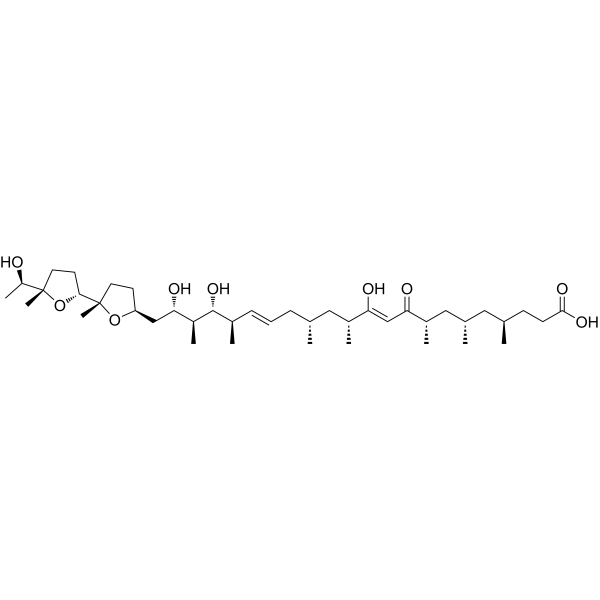
HY-13434
IonomycinCalcium Ionophore -
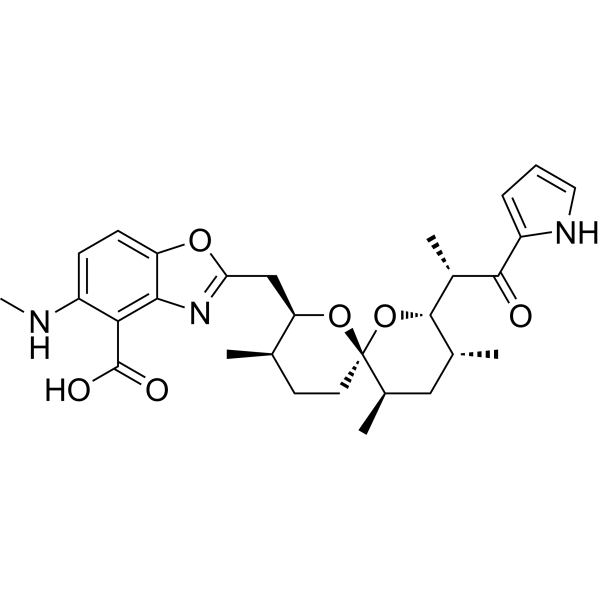
HY-N6687
CalcimycinCation Ionophore -
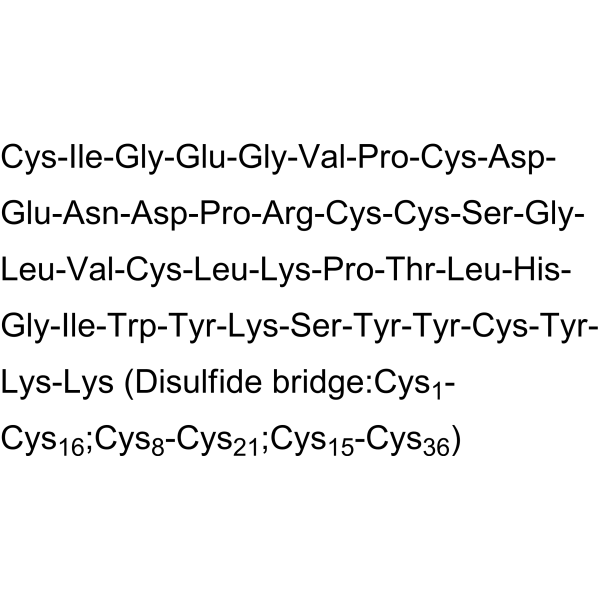
HY-P1078
Huwentoxin XVIN-type Calcium Channel Antagonist -
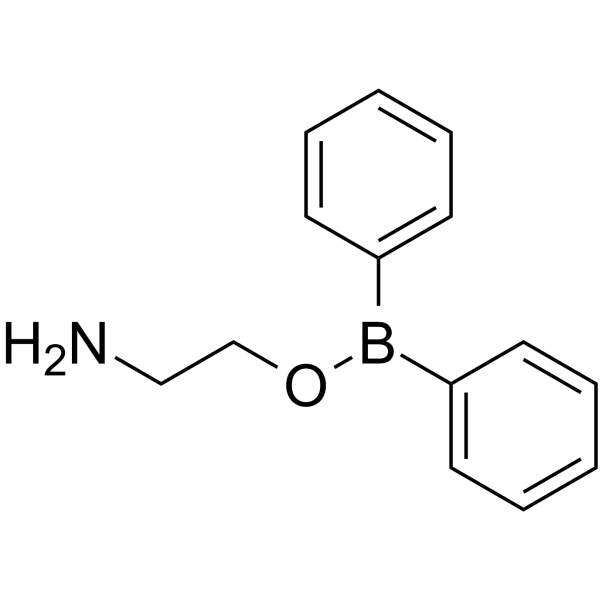
HY-W009724
2-Aminoethyl diphenylborinateIP3R Inhibitor
Publications Citing Use of MedChemExpress (MCE) ω-Agatoxin IVA
MoreAll Calcium Channel Isoforms
More

Biological Activity
Description
IC50 & Target
[1]|
P/Q-type calcium channel |
In Vitro
ω-Agatoxin IVA potently inhibits somatic P-type calcium channels in rat cerebellar Purkinje neurons with an IC50 of 2 nM[1].
ω-Agatoxin IVA inhibits Q-type calcium channels in rat cerebellar granule neurons with an IC50 of 90 nM, which is 45-fold less potent than its activity against P-type channels[1].
ω-Agatoxin IVA inhibits high potassium-induced glutamate exocytosis and calcium influx in rat cortical synaptosomes with IC50 values ranging from 30 nM to 225 nM[1].
ω-Agatoxin IVA (200 nM) inhibits cloned rat brain rbA-I and rbA-II calcium channel isoforms by only 20%[1].
ω-Agatoxin IVA (100 nM) does not inhibit voltage-dependent calcium currents in cultured rat sympathetic neurons[2].
ω-Agatoxin IVA (100 nM; 30 min) does not alter frequency-dependent neurogenic excitatory responses in isolated rabbit pulmonary artery ring preparations[2].
ω-Agatoxin IVA (100 nM; 30 min) does not significantly inhibit neurogenic cholinergic excitatory responses in isolated guinea-pig myenteric plexus preparations[2].
ω-Agatoxin IVA (100 nM; 30 min) does not significantly inhibit neurogenic noradrenergic excitatory responses in isolated rat vas deferens preparations[2].
ω-Agatoxin IVA (100 nM; 30 min) does not significantly inhibit neurogenic excitatory responses in isolated rat bladder strip preparations[2].
ω-Agatoxin IVA (100 nM; 30 min) does not significantly inhibit neurogenic noradrenergic excitatory responses in isolated rat anococcygeus muscle preparations[2].
ω-Agatoxin IVA (100 nM; 30 min) does not significantly alter neurogenic NANC inhibitory responses in isolated Atropine (HY-B1205)/Guanethidine (HY-B1251)-treated rat anococcygeus muscle and jejunum preparations preparations[2].
ω-Agatoxin IVA (0.1 μmol/L; 30 min) potently inhibits Capsaicin (HY-10448)-induced CGRP release from isolated rat pial arteries[3].
MedChemExpress (MCE) has not independently confirmed the accuracy of these methods. They are for reference only. Further protocols information, click here.
In Vivo
MedChemExpress (MCE) has not independently confirmed the accuracy of these methods. They are for reference only.
-
Animal Model:Sprague-Dawley with Capsaicin-induced vasodilation (male, 250 to 300 g, 12 to 14 weeks old)[3]
-
Dosage:0.1 μmol/L
-
Administration:topical suffusion; 30 minutes before and during exposure/induction
-
Result:Caused a marginal 14.6% increase in baseline pial arterial diameter.
Significantly inhibited capsaicin-induced pial arterial vasodilation.
Increased the slope of the regression line for the vasodilation phase from -1.71 (vehicle) to -0.27.
Increased the slope for the vasoconstriction phase from -1.55 (vehicle) to -0.42.


Chemical Information
-
CAS No. 145017-83-0
-
Appearance Solid
-
Molecular Weight 5202.25
-
Formula C217H360N68O60S10
-
Color White to off-white
-
Sequence
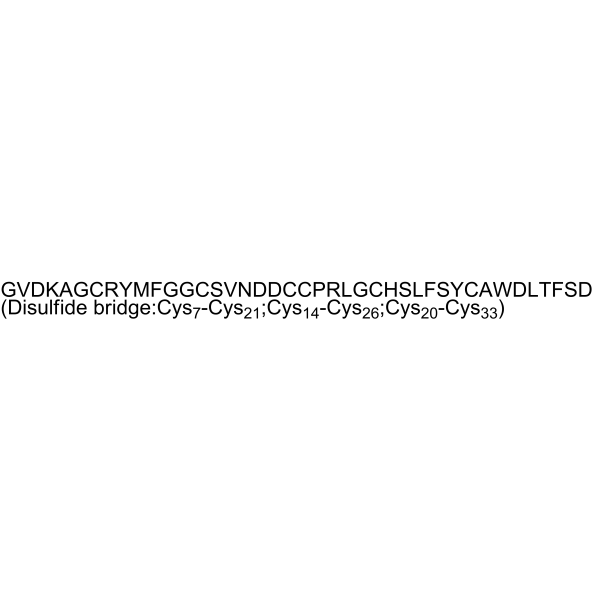
Lys-Lys-Lys-Cys-Ile-Ala-Lys-Asp-Tyr-Gly-Arg-Cys-Lys-Trp-Gly-Gly-Thr-Pro-Cys-Cys-Arg-Gly-Arg-Gly-Cys-Ile-Cys-Ser-Ile-Met-Gly-Thr-Asn-Cys-Glu-Cys-Lys-Pro-Arg-Leu-Ile-Met-Glu-Gly-Leu-Gly-Leu-Ala (Disulfide bridge:Cys4-Cys20,Cys12-Cys25,Cys19-Cys36,Cys27-Cys34)
-
Sequence Shortening
KKKCIAKDYGRCKWGGTPCCRGRGCICSIMGTNCECKPRLIMEGLGLA (Disulfide bridge:Cys4-Cys20,Cys12-Cys25,Cys19-Cys36,Cys27-Cys34)
-
Shipping
Room temperature in continental US; may vary elsewhere.
-
Storage
Sealed storage, away from moisture
Powder -80°C 2 years -20°C 1 year * In solvent : -80°C, 6 months; -20°C, 1 month (sealed storage, away from moisture)


Publications (1)
-
Journal Impact Factor
-
Most Recent


Solvent & Solubility
In Vitro:
DMSO : ≥ 100 mg/mL (19.22 mM; Hygroscopic DMSO has a significant impact on the solubility of product, please use newly opened DMSO)
* "≥" means soluble, but saturation unknown.
Please refer to the solubility information to select the appropriate solvent. Once prepared, please aliquot and store the solution to prevent product inactivation from repeated freeze-thaw cycles.
Storage method and period of stock solution: -80°C, 6 months; -20°C, 1 month (sealed storage, away from moisture). When stored at -80°C, please use it within 6 months. When stored at -20°C, please use it within 1 month.
Please refer to the solubility information to select the appropriate solvent. Once prepared, please aliquot and store the solution to prevent product inactivation from repeated freeze-thaw cycles.
Storage method and period of stock solution: -80°C, 6 months; -20°C, 1 month (sealed storage, away from moisture). When stored at -80°C, please use it within 6 months. When stored at -20°C, please use it within 1 month.
Concentration (start) × Volume (start) = Concentration (final) × Volume (final)

Protocols
-
Cell Cytotoxicity Assay
Cytotoxicity assays are usually based on the assessment of cell membrane damage, which can also be indirectly detected by measuring cell viability. Detection methods include MTT assay, CKK-8 assay, LDH assay and ATP assay, etc.
-
Research Protocol for Cardiovascular Diseases
Cardiovascular disease can be modeled as maladaptive cardiac remodeling, where ischemic injury or pressure overload activates inflammatory signaling, fibroblast activation, extracellular-matrix deposition, cardiomyocyte hypertrophy, vascular remodeling, and progressive ventricular dysfunction. The TGF-β/SMAD axis is a central profibrotic pathway after myocardial injury and pressure overload, while innate immune and cytokine pathways regulate leukocyte recruitment, scar formation, and adverse remodeling. Key unresolved questions include which inflammatory signals are reparative versus harmful, when fibrosis is protective versus maladaptive, and whether pathway inhibition improves function without weakening necessary infarct healing or compensatory remodeling.
-
Ca2+ Staining Technique
Ca2+ staining is an experimental technique that utilizes specific fluorescent probes (such as Fluo-4 AM, Fura-2, etc.) to qualitatively or quantitatively detect dynamic changes in intracellular Ca2+ concentrations; this is achieved by monitoring the changes in fluorescent signals generated when these probes bind to free intracellular calcium ions. The underlying principle relies primarily on the presence of chelating groups within the probe's molecular structure that possess high affinity for calcium ions.


Purity & Documentation
-
Data Sheet (312 KB)
-
SDS (393 KB)
- English - EN (393 KB)
- Français - FR (393 KB)
- Deutsch - DE (393 KB)
- Norwegian - NO (393 KB)
- Español - ES (393 KB)
- Swedish - SV (393 KB)
- Italian - IT (393 KB)
- Korean - KR (393 KB)
- Portuguese - PT (393 KB)
-
Handling Instructions (2659 KB)
References
[1]. Teramoto T, et al. A novel type of calcium channel sensitive to omega-agatoxin-TK in cultured rat cerebral cortical neurons. Brain Res. 1997;756(1-2):225-230. [Content Brief]
[2]. Lundy P M, Frew R. Effect of ω-agatoxin-IVA on autonomic neurotransmission[J]. European journal of pharmacology, 1994, 261(1-2): 79-84. [Content Brief]
[3]. Hong KW, et al. Effect of omega-conotoxin GVIA and omega-agatoxin IVA on the capsaicin-sensitive calcitonin gene-related peptide release and autoregulatory vasodilation in rat pial arteries. J Cereb Blood Flow Metab. 1999;19(1):53-60. [Content Brief]


Complete Stock Solution Preparation Table
Please refer to the solubility information to select the appropriate solvent. Once prepared, please aliquot and store the solution to prevent product inactivation from repeated freeze-thaw cycles.
Storage method and period of stock solution: -80°C, 6 months; -20°C, 1 month (sealed storage, away from moisture). When stored at -80°C, please use it within 6 months. When stored at -20°C, please use it within 1 month.
| Optional Solvent | Concentration Solvent Mass | 1 mg | 5 mg | 10 mg | 25 mg |
|---|---|---|---|---|---|
| DMSO | 1 mM | 0.1922 mL | 0.9611 mL | 1.9222 mL | 4.8056 mL |
| 5 mM | 0.0384 mL | 0.1922 mL | 0.3844 mL | 0.9611 mL | |
| 10 mM | 0.0192 mL | 0.0961 mL | 0.1922 mL | 0.4806 mL | |
| 15 mM | 0.0128 mL | 0.0641 mL | 0.1281 mL | 0.3204 mL |


ω-Agatoxin IVA Related Classifications
HY-P1080 Related Classifications
 Powered by Bioz
Keywords
- ω-Agatoxin IVA
- 145017-83-0
- Calcium Channel
- glutamate exocytosis
- rat cortical synaptosomes
- rat cerebellar Purkinje neurons
- calcitonin gene-related peptide
- P-type voltage-dependent calcium channels
- rat sympathetic neurons
- Q-type voltage-dependent calcium channels
- pial artery
- rat cerebellar granule neurons
- perivascular sensory nerve terminals
- Inhibitor
- inhibitor
- inhibit