



BI-78D3
Based on 1 publication(s) in Google Scholar
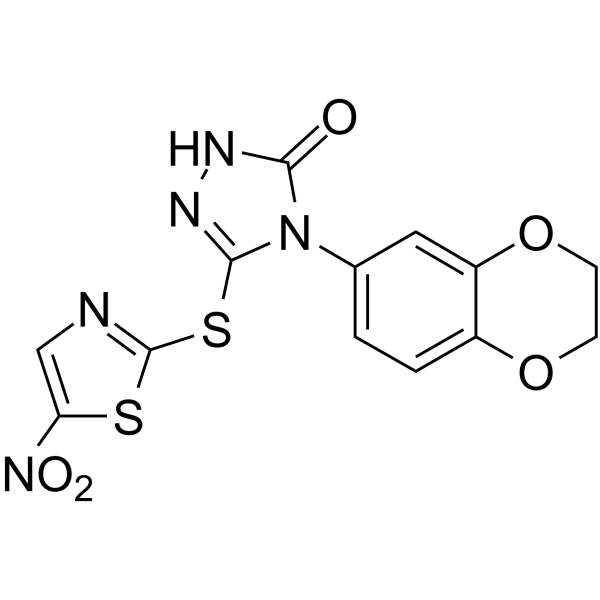
BI-78D3 functions as a substrate competitive inhibitor of JNK, inhibit the JNK kinase activity (IC50=280 nM).
For research use only. We do not sell to patients.
- Purity : 99.85%
- CAS No.: 883065-90-5
- Formula: C13H9N5O5S2
- Molecular Weight:379.37
-
Storage:Powder -20°C, 3 years , 4°C, 2 years ; In solvent -80°C, 2 years , -20°C, 1 year

To place orders, for customer services and technical support, please contact: MedChemExpress USA
Tel: 609-228-6898 E-mail: [email protected] [email protected]


-
 Biological Activity
-
Chemical Information
-
Solvent & Solubility
- Protocols
- Purity & Documentation
- References
-
 Help & FAQs


-
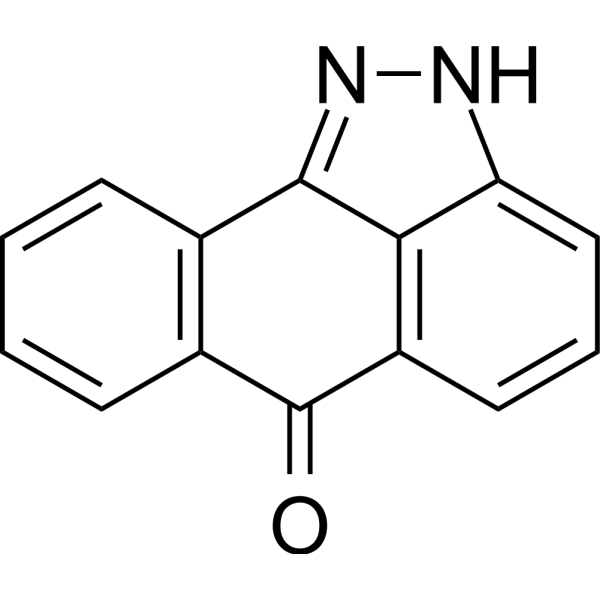
HY-12041
SP600125JNK Inhibitor -
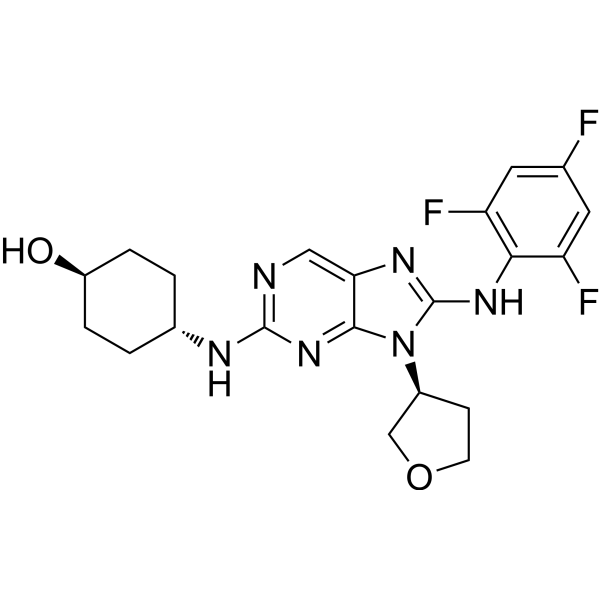
HY-15495
Tanzisertib -
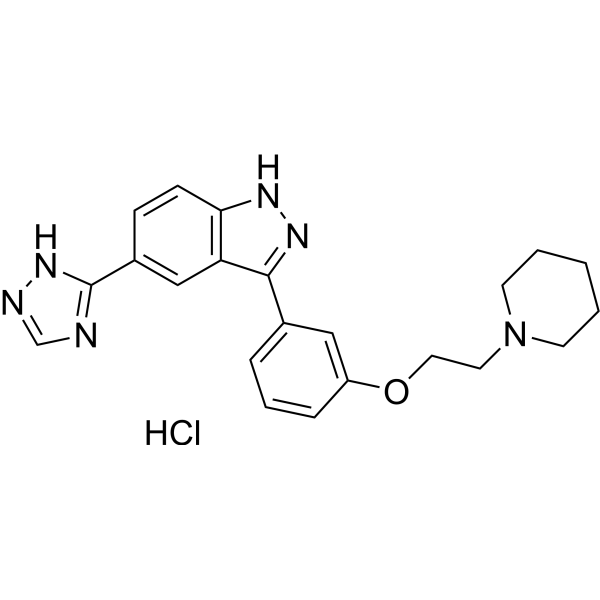
HY-13022
CC-401 hydrochlorideJNK Inhibitor -

HY-P1190
c-JUN peptidec-JUN-JNK Interaction Inhibitor -
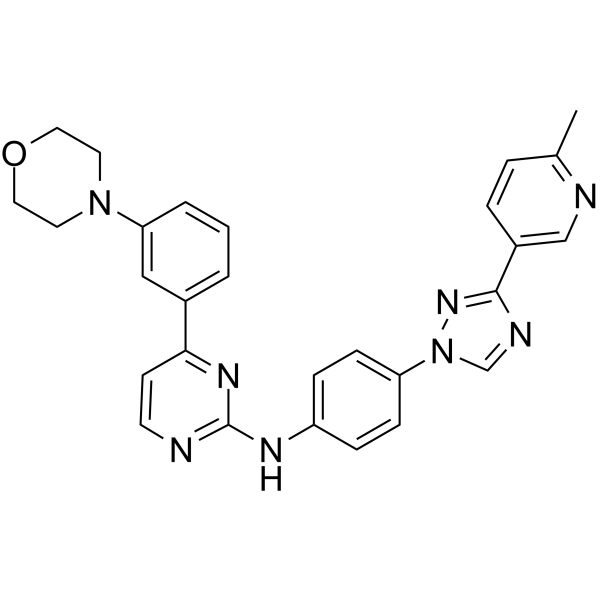
HY-12829
SR-3306JNK Inhibitor -
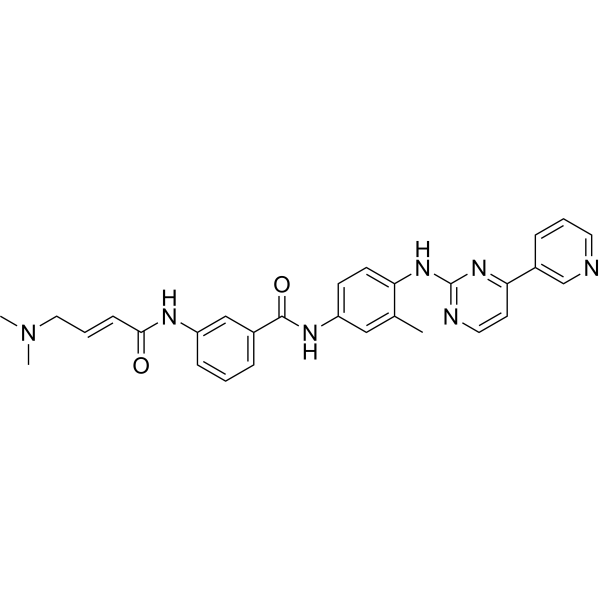
HY-13319
JNK-IN-8JNK Inhibitor -
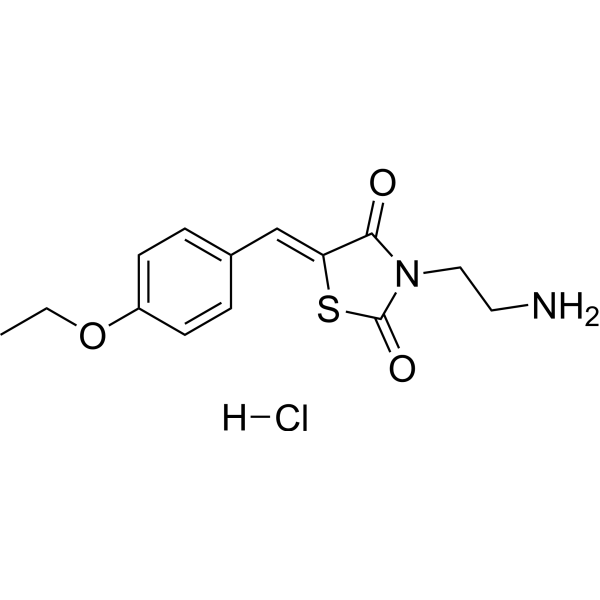
HY-113592
ERK-IN-4ERK Inhibitor -
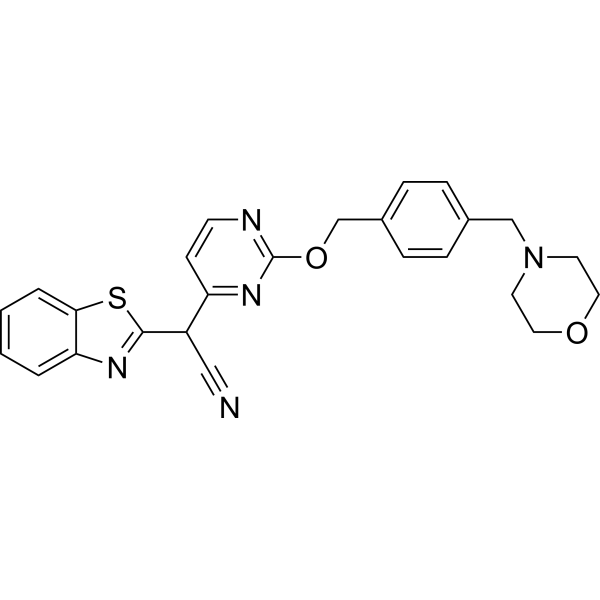
HY-14761
BentamapimodJNK Inhibitor -
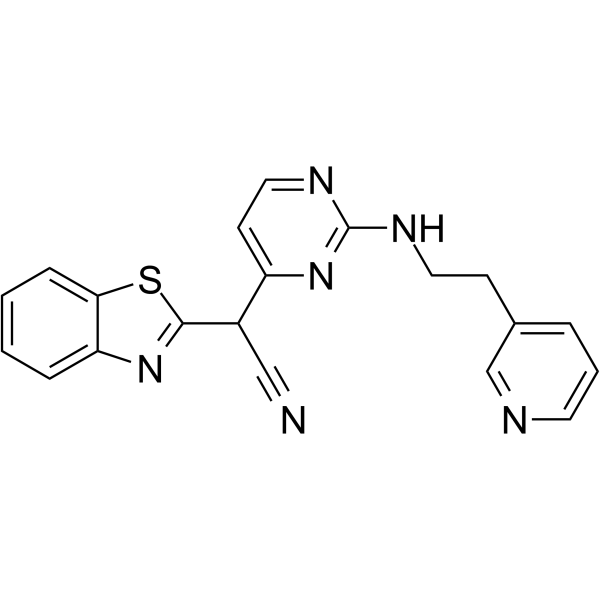
HY-11010
AS601245JNK Inhibitor -
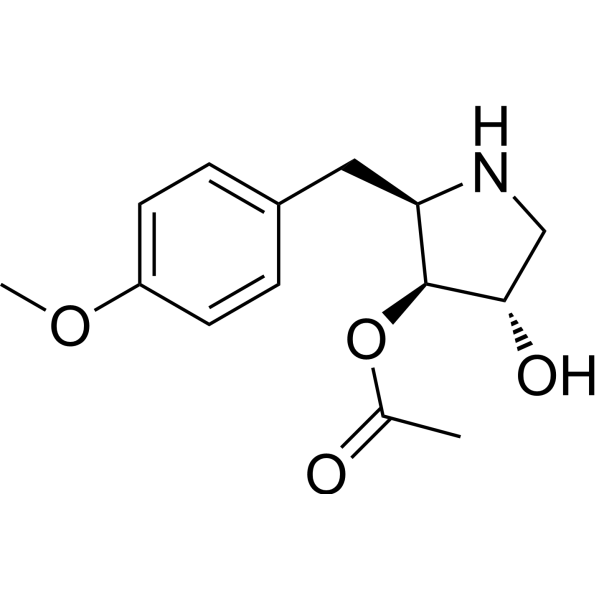
HY-18982
AnisomycinProtein Synthesis Inhibitor -
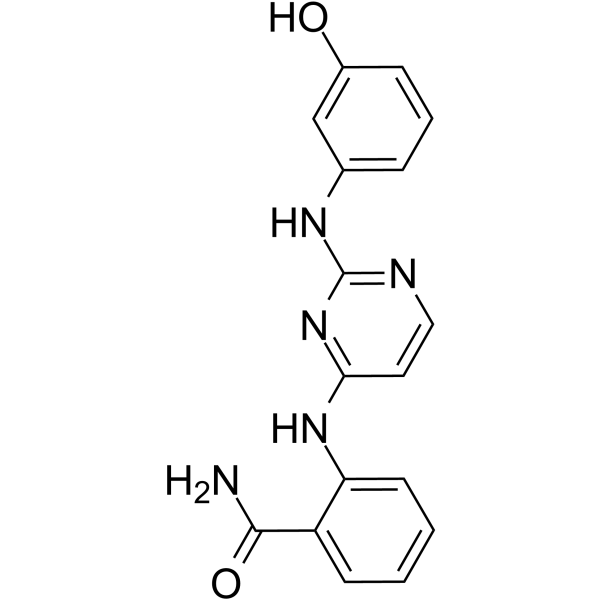
HY-15737
DB07268JNK Inhibitor -
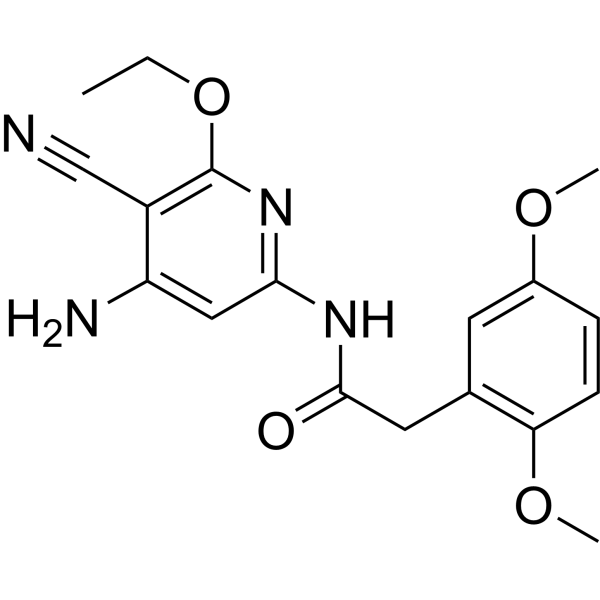
HY-107598
JNK Inhibitor VIIIJNK Inhibitor
Publications Citing Use of MedChemExpress (MCE) BI-78D3
More

Biological Activity
Description
IC50 & Target
[1]|
JNK 280 nM (IC50) |
Cellular Effect
|
Cell Line

|
Type | Value | Description | References |
|---|---|---|---|---|
| HeLa | EC50 |
12.4 μM
Compound: 24, BI-78D3
|
Inhibition of TNF-alpha-stimulated c-Jun phosphorylation in human HeLa cells treated 60 mins before TNFalpha challenge measured after 30 mins TR-FRET analysis
Inhibition of TNF-alpha-stimulated c-Jun phosphorylation in human HeLa cells treated 60 mins before TNFalpha challenge measured after 30 mins TR-FRET analysis
|
[PMID: 20146479] |
In Vitro
BI-78D3, dose-dependently inhibits the phosphorylation of JNK substrates both in vitro and in cell. BI-78D3 is able to compete with the D-domain of JIP1 (amino acids 153-163; pepJIP1) for JNK1 binding (IC50=500 nM). Using the same in vitro LanthaScreen kinase assay and the same ATF2 substrate, BI-78D3 is found to be 100-fold less active vs. p38α, a member of the MAPK family with high structural similarity to JNK, and completely inactive against mTOR and PI3-kinase (α-isoform), both unrelated protein kinases. Furthermore, Lineweaver-Burk analysis clearly indicates that BI-78D3 is competitive with ATF2 for binding to JNK1 with an apparent Ki value of 200 nM. In an attempt to profile the properties of BI-78D3 in the context of a complex cellular milieu, the cell-based LanthaScreen kinase assay is used. In this assay BI-78D3 is able to inhibit TNF-α stimulated phosphorylation of c-Jun in cell (EC50=12.4 μM)[1].
MedChemExpress (MCE) has not independently confirmed the accuracy of these methods. They are for reference only. Further protocols information, click here.
In Vivo
MedChemExpress (MCE) has not independently confirmed the accuracy of these methods. They are for reference only.


Chemical Information
-
CAS No. 883065-90-5
-
Appearance Solid
-
Molecular Weight 379.37
-
Formula C13H9N5O5S2
-
Color White to off-white
-
SMILES
O=C1N(C2=CC=C(OCCO3)C3=C2)C(SC4=NC=C([N+]([O-])=O)S4)=NN1
-
Shipping
Room temperature in continental US; may vary elsewhere.
-
Storage
Powder -20°C 3 years 4°C 2 years In solvent -80°C 2 years -20°C 1 year


Publications (1)
-
Journal Impact Factor
-
Most Recent
-
Life Sci
Icariin protects rabbit BMSCs against OGD-induced apoptosis by inhibiting ERs-mediated autophagy via MAPK signaling pathway. [Abstract]2020 Jul 15:253:117730. PMID: 32348838


Solvent & Solubility
In Vitro:
DMSO : 100 mg/mL (263.59 mM; Need ultrasonic; Hygroscopic DMSO has a significant impact on the solubility of product, please use newly opened DMSO)
Please refer to the solubility information to select the appropriate solvent. Once prepared, please aliquot and store the solution to prevent product inactivation from repeated freeze-thaw cycles.
Storage method and period of stock solution: -80°C, 2 years; -20°C, 1 year. When stored at -80°C, please use it within 2 years. When stored at -20°C, please use it within 1 year.
Please refer to the solubility information to select the appropriate solvent. Once prepared, please aliquot and store the solution to prevent product inactivation from repeated freeze-thaw cycles.
Storage method and period of stock solution: -80°C, 2 years; -20°C, 1 year. When stored at -80°C, please use it within 2 years. When stored at -20°C, please use it within 1 year.
Concentration (start) × Volume (start) = Concentration (final) × Volume (final)
In Vivo:
Select the appropriate dissolution method based on your experimental animal and administration route.
- For the following dissolution methods, please ensure to first prepare a clear stock solution using an In Vitro approach and then sequentially add co-solvents:
- To ensure reliable experimental results, the clarified stock solution can be appropriately stored based on storage conditions. As for the working solution for In Vivo experiments, it is recommended to prepare freshly and use it on the same day.
- The percentages shown for the solvents indicate their volumetric ratio in the final prepared solution. If precipitation or phase separation occurs during preparation, heat and/or sonication can be used to aid dissolution.
Add each solvent one by one: 10% DMSO 40% PEG300 5% Tween-80 45% Saline
Solubility: ≥ 2.5 mg/mL (6.59 mM); Clear solution
This protocol yields a clear solution of ≥ 2.5 mg/mL (saturation unknown).
Taking 1 mL working solution as an example, add 100 μL DMSO stock solution (25.0 mg/mL) to 400 μL PEG300, and mix evenly; then add 50 μL Tween-80 and mix evenly; then add 450 μL Saline to adjust the volume to 1 mL.
Preparation of Saline: Dissolve 0.9 g sodium chloride in ddH₂O and dilute to 100 mL to obtain a clear Saline solution.
Add each solvent one by one: 10% DMSO 90% (20% SBE-β-CD in Saline)
Solubility: ≥ 2.5 mg/mL (6.59 mM); Clear solution
This protocol yields a clear solution of ≥ 2.5 mg/mL (saturation unknown).
Taking 1 mL working solution as an example, add 100 μL DMSO stock solution (25.0 mg/mL) to 900 μL 20% SBE-β-CD in Saline, and mix evenly.
Preparation of 20% SBE-β-CD in Saline (4°C, storage for one week): 2 g SBE-β-CD powder is dissolved in 10 mL Saline, completely dissolve until clear.
In Vivo Dissolution Calculator
Please enter the basic information of animal experiments:
-
-
-
-
Recommended: Prepare an additional quantity of animals to account for potential losses during experiments.
Please enter your animal formula composition:
-
%DMSO +
Recommended: Keep the proportion of DMSO in working solution below 2% if your animal is weak.
-
%+
-
+%Tween-80 + +
-
%Saline +
The co-solvents required include: DMSO, . All of co-solvents are available by MedChemExpress (MCE). , Tween 80. All of co-solvents are available by MedChemExpress (MCE).
Working solution concentration: 0.22 mg/mL
Method for preparing stock solution: mg drug dissolved in μL DMSO. Stock solution concentration: mg/mL.
1. Take μL DMSO stock solution;
2. Add μL .
μL , mix evenly;
3. Then add μL Tween 80, mix evenly;
4. Then add μL
Please ensure that the stock solution in the first step is dissolved to a clear state, and add co-solvents in sequence. You can use ultrasonic heating (ultrasonic cleaner, recommended frequency 20-40 kHz), vortexing, etc. to assist dissolution.

Protocols
-
Kinase activity and phosphorylation assays
Kinase activity assays measure the ability of kinases to transfer phosphate groups from ATP to specific substrates, while phosphorylation assays detect the presence and levels of phosphorylated proteins. Common methods include radiolabeled ATP incorporation (e. g. ,), ADP release detection via bioluminescence (e. g. ,[3]), enzyme-linked immunosorbent assays (ELISA) for phospho-specific epitopes (e. g. ,[6]), and microtiter-based formats for high-throughput screening (e. g. ,[8]). The ADP-Glo assay quantifies kinase activity by measuring ADP produced during phosphorylation using a luciferase-based system. Radiometric assays involve autoradiography or scintillation counting after incorporation of 32P-labeled ATP into substrate proteins. ELISA-based approaches rely on phospho-specific antibodies to detect activated kinases in cell lysates or purified samples.
-
Cell Cytotoxicity Assay
Cytotoxicity assays are usually based on the assessment of cell membrane damage, which can also be indirectly detected by measuring cell viability. Detection methods include MTT assay, CKK-8 assay, LDH assay and ATP assay, etc.
-
Protocol for Kinase activity and phosphorylation assays
Kinase activity assays measure transfer of phosphate from ATP to a protein or peptide substrate, generating phosphorylated substrate, ADP, or incorporated radiolabeled phosphate as the readout; phosphorylation assays measure site-specific phosphorylation in cells or tissues as a proxy for kinase-pathway activation, inhibition, or substrate regulation. Phosphorylation can be detected by phospho-specific Western blot, immunoprecipitation kinase assay, phospho-immunofluorescence, phospho-flow cytometry, luminescent ADP detection, radiolabeled ATP incorporation, or reporter-based pathway assays, and these readouts can be applied to cancer cells, primary neurons, mouse tumors, organoids, inflammatory macrophages, ferroptosis studies, and mitophagy studies when the kinase target is biologically relevant.


Purity & Documentation
-
Data Sheet (284 KB)
-
SDS (393 KB)
- English - EN (393 KB)
- Français - FR (393 KB)
- Deutsch - DE (393 KB)
- Norwegian - NO (393 KB)
- Español - ES (393 KB)
- Swedish - SV (393 KB)
- Italian - IT (393 KB)
- Korean - KR (393 KB)
- Portuguese - PT (393 KB)
-
Handling Instructions (2659 KB)
References


Complete Stock Solution Preparation Table
Please refer to the solubility information to select the appropriate solvent. Once prepared, please aliquot and store the solution to prevent product inactivation from repeated freeze-thaw cycles.
Storage method and period of stock solution: -80°C, 2 years; -20°C, 1 year. When stored at -80°C, please use it within 2 years. When stored at -20°C, please use it within 1 year.
| Optional Solvent | Concentration Solvent Mass | 1 mg | 5 mg | 10 mg | 25 mg |
|---|---|---|---|---|---|
| DMSO | 1 mM | 2.6359 mL | 13.1797 mL | 26.3595 mL | 65.8987 mL |
| 5 mM | 0.5272 mL | 2.6359 mL | 5.2719 mL | 13.1797 mL | |
| 10 mM | 0.2636 mL | 1.3180 mL | 2.6359 mL | 6.5899 mL | |
| 15 mM | 0.1757 mL | 0.8786 mL | 1.7573 mL | 4.3932 mL | |
| 20 mM | 0.1318 mL | 0.6590 mL | 1.3180 mL | 3.2949 mL | |
| 25 mM | 0.1054 mL | 0.5272 mL | 1.0544 mL | 2.6359 mL | |
| 30 mM | 0.0879 mL | 0.4393 mL | 0.8786 mL | 2.1966 mL | |
| 40 mM | 0.0659 mL | 0.3295 mL | 0.6590 mL | 1.6475 mL | |
| 50 mM | 0.0527 mL | 0.2636 mL | 0.5272 mL | 1.3180 mL | |
| 60 mM | 0.0439 mL | 0.2197 mL | 0.4393 mL | 1.0983 mL | |
| 80 mM | 0.0329 mL | 0.1647 mL | 0.3295 mL | 0.8237 mL | |
| 100 mM | 0.0264 mL | 0.1318 mL | 0.2636 mL | 0.6590 mL |


BI-78D3 Related Classifications
HY-10366 Related Classifications
 Powered by Bioz