



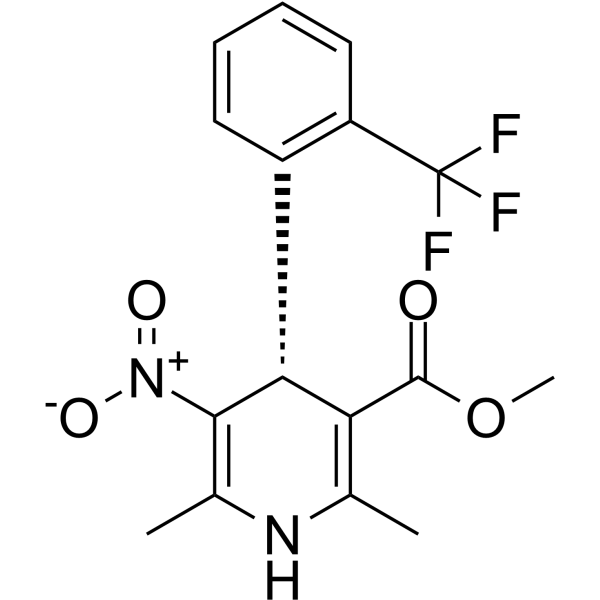
(R)-(+)-Bay-K-8644
Based on 2 publication(s) in Google Scholar
(R)-(+)-Bay-K-8644 is a calcium channel inhibitor. (R)-(+)-Bay-K-8644 inhibits Ba2+ currents (IBa) (IC50=975 nM).
For research use only. We do not sell to patients.
- Purity : 99.36%
- CAS No.: 98791-67-4
- Formula: C16H15F3N2O4
- Molecular Weight:356.30
-
Storage:Powder -20°C, 3 years , 4°C, 2 years ; In solvent -80°C, 2 years , -20°C, 1 year

To place orders, for customer services and technical support, please contact: MedChemExpress USA
Tel: 609-228-6898 E-mail: [email protected] [email protected]


-
 Biological Activity
-
Chemical Information
-
Solvent & Solubility
- Protocols
- Purity & Documentation
- References
-
 Help & FAQs


-
HY-15124
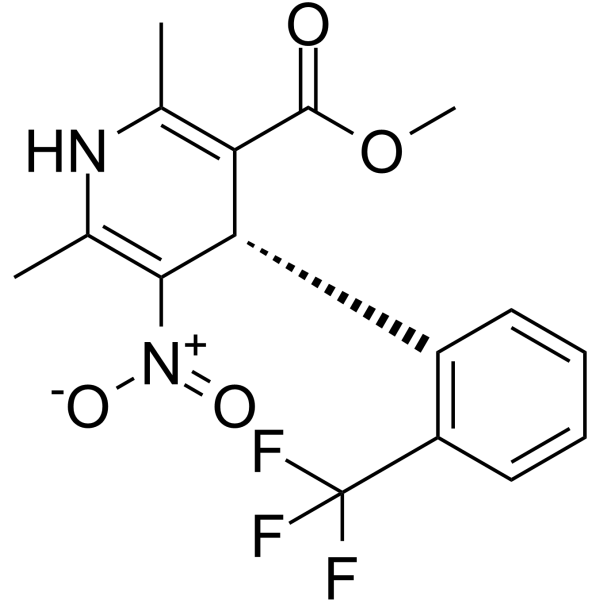
(S)-(-)-Bay-K-8644Calcium Channel Agonist -
HY-B0317
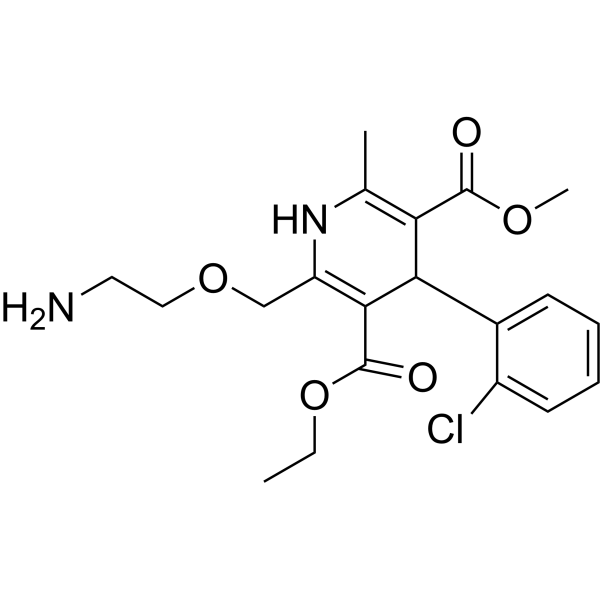
AmlodipineCalcium Channel Blocker -
HY-15593
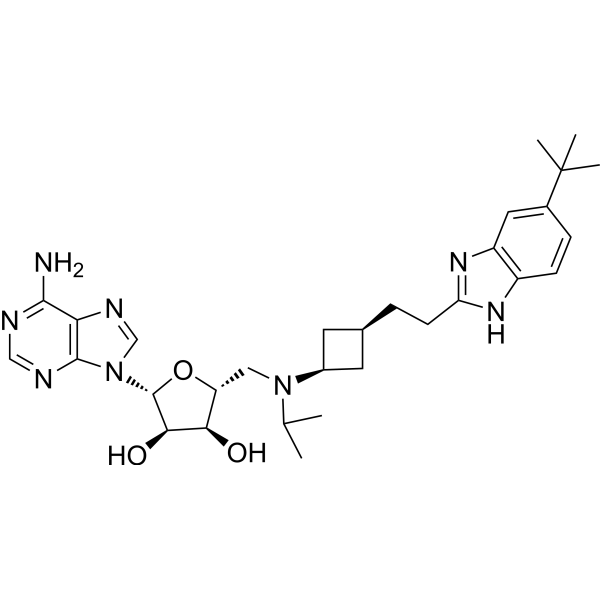
PinometostatDOT1L Inhibitor -
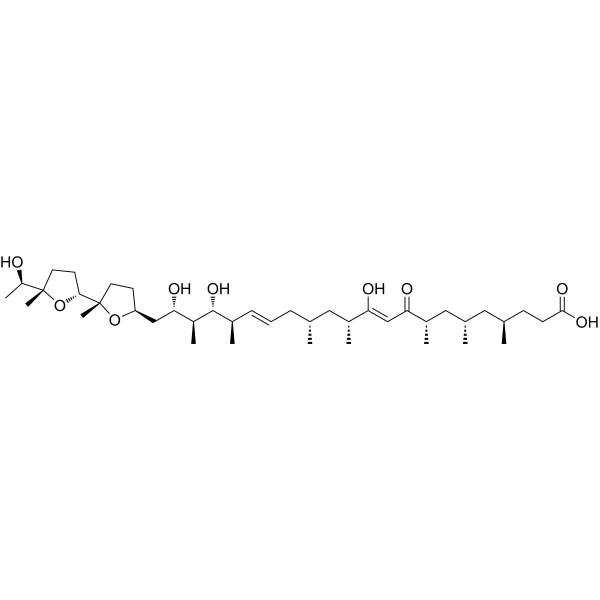
HY-13434
IonomycinCalcium Ionophore -
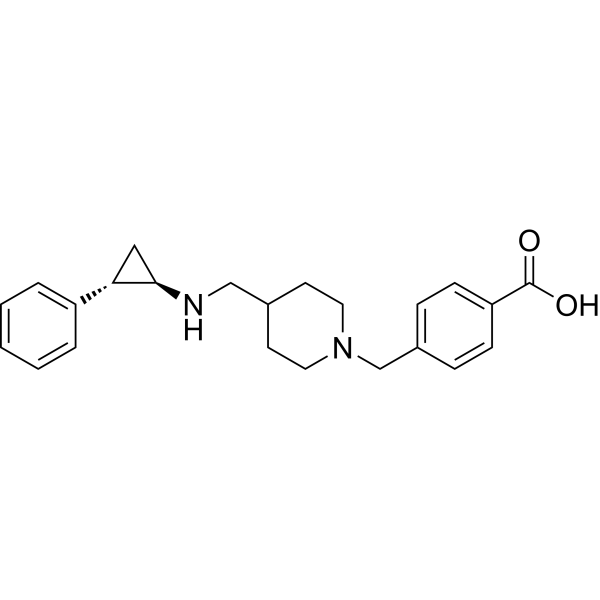
HY-18632
GSK2879552LSD1 Inhibitor -
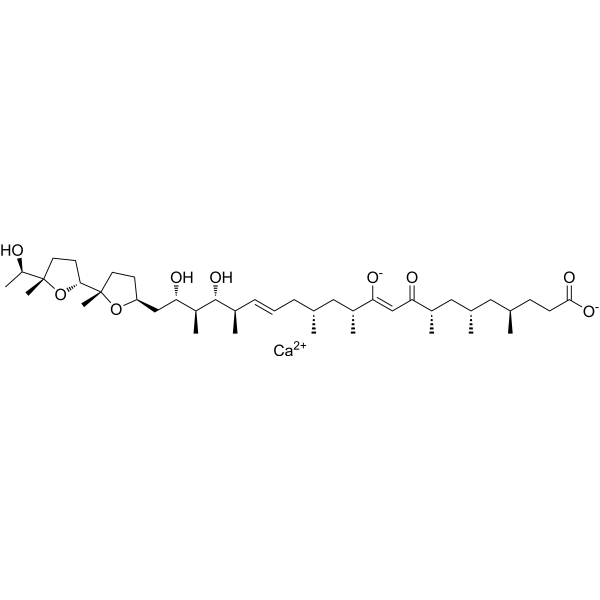
HY-13434A
Ionomycin calciumCalcium Ionophore -
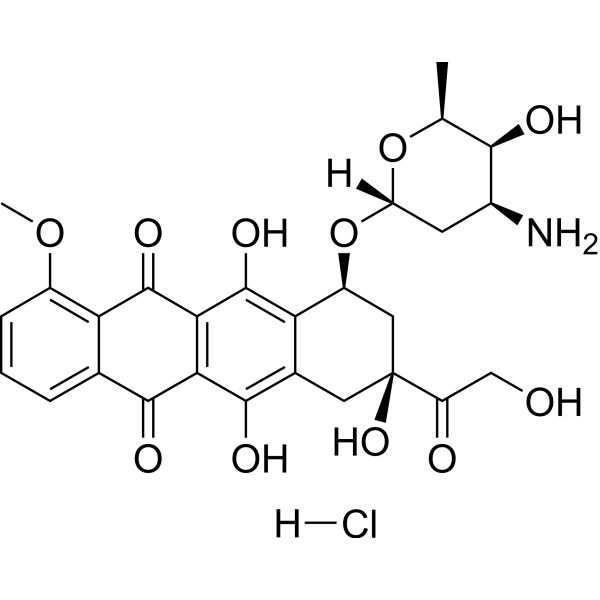
HY-15142
Doxorubicin hydrochlorideTopoisomerase Inhibitor -
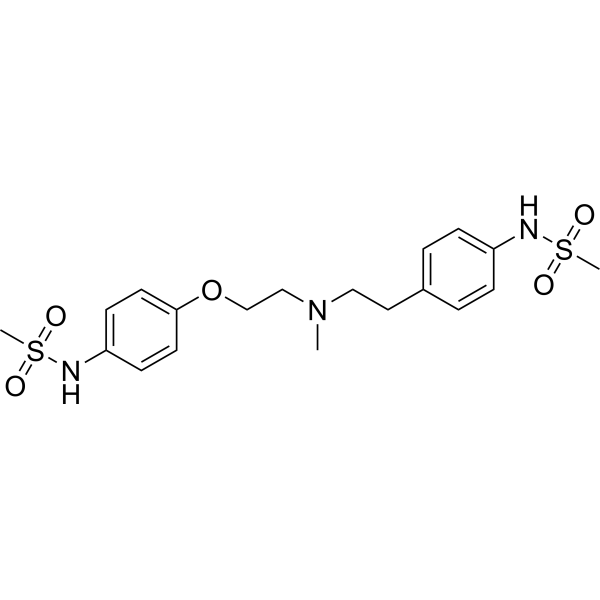
HY-B0232
DofetilideIKr Blocker -
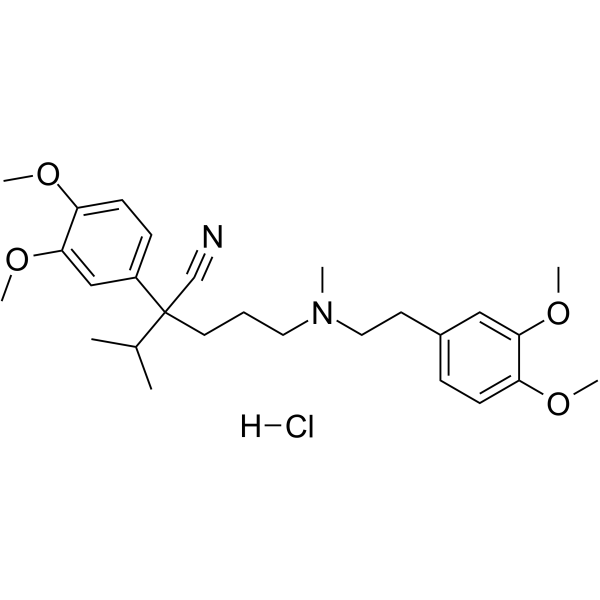
HY-A0064
Verapamil hydrochlorideCalcium Channel Blocker -
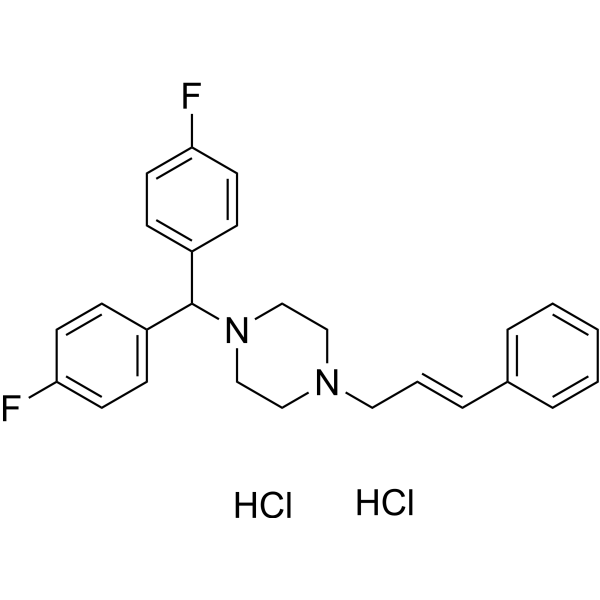
HY-B0358A
Flunarizine dihydrochlorideNa+/Ca2+ Channel Blocker -
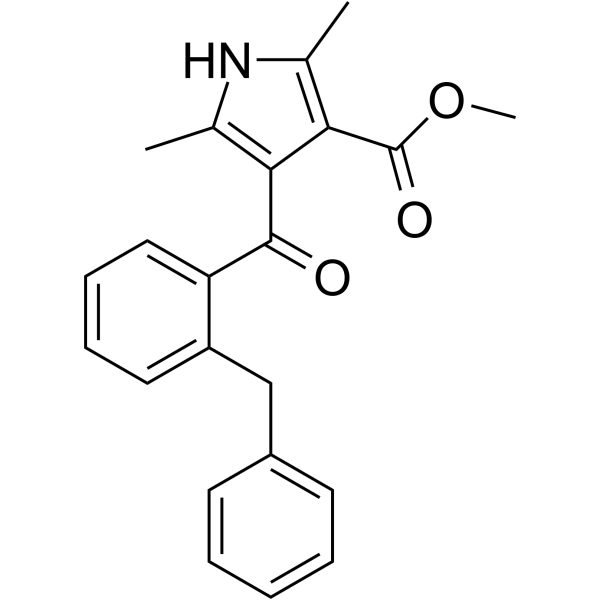
HY-103307
FPL64176L-type Ca2+ Channels Agonist -

HY-K0311
GSH/GSSG Assay Kit
Publications Citing Use of MedChemExpress (MCE) (R)-(+)-Bay-K-8644
MoreAll Calcium Channel Isoforms
More

Biological Activity
Description
IC50 & Target
|
L-type calcium channel |
In Vitro
(R)-(+)-Bay-K-8644, a conventional racemic mixture of Bay K 8644, is widely used as an L-type Ca2+ channel agonist. Each optical isomer possesses opposite effects on IBa, (R)-(+)-Bay-K-8644 as an antagonist and S(-)-Bay K 8644 as an agonist. (R)-(+)-Bay-K-8644 inhibits Ba2+ currents (IBa) (IC50=975 nM). When (R)-(+)-Bay-K-8644 (0.5 μM) is applied, IBa is suppressed to 71±10% of control. In the presence of (R)-(+)-Bay-K-8644IBa[1]. (R)-(+)-Bay-K-8644 is a calcium channel inhibitor[2].
MedChemExpress (MCE) has not independently confirmed the accuracy of these methods. They are for reference only. Further protocols information, click here.


Chemical Information
-
CAS No. 98791-67-4
-
Appearance Solid
-
Molecular Weight 356.30
-
Formula C16H15F3N2O4
-
Color Light yellow to yellow
-
SMILES
CC1=C([N+]([O-])=O)[C@H](C2=C(C(F)(F)F)C=CC=C2)C(C(OC)=O)=C(C)N1
-
Shipping
Room temperature in continental US; may vary elsewhere.
-
Storage
Powder -20°C 3 years 4°C 2 years In solvent -80°C 2 years -20°C 1 year


Publications (2)
-
Journal Impact Factor
-
Most Recent
-
Neuromodulation
Kilohertz High-Frequency Electrical Stimulation Effectively Mitigates Hyperalgesia in Mice With Neuropathic Pain Through Regulation of the Calcium/Calmodulin-Dependent Protein Kinase II/N-Methyl-D-Aspartate 2B Signaling Pathway. [Abstract]2025 Aug;28(6):962-975. PMID: 40243981 -
bioRxiv
Efficient Generation of Functional TCRαβ+ Cytotoxic T Cells from hiPSCs via Small-Molecule Modulation. [Abstract]2026 Apr 1:2026.03.31.715684. PMID: 41959015


Solvent & Solubility
In Vitro:
DMSO : 100 mg/mL (280.66 mM; Need ultrasonic; Hygroscopic DMSO has a significant impact on the solubility of product, please use newly opened DMSO)
Please refer to the solubility information to select the appropriate solvent. Once prepared, please aliquot and store the solution to prevent product inactivation from repeated freeze-thaw cycles.
Storage method and period of stock solution: -80°C, 2 years; -20°C, 1 year. When stored at -80°C, please use it within 2 years. When stored at -20°C, please use it within 1 year.
Please refer to the solubility information to select the appropriate solvent. Once prepared, please aliquot and store the solution to prevent product inactivation from repeated freeze-thaw cycles.
Storage method and period of stock solution: -80°C, 2 years; -20°C, 1 year. When stored at -80°C, please use it within 2 years. When stored at -20°C, please use it within 1 year.
Concentration (start) × Volume (start) = Concentration (final) × Volume (final)
In Vivo:
Select the appropriate dissolution method based on your experimental animal and administration route.
- For the following dissolution methods, please ensure to first prepare a clear stock solution using an In Vitro approach and then sequentially add co-solvents:
- To ensure reliable experimental results, the clarified stock solution can be appropriately stored based on storage conditions. As for the working solution for In Vivo experiments, it is recommended to prepare freshly and use it on the same day.
- The percentages shown for the solvents indicate their volumetric ratio in the final prepared solution. If precipitation or phase separation occurs during preparation, heat and/or sonication can be used to aid dissolution.
Add each solvent one by one: 10% DMSO 40% PEG300 5% Tween-80 45% Saline
Solubility: ≥ 2.5 mg/mL (7.02 mM); Clear solution
This protocol yields a clear solution of ≥ 2.5 mg/mL (saturation unknown).
Taking 1 mL working solution as an example, add 100 μL DMSO stock solution (25.0 mg/mL) to 400 μL PEG300, and mix evenly; then add 50 μL Tween-80 and mix evenly; then add 450 μL Saline to adjust the volume to 1 mL.
Preparation of Saline: Dissolve 0.9 g sodium chloride in ddH₂O and dilute to 100 mL to obtain a clear Saline solution.
Add each solvent one by one: 10% DMSO 90% (20% SBE-β-CD in Saline)
Solubility: 2.5 mg/mL (7.02 mM); Suspended solution; Need ultrasonic
This protocol yields a suspended solution of 2.5 mg/mL. Suspended solution can be used for oral and intraperitoneal injection.
Taking 1 mL working solution as an example, add 100 μL DMSO stock solution (25.0 mg/mL) to 900 μL 20% SBE-β-CD in Saline, and mix evenly.
Preparation of 20% SBE-β-CD in Saline (4°C, storage for one week): 2 g SBE-β-CD powder is dissolved in 10 mL Saline, completely dissolve until clear.
For the following dissolution methods, please prepare the working solution directly:
It is recommended to prepare fresh solutions and use them promptly within a short period of time.
The percentages shown for the solvents indicate their volumetric ratio in the final prepared solution. If precipitation or phase separation occurs during preparation, heat and/or sonication can be used to aid dissolution.
Add each solvent one by one: 50% PEG300 50% Saline
Solubility: 2.5 mg/mL (7.02 mM); Clear solution; Need ultrasonic
In Vivo Dissolution Calculator
Please enter the basic information of animal experiments:
-
-
-
-
Recommended: Prepare an additional quantity of animals to account for potential losses during experiments.
Please enter your animal formula composition:
-
%DMSO +
Recommended: Keep the proportion of DMSO in working solution below 2% if your animal is weak.
-
%+
-
+%Tween-80 + +
-
%Saline +
The co-solvents required include: DMSO, . All of co-solvents are available by MedChemExpress (MCE). , Tween 80. All of co-solvents are available by MedChemExpress (MCE).
Working solution concentration: 0.22 mg/mL
Method for preparing stock solution: mg drug dissolved in μL DMSO. Stock solution concentration: mg/mL.
1. Take μL DMSO stock solution;
2. Add μL .
μL , mix evenly;
3. Then add μL Tween 80, mix evenly;
4. Then add μL
Please ensure that the stock solution in the first step is dissolved to a clear state, and add co-solvents in sequence. You can use ultrasonic heating (ultrasonic cleaner, recommended frequency 20-40 kHz), vortexing, etc. to assist dissolution.

Protocols
-
Cell Cytotoxicity Assay
Cytotoxicity assays are usually based on the assessment of cell membrane damage, which can also be indirectly detected by measuring cell viability. Detection methods include MTT assay, CKK-8 assay, LDH assay and ATP assay, etc.


Purity & Documentation
-
Data Sheet (278 KB)
-
SDS (393 KB)
- English - EN (393 KB)
- Français - FR (393 KB)
- Deutsch - DE (393 KB)
- Norwegian - NO (393 KB)
- Español - ES (393 KB)
- Swedish - SV (393 KB)
- Italian - IT (393 KB)
- Korean - KR (393 KB)
- Portuguese - PT (393 KB)
-
Handling Instructions (2659 KB)
References
[1]. Zhu HL, et al. Antagonistic actions of S(-)-Bay K 8644 on cyclic nucleotide-induced inhibition of voltage-dependent Ba(2+) currents in guinea pig gastric antrum. Naunyn Schmiedebergs Arch Pharmacol. 2008 Dec;378(6):609-15. [Content Brief]
[2]. Sidaway P, et al. L-type Ca2+ channel sparklets revealed by TIRF microscopy in mouse urinary bladder smooth muscle. PLoS One. 2014 Apr 3;9(4):e93803. [Content Brief]


Complete Stock Solution Preparation Table
Please refer to the solubility information to select the appropriate solvent. Once prepared, please aliquot and store the solution to prevent product inactivation from repeated freeze-thaw cycles.
Storage method and period of stock solution: -80°C, 2 years; -20°C, 1 year. When stored at -80°C, please use it within 2 years. When stored at -20°C, please use it within 1 year.
| Optional Solvent | Concentration Solvent Mass | 1 mg | 5 mg | 10 mg | 25 mg |
|---|---|---|---|---|---|
| DMSO | 1 mM | 2.8066 mL | 14.0331 mL | 28.0662 mL | 70.1656 mL |
| 5 mM | 0.5613 mL | 2.8066 mL | 5.6132 mL | 14.0331 mL | |
| 10 mM | 0.2807 mL | 1.4033 mL | 2.8066 mL | 7.0166 mL | |
| 15 mM | 0.1871 mL | 0.9355 mL | 1.8711 mL | 4.6777 mL | |
| 20 mM | 0.1403 mL | 0.7017 mL | 1.4033 mL | 3.5083 mL | |
| 25 mM | 0.1123 mL | 0.5613 mL | 1.1226 mL | 2.8066 mL | |
| 30 mM | 0.0936 mL | 0.4678 mL | 0.9355 mL | 2.3389 mL | |
| 40 mM | 0.0702 mL | 0.3508 mL | 0.7017 mL | 1.7541 mL | |
| 50 mM | 0.0561 mL | 0.2807 mL | 0.5613 mL | 1.4033 mL | |
| 60 mM | 0.0468 mL | 0.2339 mL | 0.4678 mL | 1.1694 mL | |
| 80 mM | 0.0351 mL | 0.1754 mL | 0.3508 mL | 0.8771 mL | |
| 100 mM | 0.0281 mL | 0.1403 mL | 0.2807 mL | 0.7017 mL |


(R)-(+)-Bay-K-8644 Related Classifications
HY-15125 Related Classifications
 Powered by Bioz