



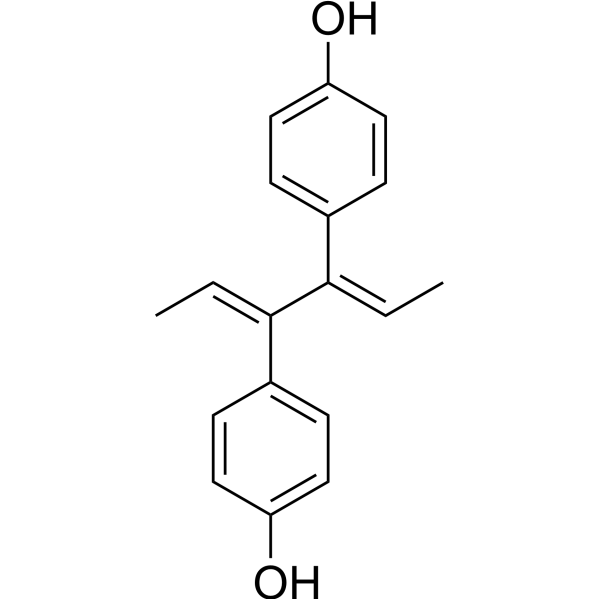
Dienestrol

Based on 1 Customer Validation
Dienestrol is an orally active nonsteroidal estrogen. Dienestrol prevents the formation of implantation swellings in the uterus by inhibiting ovum discharge.
For research use only. We do not sell to patients.
- Purity : 98.04%
- CAS No.: 84-17-3
- Formula: C18H18O2
- Molecular Weight:266.33
-
Storage:Powder -20°C, 3 years , 4°C, 2 years ; In solvent -80°C, 6 months , -20°C, 1 month

To place orders, for customer services and technical support, please contact: MedChemExpress USA
Tel: 609-228-6898 E-mail: [email protected] [email protected]


-
 Biological Activity
-
Chemical Information
-
Solvent & Solubility
- Protocols
- Purity & Documentation
- References
-
 Help & FAQs


-
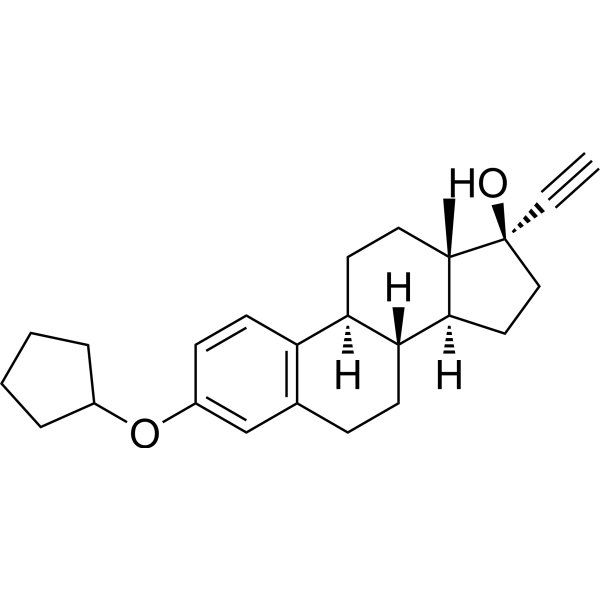
HY-B1012
QuinestrolSynthetic Estrogen -
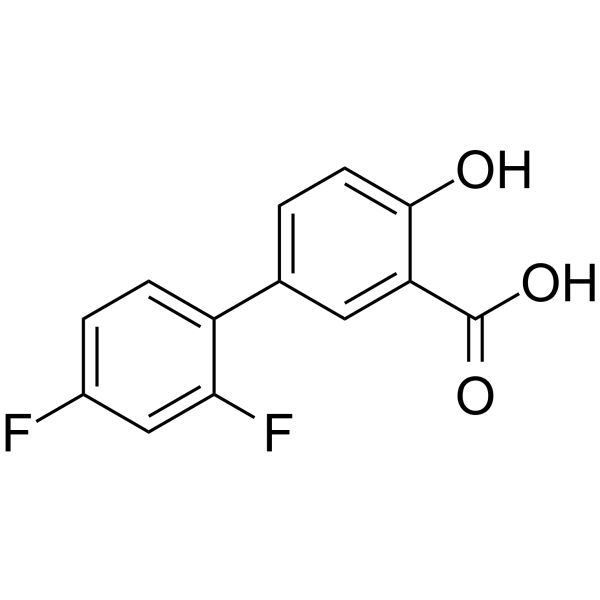
HY-18342
DiflunisalCOX Inhibitor -
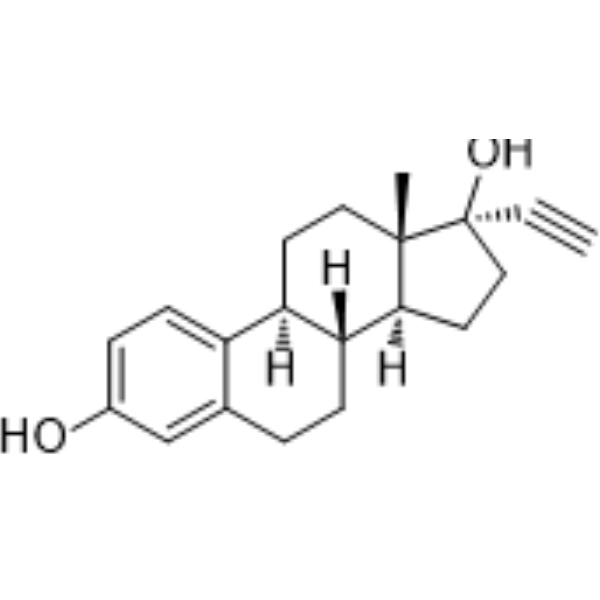
HY-B0216
EthinylestradiolEndogenous Metabolite -
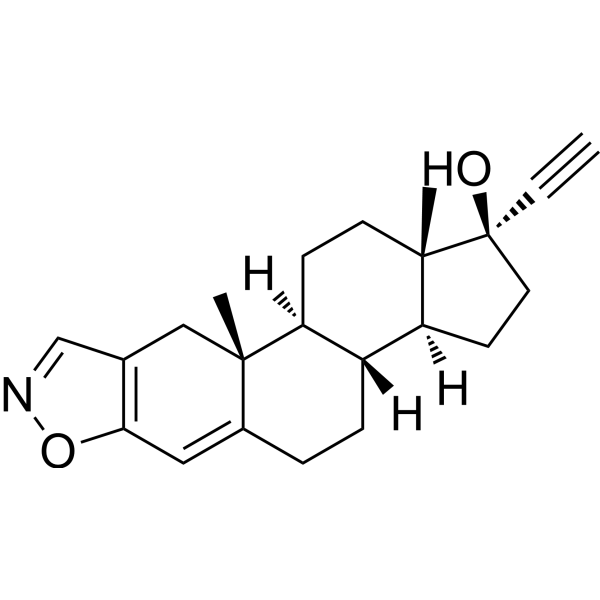
HY-B1029
DanazolSynthetic Steroid -
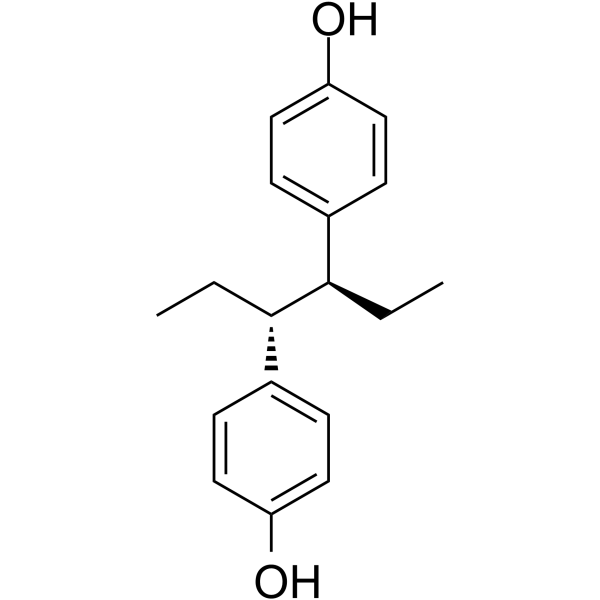
HY-B1662
HexestrolSynthetic Estrogen -
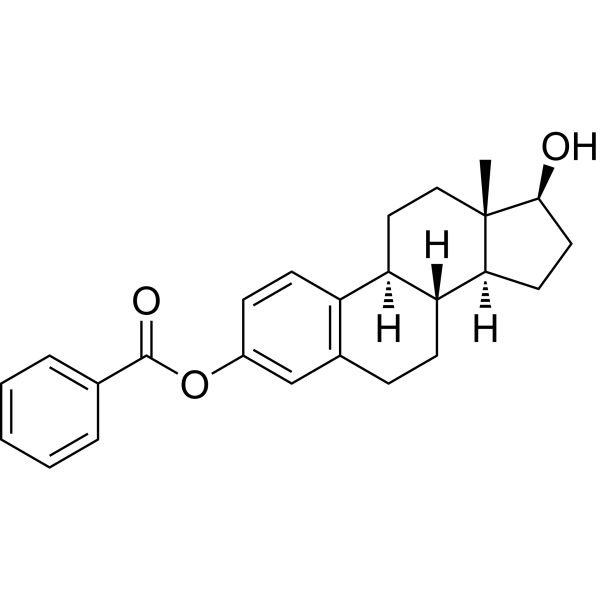
HY-B1192
Estradiol benzoateHBx inhibitor -
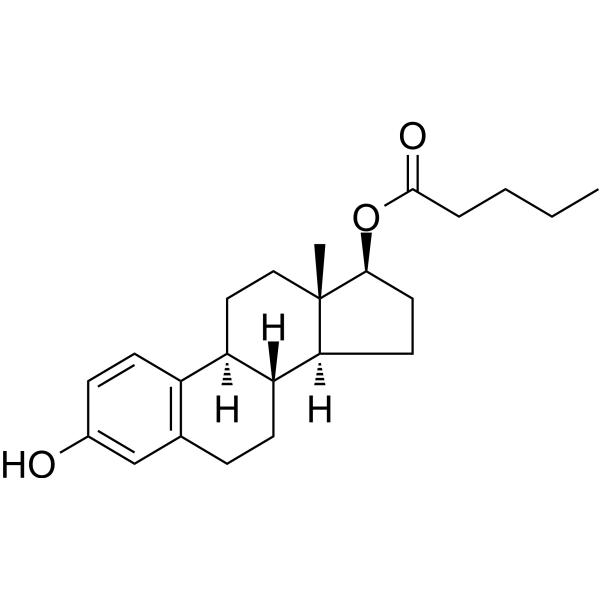
HY-B0672
Estradiol valerateEstrogen Receptor/ERR Agonist -
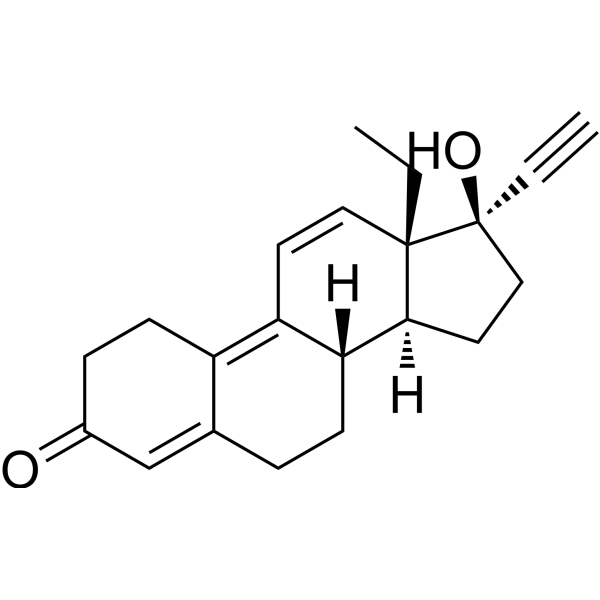
HY-101405
GestrinoneSteroid Hormone -

HY-B1403R
Dienestrol (Standard)Estrogen Receptor/ERR Agonist -
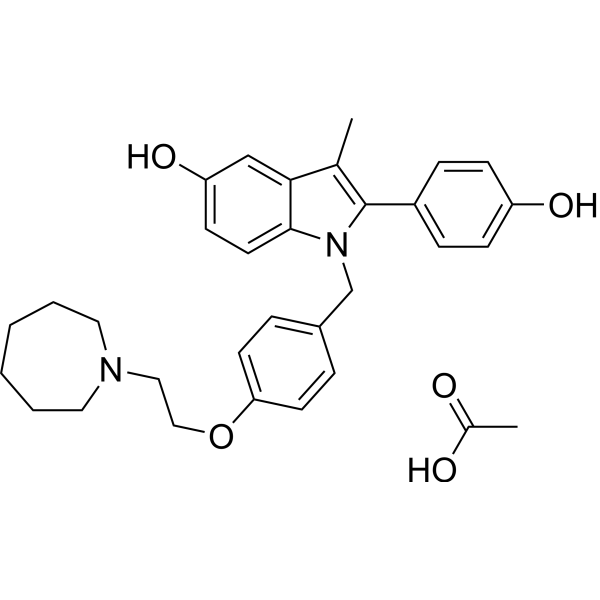
HY-A0036
Bazedoxifene acetateSERM -
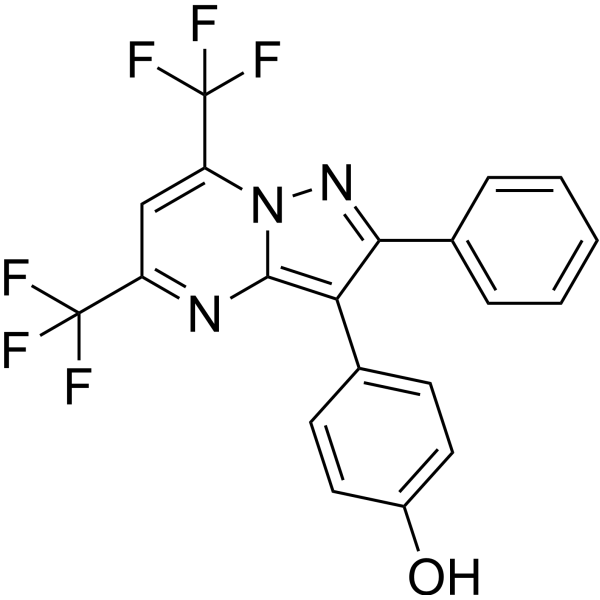
HY-103456
PHTPPERβ Antagonist -
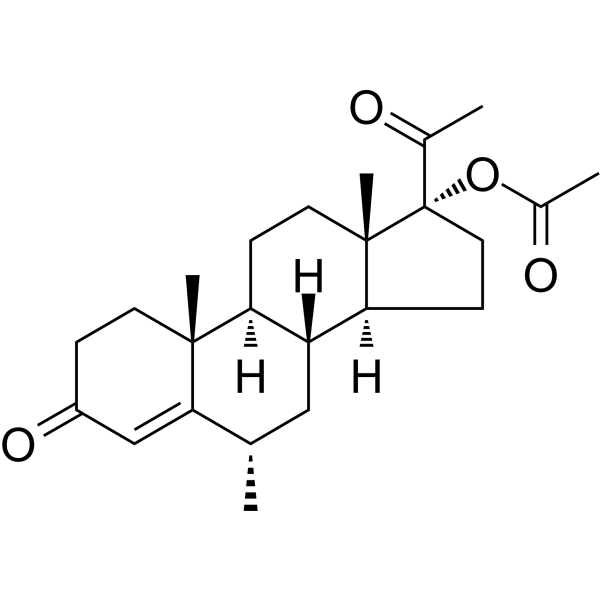
HY-B0469
Medroxyprogesterone acetateProgesterone Receptor Agonist


Biological Activity
Description
In Vivo
MedChemExpress (MCE) has not independently confirmed the accuracy of these methods. They are for reference only.


Chemical Information
-
CAS No. 84-17-3
-
Appearance Solid
-
Molecular Weight 266.33
-
Formula C18H18O2
-
Color Light yellow to light brown
-
SMILES
C/C=C(C1=CC=C(O)C=C1)/C(C2=CC=C(O)C=C2)=C/C
-
Shipping
Room temperature in continental US; may vary elsewhere.
-
Storage
Powder -20°C 3 years 4°C 2 years In solvent -80°C 6 months -20°C 1 month


Solvent & Solubility
In Vitro:
DMSO : 125 mg/mL (469.34 mM; Need ultrasonic; Hygroscopic DMSO has a significant impact on the solubility of product, please use newly opened DMSO)
Please refer to the solubility information to select the appropriate solvent. Once prepared, please aliquot and store the solution to prevent product inactivation from repeated freeze-thaw cycles.
Storage method and period of stock solution: -80°C, 6 months; -20°C, 1 month. When stored at -80°C, please use it within 6 months. When stored at -20°C, please use it within 1 month.
Please refer to the solubility information to select the appropriate solvent. Once prepared, please aliquot and store the solution to prevent product inactivation from repeated freeze-thaw cycles.
Storage method and period of stock solution: -80°C, 6 months; -20°C, 1 month. When stored at -80°C, please use it within 6 months. When stored at -20°C, please use it within 1 month.
Concentration (start) × Volume (start) = Concentration (final) × Volume (final)
In Vivo:
Select the appropriate dissolution method based on your experimental animal and administration route.
- For the following dissolution methods, please ensure to first prepare a clear stock solution using an In Vitro approach and then sequentially add co-solvents:
- To ensure reliable experimental results, the clarified stock solution can be appropriately stored based on storage conditions. As for the working solution for In Vivo experiments, it is recommended to prepare freshly and use it on the same day.
- The percentages shown for the solvents indicate their volumetric ratio in the final prepared solution. If precipitation or phase separation occurs during preparation, heat and/or sonication can be used to aid dissolution.
Add each solvent one by one: 10% DMSO 40% PEG300 5% Tween-80 45% Saline
Solubility: 2.08 mg/mL (7.81 mM); Suspended solution; Need ultrasonic
This protocol yields a suspended solution of 2.08 mg/mL. Suspended solution can be used for oral and intraperitoneal injection.
Taking 1 mL working solution as an example, add 100 μL DMSO stock solution (20.8 mg/mL) to 400 μL PEG300, and mix evenly; then add 50 μL Tween-80 and mix evenly; then add 450 μL Saline to adjust the volume to 1 mL.
Preparation of Saline: Dissolve 0.9 g sodium chloride in ddH₂O and dilute to 100 mL to obtain a clear Saline solution.
Add each solvent one by one: 10% DMSO 90% (20% SBE-β-CD in Saline)
Solubility: ≥ 2.08 mg/mL (7.81 mM); Clear solution
This protocol yields a clear solution of ≥ 2.08 mg/mL (saturation unknown).
Taking 1 mL working solution as an example, add 100 μL DMSO stock solution (20.8 mg/mL) to 900 μL 20% SBE-β-CD in Saline, and mix evenly.
Preparation of 20% SBE-β-CD in Saline (4°C, storage for one week): 2 g SBE-β-CD powder is dissolved in 10 mL Saline, completely dissolve until clear.
In Vivo Dissolution Calculator
Please enter the basic information of animal experiments:
-
-
-
-
Recommended: Prepare an additional quantity of animals to account for potential losses during experiments.
Please enter your animal formula composition:
-
%DMSO +
Recommended: Keep the proportion of DMSO in working solution below 2% if your animal is weak.
-
%+
-
+%Tween-80 + +
-
%Saline +
The co-solvents required include: DMSO, . All of co-solvents are available by MedChemExpress (MCE). , Tween 80. All of co-solvents are available by MedChemExpress (MCE).
Working solution concentration: 0.22 mg/mL
Method for preparing stock solution: mg drug dissolved in μL DMSO. Stock solution concentration: mg/mL.
1. Take μL DMSO stock solution;
2. Add μL .
μL , mix evenly;
3. Then add μL Tween 80, mix evenly;
4. Then add μL
Please ensure that the stock solution in the first step is dissolved to a clear state, and add co-solvents in sequence. You can use ultrasonic heating (ultrasonic cleaner, recommended frequency 20-40 kHz), vortexing, etc. to assist dissolution.

Protocols
-
Trophoblast Invasion Assay
The trophoblast invasion assay is commonly based on the Matrigel-coated Transwell invasion system, in which invasive cells migrate through a reconstituted basement membrane matrix toward a chemoattractant gradient, thereby modeling extracellular matrix (ECM) penetration and invasive behavior in vitro. The readout is typically the number of cells that traverse the Matrigel barrier and attach to the lower surface of a porous membrane, reflecting invasive capacity through ECM-like substrates and basement membrane components. This system was originally developed to quantify invasive cell behavior using Matrigel as a basement membrane analog in a Boyden chamber format.
-
Research Protocol for Endocrine Diseases
Endocrine diseases often arise from disrupted hormone production, hormone signaling, or target-tissue responsiveness; for diabetes-focused endocrine disease models, insulin signaling regulates glucose uptake, hepatic glucose output, lipid metabolism, and β-cell compensation. Type 2 diabetes develops through interacting defects in insulin resistance, β-cell dysfunction, adipose inflammation, hepatic glucose overproduction, altered incretin signaling, and ectopic lipid metabolism. A major unresolved question is whether endocrine dysfunction is driven primarily by target-tissue insulin resistance, intrinsic β-cell failure, immune/inflammatory stress, or combined multi-organ failure that differs by disease stage.


Purity & Documentation
-
Data Sheet (271 KB)
-
SDS (418 KB)
- English - EN (418 KB)
- Français - FR (418 KB)
- Deutsch - DE (418 KB)
- Norwegian - NO (418 KB)
- Español - ES (418 KB)
- Swedish - SV (418 KB)
- Italian - IT (418 KB)
- Korean - KR (418 KB)
- Portuguese - PT (418 KB)
-
Handling Instructions (2659 KB)
References


Complete Stock Solution Preparation Table
Please refer to the solubility information to select the appropriate solvent. Once prepared, please aliquot and store the solution to prevent product inactivation from repeated freeze-thaw cycles.
Storage method and period of stock solution: -80°C, 6 months; -20°C, 1 month. When stored at -80°C, please use it within 6 months. When stored at -20°C, please use it within 1 month.
| Optional Solvent | Concentration Solvent Mass | 1 mg | 5 mg | 10 mg | 25 mg |
|---|---|---|---|---|---|
| DMSO | 1 mM | 3.7547 mL | 18.7737 mL | 37.5474 mL | 93.8685 mL |
| 5 mM | 0.7509 mL | 3.7547 mL | 7.5095 mL | 18.7737 mL | |
| 10 mM | 0.3755 mL | 1.8774 mL | 3.7547 mL | 9.3869 mL | |
| 15 mM | 0.2503 mL | 1.2516 mL | 2.5032 mL | 6.2579 mL | |
| 20 mM | 0.1877 mL | 0.9387 mL | 1.8774 mL | 4.6934 mL | |
| 25 mM | 0.1502 mL | 0.7509 mL | 1.5019 mL | 3.7547 mL | |
| 30 mM | 0.1252 mL | 0.6258 mL | 1.2516 mL | 3.1290 mL | |
| 40 mM | 0.0939 mL | 0.4693 mL | 0.9387 mL | 2.3467 mL | |
| 50 mM | 0.0751 mL | 0.3755 mL | 0.7509 mL | 1.8774 mL | |
| 60 mM | 0.0626 mL | 0.3129 mL | 0.6258 mL | 1.5645 mL | |
| 80 mM | 0.0469 mL | 0.2347 mL | 0.4693 mL | 1.1734 mL | |
| 100 mM | 0.0375 mL | 0.1877 mL | 0.3755 mL | 0.9387 mL |


Dienestrol Related Classifications
HY-B1403 Related Classifications
 Powered by Bioz