



Docosanoic acid

Based on 1 Customer Validation
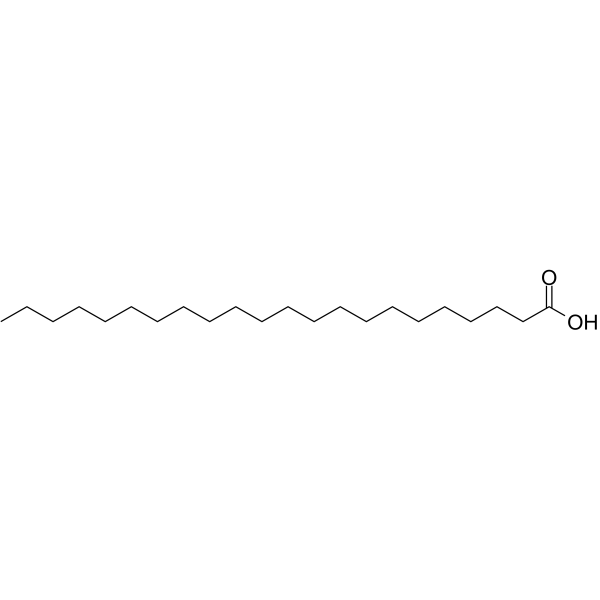
Docosanoic acid (Behenic acid) is a long-chain saturated fatty acid. Docosanoic acid inhibits the double-stranded DNA (dsDNA) binding activity of p53 DNA binding domain, with a Kd of 12 nM. Docosanoic acid has low bioavailability and can increase cholesterol in humans.
For research use only. We do not sell to patients.
- Purity : 99.40%
- CAS No.: 112-85-6
- Formula: C22H44O2
- Molecular Weight:340.59
-
Storage:
4°C, protect from light
* In solvent : -80°C, 6 months; -20°C, 1 month (protect from light)

To place orders, for customer services and technical support, please contact: MedChemExpress USA
Tel: 609-228-6898 E-mail: [email protected] [email protected]


-
 Biological Activity
-
Chemical Information
-
Solvent & Solubility
- Protocols
- Purity & Documentation
- References
-
 Help & FAQs


-
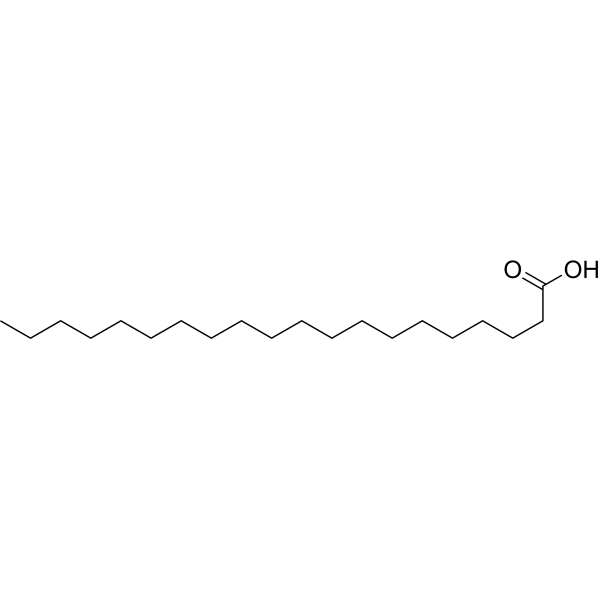
HY-W004260
Arachidic acidReceptor/Ion Channel Effector -
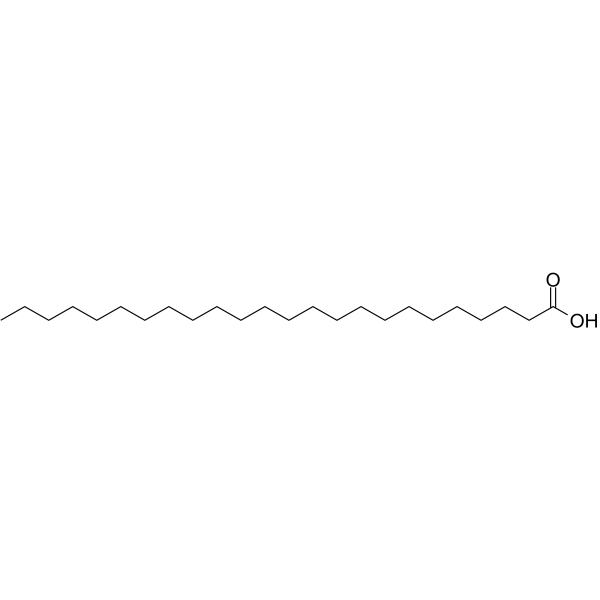
HY-121883
Lignoceric acidFatty Acid -
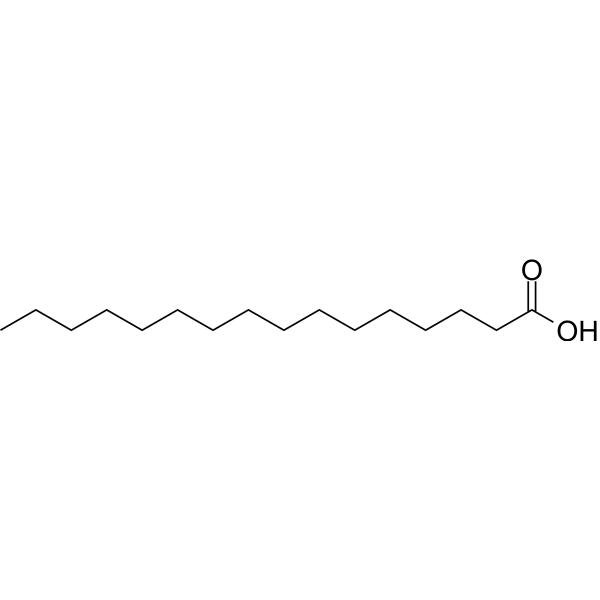
HY-N0830
Palmitic acidEndogenous Metabolite -
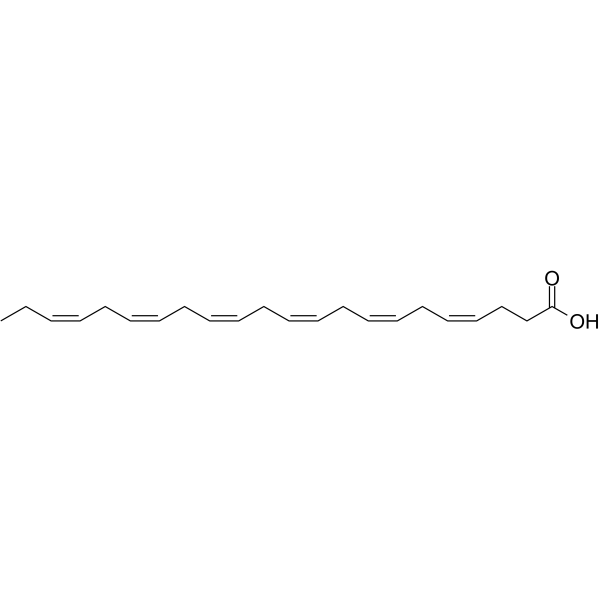
HY-B2167
Docosahexaenoic acidomega-3 Fatty Acid -
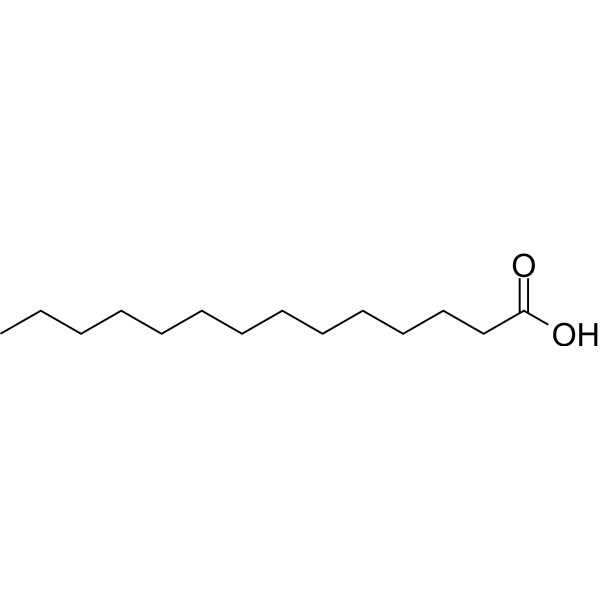
HY-N2041
Myristic acidEndogenous Metabolite -
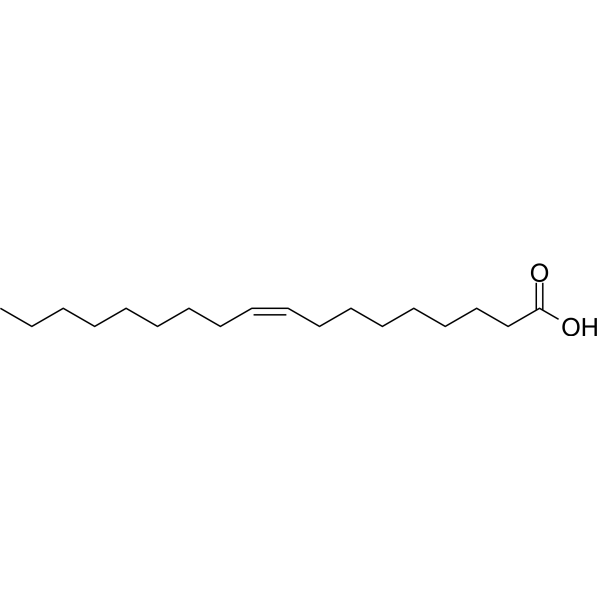
HY-N1446
Oleic acidMonounsaturated Fatty Acid -
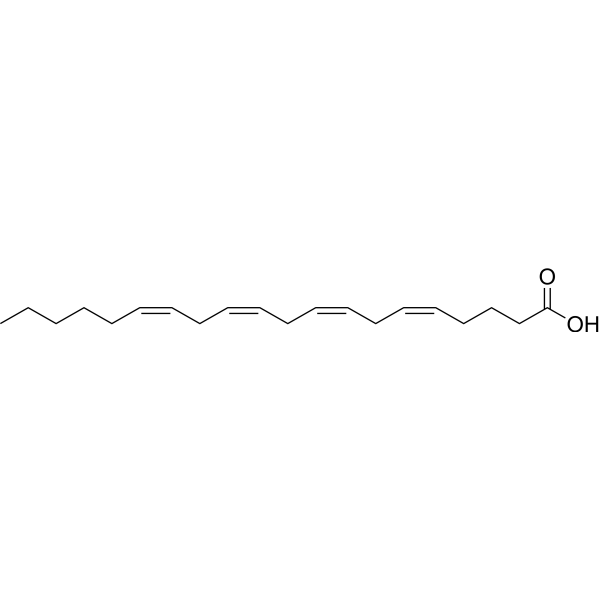
HY-109590
Arachidonic acidPolyunsaturated Fatty Acid -
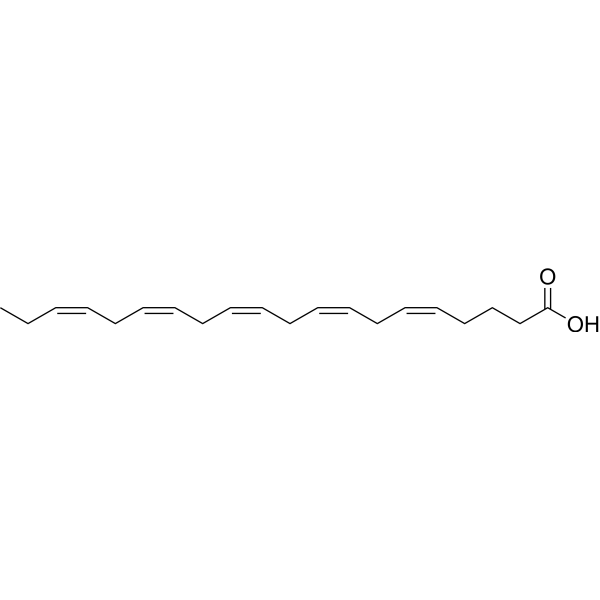
HY-B0660
Eicosapentaenoic AcidLC-PUFA -
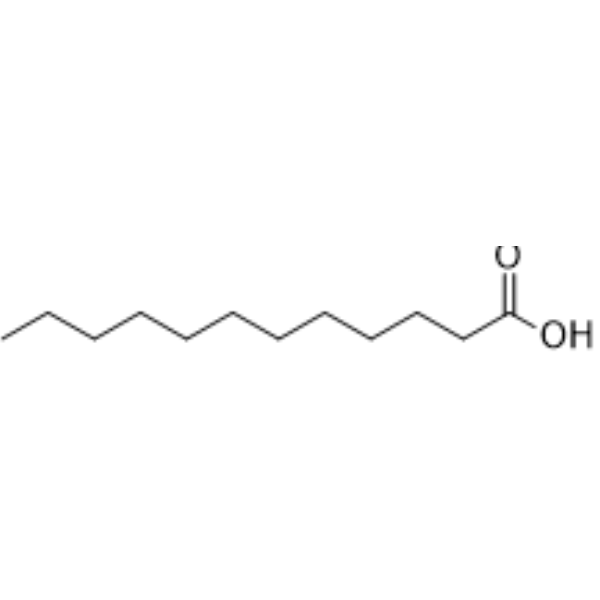
HY-Y0366
Lauric acidMiddle Chain-free Fatty Acid -
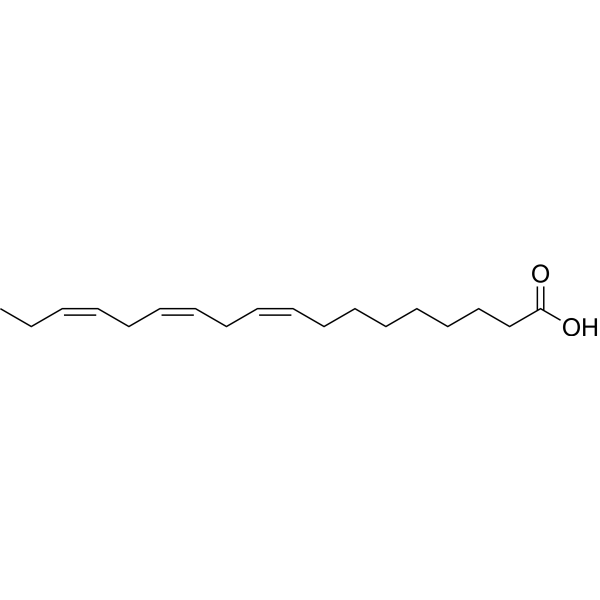
HY-N0728
α-Linolenic acidEssential Fatty Acid -
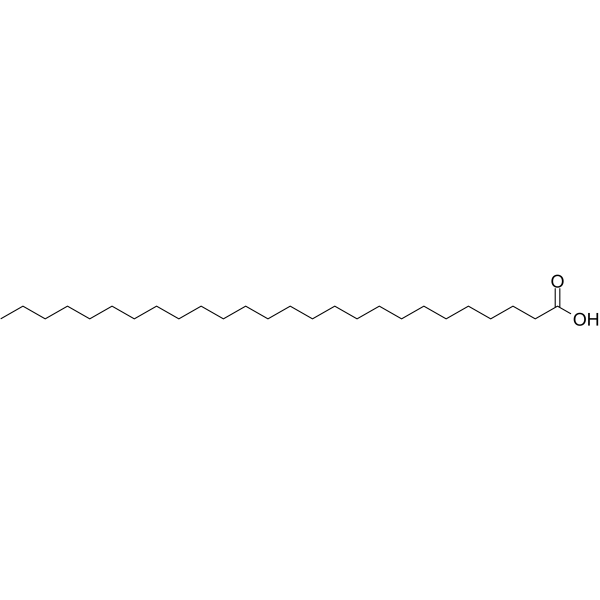
HY-113301
Hexacosanoic acidVery Long Chain Fatty Acid


Biological Activity
Description
IC50 & Target
|
Human Endogenous Metabolite |
In Vitro
Docosanoic acid is effective at inhibiting the dsDNA binding activity of wild-type p53 DBD, with 50% inhibition observed at 0.41 nmol. The inhibitory effect of Docosanoic acid on the activities of R248A mutant p53 DBD was almost as strong as that of the wild-type[3].
MedChemExpress (MCE) has not independently confirmed the accuracy of these methods. They are for reference only. Further protocols information, click here.
In Vivo
MedChemExpress (MCE) has not independently confirmed the accuracy of these methods. They are for reference only.


Chemical Information
-
CAS No. 112-85-6
-
Appearance Solid
-
Molecular Weight 340.59
-
Formula C22H44O2
-
Color White to light yellow
-
SMILES
CCCCCCCCCCCCCCCCCCCCCC(O)=O
-
Synonyms
Behenic acid
-
Structure Classification
-
Initial Source
-
Shipping
Room temperature in continental US; may vary elsewhere.
-
Storage
4°C, protect from light
* In solvent : -80°C, 6 months; -20°C, 1 month (protect from light)


Solvent & Solubility
In Vitro:
DMF : 9.09 mg/mL (26.69 mM; ultrasonic and warming and heat to 60°C)
DMSO : 1 mg/mL (2.94 mM; ultrasonic and warming and heat to 60°C; Hygroscopic DMSO has a significant impact on the solubility of product, please use newly opened DMSO)
H2O : < 0.1 mg/mL (insoluble)
Please refer to the solubility information to select the appropriate solvent. Once prepared, please aliquot and store the solution to prevent product inactivation from repeated freeze-thaw cycles.
Storage method and period of stock solution: -80°C, 6 months; -20°C, 1 month (protect from light). When stored at -80°C, please use it within 6 months. When stored at -20°C, please use it within 1 month.
Please refer to the solubility information to select the appropriate solvent. Once prepared, please aliquot and store the solution to prevent product inactivation from repeated freeze-thaw cycles.
Storage method and period of stock solution: -80°C, 6 months; -20°C, 1 month (protect from light). When stored at -80°C, please use it within 6 months. When stored at -20°C, please use it within 1 month.
Concentration (start) × Volume (start) = Concentration (final) × Volume (final)
In Vivo:
For the following dissolution methods, please prepare the working solution directly:
It is recommended to prepare fresh solutions and use them promptly within a short period of time.
The percentages shown for the solvents indicate their volumetric ratio in the final prepared solution. If precipitation or phase separation occurs during preparation, heat and/or sonication can be used to aid dissolution.
Add each solvent one by one: 50% PEG300 50% Saline
Solubility: 3.33 mg/mL (9.78 mM); Suspended solution; Need ultrasonic

Protocols
-
Protocol for Electrophoretic Mobility Shift Assay (EMSA)
Electrophoretic mobility shift assay detects protein-nucleic acid binding by incubating a labeled DNA or RNA probe with purified protein or cell extract, then separating free probe from slower-migrating protein-probe complexes on a native gel. For cancer cells, primary neurons, mouse tumor samples, intestinal organoids, inflammatory macrophages, or drug-treated samples, EMSA can measure transcription-factor DNA binding or RNA-binding protein activity in extracts, but it does not directly measure transcription, protein expression, or chromatin occupancy in intact cells. Specificity is judged by competition with unlabeled wild-type probe, failure of mutated or unrelated competitors to compete, and antibody supershift or disruption when the binding protein identity must be confirmed.
-
Protocol for Pharmacokinetic Study
Pharmacokinetic studies quantify how an organism handles a drug over time through absorption, distribution, metabolism, and excretion, and the core experimental readout is the concentration-time profile of parent drug and, when relevant, metabolites in biological matrices such as plasma, whole blood, urine, bile, or tissue. Pharmacokinetic analysis links dose, route, exposure, clearance, half-life, distribution, bioavailability, and systemic exposure to drug efficacy and toxicity hypotheses rather than measuring a signaling pathway directly. The literature links pharmacokinetics to drug-development phenotypes by showing that drug metabolism and pharmacokinetics influence compound progression, exposure-response interpretation, safety margins, dosing strategy, and failure risk during discovery and development. DMPK science contributes to compound optimization by integrating physicochemical properties, in vitro metabolism, transporter behavior, in vivo exposure, and pharmacodynamic contex


Purity & Documentation
-
Data Sheet (266 KB)
-
SDS (394 KB)
- English - EN (394 KB)
- Français - FR (394 KB)
- Deutsch - DE (394 KB)
- Norwegian - NO (394 KB)
- Español - ES (394 KB)
- Swedish - SV (394 KB)
- Italian - IT (394 KB)
- Korean - KR (394 KB)
- Portuguese - PT (394 KB)
-
Handling Instructions (2659 KB)
References
[1]. Cater NB, et al. Behenic acid is a cholesterol-raising saturated fatty acid in humans. Am J Clin Nutr. 2001 Jan;73(1):41-4. [Content Brief]
[2]. Moreira DK, et al. Evaluation of structured lipids with behenic acid in the prevention of obesity. Food Res Int. 2017 May;95:52-58. [Content Brief]
[3]. Iijima H, et al. The inhibitory action of long-chain fatty acids on the DNA binding activity of p53. Lipids. 2006 Jun;41(6):521-7. [Content Brief]


Complete Stock Solution Preparation Table
Please refer to the solubility information to select the appropriate solvent. Once prepared, please aliquot and store the solution to prevent product inactivation from repeated freeze-thaw cycles.
Storage method and period of stock solution: -80°C, 6 months; -20°C, 1 month (protect from light). When stored at -80°C, please use it within 6 months. When stored at -20°C, please use it within 1 month.
| Optional Solvent | Concentration Solvent Mass | 1 mg | 5 mg | 10 mg | 25 mg |
|---|---|---|---|---|---|
| DMSO / DMF | 1 mM | 2.9361 mL | 14.6804 mL | 29.3608 mL | 73.4020 mL |
| DMF | 5 mM | 0.5872 mL | 2.9361 mL | 5.8722 mL | 14.6804 mL |
| 10 mM | 0.2936 mL | 1.4680 mL | 2.9361 mL | 7.3402 mL | |
| 15 mM | 0.1957 mL | 0.9787 mL | 1.9574 mL | 4.8935 mL | |
| 20 mM | 0.1468 mL | 0.7340 mL | 1.4680 mL | 3.6701 mL | |
| 25 mM | 0.1174 mL | 0.5872 mL | 1.1744 mL | 2.9361 mL |


Docosanoic acid Related Classifications
HY-W013049 Related Classifications
 Powered by Bioz