



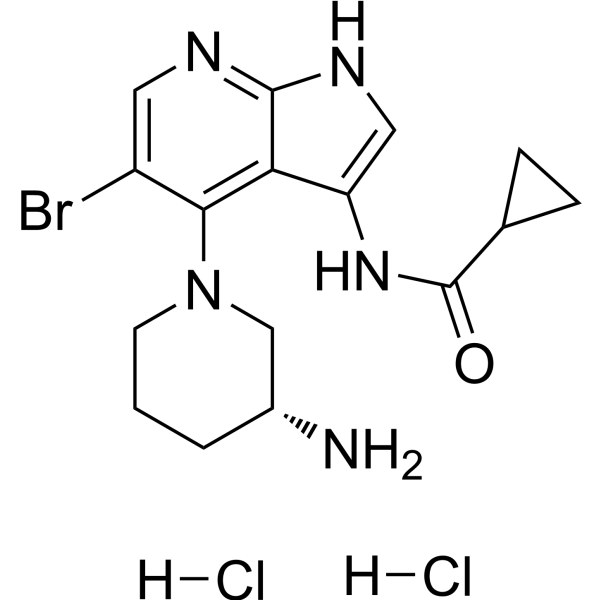
GDC-0575 dihydrochloride
Based on 6 publication(s) in Google Scholar
GDC-0575 dihydrochloride (ARRY-575 dihydrochloride) is an orally bioavailable CHK1 inhibitor, with an IC50 of 1.2 nM, and has antitumor activity.
For research use only. We do not sell to patients.
- Purity : 98.36%
- CAS No.: 1657014-42-0
- Formula: C16H22BrCl2N5O
- Molecular Weight:451.19
-
Storage:
4°C, sealed storage, away from moisture
* In solvent : -80°C, 6 months; -20°C, 1 month (sealed storage, away from moisture)

To place orders, for customer services and technical support, please contact: MedChemExpress USA
Tel: 609-228-6898 E-mail: [email protected] [email protected]


-
 Biological Activity
-
Chemical Information
-
Solvent & Solubility
- Protocols
- Purity & Documentation
- References
-
 Help & FAQs


-
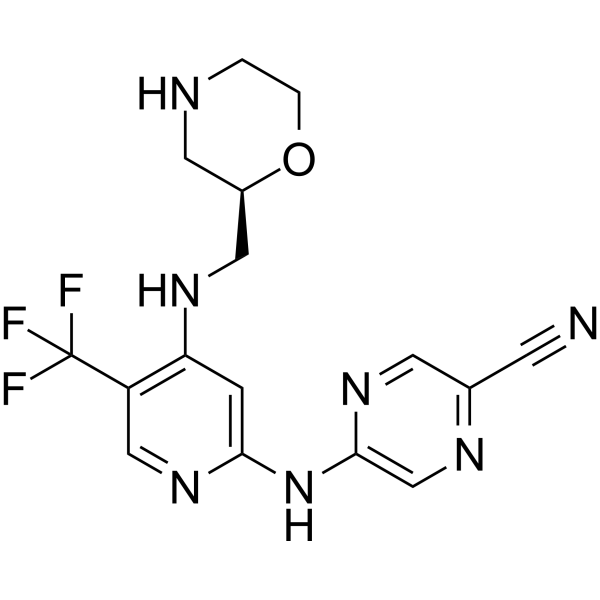
HY-18958
CCT245737CHK1 Inhibitor -
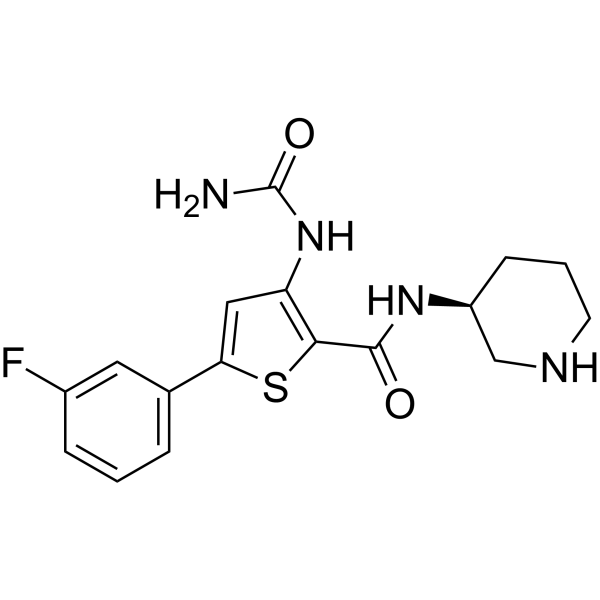
HY-10992
AZD-7762Chk Inhibitor -
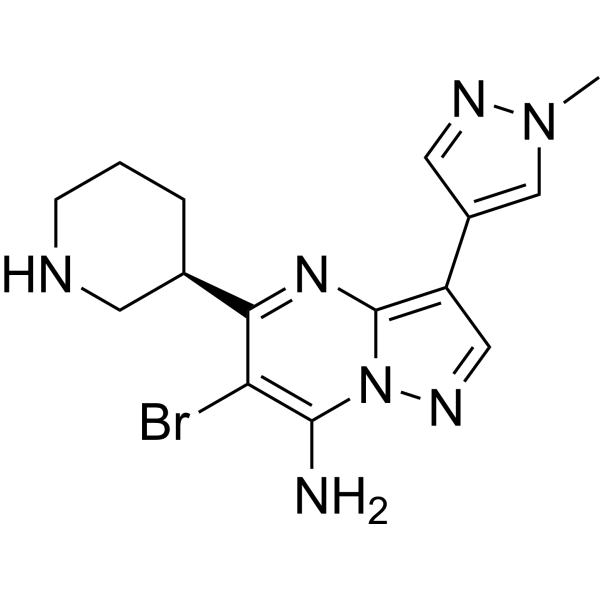
HY-15532
SCH900776CHK1 Inhibitor -
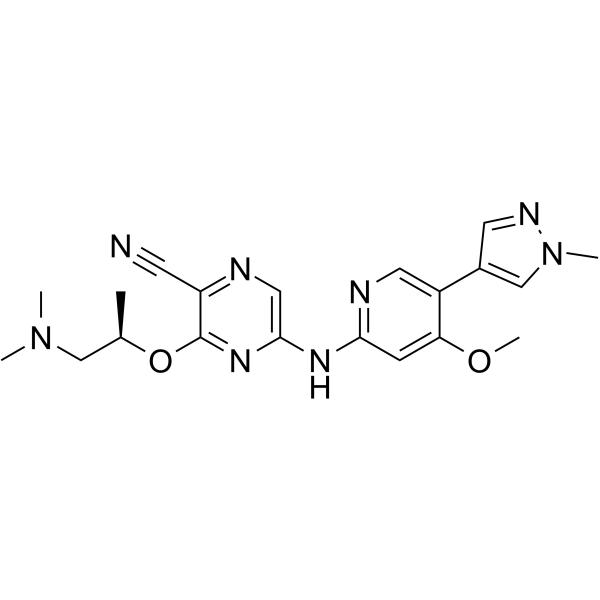
HY-18175
CCT244747 -
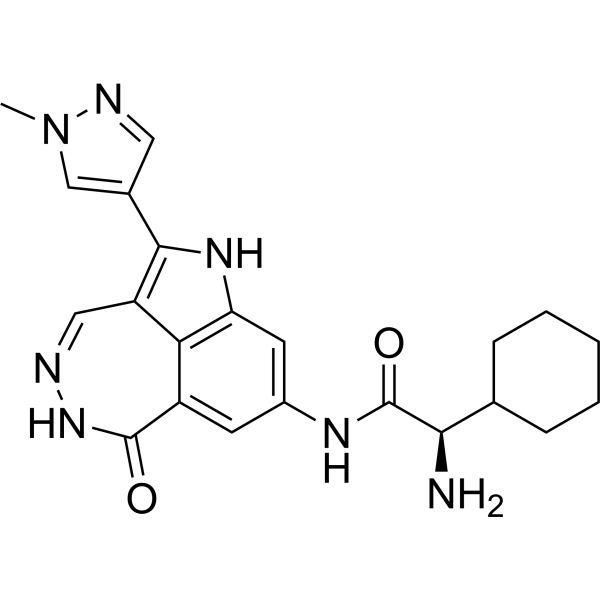
HY-10032
PF 477736Chk1 Inhibitor -
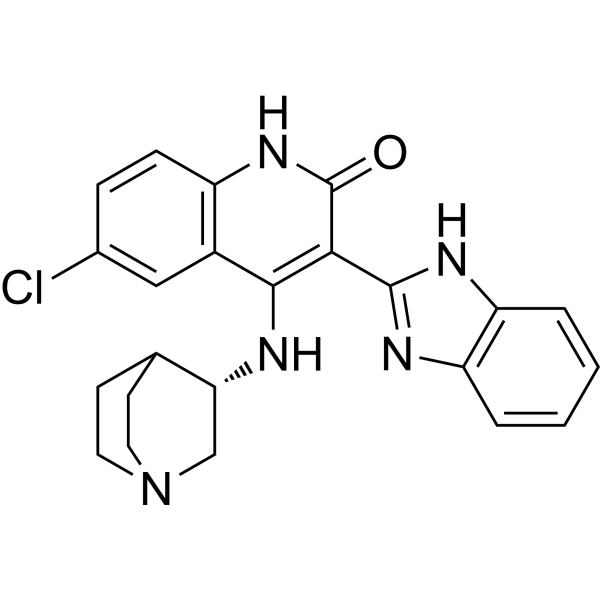
HY-13263
CHIR-124Checkpoint Kinase (Chk) Inhibitor -
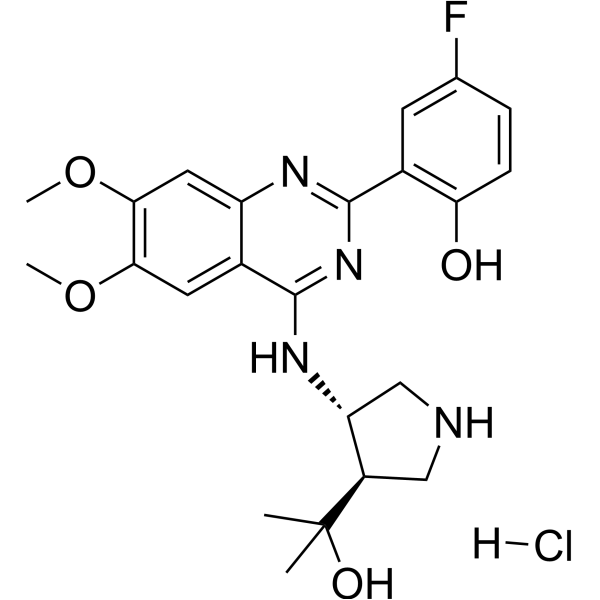
HY-14715B
CCT241533 hydrochlorideCHK2 Inhibitor -
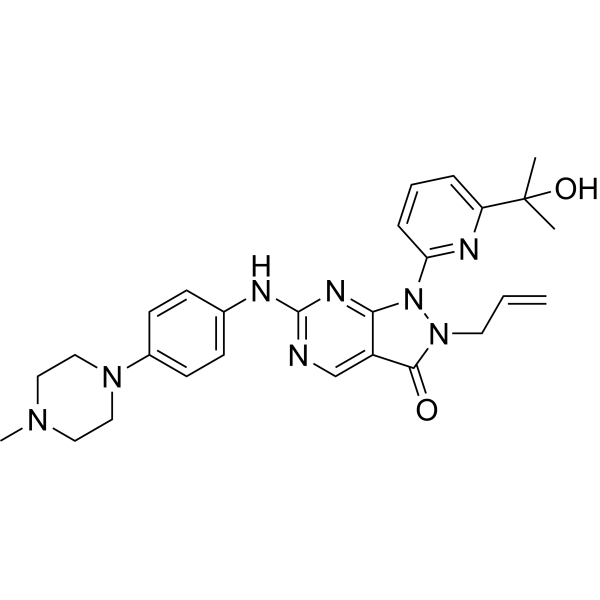
HY-10993
AdavosertibWee1 Inhibitor -
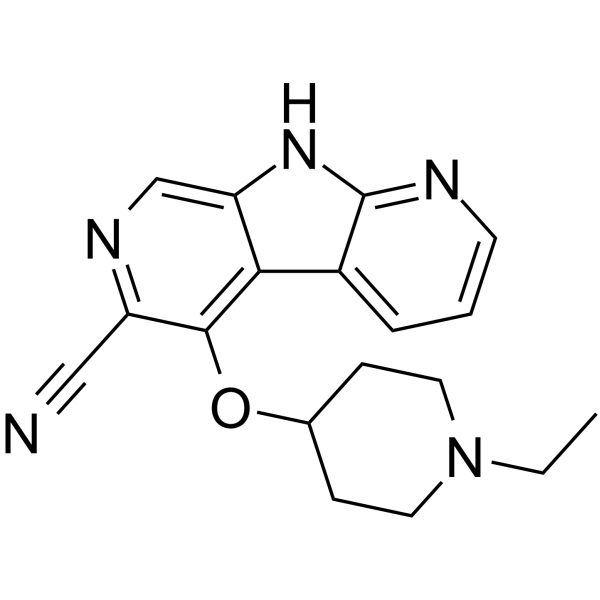
HY-19926
GDC-0425ChK1 Inhibitor -
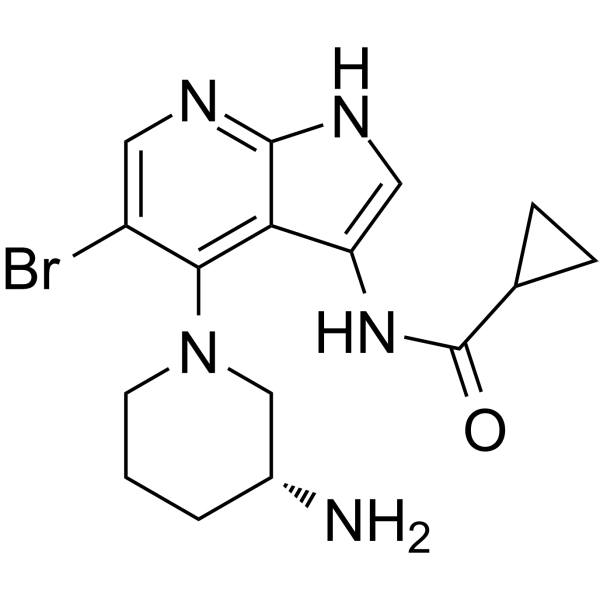
HY-112167
GDC-0575Chk1 Inhibitor -
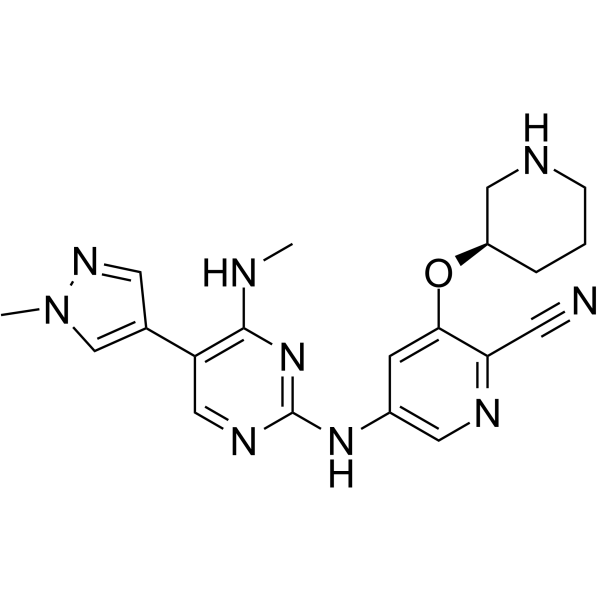
HY-128601
CHK1-IN-3CHK1 Inhibitor -
HY-18961
PD 407824Chk1/Wee1 Inhibitor
Publications Citing Use of MedChemExpress (MCE) GDC-0575 dihydrochloride
More

Biological Activity
Description
IC50 & Target
[1]|
Chk1 1.2 nM (IC50) |
In Vitro
GDC-0575 dihydrochloride is a selective and orally bioavailable CHK1 inhibitor, with an IC50 of 1.2 nM. GDC-0575 (100 nM) suppressses CHK1 activation induced by AraC by decreasing the level of Tyr15-phosphorylated CDK2. GDC-0575 (100 nM) has no effect on the viability of AML cells, but significantly reduces cell viability and induces apoptosis in combination with AraC. In addition, GDC-0575 plus AraC shows no effect on normal hematopoietic stem and progenitor cells (HSPCs)[1]. GDC-0575 shows cytotoxic activity against most of 20 melanoma cell lines tested, but several cell lines grown as tumour sphere (TS) are relatively insensitive[2].
MedChemExpress (MCE) has not independently confirmed the accuracy of these methods. They are for reference only. Further protocols information, click here.
In Vivo
MedChemExpress (MCE) has not independently confirmed the accuracy of these methods. They are for reference only.
Clinical Trial
| NCT Number | Sponsor | Condition | Start Date |
Phase

|
|---|---|---|---|---|
| NCT01329991 | Plexxikon| | 2011-05 | PHASE1 |


Chemical Information
-
CAS No. 1657014-42-0
-
Appearance Solid
-
Molecular Weight 451.19
-
Formula C16H22BrCl2N5O
-
Color Light yellow to yellow
-
SMILES
O=C(C1CC1)NC2=CNC3=NC=C(Br)C(N4C[C@H](N)CCC4)=C32.[H]Cl.[H]Cl
-
Synonyms
ARRY-575 dihydrochloride; RG7741 dihydrochloride
-
Shipping
Room temperature in continental US; may vary elsewhere.
-
Storage
4°C, sealed storage, away from moisture
* In solvent : -80°C, 6 months; -20°C, 1 month (sealed storage, away from moisture)


Publications (6)
-
Journal Impact Factor
-
Most Recent
-
Mol Cancer
2024 Apr 29;23(1):86. PMID: 38685067 -
Nat Commun
Treacle controls the nucleolar response to rDNA breaks via TOPBP1 recruitment and ATR activation. [Abstract]2020 Jan 8;11(1):123. PMID: 31913317 -
Neurotherapeutics
Chk1 Inhibition Ameliorates Alzheimer's Disease Pathogenesis and Cognitive Dysfunction Through CIP2A/PP2A Signaling. [Abstract]2022 Mar;19(2):570-591. PMID: 35286657 -
Mol Cancer Res
Inhibition of the ATR-CHK1 Pathway in Ewing Sarcoma Cells Causes DNA Damage and Apoptosis via the CDK2-Mediated Degradation of RRM2. [Abstract]2020 Jan;18(1):91-104. PMID: 31649026 -
-


Solvent & Solubility
In Vitro:
DMSO : 65 mg/mL (144.06 mM; Need ultrasonic; Hygroscopic DMSO has a significant impact on the solubility of product, please use newly opened DMSO)
H2O : 25 mg/mL (55.41 mM; Need ultrasonic)
Please refer to the solubility information to select the appropriate solvent. Once prepared, please aliquot and store the solution to prevent product inactivation from repeated freeze-thaw cycles.
Storage method and period of stock solution: -80°C, 6 months; -20°C, 1 month (sealed storage, away from moisture). When stored at -80°C, please use it within 6 months. When stored at -20°C, please use it within 1 month.
* Note: If you choose water as the stock solution, please dilute it to the working solution, then filter and sterilize it with a 0.22 μm filter before use.
Please refer to the solubility information to select the appropriate solvent. Once prepared, please aliquot and store the solution to prevent product inactivation from repeated freeze-thaw cycles.
Storage method and period of stock solution: -80°C, 6 months; -20°C, 1 month (sealed storage, away from moisture). When stored at -80°C, please use it within 6 months. When stored at -20°C, please use it within 1 month.
* Note: If you choose water as the stock solution, please dilute it to the working solution, then filter and sterilize it with a 0.22 μm filter before use.
Concentration (start) × Volume (start) = Concentration (final) × Volume (final)
In Vivo:
Select the appropriate dissolution method based on your experimental animal and administration route.
- For the following dissolution methods, please ensure to first prepare a clear stock solution using an In Vitro approach and then sequentially add co-solvents:
- To ensure reliable experimental results, the clarified stock solution can be appropriately stored based on storage conditions. As for the working solution for In Vivo experiments, it is recommended to prepare freshly and use it on the same day.
- The percentages shown for the solvents indicate their volumetric ratio in the final prepared solution. If precipitation or phase separation occurs during preparation, heat and/or sonication can be used to aid dissolution.
Add each solvent one by one: 10% DMSO 40% PEG300 5% Tween-80 45% Saline
Solubility: ≥ 2.17 mg/mL (4.81 mM); Clear solution
This protocol yields a clear solution of ≥ 2.17 mg/mL (saturation unknown).
Taking 1 mL working solution as an example, add 100 μL DMSO stock solution (21.7 mg/mL) to 400 μL PEG300, and mix evenly; then add 50 μL Tween-80 and mix evenly; then add 450 μL Saline to adjust the volume to 1 mL.
Preparation of Saline: Dissolve 0.9 g sodium chloride in ddH₂O and dilute to 100 mL to obtain a clear Saline solution.
Add each solvent one by one: 10% DMSO 90% (20% SBE-β-CD in Saline)
Solubility: ≥ 2.17 mg/mL (4.81 mM); Clear solution
This protocol yields a clear solution of ≥ 2.17 mg/mL (saturation unknown).
Taking 1 mL working solution as an example, add 100 μL DMSO stock solution (21.7 mg/mL) to 900 μL 20% SBE-β-CD in Saline, and mix evenly.
Preparation of 20% SBE-β-CD in Saline (4°C, storage for one week): 2 g SBE-β-CD powder is dissolved in 10 mL Saline, completely dissolve until clear.
For the following dissolution methods, please prepare the working solution directly:
It is recommended to prepare fresh solutions and use them promptly within a short period of time.
The percentages shown for the solvents indicate their volumetric ratio in the final prepared solution. If precipitation or phase separation occurs during preparation, heat and/or sonication can be used to aid dissolution.
Add each solvent one by one: PBS
Solubility: 10 mg/mL (22.16 mM); Clear solution; Need ultrasonic
In Vivo Dissolution Calculator
Please enter the basic information of animal experiments:
-
-
-
-
Recommended: Prepare an additional quantity of animals to account for potential losses during experiments.
Working solution concentration: 0.22 mg/mL
This product has good water solubility, please refer to the measured solubility data in water/PBS/Saline for details.

Protocols
-
Cell Cytotoxicity Assay
Cytotoxicity assays are usually based on the assessment of cell membrane damage, which can also be indirectly detected by measuring cell viability. Detection methods include MTT assay, CKK-8 assay, LDH assay and ATP assay, etc.
-
Subcutaneous Cell-Line-Derived Xenograft
Subcutaneous cell-line-derived xenograft (CDX) models are established by implanting cultured human cancer cell lines into immunodeficient mice, where the injected cells form localized tumors that can be monitored in vivo as a measure of tumorigenic potential, growth kinetics, and treatment response. These models are widely used in oncology research because they allow reproducible tumor formation and enable comparative assessment of tumor growth between different cell lines or genetic manipulations in a controlled in vivo microenvironment. Subcutaneous implantation of cancer cells in immunodeficient mice is a standard approach for evaluating tumor growth behavior and therapeutic response across multiple cancer types, including prostate, esophageal, pancreatic, and colon cancer models.


Purity & Documentation
-
Data Sheet (286 KB)
-
SDS (252 KB)
- English - EN (252 KB)
- Français - FR (252 KB)
- Deutsch - DE (252 KB)
- Norwegian - NO (252 KB)
- Español - ES (252 KB)
- Swedish - SV (252 KB)
- Italian - IT (252 KB)
- Korean - KR (252 KB)
- Portuguese - PT (252 KB)
-
Handling Instructions (2659 KB)
References
[1]. Di Tullio A, et al. The combination of CHK1 inhibitor with G-CSF overrides cytarabine resistance in human acute myeloid leukemia. Nat Commun. 2017 Nov 22;8(1):1679. [Content Brief]
[2]. Oo ZY, et al. Endogenous Replication Stress Marks Melanomas Sensitive to CHEK1 Inhibitors In Vivo. Clin Cancer Res. 2018 Jun 15;24(12):2901-2912. [Content Brief]


Complete Stock Solution Preparation Table
Please refer to the solubility information to select the appropriate solvent. Once prepared, please aliquot and store the solution to prevent product inactivation from repeated freeze-thaw cycles.
Storage method and period of stock solution: -80°C, 6 months; -20°C, 1 month (sealed storage, away from moisture). When stored at -80°C, please use it within 6 months. When stored at -20°C, please use it within 1 month.
| Optional Solvent | Concentration Solvent Mass | 1 mg | 5 mg | 10 mg | 25 mg |
|---|---|---|---|---|---|
| H2O / DMSO | 1 mM | 2.2164 mL | 11.0818 mL | 22.1636 mL | 55.4090 mL |
| 5 mM | 0.4433 mL | 2.2164 mL | 4.4327 mL | 11.0818 mL | |
| 10 mM | 0.2216 mL | 1.1082 mL | 2.2164 mL | 5.5409 mL | |
| 15 mM | 0.1478 mL | 0.7388 mL | 1.4776 mL | 3.6939 mL | |
| 20 mM | 0.1108 mL | 0.5541 mL | 1.1082 mL | 2.7705 mL | |
| 25 mM | 0.0887 mL | 0.4433 mL | 0.8865 mL | 2.2164 mL | |
| 30 mM | 0.0739 mL | 0.3694 mL | 0.7388 mL | 1.8470 mL | |
| 40 mM | 0.0554 mL | 0.2770 mL | 0.5541 mL | 1.3852 mL | |
| 50 mM | 0.0443 mL | 0.2216 mL | 0.4433 mL | 1.1082 mL | |
| DMSO | 60 mM | 0.0369 mL | 0.1847 mL | 0.3694 mL | 0.9235 mL |
| 80 mM | 0.0277 mL | 0.1385 mL | 0.2770 mL | 0.6926 mL | |
| 100 mM | 0.0222 mL | 0.1108 mL | 0.2216 mL | 0.5541 mL |
* Note: If you choose water as the stock solution, please dilute it to the working solution, then filter and sterilize it with a 0.22 μm filter before use.


GDC-0575 dihydrochloride Related Classifications
HY-112167A Related Classifications
 Powered by Bioz