



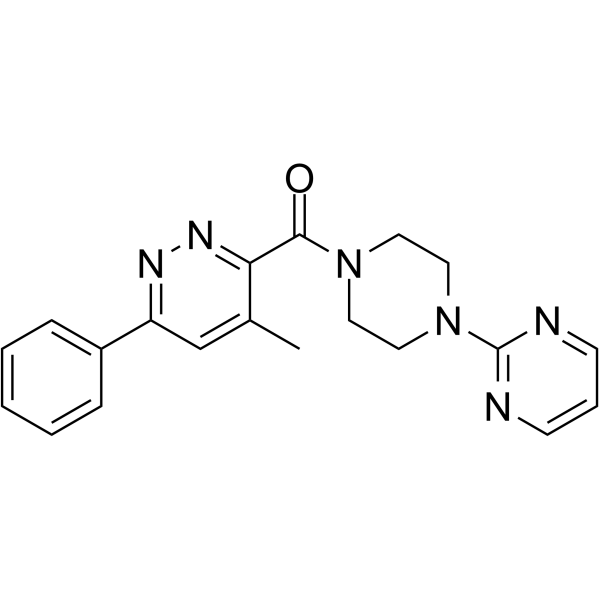
GIBH-130
Based on 3 publication(s) in Google Scholar
GIBH-130 is an effective inhibitor of neuroinflammation. GIBH-130 significantly suppresses the IL-1β secretion by activated microglia (IC50=3.4 nM).
For research use only. We do not sell to patients.
- Purity : 99.62%
- CAS No.: 1252608-59-5
- Formula: C20H20N6O
- Molecular Weight:360.41
-
Storage:Powder -20°C, 3 years , 4°C, 2 years ; In solvent -80°C, 2 years , -20°C, 1 year

To place orders, for customer services and technical support, please contact: MedChemExpress USA
Tel: 609-228-6898 E-mail: [email protected] [email protected]


-
 Biological Activity
-
Chemical Information
-
Solvent & Solubility
- Protocols
- Purity & Documentation
- References
-
 Help & FAQs


-
HY-14644
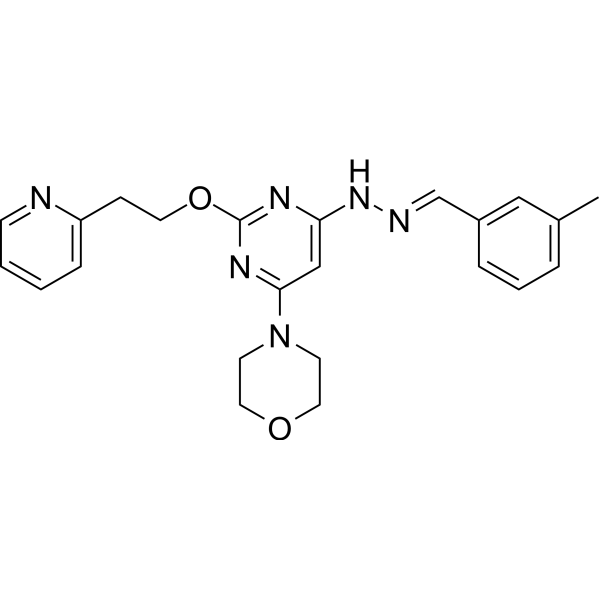
ApilimodIL-12/IL-23 Inhibitor -
HY-N0283
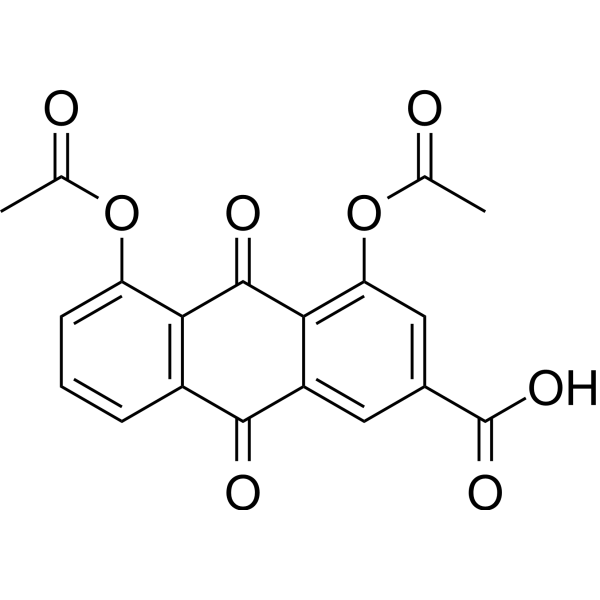
DiacereinIL-1 Inhibitor -
HY-17002
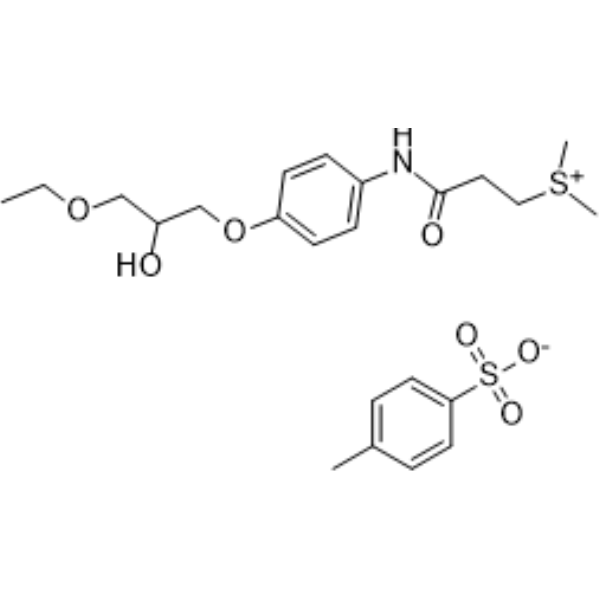
Suplatast (Tosilate)Th2 Cytokine Inhibitor -
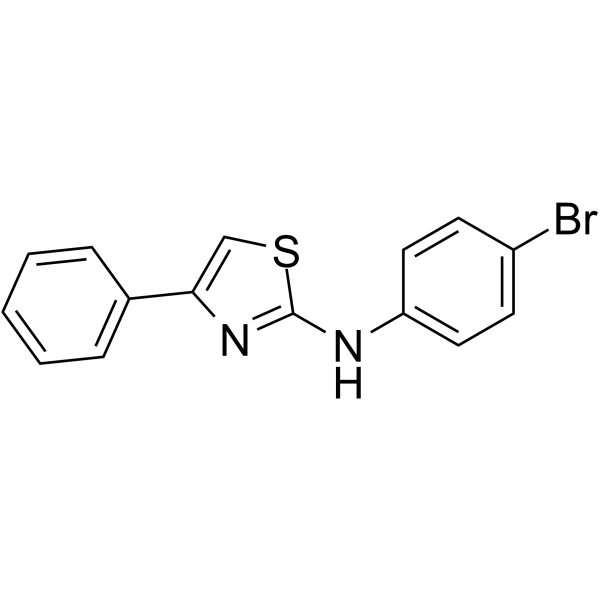
HY-114775
RCGD423gp130 Modulator -
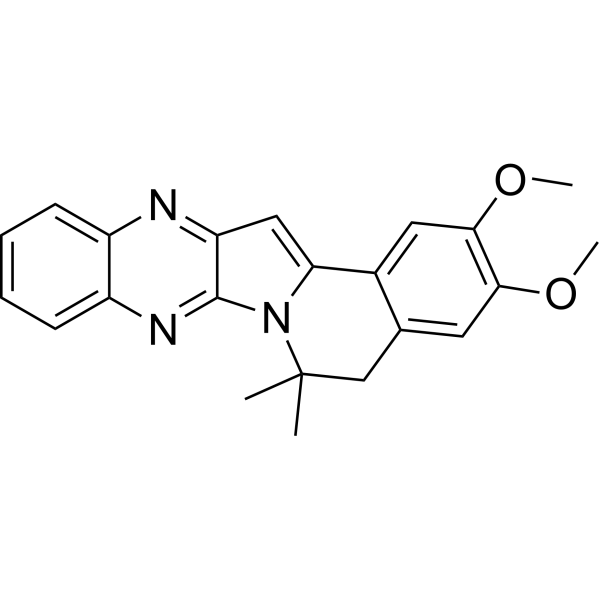
HY-19969
YM-90709IL-5 Receptor Antagonist -
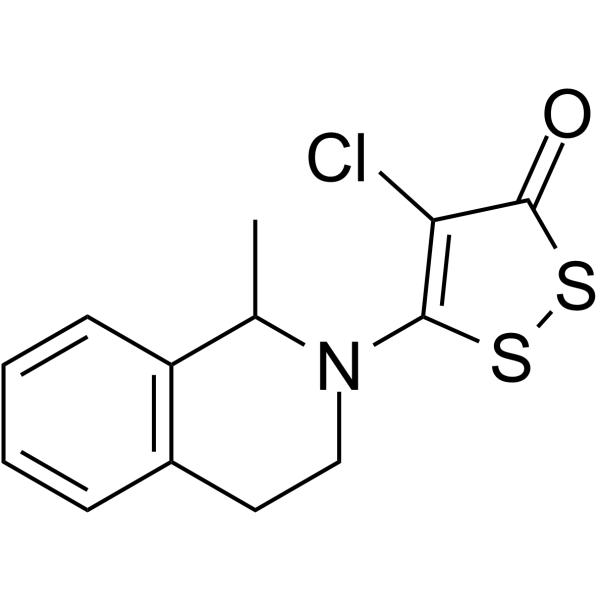
HY-101716
RP-54745 -
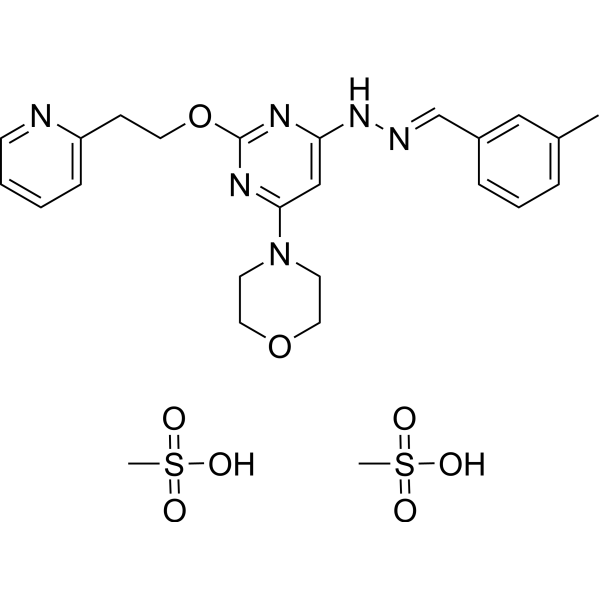
HY-14644A
Apilimod mesylateIL-12/IL-23 Inhibitor -
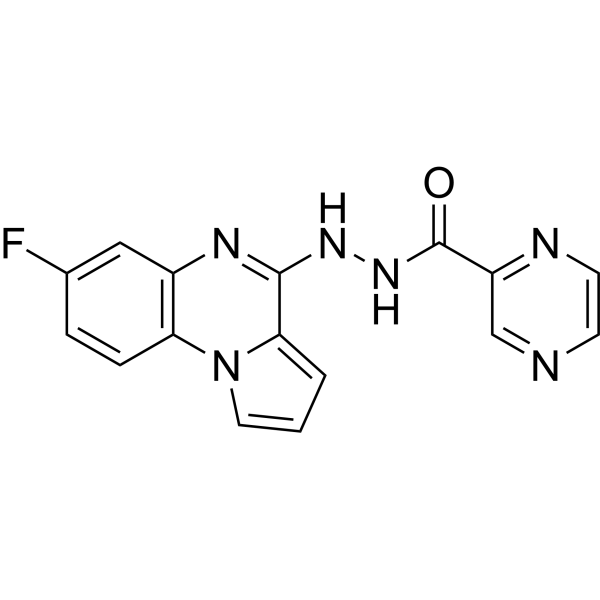
HY-15614
SC144GP130 Inhibitor -
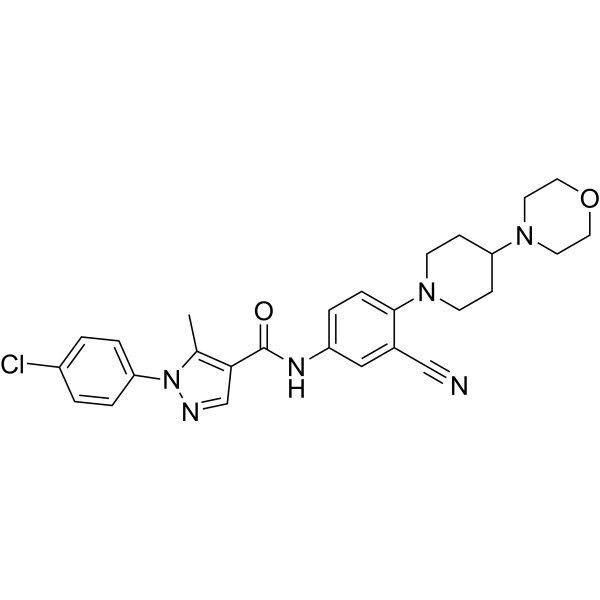
HY-15898
Y-320Apoptosis Inducer -
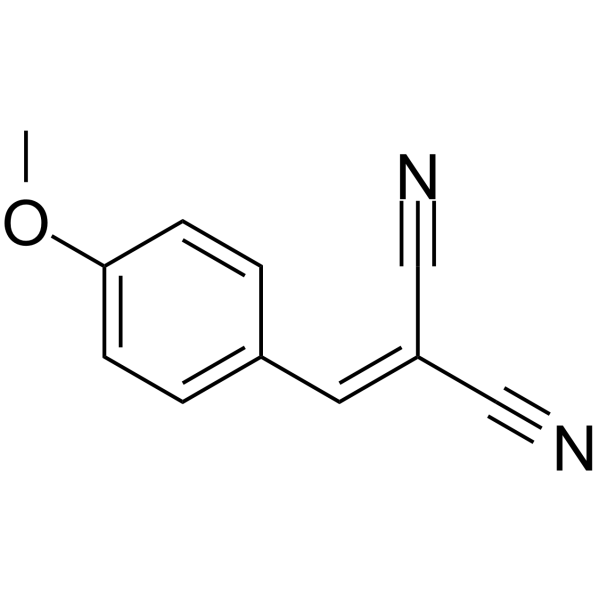
HY-16668
Tyrphostin A1Interleukin Related Inhibitor -

HY-101860R
GIBH-130 (Standard)Reference Standard -
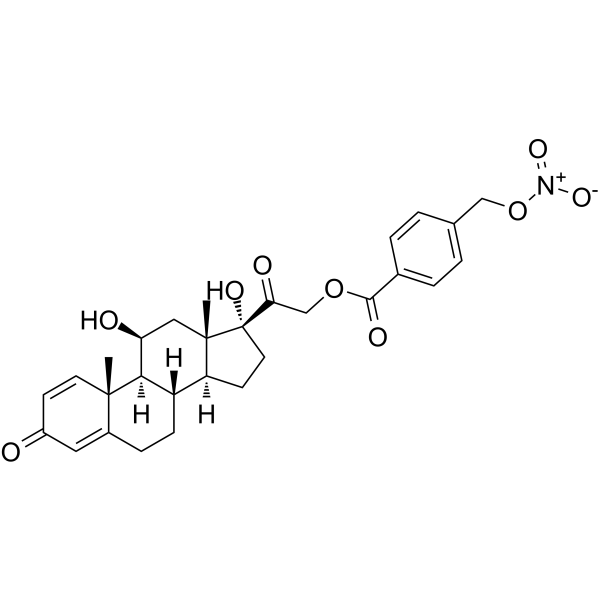
HY-101757
NO-prednisolonePrednisolone Derivative
Publications Citing Use of MedChemExpress (MCE) GIBH-130
More

Biological Activity
Description
IC50 & Target
[1]|
IL-1β 3.4 nM (IC50) |
Cellular Effect
|
Cell Line

|
Type | Value | Description | References |
|---|---|---|---|---|
| BV-2 | IC50 |
3.4 nM
Compound: GIBH-130
|
Antiinflammatory activity in LPS-stimulated mouse BV-2 cells assessed as inhibition of IL-1beta release at 10 uM and measured after 8 hrs by ELISA
Antiinflammatory activity in LPS-stimulated mouse BV-2 cells assessed as inhibition of IL-1beta release at 10 uM and measured after 8 hrs by ELISA
|
[PMID: 35931005] |
In Vitro
GIBH-130 is a novel antineuroinflammatory agent that is identified through microglia-based phenotypic screenings. GIBH-130 (IC50 3.4 nM) is identified in screenings as one of the most effective inhibitors with an acceptable half-life. Pretreatment of microglia with GIBH-130 significantly reduces the production of these factors in response to Lipopolysaccharides (LPS) stimulation, and the extent of the reduction is dependent on the concentrations of GIBH-130. The IC50 values of GIBH-130 for NO and TNF-α inhibition are 46.24 and 40.82 μM, respectively. Notably, pretreatment with GIBH-130 significantly suppresses the IL-1β secretion by activated microglia (IC50=3.4 nM). The inhibitory efficiency of GIBH-130 at 20 nM is comparable to 20 μM minocycline against IL-1β release. IL-1β is one of the major cytokines during neuroinflammatory progression of AD. So, it is meaningful to explain the selectivity of GIBH-130 against IL-1β (IC50 value 3.4 nM) over NO and TNF-α (IC50 value 46.24 and 40.82 μM, respectively) [1].
MedChemExpress (MCE) has not independently confirmed the accuracy of these methods. They are for reference only. Further protocols information, click here.
In Vivo
MedChemExpress (MCE) has not independently confirmed the accuracy of these methods. They are for reference only.


Chemical Information
-
CAS No. 1252608-59-5
-
Appearance Solid
-
Molecular Weight 360.41
-
Formula C20H20N6O
-
Color Off-white to pink
-
SMILES
O=C(C1=NN=C(C2=CC=CC=C2)C=C1C)N3CCN(C4=NC=CC=N4)CC3
-
Shipping
Room temperature in continental US; may vary elsewhere.
-
Storage
Powder -20°C 3 years 4°C 2 years In solvent -80°C 2 years -20°C 1 year


Publications (3)
-
Journal Impact Factor
-
Most Recent
-
Cell Death Discov
Intestinal Klebsiella pneumoniae infection enhances susceptibility to epileptic seizure which can be reduced by microglia activation. [Abstract]2021 Jul 7;7(1):175. PMID: 34234109 -
Ecotoxicol Environ Saf
Factors ameliorate pro-inflammatory microglia polarization through inhibition of reactive astrocytes induced by 2-chloroethanol. [Abstract]2023 Aug:261:115130. PMID: 37311391 -


Solvent & Solubility
In Vitro:
DMSO : 50 mg/mL (138.73 mM; Need ultrasonic; Hygroscopic DMSO has a significant impact on the solubility of product, please use newly opened DMSO)
H2O : < 0.1 mg/mL (insoluble)
Please refer to the solubility information to select the appropriate solvent. Once prepared, please aliquot and store the solution to prevent product inactivation from repeated freeze-thaw cycles.
Storage method and period of stock solution: -80°C, 2 years; -20°C, 1 year. When stored at -80°C, please use it within 2 years. When stored at -20°C, please use it within 1 year.
Please refer to the solubility information to select the appropriate solvent. Once prepared, please aliquot and store the solution to prevent product inactivation from repeated freeze-thaw cycles.
Storage method and period of stock solution: -80°C, 2 years; -20°C, 1 year. When stored at -80°C, please use it within 2 years. When stored at -20°C, please use it within 1 year.
Concentration (start) × Volume (start) = Concentration (final) × Volume (final)
In Vivo:
Select the appropriate dissolution method based on your experimental animal and administration route.
- For the following dissolution methods, please ensure to first prepare a clear stock solution using an In Vitro approach and then sequentially add co-solvents:
- To ensure reliable experimental results, the clarified stock solution can be appropriately stored based on storage conditions. As for the working solution for In Vivo experiments, it is recommended to prepare freshly and use it on the same day.
- The percentages shown for the solvents indicate their volumetric ratio in the final prepared solution. If precipitation or phase separation occurs during preparation, heat and/or sonication can be used to aid dissolution.
Add each solvent one by one: 10% DMSO 40% PEG300 5% Tween-80 45% Saline
Solubility: ≥ 2.5 mg/mL (6.94 mM); Clear solution
This protocol yields a clear solution of ≥ 2.5 mg/mL (saturation unknown).
Taking 1 mL working solution as an example, add 100 μL DMSO stock solution (25.0 mg/mL) to 400 μL PEG300, and mix evenly; then add 50 μL Tween-80 and mix evenly; then add 450 μL Saline to adjust the volume to 1 mL.
Preparation of Saline: Dissolve 0.9 g sodium chloride in ddH₂O and dilute to 100 mL to obtain a clear Saline solution.
Add each solvent one by one: 10% DMSO 90% (20% SBE-β-CD in Saline)
Solubility: ≥ 2.5 mg/mL (6.94 mM); Clear solution
This protocol yields a clear solution of ≥ 2.5 mg/mL (saturation unknown).
Taking 1 mL working solution as an example, add 100 μL DMSO stock solution (25.0 mg/mL) to 900 μL 20% SBE-β-CD in Saline, and mix evenly.
Preparation of 20% SBE-β-CD in Saline (4°C, storage for one week): 2 g SBE-β-CD powder is dissolved in 10 mL Saline, completely dissolve until clear.
In Vivo Dissolution Calculator
Please enter the basic information of animal experiments:
-
-
-
-
Recommended: Prepare an additional quantity of animals to account for potential losses during experiments.
Please enter your animal formula composition:
-
%DMSO +
Recommended: Keep the proportion of DMSO in working solution below 2% if your animal is weak.
-
%+
-
+%Tween-80 + +
-
%Saline +
The co-solvents required include: DMSO, . All of co-solvents are available by MedChemExpress (MCE). , Tween 80. All of co-solvents are available by MedChemExpress (MCE).
Working solution concentration: 0.22 mg/mL
Method for preparing stock solution: mg drug dissolved in μL DMSO. Stock solution concentration: mg/mL.
1. Take μL DMSO stock solution;
2. Add μL .
μL , mix evenly;
3. Then add μL Tween 80, mix evenly;
4. Then add μL
Please ensure that the stock solution in the first step is dissolved to a clear state, and add co-solvents in sequence. You can use ultrasonic heating (ultrasonic cleaner, recommended frequency 20-40 kHz), vortexing, etc. to assist dissolution.

Protocols
-
Cell Cytotoxicity Assay
Cytotoxicity assays are usually based on the assessment of cell membrane damage, which can also be indirectly detected by measuring cell viability. Detection methods include MTT assay, CKK-8 assay, LDH assay and ATP assay, etc.
-
Research Protocol for Neurological Diseases
PINK1/Parkin-mediated mitophagy pathway is a mitochondrial quality-control signaling axis in which mitochondrial depolarization stabilizes PINK1 on damaged mitochondria, activates Parkin recruitment and E3 ubiquitin ligase activity, promotes ubiquitination of outer mitochondrial membrane proteins, recruits selective autophagy adaptors, and drives lysosomal degradation of damaged mitochondria. In neurological disease research, this pathway is experimentally important because neurons, especially dopaminergic neurons, are highly dependent on mitochondrial integrity, and defective mitochondrial turnover can lead to mitochondrial dysfunction, oxidative stress, impaired neuronal survival, α-synuclein accumulation, and neuroinflammatory damage-associated signals. The genetic disease link is strongest in Parkinson’s disease because mutations in PRKN/parkin cause autosomal recessive juvenile parkinsonism, mutations in PINK1 cause hereditary early-onset Parkinson’s disease, and Drosophila studie
-
Pyroptosis Solutions
Pyroptosis is a lytic inflammatory cell-death pathway executed by gasdermin pores, most classically through inflammasome-mediated activation of caspase-1, cleavage of gasdermin D, membrane pore formation, LDH release, and secretion of IL-1β and IL-18. The canonical pathway is commonly modeled by priming cells with an inflammatory signal such as LPS to induce pro-IL-1β and inflammasome components, followed by an activation signal such as ATP or nigericin to activate NLRP3, ASC speck formation, caspase-1 cleavage, GSDMD cleavage, cytokine release, and pyroptotic membrane rupture. The non-canonical pathway is triggered when cytosolic LPS activates mouse caspase-11 or human caspase-4/5, leading to GSDMD cleavage and pyroptosis, and this can secondarily activate NLRP3-dependent IL-1β release. Pyroptosis is linked to inflammatory injury, infection, cancer, liver disease, ocular disease, placental inflammation, and other disease phenotypes, but unresolved questions include which gasdermin fam


Purity & Documentation
-
Data Sheet (279 KB)
-
SDS (393 KB)
- English - EN (393 KB)
- Français - FR (393 KB)
- Deutsch - DE (393 KB)
- Norwegian - NO (393 KB)
- Español - ES (393 KB)
- Swedish - SV (393 KB)
- Italian - IT (393 KB)
- Korean - KR (393 KB)
- Portuguese - PT (393 KB)
-
Handling Instructions (2659 KB)
References


Complete Stock Solution Preparation Table
Please refer to the solubility information to select the appropriate solvent. Once prepared, please aliquot and store the solution to prevent product inactivation from repeated freeze-thaw cycles.
Storage method and period of stock solution: -80°C, 2 years; -20°C, 1 year. When stored at -80°C, please use it within 2 years. When stored at -20°C, please use it within 1 year.
| Optional Solvent | Concentration Solvent Mass | 1 mg | 5 mg | 10 mg | 25 mg |
|---|---|---|---|---|---|
| DMSO | 1 mM | 2.7746 mL | 13.8731 mL | 27.7462 mL | 69.3654 mL |
| 5 mM | 0.5549 mL | 2.7746 mL | 5.5492 mL | 13.8731 mL | |
| 10 mM | 0.2775 mL | 1.3873 mL | 2.7746 mL | 6.9365 mL | |
| 15 mM | 0.1850 mL | 0.9249 mL | 1.8497 mL | 4.6244 mL | |
| 20 mM | 0.1387 mL | 0.6937 mL | 1.3873 mL | 3.4683 mL | |
| 25 mM | 0.1110 mL | 0.5549 mL | 1.1098 mL | 2.7746 mL | |
| 30 mM | 0.0925 mL | 0.4624 mL | 0.9249 mL | 2.3122 mL | |
| 40 mM | 0.0694 mL | 0.3468 mL | 0.6937 mL | 1.7341 mL | |
| 50 mM | 0.0555 mL | 0.2775 mL | 0.5549 mL | 1.3873 mL | |
| 60 mM | 0.0462 mL | 0.2312 mL | 0.4624 mL | 1.1561 mL | |
| 80 mM | 0.0347 mL | 0.1734 mL | 0.3468 mL | 0.8671 mL | |
| 100 mM | 0.0277 mL | 0.1387 mL | 0.2775 mL | 0.6937 mL |


GIBH-130 Related Classifications
HY-101860 Related Classifications
 Powered by Bioz