



Hexetidine

Based on 1 Customer Validation
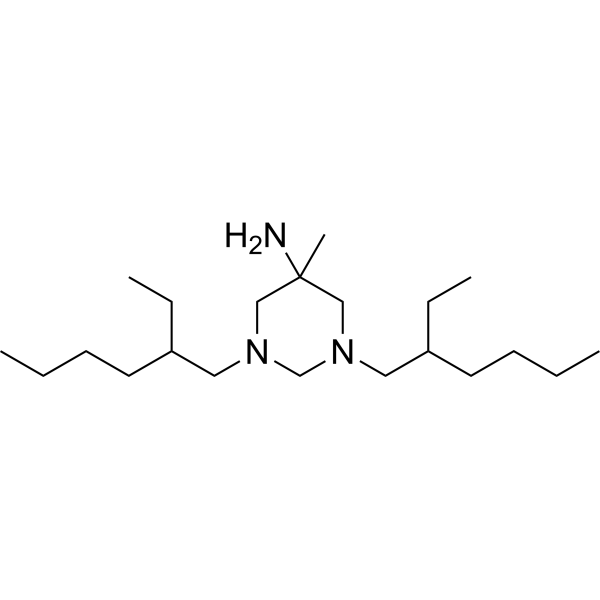
Hexetidine (NSC-17764) is an orally active antibacterial and antifungal agent with broad antibacterial and antifungal activity. Hexetidine combined with IPBC potentiates strong fungal growth inhibition properties. Hexetidine at concentrations greater than 0.1% can cause oral ulceration. Additionally, Hexetidine improves its plaque inhibiting activities combined with zinc and has been confirmed the effectiveness on purulent wound along with ultrasound. Hexetidine is a promising candidate for research in fungus-related diseases and soft tissue purulent-inflammatory
연구목적의 판매만을 진행합니다. 환자를 대상으로 한 판매는 하지 않습니다.
- Purity : 98.0%
- CAS No.: 141-94-6
- 화학식: C21H45N3
- 분자량:339.60
-
보관:Pure form -20°C, 3 years , 4°C, 2 years ; In solvent -80°C, 6 months , -20°C, 1 month

To place orders, for customer services and technical support, please contact: MedChemExpress USA
Tel: 609-228-6898 E-mail: [email protected] [email protected]


-
 Biological Activity
-
Chemical Information
-
용액&용해도
- Protocol
- 순도&문서
- References
-
 Help & FAQs


-
HY-B0221
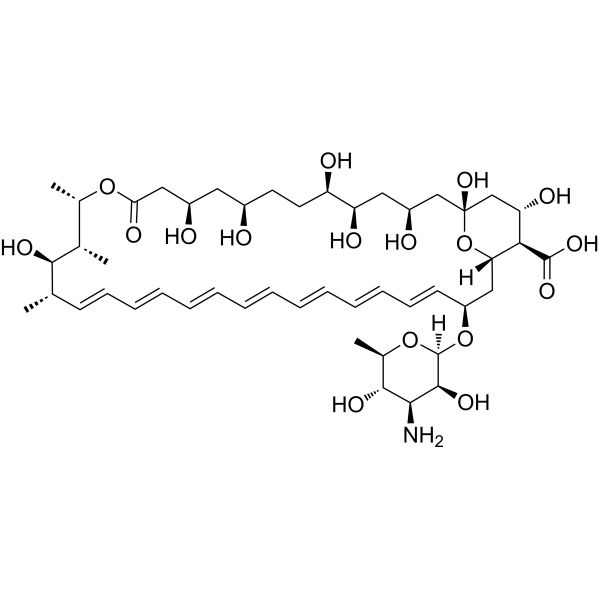
Amphotericin BAntifungal Agent -
HY-B0996R
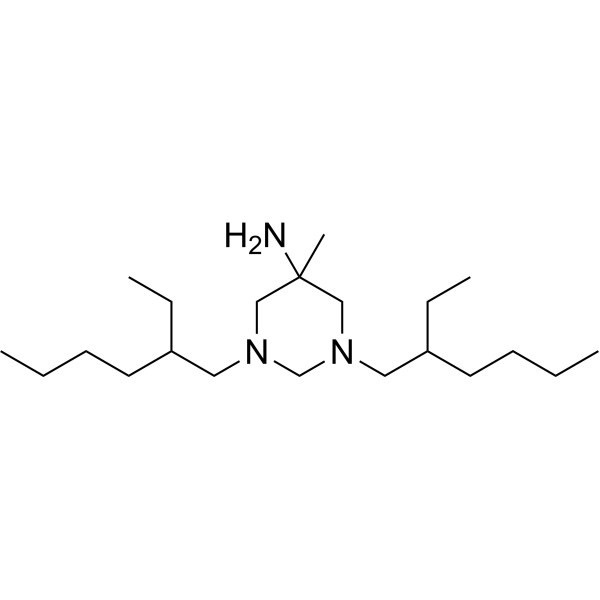
Hexetidine (Standard)Antiseptic Agent -
HY-13553
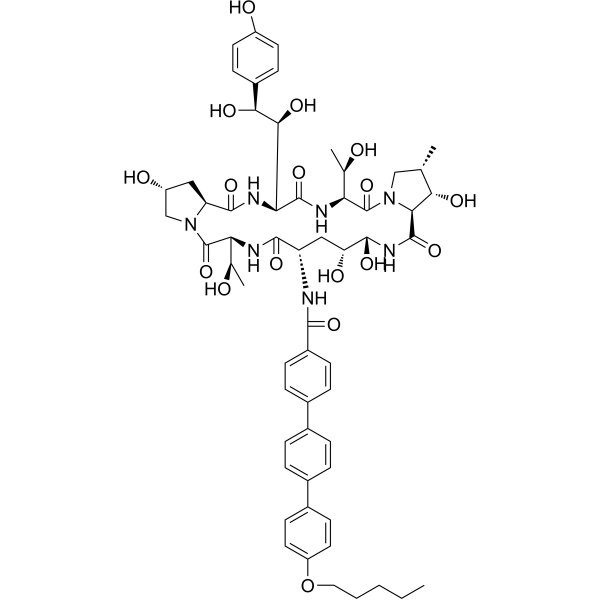
AnidulafunginAntifungal Agent -
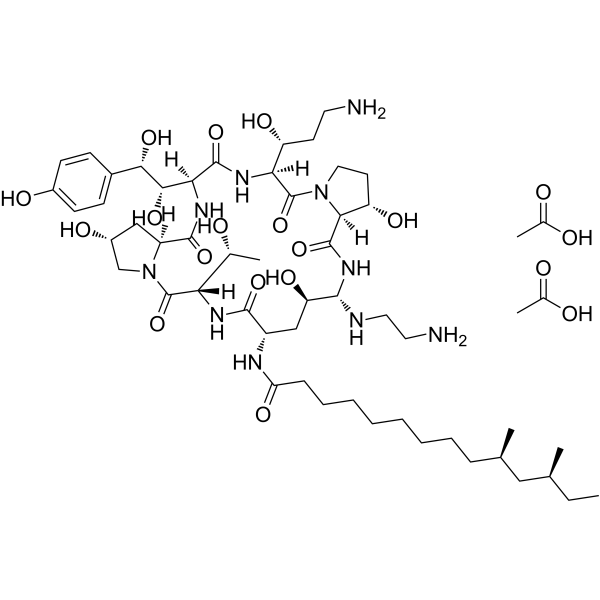
HY-17006
Caspofungin diacetateAntifungal Agent -
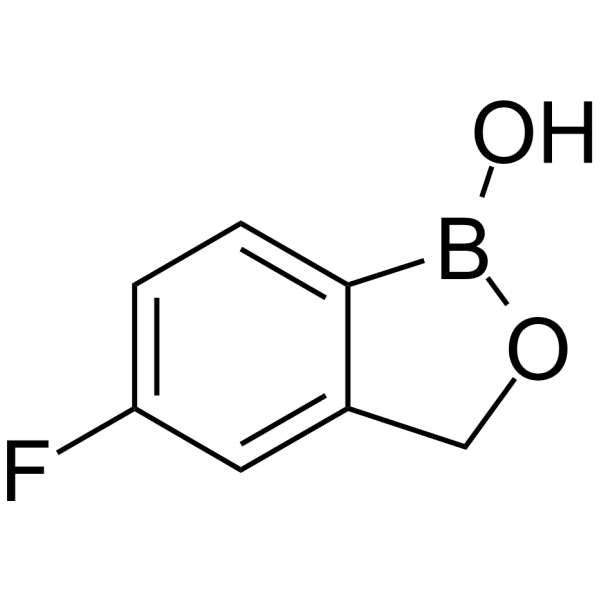
HY-10980
TavaboroleAnti-fungal Agent -
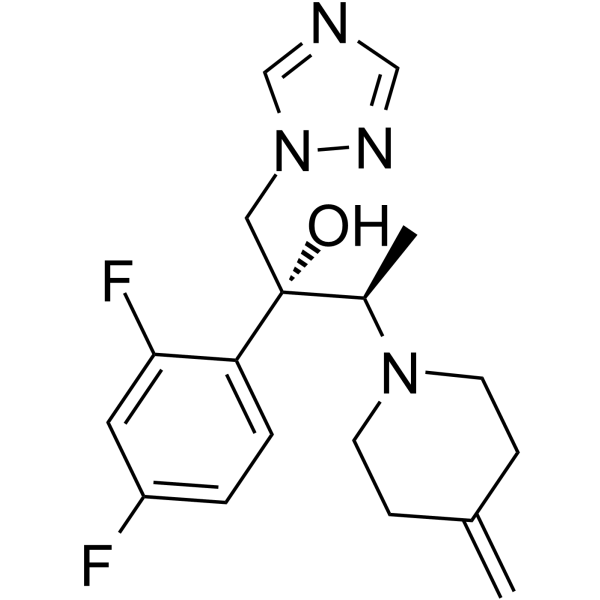
HY-15660
EfinaconazoleAntifungal Agent -
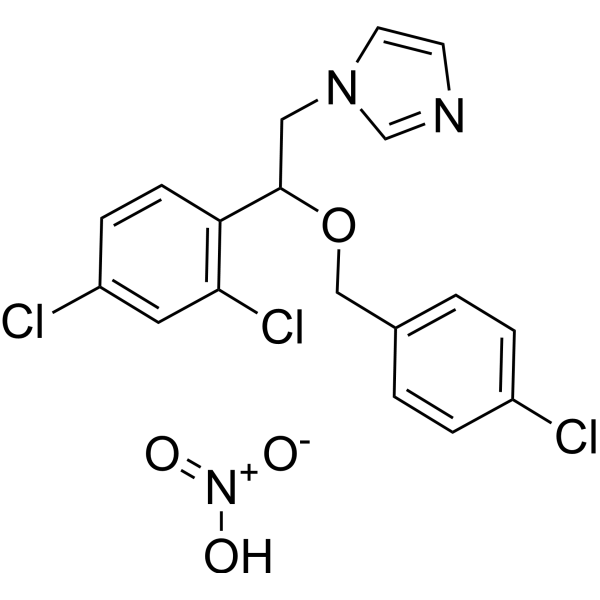
HY-B0453
Econazole nitrateAntifungal Agent -
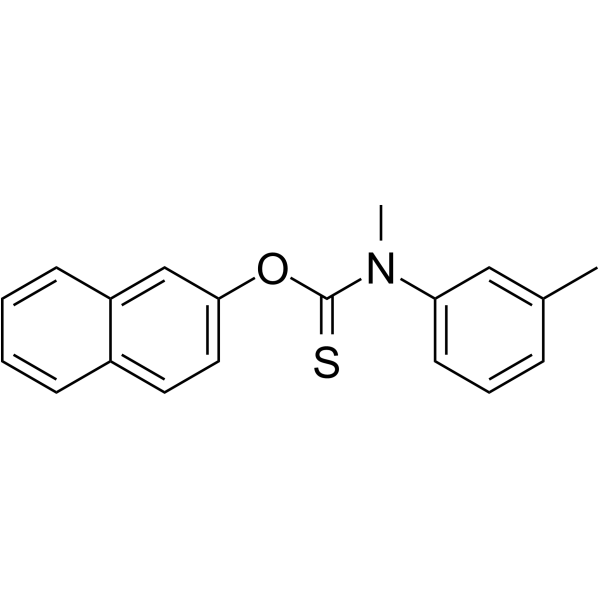
HY-B0370
TolnaftateFungal Inhibitor -
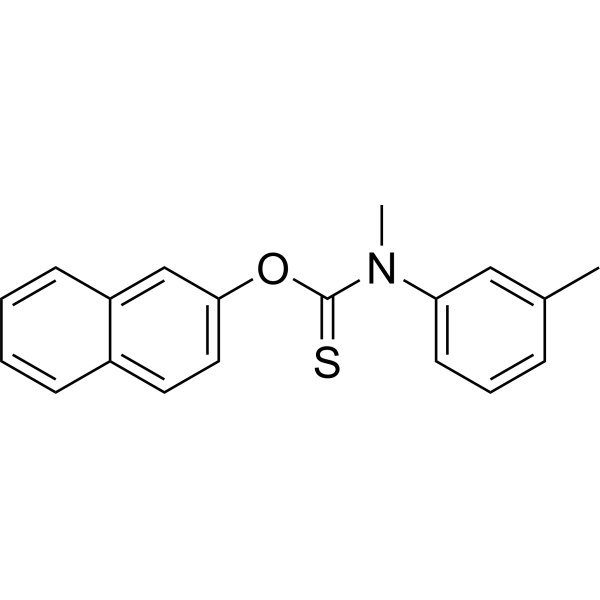
HY-B0370R
Tolnaftate (Standard)Fungal Inhibitor -
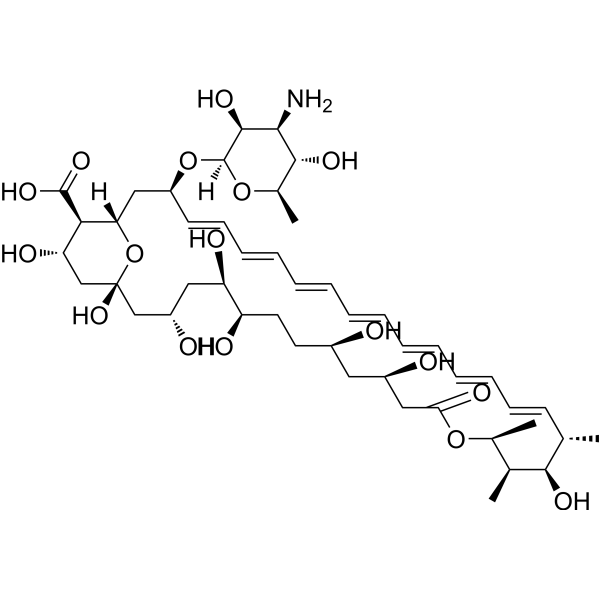
HY-B0221R
Amphotericin B (Standard) -

HY-13553R
Anidulafungin (Standard)Antifungal Agent -
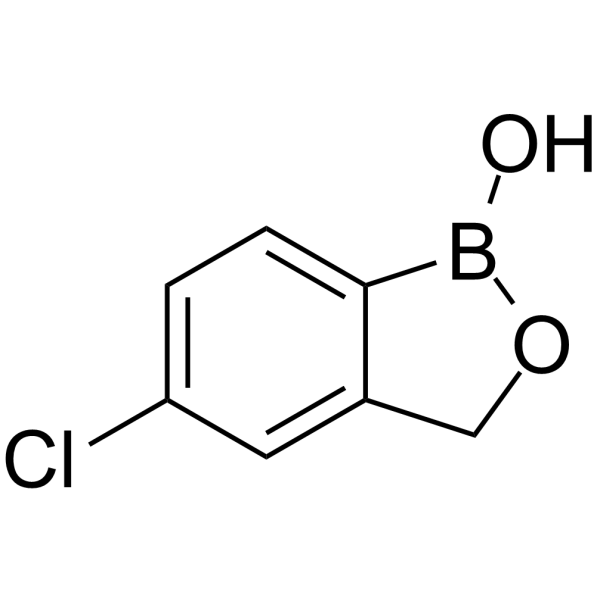
HY-100527
AN2718Protein Synthesis Inhibitor


Biological Activity
제품 설명
In Vitro
Hexetidine (15 μM, 14 days) retains strong inhibition of T. virens growth after incorporation within the alginate gel combined with iodopropynyl-butyl-carbamate (IPBC) (250 μg/ml)[1]. Hexetidine (1 mg/ml, 2 h) exhibits the rates of kill similar for both S. aureus and Ps. aeruginosa with no detectable survivors in either growth phase within 2 h of contact[6].
MedChemExpress (MCE) has not independently confirmed the accuracy of these methods. They are for reference only. Further protocols information, click here.
-
Cell Line:Human Rhabdomyosarcoma cell lines
-
Concentration:20 μM
-
Incubation Time:24 h
-
Result:Did not significantly potentiate the effect of IPBC combined with Trifluoperazine (TFZ) (HY-B0532) against the human rhabdomyosarcoma cell lines, suggesting that the combinatorial effects were specific to the fungi.
In Vivo
MedChemExpress (MCE) has not independently confirmed the accuracy of these methods. They are for reference only.
-
Animal Model:Male Wistar rats with a purulent wound[4].
-
Dosage:0.5 g
-
Administration:smeared for 15-19 days
-
Result:Showed significantly better results combined with photoditazine in the first and second phases of the course of the wound process than did their isolated use.
Clinical Trial
| NCT Number | Sponsor | Condition | Start Date |
Phase

|
|---|---|---|---|---|
| NCT01329991 | Plexxikon| | 2011-05 | PHASE1 |


Chemical Information
-
CAS No. 141-94-6
-
Appearance Liquid (Density: 0.889 g/cm3)
-
분자량 339.60
-
화학식 C21H45N3
-
Color Colorless to light yellow
-
SMILES
NC1(C)CN(CC(CC)CCCC)CN(CC(CC)CCCC)C1
-
Synonyms
NSC-17764
-
선적
Room temperature in continental US; may vary elsewhere.
-
보관
Pure form -20°C 3 years 4°C 2 years In solvent -80°C 6 months -20°C 1 month


용액&용해도
In Vitro:
DMSO : 200 mg/mL (588.93 mM; ultrasonic and warming and heat to 80°C; Hygroscopic DMSO has a significant impact on the solubility of product, please use newly opened DMSO)
Ethanol : 100 mg/mL (294.46 mM; Need ultrasonic)
Please refer to the solubility information to select the appropriate solvent. Once prepared, please aliquot and store the solution to prevent product inactivation from repeated freeze-thaw cycles.
Storage method and period of stock solution: -80°C, 6 months; -20°C, 1 month. When stored at -80°C, please use it within 6 months. When stored at -20°C, please use it within 1 month.
Please refer to the solubility information to select the appropriate solvent. Once prepared, please aliquot and store the solution to prevent product inactivation from repeated freeze-thaw cycles.
Storage method and period of stock solution: -80°C, 6 months; -20°C, 1 month. When stored at -80°C, please use it within 6 months. When stored at -20°C, please use it within 1 month.
Concentration (start) × Volume (start) = Concentration (final) × Volume (final)
In Vivo:
Select the appropriate dissolution method based on your experimental animal and administration route.
- For the following dissolution methods, please ensure to first prepare a clear stock solution using an In Vitro approach and then sequentially add co-solvents:
- To ensure reliable experimental results, the clarified stock solution can be appropriately stored based on storage conditions. As for the working solution for In Vivo experiments, it is recommended to prepare freshly and use it on the same day.
- The percentages shown for the solvents indicate their volumetric ratio in the final prepared solution. If precipitation or phase separation occurs during preparation, heat and/or sonication can be used to aid dissolution.
Add each solvent one by one: 10% DMSO 40% PEG300 5% Tween-80 45% Saline
Solubility: ≥ 2.08 mg/mL (6.12 mM); Clear solution
This protocol yields a clear solution of ≥ 2.08 mg/mL (saturation unknown).
Taking 1 mL working solution as an example, add 100 μL DMSO stock solution (20.8 mg/mL) to 400 μL PEG300, and mix evenly; then add 50 μL Tween-80 and mix evenly; then add 450 μL Saline to adjust the volume to 1 mL.
Preparation of Saline: Dissolve 0.9 g sodium chloride in ddH₂O and dilute to 100 mL to obtain a clear Saline solution.
Add each solvent one by one: 10% DMSO 90% (20% SBE-β-CD in Saline)
Solubility: ≥ 2.08 mg/mL (6.12 mM); Clear solution
This protocol yields a clear solution of ≥ 2.08 mg/mL (saturation unknown).
Taking 1 mL working solution as an example, add 100 μL DMSO stock solution (20.8 mg/mL) to 900 μL 20% SBE-β-CD in Saline, and mix evenly.
Preparation of 20% SBE-β-CD in Saline (4°C, storage for one week): 2 g SBE-β-CD powder is dissolved in 10 mL Saline, completely dissolve until clear.
In Vivo Dissolution Calculator
Please enter the basic information of animal experiments:
-
-
-
-
Recommended: Prepare an additional quantity of animals to account for potential losses during experiments.
Please enter your animal formula composition:
-
%DMSO +
Recommended: Keep the proportion of DMSO in working solution below 2% if your animal is weak.
-
%+
-
+%Tween-80 + +
-
%Saline +
The co-solvents required include: DMSO, . All of co-solvents are available by MedChemExpress (MCE). , Tween 80. All of co-solvents are available by MedChemExpress (MCE).
Working solution concentration: 0.22 mg/mL
Method for preparing stock solution: mg drug dissolved in μL DMSO. Stock solution concentration: mg/mL.
1. Take μL DMSO stock solution;
2. Add μL .
μL , mix evenly;
3. Then add μL Tween 80, mix evenly;
4. Then add μL
Please ensure that the stock solution in the first step is dissolved to a clear state, and add co-solvents in sequence. You can use ultrasonic heating (ultrasonic cleaner, recommended frequency 20-40 kHz), vortexing, etc. to assist dissolution.

Protocol
-
Research Protocol for Infectious Diseases
Infectious-disease experiments test how pathogens interact with host barriers, innate immune receptors, inflammatory signaling, pathogen replication, and tissue injury; pattern-recognition receptors such as TLRs, RIG-I-like receptors, NOD-like receptors, and inflammasomes detect microbial molecules and activate NF-κB, interferon, and cytokine responses. The central hypothesis is that infection severity reflects the balance between pathogen burden and host response: protective inflammation restricts pathogen growth, whereas excessive or mislocalized inflammation contributes to tissue damage and disease phenotype. Unresolved questions include which host pathways are protective versus pathogenic, why some infection models fail to translate to human disease, and which combined readouts best predict clinically relevant infection outcomes.


순도&문서
-
Data Sheet (271 KB)
-
SDS (394 KB)
- English - EN (394 KB)
- Français - FR (394 KB)
- Deutsch - DE (394 KB)
- Norwegian - NO (394 KB)
- Español - ES (394 KB)
- Swedish - SV (394 KB)
- Italian - IT (394 KB)
- Korean - KR (394 KB)
- Portuguese - PT (394 KB)
-
Handling Instructions (2659 KB)
References
[1]. Vallières C, et al. Potentiated inhibition of Trichoderma virens and other environmental fungi by new biocide combinations[J]. Appl Microbiol Biotechnol. 2021 Apr;105(7):2867-2875. [Content Brief]
[3]. Afennich F, et al. The effect of hexetidine mouthwash on the prevention of plaque and gingival inflammation: a systematic review.Int J Dent Hyg. 2011 Aug;9(3):182-90. [Content Brief]
[5]. Gorman SP, et al. The concomitant development of poly(vinyl chloride)-related biofilm and antimicrobial resistance in relation to ventilator-associated pneumonia[J]. Biomaterials. 2001 Oct;22(20):2741-7. [Content Brief]


Complete Stock Solution Preparation Table
Please refer to the solubility information to select the appropriate solvent. Once prepared, please aliquot and store the solution to prevent product inactivation from repeated freeze-thaw cycles.
Storage method and period of stock solution: -80°C, 6 months; -20°C, 1 month. When stored at -80°C, please use it within 6 months. When stored at -20°C, please use it within 1 month.
| Optional Solvent | Concentration Solvent Mass | 1 mg | 5 mg | 10 mg | 25 mg |
|---|---|---|---|---|---|
| Ethanol / DMSO | 1 mM | 2.9446 mL | 14.7232 mL | 29.4464 mL | 73.6160 mL |
| 5 mM | 0.5889 mL | 2.9446 mL | 5.8893 mL | 14.7232 mL | |
| 10 mM | 0.2945 mL | 1.4723 mL | 2.9446 mL | 7.3616 mL | |
| 15 mM | 0.1963 mL | 0.9815 mL | 1.9631 mL | 4.9077 mL | |
| 20 mM | 0.1472 mL | 0.7362 mL | 1.4723 mL | 3.6808 mL | |
| 25 mM | 0.1178 mL | 0.5889 mL | 1.1779 mL | 2.9446 mL | |
| 30 mM | 0.0982 mL | 0.4908 mL | 0.9815 mL | 2.4539 mL | |
| 40 mM | 0.0736 mL | 0.3681 mL | 0.7362 mL | 1.8404 mL | |
| 50 mM | 0.0589 mL | 0.2945 mL | 0.5889 mL | 1.4723 mL | |
| 60 mM | 0.0491 mL | 0.2454 mL | 0.4908 mL | 1.2269 mL | |
| 80 mM | 0.0368 mL | 0.1840 mL | 0.3681 mL | 0.9202 mL | |
| 100 mM | 0.0294 mL | 0.1472 mL | 0.2945 mL | 0.7362 mL |


Hexetidine Related Classifications
HY-B0996 Related Classifications
 Powered by Bioz