



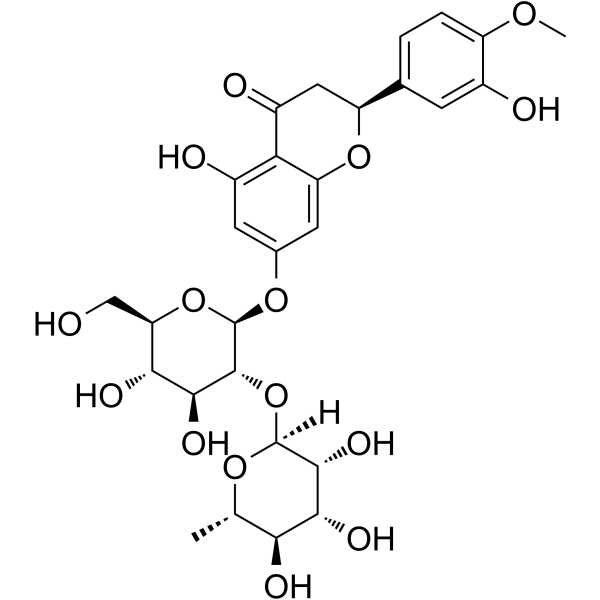
Neohesperidin
Based on 9 publication(s) in Google Scholar
Neohesperidin is a flavonoid compound abundant in citrus plants with antioxidant and anti-inflammatory effects. Neohesperidin can upregulate the Wnt/β-catenin signaling pathway, enhance the nuclear translocation of β-catenin and the differentiation of bone marrow stromal cells.
For research use only. We do not sell to patients.
- Purity : 98.67%
- CAS No.: 13241-33-3
- Formula: C28H34O15
- Molecular Weight:610.56
-
Storage:Powder -20°C, 3 years , 4°C, 2 years ; In solvent -80°C, 2 years , -20°C, 1 year

To place orders, for customer services and technical support, please contact: MedChemExpress USA
Tel: 609-228-6898 E-mail: [email protected] [email protected]


-
 Biological Activity
-
Chemical Information
-
Solvent & Solubility
- Protocols
- Purity & Documentation
- References
-
 Help & FAQs


-
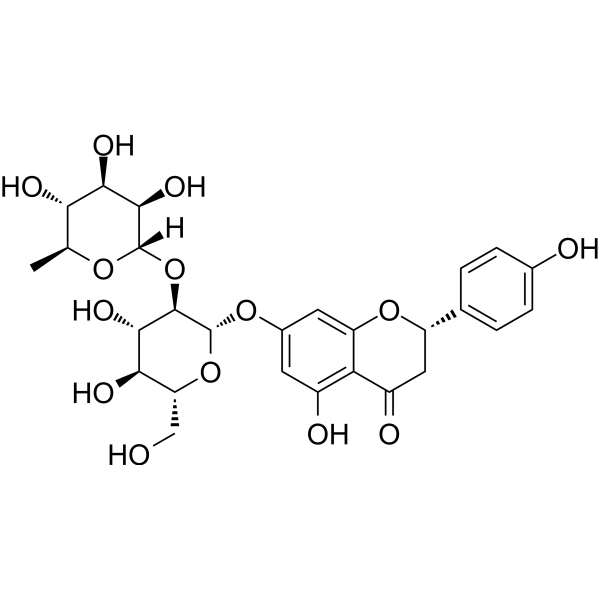
HY-N0153
NaringinCytochrome P450 Inhibitor -
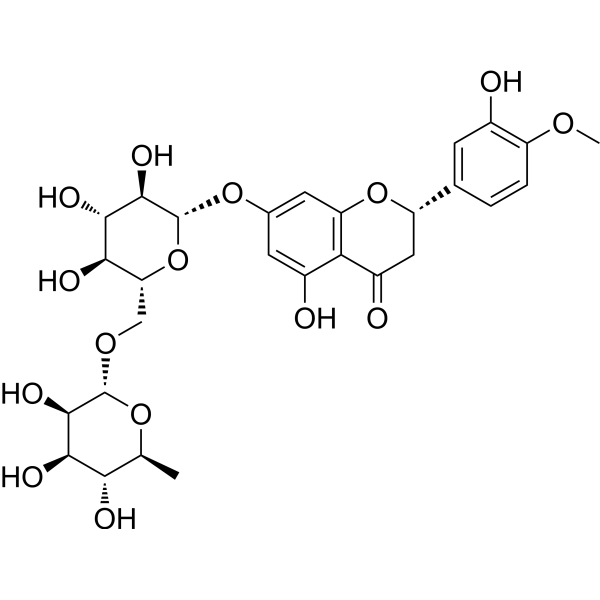
HY-15337
HesperidinAntioxidant -
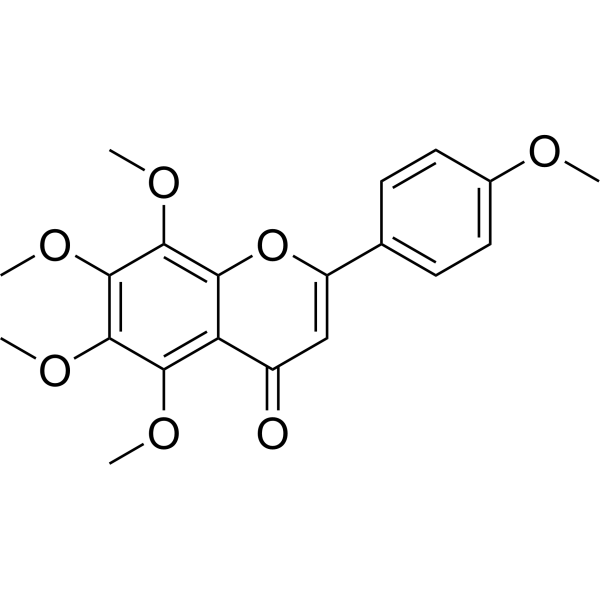
HY-N0133
TangeretinApoptosis Inducer -
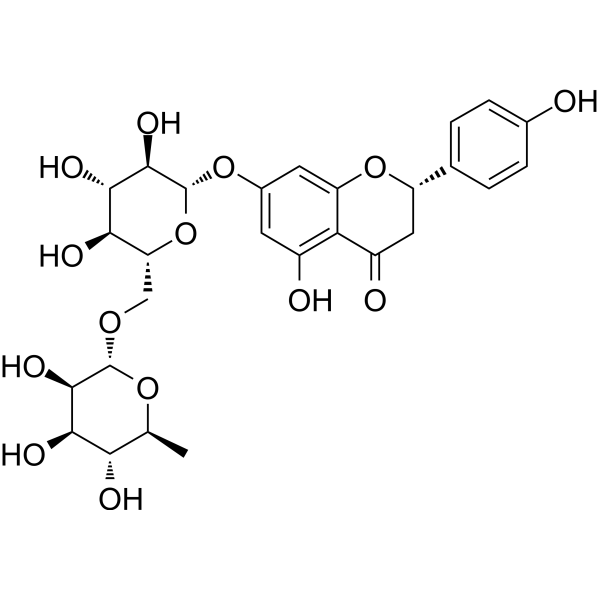
HY-N0804
NarirutinShikimate Kinase Inhibitor -
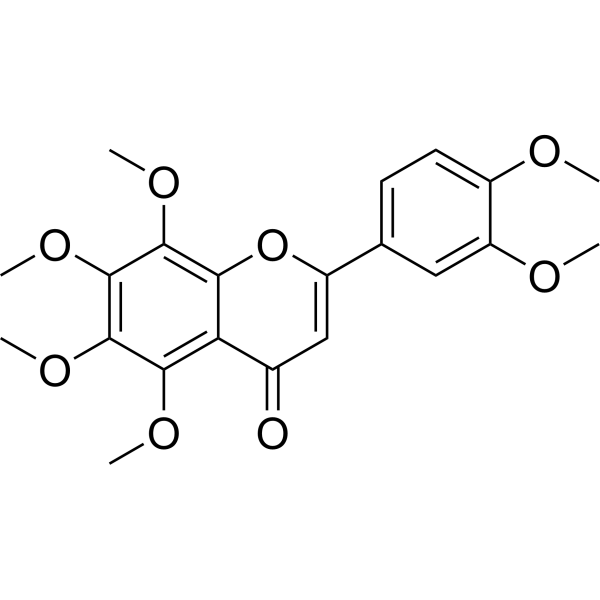
HY-N0155
NobiletinROR Agonist -
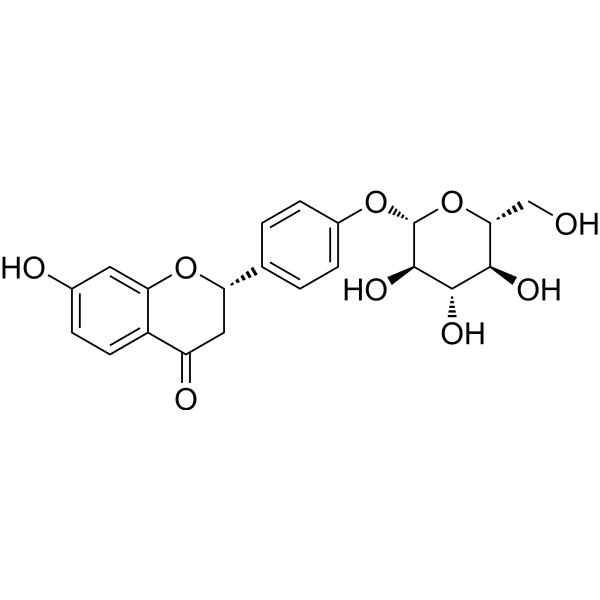
HY-N0376
LiquiritinAKR1C1 Inhibitor -
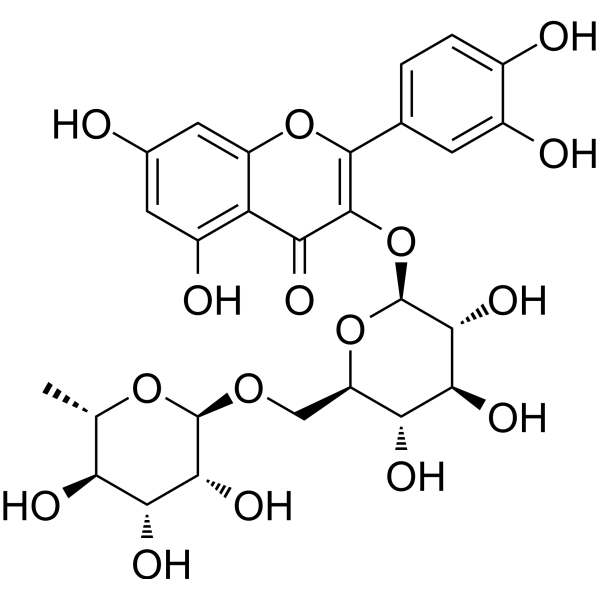
HY-N0148
RutinCBR1 Inhibitor -
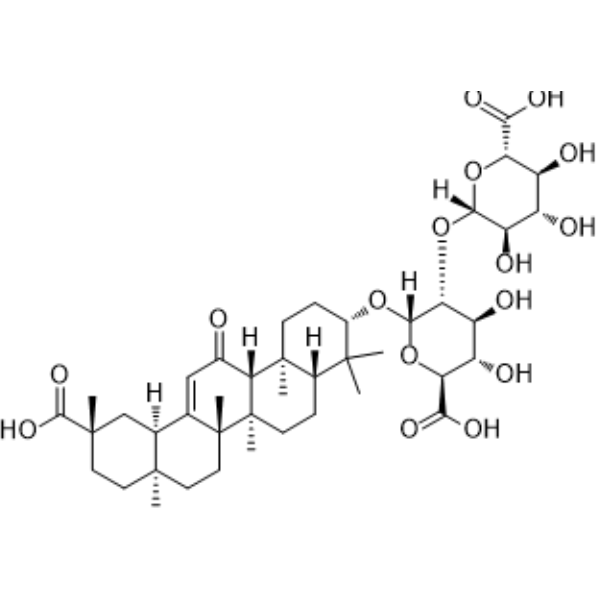
HY-N0184
Glycyrrhizic acidHMGB1 Antagonist -
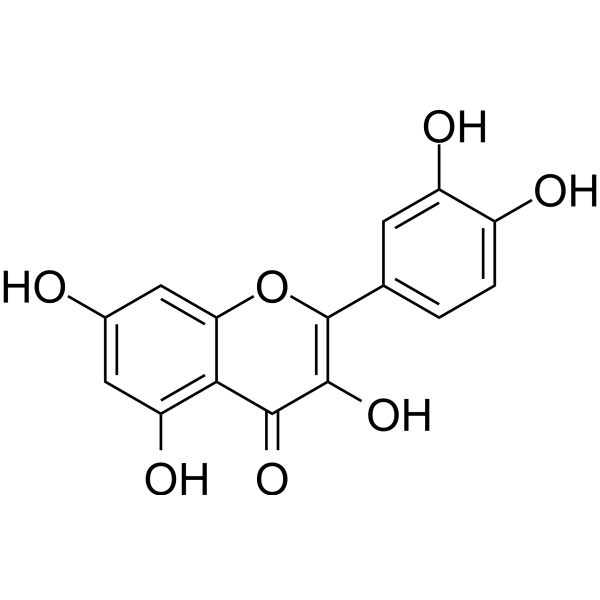
HY-18085
QuercetinFlavonoid Antioxidant -
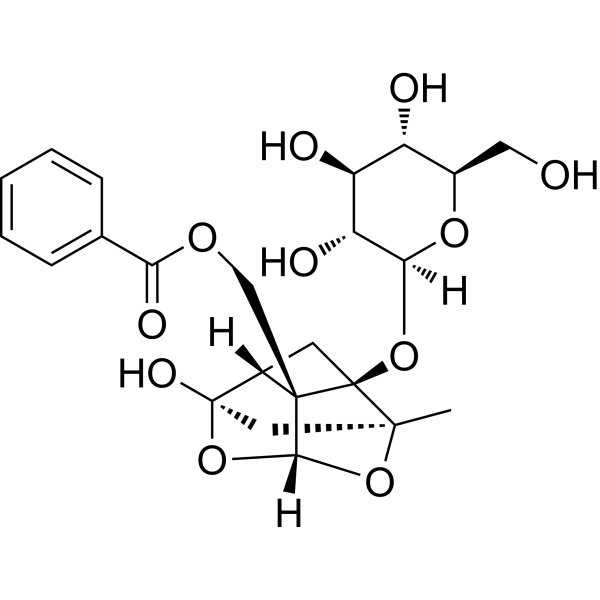
HY-N0293
PaeoniflorinHSP Activator -
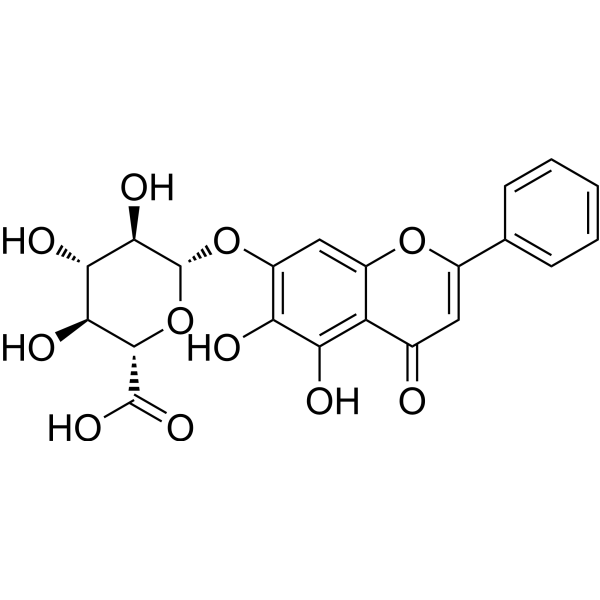
HY-N0197
BaicalinAutophagy Inducer -
HY-N0703
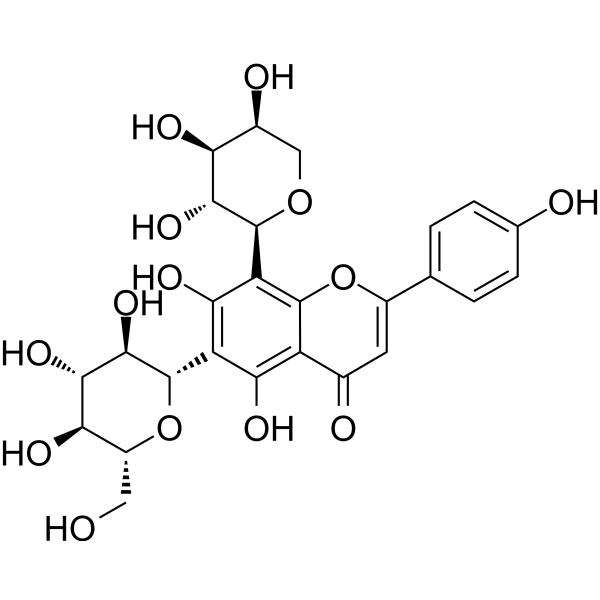
SchaftosideFlavonoid
Publications Citing Use of MedChemExpress (MCE) Neohesperidin
More- Acta Pharm Sin B. 2021 Jan;11(1):143-155. [Abstract]
- Phytomedicine. 2022 Jun:100:154041. [Abstract]
- Food Chem. 2025 Dec 30:497:146992. [Abstract]
- Food Chem. 2025 Oct 15:489:144992. [Abstract]
- Phytother Res. 2026 Jun 29. [Abstract]
- Chin J Nat Med. 2021 Oct;19(10):741-749. [Abstract]
- J Photochem Photobiol B. 2025 May:266:113148. [Abstract]
- Int J Food Sci Technol. 2023 Aug 31.
- Fitoterapia. 2022 Nov:163:105314. [Abstract]
 Customer Validation & Images

-
Cell Proliferation/Viability Assay

-
WB

-
ELISA

-
Cell Migration/Invasion Assay

-
Apoptosis Analysis


Biological Activity
Description
In Vitro
Neohesperidin induces cell apoptosis in human breast adenocarcinoma MDA-MB-231 cells. The IC50 values of neohesperidin at 24 and 48 h are 47.4±2.6 μM and 32.5±1.8 μM, respectively. The expressions of P53 and Bax in the neohesperidin-treated cells are significantly up-regulated, while that of Bcl-2 is down-regulated[1]. Neohesperidin exhibits antioxidant activity (IC50=22.31 μg/mL) in the DPPH radical-scavenging assay[2].
MedChemExpress (MCE) has not independently confirmed the accuracy of these methods. They are for reference only.
In Vivo
MedChemExpress (MCE) has not independently confirmed the accuracy of these methods. They are for reference only.


Chemical Information
-
CAS No. 13241-33-3
-
Appearance Solid
-
Molecular Weight 610.56
-
Formula C28H34O15
-
Color White to off-white
-
SMILES
O=C1C[C@@H](C2=CC=C(OC)C(O)=C2)OC3=CC(O[C@H]4[C@@H]([C@H]([C@@H]([C@@H](CO)O4)O)O)O[C@@]5([H])[C@@H]([C@@H]([C@H]([C@H](C)O5)O)O)O)=CC(O)=C13
-
Synonyms
Hesperetin 7-O-neohesperidoside
-
Structure Classification
-
Initial Source
-
Shipping
Room temperature in continental US; may vary elsewhere.
-
Storage
Powder -20°C 3 years 4°C 2 years In solvent -80°C 2 years -20°C 1 year


Publications (9)
-
Journal Impact Factor
-
Most Recent
-
Acta Pharm Sin B
Chrysin serves as a novel inhibitor of DGK α/FAK interaction to suppress the malignancy of esophageal squamous cell carcinoma (ESCC). [Abstract]2021 Jan;11(1):143-155. PMID: 33532186 -
Phytomedicine
Novel Flavan-3,4-diol vernicidin B from Toxicodendron Vernicifluum (Anacardiaceae) as potent antioxidant via IL-6/Nrf2 cross-talks pathways. [Abstract]2022 Jun:100:154041. PMID: 35306369 -
Food Chem
Effects of sun drying combined with baking processes on the flavor quality of Chongqing Tuocha raw tea. [Abstract]2025 Dec 30:497:146992. PMID: 41285060 -
Food Chem
Flavonoid-mediated metabolic underpinning quality variation in red bud-sport pear mutants. [Abstract]2025 Oct 15:489:144992. PMID: 40466530 -
Phytother Res
2026 Jun 29. PMID: 42370492 -
Chin J Nat Med
Therapeutic effect of neohesperidin on TNF-α-stimulated human rheumatoid arthritis fibroblast-like synoviocytes. [Abstract]2021 Oct;19(10):741-749. PMID: 34688464
Neohesperidin purchased from MedChemExpress. Usage Cited in: Chin J Nat Med. 2021 Oct;19(10):741-749. [Abstract]
RA-FLSs in 96-well plates were treated with different concentrations of Neohesperidin (Neo) (0.0, 10.0, 20.0, 30.0, 40.0, 50.0, 60.0 and 70.0 μM) for 24 h. The medium was removed and cell viability was analyzed by CCK-8 assay.
Neohesperidin purchased from MedChemExpress. Usage Cited in: Chin J Nat Med. 2021 Oct;19(10):741-749. [Abstract]
The amounts of MMP3, MMP9 and MMP-13 in RA-FLSs were measured by Western blot treated with Neohesperidin (NEO) (5, 10, 30 μM).
Neohesperidin purchased from MedChemExpress. Usage Cited in: Chin J Nat Med. 2021 Oct;19(10):741-749. [Abstract]
The levels of IL-1β, IL-6, IL-8 and TNF-α in the supernatant of RAFLSs were measured by ELISA treated with Neohesperidin (NEO) (5, 10, 30 μM).
Neohesperidin purchased from MedChemExpress. Usage Cited in: Chin J Nat Med. 2021 Oct;19(10):741-749. [Abstract]
Images showing the migration of RA-FLSs treated with different concentrations of Neohesperidin (NEO) (5.0, 10.0, and 30.0 μM) 24 h and 36 h after scratching.
Neohesperidin purchased from MedChemExpress. Usage Cited in: Chin J Nat Med. 2021 Oct;19(10):741-749. [Abstract]
Cell apoptotic rate was detected by flow cytometry with Annexin V-FITC/PI double staining treated with Neohesperidin (NEO) (5, 10, 30 μM).
-
J Photochem Photobiol B
Spectral and color temperature dependence of LED exposure on retinal damage and the protective effects of neohesperidin. [Abstract]2025 May:266:113148. PMID: 40073747 -
-
Fitoterapia
Maizediterpene D from the roots of Zea mays L. alleviates hydrogen peroxide induced oxidative stress and improves cell survival by activation of TrkB/IGF-1R crosstalk pathways. [Abstract]2022 Nov:163:105314. PMID: 36174847


Solvent & Solubility
In Vitro:
DMSO : 100 mg/mL (163.78 mM; Need ultrasonic; Hygroscopic DMSO has a significant impact on the solubility of product, please use newly opened DMSO)
Please refer to the solubility information to select the appropriate solvent. Once prepared, please aliquot and store the solution to prevent product inactivation from repeated freeze-thaw cycles.
Storage method and period of stock solution: -80°C, 2 years; -20°C, 1 year. When stored at -80°C, please use it within 2 years. When stored at -20°C, please use it within 1 year.
Please refer to the solubility information to select the appropriate solvent. Once prepared, please aliquot and store the solution to prevent product inactivation from repeated freeze-thaw cycles.
Storage method and period of stock solution: -80°C, 2 years; -20°C, 1 year. When stored at -80°C, please use it within 2 years. When stored at -20°C, please use it within 1 year.
Concentration (start) × Volume (start) = Concentration (final) × Volume (final)
In Vivo:
Select the appropriate dissolution method based on your experimental animal and administration route.
- For the following dissolution methods, please ensure to first prepare a clear stock solution using an In Vitro approach and then sequentially add co-solvents:
- To ensure reliable experimental results, the clarified stock solution can be appropriately stored based on storage conditions. As for the working solution for In Vivo experiments, it is recommended to prepare freshly and use it on the same day.
- The percentages shown for the solvents indicate their volumetric ratio in the final prepared solution. If precipitation or phase separation occurs during preparation, heat and/or sonication can be used to aid dissolution.
Add each solvent one by one: 10% DMSO 40% PEG300 5% Tween-80 45% Saline
Solubility: ≥ 2.5 mg/mL (4.09 mM); Clear solution
This protocol yields a clear solution of ≥ 2.5 mg/mL (saturation unknown).
Taking 1 mL working solution as an example, add 100 μL DMSO stock solution (25.0 mg/mL) to 400 μL PEG300, and mix evenly; then add 50 μL Tween-80 and mix evenly; then add 450 μL Saline to adjust the volume to 1 mL.
Preparation of Saline: Dissolve 0.9 g sodium chloride in ddH₂O and dilute to 100 mL to obtain a clear Saline solution.
Add each solvent one by one: 10% DMSO 90% (20% SBE-β-CD in Saline)
Solubility: ≥ 2.5 mg/mL (4.09 mM); Clear solution
This protocol yields a clear solution of ≥ 2.5 mg/mL (saturation unknown).
Taking 1 mL working solution as an example, add 100 μL DMSO stock solution (25.0 mg/mL) to 900 μL 20% SBE-β-CD in Saline, and mix evenly.
Preparation of 20% SBE-β-CD in Saline (4°C, storage for one week): 2 g SBE-β-CD powder is dissolved in 10 mL Saline, completely dissolve until clear.
For the following dissolution methods, please prepare the working solution directly:
It is recommended to prepare fresh solutions and use them promptly within a short period of time.
The percentages shown for the solvents indicate their volumetric ratio in the final prepared solution. If precipitation or phase separation occurs during preparation, heat and/or sonication can be used to aid dissolution.
Add each solvent one by one: 0.5% CMC-Na/saline water
Solubility: 5 mg/mL (8.19 mM); Suspended solution; Need ultrasonic
In Vivo Dissolution Calculator
Please enter the basic information of animal experiments:
-
-
-
-
Recommended: Prepare an additional quantity of animals to account for potential losses during experiments.
Please enter your animal formula composition:
-
%DMSO +
Recommended: Keep the proportion of DMSO in working solution below 2% if your animal is weak.
-
%+
-
+%Tween-80 + +
-
%Saline +
The co-solvents required include: DMSO, . All of co-solvents are available by MedChemExpress (MCE). , Tween 80. All of co-solvents are available by MedChemExpress (MCE).
Working solution concentration: 0.22 mg/mL
Method for preparing stock solution: mg drug dissolved in μL DMSO. Stock solution concentration: mg/mL.
1. Take μL DMSO stock solution;
2. Add μL .
μL , mix evenly;
3. Then add μL Tween 80, mix evenly;
4. Then add μL
Please ensure that the stock solution in the first step is dissolved to a clear state, and add co-solvents in sequence. You can use ultrasonic heating (ultrasonic cleaner, recommended frequency 20-40 kHz), vortexing, etc. to assist dissolution.


Purity & Documentation
-
Data Sheet (283 KB)
-
SDS (396 KB)
- English - EN (396 KB)
- Français - FR (396 KB)
- Deutsch - DE (396 KB)
- Norwegian - NO (396 KB)
- Español - ES (396 KB)
- Swedish - SV (396 KB)
- Italian - IT (396 KB)
- Korean - KR (396 KB)
- Portuguese - PT (396 KB)
-
Handling Instructions (2659 KB)
References
[1]. Yuan S, et al. Neohesperidin promotes the proliferation and osteogenic differentiation of BMSCs via BMP2-Wnt/β-catenin pathway. Cell Cycle. 2022 Jan;21(2):187-201. [Content Brief]
[2]. Lee JH, et al. Protective effects of neohesperidin and poncirin isolated from the fruits of Poncirus trifoliata on potential gastric disease. Phytother Res. 2009 Dec;23(12):1748-53. [Content Brief]
[3]. Xu F, et al. Neohesperidin induces cellular apoptosis in human breast adenocarcinoma MDA-MB-231 cells via activating the Bcl-2/Bax-mediated signaling pathway. Nat Prod Commun. 2012 Nov;7(11):1475-8. [Content Brief]
[4]. Jia S, et al. Hypoglycemic and hypolipidemic effects of neohesperidin derived from Citrus aurantium L. in diabetic KK-A(y) mice. Food Funct. 2015 Mar;6(3):878-86. [Content Brief]


Complete Stock Solution Preparation Table
Please refer to the solubility information to select the appropriate solvent. Once prepared, please aliquot and store the solution to prevent product inactivation from repeated freeze-thaw cycles.
Storage method and period of stock solution: -80°C, 2 years; -20°C, 1 year. When stored at -80°C, please use it within 2 years. When stored at -20°C, please use it within 1 year.
| Optional Solvent | Concentration Solvent Mass | 1 mg | 5 mg | 10 mg | 25 mg |
|---|---|---|---|---|---|
| DMSO | 1 mM | 1.6378 mL | 8.1892 mL | 16.3784 mL | 40.9460 mL |
| 5 mM | 0.3276 mL | 1.6378 mL | 3.2757 mL | 8.1892 mL | |
| 10 mM | 0.1638 mL | 0.8189 mL | 1.6378 mL | 4.0946 mL | |
| 15 mM | 0.1092 mL | 0.5459 mL | 1.0919 mL | 2.7297 mL | |
| 20 mM | 0.0819 mL | 0.4095 mL | 0.8189 mL | 2.0473 mL | |
| 25 mM | 0.0655 mL | 0.3276 mL | 0.6551 mL | 1.6378 mL | |
| 30 mM | 0.0546 mL | 0.2730 mL | 0.5459 mL | 1.3649 mL | |
| 40 mM | 0.0409 mL | 0.2047 mL | 0.4095 mL | 1.0237 mL | |
| 50 mM | 0.0328 mL | 0.1638 mL | 0.3276 mL | 0.8189 mL | |
| 60 mM | 0.0273 mL | 0.1365 mL | 0.2730 mL | 0.6824 mL | |
| 80 mM | 0.0205 mL | 0.1024 mL | 0.2047 mL | 0.5118 mL | |
| 100 mM | 0.0164 mL | 0.0819 mL | 0.1638 mL | 0.4095 mL |


Neohesperidin Related Classifications
HY-N0101 Related Classifications
 Powered by Bioz